Probiotics improve nausea and vomiting in pregnancy

In a first-of-its-kind study, researchers at the UC Davis School of Medicine found that probiotics significantly improve the symptoms of pregnancy-related nausea, vomiting and constipation. The findings were published in the journal Nutrients.
Nausea and vomiting affect about 85% of pregnancies and can significantly impact quality of life, particularly during early pregnancy.
“The cause of nausea and vomiting during pregnancy is unknown to this date. Various theories have been proposed, but none of them is conclusive,” said Albert T. Liu, lead author for the study and a professor of obstetrics and gynecology.
“Nausea, vomiting and constipation during pregnancy can significantly diminish the quality of patients’ lives. Once nausea and vomiting during pregnancy progress, they can become difficult to control, and sometimes the patient even needs to be hospitalized,” Liu said.
Beneficial microbes
Probiotics are referred to as “beneficial bacteria.” They can be found in foods like yogurt, kimchi, kefir, sauerkraut and tempeh. Probiotics are also available as food supplements. According to the National Center for Complementary and Integrative Health, other than vitamins, probiotics or prebiotics were the third most commonly used dietary supplement for adults.

Read more →

Facing Economic Collapse, Afghanistan Is Gripped by Starvation

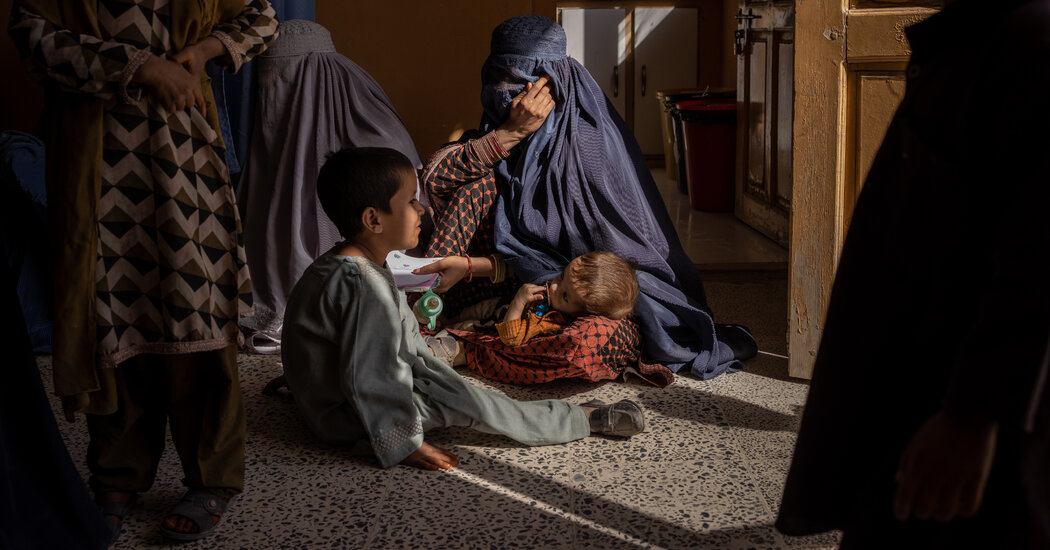
An estimated 22.8 million people — more than half the country’s population — are expected to face potentially life-threatening food insecurity this winter. Many are already on the brink of catastrophe.SHAH WALI KOT, Afghanistan — One by one, women poured into the mud brick clinic, the frames of famished children peeking out beneath the folds of their pale gray, blue and pink burqas.Many had walked for more than an hour across this drab stretch of southern Afghanistan, where parched earth meets a washed-out sky, desperate for medicine to pump life back into their children’s shrunken veins. For months, their once-daily meals had grown more sparse as harvests failed, wells ran dry and credit for flour from shopkeepers ran out.Now as the crisp air grew colder, reality was setting in: Their children might not survive the winter.“I’m very afraid, this winter will be even worse than we can imagine,” said Laltak, 40, who like many women in rural Afghanistan goes by only one name.Nearly four months since the Taliban seized power, Afghanistan is on the brink of a mass starvation that aid groups say threatens to kill a million children this winter — a toll that would dwarf the total number of Afghan civilians estimated to have been killed as a direct result of the war over the past 20 years.While Afghanistan has suffered from malnutrition for decades, the country’s hunger crisis has drastically worsened in recent months. This winter, an estimated 22.8 million people — more than half the population — are expected to face potentially life-threatening levels of food insecurity, according to an analysis by the United Nations World Food Program and Food and Agriculture Organization. Of those, 8.7 million people are nearing famine — the worst stage of a food crisis.Women carrying their children through the desert to a Red Crescent mobile health clinic in a village in Shah Wali Kot district, Kandahar.Jim Huylebroek for The New York TimesA patient talking with doctors at a Red Crescent mobile health clinic in Shah Wali Kot.Jim Huylebroek for The New York TimesSuch widespread hunger is the most devastating sign of the economic crash that has crippled Afghanistan since the Taliban seized power. Practically overnight, billions of dollars in foreign aid that propped up the previous Western-backed government vanished and U.S. sanctions on the Taliban isolated the country from the global financial system, paralyzing Afghan banks and impeding relief work by humanitarian organizations.Across the country, millions of Afghans — from day laborers to doctors and teachers — have gone months without steady or any incomes. The prices of food and other basic goods have soared beyond the reach of many families. Emaciated children and anemic mothers have flooded into the malnutrition wards of hospitals, many of those facilities bereft of medical supplies that donor aid once provided.Compounding its economic woes, the country is confronting one of the worst droughts in decades, which has withered fields, starved farm animals and dried irrigation channels. Afghanistan’s wheat harvest is expected to be as much as 25 percent below average this year, according to the United Nations. In rural areas — where roughly 70 percent of the population lives — many farmers have given up cultivating their land..css-1xzcza9{list-style-type:disc;padding-inline-start:1em;}.css-3btd0c{font-family:nyt-franklin,helvetica,arial,sans-serif;font-size:1rem;line-height:1.375rem;color:#333;margin-bottom:0.78125rem;}@media (min-width:740px){.css-3btd0c{font-size:1.0625rem;line-height:1.5rem;margin-bottom:0.9375rem;}}.css-3btd0c strong{font-weight:600;}.css-3btd0c em{font-style:italic;}.css-1kpebx{margin:0 auto;font-family:nyt-franklin,helvetica,arial,sans-serif;font-weight:700;font-size:1.125rem;line-height:1.3125rem;color:#121212;}#NYT_BELOW_MAIN_CONTENT_REGION .css-1kpebx{font-family:nyt-cheltenham,georgia,’times new roman’,times,serif;font-weight:700;font-size:1.375rem;line-height:1.625rem;}@media (min-width:740px){#NYT_BELOW_MAIN_CONTENT_REGION .css-1kpebx{font-size:1.6875rem;line-height:1.875rem;}}@media (min-width:740px){.css-1kpebx{font-size:1.25rem;line-height:1.4375rem;}}.css-1gtxqqv{margin-bottom:0;}.css-1g3vlj0{font-family:nyt-franklin,helvetica,arial,sans-serif;font-size:1rem;line-height:1.375rem;color:#333;margin-bottom:0.78125rem;}@media (min-width:740px){.css-1g3vlj0{font-size:1.0625rem;line-height:1.5rem;margin-bottom:0.9375rem;}}.css-1g3vlj0 strong{font-weight:600;}.css-1g3vlj0 em{font-style:italic;}.css-1g3vlj0{margin-bottom:0;margin-top:0.25rem;}.css-19zsuqr{display:block;margin-bottom:0.9375rem;}.css-12vbvwq{background-color:white;border:1px solid #e2e2e2;width:calc(100% – 40px);max-width:600px;margin:1.5rem auto 1.9rem;padding:15px;box-sizing:border-box;}@media (min-width:740px){.css-12vbvwq{padding:20px;width:100%;}}.css-12vbvwq:focus{outline:1px solid #e2e2e2;}#NYT_BELOW_MAIN_CONTENT_REGION .css-12vbvwq{border:none;padding:10px 0 0;border-top:2px solid #121212;}.css-12vbvwq[data-truncated] .css-rdoyk0{-webkit-transform:rotate(0deg);-ms-transform:rotate(0deg);transform:rotate(0deg);}.css-12vbvwq[data-truncated] .css-eb027h{max-height:300px;overflow:hidden;-webkit-transition:none;transition:none;}.css-12vbvwq[data-truncated] .css-5gimkt:after{content:’See more’;}.css-12vbvwq[data-truncated] .css-6mllg9{opacity:1;}.css-qjk116{margin:0 auto;overflow:hidden;}.css-qjk116 strong{font-weight:700;}.css-qjk116 em{font-style:italic;}.css-qjk116 a{color:#326891;-webkit-text-decoration:underline;text-decoration:underline;text-underline-offset:1px;-webkit-text-decoration-thickness:1px;text-decoration-thickness:1px;-webkit-text-decoration-color:#326891;text-decoration-color:#326891;}.css-qjk116 a:visited{color:#326891;-webkit-text-decoration-color:#326891;text-decoration-color:#326891;}.css-qjk116 a:hover{-webkit-text-decoration:none;text-decoration:none;}Now, as freezing winter weather sets in, with humanitarian organizations warning that a million children could die, the crisis is potentially damning to both the new Taliban government and to the United States, which is facing mounting pressure to ease the economic restrictions that are worsening the crisis.“We need to separate the politics from the humanitarian imperative,” said Mary-Ellen McGroarty, the World Food Program’s country director for Afghanistan. “The millions of women, of children, of men in the current crisis in Afghanistan are innocent people who are being condemned to a winter of absolute desperation and potentially death.”Madina, 2, who was brought by her grandmother to Mirwais Regional Hospital in Kandahar in October after a pharmacist said there was nothing more he could do for her.Jim Huylebroek for The New York TimesWomen and children at the pediatrics ward of Mirwais Regional Hospital in October.Jim Huylebroek for The New York TimesIn Shah Wali Kot, a barren district in Kandahar Province, the drought and economic crash have converged in a perfect storm.For decades, small farmers survived the winters on stored wheat from their summer harvest and the income from selling onions in the market. But this year yielded barely enough to sustain families during the fall months. Without food to last the winter, some people migrated to cities hoping to find work or to other districts to lean on the help of relatives.Inside one of the two mud huts of the clinic, which is run by the Afghan Red Crescent and supported by the International Federation of Red Cross and Red Crescent Societies, Laltak clutched her granddaughter’s gaunt frame as if steeling herself for the hardships she knew this winter would bring.Her family has no wheat left, no wood to make fires for heat, no money to buy food. They have exhausted the support of nearby relatives who cannot even feed their own families. “Nothing, we have nothing,” Laltak said in an interview at the end of October.She and most of the mothers interviewed did not own cellphones or have phone service in their villages, so The Times could not follow up with them on the health of their children.Many women and children walked for more than an hour to reach the Red Crescent health clinic in Shah Wali Kot district.Jim Huylebroek for The New York TimesA Taliban guard managing crowd control as Afghans receive food aid during a distribution by the World Food Program in Kabul, in October.Victor J. Blue for The New York TimesThe humanitarian catastrophe unfolding in Afghanistan comes as hunger has steadily risen around the world in recent years, driven by the coronavirus pandemic, conflict and climate-related shocks.Thirty percent more Afghans faced crisis-level food shortages in September and October compared with the same period last year, according to the United Nations. In the coming months, the number of Afghans in crisis is expected to hit a record high.“It was never this bad,” said Sifatullah Sifat, the head doctor at the Shamsul Haq clinic on the outskirts of Kandahar city, where malnutrition cases have doubled in recent months. “Donors are shipping in medicine, but it’s still not enough.”By 10 a.m. each morning, a throng of mothers carrying skeletal children masses in the hallway of the malnutrition unit.Inside an examination room in October, Zarmina, 20, cradled her 18-month-old son while her 3-year-old daughter stood behind her, clutching her blue burqa. Since the Taliban seized power and her husband’s work as a day laborer dried up, her family has survived on mostly bread and tea — meals that left her children’s stomachs gnawing with hunger.Laborers unloading sacks of flour from a World Food Program convoy, in October.Victor J. Blue for The New York TimesThe humanitarian catastrophe unfolding in Afghanistan comes as hunger has steadily risen around the world in recent years.Victor J. Blue for The New York Times“They are crying to have food. I wish I could bring them something, but we have nothing,” said Zarmina, who is six months pregnant and severely anemic.Zarmina’s son had grown frail after weeks of diarrhea. He stared blankly at the wall as a nurse wrapped a color-coded measuring band used to diagnose malnutrition around his rail-thin arm, stopping at the color red: Severe malnourishment.As the nurse told Zarmina that he needed to go to the hospital for treatment, another mother barged into the room and collapsed on the floor, demanding help for her infant daughter.“It’s been almost one week, I can’t get medicine for her,” she pleaded.The nurse begged her to wait: Her daughter’s malnutrition was considered only moderate.Since the Taliban seized power, the United States and other Western donors have grappled with delicate questions over how to avert a humanitarian catastrophe in Afghanistan without granting the new regime legitimacy by removing sanctions or putting money directly into the Taliban’s hands.“We believe that it’s essential that we maintain our sanctions against the Taliban but at the same time find ways for legitimate humanitarian assistance to get to the Afghan people. That’s exactly what we’re doing,” the deputy U.S. Treasury secretary, Wally Adeyemo, told the Senate Banking Committee in October.But as the humanitarian situation has worsened, aid organizations have called on the United States to move more quickly. American officials showed some flexibility around loosening the economic chokehold on Afghanistan last week, when the World Bank’s board — which includes the United States — moved to free up $280 million in frozen donor funding for the World Food Program and UNICEF. Still, the sum is just a portion of the $1.5 billion frozen by the World Bank amid pressure from the United States Treasury after the Taliban took control.As freezing winter weather sets in, humanitarian organizations warn that a million children could die of acute malnutrition in Afghanistan in the coming months.Jim Huylebroek for The New York TimesA baby is being checked for signs of malnutrition at a World Food Program health facility in Kandahar.Jim Huylebroek for The New York TimesHow those released funds will be transferred into Afghanistan remains unclear. Despite letters that the U.S. Treasury Department recently issued to foreign banks assuring them they can process humanitarian transactions to Afghanistan, many financial institutions remain fearful of exposure to U.S. sanctions.The Taliban government has repeatedly called on the Biden administration to ease economic restrictions and has worked with international organizations to deliver some assistance. But already, millions of Afghans have been pushed over the edge.At Mirwais Regional Hospital in Kandahar this fall, children suffering from malnutrition and disease crowded onto the pediatric ward’s worn metal beds. In the intensive care unit, an eerie silence filled the large room as children too weak to cry visibly wasted away, their breath labored and skin sagging off protruding bones.“I wanted to bring her to the hospital earlier,” said Rooqia, 40, looking down at her one-a-half-year-old daughter, Amina. “But I had no money, I couldn’t come.”Like many other mothers and grandmothers in the ward, they had come from western Kandahar where over the past two years irrigation channels have run dry and more recently, pantries emptied. Amina started to shrivel — her skin so drained of life-sustaining vitamins that patches peeled away.On a bed nearby, Madina, 2, let out a soft wail as her grandmother, Harzato, 50, readjusted her sweater. Harzato had taken the girl to the local pharmacist three times begging for medicine until he told her there was nothing more he could do: Only a doctor could save the child.“We were so far from the hospital, I was worried and depressed,” Harzato said. “I thought she might not make it.”A severely malnourished child in the intensive care unit of Mirwais Regional Hospital in October.Jim Huylebroek for The New York TimesYaqoob Akbary contributed reporting from Kandahar, Wali Arian from Istanbul and Safiullah Padshah from Kabul.

Read more →

Belgian zoo hippos test positive for Covid

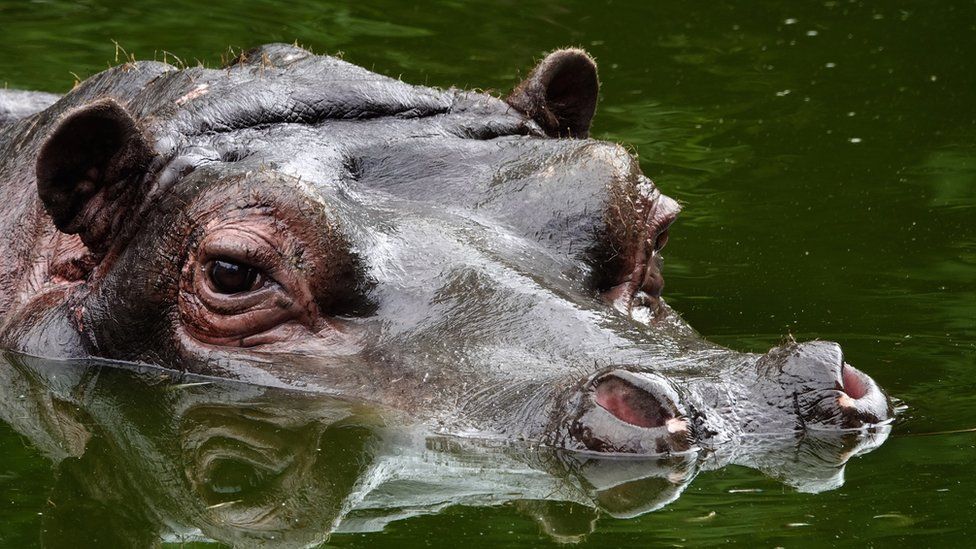
SharecloseShare pageCopy linkAbout sharingImage source, Getty ImagesA Belgian zoo has said that its two hippopotamuses have been taken into quarantine after testing positive for coronavirus.It is unclear how Imani, aged 14, and Hermien, 41, caught the virus, Antwerp Zoo said, adding the animals were doing well – apart from having runny noses.Restrictions have been tightened at the zoo until the animals test negative.Globally, there have been several reports of captive and domesticated animals infected with Sars-CoV-2.The hippos’ noses are usually wet, but vets at Antwerp Zoo decided to test the pair after they noticed they were “expelling snot”.Their enclosure has been sealed off. Their handlers – who have tested negative – must wear masks and safety glasses, and disinfect their footwear before any contact with the hippos.”To my knowledge, it’s the first recorded contamination among this species. Throughout the world this virus has mostly been seen in great apes and felines,” said Antwerp Zoo vet Francis Vercammen.Earlier this week, Canada also confirmed that three Covid cases had been discovered in wild deer – the first such report in the country’s wildlife.But limited testing means no-one knows how prevalent coronavirus is in the wild.Pets can catch Covid from owners, study suggestsCovid therapy from llamas shows promise

Read more →

Dr. Sherif R. Zaki, Acclaimed Disease Detective, Dies at 65

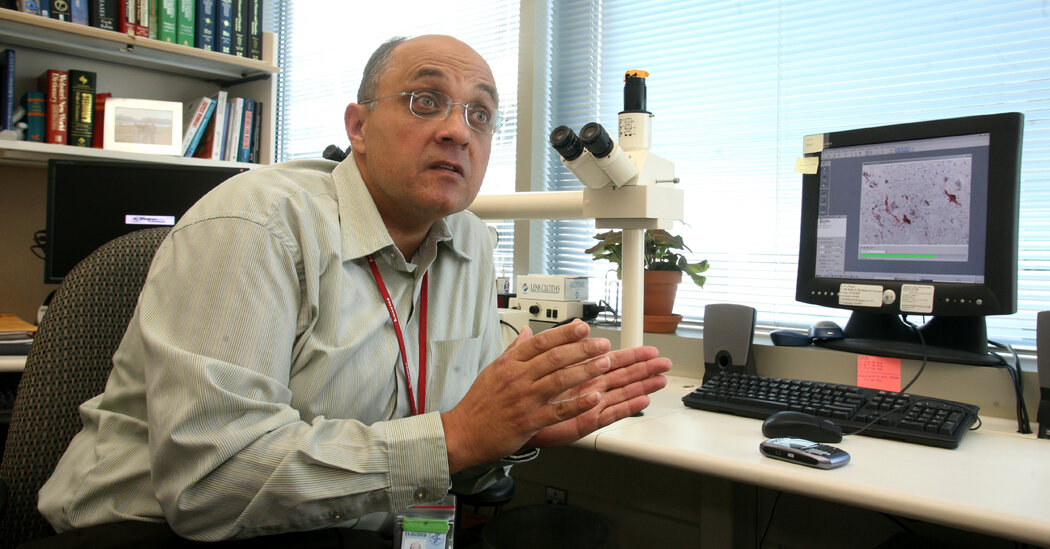
He helped identify numerous viruses, including Covid-19, as well as the bioterrorism attack that spread anthrax in 2001.Dr. Sherif R. Zaki, a pathologist who as America’s chief infectious disease detective helped identify the Covid-19, Ebola, West Nile and Zika viruses and severe acute respiratory syndrome, as well as the bioterrorism attack that spread anthrax in 2001, died on Nov. 21 in Atlanta. He was 65.His wife, Nadia (Abougad) Zaki, said that he died in a hospital from complications of injuries sustained in a fall down a flight of stairs at his home.Dr. Zaki joined the Centers for Disease Control and Prevention in 1988 and became chief of the agency’s infectious diseases pathology branch in the early 1990s.By applying a process called immunohistochemistry, which allows researchers to identify foreign pathogens by staining cells and observing them through electron microscopes capable of magnifying bacteria and viruses 740,000 times, Dr. Zaki and his team made strides in distinguishing rare diseases and their mutations and determining what made some of them, like SARS and Ebola, so contagious and lethal.“Dr. Zaki was critical in diagnosing unexplained illness and outbreaks that allowed C.D.C. and public health to respond more quickly and save lives,” the agency’s director, Dr. Rochelle Walensky, said in a statement.Dr. Rima Khabbaz, the director of the agency’s National Center for Emerging and Zoonotic Infectious Diseases, said in an email to the C.D.C. staff that Dr. Zaki was widely considered to be “among the most influential infectious disease pathologists of his generation.” He was also known as a generous mentor and colleague, and as a researcher with a phenomenal memory.After studying the coronavirus that caused SARS, he presciently told Smithsonian magazine in 2003, “I don’t see any reason why it shouldn’t come back.”An image of the lung tissue pathology of SARS. After studying the coronavirus that caused SARS, Dr. Zaki presciently told Smithsonian magazine in 2003, “I don’t see any reason why it shouldn’t come back.”Dr. Sherif ZakiIn 2001, after the Sept. 11 terrorist attacks in New York and Washington, Dr. Zaki determined that a number of people who had come into contact with letters containing a white powder had died from anthrax after their skin was exposed to the bacteria, or after inhaling it.He and his team helped identify a deadly outbreak of hantavirus in the Navajo Nation in 1993 (that discovery spurred the expansion of the infectious diseases pathology branch); a previously unidentified bacterial illness called leptospirosis in Nicaragua; and the mosquito-borne Zika virus in the brain tissue of babies in Brazil, establishing that it could be transmitted during pregnancy.He headed the agency’s Unexplained Deaths Project, a squad of detectives of last resort responsible for delving into the causes of the 700 or so baffling fatalities from disease that occur in the United States every year.A colleague, Dr. Christopher D. Paddock, recalled Dr. Zaki’s “remarkable patience, perseverance and curiosity,” as well as his “stubborn determination to find the cause of disease, whether it involved one patient or 100 patients — he simply would not give up.”After four people who received organ transplants in Massachusetts and Rhode Island developed a viral infection and three of them died, Dr. Zaki and his colleagues pinpointed the cause as lymphocytic choriomeningitis, a rare rodent-borne virus. It turned out that the organ donor’s daughter had a pet hamster.In 2005, a few days after complaining to his pediatrician of a fever, a headache and an itchy scalp, a 10-year-old Mississippi boy became so agitated that he bit a relative. After he was hospitalized, tests were inconclusive, but he died two weeks later.About a week after that, Dr. Zaki’s team detected rabies virus in the boy’s body. They learned from follow-up interviews that dead bats had been discovered in the boy’s home, and that he had found a live bat in his bedroom.Sherif Ramzy Zaki was born on Nov. 24, 1955, in Alexandria, Egypt. He spent his first six years in Chapel Hill, N.C., where his father, Ramzy Zaki, was attending graduate school. He later lived in the Caribbean, the Middle East and Europe, where his father worked for the United Nations’ International Labor Organization. His mother, Dalal (Elba) Zaki, was a teacher.In addition to his wife, he is survived by a daughter, Yasmin; a son, Samy; and two sisters, Dorreya and Safa.In 1978, he graduated second in his class of 800 from the Alexandria Medical School in Egypt. But he was less interested in practicing medicine than in unraveling mysteries, which had been an obsession of his ever since he was captivated by the novels of Enid Blyton as a child.That obsession was at the heart of his work at the C.D.C. “We go into the basics of how a disease happens, the mechanism,” he said in an interview with Stat, a medical website, in 2016. “Putting pieces together. Solving puzzles.”He earned a master’s in pathology from Alexandria University. But since autopsies were not permitted in Egypt for religious reasons, he did his residency in anatomic pathology at Emory University in Atlanta, where he also received a doctorate in experimental pathology.He then went to work at the C.D.C. and became a naturalized American citizen.Described by James LeDuc, a former colleague, as “kind of the secret weapon for a lot of what was done at C.D.C. on emerging diseases,” he was awarded the Department of Health and Human Services Secretary’s Award for Distinguished Service, the department’s highest honor, nine times.“What distinguished him as a researcher was creativity, collaboration, solid scientific methodology and a broad knowledge base.,” Dr. Inger K. Damon of the C.D.C.’s National Center for Emerging and Zoonotic Infectious Diseases said in an email.Dr. Zaki had no illusions that his work would ever be finished.“We think we know everything,” he told The New York Times in 2007, “but we don’t know the tip of the iceberg.”“There are so many viruses and bacteria we don’t know anything about, that we don’t have tests for,” he added. “A hundred years from now, people will not believe the number of pathogens we didn’t even know existed.”

Read more →

The Variant Hunters: Inside South Africa’s Effort to Stanch Dangerous Mutations

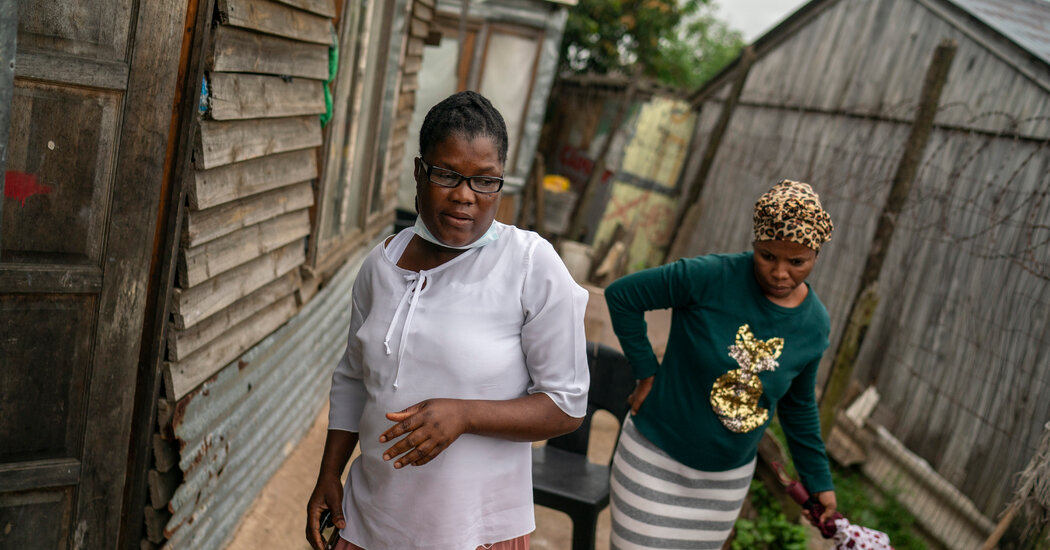
Scientists in a cutting-edge laboratory do part of the work. Local health workers on foot do the rest.NTUZUMA, South Africa — A few months ago, Sizakele Mathe, a community health worker in this sprawling hillside township on the edge of the city of Durban, was notified by a clinic that a neighbor had stopped picking up her medication. It was a warning sign that she had likely stopped taking the antiretroviral tablet that suppresses her H.I.V. infection.That was a threat to her own health — and, in the era of Covid-19, it might have posed a risk to everyone else’s. The clinic dispatched Ms. Mathe to climb a hill, wend her way down a narrow path and try to get the woman back on the pills.Ms. Mathe, as cheerful as she is relentless, is part of a national door-to-door nagging campaign. It’s half of a sophisticated South African effort to stanch the emergence of new variants of the coronavirus, like the Omicron strain that was identified here and shook the world this past week.The other half takes place at a state-of-the-art laboratory 25 miles down the road. At the KwaZulu-Natal Research Innovation and Sequencing Platform in Durban, scientists sequence the genomes of thousands of coronavirus samples each week. The KRISP lab, as it is known, is part of a national network of virus researchers that identified both the Beta and Omicron variants, drawing on expertise developed here during the region’s decades-long fight with H.I.V.This combination of high tech and grassroots represents one of the front lines in the world’s battle against the evolving coronavirus. On Friday, the research network in South Africa reported to a world waiting anxiously for new information that the new variant appeared to spread twice as quickly as Delta, which had been considered the most contagious version of the virus.The researchers at KRISP are global leaders in viral phylogenetics, the study of the evolutionary relationship between viruses. They track mutations in the coronavirus, identify hot spots of transmission and provide crucial data on who is infecting whom — which they deduce by tracking mutations in the virus across samples — to help tamp down the spread.Since the start of the pandemic, they have been closely scrutinizing how the virus changes in South Africa because they are worried about one thing in particular: the eight million people in the country (13 percent of the population) who live with H.I.V.Tulio de Oliveira outside the KwaZulu-Natal Research Innovation and Sequencing Platform lab in Durban, South AfricaJoão Silva/The New York TimesWhen people with H.I.V. are prescribed an effective antiretroviral and take it consistently, their bodies almost completely suppress the virus. But if people with H.I.V. aren’t diagnosed, haven’t been prescribed treatment, or don’t, or can’t, take their medicines consistently each day, H.I.V. weakens their immune systems. And then, if they catch the coronavirus, it can take weeks or months before the new virus is cleared from their bodies.When the coronavirus lives that long in their systems, it has the chance to mutate and mutate and mutate again. And, if they pass the mutated virus on, a new variant is in circulation.“We have reasons to believe that some of the variants that are emerging in South Africa could potentially be associated directly with H.I.V.,” said Tulio de Oliveira, the principal investigator of the national genetic monitoring network.In the first days of the pandemic, South Africa’s health authorities were braced for soaring death rates of people with H.I.V. “We were basically creating horror scenarios that Africa was going to be decimated,” said Salim Abdool Karim, an epidemiologist who heads the AIDS institute where KRISP is housed. “But none of that played out.” The main reason is that H.I.V. is most common among young people, while the coronavirus has hit older people hardest.An H.I.V. infection makes a person about 1.7 times more likely to die of Covid — an elevated risk, but one that pales in comparison with the risk for people with diabetes, who are 30 times more likely to die. “Once we realized that this was the situation, we then began to understand that our real problems with H.I.V. in the midst of Covid was the prospect that severely immunocompromised people would lead to new variants,” Dr. Abdool Karim said.The Covid-19 extraction room in the laboratory of the Centre for the AIDS Programme of Research in South Africa, where KRISP is housed.João Silva/The New York TimesResearchers at KRISP have shown that this has happened at least twice. Last year, they traced a virus sample to a 36-year-old woman with H.I.V. who was on an ineffective treatment regimen and who was not being helped to find drugs that she could tolerate. She took 216 days to clear the coronavirus from her system; in that time inside her body, the viruses acquired 32 different mutations.In November, Dr. de Oliveira and his team traced a coronavirus sample with dozens of mutations to a different part of the country, the Western Cape, where another patient was also poorly adhering to the H.I.V. drug regimen. The coronavirus lingered in her body for months and produced dozens of mutations. When these women were prescribed effective drugs and counseled on how to take them properly, they cleared the virus quickly.“We don’t have a lot of people like her,” Dr. Abdool Karim said of the woman who took 216 days to clear the coronavirus from her system. “But it doesn’t take a lot of people, it just takes one or two.” And a single variant can rattle the world, as Omicron has.The origin of this variant is still unknown. People with H.I.V. are not the only ones whose systems can inadvertently give the coronavirus the chance to mutate: It can happen in anyone who is immunosuppressed, such as transplant patients and those undergoing cancer treatments.By the time the KRISP team identified the second case of a person with H.I.V. producing coronavirus variants, there were more than a dozen reports of the same phenomenon in medical literature from other parts of the world.Viruses mutate in people with healthy immune systems, too. The difference for people with H.I.V., or another immunosuppressing condition, is that because the virus stays in their systems so much longer, the natural selection process has more time to favor mutations that evade immunity. The typical replication period in a healthy person would be just a couple of weeks, instead of many months; fewer replications mean less opportunities for new mutations.“Our real problems with H.I.V. in the midst of Covid was the prospect that severely immunocompromised people would lead to new variants,” said Salim Abdool Karim.João Silva/The New York TimesAnd because South Africa has so many people with H.I.V., and because this new pandemic has struck hard here, disrupting life in many ways, there is a particular urgency to the work of trying to block the variants.That is where the efforts of community health workers such as Ms. Mathe come in. On a typical workday, she walks dirt paths past leaking standpipes and front-step hair salons, armed with an ancient cellphone and a mental roster of who has turned up at the clinic lately, who is looking unwell and who needs a visit. Ms. Mathe, who herself has been on H.I.V. treatment for 13 years, is paid $150 a month.Silendile Mdunge, a thin 36-year-old mother of three, stopped taking her antiretrovirals during the brutal third wave of Covid that hit South Africa between May and July. Her drugs were no longer being delivered to a nearby community pickup point because many health care workers were redeployed. Instead she was supposed to collect the pills at a central clinic about nine miles away. But she feared contracting this new virus in a shared taxi or standing in the huge clinic lines that she heard about.She was off the medication for four months before Ms. Mathe turned up at the small home built of scrap wood that Ms. Mdunge shares with seven family members.The Coronavirus Pandemic: Key Things to KnowCard 1 of 5The Omicron variant.

Read more →

Bolsonaro: Brazilian Supreme Court opens investigation into vaccine comments

SharecloseShare pageCopy linkAbout sharingImage source, Getty ImagesBrazil’s Supreme Court has opened an inquiry into comments made by President Jair Bolsonaro wrongly claiming that Covid-19 vaccines may increase the chance of contracting Aids.The comments, made during a social media livestream in October saw him temporarily banned from Facebook and YouTube under their fake news policies.Mr Bolsonaro has frequently cast doubt over the effectiveness of vaccines. He is already facing a separate inquiry into his handling of the pandemic.During the livestream on 24 October, Mr Bolsonaro claimed that reports “suggest that people who are fully vaccinated against Covid-19 are developing Acquired Immune Deficiency Syndrome (Aids) much faster than expected”. The assertion has been strongly rejected by scientists and medical experts.The embattled president, who has refused to get vaccinated himself, has defended the comments and claimed that he was simply quoting from an article in a magazine. On Friday, Supreme Court Justice Alexandre de Moraes ruled that Mr Bolsonaro had “used the modus operandi of mass dissemination schemes in social networks” which called for further investigation. Brazil’s leader defiant as Covid inquiry launchedWhy could Brazil’s president face criminal charges? Mr de Moraes instructed Brazil’s top prosecutor, Augusto Aras, to try to establish whether the president’s comments are linked to a group of his supporters who are currently being investigated for the large-scale production of fake news. The group, known in local media as the Office of Hate, has spread misinformation throughout the pandemic and has called for a military coup that would give Mr Bolsonaro, a former army captain, unlimited powers to rule the country.Investigations into the group have already seen the arrest of a number of the president’s allies, including Roberto Jefferson, the head of the right-wing Brazilian Labour Party. Mr Bolsonaro has come under heavy pressure in recent months and faced a number of political crises that have dented his popularity.In October, Brazilian senators voted to recommend charging him over his response to the Covid-19 pandemic.A special Senate investigative panel backed a report calling for charges to be filed against the president, including crimes against humanity. Mr Bolsonaro has maintained he is “guilty of absolutely nothing”.Brazil’s death toll from Covid-19 is the second highest in the world, behind the United States. More than 615,000 people have died, and 22.1 million have been infected with the virus, although there are fears the true numbers are far higher.In March, as deaths spiked, the president told Brazilians to “stop whining” and downplayed the threat of the virus, as the health system was crippled by the crisis.This video can not be playedTo play this video you need to enable JavaScript in your browser.

Read more →

Omicron Variant Spreading Twice as Quickly as Delta in South Africa

A new mathematical analysis strengthens concerns about the effects of the new variant on the pandemic’s course.Underscoring increasing concerns about Omicron, scientists in South Africa said on Friday that the newest coronavirus variant appeared to spread more than twice as quickly as Delta, which had been considered the most contagious version of the virus.Omicron’s rapid spread results from a combination of contagiousness and an ability to dodge the body’s immune defenses, the researchers said. But the contribution of each factor is not yet certain.“We’re not sure what that mixture is,” said Carl Pearson, a mathematical modeler at the London School of Hygiene and Tropical Medicine who led the analysis. “It’s possible that it might even be less transmissible than Delta.”Dr. Pearson posted the results on Twitter. The research has not yet been peer-reviewed nor published in a scientific journal.On Thursday, researchers reported that the new variant may partly dodge immunity gained from a previous infection. It’s still unclear whether, or to what degree, Omicron may evade protection conferred by the vaccines.But some experts said they would expect the outcome to be similar.“It’s scary that there are so many reinfections happening, which means that vaccine-induced immunity may also be impacted in similar way,” said Akiko Iwasaki, an immunologist at Yale.The Omicron variant has appeared in nearly two dozen countries. The United States has identified at least 10 cases in six states. President Biden reiterated on Friday morning that his administration’s newest pandemic measures, which were announced this week, should be sufficient to blunt the spread of Omicron.A Covid testing station at the O.R. Tambo International Airport in Johannesburg on Thursday.Joao Silva/The New York TimesThe variant was first identified in South Africa on Nov. 23 and has quickly come to account for about three-quarters of new cases in that country. South Africa reported 11,535 new coronavirus cases on Thursday, a 35 percent jump from the day before, and the proportion of positive test results increased to 22.4 percent from 16.5 percent.“It is actually really striking how quickly it seems to have taken over,” said Juliet Pulliam, the director of an epidemiological modeling center at Stellenbosch University in South Africa, who led the earlier research on immunity.Omicron cases are doubling roughly every three days in Gauteng province, which is home to South Africa’s densely populated economic hub, according to the new estimates by the researchers.In a mathematical analysis, they estimated the variant’s Rt — a measure of how quickly a virus spreads — and compared it with the metric for Delta. They found that Omicron’s Rt is nearly 2.5 times as high as that of Delta’s.That figure depends on not just how contagious the variant may be, but also its ability to sidestep the body’s immune defenses once it reaches a new host.Based on the mutations Omicron carries, some researchers had warned that the variant may turn out to be highly transmissible, and that the current vaccines may not be as effective against it as against previous variants.In the research published on Thursday, Dr. Pulliam and her colleagues estimated the new variant’s ability to evade immunity by looking at confirmed cases in the country through late November.They reported an uptick in reinfections among people who had tested positive for the virus at least 90 days earlier, suggesting that the immunity gained from a previous bout with the virus was no longer as protective as it had appeared. The increase in reinfections coincided with Omicron’s spread in the country.A quirk of Omicron’s genetic code made it easy to distinguish the variant from Delta in diagnostic tests, and that helped scientists quickly spot its steep rise, Dr. Pulliam said.“If we hadn’t had that, we probably would be several weeks behind where we are now in terms of recognizing that there was a new variant,” she added.The team did not confirm that the reinfections they observed were caused by the new variant, but said it was a reasonable assumption. A similar spike did not occur when the Beta and Delta variants were dominant, the scientists noted.The Coronavirus Pandemic: Key Things to KnowCard 1 of 5The Omicron variant.

Read more →

Omicron and Vaccine Protection

Omicron and Vaccine ProtectionAndrew JacobsReporting on the coronavirusWhy are scientists worried?Early evidence suggests Omicron may be significantly more contagious than the highly contagious Delta variant. Because of a high number of mutations, scientists also worry Omicron might be able to dodge the immune system and vaccines more readily than previous variants. The makers of Regeneron have already indicated that their Covid antibody treatment might be less effective against Omicron but said tweaks to the drug can be made if necessary.

Read more →

Where did western honey bees come from? New research finds the sweet spot

For decades, scientists have hotly debated the origin of the western honey bee. Now, new research led by York University has discovered these popular honey-producing bees most likely originated in Asia.
From there, the western honey bee (Apis mellifera) expanded independently into Africa and Europe creating seven separate geographically and genetically distinct evolutionary lineages traceable back to Western Asia.
The western honey bee is used for crop pollination and honey production throughout most of the world, and has a remarkable capacity for surviving in vastly different environments — from tropical rainforest, to arid environments, to temperate regions with cold winters. It is native to Africa, Europe and Asia, and was recently believed to have originated in Africa.
The research team sequenced 251 genomes from 18 subspecies from the honey bee’s native range and used this data to reconstruct the origin and pattern of dispersal of honey bees. The team found that an Asian origin — likely Western Asia — was strongly supported by the genetic data.
“As one of the world’s most important pollinators, it’s essential to know the origin of the western honey bee to understand its evolution, genetics and how it adapted as it spread,” says corresponding author Professor Amro Zayed of York University’s Faculty of Science.
The study also highlights that the bee genome has several “hot spots” that allowed honey bees to adapt to new geographic areas. While the bee genome has more than 12,000 genes, only 145 of them had repeated signatures of adaptation associated with the formation of all major honey bee lineages found today.
“Our research suggests that a core-set of genes allowed the honey bee to adapt to a diverse set of environmental conditions across its native range by regulating worker and colony behaviour,” says York University PhD student Kathleen Dogantzis of the Faculty of Science, who led the research.
This adaptation also allowed for the development of some 27 different subspecies of honey bees.
“It’s important to understand how locally adapted subspecies and colony-level selection on worker bees, contributes to the fitness and diversity of managed colonies,” says Dogantzis.
The sequencing of these bees also led to the discovery of two distinct lineages, one in Egypt and another in Madagascar.
The researchers hope their study finally lays to the rest the question of where the western honey bee came from so future research can further explore how they adapted to different climates and geographic areas.
The paper, Thrice out of Asia and the adaptive radiation of the western honey bee, was published today in the journal Science Advances.
Story Source:
Materials provided by York University. Note: Content may be edited for style and length.

Read more →

Rapid test identifies antibody effectiveness against COVID-19 variants

Biomedical engineers at Duke University have devised a test to quickly and easily assess how well a person’s neutralizing antibodies fight infection from multiple variants of COVID-19 such as Delta and the newly discovered Omicron variant.
This test could potentially tell doctors how protected a patient is from new variants and those currently circulating in a community or, conversely, which monoclonal antibodies to treat a COVID-19 patient. The test is described online December 3 in the journal Science Advances.
“We currently really have no rapid way of assessing variants, neither their presence in an individual, nor the ability of antibodies we possess to make a difference,” said Cameron Wolfe, associate professor of medicine at the Duke University School of Medicine. “It’s one of the lingering fears that, as we successfully vaccinate more and more people, a variant may emerge that more radically evades vaccine-induced antibody neutralization. And if that fear came true — if Omicron turned out to be a worst-case scenario — how would we know quickly enough?”
“While developing a point-of-care test for COVID-19 antibodies and biomarkers, we realized there could be some benefit to being able to detect the ability of antibodies to neutralize specific variants, so we built a test around that idea,” said Ashutosh Chilkoti, the Alan L. Kaganov Distinguished Professor and Chair of Biomedical Engineering at Duke. “It only took us a week or two to incorporate the Delta variant in our test, and it could easily be expanded to also include the Omicron variant. All we need is the spike protein of this variant, which many groups across the world — including our group at Duke — are feverishly working to produce.”
The researchers have dubbed their test the COVID-19 Variant Spike-ACE2-Competitive Antibody Neutralization assay, or CoVariant-SCAN for short. The test’s technology hinges on a polymer brush coating that acts as a sort of non-stick coating to stop anything but the desired biomarkers from attaching to the test slide when wet. The high effectiveness of this non-stick shield makes the test incredibly sensitive to even low levels of its targets. The approach allows researchers to print different molecular traps on different areas of the slide to catch multiple biomarkers at once.
In this application, researchers print fluorescent human ACE2 proteins — the cellular targets of the virus’s infamous spike protein — on a slide. They also print spike proteins specific to each variant of COVID-19 at different specific locations. When the test is run, the ACE2 proteins detach from the slide and are caught by the spike proteins still attached to the slide, causing the slide to glow.

Read more →