Daytime meals may reduce health risks linked to night shift work

A small clinical trial supported by the National Institutes of Health has found that eating during the nighttime — like many shift workers do — can increase glucose levels, while eating only during the daytime might prevent the higher glucose levels now linked with a nocturnal work life. The findings, the study authors said, could lead to novel behavioral interventions aimed at improving the health of shift workers — grocery stockers, hotel workers, truck drivers, first responders, and others — who past studies show may be at an increased risk for diabetes, heart disease, and obesity.
The new study, which the researchers noted is the first to demonstrate the beneficial effect of this type of meal timing intervention in humans, appears online in the journal Science Advances. It was funded primarily by the National Heart, Lung, and Blood Institute (NHLBI), part of NIH.
“This is a rigorous and highly controlled laboratory study that demonstrates a potential intervention for the adverse metabolic effects associated with shift work, which is a known public health concern,” said Marishka Brown, Ph.D., director of the NHLBI’s National Center on Sleep Disorders Research. “We look forward to additional studies that confirm the results and begin to untangle the biological underpinnings of these findings.”
For the study, the researchers enrolled 19 healthy young participants (seven women and 12 men). After a preconditioning routine, the participants were randomly assigned to a 14-day controlled laboratory protocol involving simulated night work conditions with one of two meal schedules. One group ate during the nighttime to mimic a meal schedule typical among night workers, and one group ate during the daytime.
The researchers then evaluated the effects of these meal schedules on their internal circadian rhythms. That’s the internal process that regulates not just the sleep-wake cycle, but also the 24-hour cycle of virtually all aspects of your bodily functions, including metabolism.
The researchers found that nighttime eating boosted glucose levels — a risk factor for diabetes — while restricting meals to the daytime prevented this effect. Specifically, average glucose levels for those who ate at night increased by 6.4% during the simulated night work, while those who ate during the daytime showed no significant increases.
“This is the first study in humans to demonstrate the use of meal timing as a countermeasure against the combined negative effects of impaired glucose tolerance and disrupted alignment of circadian rhythms resulting from simulated night work,” said study leader Frank A.J.L. Scheer, Ph.D., professor of medicine at Harvard Medical School and director of the Medical Chronobiology Program at Brigham & Women’s Hospital in Boston.
The researchers said that the mechanisms behind the observed effects are complex. They believe that the nighttime eating effects on glucose levels during simulated night work are caused by circadian misalignment. That corresponds to the mistiming between the central circadian “clock” (located in the brain’s hypothalamus) and behavioral sleep/wake, light/dark, and fasting/eating cycles, which can influence peripheral “clocks” throughout the body. The current study shows that, in particular, mistiming of the central circadian clock with the fasting/eating cycles plays a key role in boosting glucose levels. The work further suggests the beneficial effects of daytime eating on glucose levels during simulated night work may be driven by better alignment between these central and peripheral “clocks.”
“This study reinforces the notion that when you eat matters for determining health outcomes such as blood sugar levels, which are relevant for night workers as they typically eat at night while on shift,” said the study co-leader Sarah L. Chellappa, M.D., Ph.D., a researcher in the nuclear medicine department at the University of Cologne, Germany. Chellappa formerly worked with Scheer in Brigham & Women’s Medical Chronobiology Program.
To translate these findings into practical and effective meal timing interventions, the researchers said more study is needed, including with real-life shift workers in their typical work environment.

Read more →

Brain drain: Scientists explain why neurons consume so much fuel even when at rest

Pound for pound, the brain consumes vastly more energy than other organs, and, puzzlingly, it remains a fuel-guzzler even when its neurons are not firing signals called neurotransmitters to each other. Now researchers at Weill Cornell Medicine have found that the process of packaging neurotransmitters may be responsible for this energy drain.
In their study, reported Dec. 3 in Science Advances, they identified tiny capsules called synaptic vesicles as a major source of energy consumption in inactive neurons. Neurons use these vesicles as containers for their neurotransmitter molecules, which they fire from communications ports called synaptic terminals to signal to other neurons. Packing neurotransmitters into vesicles is a process that consumes chemical energy, and the researchers found that this process, energy-wise, is inherently leaky — so leaky that it continues to consume significant energy even when the vesicles are filled and synaptic terminals are inactive.
“These findings help us understand better why the human brain is so vulnerable to the interruption or weakening of its fuel supply,” said senior author Dr. Timothy Ryan, a professor of biochemistry and of biochemistry in anesthesiology at Weill Cornell Medicine.
The observation that the brain consumes a high amount of energy, even when relatively at rest, dates back several decades to studies of the brain’s fuel use in comatose and vegetative states. Those studies found that even in these profoundly inactive states, the brain’s consumption of glucose typically drops from normal by only about half — which still leaves the brain as a high energy consumer relative to other organs. The sources of that resting energy drain have never been fully understood.
Dr. Ryan and his laboratory have shown in recent years that neurons’ synaptic terminals, bud-like growths from which they fire neurotransmitters, are major consumers of energy when active, and are very sensitive to any disruption of their fuel supply. In the new study they examined fuel use in synaptic terminals when inactive, and found that it is still high.
This high resting fuel consumption, they discovered, is accounted for largely by the pool of vesicles at synaptic terminals. During synaptic inactivity, vesicles are fully loaded with thousands of neurotransmitters each, and are ready to launch these signal-carrying payloads across synapses to partner neurons.
Why would a synaptic vesicle consume energy even when fully loaded? The researchers discovered that there is essentially a leakage of energy from the vesicle membrane, a “proton efflux,” such that a special “proton pump” enzyme in the vesicle has to keep working, and consuming fuel as it does so, even when the vesicle is already full of neurotransmitter molecules.
The experiments pointed to proteins called transporters as the likely sources of this proton leakage. Transporters normally bring neurotransmitters into vesicles, changing shape to carry the neurotransmitter in, but allowing at the same time for a proton to escape — as they do so. Dr. Ryan speculates that the energy threshold for this transporter shape-shift was set low by evolution to enable faster neurotransmitter reloading during synaptic activity, and thus faster thinking and action.
“The downside of a faster loading capability would be that even random thermal fluctuations could trigger the transporter shape-shift, causing this continual energy drain even when no neurotransmitter is being loaded,” he said.
Although the leakage per vesicle would be tiny, there are at least hundreds of trillions of synaptic vesicles in the human brain, so the energy drain would really add up, Dr. Ryan said.
The finding is a significant advance in understanding the basic biology of the brain. In addition, the vulnerability of the brain to the disruption of its fuel supply is a major problem in neurology, and metabolic deficiencies have been noted in a host of common brain diseases including Alzheimer’s and Parkinson’s disease. This line of investigation ultimately could help solve important medical puzzles and suggest new treatments.
“If we had a way to safely lower this energy drain and thus slow brain metabolism, it could be very impactful clinically,” Dr. Ryan said.

Read more →

Researchers find surprising benefit to the immune system following infection

The human body’s immune system weakens over time, making older adults more susceptible to infections and leaving scientists with the puzzling dilemma of how to maintain health across the lifespan. As part of continuing research at the University of Arizona Health Sciences, a recent study into how infection affects the immune system resulted in a surprising outcome that could lead to new immunotherapies to prevent disease and novel ways to strengthen the aging immune system.
The immune system uses T cells, white blood cells that defend against pathogens such as viruses, bacteria and parasites, to fight infection. Prior research by Janko Nikolich-Žugich, MD, PhD, professor and head of the UArizona College of Medicine — Tucson’s Department of Immunobiology, found that both the number and function of naïve T cells — those that have never responded to an infection before — were negatively affected by aging.
“The main population of cells that we lose in the process of aging are naïve T cells,” Dr. Nikolich-Žugich said. “This study showed that both the maintenance of naïve T cells over time and their function were improved by the presence of an infection, which aligns somewhat with the hygiene hypothesis that basically says if you allow your kids to be exposed to everyday germs, it’s going to be better for them.”
Previously, it was thought infections primarily affected the creation of memory T cells. When exposed to a pathogen, some naïve T cells learn and remember, becoming memory T cells that prevent re-infection when they encounter the same pathogen again.
The recent UArizona Health Sciences study, published in the journal Nature Communications, found a mechanism by which an infection has the potential to strengthen the immune system against not only future attacks by the same pathogen, but against different ones as well.
One of the ways the body regulates cell growth is through interleukins, naturally occurring proteins that mediate communication between cells. Interleukin 7 (IL-7), specifically, plays an important role in naïve T cell development and maintenance.
When the body detects a foreign invader, naïve T cells are put into action by major histocompatibility complex (MHC) molecules, a group of genes on the surface of cells. MHC molecules take a portion of the pathogen and display it on the cell surface for recognition by the appropriate T cells. But in the absence of infection, MHC molecules also provide subtle “tickling” signals to naïve T cells to keep them alive and able to receive IL-7 signals that keep their metabolism optimally tuned. The infected cells also secrete interferon type 1 molecules, which signal additional immune responses.
“Now we know that when you have these fairly substantial infections, interferon type 1 molecules are making the MHC and Interleukin 7 signals stronger, more abundant and more available to naïve T cells. It has never been shown that an infection can do something like this,” Dr. Nikolich-Žugich said. “This study showed that an infection not only better maintained the number of naïve T cells, but it put them on a slightly higher state of alertness.”
That means when the immune system encounters a new infection, such as SARS-CoV-2 or a new strain of influenza, naïve T cells would be able to respond faster and provide better protection.
Moving forward, Dr. Nikolich-Žugich hopes to be able to determine how long the infection-mediated naïve T cell response lasts, and if that depends on the presence of multiple or persistent infections.
Eventually, the UArizona Health Sciences research team wants to develop therapies that boost the immune system to fight disease by using naïve T cells that are in a heightened state of alertness, to target things like cancerous tumors. They also hope to examine the feasibility of using the mechanism that maintains naïve T cell production to strengthen the aging immune system.

Read more →

A chewing gum that could reduce SARS-CoV-2 transmission

A chewing gum laced with a plant-grown protein serves as a “trap” for the SARS-CoV-2 virus, reducing viral load in saliva and potentially tamping down transmission, according to a new study.
The work, led by Henry Daniell at Penn’s School of Dental Medicine and performed in collaboration with scientists at the Perelman School of Medicine and School of Veterinary Medicine, as well as at The Wistar Institute and Fraunhofer USA, could lead to a low-cost tool in the arsenal against the COVID-19 pandemic. Their study was published in the journal Molecular Therapy.
“SARS-CoV-2 replicates in the salivary glands, and we know that when someone who is infected sneezes, coughs, or speaks some of that virus can be expelled and reach others,” says Daniell. “This gum offers an opportunity to neutralize the virus in the saliva, giving us a simple way to possibly cut down on a source of disease transmission.”
Vaccinations for COVID-19 have helped change the course of the pandemic but haven’t stamped out transmission. Even people who are fully vaccinated can still become infected with SARS-CoV-2 and, according to recent research, can carry a viral load similar to those who are unvaccinated.
Prior to the pandemic, Daniell had been studying the angiotensin-converting enzyme 2 (ACE2) protein in the context of treating hypertension. His lab had grown this protein, as well as many others that may have therapeutic potential, using a patented plant-based production system. By bombarding plant material with the DNA of target proteins, they coax plant chloroplasts to take up the DNA and begin growing the proteins. The plant material, freeze-dried and ground-up, could be used as a means of delivering the protein. This system has the potential to avoid the usual obstacles to protein drug synthesis: namely, an expensive production and purification process.
Daniell’s past work on ACE2 proved fortuitous in the context of the COVID-19 pandemic. The receptor for ACE2 on human cells also happens to bind the SARS-CoV-2 spike protein. Other research groups have shown that injections of ACE2 can reduce viral load in people with severe infections.

Read more →

Immune system-stimulating nanoparticle could lead to more powerful vaccines

A common strategy to make vaccines more powerful is to deliver them along with an adjuvant — a compound that stimulates the immune system to produce a stronger response.
Researchers from MIT, the La Jolla Institute for Immunology, and other institutions have now designed a new nanoparticle adjuvant that may be more potent than others now in use. Studies in mice showed that it significantly improved antibody production following vaccination against HIV, diphtheria, and influenza.
“We started looking at this particular formulation and found that it was incredibly potent, better than almost anything else we had tried,” says Darrell Irvine, the Underwood-Prescott Professor with appointments in MIT’s departments of Biological Engineering and Materials Science and Engineering; an associate director of MIT’s Koch Institute for Integrative Cancer Research; and a member of the Ragon Institute of MGH, MIT, and Harvard.
The researchers now hope to incorporate the adjuvant into an HIV vaccine that is currently being tested in clinical trials, in hopes of improving its performance.
Irvine and Shane Crotty, a professor at the Center for Infectious Disease and Vaccine Research at the La Jolla Institute for Immunology, are the senior authors of the study, which appears today in Science Immunology. The lead authors of the paper are Murillo Silva, a former MIT postdoc, and Yu Kato, a staff scientist at the La Jolla Institute.
More powerful vaccines
Although the idea of using adjuvants to boost vaccine effectiveness has been around for decades, there are only a handful of FDA-approved vaccine adjuvants. One is aluminum hydroxide, an aluminum salt that induces inflammation, and another is an oil and water emulsion that is used in flu vaccines. A few years ago, the FDA approved an adjuvant based on saponin, a compound derived from the bark of the Chilean soapbark tree.

Read more →

Understanding mouthfeel of food using physics

Food texture can make the difference between passing on a plate and love at first bite. To date, most studies on food texture center on relating a food’s overall composition to its mechanical properties. Our understanding of how microscopic structure and changes in the shape of food affect food texture, however, remains underdeveloped.
Researchers from Denmark and Germany conducted a series of experiments relating food microstructure and rheology, the study of how soft solids and some liquids deform, to texture. In Physics of Fluids, by AIP Publishing, they used coherent anti-Stokes Raman scattering (CARS) microscopy to relate the molecular makeup of the fat in foods with the rheological and mechanical properties of the food.
The foods in question: foie gras and pâté.
“Using soft matter physics tools and models, we connected structural information in the food across length scales,” said author Thomas Vilgis. “We joined microscopy and rheology to understand the mouthfeel of food from a gastrophysical standpoint.”
Both deriving from duck livers, the two dishes are similar enough in overall structure, and their differing fat distribution provided a window into how fat affects texture.
“There are further different interesting aspects that can be targeted to create new products with the same features as these products,” said author Mathias P. Clausen. “Can we create foie gras-like textures without animal cruelty? Can we create melting and creamy texture from different fat sources?”
To answer these questions, the group turned to CARS microscopy, which uses lasers to vibrate chemical bonds in foods to tunable frequencies and cause them to emit light. The technique has been used for decades in other fields but, so far, has received relatively little use in food science.
The fat in foie gras had arranged into an irregularly shaped, weakly linked fat network embedded in a protein matrix, which made its mouthfeel harder, more brittle, and more elastic than pâté’s.
The greater number of rounder and smoother fat particles and lack of an interconnected network were responsible for the pâté’s softer texture.
Clausen hopes their research stokes further interest in investigating which microscopic features of foods can be tweaked. The group looks to study other components of foods with advanced microscopy, such as protein arrangement, and see if they can use their findings to create foods that mimic the texture of foie gras.
Story Source:
Materials provided by American Institute of Physics. Note: Content may be edited for style and length.

Read more →

Omicron and Travel: So, Now Do I Need Trip Insurance?

In light of the new variant, is extra protection warranted for things like flight and lodging cancellations and quarantine hotels? It depends. Here’s what you need to know.While the pandemic has depressed travel, it may have encouraged travel insurance, say those in the industry.“The biggest question we get from customers is: ‘What happens if I get Covid during travel and what if I have to quarantine?’” said Jeremy Murchland, the president of Seven Corners, a travel insurance management company. “Covid has created a much broader awareness of travel insurance.”But will it help you in light of the new Omicron variant, which has already led to new travel restrictions and requirements? In the early days of the pandemic, travel insurance largely failed to protect travelers who wanted or needed to cancel as the world shut down. The following are answers to common questions about travel insurance now.Does travel insurance cover Covid-19, including the new Omicron variant?For the most part, yes, travel insurance policies now treat Covid-19 in all its variants — including Omicron — like any other medical emergency.“Consumers should know that most travel insurance plans with medical benefits now treat Covid like any other illness that you could contract while traveling or that could prohibit you from going on your trip,” said Carol Mueller, a vice president of Berkshire Hathaway Travel Protection. “If you become ill before your trip, you’ll need a doctor’s note confirming your illness and that you are unable to travel in order to be eligible for benefits. The benefits are the same regardless of whether you contract Omicron, another variant of Covid or any illness for that matter.”Buyers should read the policies carefully and look out for those that exclude pandemics, Covid-19 and its variants. To make a claim, you must have had travel insurance before becoming ill.“We always say, you can’t buy auto insurance after you’ve already had an accident,” said Meghan Walch, the product manager of InsureMyTrip, an insurance sales site. “It is designed for unforeseen issues. You have to purchase it before an event.”I am traveling internationally. If borders close because of Omicron, am I covered through travel insurance?No, most policies do not cover you if your foreign destination closes its borders to visitors, as Israel did recently. With a few exceptions, that also goes for a government-issued travel warning to a destination, which is generally not a covered reason to make a claim.Given the added uncertainties of Omicron, should I consider a ‘Cancel for Any Reason’ policy?Cancel for Any Reason, or C.F.A.R., provisions would allow you to claim some of your nonrefundable costs if you decide not to go on a trip for any reason, including border closures or fear of contracting Covid. The rub is that this form of insurance — in addition to being more expensive — must generally be purchased within a day or two of booking the trip and will only return 50 to 75 percent of nonrefundable trip costs.“Most travel insurance policies do not cover you for wanting to cancel out of fear of Covid. We say this 10 times a week,” said Sarah Groen, the owner of the agency Bell and Bly Travel. She counsels clients to consider their worst fears — illness, for example, or quarantine — in troubleshooting travel insurance. “We’ve become like therapists,” she said.What about quarantine and medical expenses?Make sure the policy you choose covers these. In the case of medical coverage, check with your regular health insurer; many policies will not cover you abroad, which is an additional reason to consider coverage if you are traveling internationally.“What travel insurance can do is cover additional hotel stays if you are able to self-quarantine and additional airfare when you’re able to come home,” said Megan Moncrief, the chief marketing officer for Squaremouth, a travel insurance sales site. She added that most policies will extend to seven days past your originally scheduled return date, effectively covering only about seven days in case of quarantine.Do some destinations require travel insurance?Yes, primarily to cover medical care or quarantine accommodations in the event that a traveler tests positive for Covid-19. For example, Singapore requires medical insurance with a minimum coverage of 30,000 Singapore dollars, or about $22,000. Fiji requires travel insurance to cover potential treatment for Covid-19, and makes it available from about $30. Some destinations, such as Anguilla, recommend rather than require travel insurance. InsureMyTrip.com has a page devoted to countries that require travel insurance.It bears thinking about what it would take to get home for treatment should you contract Covid-19 abroad. Thailand, for example, requires travelers to have medical insurance with the minimum coverage of $50,000. “Evacuation out of Thailand would be higher,” said Sasha Gainullin, the chief executive of Battleface, a travel insurance start-up that unbundles benefits. In the case of a Thailand trip, he advised taking medical coverage up to $100,000 for treatment locally and $500,000 for medical evacuation and repatriation.Do I need insurance if I have bookings with flexible cancellation policies?Probably not, if you have hotel reservations that allow free cancellation 24 to 48 hours in advance. The same with flights; if your flight is changeable and will provide a voucher or refund in case of cancellation, you’re covered.I have rented a house with restrictive cancellation penalties. Can I insure against those?Yes. Vacation home rentals from Airbnb and the like can be treated just like other accommodations that do not offer refunds. In this case, you would want to get a policy in the amount you would forfeit if you had to cancel for a covered reason like illness. Again, fear of travel is not a covered reason; for that, you would need C.F.A.R.Elaine Glusac is the Frugal Traveler columnist. Follow her on Instagram: @eglusac.Follow New York Times Travel on Instagram, Twitter and Facebook. And sign up for our weekly Travel Dispatch newsletter to receive expert tips on traveling smarter and inspiration for your next vacation.

Read more →

Printing technique creates effective skin equivalent, heals wounds

Chronic wounds are deep and difficult to repair. Often, the top of the injury heals before the bottom, so the wound collapses in on itself. Over time, this can result in scar tissue and reduced skin function.
In APL Bioengineering, by AIP Publishing, researchers from the University of Birmingham and University of Huddersfield developed an approach to print skin equivalents. The material may play a future role in facilitating the healing of chronic wounds.
The technique is the first of its kind to simulate three layers of skin: the hypodermis, or fatty layer, the dermis, and the epidermis.
“You effectively have three different cell types. They all grow at different speeds,” said author Alan Smith. “If you try to produce tri-layered structures, it can be very difficult to provide each of the requirements of each different layer.”
To solve this problem, the scientists used suspended layer additive manufacturing (SLAM). They created a gel-like material to support the skin equivalent, twisting and altering the structure of the gel as it formed to create a bed of particles that can then support a second phase of gel injection.
During printing, the skin layers are deposited within the support gel, which holds everything in place. After printing, the team washed away the support material, leaving behind the layered skin equivalent.
If the researchers moved a needle through the supporting gel, it repaired itself faster than other similar techniques. This results in higher resolution printing than previous methods and allows for the printing of complicated skin structures.
The authors tested the skin substitute by cutting a hole in pig tissue and printing a skin equivalent to fill the hole. After culturing the model system for 14 days, they saw signs of wound repair.
“We used a stain that allowed us to quantify the integration we got between original material and tissue,” said author Liam Grover. “We were able to demonstrate some integration even after a short period of time.”
The team cannot assess chronic wound healing with the skin substitute because that process takes more time than their model allowed, which was only 14-21 days. However, their next step is to test longer, appropriate models for chronic deep wounds. The ultimate goal is to repair human skin and reduce scarring for all patient scenarios.
Story Source:
Materials provided by American Institute of Physics. Note: Content may be edited for style and length.

Read more →

Are My Stomach Problems Really All in My Head?

Scientists often debate whether irritable bowel syndrome is a mental or physical issue. That’s not much help for those who suffer from it.The New Mexican desert unrolled on either side of the highway like a canvas spangled at intervals by the smallest of towns. I was on a road trip with my 20-year-old son from our home in Los Angeles to his college in Michigan. Eli, trying to be patient, plowed down I-40 as daylight dimmed and I scrolled through my phone searching for a restaurant or dish that would not cause me pain. After years of carefully navigating dinners out and meals in, it had finally happened: There was nowhere I could eat.“I’m so sorry, honey,” I said. “I feel really, really bad.” And I did. I was on the verge of tears, as much out of self-pity and shame as any maternal concern.Eli shook his head. “It’s OK, Mom. It’s not your fault.”But it was. Because of me — or, to be precise, my digestive system — we would not eat until we reached Amarillo, Texas, at 10 p.m., and bought frozen food from a grocery store near our Airbnb.My gut is not a carefree traveler. Ingest the wrong items, and my stomach feels as though someone’s scoured it with a Brillo pad. For the next few hours, I may also experience migraines, achy joints and a foggy, feverish sensation like I’m coming down with the flu. My doctors call this irritable bowel syndrome, or I.B.S. I call it a terrible shame.I.B.S. is a diagnosis of exclusion, a so-called functional disorder scribbled in your chart only after every test and examination has come back normal. Simply put, there’s nothing wrong with my stomach that our current medical tools can detect. Some physicians and researchers have described this condition in terms of a mind-gut connection.“Everybody has contractions in their gut,” said Dr. Emeran Mayer, a gastroenterologist at the University of California, Los Angeles, and the author of “The Mind-Gut Connection: How the Hidden Conversation Within Our Bodies Impacts Our Mood, Our Choices and Our Overall Health.”The same contractions that go unnoticed by most people cause pain in I.B.S. patients, who have become hypersensitive to sensations in their gut, he said. Calm the mind, the thinking goes, and the gut may follow.Fair or not, I hear this prescription and think, “Oh, so this is all in my head?” Then I fear my stomach aches are my fault, the product of an anxious mind that I cannot tame into submission.That night on the highway, I kept wanting to apologize to my son again. But as Eli flicked on the headlights, I realized he accepted me the way I was. And I wondered, what if I could, too?My I.B.S. journey started about nine years ago, at age 44, when I noticed that my migraines — for decades reliably yoked to my menstrual cycle — were accompanied by a sour stomach, like my gut was sucking on lemons. Cutting out gluten helped, but as the years passed, my gut continued to deteriorate.I later learned my experience is not unusual. Studies suggest that female sex hormones modulate the brain-gut connection, and as these hormones wane, women may experience more severe I.B.S. symptoms.Eventually, I dropped 10 pounds because eating had become so painful. That’s why, in 2015, I landed in the office of a gastroenterologist. He ran a bunch of tests — blood, scopes — and when everything came back negative, he diagnosed me with I.B.S.It could have started with a past infection, he said. Recent stresses in my life probably didn’t help. He had no way of curing me, but he advised me to relax more and manage my diet.If my I.B.S. was triggered by stress, I thought, “I must be the most neurotic person I know.” Thoughts like these did not help me calm down. But that became my new goal: to relax so my belly would no longer hurt.I’d download a new meditation app or try a different therapist or attend restorative yoga classes. My list of restricted foods continued to grow though — no more dairy, soy, alcohol, peanuts, garlic, beans or lentils. I avoided wine and cheese gatherings and scoured the ingredients on packaging and menus. When I stayed off problem foods, my stomach felt better.If I decided I was calmer and began to edge off my strict diet, I’d be miserable again. When I asked Dr. Mayer why no amount of calming would allow me to eat gluten or garlic without pain, he warned me not to underestimate the power of fear.“It’s a very common thing in I.B.S. patients,” he said. He added that an I.B.S. patient’s system “looks at food as a potentially dangerous thing.”Then, this August on that same trip with Eli, I read about a new theory for I.B.S. A paper published in The New England Journal of Medicine theorized that an abdominal infection can temporarily disturb the cell barrier that lines the colon. With the barrier disturbed, allergy-inducing proteins can get absorbed by the colon, triggering localized allergic reactions to certain inflammatory foods like gluten and leading to reverberations up and down the digestive tract.I’d been telling people for years that I didn’t have allergies to certain foods, even though my body’s response to them felt automatic. Now this research seemed to indicate what I was feeling could be an allergic reaction — one no amount of hypnotherapy or journaling was going to make disappear.When I read this, scrolling through my phone at a motel in Illinois, I thought: I knew it. The stabbing stomach pains that woke me at 3 a.m. after eating garlic or black beans weren’t caused by my subconscious; it was my damaged gut.Later, I called Dr. Marc E. Rothenberg, one of the paper’s authors and the director of the division of allergy and immunology at Cincinnati Children’s Hospital Medical Center, to get more clarity.“Stress modifies, and can exacerbate, the underlying disease physiology,” Dr. Rothenberg said. “But stress is not the cause of I.B.S.”There’s an exhaustion that comes from years of trying to make something go away that insists on hanging around. These days, I’m a little less tired from the struggle and a little more at peace with my body. I’ve finally come to the conclusion that suits me: my gut is different than other people’s.From time to time, I still try new remedies to improve digestion or better manage anxiety — a probiotic, Chinese herbs, a new meditation app. But if I’m never able to eat another grilled cheese sandwich (dairy cheese, wheat bread, actual butter), I can live with that. And that’s the most relaxing mantra there is.Constance Sommer is a freelance writer in Los Angeles.

Read more →

Cognitive Rehab: One Patient’s Painstaking Path Through Long Covid Therapy

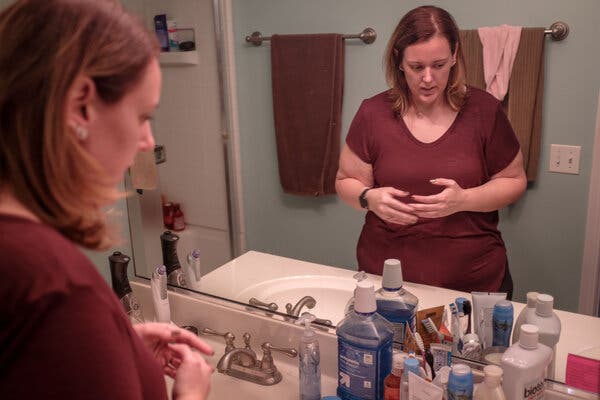
AURORA, Ill. — There is sobering evidence of Samantha Lewis’s struggle with long Covid on her bathroom mirror.Above the sink, she has posted a neon pink index card scrawled with nine steps (4. Wet brush 5. Toothpaste) reminding her how to brush and floss her teeth. It is one of many strategies Ms. Lewis, 34, has learned from “cognitive rehab,” an intensive therapy program for Covid-19 survivors whose lives have been upended by problems like brain fog, memory lapses, dizziness and debilitating fatigue.Nearly two years into the pandemic, advances have been made in treating Covid itself, but long Covid — a constellation of lingering health problems that some patients experience — remains little understood. Post-Covid clinics around the country are trying different approaches to help patients desperate for answers, but there is little data on outcomes so far, and doctors say it is too soon to know what might work, and for which patients.While some physical symptoms of long Covid, like shortness of breath or nausea, can be addressed with medication, cognitive issues are more challenging. Few drugs exist, and while some deficits can rebound with time, they can also be exacerbated by resuming activities too soon or intensively.Among items in the bathroom, Ms. Lewis keeps an index card reminding her how to brush her teeth and floss.Over several months, The New York Times visited Ms. Lewis, interviewed her doctors, attended her therapy sessions and read her medical records. Before she was infected with the coronavirus in October 2020, experiencing a modest initial illness that did not require hospitalization, she was successfully juggling a demanding, detail-oriented job while raising a child with autism and attention deficit hyperactivity disorder. But this summer, she scored 25 on a 30-point assessment, placing her in a pre-dementia category called mild cognitive impairment.“I can feel that things are off,” she told a neurologist at Northwestern Memorial Hospital’s Neuro Covid-19 Clinic in Chicago who evaluated her and recommended cognitive rehab. “I approach a red light, my brain knows that it’s red, but it’s not reacting to the rest of my body to put my foot on the brake. Do you understand how terrifying that is?”In July, she began throwing herself into several sessions a week at Shirley Ryan AbilityLab, a rehabilitation center that for years has helped patients with brain injuries, strokes and other conditions. It has so far treated about 600 Covid survivors. There, an occupational therapist, physical therapist and speech-language pathologist gave Ms. Lewis exercises to strengthen her memory, concentration, balance and endurance.At home, 40 miles west of Chicago, Ms. Lewis practices the memory and attention exercises with playing cards and a color-coded planner, and the balance exercises using a Post-it marked with an “X” affixed to her wall. Smart speakers throughout the tri-level townhouse broadcast reminders like, “Samantha, it is time to take a break for lunch” and “Get your butt ready for bed.”“These are things she legitimately needs,” Dr. Ashley Stoecker, her primary care physician, said.Ms. Lewis’s slowed reaction time during her struggle with long Covid kept her from driving on highways, and she once asked her 11-year-old daughter to monitor the rearview mirror so she could focus on the road.‘I feel so stupid’Studies estimate that 10 to 30 percent of coronavirus patients may develop long-term symptoms and post-Covid clinics are beginning to characterize the experience.One year after infection, 63 percent of 156 patients at Mount Sinai Health System’s post-Covid program reported cognitive problems like trouble with short-term memory and planning. Most reported ongoing brain fog, dizziness, headaches or fatigue, and many reported labored breathing or palpitations. Nearly half of 102 patients had stopped working full time.Of more than 1,000 patients from around the country evaluated by Northwestern’s neuro-Covid clinic, many were previously multitaskers with busy jobs, said Dr. Igor Koralnik, who heads the clinic and is Northwestern’s chief of neuro-infectious diseases and global neurology. In a report about the clinic’s first 100 patients, the average age was 43.“I was a little bit surprised with how young and functional our population was initially,” Dr. Joshua Cahan, a cognitive neurologist at Northwestern, said. But, he added, the cognitive symptoms have proved especially “noticeable to people who are having demanding lives.”Long Covid has affected everything for Ms. Lewis. Her slowed reaction time prevented her from driving on highways. She has occasionally pulled over to vomit from motion sickness and once asked her 11-year-old daughter, Mariah, to monitor the rearview mirror so she could focus on the road.Before Covid, Ms. Lewis was an avid roller skater with the roller derby nickname “Savage Siren”; after Covid, her balance became so unsteady, she used a walker and then a cane.Once an an avid roller skater, Ms. Lewis, left, shopping with her daughter, Mariah, has had to use a cane to help with her post-Covid balance issues.“She was so active before,” said Dr. Stoecker, who has witnessed lapses like the time Ms. Lewis left her wallet in Dr. Stoecker’s office.She had to sharply reduce her hours in her job as a director with an agency operating group homes and programs for adults with developmental disabilities and sometimes made mistakes like assigning three employees the same task.“My whole field is developmental disabilities,” Ms. Lewis said. “You hate to be the person that’s like, ‘I need something too.’”Especially difficult is feeling less able to support Mariah. “I’m her person,” Ms. Lewis said, lamenting that ringing and buzzing in her ears makes sounds so painful she sometimes has to ask Mariah, who loves to talk, to be quiet.“My cognitive stuff is a little broken,” she told Mariah. “We’re both in repair.”Mariah replied: “That’s hard because you’re not supposed to be broken.”In September, she drove Mariah to autism therapy on the wrong day.“I feel so stupid,” Ms. Lewis exclaimed.“You’re not stupid, Mom,” Mariah said. “Your brain’s just hurt a little bit and it will get better.”Beginning therapyA cognitive rehab exercise with Melissa Purvis, right, a speech-language pathologist at Shirley Ryan AbilityLab in Burr Ridge.“Repeat this sentence: ‘The restaurant is on the top floor of the Bank of America building on 12th,’” Melissa Purvis, a speech-language pathologist, instructed Ms. Lewis in late July, soon after she started cognitive rehab.“The restaurant is on the 12th floor of the Bank of America building,” Ms. Lewis said.Ms. Purvis asked her to repeat six numbers: 4, 7, 1, 9, 2, 6.“4, 7, 2, 5, 6,” Ms. Lewis replied.She took overly long to complete a maze. “The lines all started to blur together,” she said.Out of 10 tests, Ms. Purvis reported, “There were five different areas in here where you’re definitely working below where you should be.”Ms. Lewis’s fiancé at the time, James Moylan (they recently married), was skeptical initially. “Are we in kindergarten? Is this the best they can come up with?” he said.“But now,” he added, “it makes sense.”Medication and supplements that Ms. Lewis takes to try to address some of her post-Covid symptoms. What causes post-Covid neurological symptoms is unclear. Theories include inflammation and overactive immune responses. Brain scans and other tests frequently show nothing amiss.“Oftentimes, doctors will have told them, ‘You look fine, this is made up in your head, forget about it,’” said Dr. Elliot Roth, an attending physician at the AbilityLab’s Brain Innovation Center and chairman of physical medicine and rehabilitation at Northwestern.Some scientists think specific factors could predispose people to long-term symptoms. Forty-two percent of the Northwestern clinic’s first 100 patients previously had depression or anxiety, though such patients might simply be more comfortable seeking neurological treatment, doctors said. Other pre-existing conditions included autoimmune diseases and headaches.Ms. Lewis experienced depression as a teenager, was briefly diagnosed with bipolar disorder in college and has since been intermittently treated for depression and anxiety, although she wasn’t taking psychiatric medication before Covid and hasn’t needed it since, she and Dr. Stoecker said.Her few pre-Covid medications, she said, were for tension headaches and hypothyroidism. Her history also included occasional asthma and possibly an underlying autoimmune condition, psoriatic arthritis, which was diagnosed after Covid, Dr. Stoecker said.Searching for helpPreparing dinner at home in Aurora, Ill., with Mariah. “I’m her person,” Ms. Lewis said.Two weeks after testing positive and isolating at home, Ms. Lewis tried returning to work, but lasted only two hours. A scan of her lungs found haziness and constricted airways.One month post-infection, she had to nap by noon every day and was so dizzy that things spun when she stood or walked. Once, she fainted while putting away groceries, hitting her head on the microwave and kitchen counter. Mariah said she asked, “Are you OK?” three times, becoming tearful, before Ms. Lewis opened her eyes.Two days later, a hospital found no brain injury, she said, but a doctor there suggested she see several specialists, saying her symptoms resembled those of some of his hospital’s nurses who had struggled with long Covid for months.Soon after, a pulmonologist mentioned Northwestern’s clinic and Ms. Lewis scheduled the first available appointment, in late March. While waiting, she visited a local neurologist who suggested she just “try harder,” she said.A cardiologist detected rapid heart rate. She was diagnosed with a type of dysautonomia called POTS, which can involve dizziness. She saw a gastroenterologist for diarrhea and nausea, and a rheumatologist for arthritis-related knee problems. But neurological problems agonized her the most. Accustomed to cooking meals from scratch, including lunches for co-workers, she couldn’t follow recipes. “I was the person that fed everyone and now I struggle to figure out what I can feed myself,” she said.She forgot to pay several bills and couldn’t remember why she had entered a room.One of several pink cards with reminders that Ms. Lewis has posted in her home.Such lapses were “really, really strange” for someone typically so responsible she seemed to do “the job of 12 people,” Mr. Moylan said. “It was almost like she was drunk.”When her neuro-Covid clinic appointment came, “it was very relieving to finally feel validated,” Ms. Lewis said. Dr. Koralnik prescribed a medication for fatigue, amantadine, which she finds helpful, calling it “zoom-zoom pills.”On the cognitive assessment he administered, she scored “significantly lower than average” in processing speed, attention and executive function, he said, and barely average in the remaining category, working memory.The results were “crushing,” she said.Dr. Cahan, then on leave, did an in-depth follow-up when he returned in June.On those tests, Ms. Lewis said, she called a camel a “desert llama” and when asked to count backward from 100 by seven, “I say 93 and I’m just stuck.”The Coronavirus Pandemic: Key Things to KnowCard 1 of 5The Omicron variant.

Read more →