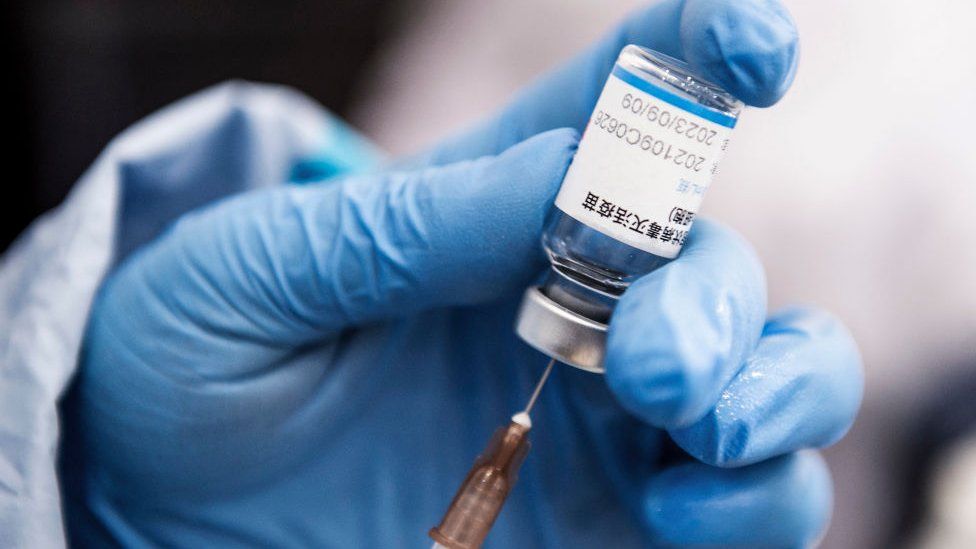
Nicaragua receives China vaccines after cutting ties with Taiwan

SharecloseShare pageCopy linkAbout sharingImage source, Getty ImagesNicaragua has received one million Covid vaccines from China, days after it cut diplomatic ties with Taiwan in favour of Beijing.Government representatives returned to the Central American state on Sunday with news of the donation.Local media broadcast clips showing an Air China plane landing with the first 200,000 doses of the Sinopharm vaccine. Officials said they were “extremely grateful” for restored relations with Beijing.”We have come back with this great news that we have brought this donation of one million vaccinates to the Nicaraguan people,” said Laureano Ortega Murillo, the son of Nicaraguan president Daniel Ortega and one of his advisers.Currently, only 38% of Nicaragua’s adult population is fully vaccinated but at least 67% have received one dose.The Central American nation’s flip in allegiance to Beijing last week dismayed Taiwan authorities, with Taipei saying it was “deeply saddened” that Nicaragua had “disregarded many years of friendship”.Taiwan had previously been an important trade partner to Nicaragua. But last week, Nicaragua’s president declared that it recognised that Taiwan was an inalienable part of China’s territory.What’s behind the China-Taiwan divide?What is the ‘One China’ policy?Beijing sees Taiwan as a breakaway province to be reunified with the mainland one day. However, Taiwan sees itself as a democratically-governed, independent country, though it has never formally declared independence from the mainland.In response to Nicaragua’s move, Taiwan President Tsai Ing-wen said: “No amount of external pressure can shake our commitment to freedom, human rights, the rule of law and to partnering with the international democratic community as a force for good.”China has insisted that any country that wants formal diplomatic relations with it must renounce their ties with Taipei.Taiwan’s list of diplomatic allies – most of which are Pacific or Latin American nations – has dwindled from 21 to 14 since President Tsai took office in 2016. Of late, Washington and its allies have expressed increasingly strong rhetoric in support of the island – raising tensions with Beijing.EU member nation Lithuania also opened a de facto embassy in Taiwan last month, prompting China to downgrade its diplomatic engagement in protest.This video can not be playedTo play this video you need to enable JavaScript in your browser.

Read more →

Omicron: India aims to avoid 'pandemic roulette'

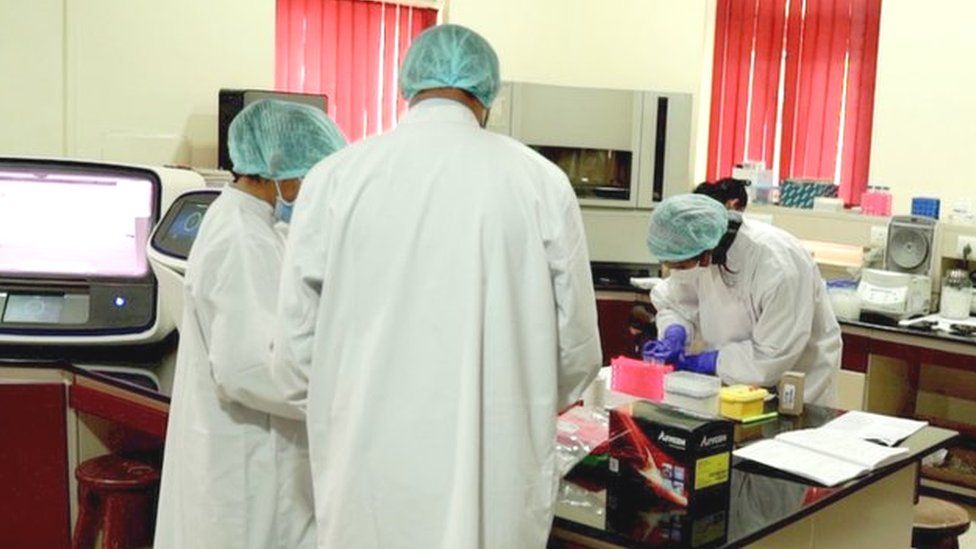
SharecloseShare pageCopy linkAbout sharingIt’s a frantic time at the National Institute of Virology (NIV) in the western city of Pune, India’s oldest genome sequencing facility. As the country tries to contain the spread of the Omicron variant, laboratories like the NIV are working round the clock to identify people who might be infected by it. Every day it receives about 100 throat and nasal swabs sealed in small boxes. That’s roughly five times more samples than it was testing before the omicron variant – first detected in South Africa and now spreading around the world – appeared. In an airtight room the boxes are opened by researchers wearing protective suits, and the process to isolate the virus begins. The sample is labelled with a number so the scientists don’t know whose swab they’re checking. “There’s great pressure on us right now to deliver quickly. But we have to do it right, and it’s not an instant process,” says Dr Varsha Potdar, a senior scientist and group leader at NIV. Her phone barely stops ringing. It takes hours to prepare the sample so that it can be fed into a sequencing machine, which was bought in March last year at the start of the pandemic. The machine generates data, which is then compared by a software programme to the original Covid-19 virus first identified in Wuhan, China. This tells the scientists which variant has been detected. Warnings of third wave During the second wave earlier this year, India was criticised for not telling the world early enough about Delta, which quickly became the dominant variant across the globe. What has changed since then? “We’ve learnt a lot from that,” says Dr Priya Abraham, Director of NIV. “We know that the more we allow a virus to spread, the more the likelihood that we will have a new variant. I think we will be much more proactive now, much more prepared.”Given the size of India’s population though, Dr Abraham says there are limitations. BBCI think we will be much more proactive now, much more prepared.Dr Priya AbrahamDirector, NIV”We’re nowhere near more advanced countries like the UK or the USA, but I think we have caught up a lot. And remember, we need to also give the messaging that along with these measures, everybody needs to be cautious,” she says.”I think a third wave will come depending on how warmly we invite it. If there’s vaccine hesitancy, and we have mass gatherings in confined spaces, yes, the third wave will be here.”More than half of India’s adult population is fully vaccinated. That still leaves hundreds of millions at risk. Doctors warn that if an Omicron-fuelled third wave hits, medical facilities could still be overrun very quickly. “In the second wave, hospital capacity didn’t just get exceeded by a little bit, it was exceeded by several times what it was capable of. So even if we have a small third wave, which I think is definitely a possibility, it could still overwhelm our health system,” says Dr Swapneil Parekh, a physician in Mumbai. “And so I think rather than asking if it’s going to happen, or when it’s going to happen, we should focus on getting ready for it.”At Holy Family hospital in Delhi, there’s been an uptick in the number of Covid cases in the past week, after more than a month of no patients with the infection being admitted. ‘There is a sense of dread and anxiety building up, that we are going to take the same path as the second wave,” says Dr Sumit Ray, who heads the hospital. “Some of these are double vaccinated people getting re-infected, so it’s time to be very careful again.”The BBC visited the hospital during the worst of the second wave in April. It was completely overrun. They had squeezed in trolleys and wheelchairs into every space possible to treat as many patients as they could. Still they had to turn people away. Do vaccines work against Omicron?Vaccines should work against Omicron, WHO saysThere was also an acute oxygen shortage in the city. Between looking at his patients in the intensive care unit, Dr Ray was making frantic phone calls to get more supplies. In some hospitals in Delhi and other parts of India, people were killed because oxygen ran out. Dr Ray said the Indian government needed to better organise its resources and facilitate the movement of supplies where needed. “People should not have to go from hospital to hospital looking for a bed. That is unacceptable. There needs to be better co-ordination. I think we have had the time to prepare, and this should be done,” he said. “You’re trained to save lives and if you can’t do it because there aren’t enough resources, you feel a sense of failure. It was the worst period ever in my life, as a medical professional.”This video can not be playedTo play this video you need to enable JavaScript in your browser.The government says it is putting preparations in place. But Dr Parekh in Mumbai says more needs to be done.”I think we really need to get as many people fully vaccinated as possible. Let’s also start rolling out third doses for the elderly and the clinically vulnerable, especially individuals who are immunocompromised, as also for healthcare workers and frontline workers,” he said. “In this country, we’ve played pandemic roulette during the second wave, and lost. So this time, let’s do the opposite. Let’s over-prepare.”Additional reporting by Kunal Sehgal

Read more →

British studies warn of Omicron’s speed, and one notes the need for boosters.

The first real-world study of how vaccines hold up against the Omicron variant showed a significant drop in protection against symptomatic cases caused by the new and fast-spreading form of the coronavirus.But the study, published by British government scientists on Friday, also indicated that third vaccine doses provided considerable defense against Omicron.Government scientists on Friday also offered the most complete look yet at how quickly Omicron was spreading in England’s highly vaccinated population, warning that the variant could overtake Delta by mid-December and, without any precautionary measures, cause Covid-19 cases to soar.Those warnings were reinforced by a computer modeling study of England released on Saturday suggesting that even in populations with high levels of immunity, Omicron could significantly disrupt life and overwhelm hospitals. Scientists cautioned that those projections could change as they learned more about the severity of Omicron infections.The vaccine study published Friday indicated reduced levels of protection. Four months after people received a second dose of the Pfizer-BioNTech vaccine, the shots were roughly 35 percent effective in preventing symptomatic infections caused by Omicron, a significant drop-off from their performance against the Delta variant, the scientists found.A third dose of the Pfizer-BioNTech vaccine, though, lifted the figure to roughly 75 percent.Two doses of the AstraZeneca vaccine appeared to offer virtually no protection against symptomatic infection caused by Omicron several months after vaccination. But for those recipients, an additional Pfizer-BioNTech dose paid big dividends, boosting effectiveness against the variant to 71 percent.Still, the study’s authors said they expected that the vaccines would remain a bulwark against hospitalizations and deaths, if not infections, caused by Omicron. And the researchers cautioned that even in a country tracking the variant as closely as Britain is, it was too early to know precisely how well the vaccines would perform.That study was released alongside new findings about how easily Omicron is managing to spread. Someone infected with the Omicron variant, for example, is roughly three times as likely as a person infected by the Delta variant to pass the virus to other members of his or her household, Britain’s Health Security Agency reported.And a close contact of an Omicron case is roughly twice as likely as a close contact of someone infected with Delta to catch the virus.Neil Ferguson, an epidemiologist at Imperial College London, said that Omicron’s ability to evade the body’s immune defenses accounted for most of its advantage over previous variants. But modeling work by his research team also suggested that Omicron was simply more contagious than Delta, by roughly 25 to 50 percent.“I think that there’s a significant amount of immune escape,” Dr. Ferguson said, referring to the virus’s ability to dodge the body’s defenses. “But it’s also more intrinsically transmissible than Delta.”He and other scientists have cautioned that evidence was still coming in, and that better surveillance in places where the Omicron wave is most advanced could affect their findings.The World Health Organization said this week that some evidence had emerged that Omicron was causing milder illness than Delta, but that it was too early to be certain. Still, scientists have warned that if the variant keeps spreading as quickly as it is in England, where cases are doubling every 2.5 days, health systems around the world may be deluged with patients.Even if Omicron causes severe illness at only half the rate of the Delta variant, Dr. Ferguson said, his computer modeling suggested that 5,000 people could be admitted to hospitals daily in Britain at the peak of its Omicron wave — a figure higher than any seen at any other point in the pandemic.Scientists said that widespread vaccination in countries like Britain and the United States would keep as many people from dying as have in earlier waves. But the experts also warned that patients with Covid and with other illnesses would suffer if hospitals became too full.“It only requires a small drop in protection against severe disease for those very large numbers of infections to translate into levels of hospitalization we can’t cope with,” Dr. Ferguson said.The Coronavirus Pandemic: Key Things to KnowCard 1 of 5U.S. nears 800,000 Covid deaths.

Read more →

Vaccines and previous infection could offer some 'stronger than basic' protection to Omicron, early study suggests

Published today, one of the earliest, peer-reviewed studies looking into the Omicron variant of COVID-19 suggests that people previously infected with COVID, and those vaccinated, will have some, “stronger than basic” defence against this new strain of concern.
However, the test tube (or ‘in-vitro’, scientifically) samples of Omicron examined in this new research do show it “exceeds” all other variants in its potential capability to evade the protection gained from previous infection or vaccination.
Published in Emerging Microbes & Infection, the findings also suggest that although a third-dose enhancement strategy can “significantly boost immunity,” the protection from Omicron “may be compromised” — but more research is needed to better understand this.
Reporting on this very early study, lead author Youchun Wang, Senior Research Fellow from the National Institutes for Food and Drug Control in China, says their results support recent findings in South Africa which highlight Omicron was “easy to evade immunity.”
“We found the large number of mutations of the Omicron variant did cause significant changes of neutralization sensitivity against people who had already had COVID,” Wang says.
“However, the average ED50 (protection level) against Omicron is still higher than the baseline, which indicated there is still some protection effect can be observed.”
Wang, who is Former Chairman of the Medical Virology and Vice Chairman of the Medical Microbiology and Immunology of the Chinese Medical Association, does adds caution though.

Read more →

Third of cases in London are Omicron – Zahawi

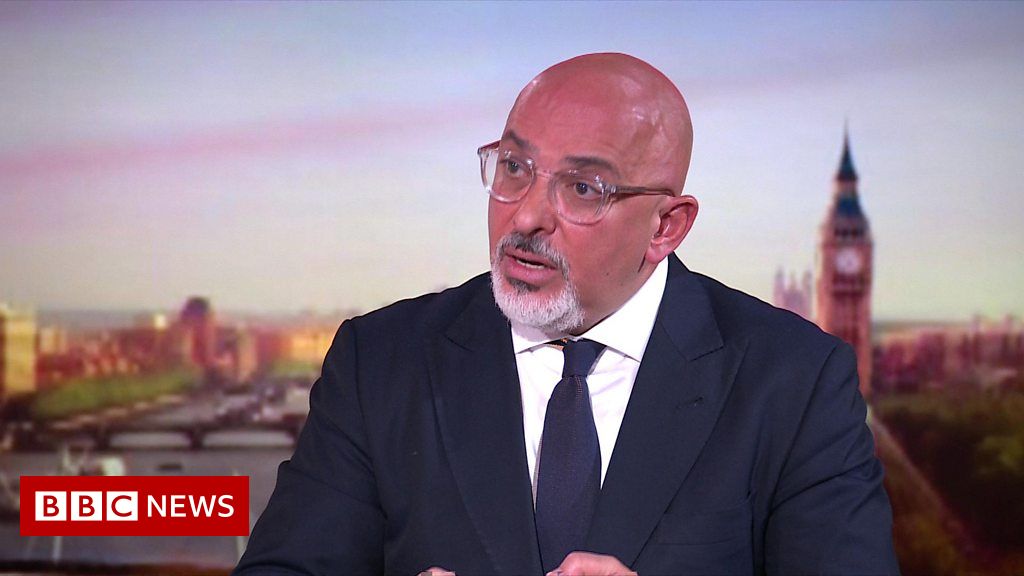
The Omicron variant accounts for a third of the coronavirus cases in London, Nadhim Zahawi has said.Speaking to the BBC’s Andrew Marr, the former vaccines minister turned education secretary said hospitals were now seeing patients infected with the new variant.He said it was “much more infectious” than the current dominant variant in the UK, Delta.

Read more →

Covid: Brazil to demand proof of vaccination from foreign visitors

SharecloseShare pageCopy linkAbout sharingImage source, NurPhoto via Getty ImagesA Supreme Court judge in Brazil has ruled that foreign visitors will need to provide a Covid-19 vaccination certificate to enter the country.The ruling invalidates regulations issued previously by the national health agency demanding only a negative PCR test for foreign arrivals. The judge said it would be impossible to check all visitors and prevent the spread of the new Omicron variant.Lenient measures had made the country popular among non-vaccinated tourists.The ruling is seen as another defeat for President Jair Bolsonaro, who has repeatedly undermined efforts to control the spread of the virus in one of world’s hardest-hit countries by the pandemic.The president, who says he has not been vaccinated, had denied requests of the health agency Anvisa to demand vaccination proof from visitors.Judge Luís Roberto Barroso said exceptions would be made for those coming from countries that had been unable to vaccinate most of their populations. They will need to quarantine on arrival for five days.It is not yet clear when the new requirements will be introduced.CONTEXT: ‘Everything you should not do, Brazil has done’EXPLAINER: Omicron: Is it milder despite dodging immunity?IN CHARTS: Tracking the pandemicThe announcement comes ahead of the country’s busy summer season, with cities hosting popular New Year’s Eve parties and Carnival parades.But several celebrations have already been cancelled because of the Omicron variant. In Rio de Janeiro, the famous fireworks display at Copacabana beach on 31 December has been called off for the second year in a row.Since the start of the pandemic, Brazil has reported 22 million Covid-19 infections and 616,000 deaths. About 65% of the population has been fully vaccinated.The country has confirmed four cases of the new Omicron variant.You may also find interesting:This video can not be playedTo play this video you need to enable JavaScript in your browser.

Read more →
The Nigerian woman whose life changed when she visited a leprosy colony

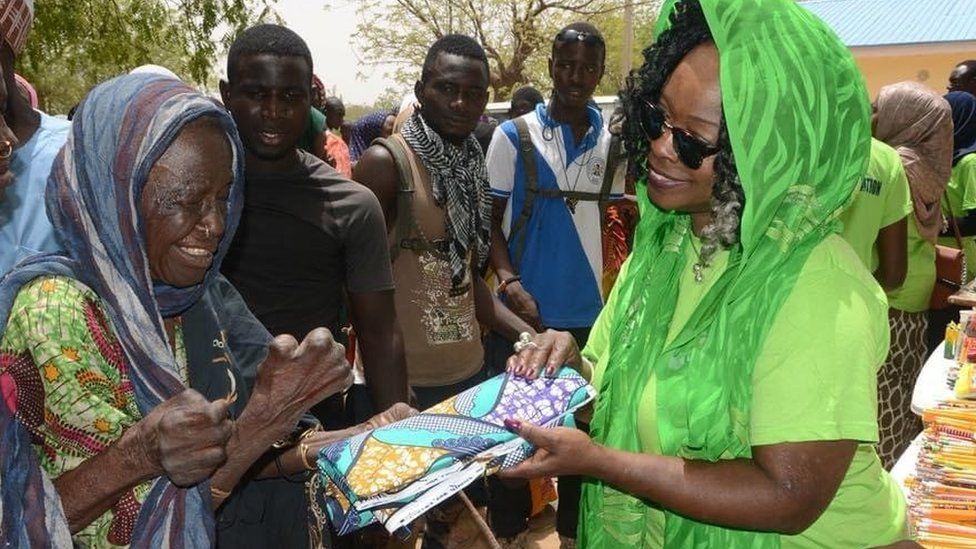
SharecloseShare pageCopy linkAbout sharingImage source, Iby Ikotidem In our series of letters from African writers, Nigerian novelist Adaobi Tricia Nwaubani writes about a woman whose life changed after she got a skin ailment and later visited a leprosy colony.Iby Ikotidem was used to being the life of the party. She loved fashion and jewellery, had a multitude of friends and a full social calendar, often organising events in the US state of New Jersey, where she has lived with her husband and two children for the past 28 years.”I was a showstopper,” she said.But all that was brought to an end shortly after the first patch of dry skin appeared on her knee about 12 years ago, around the time her real estate business folded. She thought little of it until it rapidly spread all over her body, except her face. Following a series of medical tests, she was diagnosed with acute psoriasis, an autoimmune disease that causes skin cells to build up and form scales and itchy, dry patches.’Mirror was my enemy’Even when she wore long-sleeve blouses and maxi skirts to cover up the sight and stop people from staring, her condition still drew attention wherever she went.Sometimes when she got up from a chair, people exclaimed in shock, wondering where the “dust” on the floor had suddenly appeared from.”I hated looking at myself. The mirror was my enemy,” she saidSoon, the stigmatisation began.Mrs Ikotidiem recalls a particularly painful incident when she was among the weekend guests at a party in her friend’s house – she was given a mattress on the floor in the basement while everyone else retired to guest bedrooms upstairs.”I sat on the floor, crying,” she said. Image source, Iby IkotidemMrs Ikotidiem soon became a recluse, shaved her hair – and was on a downward spiral until her 12-year-old daughter told her: “Mummy, you’re my hero. Please, don’t allow this sickness take you down.'” Mrs Ikotidem said: “That dissolved every thought of suicide I had.” The year after her diagnosis, her children were invited to join a group of young people in the US from her home state of Akwa Ibom, who would volunteer for charity work there. Her son, Anthony, then about 15 years old, insisted that his mother accompany him. Reluctantly, she agreed.They visited a number of orphanages – trips which were covered on local television. While having breakfast in the hotel one morning, Mrs Ikotidem was approached by an old schoolmate who praised her and the youths for their work and suggested they extend their charity to leprosy colonies in the state.”I said: ‘What! Is there still leprosy in Nigeria?'” Mrs Ikotidem said. “It was my first time of knowing that there was still leprosy in the world.”Despite its elimination as a global health concern, leprosy is still prevalent in Nigeria, with more than 3,500 cases diagnosed each year, according to the country’s Centre for Disease Control. The bacterial disease can be cured if diagnosed and treated early but if left untreated, it can cause severe damage to hands and feet, and even paralysis and blindness.BBCWith limited funding from a government that has many other public health priorities, leprosy colonies in Nigeria tend to depend mostly on international charities”Adaobi Tricia Nwaubani Nigerian novelistSome parents were initially hesitant when Mrs Ikotidem mentioned going to the Ekpene Obom Leprosy Hospital but they eventually all accompanied her – a visit that changed her life.Like many leprosy hospitals around Nigeria, Ekpene Obom also provides accommodation for patients who can no longer return to their original communities owing to stigmatisation. Even after they are cured from the disease that is treatable within six to 12 months of a course of antibiotics, they remain there with their families, their children attending school also within the premises.Mrs Ikotidem told the residents and patients that she understood their plight.”I knew what it was to be abandoned, to be stared at,” she said.Sold her jewelleryOver the past decade, Mrs Ikotidem has made caring for leprosy patients her life’s mission. Through Hope’s Door, a foundation she set up, she has focused her work so far on three colonies in southern and northern Nigeria.Image source, Getty ImagesAmong other assistance, she provides them with special shoes, crutches, and wheelchairs. She supplies their children with stationery for school. She renovates their residential areas.”You need to see some of the mattresses they used, you wouldn’t even let your dog sleep on it,” she said.With limited funding from a government that has many other public health priorities, leprosy colonies in Nigeria tend to depend mostly on international charities, such as The Leprosy Mission.”When they have any problem, they call me, not the government,” Mrs Ikotidem said, who funded her initial projects by selling her precious jewellery before hosting fundraising events and reaching out to friends.Her next big project is to help the residents of the colonies become less dependent, by providing them with seedlings and tools for farming on their land.”I go to bed thinking about this community and wake up thinking about them,” Mrs Ikotidem said. “In psoriasis, I found my mission, and in my mission, I found my healing.”More Letters from Africa:How Bangladeshis are lured into slavery in LibyaHow Sudan’s generals betrayed my generation’Why I returned to Boko Haram and how I escaped’Ghana’s role in honouring a US civil rights heroFollow us on Twitter @BBCAfrica, on Facebook at BBC Africa or on Instagram at bbcafrica

Read more →

Meth and heroin fuel Afghanistan drugs boom

SharecloseShare pageCopy linkAbout sharingImage source, Getty ImagesHeaped in plastic bags in a small room in rural southern Afghanistan, the white crystals glisten. They are “export quality” methamphetamine, and will be trafficked to countries as far away as Australia. Once there, the 100kg (220lb) stored in this room will have a street value of around £2m ($2.6m). Outside, smoke billows from two barrels where new batches of meth are being cooked. Drugs are big business in Afghanistan, and under the Taliban, trade is booming. The country has long been linked with heroin, but in recent years, it has also emerged as a significant producer of crystal meth – another dangerously addictive drug. One source involved in the trade says that about 3,000kg of crystal meth are now manufactured every day by more than 500 makeshift “factories” in a single remote drug-producing district in the south-west of the country. The rise of meth has been fuelled by a discovery that ephedra – a common, wild herb known locally as “oman” – can be used to make one of the drug’s key ingredients: ephedrine. At a bazaar deep in the desert that serves as the central node of Afghanistan’s meth trade, there are huge mounds of the plant on sale, on scale not previously seen before. Previously, the Taliban were understood to charge tax on ephedra. But recently, they have announced a ban on its cultivation, in a decree that was not widely publicised. For the moment though, they’re continuing to allow the meth labs to function. One Afghan involved in the trade told us with a wide grin that the ban on ephedra had simply caused the wholesale price of meth to double overnight, while there were still warehouses full of supplies of the plant to use for future production. Dr David Mansfield is a leading expert on Afghanistan’s drug trade who has tracked the growth in meth production with the help of satellite imagery identifying labs involved in the process. He says the ban on ephedra comes at a time of the year when the crop has already been collected, “so the true impact will not even be felt until July next year when the ephedra harvest is due”.Dr Mansfield believes the amount of meth being produced in Afghanistan could outweigh the amount of the country’s other more established drug, heroin. Opium harvested from the country’s poppy fields is already estimated to be the source of about 80% of the world’s supply, and it too appears to be booming. In recent weeks, farmers across Afghanistan have been busy preparing their fields and planting opium seeds. “We know it’s harmful,” says Mohammad Ghani, while raking the earth outside the city of Kandahar, “but nothing else we grow makes any money.” What’s the Taliban’s record on opium production?How do the Taliban make money?Who are the Taliban?Afghanistan’s economy is collapsing following the withdrawal of international support in response to the Taliban takeover earlier this year, and for many farmers, opium seems like the safest option. Decreasing water levels, exacerbated by drought, are also forcing their hands, they say. “We have to drill wells, and if we grow okra or tomatoes, we won’t even make half of what the wells cost us,” says Mr Ghani.Speculation the Taliban might eventually ban opium cultivation has led to a rise in prices, which in turn, according to farmers, is encouraging them to plant more of it. For now, the trade is flourishing. Opium dealers, who used to pay off corrupt government officials and sell bags of the thick black paste in secret, have now set up stalls in markets. “Since the Taliban liberated the country, we have become totally free,” one wholesaler says, with a smile.The Taliban, however, are still sensitive about the trade. In Helmand province, they prevented the BBC from filming a large and notorious opium bazaar, describing it as a “restricted area”. BBCWe know it’s (opium’s) harmful… but nothing else we grow makes any money.Mohammad GhaniOpium farmerWhen pressed on whether the ban on media coverage was rooted in allegations some Taliban members were profiting from the trade, Hafiz Rashid, the head of the provincial cultural commission abruptly ended an interview and threatened to smash a camera unless the footage was deleted. In neighbouring Kandahar, we were initially given permission to film an opium bazaar, but on arrival told it would not be possible. Bilal Karimi, a Taliban spokesman in Kabul, told the BBC the group was “trying to find alternatives” for farmers. “We can’t take this away from people without offering them something else,” he said. During the group’s first stint in power, they did eventually ban opium. During their insurgency, however, taxes on it became a source of revenue, though in public they refute that. Some traders say that if the Taliban want to, they will be able to effectively enforce a ban on the drug again. Others are sceptical. “They’ve achieved what they have thanks to opium,” one farmer says, indignantly. “None of us will let them ban opium unless the international community helps the Afghan people. Otherwise we’ll go hungry and won’t be able to look after our families.” Dr Mansfield warns that increases in costs of food and agricultural products linked to the economic crisis will lead farmers and lab owners to ramp up the volume of trade, “just to maintain their income”. In parts of Afghanistan, the drug industry is deeply enmeshed in the local economy. Gandum Rez, a remote cluster of villages in Helmand, is only reachable by a dusty gravel track. But it’s at the centre of the global heroin trade. As well as a large number of market stalls devoted to the sale of opium, it’s home to factories, employing 60-70 people each, which process it into heroin. The drug is smuggled into Pakistan and Iran, and then westwards to the rest of the world, including Europe. According to one local source, a kilogram of heroin for export sells at around 210,000 Pakistani rupees (£900; $1,190). A former drug trafficker in the UK told the BBC that by the time a kilogram reached Britain and had been cut with various mixing agents, it would have a street value of around $66,000. Most of that profit is made by those transporting the drugs internationally, but the Taliban do levy taxes on producers. According to Dr Mansfield, the amounts earned by the group from drugs are often overstated, and less significant than other sources of revenue. But he estimates that in 2020, they received around $35m from taxes on drug production – money that they need.”The first time the Taliban came to power, it took them six years before they actually enforced a ban on drugs and that was just opium at the time,” he says.To do so now, given the state of the Afghan economy, Dr Mansfield says, would be seen as punishing a constituency that has previously given the Taliban “succour and support”. Taliban spokesman Bilal Karimi told the BBC that eradicating drug production would help both Afghanistan and the international community, “so the world should help too”. The country’s drug trade doesn’t solely revolve around exports. It has also had a devastating impact on the Afghan population, in which high levels of addiction are seen. By the side of a busy road on the outskirts of the capital Kabul, a few hundred men are huddled together in small groups, smoking crystal meth and heroin. “Now the drugs are made in Afghanistan, they’re much less expensive,” says one man, “before they used to come from Iran. A gram of meth was 1,500 Afghani ($15), now it’s 30 to 40 Afghani ($0.31 to $0.41).” Conditions are squalid, with some living inside sewage ditches. “Even a dog wouldn’t live the way we do here,” says another man. The Taliban often roughly round them up and take them to under-resourced rehab centres, they say, but most end up straight back here.For now, more drugs look set to hit the streets both in Afghanistan and abroad. You may also be interested in:This video can not be playedTo play this video you need to enable JavaScript in your browser.

Read more →
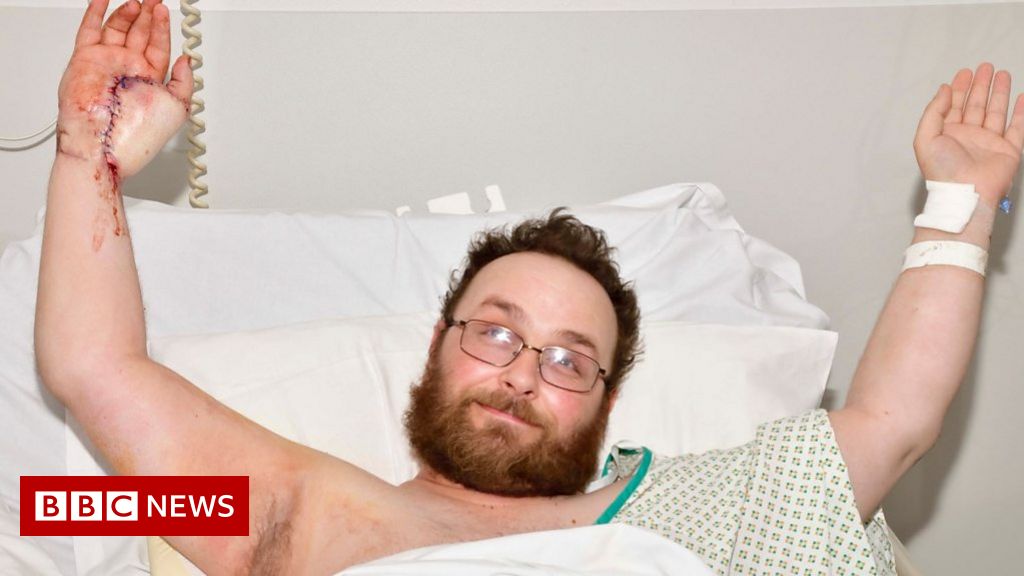
'My hand was saved by stitching it to my chest'

A car crash victim’s hand has been saved by using a wartime technique which involved stitching it to his chest.Martin Shaw’s hand was severely injured when his car skidded and crashed on the A512 near Shepshed, Leicestershire.The 35-year-old, who lives in Loughborough, thought his hand would need to be amputated and feels lucky he can still use it.

Read more →