Margaret Giannini, Champion of People With Disabilities, Dies at 100
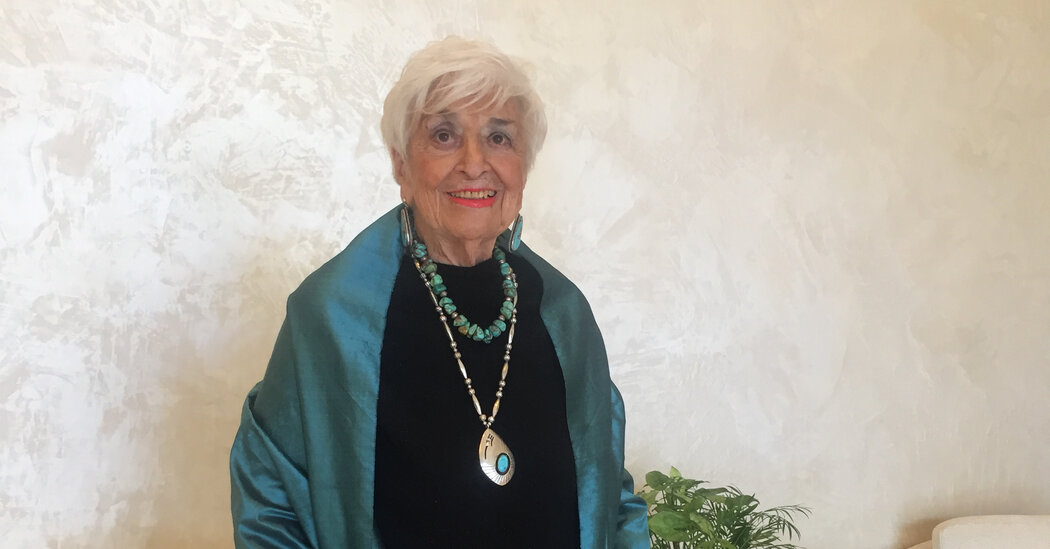
After meeting the parents of children with a range of disabilities, she decided almost on the spot to start a clinic to treat such children exclusively.Dr. Margaret Giannini, a pioneer in treating developmental and physical disabilities, died on Nov. 22 at her home in San Diego. She was 100.Her son Louis J. Salerno confirmed the death.Dr. Giannini, an internationally recognized expert in the care of people with disabilities, was the catalyst behind what is now the Westchester Institute for Human Development in Valhalla, N.Y., north of New York City, one of the world’s largest facilities for people with developmental disabilities.A pediatric oncologist at New York Medical College, she was summoned one day in 1950 to the office of the chairman of her department, Dr. Lawrence B. Slobody. He introduced her to several parents whose children had a range of disabilities; they had not been able to find a doctor in New York City willing to provide them with general medical care.Recognizing the obvious need, Dr. Giannini decided almost on the spot to start a clinic that would focus exclusively on such children. That year, she founded the Mental Retardation Institute on the Upper West Side, which she said was the first of its kind in the country. She worked out of a basement because others in the building did not want children with visible problems coming through the lobby.“If ever a vital need and the right one to fill it were well met,” The Daily News wrote in 1970, “it’s in the person of Dr. Margaret Giannini and the field of mental retardation,” the commonly accepted term of that era.By 1971, she had raised more than $7.5 million to establish a new building in Valhalla. The institute provided diagnosis, evaluation and therapy. It also trained professionals and students in psychology, social work, speech, audiology, nutrition and rehabilitation.Dr. Giannini was dedicated to helping people with disabilities “before it became respectable,” she told The Daily News.“There was a feeling of hopelessness about it,” she said. “I think the feeling of many physicians was, ‘What do you want to bother with that for? You can’t do anything anyway — it’s just time-consuming and draining.’”She credited President John F. Kennedy and his family, especially his sister Eunice Kennedy Shriver, with helping to change attitudes and direct money toward research. The Kennedys took up the cause after they disclosed that another sister, Rosemary, had been born with intellectual disabilities and lived most of her life in an institution after undergoing a lobotomy.One of the many people who were referred to Dr. Giannini’s institute was Emily Perl Kingsley, a writer for “Sesame Street,” who in 1974 had given birth to a son, Jason, who had Down syndrome. Her obstetrician told her that there were no good alternatives to institutionalizing him, a common approach back then. When Ms. Kingsley refused, the doctor referred her to Dr. Giannini, who took Jason under her care.Ms. Kingsley’s experience served as the basis for a made-for-television film, “Kids Like These” (1987), written by Ms. Kingsley and starring Tyne Daly and Richard Crenna.Dr. Giannini portrayed herself in the movie. She was thrilled to join the Screen Actors Guild, her son said, and cherished her card for years.Margaret Joan Giannini was born on May 27, 1921, in Camden, N.J., the youngest of four girls. Her father, Francisco Giannini, a member of the prominent operatic Giannini family of Philadelphia, died of a sudden illness when she was a young girl. Her mother, Rose (Giordano) Giannini, struggled to raise the family by herself through the Depression, working in a beauty salon and taking on odd jobs like selling gum.Margaret, known as Peg, worked after school in the nurse’s office of the nearby Campbell Soup factory. It was there that she developed her interest in medicine.She started college at Boston University but left after a year because of economic hardship. She returned to Camden and enrolled at Temple University in Philadelphia.After her third year, she planned to go to medical school at Hahnemann Medical College in Philadelphia, which later became part of Drexel University College of Medicine. With World War II underway, students who wanted to become doctors were being accelerated through their programs.She never graduated from Temple and needed one more credit, in organic chemistry, to meet the pre-med requirements at Hahnemann. The only university nearby that was offering organic chemistry over the summer was Villanova, which at the time accepted only men. She enrolled anyway, but after she had attended class for a week, officials insisted she leave. Her professor offered to give her private lessons and said that if she could pass the exam, he would give her the credit she needed. She passed and began medical school in the fall of 1941.She graduated in 1945 — one of three women in the class, Hahnemann’s second to accept women — and did her internship at New York Medical College in Valhalla. A friend there set her up on a blind date with Dr. Louis J. Salerno, who had just returned from service as a major in the Army at the end of the war. They married in 1948 at St. Patrick’s Cathedral in New York.She kept her own name, which was highly unusual in that era. She and her husband were both professors at New York Medical College (she taught pediatrics; he taught obstetrics and gynecology), and she wanted to minimize any confusion.In addition to her son Louis, she is survived by three other sons, Robert, Justin and Mark Salerno; five grandchildren; and two great-grandchildren. Her husband died in 1988.Dr. Giannini’s work at the Mental Retardation Institute, of which she was director from 1950 to 1978, drew the attention of President Jimmy Carter, who appointed her the first director of the National Institute on Disability and Rehabilitation Research (now the National Institute on Disability, Independent Living and Rehabilitation Research).After Mr. Carter lost the 1980 election, she joined the Department of Veterans Affairs, where she expanded her work to encompass physical disabilities related to military service, including post-traumatic stress disorder, traumatic brain injury, blindness, deafness and other problems.In her second presidential appointment, President George W. Bush named her the principal deputy assistant secretary for aging at the Department of Health and Human Services. There she got to know Tommy Thompson, the secretary of the department, who appointed her director of the department’s office on disability in 2002.“She wanted to make sure that people who were underprivileged or had a handicap had the same chance as anybody else,” Mr. Thompson said in a phone interview. “She was a constant doer, always in motion, always doing something for somebody else.”She received scores of honors and awards throughout her life before retiring from federal service in 2009 at age 88. But she never really stopped working. A week before she died, she was pressing Congress to establish a federal holiday for people with disabilities.

Read more →
C.D.C. vaccination data may overestimate first doses and underestimate boosters.

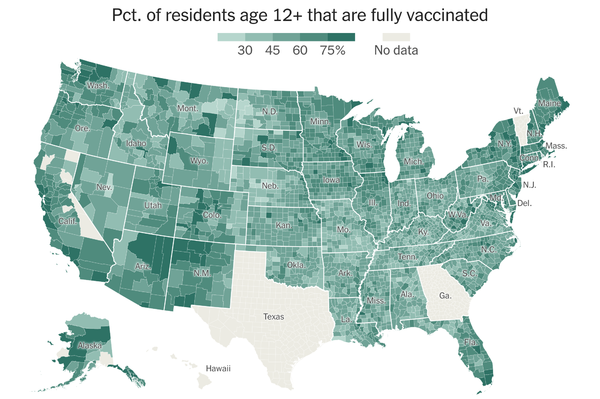
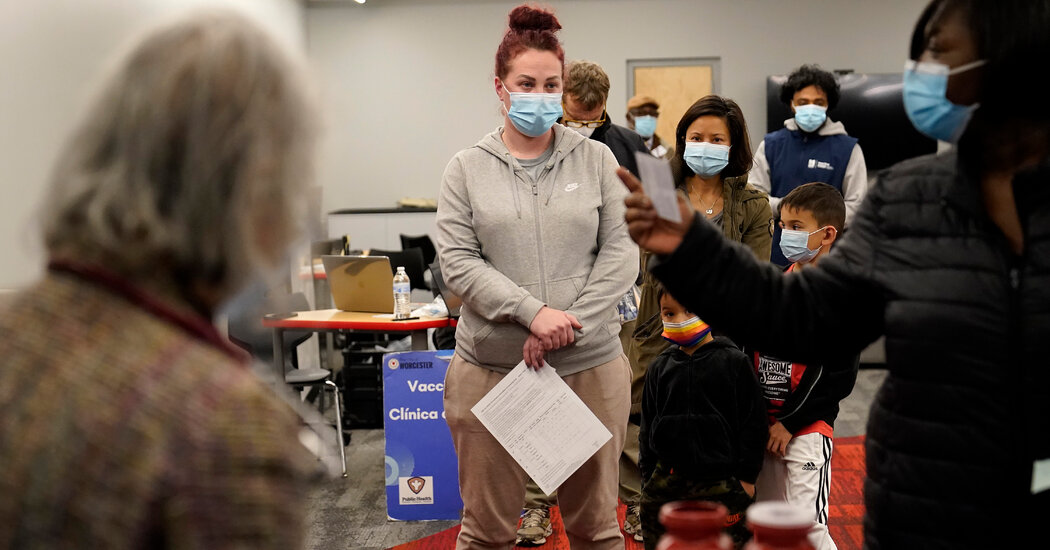
The Centers for Disease Control and Prevention, which millions of Americans rely on for up-to-date information on vaccination rates in their communities, recently acknowledged that its data might overestimate the number of people who have received first doses while underestimating the number who have received booster shots.The acknowledgment was easy to miss, tucked into footnotes at the bottom of the vaccination tracking page on the C.D.C. website. It said that, in light of the possible error, the agency would cap its estimates of vaccination rates at 95 percent. Previously, it had capped its estimates at 99.9 percent and, for example, showed a 99.9 percent national vaccination rate for people 65 and older, which experts said was clearly inaccurate.The C.D.C.’s data on vaccination rates are still considered to be reliable, especially with regard to the number of fully vaccinated Americans, experts say. The main reason for the discrepancies is that state and county data, which the C.D.C. relies on to compile its statistics, does not always properly link the record of people’s booster shots to the records of their initial vaccinations. When the two are not connected, the booster is recorded as though it were a first dose given to a previously unvaccinated person.This can happen when people go to a different location for a booster shot than they did for their original series of injections. That often occurs when people move, or the place they received their first doses doesn’t exist anymore, as is the case with many government-sponsored mass vaccination sites that closed after a few months. Sometimes a different location for a booster is chosen simply because it’s more convenient.Data reported to the C.D.C. is stripped of personal information, which makes it difficult to spot and correct these sorts of errors.“Even with the high-quality data C.D.C. receives from jurisdictions and federal entities, there are limits to how C.D.C. can analyze those data,” the agency said in one of its footnotes. The note added that people receiving boosters at a different location was “just one example of how C.D.C.’s data may overestimate first doses and underestimate booster doses.”A broader reporting challenge is that methodology varies from state to state. Some, for instance, record prisoners in the county where they are incarcerated, while others record them in the county where they lived before. These practices do not always align with how the census counts prisoners — and the C.D.C. uses census counts as its denominators in calculating vaccination rates.Take Crowley County, Colo., as an example. The county is home to a state prison with capacity for nearly 1,900 people. Colorado counts those prisoners at their last legal address, not in Crowley County (unless, of course, they lived in Crowley before they were incarcerated).That means the state calculates the county’s vaccination rate by dividing the number of vaccinations by the number of residents excluding prisoners. But when Colorado reports its data to the C.D.C., the agency divides the number of vaccinations by the census count, which includes prisoners.Given that the county has fewer than 6,000 residents, that change in the denominator makes a huge difference, yielding a vaccination rate of just over 20 percent in the C.D.C. data but close to 50 percent in Colorado’s data.Amy Schoenfeld Walker

Read more →

Hesitancy, Apathy and Unused Doses: Zambia’s Vaccination Challenges

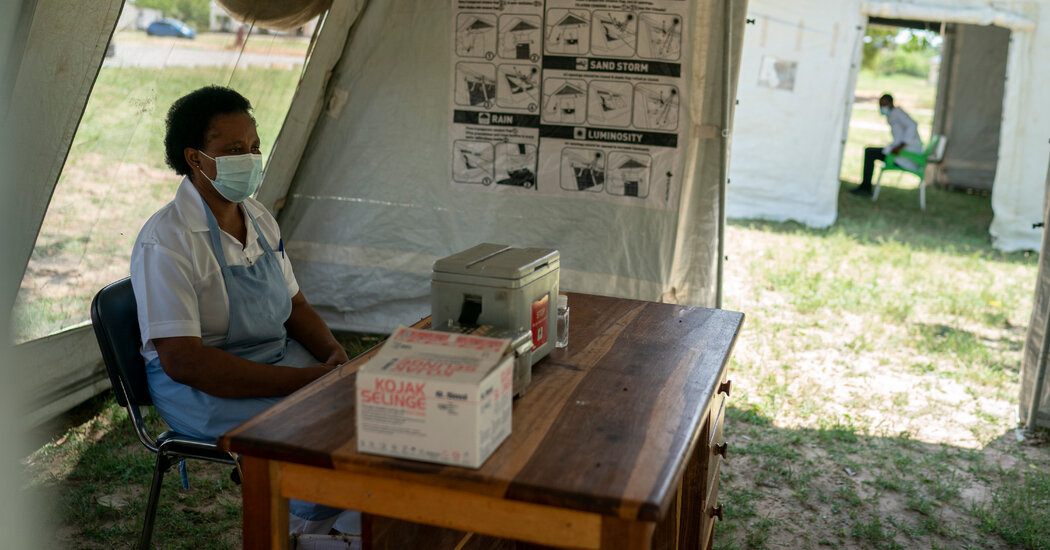
Vaccinating Africa is critical to protecting the continent and the world against dangerous variants, but supply isn’t the only obstacle countries face.NGWERERE, Zambia — Four people turned up at a health clinic tucked in a sprawl of commercial maize farms on a recent morning, looking for Covid-19 vaccines. The staff had vials of the Johnson & Johnson vaccine stashed in the fridge. But the staff members apologetically declined to vaccinate the four and suggested they try another day.A vial of the Johnson & Johnson vaccine holds five doses, and the staff was under orders not to waste a single one.Ida Musonda, the nurse who supervises the vaccination effort, suspected that her team might have found more takers if they packed the vials in Styrofoam coolers and headed out to markets and churches. “But we have no fuel for the vehicle to take the vaccines there,” she said.They did vaccinate 100 people on their last trip to a farm; the records from that trip sat in a paper heap in the clinic because the data manager had no internet connection to access an electronic records system.For months, the biggest challenge to vaccinating Africans against Covid, and protecting both the continent and the world from the emergence of dangerous variants, has been supply: A continent of about 1.4 billion people has received just 404 million doses of vaccine, and only 7.8 percent of the population is fully vaccinated.But as supply has begun to sputter into something like a more reliable flow, other daunting obstacles are coming into focus. All of them are on view at and around Ngwerere.Weak health care systems with limited infrastructure and technology, and no experience vaccinating adults, are trying to get shots into the arms of people who have far more pressing priorities. At the same time, the global flow of information, and deliberate misinformation, on social media is generating the same skepticism that has stymied vaccination efforts in the United States and other countries.Some Zambians are hesitant, but others have an attitude that could better be described as vaccine indifference. This is a poor country where the economy has contracted sharply during the pandemic, and many unvaccinated people are more focused on putting food on the table.Simon Phiri, left, walked three kilometers on his day off to receive a Covid vaccine at a clinic in Chongwe, outside of Lusaka, Zambia.João Silva/The New York TimesBernadette Kawango was skeptical of the fearmongering around Covid vaccines, but said she had more urgent health worries than the coronavirus.João Silva/The New York Times“I’d like to get it but I work Monday to Saturday, and I don’t know if they vaccinate on Sunday,” said Bernadette Kawango, who supports a large extended family with her wages from an auto-parts store in a low-income neighborhood on the edge of Lusaka, the capital. She has heard many rumors: that people who receive the vaccine will die in two years; that the vaccine is part of a plot by Europeans to kill Africans and take their land; that Bill Gates is on a campaign to reduce the world population.Such stories make her roll her eyes. But Covid is not at the top of her list of health care worries. “It’s cholera season, and people have malaria, and there is H.I.V. and TB,” she said. She does not know anyone who has been diagnosed with Covid.All these challenges create two major problems. First, the pace of vaccination is far too slow to prevent unnecessary deaths in a fourth wave, which is already beginning in southern Africa, or to prevent the emergence of new variants such as Omicron, which was first identified in South Africa late last month. The vaccines now in stock — many of them donations close to their expiration dates when they arrive — may not be used before they must be destroyed.Second, the push to vaccinate against Covid is drawing resources from health systems that can hardly spare them, which could lead to disastrous consequences for the fight against other devastating health problems.At the Ngwerere health clinic, the usual bustle and screeching at the mother-and-child health area, where babies are monitored for signs of malnutrition and given childhood immunizations, was absent because everyone on that staff had been repurposed as Covid vaccinators.“Every time we have a wave here it really threatens the investments that have been made in H.I.V., maternal and child health, and TB and malaria, and it’s important that we protect those,” said Dr. Simon Agolory, who runs the large Zambia program of the U.S. Centers for Disease Control and Prevention.Women wait to see a nurse at a rural clinic in Chongwe DistrictJoão Silva/The New York TimesCharity Machika’s vaccination data was registered on a paper card because the technician at the clinic had no internet connection to make an electronic record.João Silva/The New York TimesDr. Andrew Silumesii, the director of public health for Zambia’s health ministry, said there was already clear evidence that infant growth monitoring and childhood immunization had declined over the course of the pandemic. He worries that malaria, TB and H.I.V. infections will also increase.So far, 7 percent of Zambians, some five million people, have been vaccinated against Covid. President Hakainde Hichilema has set a target of vaccinating another two million by Christmas, and 70 percent of the population by the third quarter of 2022, a goal that looks exceedingly ambitious.Zambia’s vaccines come mostly from Covax, the global vaccine-sharing initiative, with additional donations from China and the African Union. The fact that Zambia is dependent largely on donations means that it must adapt its program to whatever shipments arrive — a bit like making a meal with whatever arrives in a farm subscription box. The country is managing distribution of five different vaccines, each with different dosing regimens, storage requirements and vial volumes.That has created a huge additional administrative burden for skeleton staffs such as Ms. Musonda’s team. Her staff has no budget for cellphone calls to remind people about second shots, and the effect can be seen in the charts stapled on the vaccination room wall: Of the 840 people who received a first dose of AstraZeneca in April, only 179 came back for a follow-up shot in July.When Zambia experienced a severe third Covid wave earlier this year, the media coverage of people dying in the parking lots of hospitals that ran out of oxygen rattled a population that had been thinking of the virus as something that affected only white or rich people. There were pre-dawn lineups outside vaccination sites that couldn’t keep shots in stock.But when the wave abated, so did the demand.The Ngwerere health clinic has only basic infrastructure.João Silva/The New York TimesMany people here recall the time when Zambians were dying of AIDS in huge numbers and Western pharmaceutical companies refused to produce affordable lifesaving medications. There is skepticism now that those same companies have come offering free solutions.The Coronavirus Pandemic: Key Things to KnowCard 1 of 5The Omicron variant.

Read more →

Medicare Extends Telehealth Coverage, a Lifeline for Older Americans

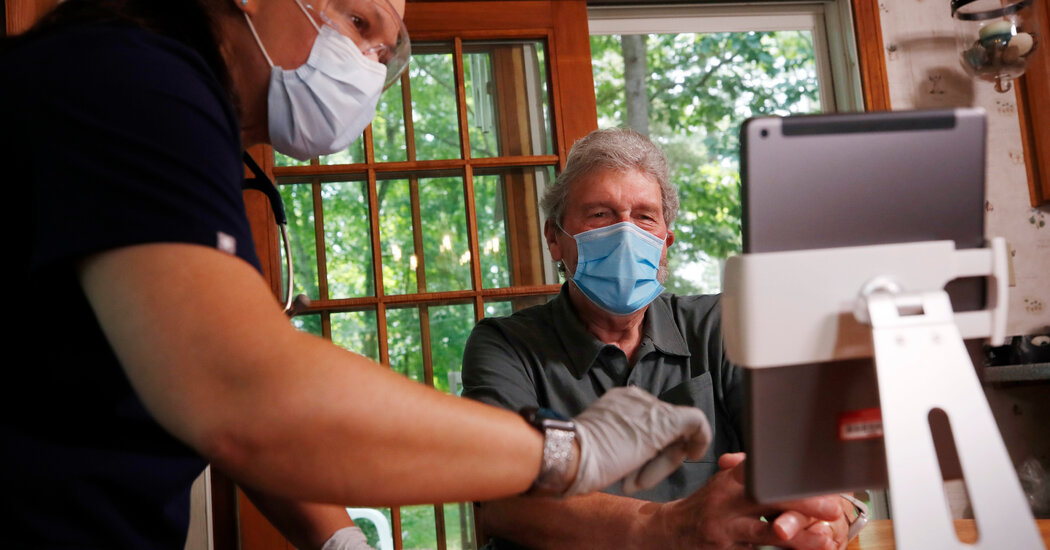
Medicare has extended coverage of remote health care. While telehealth removed barriers to care for many during the pandemic, some say there is more to be done.Ben Forsyth had doubts about telehealth.When the coronavirus pandemic hit New York, he was wary of trekking by subway from Brooklyn to see his palliative care doctor at Mount Sinai Hospital in Manhattan. The prospect of entering a hospital and sitting in a waiting room troubled him, too.But when his doctor, Helen Fernandez, suggested a video visit to monitor his chronic kidney disease and other conditions, “I wasn’t sure how it would work,” said Dr. Forsyth, 87, a retired internist and university administrator. “Would I feel listened to? Would she be able to elicit information to help with my care?”Still, he logged on through Mount Sinai’s patient portal (“I wouldn’t say it was completely user-friendly”) on his laptop — and quickly became a convert.He’s had four video appointments with Dr. Fernandez since, along with two in-person visits once he was fully vaccinated. He consulted her remotely when he wintered in Florida; he has also seen his cardiologist and his sleep specialist through telehealth.Telehealth, also called telemedicine, refers to providing care remotely using technology such as video and phone calls, monitoring devices and patient portals.“It should be part of the options that people have,” said Dr. Forsyth.For now, it will be. In March 2020, Medicare greatly expanded coverage for telehealth, giving older Americans and others access to more health care options during the pandemic. Telehealth use promptly soared to nearly 52.7 million Medicare visits last year from 840,000 in 2019, according to a new federal report.Last month, Medicare announced that it would extend most telehealth coverage through 2023, to allow time to “evaluate whether the services should be permanently added” to its coverage. It had already made certain telehealth services permanent.This represents enormous change for telehealth. Before Covid, Medicare coverage for telehealth “simply wasn’t very available,” said Tricia Neuman, the executive director of the Program on Medicare Policy at Kaiser Family Foundation. Traditional Medicare permitted telehealth only in rural areas, for a narrow range of services. (Medicare Advantage plans had more flexibility.) Even then, patients had to travel to a clinic or hospital to do video calls if, for instance, they needed to consult with a specialist far away. They couldn’t receive telehealth at home, nor could they receive care over the phone.Doctors or physician assistants could provide telehealth and get reimbursed, but not physical therapists or nurse practitioners, and they had to have previously seen the patient in person.Then “the floodgates really opened at the beginning of the pandemic,” said Gretchen Jacobson, the vice president for Medicare at The Commonwealth Fund, which supports research to improve Medicare.Medicare removed the geographic barriers, so that patients across the country could receive telehealth in their homes.Jay Berger, left, a physical therapist, saw a patient from home in Frederick, Md.Dan Gross/The Frederick News-Post, via Associated PressOne hundred and forty additional remote services became eligible for coverage because of the move, as did more kinds of providers. Practitioners no longer needed a previous relationship with the patient and did not need to work in the same state as the person receiving care. If health care professionals lacked digital platforms that complied with federal privacy laws, Medicare allowed them to use widely available apps like FaceTime or Skype. It allowed coverage for audio-only phone visits, too.And it raised reimbursement amounts so that providers were not paid less for telehealth than for in-person visits, eliminating a critical disincentive.Now, it’s hard to imagine health care without the “tele-.” Nearly a quarter of U.S. adults over 65 have had a video visit during the pandemic, a Mount Sinai study found.“They’re most likely to need frequent medical care,” said Julia Frydman, the study’s lead author. Seniors also may face mobility problems that make office visits daunting, and with less effective immune systems, they’re at higher risk for Covid-19. Using telehealth, “they wouldn’t have to travel back and forth and be exposed to a deadly disease,” she said.Dr. Frydman discovered that another benefit of telehealth was learning more about her patients’ home environments. One older telehealth patient proudly told her about tending the greenery she noticed behind him. Then, over several months, she saw that his house plants were wilting and dying. “It prompted me to ask about his mood, his energy,” she said, and his answers revealed a previously unsuspected problem.In her palliative care practice at Mount Sinai, Dr. Frydman has found that of course, telehealth has limits. “You sometimes want to see patients walk into the room,” she said. “Has their gait changed? How do they get in and out of a chair?”That’s what soured Marcia Weiser, 83, on telehealth. “It’s better than nothing, but I don’t see that it’s optimal,” said Ms. Weiser, a retired calculus teacher on Manhattan’s Lower East Side. Many of her health issues, like joint pain and cholesterol monitoring, require “something hands-on, or a blood test or a urine test or an eye test,” she said. “I can’t get that on a computer.”While telehealth may not be for everyone, studies have shown that both patients and doctors broadly support it. After 2023, when the current Medicare extension ends, “the core question for policymakers will not be whether to allow telehealth, but how to make it efficient, effective and equitable, available to everyone,” said Dr. Jacobson.Researchers are still investigating whether patients using the virtual services fare as well as they do with in-person care, though one review of clinical trials using video teleconferencing found largely similar results.Analysts are also tracking whether video and phone visits replace in-person appointments or are additional, unnecessarily boosting Medicare spending. Whether telehealth is more prone to fraud than in-person care is unclear, too.Improving equity in telehealth poses another challenge, since access to digital devices and the internet varies significantly between different groups.JB Lockhart, 69, a self-described telehealth partisan in Lake Oswego, Ore., began video visits with her primary care doctor even before the pandemic. “I live on my computer,” she said.But a Kaiser Family Foundation survey in the fall of 2020 found that a quarter of Medicare beneficiaries over age 75 had no access to the internet. A little over half owned a computer or smartphone, a much lower proportion than among those 65 to 74.The Pew Research Center reported this year that over a third of adults over 65 never used video to talk to other people during the pandemic. Only 45 percent used a social media site. About a third lacked home broadband.Among the Medicare population last year, Black and rural beneficiaries used telehealth less often than whites and urban dwellers, the federal report showed. Dr. Frydman’s national study also noted geographic differences, and found that beneficiaries with lower education and those living alone also used telehealth less.“We need to be really careful that telemedicine doesn’t worsen health disparities,” said Dr. Frydman.Several recent federal initiatives will help make broadband more available. The largest appropriation, in the infrastructure bill President Biden signed last month, directs $65 billion to improve internet access in rural areas and tribal communities, and for low- income families.Along with improved internet access, older Americans may need coaching to use the technology, and web designers may need to make telehealth platforms simpler to use. An analysis of electronic health records at Mount Sinai, for instance, found that during New York City’s initial Covid surge, only 53 percent of patients in the geriatrics practice had activated their patient portal, which is necessary for telehealth via video.Health systems trying to reach older patients might heed Dr. Forsyth, who offered a marketing tip. “Telemedicine sounds so cold and technical,” he said. “If it were called an ‘electronic house call,’ people could feel more comfortable.”

Read more →

Omicron is speeding through Britain, and vaccines provide reduced protection, U.K. scientists say.

The first real-world study of how vaccines hold up against the Omicron variant showed a significant drop in protection against symptomatic cases caused by the new and fast-spreading form of the coronavirus.But the study, published by British government scientists on Friday, also indicated that third vaccine doses provided considerable defense against Omicron.Government scientists on Friday also offered the most complete look yet at how quickly Omicron was spreading in England’s highly vaccinated population, warning that the variant could overtake Delta by mid-December and, without any precautionary measures, cause Covid-19 cases to soar.Four months after people received a second dose of the Pfizer-BioNTech vaccine, the shots were roughly 35 percent effective in preventing symptomatic infections caused by Omicron, a significant drop-off from their performance against the Delta variant, the scientists found.A third dose of the Pfizer-BioNTech vaccine, though, lifted the figure to roughly 75 percent.Two doses of the AstraZeneca vaccine appeared to offer virtually no protection against symptomatic infection caused by Omicron several months after vaccination. But for those recipients, an additional Pfizer-BioNTech dose paid big dividends, boosting effectiveness against the variant to 71 percent.Still, the study’s authors said they expected that the vaccines would remain a bulwark against hospitalizations and deaths, if not infections, caused by Omicron. And the researchers cautioned that even in a country tracking the variant as closely as Britain is, it was too early to know precisely how well the vaccines would perform.That study was released alongside new findings about how easily Omicron is managing to spread. Someone infected with the Omicron variant, for example, is roughly three times as likely as a person infected by the Delta variant to pass the virus to other members of his or her household, Britain’s Health Security Agency reported.And a close contact of an Omicron case is roughly twice as likely as a close contact of someone infected with Delta to catch the virus.Neil Ferguson, an epidemiologist at Imperial College London, said that Omicron’s ability to evade the body’s immune defenses accounted for most of its advantage over previous variants. But modeling work by his research team and other groups in Britain also suggested that Omicron was simply more contagious than Delta, by roughly 25 to 50 percent.“I think that there’s a significant amount of immune escape,” Dr. Ferguson said, referring to the virus’s ability to dodge the body’s defenses. “But it’s also more intrinsically transmissible than Delta.”He and other scientists have cautioned that evidence was still coming in, and that better surveillance in places where the Omicron wave is most advanced could affect their findings.The World Health Organization said this week that some evidence had emerged that Omicron was causing milder illness than Delta, but that it was too early to be certain. Still, scientists have warned that if the variant keeps spreading as quickly as it is in England, where cases are doubling every 2.5 days, health systems around the world may be deluged with patients.Even if Omicron causes severe illness at only half the rate of the Delta variant, Dr. Ferguson said, computer modeling suggested that 5,000 people could be admitted to hospitals daily in Britain at the peak of its Omicron wave — a figure higher than any seen at any other point in the pandemic.Scientists said that widespread vaccination in countries like Britain and the United States would keep as many people from dying as have in earlier waves. But the experts also warned that patients with Covid and with other illnesses would suffer if hospitals became too full.“It only requires a small drop in protection against severe disease for those very large numbers of infections to translate into levels of hospitalization we can’t cope with,” Dr. Ferguson said.It will take several weeks to understand how the current surge in Omicron infections may translate into people needing hospital care. “I’m concerned that by the time we know about severity,” Dr. Ferguson said, “it may be too late to act.”

Read more →

Ros Atkins on… Compulsory Covid vaccinations

Austria is introducing a vaccine mandate from February and other nations around the world are also looking at their options. This complex situation has many viewpoints, from intrusions on personal liberty, moral obligations to keep each other safe, to unfair distribution of vaccines to poorer countries. Ros Atkins takes a look at the differing views.

Read more →

Infant immune systems are stronger than you think, research shows

As any parent knows, infants are prone to getting respiratory infections.
But a new study shows that the infant immune system is stronger than most people think and beats the adult immune system at fighting off new pathogens.
The infant immune system has a reputation for being weak and underdeveloped when compared to an adult, but the comparison isn’t quite fair, says Donna Farber, PhD, professor of microbiology & immunology and the George H. Humphreys II Professor of Surgical Sciences at Columbia University Vagelos College of Physicians and Surgeons.
Babies do get a lot of respiratory illnesses from viruses, like influenza and respiratory syncytial virus, compared to adults. But unlike adults, babies are seeing these viruses for the first time. “Adults don’t get sick as often because we’ve recorded memories of these viruses that protect us,” Farber says, “whereas everything the baby encounters is new to them.”
In the new study, Farber and colleagues leveled the playing field and only tested the immune system’s ability to respond to a new pathogen, essentially eliminating any contribution from immunological memories.
For the head-to-head comparison, the researchers collected naïve T cells — immune cells that have never encountered a pathogen — from both infant and adult mice. The cells were placed into an adult mouse infected with a virus.

Read more →

What Happened When Philadelphia Mandated Covid Vaccines for Health Workers

Federal officials point to the city’s mandate as a success story and a shield against new Covid outbreaks at hospitals and nursing homes.While the national vaccine mandate for health care workers remains mired in the federal courts, government officials say there is ample proof that requirements work — and do not cause a mass exodus of employees that some critics had feared.Philadelphia, which issued a vaccine mandate in August, would seem to be a case in point. Virtually all hospital employees there are now fully vaccinated against Covid-19, according to a group of local hospitals that met last week with officials from the Centers for Medicare and Medicaid Services, which issued the national rule. About 95 percent of nursing home employees are also fully vaccinated, according to the city health department, compared with an average of 75 percent across the country.With several states, including Pennsylvania, reporting sharp increases in Covid cases and hospitalizations and the arrival of the new Omicron variant, vaccine protection for health care workers is once again a critical tool.Pennsylvania now has one of the country’s highest hospitalization rates. “Covid continues to rage on,” Dr. Jaewon Ryu, the chief executive of one of the state’s largest hospital groups, Geisinger, said at a news conference. Its intensive-care units are overwhelmed, he said.In Philadelphia alone, 366 people were hospitalized in early December, compared with around 200 before Thanksgiving, according to city data.The city’s hospitals and nursing homes were able to achieve high vaccination rates without significant staff departures. “At the end of the day, very few people quit,” Chiquita Brooks-LaSure, the agency’s administrator, said in an interview after the meeting.Ms. Brooks-LaSure said it was important that hospitals and nursing homes educate their workers about the benefits of the vaccine and address safety concerns, although she added that local and workplace orders clearly influenced higher vaccination rates.About 40 percent of the nation’s hospitals have vaccine requirements, and numerous states and cities imposed them for health care workers. In New York, which issued a mandate in late August, about 96 percent of hospital and nursing home workers are fully vaccinated, according to state data.See How Vaccinations Are Going in Your County and StateSee where doses have gone, and who is eligible for a shot in each state.In California, which also required workers to get vaccinated, about 94 percent of nursing home employees have done so, and outbreaks have fallen, according to state data.In states without mandates, like Oklahoma, about a third of nursing home workers are not fully vaccinated, and there have been thousands of recent cases among residents and staff.At Crozer Health, a hospital group based in Springfield, Pa., the vaccination rate among workers climbed to 98 percent from 65 percent, largely because the area’s hospitals all had similar requirements and faced the looming federal mandate, Conlen Booth, Crozer’s senior director of emergency preparedness, said. “Staff understood there was no other alternative,” he said.Crozer asked infectious disease specialists to directly address employees who were hesitant, including first responders like paramedics whose jobs did not typically put them in direct contact with someone who could answer their questions authoritatively. “They had never been spoken to by a physician,” Mr. Booth said.Even nursing home executives acknowledged that the city’s requirement resulted in fewer departures than predicted. Philadelphia’s 47 nursing homes reported an average of about seven staff departures related to the vaccine requirement, according to the Pennsylvania Health Care Association, which represents the state’s nursing homes.Zach Shamberg, the group’s chief executive, said Philadelphia remained “a cautionary tale” given that some employees did leave. Because a widespread staffing shortage is already hindering the ability of nursing homes to care for residents, “we cannot afford to lose one more worker,” he said.There was some disagreement among hospital executives on the panel, which explored techniques employed to get all their workers vaccinated. One administrator warned that mandates could smack of “Big Brother,” while another defended the federal requirement as crucial leverage.Officials from the Centers for Medicare and Medicaid Services also emphasized the unique role of individuals who care for the public, pointing to cases where patients were uncomfortable with nurses or aides who were not immunized.“Health care workers have a special ethical and professional duty to protect the patients,” Dr. Lee Fleisher, the agency’s chief medical officer, said at the meeting with the hospitals. “There is no question that in any health care setting, the unvaccinated pose a direct and indirect threat to patient safety and, from our perspective, population health.”The future of President Biden’s vaccine mandates for health care workers and private employees in other sectors is unclear. Federal judges have blocked the C.M.S. rule, which required health care providers to get their workers — an estimated 17 million — fully vaccinated by early January or risk losing federal funding.The judge in the U.S. District Court for the Western District of Louisiana ruled that the agency had overstepped its authority by issuing an emergency regulation. He said the mandate “is something that should be done by Congress, not a government agency,” and added that “it is not clear that even an act of Congress mandating a vaccine would be constitutional.”The administration has appealed, and the rule is on hold. “While C.M.S. remains confident in its authority to protect the health and safety of patients in facilities certified by the Medicare and Medicaid programs, it has suspended activities related to the implementation and enforcement of this rule pending future developments in the litigation,” the agency informed health care providers early this month.The Coronavirus Pandemic: Key Things to KnowCard 1 of 5The Omicron variant.

Read more →

Chemicals from hair and beauty products impact hormones, especially during pregnancy

Use of certain personal care products during pregnancy may impact maternal hormone levels, according to a new Rutgers study.
Personal care and beauty products contain several ingredients that often include a wide range of endocrine-disrupting chemicals like phthalates, parabens, phenols, parabens and toxic metals. These chemicals interact with hormone systems, influencing synthesis, regulation, transport, metabolism and hormone reception, which are all especially vulnerable during pregnancy.
The National Institute of Environmental Health Sciences and National Institutes of Health-funded study, published in Environmental Research, examined the association between personal care product use and the levels of sex steroid hormones, including estrogens and progesterone and thyroid hormones among pregnant women. The researchers also explored how demographic factors impact the use of certain personal care products.
Researchers collected blood samples from 1,070 pregnant women between 18 and 40 years of age enrolled in the Puerto Rico PROTECT Cohort, an ongoing prospective birth study designed to examine environmental exposures in pregnant women and their children who live in the northern karst zone of Puerto Rico.
As part of the study, participants underwent physical exams and completed a series of questionnaires providing their demographics, occupation, lifestyle and use of personal care products like fragrances, lotions, cosmetics, nail polish, shaving cream, mouthwash, shampoo and other hair products, such as bleach, relaxers and mousse. Participants also provided blood samples twice throughout their pregnancies, which were analyzed for nine sex steroid and thyroid hormones.
The researchers found that the use of hair products, particularly hair dyes, bleach, relaxers and mousse are associated with lower levels of sex steroid hormones, which have a critical role maintaining pregnancy and fetal development. Disruptions of these hormones may contribute to adverse maternal and pregnancy outcomes like growth restriction, preterm birth and low birth weight.
“Alterations in hormone levels, especially during pregnancy, can have vast consequences beyond health at birth including changes in infant and child growth, pubertal trajectories and may influence development of hormone-sensitive cancers such as breast, uterine and ovarian cancer,” says the study’s lead author, Zorimar Rivera-Núñez, an assistant professor at the Rutgers School of Public Health. “Additional research should address the public health impact of exposure to chemicals in hair products in pregnant populations.”
The researchers also found that socioeconomic variables, such as income, education and employment status, influence the use of personal care products among pregnant women in Puerto Rico. For example, participants who reported a household income greater than $100,000 used personal care products more often than participants with lower household incomes. Additionally, employed participants reported using more cosmetics than those who were unemployed.
“Prior research has shown that non-pregnant populations have also reported associations between frequency of use and socioeconomic markers, such as household income and education,” Rivera-Núñez said. “A strong culture of beauty influences Latina women, which may impact consistent use of cosmetics through pregnancy. This data is important because it will allow us to identify populations who are at an increased risk of chemical exposures associated with personal care product use.”
The researchers, who include individuals from the Rutgers Environmental and Occupational Health Sciences Institute, University of Michigan, University of Puerto Rico, University of Georgia and Northeastern University, recommend that primary physicians and obstetricians should speak to reproductive-age women about the potential health impact of endocrine disrupting chemicals, like those found in hair products.
Story Source:
Materials provided by Rutgers University. Original written by Michelle Edelstein. Note: Content may be edited for style and length.

Read more →

Three vaccine doses key for tackling Omicron

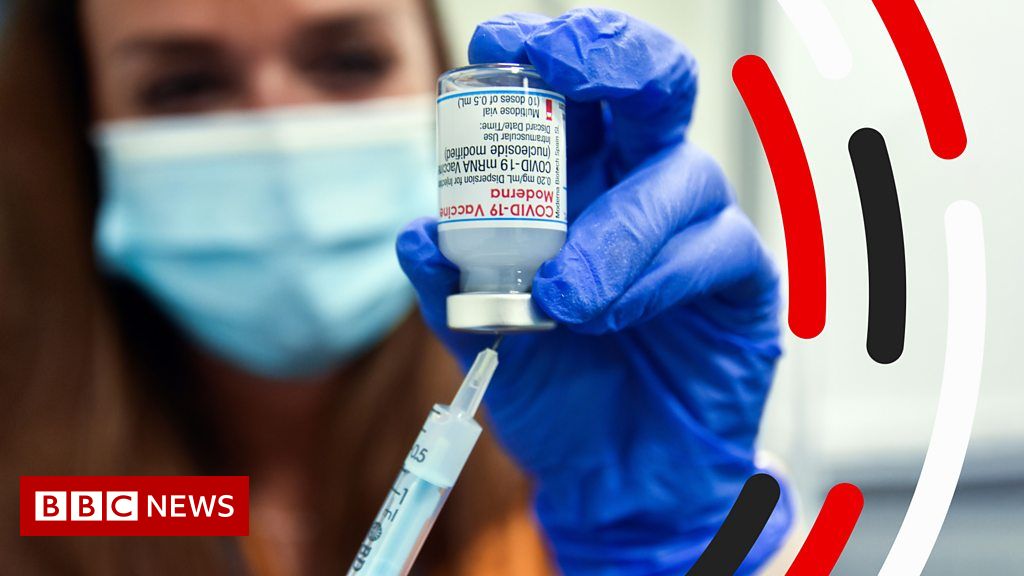
SharecloseShare pageCopy linkAbout sharingImage source, Getty ImagesTwo doses of a Covid vaccine are not enough to stop you catching the Omicron variant, UK scientists have warned. Early analysis of UK Omicron and Delta cases showed the vaccines were less effective at stopping the new variant. However, a third booster prevents around 75% of people getting any Covid symptom. The UK Health Security Agency said vaccines were still likely to offer good protection against severe Covid that needed hospital treatment. Omicron: How worried should we be?The latest lab science on Omicron’s threatThe concern since the heavily mutated Omicron variant first emerged was that it would make vaccines less effective. Scientists analysed data from 581 Omicron cases and thousands of Delta cases to calculate how effective the vaccines were against the new variant.The analysis is based on limited data, but showed a dramatic drop in effectiveness for the Oxford-AstraZeneca vaccine and a significant drop off for two doses of Pfizer. The 75% protection against Covid symptoms after a booster is not as high as against previous variants.So far around 22 million people have received a booster dose, but even if everyone was boosted the lower vaccine effectiveness would still leave millions of people susceptible. The real world data backs up laboratory studies that showed a 40-fold reduction in the ability of antibodies from double-vaccinated people to take out the virus. There is optimism that vaccines will still keep many people out of hospital even if more do get Covid. Data on severity could be published next week.However, an Omicron wave could be problematic even if it was milder. A large and sudden wave could lead to everyone who is still vulnerable needing hospital care at the same time. The rapid surge in Omicron cases was already hinting that the variant was getting around some of the protection given by vaccine. It is estimated that the number of Omicron cases is doubling every two-to-three days. The UKHSA estimates that more than half of all cases in the country will be Omicron by the mid-December and that if growth continues unabated there will be more 100,000 cases a day by the end of the month. Dr Mary Ramsay, the head of immunisation at the UKHSA, said: “These early estimates should be treated with caution but they indicate that a few months after the second jab, there is a greater risk of catching the Omicron variant compared to Delta strain.””We expect the vaccines to show higher protection against the serious complications of COVID-19, so if you haven’t yet had your first two doses please book an appointment straight away.”The research comes amid concern about the growing numbers of Omicron cases in the UK. Scotland’s First Minister, Nicola Sturgeon, has warned of a “tsunami” of cases as she tightened Covid isolation rules and encouraged people to cancel Christmas party plans.The Levelling Up Secretary Michael Gove warned “we face a deeply concerning situation” after chairing a Cobra meeting with the first ministers of the devolved administrations this afternoon. He said measures taken so far were “proportionate” but said they “absolutely” needed to keep everything under review.”Action is absolutely required and as new data comes in we will consider what action we do require to take in the face of that data,” he said.A further 58,194 Covid cases have been reported in the UK, according to the latest government statistics. This is mostly still the Delta variant, but is the highest figure since 9 January this year. Follow James on TwitterUKHSAThe BBC is not responsible for the content of external sites.

Read more →