Innovative textile vents to release heat when you sweat

Materials Scientists at Duke University have developed a lightweight material that traps thermal energy when dry, but opens a series of tiny vents to let heat escape when a person starts sweating. The vents close again to retain heat once they are dry.
Using physics rather than electronics to open the vents, the material has potential as a patch on various types of clothing to help keep the wearer comfortable in a wide range of situations.
The approach is described online on December 15 in the journal Science Advances.
“People who are skiing or hiking in colder weather usually wear layers so they can adjust how much heat their clothing is trapping as their body heats up,” said Po-Chun Hsu, assistant professor of mechanical engineering and materials science at Duke. “But by strategically placing patches of a material that can let out heat when a person is sweating, one could imagine making a one-piece-fits-all textile.”
When first attempting to make such a dual-purpose material, Hsu turned to nylon. It’s inexpensive, lightweight and soft, and Hsu knew that if cut into flaps, nylon curls in on itself a little bit when one side is exposed to moisture.
Nylon is not, however, known for making particularly warm clothing, so Hsu added a layer of heat-trapping silver on top. Expecting the weight of the silver to bog down the nylon flaps, he tried to make the layer as thin as possible. But to his surprise, the silver addition actually made the flaps curl back even more.

Read more →

C.D.C. Virus Tests Were Contaminated and Poorly Designed, Agency Says

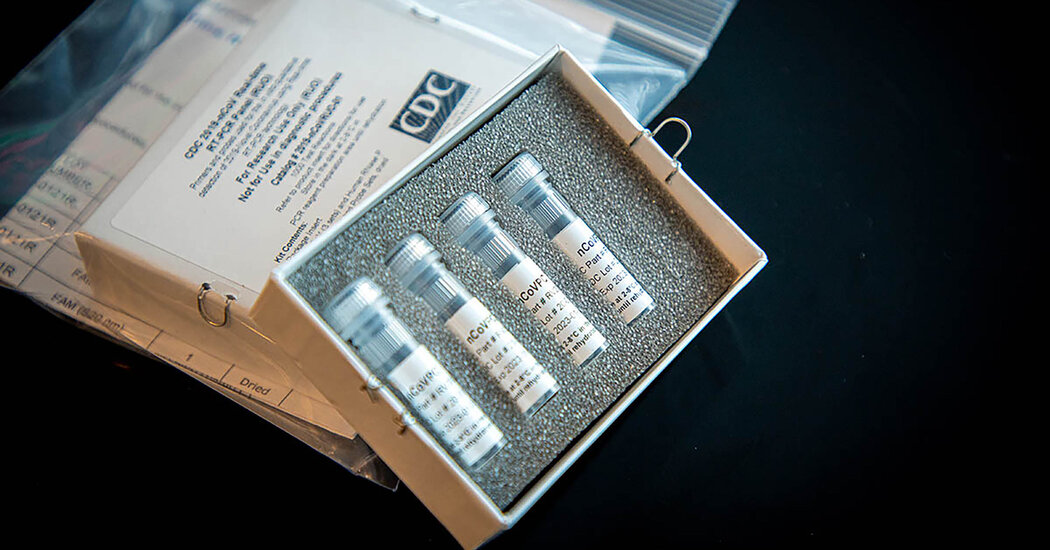
An internal review documented two serious flaws in the test kits, which were distributed to public health laboratories in early 2020.The faulty coronavirus testing kits developed by the Centers for Disease Control and Prevention in the early weeks of the pandemic were not only contaminated but had a basic design flaw, according to an internal review by the agency.Health officials had already acknowledged that the test kits were contaminated, but the internal report, whose findings were published in PLOS ONE on Wednesday, also documented a design error that caused false positives.The distribution of faulty test kits, at a time when no other tests were authorized, set back health officials’ efforts to detect and track the virus.“It delayed the availability of more widespread testing,” said Dr. Benjamin Pinsky, the director of clinical virology for Stanford Health Care. He added, “I think it’s important that they got to the bottom of what went wrong.”In January 2020, the C.D.C. developed a polymerase chain reaction, or P.C.R., test for the virus. P.C.R. tests, which are performed in laboratories, can detect the virus at very low levels and have been considered the gold standard for diagnosing a coronavirus infection.Problems emerged soon after the C.D.C. had begun shipping its test kits out to public health laboratories in early February. Within days, many labs were reporting that the tests were generating inconclusive results.In mid-February, the agency acknowledged that the kits were flawed, and in April, officials at the U.S. Food and Drug Administration said that poor manufacturing practices had resulted in contamination of the test kits.The new paper presents the results of the C.D.C.’s own internal investigation into the problems with the tests.The C.D.C.’s test was designed to detect three distinct regions, or target sequences, of the virus’s genetic material. The test kits contain a set of what are known as primers, which bind to and make copies of the target sequences, and probes, which produce a fluorescent signal when these copies are made, indicating that genetic material from the virus is present.The primers and probes need to be carefully designed so that they bind to the target sequences and not to each other. In this case, that did not happen. One of the probes in the kit sometimes bound to one of the primers, producing the fluorescent signal and generating a false positive.“It’s something that should have been caught in the design phase,” said Susan Butler-Wu, a clinical microbiologist at the Keck School of Medicine of the University of Southern California. “That’s one thing that you check for.”The investigation also confirmed that the test kits had been contaminated with synthetic fragments of the virus’s genetic material. These synthetic sequences, which are often used to ensure that the tests are working properly, were manufactured at the same C.D.C. lab where the test kits were undergoing a quality analysis. It is “likely” that the test kits were contaminated there, the agency concluded.The contamination suggests that the agency violated standard manufacturing protocols, officials have said.The Coronavirus Pandemic: Key Things to KnowCard 1 of 4Pfizer’s Covid pill.

Read more →

Met Opera to Mandate Booster Shots for Staff and Audiences

It is the first major performing arts institution to require boosters, as concern mounts over rising coronavirus cases and the spread of the Omicron variant. The rule will take effect Jan. 17.The Metropolitan Opera announced Wednesday that it would require all eligible adult employees and audience members to get Covid booster shots in order to enter the opera house, making its safety measures stricter than those on Broadway or at other venues.The Met is the first major performing arts organization in the city to announce a booster-shot mandate that will apply to audiences as well as staff members; the new rule will take effect Jan. 17. The policy was announced as concern about rising caseloads and the spread of the Omicron variant is mounting: The average daily number of coronavirus cases in the city has more than doubled over the past two weeks.“We think we should be setting an example,” Peter Gelb, the general manager of the Met, said in an interview. “Hopefully we will have an influence on other performing arts companies as well. I think it’s just a matter of time — everyone is going to be doing this.”It is not the first time that performing arts organizations, eager to reassure audiences that they could safely visit theaters, have imposed virus prevention measures that went beyond government mandates. When Broadway theaters announced over the summer that they would require audiences to be vaccinated and masked, it was several days before Mayor Bill de Blasio announced that New York City would impose a vaccine mandate for a variety of indoor spaces, including performing arts venues.Since the Met reopened after losing more than a full season to the pandemic, it has required that staff members and patrons be fully vaccinated to enter the opera house. But Gelb said that it had become “obvious” to him that even stronger safeguards were now necessary.“It’s of paramount importance that the audience members and employees feel safe when they enter the building,” he said. “To me, there is no question — this is the right move.”Since November, the Centers for Disease Control and Prevention has recommended booster shots — either six months after people receive a second Pfizer or Moderna shot, or two months after a single dose of the Johnson & Johnson vaccine.When the Met’s new rules take effect Jan. 17, people eligible for booster shots will be required to have them to enter the opera house. (There will be a short grace period: People will be allowed in unboosted if the performance falls within two weeks of the date they become eligible for boosters. People who are not yet eligible for their booster shots will still be allowed in.) Inside the opera house, people will be required to wear face masks, except when they are eating or drinking in the limited areas where that is allowed.Met officials said that they reviewed their new policy with leaders of the various unions that represent its workers in advance of Wednesday’s announcement and described the union response to the rules as “very positive.”Len Egert, the national executive director of the American Guild of Musical Artists, said that union officials had determined that at the Met, “boosters are warranted,” and had subsequently bargained to make sure its members’ rights were protected.Adam Krauthamer, the president of Local 802 of the American Federation of Musicians, said his union “applauds the Met’s plan to make vaccine boosters mandatory” and called the move “a necessary step forward to ensure the public’s safety and keep N.Y.C. as a beacon of live performance.”The company has adopted strict safety measures since reopening; in October, choristers wore masks backstage during a performance of “Die Meistersinger von Nürnberg.” Todd Heisler/The New York TimesIt was not immediately clear whether other arts institutions would follow the Met in tightening their Covid rules. Gelb said he had informed the leaders of Carnegie Hall, the New York Philharmonic and Lincoln Center that the Met would soon be adding a booster-shot mandate.The announcement that the Met would enact stricter Covid protocols came a day after a performance of the ballet “Don Quixote” was canceled at the Opéra Bastille in Paris because officials said someone in the company tested positive for the virus. Several Broadway shows have recently had to cancel performances because of positive Covid tests among the cast and crew. And in the National Football League, 37 players tested positive Monday, the highest single-day total since the start of the pandemic.The Coronavirus Pandemic: Key Things to KnowCard 1 of 4Pfizer’s Covid pill.

Read more →

Sugar-coated COVID-19 test strip takes advantage of coronavirus' sweet tooth

Even those tracking each new discovery about the coronavirus and its variants may not be aware of the virus’ sugar cravings.
Researchers at the University of North Carolina at Chapel Hill and University of California San Diego take advantage of the virus’ sweet tooth in the design of a sugar-coated COVID-19 test strip that’s been effective at detecting all known variants of the coronavirus, including Delta.
In the next few weeks, researchers will determine if the self-test known as GlycoGrip can detect infections caused by the Omicron variant too, said Carolina researcher Ronit Freeman.
“We have turned the tables on the virus by using the same sugar coat it binds to infect cells — to capture it into our sensor,” said Freeman who published the findings in ACS Central Science.
One of the greatest challenges of the ongoing COVID-19 pandemic has been responding to the virus’ mutations and emerging variants. New tests must be developed for new tweaks in the virus’ genetic code.
But GlycoGrip offers a solution for universal coronavirus testing.

Read more →

Reducing copper in the body alters cancer metabolism to reduce risk of aggressive breast cancer

Depleting copper levels may reduce the production of energy that cancer cells need to travel and establish themselves in other parts of the body by a process referred to as metastasis, according to a new study by investigators from Weill Cornell Medicine and Memorial Sloan Kettering Cancer Center (MSK). The discovery of the underlying mechanisms of how copper depletion may help reduce metastasis in breast cancer will help inform the design of future clinical trials.
In a series of research papers from 2013 to 2021, Weill Cornell Medicine researchers showed that in a phase II clinical trial when patients who had high-risk triple-negative breast cancer (TNBC) were treated with a drug that lowers the levels of copper in their bodies, it prolonged the period of time before their cancer recurred and spread or metastasized. In the current study, published Dec. 15 in Nature Communications, and led by first author Divya Ramchandani, a research associate in Cardiothoracic Surgery at Weill Cornell Medicine, the investigators used animal models to take a closer look at why that was the case.
“One of the defining features of TNBC is that it’s highly aggressive, difficult-to treat form of disease, with high rate of metastatic recurrence and few treatment options,” said co-senior author Dr. Vivek Mittal, director of research at the Neuberger Berman Lung Cancer Center and the Ford-Isom Research Professor of Cardiothoracic Surgery at Weill Cornell Medicine. “Even after surgery and other treatment, the rates of recurrence are high, which tends to happen early on. As a result, better treatments that focus specifically on this type of cancer are needed.”
Many of the biological processes that take place inside cells require metal atoms. Although iron is perhaps more well-known, copper has begun to emerge to be an important player. Copper is required for a process called oxidative phosphorylation (OXPHOS), which cells use to generate energy in organelles called mitochondria. Dr. Mittal showed that metastatic cancer cells in TNBC had high levels of intracellular copper and elevated levels of OXPHOS compared to non-metastatic cells. The researchers hypothesized that metastatic cells may require a lot of energy to spread to other parts of the body and set up shop, blocking the availability of copper, thereby cutting off their power source, might be a good way to prevent these cells from traveling.
To lower levels of copper, the researchers in both the earlier clinical trial and the recent animal research used a drug called tetrathiomolybdate (TM), which is being developed to treat a copper-storage disorder called Wilson’s disease. In mouse models of TNBC, they found that when they depleted the levels of copper in the body, the primary tumors continued growing while the cancer’s ability to metastasize was greatly reduced.
A closer look at the cancer cells treated with TM found that these cells changed their metabolism in a way that made it harder for them to generate energy. Interestingly, this failing energy status triggered a crucial energy sensor AMP-activated protein kinase (AMPK). In a separate study, the researchers also found that lowering copper levels affected collagen remodeling in the so-called premetastatic niche — areas of the body where it’s easier for rogue cancer cells to establish themselves. This helped explain how TM may make it more difficult for traveling TNBC cells to colonize distant organs.
“This paper is based on research that started in the clinic, which we brought back to the lab,” said co-senior author Dr. Linda Vahdat, who is professor of medicine at Weill Cornell Medicine, a medical oncologist at MSK and chief of medical oncology and clinical director of cancer services at Norwalk Hospital. “Now it has morphed into some very interesting science that we can move forward into a bigger clinical trial.”
“We can use this information to plan our large, randomized trial in breast cancer,” Dr. Mittal said. The trial, which will be a phase II trial enrolling 177 patients, will look at the use of TM as an adjuvant treatment (one given after other treatment is completed) to reduce the risk of the cancer coming back in patients with TNBC. The study is expected to begin recruiting patients in the fall of 2022 through the Translational Breast Cancer Research Consortium, supported by the Breast Cancer Research Foundation, with additional support from the NCI NExT program.
In the earlier trial, Dr. Vahdat said, the patients had very few side effects from the TM, which is taken two to three times a day as a pill. “We deplete the copper in patients to the level where normal cell functions can still take place, but tumor-related processes cannot,” she said.
Lab research will be an important component of the upcoming trial as the goal is to figure out the right treatment for the right patient at the right time. Investigators will study tissues from the patients to analyze the metabolic aspects of both tumor and healthy tissues. Drs. Mittal and Vahdat plan to expand upon these findings using a recently awarded $2.8 million grant from the National Cancer Institute to study copper-mediated metabolic reprogramming and extracellular matrix alterations in TNBC metastasis.

Read more →

Better identification of sesame in food packaging needed to avoid anaphylaxis

In 2021, the US Congress passed the Food Allergy Safety, Treatment, Education & Research Act which, among other things, added sesame to the list of allergens which are mandatory for inclusion on food labels by 2023. A new study in Annals of Allergy, Asthma and Immunology, the scientific journal of the American College of Allergy, Asthma and Immunology (ACAAI), found that among those who self-reported an allergic reaction to sesame, more than 56% of products which contained sesame did not declare sesame on the label.
“Sesame is the ninth most common childhood food allergy in the US, yet many people don’t recognize it on food labels, or it’s missing entirely” says allergist Katie Kennedy, MD, ACAAI member and senior author on the paper. “What we discovered in our study was that amongst those who reported events related to accidental ingestion of sesame, many reported they didn’t know that words such as ‘tahini’ meant sesame. Because the word ‘sesame’ is often not used on labels, accidents happen at a greater rate.”
The study examined 379 self-reported events related to sesame involving 327 individuals with 360 distinct adverse clinical reactions. 19 events involved a sesame labeling issue that did not result in a clinical reaction. Most of the reports (85%) were from parents providing information on events with their children.
“About 48% of the allergic reactions required hospitalizations or an emergency room visit,” says allergist Kim Nguyen, MD, ACAAI member and co-author of the paper. “Most of the events (63%) occurred at home; about 11% of events occurred at a restaurant, 5% at a friend’s house and 4% of events occurred at school. The most common reason for reporting an event was the occurrence of an allergic reaction following ingestion (99%) as opposed to contact-only exposure.”
“Some of the reports were due to products declared as containing ‘spices’ or ‘natural flavors’ and required consumers to call the company or manufacturer to clarify the ingredients,” says Dr. Kennedy. One of the reported events occurred in a child with a known sesame allergy, and she had eaten meatloaf made with breadcrumbs. The parents later learned that the “spices” labeled on the breadcrumbs contained sesame.
The authors conclude that clear and specific product labeling for sesame is crucial for the prevention of adverse reactions, especially anaphylaxis, in food-allergic people.
Story Source:
Materials provided by American College of Allergy, Asthma, and Immunology. Note: Content may be edited for style and length.

Read more →

'Drink your peas!' Benefits of supplementing cow milk with plant protein

Scientists from the Department of Food Science and Technology at The Ohio State University (Columbus, Ohio, USA) have developed a novel method of supplementing cow milk with vegetable protein using readily available current dairy processing equipment. A new report in the January 2022 issue of the Journal of Dairy Science® presents the study, which may open opportunities to create new functional, multisourced dairy products that could help bolster declining fluid milk sales in the United States.
Approximately 80% of the protein in cow milk takes the form of casein, which naturally binds together to form large spherical molecules suspended in the water component of milk. However, protein does not readily dissolve in water; one end of the casein protein is attracted to water (hydrophilic) and the other is repelled by it (hydrophobic). When the proteins join together, the exterior of the resulting large molecule, called the casein micelle, is made up of the water-attracted end of the protein, while the core of the casein micelle is the water-repellant side. This structure allows casein micelles to carry most of the vitamins and minerals, such as calcium — which, like proteins, do not dissolve easily in water — that make milk such a nutritious part of the diet.
“Our research team used these unique features of casein micelles to turn them into transporters of additional protein from a plant-derived source, in this case, peas,” mentions first author Abigail Krentz, MS. The casein micelle has been used similarly before, to add extra vitamins and minerals to milk, as well as to enrich the nutritional content of low-fat foods.
Lead investigator Rafael Jiménez-Flores, PhD, observes, “Plant-based proteins, such as those in peas, can be challenging to use in foods because of their low solubility and undesirable off-flavors. Pea protein, in particular, can be a challenge to use in food systems because of its low solubility and undesirable bitterness.”
Why peas, then? Jiménez-Flores explains, “Pea protein has become popular due to its balanced amino acid composition and branched-chain amino acids that assist in muscle development. Pea protein is a nonallergenic, gluten-free, and cost-effective plant protein.” Pea protein also has a high percentage of hydrophobic proteins (65% to 80%), which the researchers determined made it a good model to represent plant-based proteins.
In order to turn casein micelles into transporters of extra nutrients, the micelle has to be broken open, the nutrients incorporated, and the micelle structure reassembled. Past research has accomplished this using ultra-high pressure and other specialized techniques, but this study achieved its results using readily available dairy processing equipment that could be easily reproduced in any dairy facility.
As the dairy industry struggles to maintain consumer attention in the midst of declining fluid milk sales, the demand for plant-based protein is growing due to consumers’ desires for healthy high-protein products that are also environmentally conscious. This research combines these goals and offers potential for innovations with other plant-based proteins or nutraceuticals with low solubility, allowing the dairy industry to provide highly nutritious new products that also meet evolving consumer preferences.
Story Source:
Materials provided by Elsevier. Note: Content may be edited for style and length.

Read more →

Normal 6-month outcomes in babies of women with COVID-19 during pregnancy

Babies born to women who had COVID-19 during pregnancy showed reassuring patterns of growth and development at 6-month follow-up, according to a study from Ann & Robert H. Lurie Children’s Hospital of Chicago and Northwestern Medicine in partnership with Erie Family Health Center, a Federally Qualified Health Center (FQHC) that serves a diverse and low-income patient population. The study, published in the Journal of Perinatal Medicine, reports on infant outcomes from the longest follow-up to date of prenatal exposure to COVID-19.
“Our results should be reassuring to pregnant women with COVID-19 who are worried about how the virus might affect the baby,” said senior author Malika Shah, MD, a neonatologist at Lurie Children’s and Medical Director of the Prentice Women’s Hospital Newborn Nursery, as well as Associate Professor of Pediatrics at Northwestern University Feinberg School of Medicine. “At 6-month follow-up, we observed normal growth patterns and developmental milestones, with the rate of developmental referrals not higher than what we normally see. This is very good news during the pandemic that has been especially hard on populations facing health inequities and disproportionate impact of COVID-19.”
The study included 33 publicly insured women and their infants, all of whom identified as Latinx. While all of the women had COVID-19 during pregnancy, 55 percent tested positive within 10 days of delivery. None of the infants in the study tested positive for COVID-19. Three of the infants (10 percent) were born premature, and five infants (15 percent) required neonatal intensive care for conditions unrelated to COVID-19.
The study followed infants born April-July 2020, before COVID-19 vaccines were available and prior to the emergence of concerning variants.
“As the pandemic persists and variants emerge, looking at longer term outcomes is critical. FQHCs have been at the forefront of delivering care to vulnerable populations since the beginning. Partnerships with FQHCs, like Erie Family Health Center, make it feasible to conduct these studies.” said Dr. Shah.
Story Source:
Materials provided by Ann & Robert H. Lurie Children’s Hospital of Chicago. Note: Content may be edited for style and length.

Read more →

New discovery on how omega-3 fatty acids can reduce atherosclerosis

A receptor activated by substances formed from omega-3 fatty acids plays a vital role in preventing inflammation in blood vessels and reducing atherosclerosis, a new study from Karolinska Institutet in Sweden published in The Journal of Clinical Investigation reports.The discovery can pave the way for new strategies for treating and preventing cardiovascular disease using omega-3 fatty acids.
Cardiovascular disease is the most common cause of death globally and a serious public health problem. Atherosclerosis is associated with chronic inflammation in the blood vessels. Inflammation a is normally controlled by stop signals called resolvins, which switch off the inflammation and stimulate tissue healing and repair through a process called resolution of inflammation. Resolvins are formed from omega-3 fatty acids and bind to and activate a receptor called GPR32.
“We’ve found that this receptor is dysregulated in atherosclerosis, indicating a disruption in the body’s natural healing processes,” says the study’s first author Hildur Arnardottir, assistant professor at the Department of Medicine, Solna, Karolinska Institutet. “This discovery can pave the way for completely new strategies for treating and preventing atherosclerosis by arresting inflammation in the blood vessels, while also turning on the body’s healing processes with the help of omega-3 fatty acids, for example.”
The new study shows that signalling via the receptor actively stops inflammation in atherosclerotic blood vessels and stimulates healing. The researchers have studied atherosclerotic plaque and created a new experimental model with an over-expressed GPR32 receptor. The GPR32 receptor counteracted atherosclerosis and inflammation in the blood vessels, and resolvins that activate GPR32 enhanced the effect.
“We’ll now be studying the mechanisms behind the failed management of inflammation in the blood vessels and how omega-3 mediated stop signals can be used to treat atherosclerosis,” says the study’s last author Magnus Bäck, senior consultant cardiologist and professor at the Department of Medicine, Solna, Karolinska Institutet.
The study was mainly financed by the Swedish Research Council, the Swedish Heart-Lung Foundation, King Gustaf V and Queen Victoria’s Foundation of Freemasons and Region Stockholm. There are no reported conflicts of interest.
Story Source:
Materials provided by Karolinska Institutet. Note: Content may be edited for style and length.

Read more →

On Cruise Ships, Omicron Puts Safety Protocols to the Test

Many lines are adjusting their masking, testing and vaccine rules, while criticism is mounting about the lack of transparency in reporting positive cases to passengers and crew members.By the time the Norwegian Breakaway cruise ship docked in New Orleans on Dec. 4, after a weeklong cruise that included stops in Belize, Honduras and Mexico, 17 coronavirus cases had been identified on the ship, including a case of the new Omicron variant. The local and federal health authorities were notified — but not all the disembarking passengers.“I only found out after I got home and saw it on the news,” said Betsy Rodriguez, a retired veterinarian who took the Caribbean cruise with her daughter. “We felt pretty safe knowing everyone on the ship was vaccinated, but I guess it would have been good to know people tested positive so we could have been more careful.”Since the cruise industry restarted operations in the United States this June, its efforts to keep the coronavirus at bay — or at least contained, unlike the major outbreaks experienced in 2020 — have been largely successful. Most cruise companies mandate full vaccinations for crew and most passengers, and have implemented strict health and safety protocols to swiftly identify coronavirus cases onboard and reduce their spread.But in recent months, as new and highly contagious variants have emerged and case numbers steadily increase worldwide, these measures are being put to the test. Many lines are adjusting their masking, testing and vaccine rules, while criticism is mounting about the lack of transparency in reporting positive cases to passengers and crew members during sailings.A crew member on the Breakaway, who spoke on the condition of anonymity because he was not permitted to speak to the news media, said he first heard about the outbreak from a friend and fellow employee. When he contacted management, they neither shared the number of positive cases nor identified who was infected.“I would like to know who tested positive because this new variant spreads very quickly and I have a medical condition which means I need to be very careful and protect myself,” he said, voicing concern that if he became sick, he could be sent back to his home country. “I can’t afford that because I need to take care of my family at home.”Most cruise companies do not publicly announce the number of coronavirus cases identified during sailings, but all cruise ships operating to and from U.S. ports must submit daily numbers to the Centers for Disease Control and Prevention, which uses a color-coded system to inform the public whether the number of cases is above or below the agency’s threshold for an investigation. Sharing this data is one of many requirements in the Framework for Conditional Sailing Order, a series of C.D.C. guidelines that cruise companies must follow to operate in U.S. waters.The 17 cases on board the Norwegian Breakaway were first publicly reported by the Louisiana State Department of Health on Dec. 4. All passengers and crew members — more than 3,200 people — onboard were fully vaccinated, following the company’s policy.Norwegian declined to comment on its policies for reporting cases on board its ships or whether any additional Breakaway crew members tested positive after passengers disembarked.“All the identified cases onboard were asymptomatic, ” a company spokesman said in a statement. “We implemented quarantine, isolation and contact tracing procedures for identified cases and tested all individuals on Norwegian Breakaway before disembarkation.” In addition, he said, passengers were given “post-exposure and quarantine public health guidance” as laid out by the C.D.C.Reporting to the C.D.C.The coronavirus wreaked havoc on the cruise industry in the early stages of the pandemic, infecting hundreds of cruise passengers and workers, and requiring the sector to shut down for 18 months. To begin sailing, cruise ships had to agree to the C.D.C.’s Conditional Sailing Order, which is valid until Jan. 15.Among the safety measures the order requires — beyond submitting the daily number of coronavirus cases — is a prevention and control plan for each cruise ship. The plan, said Bari Golin-Blaugrund, a spokeswoman for the Cruise Line International Association trade group, includes “procedures for informing passengers and crew members that a threshold of Covid-19 has been met or exceeded.”“The reporting requirements and practices of the cruise industry are practically unmatched compared to other sectors in the United States, especially within the travel and tourism sector,” she said.In a C.D.C. report of coronavirus data published last month, cruise operators had reported 1,359 positive cases between June 26 and Oct. 21. During that time, 49 hospitalizations, 38 medical evacuations and one death occurred because of coronavirus infections detected onboard cruise ships.The report highlighted several large outbreaks, including one in which a symptomatic passenger who tested positive on a ship in July was linked to 20 additional cases over two sailings. One ship reported 58 positive between July 24 and Aug. 28 and another reported 112 cases over four consecutive voyages, which ended on Sept. 7. Most of the cases were breakthrough infections in fully vaccinated passengers.While the C.D.C. relies on data reported by the cruise companies, the agency also carries out inspections to make sure that cruise ships are in compliance.With the rise of Delta and Omicron variants, and as the virus surges across the world, cruise lines have been adjusting their health and safety protocols, reinstating measures like mask mandates and requiring additional testing from passengers. Starting Jan. 13, Disney Cruise Line will require all children over the age of 5 to be fully vaccinated against the coronavirus.The Coronavirus Pandemic: Key Things to KnowCard 1 of 4Pfizer’s Covid pill.

Read more →