Covid: UK reports highest daily cases since the pandemic began

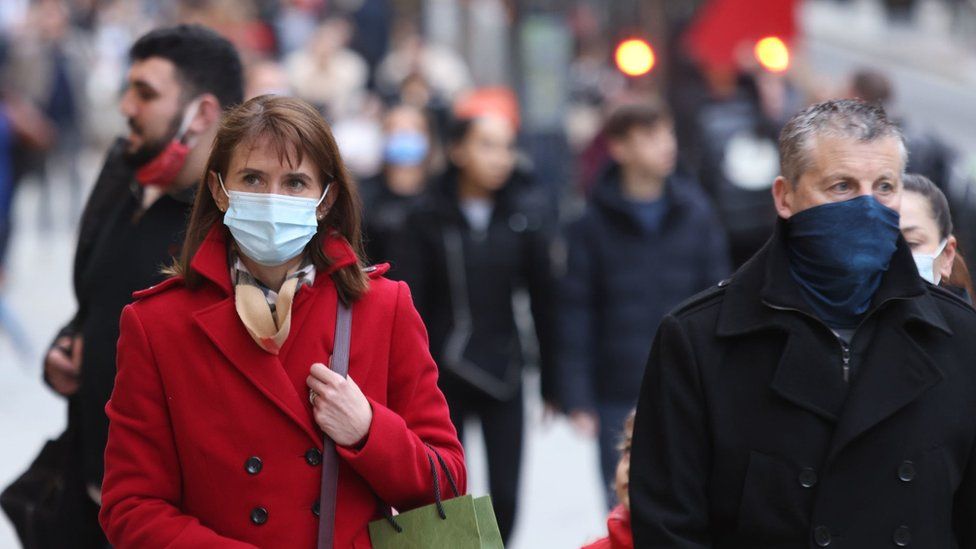
SharecloseShare pageCopy linkAbout sharingImage source, PA MediaThe UK has recorded the highest number of daily Covid-19 cases since the beginning of the pandemic, with 78,610 new cases on Wednesday. The previous record was 68,053 on 8 January – when the UK was in lockdown.The head of the UK Health Security Agency, Dr Jenny Harries, earlier warned the Omicron variant is “probably the most significant threat” since the pandemic began.Prime Minister Boris Johnson is due to hold a press conference at 17:00 GMT.Cases have risen by nearly 20,000 in one day – on Tuesday, 59,610 confirmed cases were confirmed by the government.The jump in cases follows the introduction of new measures in recent days, with mandatory face masks in most indoor settings and Covid passes for large events in England.Health Secretary Sajid Javid refused to rule out introducing new restrictions over the coming weeks, but insisted the measures in place currently “are the right ones”.Asked if more guidance would be issued instead of legislation, he told reporters: “We keep the whole situation under review. It is fast-moving, I think people understand that.”Also on Wednesday, the UK gave out 656,711 booster or third doses of a vaccine – up by over 140,000 on the day before. There were 165 deaths of people who tested positive for Covid in the previous 28 days.Health officials have been clear we should expect cases to surge because of the Omicron variant.The first UK case was identified last month – and by last weekend it was thought to account for nearly a quarter of cases. And with Omicron infections doubling every two days it was only a matter of time before it began to drive up overall infection levels.These numbers are only going to go up from here as both Delta and Omicron circulate.What is not clear is what it means for serious illness.There are suggestions it is causing milder illness. There is logic to that – reinfections or infections post vaccination are likely to be milder.But if infections continue to rise as quickly as they are that will push up hospital admissions.Left unchecked, the peak will come quickly with modelling suggesting it could range between just over 2,000 a day to more than 6,000 in England alone.Last winter it topped out at 3,700.Concerns over the speed at which the Omicron variant is spreading in the UK have been expressed by scientists and government advisers.The chief executive of NHS England said the case numbers “should worry all of us” and emphasised they show how important the booster programme is. Amanda Pritchard told the House of Commons Public Accounts Committee: “That is a stark reminder of why the current national mission to get Covid vaccination is the right one.”

Read more →

New study reveals how epithelial cells in the body naturally eliminate 'precancerous' ones

In addition to its immune surveillance system, recent reports have shown that the human body has defense mechanisms run by non-immune epithelial cells. Epithelial cells are a type of cell that occur in layers that line most surfaces of our body. These epithelial cells can recognize and extrude neighboring precancerous cells from the epithelium; this extrusion process is called cell competition. This form of immune-like surveillance has garnered attention in recent years based on its potential for future immune-like therapeutic targets for cancer preventive treatment. However, it is still unknown what kind of ligand-receptor interactions are involved in the recognition of precancerous cells by normal epithelial cells. Recently, a group of scientists have successfully solved this research question and have published their findings in Nature Immunology.
Speaking about the premise of their study, Professor Takeshi Maruyama, an Associate Professor at the Waseda Institute for Advanced Study at Waseda University, who led the research group, says, “During the process of cell competition, normal epithelial cells can be primed by contact with precancerous cells. However, it was previously unclear how neighboring normal epithelial cells recognize precancerous cells to eliminate them.”
In this work, the researchers identified a plasma membrane protein, Canis suboptimal alteration recognizing protein (Canis AltR) in non-transformed canine epithelial cells, the function of which was unknown, as a recognizing protein for cell competition. In humans, the protein most similar to AltR is leukocyte immunoglobulin-like receptor B3 (LILRB3). AltR/LILRB3 interacts with major histocompatibility complex class I (MHC class I) that is expressed on precancerous epithelial cells.
MHC class I-AltR/LILRB3 interaction causes the activation of AltR/LILRB3, which triggers an intracellular SHP2-ROCK2 (Src homology-2 domain-containing protein tyrosine phosphatase-2-Rho-associated protein kinase 2) pathway. This SHP2-ROCK2 pathway leads to the “accumulation of cytoskeletal components,” which generates a mechanical force to extrude precancerous cells, in the normal epithelial cells at the boundary with precancerous cells. Finally, normal epithelial cells push the precancerous cells out of the epithelium to eliminate them from the body.
Interestingly, this molecular mechanism occurs independently of natural killer or CD8+ T cell-mediated immune responses. “Our study describes a new immune-like mechanism by non-immune epithelial cells to suppress tumorigenesis,” says Maruyama.
The researchers hope that these significant findings can be applied to real life cancer treatment. Maruyama adds, “The recombinant MHC-I-α3 protein used in this study enhances the elimination of precancerous cells and suppresses the formation of tumors and precancerous lesions. We hope that this biomolecule would contribute to a therapeutic candidate for cancer prevention by the elimination of precancerous cells.”
This study advances us closer to more effective cancer treatments in the future, bringing hope to the fight against this devastating disease.
Story Source:
Materials provided by Waseda University. Note: Content may be edited for style and length.

Read more →

Gallic acid and stretching decrease osteoarthritis markers in cartilage cells

A healthy diet and a little exercise appear to be good for arthritis, even on the cellular level.
A team led by Washington State University researchers used gallic acid, an antioxidant found in gallnuts, green tea and other plants, and applied a stretching mechanism to human cartilage cells taken from arthritic knees that mimics the stretching that occurs when walking. The combination not only decreased arthritis inflammation markers in the cells but improved the production of desired proteins normally found in healthy cartilage.
While still at an early stage, the findings suggest a new procedure could be developed to treat cartilage cells extracted from a patient to grow a supply of cells or a tissue to be re-implanted.
“We found the combined stretching, which acts like an exercise for the cell itself, with the gallic acid decreased inflammation markers, which means we were able to reverse osteoarthritis,” said Haneen Abusharkh, the study’s lead author and a recent WSU Ph.D. graduate. “It’s basically like having good exercise and a good diet on a micro-scale.”
For the study, published in Experimental Cell Research, the researchers harvested osteoarthritic cartilage cells from donated knees taken out during joint replacement surgery at Pullman Regional Hospital. They cultured the cells in the lab and first tested six antioxidant “nutraceuticals,” or nutritional products, including Vitamin C, Vitamin E and curcumin. Antioxidants can neutralize free radicals, unstable atoms that result from oxidative stress which can damage cells and tissues.
The laboratory tests suggested gallic acid as the most effective antioxidant for neutralizing the free radicals in the osteoarthritic cartilage cells. The researchers then applied the gallic acid and added stretching, using a cytostretcher developed by the company Curi Bio Inc. They set stretching to 5%, a level that matches the stretch in human knees when walking.

Read more →

Molecular switch for addiction behavior

A molecular switch influences addiction behaviour and determines how strong the response to addictive drugs is. A research team at Heidelberg University and the Sorbonne University in Paris (France) made the discovery in mice treated with cocaine. The researchers led by Prof. Dr Hilmar Bading (Heidelberg) and Prof. Dr Peter Vanhoutte (Paris) demonstrated that the protein Npas4 regulates the structure and function of nerve cells that control addiction behaviour in mice. If the quantity of Npas4 was reduced in an experiment, the animals’ response to cocaine was much weaker.
“In the animal model, Npas4 acts as a molecular regulator for the sensitivity to drugs of abuse. We hope that the results of our research lead to a better understanding of addiction in humans and will contribute to new therapeutic approaches,” states lead author Thomas Lissek. The physician and scientist is pursuing doctoral research on molecular signalling mechanisms linking neuronal activity to gene transcription at the Interdisciplinary Center for Neurosciences (IZN) at Heidelberg University. According to the researcher, the current findings also underpin the existence of a biological basis for addiction behaviour, much like for diabetes or cardiovascular disease.
The protein Npas4 acts as a so-called transcription factor. “We can view Npas4 as a conductor who coordinates which and how many other molecules are produced in a cell,” explains Thomas Lissek. The target molecules of Npas4 primarily regulate the electrical activity patterns and the structure of nerve cells and influence the number of contact points between them. When the researchers reduced the amount of Npas4, the contacts between the nerve cells diminished. The mice subsequently exhibited a weaker response to cocaine than with a higher amount of Npas4.
The current findings from the Heidelberg and Paris scientists also demonstrate that Npas4 is governed by a special regulation mechanism. The protein can be induced only by stimuli that cause the calcium concentration in the nucleus of nerve cells to increase. For instance, the activation of dopamine receptors — a much-discussed mechanism in the development of addiction — does not contribute to increasing the amount of Npas4. The teams of Hilmar Bading and Peter Vanhoutte were also able to confirm this characteristic in human stem cell-derived neurons.
The unusual regulation mechanism of Npas4 is interesting for both basic biological research as well as the development of therapies to treat addiction. “Npas4 and its associated signalling pathway in the control of addiction behaviour are promising therapeutic approaches,” explains Prof. Bading, Director of the Department of Neurobiology at the IZN.
The research was conducted within the framework of a German-French cooperation project and was funded by the German Research Foundation (DFG) and the Agence Nationale de la Recherche (ANR), among others. The results were published in the journal EMBO Reports.
Story Source:
Materials provided by Heidelberg University. Note: Content may be edited for style and length.

Read more →

Immune system responds to mRNA treatment for cancer, researchers find

Adding messenger RNA, or mRNA therapy improves the response to cancer immunotherapy in patients who weren’t responding to the treatment, Mayo Clinic research shows. Immunotherapy uses the body’s immune system to prevent, control and eliminate cancer. The study is published in Cancer Immunology Research, a journal of the American Association for Cancer Research.
The phrase messenger RNA and its acronym, mRNA, have become familiar to the public during the COVID-19 pandemic. The mRNA vaccines for COVID-19 work by instructing cells in the body how to make a protein that triggers an immune response against the virus.
MRNA technology has also been of interest to cancer researchers and physicians. One of the major obstacles in cancer treatment is the low response rate in patients who receive immune checkpoint inhibitors to prevent an immune response from being so strong that it destroys healthy cells in the body.
“We found that by introducing mRNA in immune cells, it is possible to produce useful proteins to improve their anti-tumor activity without attempting to change the genome itself,” says Haidong Dong, M.D., Ph.D., a Mayo Clinic cancer researcher. “This approach may have the potential to be used across the spectrum of medicine to pull information gained from single-cell RNA-sequencing into mRNA-based therapy for patients.”
For the study, Dr. Dong and his team produced an immune system protein in the lab ? a monoclonal antibody ? that can detect the protein levels in tumor tissues. The goal was to determine whether certain patients may have appropriate protein levels in their tumor-reactive immune cells as a potential biomarker for this therapeutic intervention.
“Most patients with advanced cancers have not benefited from current immune checkpoint blockade therapy,” says Dr. Dong. “Our study provides a tool to detect this problem and also provides a mRNA-based therapy to fix it.”
Next, the researchers employed new sequencing technology that makes a mRNA-based change of primary immune cells possible. They identified the target gene in single-cell RNA-sequencing datasets. Then they performed a functional test to validate the role of the target gene in enhanced immune cell-mediated killing of tumor cells.

Read more →

Scientists find new details about how immune system builds long-term memory

Experts in Japan have identified a fundamental part of the immune system’s long-term memory, providing a useful new detail in the pursuit to design better vaccines for diseases, ranging from COVID-19 to malaria. The research, published in the Journal of Experimental Medicine, reveals a new role for the enzyme TBK1 in deciding the fate of immune system memory B cells.
The immune system is made of many cell types, but the two types relevant for this University of Tokyo research project are white blood cells called CD4+ follicular helper T cells and B cells. After the body recognizes an infection, the follicular helper T cells release chemical signals that cause immature B cells to learn and remember what pathogens to attack. This process of T-to-B cell signaling and B cell training occurs within a temporary cell structure called the germinal center in organs of the immune system, including the spleen, lymph nodes and tonsils. Memory B cells developed within the germinal center memorize a pathogen the first time it infects you and then if it ever gets into your body again, the mature, trained memory B cells attack it by inducing antibody production before the pathogen can multiply, saving you from feeling sick a second time.
“A goal of vaccination is to produce high-quality memory B cells for long-lasting antibody production,” said Project Assistant Professor Michelle S. J. Lee from the UTokyo Institute of Medical Science, first author of the recent publication.
“There are many factors to consider when designing vaccines for long-lasting immunity, so we should not focus only on the germinal center alone. But if you don’t have a functional germinal center, then you will be very susceptible to reinfection,” said Lee.
However, there is no limit to the number of times you can be bitten by mosquitoes and reinfected by the malaria parasite. Somehow, malaria parasites escape memory B cells. Although children are more likely to die from malaria than adults, some people can become severely ill despite any number of previous malaria infections.
This ability of the parasite to prevent and evade effective B cells is what makes malaria an interesting pathogen for Professor Cevayir Coban, who leads the Division of Malaria Immunology at the UTokyo Institute of Medical Science and is last author of the research paper with Lee and collaborators at Osaka University.

Read more →

Good mental health in young adults born after assisted reproduction

Use of assisted reproductive techniques (ART) does not lead to poorer mental health in children across adolescence and young adulthood, according to a large observational study led by researchers at Karolinska Institutet in Sweden. The study, published in JAMA Psychiatry, found a slightly higher risk of obsessive-compulsive disorder for those born after ART but this was explained by parental background factors.
“These findings are overall reassuring with respect to the psychiatric health of adolescents conceived with ART, a group that we are now for the first time able to follow into early adulthood,” says the study’s corresponding author Chen Wang, doctoral student at the Department of Medical Epidemiology and Biostatistics at Karolinska Institutet.
Since 1978, more than 9 million children have been born following the use of assisted reproductive techniques.In-vitro fertilization (IVF) has so revolutionized the treatment of infertility that Robert G. Edwards was awarded the Nobel Prize in Physiology or Medicine in 2010 for the development. Prior studies have however linked the use of ART to some undesired birth outcomes such as an increased risk of birth defects, preterm birth, and low birth weight.
The knowledge about the long-term health of children conceived with ART is still limited. Now, researchers at Karolinska Institutet have conducted the first major study on mental health in young adults born in Sweden following ART.
Using individually linked population-based data, the researchers were able to follow more than 1.2 million people born in Sweden between 1994 and 2006, including 31,565 participants conceived with ART. The participants were between 12 and 25 years of age when the study concluded. The researchers also had access to registry-based information on clinical diagnoses of mood disorders such as major depression, anxiety, obsessive-compulsive disorder (OCD) or suicidal behavior.
Aside from the potential effects of the intervention, certain traits and characteristics that may be more common in couples that undergo ART could also play a role in the long-term health of their children. In the study, the researchers therefore took particular care to separate the role of the treatment from the influence of a wide range of parental background factors, such as infertility, maternal and paternal age, education, and mental health history.
“In the end, we did not find that use of ART had any adverse influence on children’s psychiatric health as they go through adolescence. Individuals conceived with ART had a slightly elevated risk of OCD compared with the general population but this was explained by differences in the background of the parents, as this excess risk was no longer present after adjustment for various parental characteristics,” says last author Sara Öberg, associate professor at the Department of Medical Epidemiology and Biostatistics at Karolinska Institutet.
Story Source:
Materials provided by Karolinska Institutet. Note: Content may be edited for style and length.

Read more →

Kroger Eliminates Some Benefits for Unvaccinated Employees

Kroger, the national supermarket operator and one of the nation’s largest retailers, has restructured its Covid-19 benefits for unvaccinated employees and will charge some of them if they remain unprotected, a spokeswoman for the company confirmed on Wednesday.Last year, before coronavirus vaccines were available, the company began offering two weeks of paid time off to employees who contracted Covid-19. Kroger told employees last week that, beginning Jan. 1, that benefit would no longer be available to people who were unvaccinated, the spokeswoman said. The news was reported by The Wall Street Journal on Tuesday.Unvaccinated employees will still be eligible for other forms of leave, but the special time off will now be open only to fully vaccinated employees.Kroger also said it would charge salaried workers who are enrolled in a company health care plan $50 a month if they remained unvaccinated. That surcharge would not apply to unionized workers and hourly-wage associates enrolled in a company health care plan.“We created and amended several workplace policies at the onset of the pandemic to support our associates during immense uncertainty,” the spokeswoman said in a statement. “The administration of the vaccine to our associates has been an integral part of our efforts and continues to be a focus.”It was unclear how many of Kroger’s approximately 500,000 employees have been vaccinated.Earlier this year, Kroger said it would give a one-time payment of $100 to all associates who received the Covid-19 vaccine, joining a wave of companies, cities and states in offering similar incentives. Kroger said it would continue that program.In September, the Biden administration issued three vaccine mandates, one for federal contractors, another for health care workers, and a third for companies with more than 100 employees. All three of the mandates affecting the private sector have been put on hold by courts because of legal challenges.Employers and governors, mostly in Republican states, have opposed President Biden’s mandates that employees of large companies must either be vaccinated or get tested weekly, arguing that it was overreach.When asked about Kroger’s new policies, Jen Psaki, the White House press secretary, said during a news briefing on Tuesday, “We know different private sector companies and entities are going to take different steps to incentivize people to get vaccinated, to keep their employees safe and their work force safe.” She stressed that the company’s new policy did not come from the federal government.Kroger, which was founded in 1883 and is based in Cincinnati, operates more than 2,500 stores in 35 states and the District of Columbia under a number of brand names, according to its website.

Read more →

On the front line as Afghan children battle malnutrition and measles

SharecloseShare pageCopy linkAbout sharing”There’s no space inside,” shouts a beleaguered hospital worker as he tries to push back a frantic crowd of mothers and babies hoping to receive nutrition packs. “It’s like this every day,” he yells out to us over their heads, “it’s been like this for the last four or five months… It was bad last year too, but not like this.” The war in Afghanistan is over, but its economy is collapsing and at this hospital, in the remote, central province of Ghor, they’re struggling to cope with the fallout. International support, which propped up the previous government, was withdrawn after the Taliban takeover in August, whilst the country’s foreign reserves, totalling around $10bn, have been frozen – chiefly by the United States. Afghanistan has seen unemployment and food prices soar, whilst the value of its currency is plummeting and banks have set limits on cash withdrawals. For the women outside the malnutrition triage centre in Ghor, life has always been difficult, but now it’s getting even harder. “We have nothing, no food. My children are sick and we don’t have medicine,” pleads one mother. “Why aren’t we getting any help?” There are twice as many cases now compared with this time last year, one senior doctor tells us.Inside a small room, a nurse wraps a measure around the stick-like arm of a young baby. It indicates “red” – the child is severely malnourished. They’re witnessing a sharp rise in cases of malnutrition here and across the country, with both mothers and young infants in particular unable to get enough food. The UN has warned that one million children are at risk of dying due to starvation over the coming months. At the malnutrition ward, they’re running out of space. “Right now, we have two babies and their mothers in a single bed,” Dama, a nurse tells me. “At times we have three.” Temperatures can drop well below -10C at night, but there’s only enough wood in the heater to last for a couple of hours each day. Under the previous government, the hospital was also badly under-resourced, but at least the Ministry of Health was able to provide them with enough fuel. Now, with funds cut off, the Taliban’s government simply doesn’t have the money. Even the small pile of wood in the ward’s heater has been donated by an international charity. Someone has shoved an empty medicine box and a crisp wrapper inside the stove too, to try and provide a few extra minutes of warmth. Chaghcharan, the capital of Ghor province, is around 10 hours drive from the capital Kabul, much of it along a dirt road. The mountains along the way are picturesque, but there’s less snow on them than usual – a sign of the continuing drought that’s adding to the humanitarian crisis.The struggle to save Afghanistan’s starving babiesAppeal to help Afghanistan over starvation fearsAfghans facing ‘hell on earth’ as winter loomsAs we arrive at the province’s only hospital, staff are receiving their salaries for the first time in five months, thanks to the International Committee of the Red Cross. Medicine supplies, for now are still dangerously low, however. They have only about a week’s worth left, so most patients are told to buy their own from nearby pharmacies. “We don’t have anything… no medicines,” says Dr Safar, his voice cracking with emotion as he holds up a prescription he’s writing, “we are suffering, sometimes we are crying.”Many struggle to cover the costs of treatment. Gulfiroz, 20, is recovering from a Caesarean section. Her baby, Benyahim, is doing well, but the procedure has driven her family into debt. “We didn’t even have 10 Afghani (9c; 6p) for a taxi here,” her mother-in-law tells the BBC. “We couldn’t afford to buy her meat, just milk… We had to buy lots of medicines. We asked everyone we know to lend us the money.” At times hospital staff hold their own collections on behalf of patients, despite not having received pay checks for months themselves. Dr Parsa, the head of the hospital, has been paying out of his own pocket for six extra nurses, just to keep essential services running. Western governments are anxious about resuming funding, concerned they will be strengthening the new Taliban government. But Dr Parsa says his hospital needs support. “My message to the international community is: this is the worst situation we have ever faced… please send us humanitarian aid. Negotiate with the Islamic emirate [the Taliban government] and unfreeze their foreign reserves.” It’s not just a rise in malnutrition that hospital staff are witnessing, but also of cases of severe pneumonia as winter sets in. “We don’t have fuel, shawls or warm clothes,” says one elderly woman accompanying her baby granddaughter in the emergency ward. “We don’t have a real life… we’re displaced refugees.” Panorama reports on how life has changed for Afghan people under Taliban rule – watch on BBC iPlayer.It’s in the measles ward we come across the starkest example of the consequences of the lack of hospital resources. The hospital is struggling to cope with the number of cases of the infectious disease – vaccination campaigns were recently disrupted by both Covid and, until the Taliban takeover, armed clashes. The night before we arrived a baby boy died, because doctors couldn’t provide him with enough oxygen. “We needed pure oxygen in cylinders… they’re expensive,” says another doctor, Dr Musa. A cylinder would have cost them around $50. That can be the difference between life and death in Afghanistan. In fact, there are a few dozen empty cylinders just outside the measles ward. The hospital has a machine to produce its own oxygen, but there’s no electricity to power it. At the moment, there’s no electricity across the whole city, apart from private solar power in some residents’ homes. The city used to be powered by a fuel-run power plant, but there’s no money to turn it on. The hospital has its own generators, but they’re not enough. Dr Khatera heads the maternity unit, and is the wife of Dr Parsa, who is in charge of the whole hospital. Despite the billions of dollars of international support over the past two decades, she reels off a list of equipment and resources they have long been in need of. Now, the situation is even worse. The International Committee of the Red Cross is committed to providing emergency support for the next six months.Dr Parsa is grateful, but also deeply worried about the future. “If we don’t get international help, and this situation continues, my fear is the hospital will shut down. That would be the end of the health service in this province,” he warns. Additional reporting by Ahmad Fawad Zhwak and Malik Mudassir.This video can not be playedTo play this video you need to enable JavaScript in your browser.

Read more →

Despite cleaner air, pollution disparities for people of color remain across the US

Air pollution is linked to multiple health conditions, including heart disease, cancer and cognitive decline. These effects vary depending on the source of air pollution. And not everyone is equally exposed to poor air quality.
University of Washington researchers investigated disparities in exposure to six major air pollutants in 1990, 2000 and 2010 by comparing models of air pollution levels to census data — including where people live, their racial/ethnic background and their income status.
The team showed that while overall pollutant concentrations have decreased since 1990, people of color are still more likely to be exposed to all six pollutants than white people, regardless of income level, across the continental United States.
The researchers published these results Dec. 15 in Environmental Health Perspectives.
“This is the first time anyone has looked comprehensively at all these main pollutants and watched how they vary over time and space,” said senior author Julian Marshall, UW professor of civil and environmental engineering. “This paper is a chance to recognize that, while every community is unique, there are some factors that play out over and over again consistently across our country. If we go state by state, there’s no place where there are no environmental justice concerns.”
Previously the researchers showed that Americans of color were exposed to higher concentrations of nitrogen dioxide (NO2), an outdoor pollutant from cars and trucks, in two census years: 2000 and 2010.

Read more →