A 3-D Printed Pod Inflames the Assisted Suicide Debate

The pod, known as Sarco, was conceived as a way for people to end their lives without involving a doctor. A plan to introduce it in Switzerland has raised alarm even among right-to-die advocates.For years, a sleek, pod-shaped suicide machine called Sarco has been a striking sight at museums and funeral conventions.Now the creator of the pod is saying he is ready to take it beyond the showroom and make it available for 3-D printing next year in Switzerland, which has permissive laws on voluntary assisted suicide.The announcement by the inventor, Dr. Philip Nitschke, has unsettled even some of the most ardent right-to-die advocates, inflaming the debate.Dr. Nitschke, an Australian doctor who has been a supporter of assisted voluntary suicide for decades, said this month that he hoped to start sharing the 3-D printing program for the machine, which is designed to cause death as it fills with nitrogen, replacing the oxygen inside.He said he was aiming to introduce it in Switzerland in early 2022 after a lawyer hired by his nonprofit organization, Exit International, found no conflict with Swiss law. But the announcement, which he made in interviews and on the organization’s website, added to a growing debate over whether the online distribution of suicide information and materials encourages people to end their own lives when they might not otherwise seek to do so.In Britain, where an assisted dying bill is being reviewed in Parliament, Dr. Stephen Duckworth, the founder of Disability Matters Global, wrote in The Independent that he was “appalled” by Sarco.Dr. Duckworth, who has pressed for safe laws emphasizing personal choice and control of the dying process, added that he could not support it, “nor am I aware of any credible assisted-dying campaigner who does.” Sarco, he said in an interview, would “deprive users of human connection and replace it with a lonely virtual-reality experience.”He also raised concerns about safety. “What if it is accessed by someone not in their right mind?” he said. “Or a child? Or if it is used to abuse others? What if it doesn’t result in immediate or peaceful death and the individual is left alone without any recourse to call for help?”Dr. Charles D. Blanke, an oncologist and a professor at the OHSU Knight Cancer Center in Portland, Ore., who has studied data on physician-assisted dying, said breathing in nitrogen causes a rapid death. But he cautioned that it is untested, including as an alternative to lethal injection in capital punishment.“It is not at all clear that nitrogen inhalation would bring a peaceful death,” he said, contrary to Dr. Nitschke’s claim that death comes quickly after a brief euphoria.The law in Switzerland, where about 1,300 people sought help from right-to-die organizations in 2020, requires confirmation that people seeking to end their own lives are of sound mind and reached the decision without pressure from anyone with “selfish” motives. Then a doctor writes a prescription for sodium pentobarbital, the lethal medication used there.Sarco would bypass that step because it does not require a prescription for a drug.Some Swiss right-to-die organizations have distanced themselves from Sarco. Exit, which offers living wills, counseling and end-of-life care, and is unaffiliated with Dr. Nitschke’s similarly named nonprofit, said it does not see Sarco as an alternative to physician-assisted suicide. Another group, Lifecircle, said “there is no human warmth with this method.”Dignitas, a clinic near Zurich, said sodium pentobarbital “is approved and supported by the vast majority of the public and politics.” Pegasos Swiss Association said it was in discussion with the Sarco team but wanted further clarification about the device.Others who have studied the ethics of voluntary assisted suicide welcomed the debate that Sarco has inspired. Thaddeus Pope, a bioethicist at the Mitchell Hamline School of Law in St. Paul, Minn., said the debate about Sarco could lead to a new way of looking at end-of-life options, including by legislators.“That might be bigger or more important than the actual Sarco itself,” he said, adding that Dr. Nitschke was “illustrating the limitations of the medical model and forcing us to think.”“There are a lot of people that live with illnesses or conditions that they don’t want to live with, but they don’t qualify for medically aided dying where they live,” he said. “If he really goes forward with it, this may get the nonmedical approach to hastening death some more attention.”Dr. Nitschke, 74, has years of experience with assisted suicide. In the 1990s in Australia, he developed a machine that allowed his terminally ill patients to initiate their own deaths by administering a lethal medication with the touch of a computer key. This was the same era when Dr. Jack Kevorkian was promoting — and being prosecuted over — an assisted suicide device in the United States.Dr. Nitschke said he was inspired to create Sarco by the death in 2012 of Tony Nicklinson, a British man who suffered from so-called locked-in syndrome and whose request for help in ending his life had been rejected by a panel of judges.He said he had taken steps to ensure that anyone using Sarco would be doing so voluntarily. Users can initiate the nitrogen flow only after stating their name and where they are, and that they know what is about to happen. That process is filmed, he said, and a copy is provided to the coroner.“You say goodbye to everybody and climb in,” Dr. Nitschke said. “The idea is you are going, and they are staying.”Dr. Nitschke worked with designers in the Netherlands, where he lives, to produce a Sarco prototype in 2017 that has since been exhibited in museums and funeral fairs in Amsterdam and Venice.A model is currently on display at the Museum for Sepulchral Culture in Kassel, Germany, as part of a suicide exhibit. The curator, Tatjana Ahle, said most visitors were uncomfortable with the idea of using a futuristic pod for suicide.She said they “seemed to feel that this was inappropriate and dangerously aestheticizing death and trivializing it in its scope.”If you are having thoughts of suicide, in the United States call the National Suicide Prevention Lifeline at 800-273-8255 (TALK) or go to SpeakingOfSuicide.com/resources for a list of additional resources. Go here for resources outside the United States.

Read more →
Covid: First UK patients given take-at-home pill

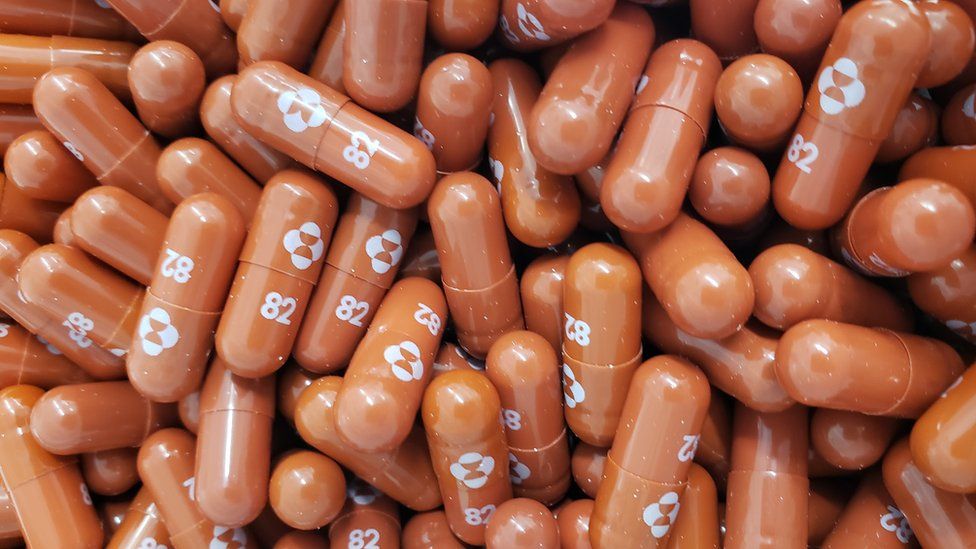
SharecloseShare pageCopy linkAbout sharingImage source, MerckThe first at-home treatment for Covid has been given to patients in the UK as part of a major national study. Molnupiravir will be tested on 10,000 people at risk of serious illness in research led by University of Oxford.Last month, the UK became the first country in the world to approve its use – a move described as a “game-changer” by health secretary Sajid Javid. But some scientists have questioned its effectiveness after its early clinical trial results were downgraded.’More at risk’Molnupiravir, initially developed to treat influenza, works by inserting errors into the genetic code of coronavirus every time it copies itself, limiting its ability to multiply in the body.The UK has agreed to purchase 480,000 courses of the drug which is designed to reduce the risk of more vulnerable patients needing hospital treatment after catching the virus.Image source, Sonia BryanIt is the first antiviral medication for Covid which can be taken at home in tablet form, rather than injected or given intravenously.Earlier this week Sonia Bryan, a 65-year-old nurse from Redditch in Worcestershire, became one of the first people in the world to be given the pill outside of a clinical trial run by a drug company. “I’m in the older age group, so I’m a little bit more at risk,” she said. “If it works, they can get this drug into the community, help people get back to normal more quickly, and prevent hospital admissions so Covid doesn’t get out of hand.”Sonia, who looked after Covid patients herself in the first wave of the pandemic, has no idea how she caught the virus, but started to feel unwell last week and tested positive on 9 December. The following day she was sent a course of the pills by courier as part of a national study called Panoramic led by University of Oxford and funded by the National Institute for Health Research. The trial is aiming to rapidly recruit 10,600 people across the UK to test whether the pill cuts the need for the over-50s and those with underlying health problems to be admitted to hospital.The chief investigator of the study, Prof Chris Butler, said: “There are good grounds for believing that this drug could be a game-changer, but that’s not proven in the UK context at the current time.”All the initial clinical trials were done in unvaccinated people, and with the variants that were circulating at that time. How will that play out in the UK setting where the population is largely vaccinated? “We don’t know. And that is exactly why we need to do the [Panoramic] trial.”Molnupiravir is the first of several new treatments for Covid that are likely to be tested over the course of the study.All the new antivirals in development have to be taken within five days of symptoms appearing to have much of an effect – before high levels of the virus are present in the body.GPs participating in the study can sign up their patients – with the drugs couriered to their front door the next day. Those over 50 or in another high-risk group can also enrol for the trial online as soon as they test positive.Another 1.3 million of the highest risk patients, including those with Down’s syndrome or undergoing chemotherapy, are also eligible to access molnupiravir and other hospital based Covid treatments, such as monoclonal antibodies, on the NHS from today, outside of the Panoramic study.Image source, MSDIn October, the drug companies behind molunpiravir – Merck Sharp & Dohme (MSD) and Ridgeback Biotherapeutics – reported initial trial results in a press release suggesting the pill reduced the risk of hospital treatment in vulnerable patients with Covid by 50%. But new data was recently provided to the US medicines regulator, the FDA, as part of the approval process in the United States. It showed that in a later, second part of the trial, there was no significant difference in outcomes between the group given the drug and a similar group given a dummy pill or placebo. Combined with the results from the first part of the trial, it reduced the overall efficacy of the treatment from 50% to 30%.Drug regulators in other countries have been more cautious as a result. Last week the French National Authority of Health refused to approve the medicine, saying it was less effective than initially hoped.Prof Penny Ward, a visiting professor in pharmaceutical medicine at King’s College London, said: “We have to really understand why that happened because it isn’t a usual phenomenon within a clinical trial.”But nonetheless, even a 30% reduction in the severity of illness or needing to go to hospital is still a valuable benefit in that very high-risk population.”The Panoramic study will start by evaluating molnupiravir, but has been designed so it can also test the effectiveness of other antiviral treatments on a rolling basis.That is likely to include Paxlovid – a new combination therapy developed by the US drugs giant Pfizer and based in part on one of its older HIV medications. The company said this week that it is 90% effective at preventing hospitalisation and death in high-risk patients in clinical trials and can work against the Omicron variant now spreading throughout the world.LOOK-UP TOOL: How many cases in your area?SYMPTOMS: What are they and how to guard against them?YOUR QUESTIONS: We answer your queriesTREATMENTS: What progress are we making to help people?NEW VARIANTS: How worried should we be?

Read more →

For IBS, specific diets are less important than expected

Many IBS sufferers avoid certain types of food and often exclude gluten. However, a large new study from Chalmers University of Technology and Uppsala University, Sweden, does not show a relationship between high intake of gluten and increased IBS symptoms. The researchers did find that a certain type of carbohydrate called ‘fodmaps’ can aggravate intestinal problems, however, the overall results indicate that they also have less influence than previously thought.
“IBS is a very complex disease involving many factors, but our results indicate that the effects of specific diets are not as great as previously thought,” explains Elise Nordin, PhD student in Food Science at Chalmers and lead author of the scientific article, published in the American Journal of Clinical Nutrition.
IBS (irritable bowel syndrome) affects around three to five percent of the world’s population, and involves symptoms such as stomach pain, diarrhea and constipation. In the new study, which included 110 people with IBS, the researchers examined how people were affected by serving them rice puddings prepared in different ways. One variety was rich in gluten while the other contained large amounts of carbohydrate of the ‘fodmap’ variety — that is, fermentable carbohydrates, including certain chains of fructose and lactose. Many foods are rich in fodmaps, including dairy products, types of bread and certain fruits and vegetables. In addition to the specially prepared rice puddings, the researchers also served a neutral one that served as a placebo.
Double-blind knowledge of the rice puddings
The participants in the study ate rice puddings rich in fodmaps, gluten and the placebo in random order, for one week per category. The study was double-blind, meaning neither the participants nor the researchers knew who ate which rice pudding and when.
“Diet studies are difficult to conduct double blind, as it can often be obvious to the participants what they are eating. This is a big obstacle, as knowledge that something has been added to or removed from the diet can affect the result. The fact that we succeeded in creating diets that were completely blind, together with the large number of participants, makes our study unique,” says Elise Nordin.

Read more →

Elizabeth Holmes Trial: Closing Arguments Are Set to Begin

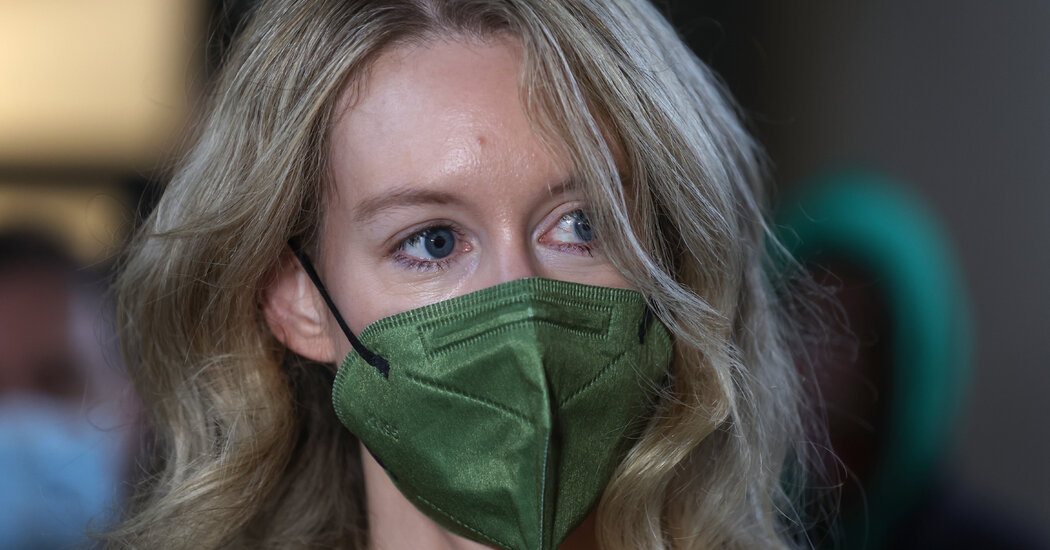
After 15 weeks and 32 witnesses, the trial of Elizabeth Holmes, the founder of the failed blood testing start-up Theranos, is entering its final stages.On Thursday morning, prosecutors are set to begin their closing arguments to prove that Ms. Holmes, 37, is guilty of 11 counts of wire fraud and conspiracy to commit wire fraud.Her case is being closely watched as a referendum on the worst excesses of Silicon Valley’s start-up culture, which prizes change-the-world claims and fast growth. The verdict could influence whether prosecutors pursue similar white-collar criminal cases at a time when tech start-ups are swimming in funding and hype.The jury of eight men and four women will begin to deliberate the fate of Ms. Holmes once the defense concludes its closing arguments on Friday. Ms. Holmes faces up to 20 years in prison if convicted.The prosecution’s case boils down to proving one thing: that Ms. Holmes intended to deceive Theranos’s investors, doctors and patients with her claims about the start-up’s blood testing technology. Proving intent is the hardest part of prosecuting a white-collar criminal trial, said James Melendres, a former federal prosecutor.“It goes to what was happening inside someone’s mind, which is extremely hard to prove definitively,” he said.Before Theranos imploded, Ms. Holmes stood out as the rare successful female founder in the male-dominated tech industry. She had founded Theranos in 2003, dropped out of Stanford in 2004 to work on the start-up and raised nearly $1 billion from investors for the company’s supposedly revolutionary blood testing technology.But a Wall Street Journal investigation in 2015 revealed that Theranos’s technology did not work and that Ms. Holmes appeared to have been courting investors and commercial partners with overblown and misleading claims. The company collapsed in 2018 amid scandal.That same year, Ms. Holmes was indicted on fraud charges. Her trial began on Sept. 8 after numerous delays.Prosecutors outlined six main areas of Ms. Holmes’s alleged deception, including lies about the abilities of Theranos’s technology, its work with the military and its business performance.The government called former Theranos employees to testify about test failures and a dysfunctional lab environment. Doctors and patients spoke about how they had made medical decisions based on Theranos tests that turned out to be wrong. And investors and pharmaceutical executives said that Ms. Holmes’s misleading claims had led them to invest millions of dollars in Theranos or sign contracts with her company.Last month, Ms. Holmes took the stand and painted herself as a well-meaning entrepreneur who was naïve and relied too much on those around her. She said she had been emotionally and physically abused by Ramesh Balwani, Theranos’s former chief operating officer and her former boyfriend. Mr. Balwani, who faces identical fraud charges to Ms. Holmes and faces trial next year, has denied the allegations.

Read more →

What Happens If You Test Positive for Covid While Traveling?

In the midst of the holiday season, the Omicron variant has many considering the prospects of getting stuck while traveling. Here’s what you need to know.Millions of Americans are expected to travel over Christmas and New Year’s, with some booking sites, such as Hopper, predicting that even international travel will approach prepandemic levels. As travelers try to decide whether to commit to their plans, many are grappling with the question: What if I test positive even though I’m vaccinated, and get stuck somewhere far from home?It’s not an outrageous question. In 2019, more than 5 million people flew into the United States over the holiday period, according to Customs and Border Protection data. Every person age 2 and up who is returning to the United States from abroad by air — including vaccinated American citizens — has to take a coronavirus test within a day of their flight home. Even if the numbers of those traveling hover far below 2019 levels, some people will have to cancel their flights to the United States because they tested positive.Of course, for people who become severely sick with Covid, the immediate concerns go far beyond getting stuck. Over the past week, an average of 7,052 people around the world — including nearly 1,300 people in the United States — died each day from the coronavirus. For vaccinated people, the implications are generally less dire. Worrying about your inability to board a flight can feel self-indulgent when I.C.U.s in many places are overwhelmed. But from a planning perspective, the consequences are not insignificant.What are the odds of testing positive if you’re vaccinated?Alas, this was difficult to answer even before the Omicron variant popped up in November. While research once put the odds of the average vaccinated American contracting Covid at around one in 5,000 per day, that figure is likely to increase as Omicron spreads. Though much is still unknown about the variant, early indications suggest that it infects vaccinated people at higher rates than previous variants. One small study found that the majority of the 43 people first identified with Omicron in the United States were fully vaccinated when they tested positive. There have been some early indications that the variant might cause milder disease than other variants and scientists expect that it’s less likely to become severe in vaccinated people.Boosters should decrease a vaccinated person’s odds of becoming infected with multiple variants. Early data suggests that booster shots for the Moderna and the Pfizer-BioNTech vaccines offer substantial protection against Omicron, Dr. Anthony S. Fauci, President Biden’s top medical adviser, said Wednesday. Booster shots start having an effect in many people in just a few days, meaning that it’s not too late to reap the benefits even if you’re traveling soon, said Dr. Aaron Milstone, a professor of pediatric infectious disease at Johns Hopkins University School of Medicine, who is studying the immune response to booster doses. Even stronger protection is likely to kick in 10 to 14 days after the shot, he and other experts noted, so the sooner you get one, the better.If I test positive while traveling within the United States, will I have to stay put?When driving across a state border, no one is going to ask you to flash negative test results. Neither states, airlines, airports or most other forms of transportation require negative coronavirus tests from domestic travelers with a few exceptions: Hawaii and the U.S. Virgin Islands. If you do end up testing positive — perhaps because a private gathering requires a test — the responsible course of action would be to isolate yourself from others because you are contagious, said Dr. Emily E. Volk, the president of the College of American Pathologists, an organization of physicians who perform biopsies and diagnose disease.“It’s the morally and ethically correct thing to do,” she said.But in most of America it’s up to the individual to decide how to proceed. The Centers for Disease Control and Prevention advises isolating for at least 10 days after testing positive, even if a person never develops symptoms. In a recent article for The Atlantic magazine, the writer Katharine J. Wu argues that this recommendation is outdated and that vaccinated people should be able to test out of isolation sooner. Dr. David Freedman, the president-elect of the American Society of Tropical Medicine and Hygiene, made a similar point in a recent interview: Once you’ve tested negative, you should feel OK about traveling again, he said.Either way, for better or worse, these are just recommendations. Some employers, educational institutions, states and counties have additional isolation policies, but few locations actively enforce quarantine. Depending on where you tested positive, you might get a call from a contact tracer. Or you might not.So what happens if you test positive while traveling internationally?A crucial step while planning any trip is to familiarize yourself with the points at which you will have to take a test and what would happen if you or someone you were traveling with tested positive, including the length and type of quarantine. In some destinations, the only concrete consequence of a positive test is that you can’t board a flight. In other destinations, health officials might require you to stay in a government hospital for more than 10 days.Pack as if you’re going to get stuck, advised Amy Eckhardt, the owner of World View Adventures, a travel agency based in Buffalo, N.Y. That might mean bringing two additional weeks of medication and your work laptop.Ms. Eckhardt has yet to have a client test positive while abroad, but she’s learned from her own experience. To celebrate her 40th birthday, she spent about a month and a half in Mexico last winter before she had the opportunity to get vaccinated. For the final leg of her trip, she picked a resort in Costa Mujeres that offered free on-site testing and covered the costs of food and lodging during quarantine, if required.When her results came back positive on Jan. 31, she said, hotel employees asked her to put on a “biohazard orange” wristband and to move from her oceanfront room to a basement room in “the quarantine section.” Because she was the hotel’s first guest to test positive, the staff was still figuring out how to handle such situations. Her resort stationed a guard outside her door, and initially she had to move to a new room across the hall every three days, while people in hazmat-like suits and goggles sanitized the room and placed new towels in the bathroom. Fortunately, she never developed any serious symptoms and her primary obstacle was boredom, which she countered by posting detailed updates about the iguana on her patio and other humorous observations in a private Facebook group for travel agents. After completing her 10 days of quarantine, she tested negative and flew back to the United States.How long does it take to test negative?Someone infected with Covid will typically test positive for five to eight days, said Dr. Freedman of the American Society of Tropical Medicine and Hygiene.In rare cases someone might test positive for as long as six weeks, even though the individual is no longer contagious, he said. There is a way to get around this in some cases. Many countries and airlines will accept a certificate of recovery from a doctor or health official in lieu of a test. Erika Richter, a spokeswoman for the American Society of Travel Advisors, a trade organization, urged people to review the C.D.C.’s highly specific requirements for that certificate.The Coronavirus Pandemic: Key Things to KnowCard 1 of 4U.S. surpasses 800,000 deaths.

Read more →

C.D.C. Panel Will Discuss Blood Clot Risk Linked to J.&J.’s Vaccine

Expert advisers to the Centers for Disease Control and Prevention will meet on Thursday to discuss what federal health officials see as a concerning increase in the rates of a rare but serious blood clotting disorder linked to Johnson & Johnson’s coronavirus vaccine.The Advisory Committee on Immunization Practices will see new data at the meeting that shows elevated risks of the condition in men and women, according to one federal official, setting the stage for the experts to possibly recommend new restrictions on the use of the vaccine.The F.D.A. on Tuesday said that although problems arose in men and women, the highest rate was in about 1 in 100,000 in women aged 30-49.Among the women who were diagnosed with the syndrome, which can impair clotting and cause internal bleeding, about one in seven of them died, the F.D.A. said. The federal official who described the planning for Thursday’s meeting said that updated figures showed roughly nine deaths from the disorder.The panel on Thursday may advise that the vaccine only be given to people who cannot access a different brand or who want it despite the risk, or restrict it to certain groups.The Washington Post first reported the plans for Thursday’s meeting and the new federal data.Jake Sargent, a spokesman for Johnson & Johnson, said the company shares with regulators reports of side effects in people who have received the vaccine and “strongly support raising awareness of the signs and symptoms of this rare event.” About 16 million people in the United States have received a single shot of the Johnson & Johnson vaccine as their primary immunization, compared to 73 million fully immunized with Moderna’s vaccine and 113 million with Pfizer’s. Among the people in the United States who have received a booster shot, just 1.5 percent have gotten the one from Johnson & Johnson.The side effect, known as thrombosis with thrombocytopenia syndrome, can impair clotting and cause internal bleeding. An increased risk for the condition has been linked to the Johnson & Johnson vaccine and the shot from AstraZeneca, which is not authorized in the United States. It has not been linked to the vaccines from Moderna or Pfizer.On Tuesday, the Food and Drug Administration announced that it added a warning to the vaccine’s fact sheets for patients and providers, saying the shot should not be given to anyone who has had a clotting problem after a first dose. The agency said that it “continues to find” that the benefits of the vaccine outweigh its risks.As more cases of the clotting disorder were adjudicated by federal health officials in recent months, F.D.A. and C.D.C. officials grew increasingly alarmed by the numbers presented to them by the C.D.C.’s immunization safety office, which monitors reports in the Vaccine Adverse Event Reporting System, or VAERS, a decades-old system that relies on self-reported cases from patients and health care providers.The reports of the condition grew worrisome enough in recent weeks that federal officials determined they needed to call an emergency meeting of the C.D.C. advisers.The Coronavirus Pandemic: Key Things to KnowCard 1 of 4U.S. surpasses 800,000 deaths.

Read more →

Study shows how HIV copies itself in the body

HIV replication in the human body requires that specific viral RNAs be packaged into progeny virus particles. A new study has found how a small difference in the RNA sequence can allow the viral RNA to be packaged for replication, creating potential targets for future HIV treatments.
The study, published last week in the Proceedings of the National Academy of Sciences, found that HIV chooses its viral RNA genome — the “source code” that it injects into healthy human cells to infect them — based on functions attributable to just two nucleotides.
“It’s just this two-nucleotide difference that makes such a dramatic effect,” said Karin Musier-Forsyth, senior author of the study, Ohio Eminent Scholar and a professor of chemistry and biochemistry at The Ohio State University. “If we can prevent it from packaging its own genome, we can prevent it from spreading inside the body.”
The study’s authors, who also include researchers from the National Cancer Institute, hoped to answer a long-standing question in HIV biology research: How does the virus know to package its specific viral RNA to be copied in human cells?
“Just like we need a genome encoded by DNA, viruses have their own genomic DNA or RNA — in the case of HIV it’s RNA — and they have to package their genomic RNA and that’s what this whole study is about,” she said. “It’s an essential step for how we understand the replication of the virus.”
RNA is a string of nucleotides, and it is present in some form or another in all living things, including viruses. In HIV, it carries the genetic information that allows the virus to copy itself inside a host — the human body. HIV RNA comprises about 9,800 nucleotides.
“We have lots of types of RNA in our cells as humans, including messenger RNA (mRNA), which is very abundant — and which everyone has heard about now, thanks to COVID-19,” Musier-Forsyth said. “But the viral genome from HIV is made in small amounts, and it is very selectively packaged as genomic RNA, in addition to serving as mRNA to make viral proteins. How does the virus find this genomic RNA to package and not just package any old RNA in our cells?”
Researchers believed if they could find an answer to that question, they might eventually be able to develop drugs that could block the virus from replicating and stop it from infecting healthy human cells.
The researchers examined the structures of two nearly identical HIV RNA strings and found that the virus used a two-nucleotide difference on the very end of the RNA strings to distinguish between genomic RNA and viral mRNA. One, they found, was more efficient at being packaged as a genome than the other due to the conformations, or structures, that it formed.
The findings could have implications for future HIV treatments that target RNA and would be different from current HIV treatments, which primarily target viral proteins. New HIV drugs based on this discovery are likely years away, but Musier-Forsyth said this finding is an important scientific step.
“Now that we understand more about the structure of the RNA, we could develop therapeutics, whether they be small molecules or other new nucleic acid therapeutics, that could lock the RNA into a conformation that wouldn’t be packaged. If it can’t package its genome then it can’t replicate,” Musier-Forsyth said.
Other Ohio State researchers who contributed to this study include Shuohui Liu and Jonathan P. Kitzrow. This work was supported by the National Institutes of Health.
Story Source:
Materials provided by Ohio State University. Original written by Laura Arenschield. Note: Content may be edited for style and length.

Read more →

How diet influences taste sensitivity and preference

What you eat influences your taste for what you might want to eat next. So claims a University of California, Riverside, study performed on fruit flies.
The study, published in the Journal of Neuroscience, offers a better understanding of neurophysiological plasticity of the taste system in flies.
To maintain ideal health, animals require a balanced diet with optimum amounts of different nutrients. Macronutrients like carbohydrates and proteins are essential; indeed, an unbalanced intake of these nutrients can be detrimental to health. Flies require macronutrients such as sugars and amino acids for survival. They use the gustatory system, the sensory system responsible for the perception of taste, to sense these nutrients and begin feeding.
In their experiments in the lab, the researchers Anindya Ganguly and Manali Dey, led by Anupama Dahanukar, fed adult flies different diets: a balanced diet, a sugar-reduced and protein-enriched diet, and a sugar-enriched and protein-depleted diet. They ensured that all three diets were similar in total calorie content and tested the flies daily for a week to examine modifications in their food choice and taste sensitivity.
The researchers report that diet affects dopamine and insulin signaling in the brain, which, in turn, affects the flies’ peripheral sensory response, which is comprised of neurons directly involved in detecting external stimuli. This response then influences what the flies eat next.
“We found diet changed the flies’ taste preference,” said Dahanukar, an associate professor of molecular, cell and systems biology. “For a diet with excess protein at the expense of carbohydrates, the flies’ taste sensitivity changed so that they mounted a compensatory behavioral response in the short term to eat more carbohydrates and less protein in order to regain a balanced diet.”
What this may mean for other animals, including humans, is that conserved signaling pathways could play a role in mounting similar diet-induced changes in taste. Individuals on a high sugar diet could see a dampening of sugar taste, making sugars less palatable at least for the short term. Similarly, a low protein diet would enhance umami taste, increasing the value of protein-rich foods to be consumed next.
“Changes in gene expression appear to be involved,” said Ganguly, a former graduate student at UC Riverside and now a postdoctoral researcher at UC Santa Barbara. “We see these changes in flies based on dietary exposure for just a day or two.”
Interestingly, when the flies that were fed unbalanced diets were returned to a balanced diet, their taste sensitivity returned to baseline levels, suggesting that changes in taste preference are reversible.
“Our work shows that imbalances in diet affect your taste preferences in a way that help you in the short term at least,” said Dey, a graduate student in Dahanukar’s lab. “They help you change your taste so that you prefer foods that benefit you, foods that would help you achieve metabolic homeostasis again.”
Dahanukar cautioned, however, that long term effects on consumption may be more complex. For example, research by other scientists has shown that while flies raised on a high sugar diet saw their sugar response decrease in the short term, flies maintained on that diet consumed more of that food in the long term.
Dahanukar, Ganguly, and Dey were joined in the study by Christi Scott and Vi-Khoi Duong. Scott is a former graduate student and postdoctoral researcher at UCR. She helped analyze transcriptome data. Duong is a former undergraduate student who did his honors thesis in Dahanukar’s lab. He is now in dental school.

Read more →

Breakthrough in using CRISPR-Cas9 to target fat cells

Fat — it is vital for life but too much can lead to a host of health problems. Studying how fat, or adipose, tissue functions in the body is critical for understanding obesity and other issues, yet structural differences in fat cells and their distribution throughout the body make doing so challenging.
“Fat cells are different from other cells in that they lack unique cell surface receptors and only account for a minority of the cells within fat tissue,” said Steven Romanelli, Ph.D., a former member in the laboratory of Ormand MacDougald, Ph.D., in the Department of Molecular & Integrative Physiology.
In a new paper published in the Journal of Biological Chemistry, Romanelli, MacDougald and their colleagues describe a breakthrough using CRISPR-Cas9, a tool that has transformed molecular biological research, but whose use in the study of adipose tissue had been elusive.
“The biggest challenge in terms of adipose research to date has been that if you want to study a gene’s function, you have to commit a considerable amount of time, resources and money into developing a transgenic mouse,” said Romanelli.
The traditional way of developing mouse models involves breeding mice with a desired mutation to delete or introduce certain genes of interest, which Romanelli says can take more than a year and tens of thousands of dollars.
CRISPR-Cas9 has revolutionized this process. It’s a gene editing technique comprised of an enzyme called Cas9 which can break strands of DNA and a piece of RNA that guides the Cas9 enzyme to a specific site in the genome for editing. This tool is packaged into a non-harmful virus for delivery to the cells being studied. The tool has been successfully used to study heart, liver, neurons, and skin cells to name a few, but never a certain type of adipose cells known as brown fat.
Using the technique, the team was able to successfully target brown fat, a specialized adipose tissue used to generate heat and protect core body temperature.
“What we’ve been able to do is take that whole process and distill it into anywhere from two weeks to a month to generate a transgenic mouse, reducing the cost to less than $2,000. Not only does it reduce time and cost, it democratizes the research so that any lab that is familiar with molecular biology techniques can adopt this method and do it themselves,” said Romanelli.
They were also able to use this method to delete multiple genes simultaneously, a fact that could help researchers better understand important molecular pathways.
Using their adeno-associated virus CRISPR-Cas9 components, they were able to knockout the UCP1 gene that defines brown adipose and enables it to generate heat, in adult mice. They observed that the knockout mice were able to adapt to the loss of the gene and maintain their body temperature in cold conditions, hinting at other pathways involved in temperature homeostasis.
Romanelli says these early results are exploratory, but the technique represents an important step forward in studying fat.
Story Source:
Materials provided by Michigan Medicine – University of Michigan. Original written by Kelly Malcom. Note: Content may be edited for style and length.

Read more →