C.D.C. Panel Recommends Other Covid Vaccines Over J.&J.’s Shots
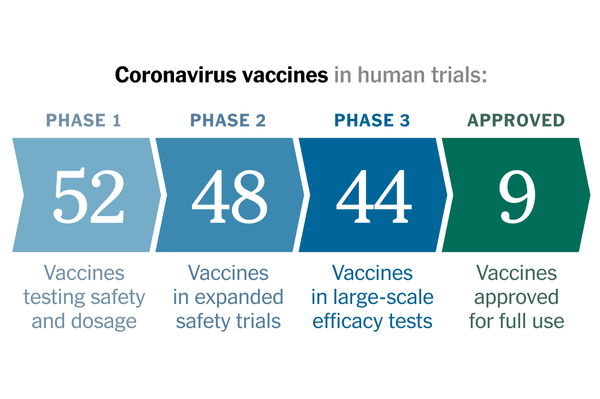
A committee of experts voted on a preference for the Moderna or Pfizer immunizations, citing the risk of blood clots linked to Johnson & Johnson’s product.An expert panel to the Centers for Disease Control and Prevention on Thursday voted to recommend that Covid vaccines other than Johnson & Johnson’s should be preferred, citing increasing evidence that the company’s shots can trigger a rare blood clot disorder now linked to dozens of cases and at least nine deaths in the United States in the last year.The panel’s vote effectively discourages vaccine providers and adults from using Johnson & Johnson’s shot. New data showed that there was a higher risk for the blood clotting condition than previously known. The risk was greatest among women aged 30 to 49, estimated at 1 in 100,000 who had received the company’s shot.Still, some panelists expressed hope that Johnson & Johnson’s vaccine could still be used by people who did not have access to the more popular shots from Moderna or Pfizer-BioNTech, or wanted the shot despite knowing of the elevated side effect risk.The recommendation, which the C.D.C. must still decide whether to accept, is the latest setback for a vaccine which has largely fallen out of favor in the United States. The company’s vaccine has not fulfilled its early promise as a traditional, one-and-done format that would be easy to deploy in more isolated or rural communities, and among people skittish about receiving two doses.About 16 million people in the United States have received the Johnson & Johnson vaccine as their primary immunization, compared to 73 million fully immunized with Moderna’s vaccine and 114 million with the Pfizer-BioNTech shots. Among Americans who have received a booster, just 1.6 percent chose Johnson & Johnson.Earlier this week, the Food and Drug Administration issued updated guidance on the risks of the blood-clotting disorder linked to Johnson & Johnson’s vaccine, but reiterated that the benefits outweighed its risks.Dozens of countries have authorized Johnson & Johnson’s vaccine and have been using it as part of their immunization campaigns. But while it remains in high demand in some parts of the world, it has lost popularity in many countries because of safety concerns and its relative lower effectiveness against Covid.Some governments have already moved to put restrictions on Johnson & Johnson’s shot because of the blood clotting risk. Finland, Denmark and Slovenia stopped using it, and several other nations have ranked it lower for use than Pfizer-BioNTech and Moderna’s vaccines. Some countries also have advised doctors to counsel women under 50 of the potential risk.The C.D.C. panel’s recommendation lands in the midst of a global surge in virus cases driven by the Delta coronavirus variant and Omicron, the latest version that has already begun spreading quickly in Britain and the United States.Several laboratory experiments suggest that a single dose of Johnson & Johnson’s shot may offer little defense against infection with Omicron. The company said late last month that it was testing blood samples from clinical trial participants who have received its shot as a booster to see how their vaccine-induced antibodies fare against Omicron.At Thursday’s meeting of the Advisory Committee on Immunization Practices, C.D.C. officials went into detail on the clotting-related syndrome identified in 54 people in the United States who received the Johnson & Johnson shot before the end of August. Overall, the rate of the condition was 3.8 cases per one million people given the vaccine.People who received a Johnson & Johnson shot months ago are not thought to be at risk for the clotting condition, since the onset of symptoms typically occurred about nine days after vaccination in the diagnosed cases.An increased risk for the condition, which is known as thrombosis with thrombocytopenia syndrome and can cause internal bleeding, has also been linked to the shot from AstraZeneca, which is not authorized in the United States. It has not been associated with the Moderna or Pfizer vaccines.One panelist, Dr. Pablo Sanchez, a pediatrician at Ohio State University, said he had steered families away from the Johnson & Johnson vaccine.Evidence has increasingly shown that one dose of Johnson & Johnson’s shot offers much less protection against infection than other vaccines. Federal health officials in October authorized boosters for people who had received a single shot of the company’s vaccine at least two months earlier. They allowed for a “mix and match” approach, allowing people to get a second shot of a Pfizer or Moderna vaccine.Coronavirus Vaccine TrackerA look at all the vaccines that have reached trials in humans.So far, most Johnson & Johnson recipients who have gotten a booster have turned to other shots, and hardly any people originally immunized with other shots have opted for Johnson & Johnson as a booster.Despite their recommendation, a number of panelists said it was important to keep Johnson & Johnson’s vaccine available as an option.“It’s really important, though, that we not completely eliminate this vaccine,” said Dr. Jason Goldman, an assistant professor of clinical biomedical science at Florida Atlantic University.Dr. Penny Heaton, a Johnson & Johnson executive, said the vaccine is making a “crucial difference” in the pandemic response. “We are confident in the positive benefit-risk profile of our vaccine. It is saving lives here in the U.S. today and on every continent around the globe,” she said.In April, soon after Johnson & Johnson’s vaccine started being administered in the United States, federal officials briefly halted use of the shot because of concerns about the risk of blood clots. Cases have continued to accumulate.The Coronavirus Pandemic: Key Things to KnowCard 1 of 4A new U.S. surge.

Read more →

In 50 Words, Tell Us Your Best Pandemic Story

We want to hear about your Covid memories.It’s a cliché to say that this has been a roller coaster of a year. Coronavirus infections soared in the first few months of 2021. Then, vaccines picked up in earnest. Cases dropped. Borders opened. Delta surged. Schools reopened. Now, here’s Omicron.A lot has happened, and some of it may have felt like a blur.So as we reach the end of this year, we’d like to know how it went for you. What is the moment from the pandemic in 2021 that will stick with you for years to come?Maybe it was learning that you’d tested positive. Maybe it’s missing someone you love who died from the virus. Maybe it was the moment you received your first vaccine dose, or when you heard that a vulnerable relative had. Maybe it was your first dinner back at a restaurant, or the first hug from a grandchild.Whatever it is, we’d love for you to share it with us and perhaps also with our readers.As a challenge, we’re asking you to keep your responses to a 50-word limit. (Here are some Tiny Love Stories, for inspiration on the format, and an online word counter, if you want to check your work.) If you’d like to participate, share your story below. We may feature it in the Coronavirus Briefing newsletter.Share your pandemic story.

Read more →

New hiding place for antibiotic resistance

Antibiotic resistance is a race between us humans, who strive to find new antibiotics that can treat infectious diseases — and bacteria, which are becoming increasingly resistant. For now, bacteria are way ahead, which is why it is important for us to learn more about antibiotic resistance. A Danish research group has discovered a new piece of the puzzle that helps us better understand the ‘enemy’.
University of Copenhagen researchers have shown that the prevailing assumption that resistant bacteria lose their resistance capability when antibiotics are not present is a truth requiring significant modifications.
“One widespread strategy to combat antibiotic resistance has been to use antibiotics for a period of time and then take a break. The belief is that resistant bacteria will lose their resistance genes or be outcompeted during the break, after which the antibiotics will work again. But that approach doesn’t seem to hold up,” says one of the study’s senior authors, Associate Professor Mette Burmølle of the Department of Biology.
Co-first author Henriette Lyng Røder elaborates:
“Our study demonstrates that resistance genes are able to hide in inactive bacteria, where they form a hidden reserve of resistance that bacteria can rely on. In other words, they don’t just disappear when antibiotics aren’t around.”
Biofilm deals resistance genes a strong card
Most bacteria live and interact in what are known as biofilms — where microbial communities are encased in a matrix of mucus they form, often on the surface of a material. Biofilms are found everywhere from stones and plants, to plaque on the teeth, to implants. Biofilms contain both active and inactive bacteria. The mucus and hibernation of inactive bacteria make biofilms a fortress able to withstand large amounts of antibiotics. But the new study shows that biofilms deal bacteria another strong card.

Read more →

Specific components of air pollution identified as more harmful than others

Ammonium is one of the specific components of fine particulate matter (PM2.5), that has been linked to a higher risk of death compared to other chemicals found in it, according to a new study in the journal Epidemiology.
This finding stems from the largest global analysis of its kind, conducted by the London School of Hygiene & Tropical Medicine as part of the Multi-City Multi-Country (MCC) Collaborative Research Network.
Particulate matter is one of the most dangerous air pollutants — a complex mixture of extremely small particles and liquid droplets which can be directly emitted from natural sources, such as forest fires, or when gases emitted from power plants, industries and automobiles react in the air.
PM2.5 is airborne particulate matter smaller than 2.5 µm in diameter. It is usually believed the black carbon part of PM2.5 (mainly stemming from motorised vehicles) was the most harmful one. However, the team’s analysis of data in 210 cities across 16 countries from 1999-2017 found human health risks from air pollution vary depending on the proportion of different components in PM2.5.
One of the most dangerous components is ammonium (NH4+), originating mostly from fertiliser use and livestock. The risk of excess mortality from PM2.5 roughly increased from 0.6% to 1% when the proportion of ammonium increased from 1% to 20% in the mix1.
Cities with a larger concentration of ammonium in the mix, including Japanese cities Aikita, Aomori, Sendai, and Canadian cities London Ontario and Sarnia were associated with higher health risks. Specific action aimed at the agricultural and farming sectors may speed up the reduction of the negative health impacts of air pollution.

Read more →

Stem cells organize themselves into embryoid

Researchers at the University of Bonn have developed a method to generate embryo-like cell complexes from the stem cells of mice. The method provides new insights into embryonic development. In the medium term, it might also be suitable for developing tests for substances that could be harmful to fertility. The study is published in the journal Nature Communications.
It is still not fully understood how a mouse, a dog or a human being develops from a fertilized egg cell. The egg cell is capable of forming every type of tissue in the organism, whether it is bone, skin, muscle or the brain. Its daughter cells are genetically identical to it; so in principle they should be able to do the same. But in these cells, certain programs in the genetic material are activated very early on, which irreversibly determines their course of development.
This process must be coordinated down to the smallest detail. After all, this is the only way to ensure that the eyes form at the appropriate location on the face, while other cells very close by develop into the nasal cartilage. Surprisingly, however, there is no conductor wielding the baton. “Embryo development is largely based on self-organization,” explains Prof. Dr. Hubert Schorle of the Institute of Pathology at the University of Bonn. “Each cell releases messenger substances into its environment and thereby helps determine the fate of its neighbors.” It is as if in an orchestra everyone only pays attention to what the musicians around them are playing. And yet this would not result in a cacophony, but in Beethoven’s Ninth Symphony.
Modified cell lines organize themselves
The current study allows new insights into these precisely coordinated processes. The researchers from Bonn succeeded in maturing embryonic stem cells (ES cells) from mice into a so-called embryoid. ES cells are pluripotent; different tissue types can form from them. Unlike omnipotent fertilized eggs, however, they are not all-rounders — so they no longer have every career open to them. “In addition to the actual embryo, the membrane that surrounds it and parts of the placenta also emerge from the egg,” Schorle explains. “ES cells, on the other hand, cannot form these tissue structures outside the embryo.”
However, they apparently play a decisive role in embryonic development: If ES cells are stimulated to divide, they merely turn into an undifferentiated cluster of cells. “We have now genetically modified some of the ES cells in our study,” explains Schorle’s colleague Jan Langkabel. He performed the main experiments in the study together with Arik Horne from Prof. Dr. Joachim Schultze’s research group at the German Center for Neurodegenerative Diseases (DZNE) and the LIMES Institute at the University of Bonn. “Some ES cells were then able to form the membrane and others the embryonic portion of the placenta.”
When the researchers brought these two modified cell lines together with the original ES cells, they observed something astonishing: The mouse cells differentiated in a finely balanced manner, eventually producing an embryo-like complex — an embryoid. “This resembled a 5-day-old mouse embryo,” Horne says. “The disordered mixture of the three cell types had therefore evolved into a strictly ordered structure, much like the one that normally emerges from a fertilized egg.” Studies of their gene activity confirmed this finding: Each individual cell of the embryoid behaved very similarly to its counterpart in a real embryo.
Embryoids could replace animal testing
It was already possible to create such embryoids before. However, this required the use of three completely different cell lines, which were grown separately in a strictly coordinated manner. This approach is very complex and error-prone — unlike the new method: “We work with a single culture,” stresses Schorle, who, like Prof. Schultze, is a member of the Transdisciplinary Research Area (TRA) “Life and Health” at the University of Bonn. “We then switch on the placenta program after a certain time in one part of the cells and the membrane program in another part. The rest then happens, as it were, by itself through self-organization.”
Prof. Schorle is now planning to create such embryoids from ES cells of monkeys in a very similar way. These could then be used for toxicity tests, he says — for example, to determine whether certain substances cause malformations in the womb. This currently relies on animal testing. “The use of such embryoids could replace at least some of these,” notes the researcher. He is already planning a corresponding cooperation project with researchers at the University of Göttingen.
Story Source:
Materials provided by University of Bonn. Note: Content may be edited for style and length.

Read more →

Greater exposure to nitrogen dioxide linked to higher levels of biomarkers of Alzheimer's disease in the brain

Investigators from the Barcelonaβeta Brain Research Center (BBRC), the research arm of the Pasqual Maragall Foundation, in collaboration with ISGlobal, have found an association between exposure to air pollution and higher levels of biomarkers of Alzheimer’s disease, particularly in individuals with elevated beta-amyloid deposition in the brain. The results of the study, which was supported by the “la Caixa” Foundation, have been published in Environment International.
“In line with those of other recent studies, our findings indicate that the tiny suspended particles and gases in air pollution, produced primarily by road traffic, may be an environmental risk factor for Alzheimer’s disease,” highlights Dr. Marta Crous Bou, one of the authors of the study and a scientific collaborator with the BBRC. She goes on to saythat the study “provides evidence that air pollution may have a particular effect on individuals who already have disease biomarkers, in this case, beta-amyloid deposition in the brain, and that exposure may contribute to the advance or progression of the disease.”
The results of this study indicate that greater exposure to nitrogen dioxide and to suspended particles with a diameter of 2.5 microns or less (PM2.5) is associated with higher levels of beta-amyloid protein deposition in the brain, a biological alteration that occurs in Alzheimer’s disease. On the other hand, exposures containing PM10 (particles with a diameter of 10 microns or less) and PM2.5 particles were associated with higher levels of neurofilament light (NfL) in cerebrospinal fluid, a biomarker of neuronal injury. The study findings also suggest that the effect of air pollutant exposure on NfL levels was stronger in individuals who carry the ?4 variant of the APOE gene, the main risk-factor gene for Alzheimer’s disease.
These findings are consistent with hypotheses which propose that fine particles such as PM2.5 can cross the blood-brain barrier and reach the brain. Air pollution is also one of the most prevalent sources of environmentally-induced inflammation and oxidative stress, two factors involved in neurodegenerative processes.
New Horizons
Although the mechanisms involved in these associations are still poorly understood, the findings of this study reinforce the emerging scientific evidence that air pollution may be a risk factor in the development of Alzheimer’s disease. “It is important to emphasize that this is a modifiable factor, and one to which a large part of the population is exposed. Even though the associated risks are small, a reduction in exposure would lead to a decrease in the morbidity associated with this disease,” explainsISGlobal researcher Dr. Silvia Alemany, first author of the study. “Future studies will allow us to demonstrate whether its effects are related to disease progression.”
Dr. Natàlia Vilor-Tejedor, co-author of the study and a member of the BBRC’s Neuroimaging Research Group, emphasises that the discoveries “will make it possible for us to analyse the effects of air pollution on the brain and cognition, while taking into account the role played by genes.” She goes on to explain that the results “also open the door to the investigation of the long-term impact of pollution on mechanisms involved in Alzheimer’s disease and to research outside of the city of Barcelona and in a broader segment of the population.”
The participants were selected from the ALFA + study. The sample included 156 cognitively unimpaired adults with a mean age of 57 years, many of them relatives of patients with Alzheimer’s disease. The researchers only included individuals who had lived in the city of Barcelona at the same address for at least the preceding 3 years and for whom reliable geocoded data was available.
Story Source:
Materials provided by Barcelona Institute for Global Health (ISGlobal). Note: Content may be edited for style and length.

Read more →

Cannabis may contain heavy metals and affect consumer health, study finds

Cannabis plants — which are used to produce industrial hemp, medical marijuana and cannabidiol (CBD) oil, among other products — have an inherent ability to absorb heavy metals from the soil, making them useful for remediating contaminated sites. But this ability to soak up toxic metals may also make cannabis dangerous for consumers who ingest it. A new meta-analysis, led by researchers at Penn State, examines the ability of cannabis plants to absorb heavy metals and discusses the resulting health impacts on consumers. The team proposes a blueprint of strategies for growers to alleviate heavy-metal uptake by their crops.
“Heavy metals, such as lead, mercury, cadmium and chromium, are known to be carcinogenic,” said Louis Bengyella, assistant research professor of plant science, Penn State. “The heavy-metal content of cannabis is not regulated; therefore, consumers could unknowingly be exposed to these toxic metals. This is bad news for anyone who uses cannabis but is particularly problematic for cancer patients who use medical marijuana to treat the nausea and pain associated with their treatments.”
Compounding the problem, Bengyella said, is the fact that some cannabis strains have been bred specifically for phytoremediation, which is the use of plants to remove pollutants from soil, water or air.
“The problem is if we use these strains that were developed for phytoremediation without considering why they were developed in the first place, we may unknowingly expose consumers to heavy metals,” he said.
Bengyella and his colleagues conducted a meta-analysis of research studies on heavy-metal contamination in cannabis. Specifically, they investigated available information on the application of cannabis in phytoremediation, the fate of heavy metals in cannabis plants, the medical impact of heavy metals in cannabis and agricultural strategies to mitigate heavy metal uptake.
Their results were published in a recent issue of Toxin Reviews, hosted by Taylor and Francis Ltd.

Read more →

Women who practice self-compassion are at lower risk of cardiovascular disease

Despite what skeptics say, being kind to oneself is not a New Age fad — and there is research to back it up.
Middle-aged women who practiced self-compassion had lower risk of developing cardiovascular disease, irrespective of other traditional risk factors such as high blood pressure, insulin resistance and cholesterol levels. The findings were published today by University of Pittsburgh researchers in Health Psychology.
“A lot of research has been focused on studying how stress and other negative factors may impact cardiovascular health, but the impact of positive psychological factors, such as self-compassion, is far less known,” said Rebecca Thurston, Ph.D., professor of psychiatry, clinical and translational science, epidemiology, and psychology at Pitt.
Mindfulness practices, such as meditation, are gaining popularity among U.S. adults. Exhausted from a barrage of stressors at work and in their personal life, people increasingly choose to turn inward to help manage their mood and emotions.
During the pandemic, the stressors have amplified, especially for women. Research from various groups across the world demonstrates that women are particularly affected by the dragging pandemic — they care for children and older relatives and are often the ones to care for other adults, too, as women compose much of the U.S. nursing workforce.
Practicing mindfulness and self-compassion is a tool that counsellors and clinical psychologists often suggest to clients who are dealing with chronic stress. These techniques have been shown to be effective for managing anxiety, irritability and even mild depression.
But do these practices have any physiological effects on the body? Thurston and her colleagues sought to answer that question by enrolling almost 200 women between ages 45 and 67. The women completed a short questionnaire asking them to rate how often they experience feelings of inadequacy, whether they often feel disappointed by their self-perceived flaws or if they grant themselves caring and tenderness during difficult life moments. The women also received a standard diagnostic ultrasound of their carotid arteries — major vessels in the neck that carry the blood from the heart to the brain.
The scientists found that women who scored higher on the self-compassion scale had thinner carotid artery walls and less plaque buildup than those with lower self-compassion. These indicators have been linked to lower risk of cardiovascular disease — such as heart attacks and strokes — years later. The results persisted even when the researchers controlled for behaviors and other psychological factors that might influence cardiovascular disease outcomes, such as physical activity, smoking and depressive symptoms.
“These findings underscore the importance of practicing kindness and compassion, particularly towards yourself,” said Thurston. “We are all living through extraordinarily stressful times, and our research suggests that self-compassion is essential for both our mental and physical health.”
Additional authors of this study are Megan Fritz, Ph.D., Yuefang Chang, Ph.D., and Emma Barinas-Mitchell, Ph.D., all of Pitt, and Pauline Maki, Ph.D., of the University of Illinois at Chicago.
This research was supported by the National Institutes of Health’s (NIH) National Institute on Aging (RF1AG053504), the NIH Heart Lung and Blood Institute (2K24HL123565), and the Pitt Clinical and Translational Science Institute (NIH Grant UL1TR000005).
Story Source:
Materials provided by University of Pittsburgh. Note: Content may be edited for style and length.

Read more →

NIH scientists urge pursuit of universal coronavirus vaccine

A growing body of scientific evidence, considered together with ecological reality, strongly suggests that novel coronaviruses will continue to infect bats and other animal reservoirs and potentially emerge to pose a pandemic threat to humans. To counter future coronavirus outbreaks, the global scientific and medical research community should focus a major effort now on three goals: characterize the range of coronavirus genetic diversity in multiple animal species; better understand coronavirus disease pathogenesis in laboratory animal models and people; and apply this knowledge to the development of long-lasting, broadly protective coronavirus vaccines. So argue physician-scientists Anthony S. Fauci, M.D., Jeffery K. Taubenberger, M.D., Ph.D., and David M. Morens, M.D., of the National Institute of Allergy and Infectious Diseases (NIAID), part of the National Institutes of Health, in a new commentary in The New England Journal of Medicine.

advertisement

Read more →

College football players have abnormalities in coordination and inflammation

College football players may appear healthy and successful on the field, but a number of biological measures say otherwise.
A new study between Northwestern Medicine, Pennsylvania State University and other collaborating universities has found collegiate football athletes with a decade or more of experience with the sport have related abnormalities in inflammation, energy production and coordination that are apparent before the football season and across the season. The abnormalities are related to routine repetitive head impacts from tackling and blocking.
Most head trauma studies tend to focus on injury being severe enough to cause a clinical concussion, as opposed to assessing the routine effect of repeated tackles or blows to the head over a season. These findings argue that impact sport athletes, regardless of history of concussion, have chronic problems.
These problems were found in measures that show abnormal regulation of inflammation, less coordinated movement and abnormalities in how cells produce energy. These three measures are significantly related to each other before the football season and to changes observed across the football season. They were also related to the number of head impacts a player received over the season.
“These findings support over a decade of reports about the negative effects of repetitive head impacts along with studies of animal brain injury,” said co-senior author Dr. Hans Breiter, professor of psychiatry and behavioral sciences at Northwestern University Feinberg School of Medicine. “At this point, it appears the canary is dead in the coal mine.”
“This problem affects much of youth and professional impact sports in the U.S., along with training of U.S. military personnel,” said co-senior author Dr. Semyon Slobounov, professor of neurosurgery at Penn State College of Medicine.

Read more →