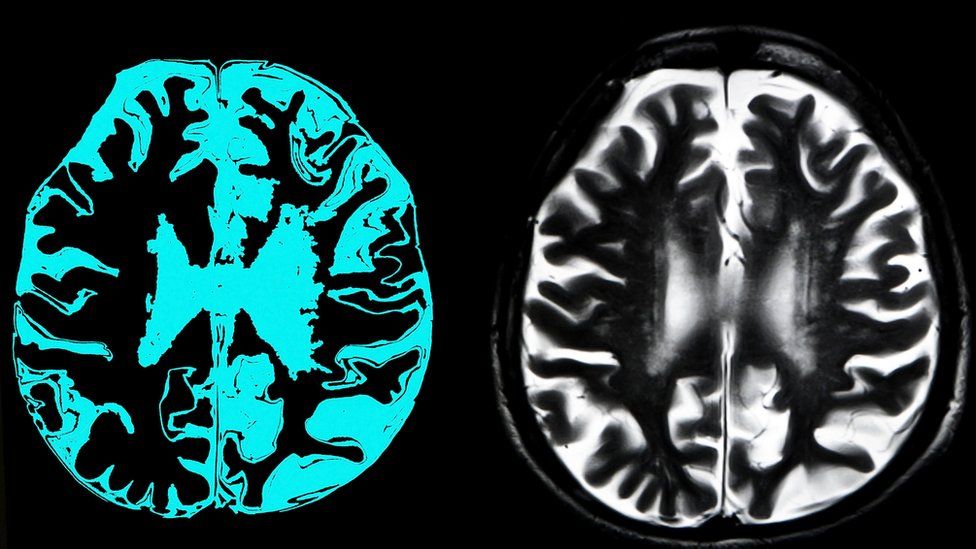
New research sheds light on how ultrasound could be used to treat psychiatric disorders

Imagine passing an exam, and thinking your success was down to the socks you wore or the number of biscuits you’d eaten, rather than the hours of study you’d put in.
This is issue of ‘credit assignment’, where a person or animal attributes the wrong outcome to an event, exists in a variety of psychiatric disorders, like addiction or OCD where people still believe that drug consumption on engaging in certain rituals will lead to positive outcomes.
Now a new study in macaque monkeys has shed light on which parts of the brain support credit assignment processes and, for the first time, how low-intensity transcranial ultrasound stimulation (TUS) can modulate both brain activity and behaviours related to these credit assignment processes.
While currently developed in an animal model, this line of research and the use of TUS could one day be applied to clinical research to tackle psychiatric conditions where maladaptive decisions are observed.
Led by the University of Plymouth and published in the journal Science Advances, the study shows that credit assignment-related activity in the lateral prefrontal area of the brain, which supports adaptive behaviours, can be safely and quickly disrupted with TUS.
After stimulating this brain area, the animals in the study became more exploratory in their decisions. As a consequence of the ultrasound neuromodulation, behaviour was no longer guided by choice value — meaning that they could not understand that some choices would cause better outcomes — and decision-making was less adaptive in the task.
The study also showed that this process remained intact if another brain region (also part of the prefrontal cortex) was stimulated; showing for the first time how task-related brain modulation is specific to stimulation of areas that mediate a certain cognitive process.
The work was co-led by the Wellcome Centre for Integrative Neuroimaging at the University of Oxford, and co-authored by Radboud University, Netherlands; PSL Research University, Paris, France; Pôle Hospitalo-Universitaire, Paris, France; the University of Paris; and the University of Lyon, France.
First author, Dr Elsa Fouragnan — UKRI Future Leader Fellow at the University of Plymouth — said: “The brain is like a mosaic — there are multiple parts doing different things. Each part may be linked to a certain behaviour. The challenge is first to know whether this behaviour is causally linked to a certain brain region. Only brain stimulation allows you to answer this question.
“The second challenge is that if you disrupt or modulate one part, then it can affect several others, so we need to understand how brain areas work together, and how they affect each other if one is stimulated or disrupted.
“The really interesting finding in this study is not only discovering where certain decision making activities take place, but also how neuromodulation can change these and associated behaviours. We hope that this can pave the way to new studies in humans, particularly in patients experiencing mental health issues.”
The work is used as a proof of concept study for ongoing research at the University of Plymouth’s new Brain Research and Imaging Centre (BRIC), where Dr Fouragnan is the lead of the Non Invasive Brain Stimulation laboratory.
Story Source:
Materials provided by University of Plymouth. Original written by Amy King. Note: Content may be edited for style and length.

Read more →

Pioneering new technique to barcode cells

Scientists have developed a pioneering new technique to barcode individual cells more accurately and efficiently — which could help pave the way for quicker disease diagnosis.
A team of researchers from the Living Systems Institute at the University of Exeter has created a new method, that combines artificial intelligence with microfluidics, that can easily classify, sort and count individual cells.
The ground-breaking new technique allows scientists to carry out intricate and in-depth analysis of single cells, including mammalian cells, in real-time.
Previously, there have been no general methods to accurately sample and barcode isolated single cells without large wastage during the sampling process.
This new approach, however, allows scientists to barcode individual cells much more accurately and efficiently than before to quantify their molecular make-up — a crucial development as disease often comes from the malfunction of a few cells.
The new technique could revolutionise the crucial early diagnosis of some of the most debilitating and life-threatening diseases, including cancer.
The study is published in the journal Advanced Materials Technologies.
Dr. Fabrice Gielen, principal investigator of the research group from the Living Systems Institute said: “With the technology we have developed, we have the opportunity to advance our understanding of the origin of differences observed between cells in a population.
“These differences are seen at the molecular level and are especially large during key cell stages such as differentiation into specialised cells, but can also be indicative of early cancer development.
“We have applied our tool for screening of thousands of single cells from real-time imaging data and efficiently barcode them with minimum cell waste.
“We are currently applying this tool to screen miniature in-vitro tumours formed from model neuroblastoma cells to understand why cancer progression appears to be highly unpredictable in clinical settings. This may lead to early diagnostics and the use of targeted therapeutics.
“Our technique being generic in scope, we also foresee plenty of further opportunities enabled by real-time image analyses such as the study of bacterial biofilm formation and the degradation of plastic microfibers by biocatalysts.”
Story Source:
Materials provided by University of Exeter. Note: Content may be edited for style and length.

Read more →

Addiction relapse driven by drug-seeking habit, not just drug

Why are some individuals able to use recreational drugs in a controlled way, whereas others switch to the compulsive, relapsing drug-seeking and -taking habits that characterize substance use disorder (SUD)? Despite more than six decades of extensive research, the question remains unanswered, hampering the development of targeted prevention and therapeutic strategies. Now, a new study in rats identifies the maladaptive nature of drug-seeking habits and how they contribute to the perpetuation of addiction by promoting the tendency to relapse.
The study appears in Biological Psychiatry, published by Elsevier.
Given the importance of the drug itself in the development and perpetuation of SUD, the research community has understandably focused on the brain’s adaptations in response to exposure to addictive drugs, such as cocaine, leading to a better understanding of the mechanisms underlying the consumption of these drugs. But people with SUD do not just take addictive drugs, they spend a great deal of time foraging for these drugs over long periods of time. During drug foraging, many compulsive behaviors characteristic of SUD manifest themselves, particularly during episodes of relapse to drug-seeking following periods of forced abstinence.
“Therefore,” says David Belin, PhD, the study’s senior author, “we found it important to consider the psychological and neural mechanisms of the tendency to inflexibly engage in drug-seeking behaviors, which may reflect the development of maladaptive drug-seeking habits.”
In rats, drug foraging over long periods is maintained and invigorated by drug-paired cues, much like in people. In both rats and people, engagement in foraging behavior becomes satisfying in its own right.
“When they are prevented from enacting their drug-seeking behavior, in conditions for instance like incarceration in humans, individuals experience the building of internal distress that results in explosive behavior at relapse, which is mediated by so-called ‘negative urgency,'” says Dr. Belin. “Notably, this study demonstrates that development of ‘incentive habits’ enables the recruitment of flexible, goal-directed behaviors at relapse” — namely, the relief-inducing fulfilment of the drug-seeking habit, rather than the drug itself. That negative emotional urgency represents a risk factor for relapse and continued SUD.
The study bolsters support for the idea that drug addiction is a psychiatric disorder, and it identifies the development of ingrained habits as a key psychological process that contributes to the perpetuation of drug-seeking behavior and relapse.
John Krystal, MD, editor of Biological Psychiatry, said of the work, “There has been a historic focus on negative emotional states as a trigger for relapse to substance use. Most of the focus on negative emotions has been directed to comorbid anxiety and mood disorders. Here, the authors point to negative emotional urgency related to the inability to execute the habit as an important new risk mechanism.”
Story Source:
Materials provided by Elsevier. Note: Content may be edited for style and length.

Read more →

Breakthrough infections generate 'super immunity' to COVID-19, study suggests

Breakthrough infections greatly enhance immune response to variants of the virus that causes COVID-19, according to a newly published study from Oregon Health & Science University.
The laboratory results, published online ahead of print today in the Journal of the American Medical Association (JAMA), reveals that a breakthrough infection generates a robust immune response against the delta variant. Authors say the findings suggest the immune response is likely to be highly effective against other variants as the SARS-CoV-2 virus continues to mutate.
The study is the first to use live SARS-CoV-2 variants to measure cross-neutralization of blood serum from breakthrough cases.
“You can’t get a better immune response than this,” said senior author Fikadu Tafesse, Ph.D., assistant professor of molecular microbiology and immunology in the OHSU School of Medicine. “These vaccines are very effective against severe disease. Our study suggests that individuals who are vaccinated and then exposed to a breakthrough infection have super immunity.”
The study found that antibodies measured in blood samples of breakthrough cases were both more abundant and much more effective — as much as 1,000% more effective — than antibodies generated two weeks following the second dose of the Pfizer vaccine.
The study suggests each exposure following vaccination actually serves to strengthen immune response to subsequent exposures even to new variants of the virus.

Read more →

Alzheimer's drug aducanumab not approved for use in EU

SharecloseShare pageCopy linkAbout sharingImage source, Getty ImagesThe European Medicines Agency has said no to approving a new drug for Alzheimer’s disease in the EU.Aducanumab does not appear to be effective at treating adults with early-stage symptoms, the EMA said.Alzheimer’s charities say they are disappointed by the decision because thousands of people are left with no treatment options.The drug – the first new treatment for 20 years – was controversially approved in the US in June.At the time, many scientists said there was little evidence from trials of it being of benefit despite it targeting amyloid – a protein that forms abnormal clumps in the brains of people with Alzheimer’s.Biogen, the manufacturer of the drug, can ask for the EMA’s decision to be re-examined within the next two weeks.It’s not known whether the company will submit a separate application for approval to the UK regulator, the MHRA.’Could cause harm’The European Medicines Agency based its decision on two main studies of more than 3,000 patients with early-stage Alzheimer’s disease which compared the effects of a low dose and high dose of the drug with a dummy pill.The patients, who had mild cognitive impairment or mild dementia, had their symptoms assessed after 78 weeks of treatment.”Results from the main studies were conflicting and did not show overall that aducanumab was effective at treating adults with early-stage Alzheimer’s disease,” the EMA said.”In addition, the studies did not show that the medicine was sufficiently safe as images from brain scans of some patients showed abnormalities suggestive of swelling or bleeding, which could potentially cause harm,” it added. The EMA concluded that the benefits of the drug did not outweigh its risks and recommended the refusal of a marketing authorisation.There are estimated to be nearly 8 million people living with dementia in the EU and around a million in the UK, with numbers expected to double by 2050.Alzheimer’s disease is thought to be the cause of the majority of those cases.European Medicines Agency -The BBC is not responsible for the content of external sites.

Read more →

Judge Overturns Purdue Pharma’s Opioid Settlement

The ruling said the company’s owners, members of the Sackler family, could not receive protection from civil lawsuits in return for a $4.5 billion contribution.A federal judge on Thursday evening unraveled a painstakingly negotiated settlement between Purdue Pharma and thousands of state, local and tribal governments that had sued the maker of the prescription painkiller OxyContin for the company’s role in the opioid epidemic, saying that the plan was flawed in one critical area.The judge, Colleen McMahon of the U.S. District Court for the Southern District of New York, said that the settlement, part of a restructuring plan for Purdue approved in September by a bankruptcy judge, should not go forward because it releases the company’s owners, members of the billionaire Sackler family, from liability in civil opioid-related cases.Although the Sacklers did not file for personal bankruptcy protection, they had made immunization from opioid claims an absolute requirement in exchange for contributing payments amounting to $4.5 billion to the agreement.But the bankruptcy code, Judge McMahon said, does not explicitly permit a judge to grant such releases, which she called “the great unsettled question.”The Sacklers did not respond to requests for comment on Thursday evening.Lawyers for a small group of states that had appealed the plan immediately hailed the ruling. “This is a seismic victory for justice and accountability that will re-open the deeply flawed Purdue bankruptcy and force the Sackler family to confront the pain and devastation they have caused,” said William Tong, the attorney general of Connecticut.In recent months, members of Congress have proposed legislation called “The Sackler Act” to preclude owners from receiving such protections unless they file for bankruptcy themselves. But even if eventually passed, it is unlikely to become law in sufficient time to resolve the Purdue case.In her ruling, Judge McMahon all but openly invited the U.S. Court of Appeals for the Second Circuit to weigh in. Various appellate courts disagree on the matter and, in her meticulous, 142-page assessment, Judge McMahon wrote that “the lower courts desperately need a clear answer.”Within hours of the ruling, Purdue said it would appeal. Judge McMahon’s ruling “will delay, and perhaps end, the ability of creditors, communities, and individuals to receive billions in value to abate the opioid crisis,” said Steve Miller, chairman of the company’s board of directors. “These funds are needed now more than ever as overdose rates hit record-highs, and we are confident that we can successfully appeal this decision and deliver desperately needed funds to the communities and individuals suffering in the midst of this crisis.”The fates of Purdue and the Sacklers have been perhaps the most closely watched among the web of litigation brought against companies in the pharmaceutical industry seeking to hold them accountable for the epidemic of opioid addiction in the United States, which has claimed more than a half-million lives.Under the crush of thousands of lawsuits, Purdue filed for bankruptcy restructuring in September 2019, which automatically put a hold on all the claims against it.Nearly two years later, Judge Robert Drain, the bankruptcy court judge in White Plains, N.Y., confirmed a plan that had been approved by a majority of creditors who voted. Purdue would be formally dissolved and would re-emerge as a new company called Knoa Pharma that would still produce OxyContin but also other drugs. The new company’s profits would go to states and communities to fund opioid treatment and prevention efforts.The Sacklers would renounce their ownership, eventually sell their foreign pharmaceutical companies as well, and contribute $4.5 billion of their fortune to the state and local opioid abatement funds.In exchange, all lawsuits against Purdue would be extinguished, a benefit typical of bankruptcy. What made the settlement so contentious was the Sacklers’ insistence on being released from all Purdue-related opioid claims, although they had not personally filed for bankruptcy.In court, lawyers said there are more than 800 lawsuits that name the Sacklers.After Judge Drain approved the plan, it was immediately appealed by the United States Trustee, a branch of the Justice Department that monitors bankruptcy cases; eight states, including Maryland, Washington and Connecticut; the District of Columbia; and about 2,000 individuals. The appeal was filed in federal district court.Lawyers challenging the plan argued that the Sacklers had essentially gamed the bankruptcy system. Moreover, they argued, Judge Drain lacked the authority to shut off a state’s power to pursue the Sacklers under its own civil consumer protection laws.Judge Colleen McMahon of the U.S. District Court for the Southern District of New York in Manhattan.Caitlin Ochs for The New York Times“Today’s ruling is a critical development that restores the state’s ability to protect the safety of Marylanders by holding fully accountable those who created or contributed to the opioid crisis, particularly members of the Sackler family,” said Brian E. Frosh, the Maryland attorney general.During oral arguments, Judge McMahon said she was troubled by what she saw as a red flag: the more than $10 billion that the Sacklers withdrew from Purdue between 2008 and 2018, as the opioid epidemic was cresting. The Sackler dividends were largely deposited in offshore accounts and trusts that are inaccessible to American authorities.And notably, she said, the withdrawals escalated after Purdue and three top executives pleaded guilty in 2007 to federal criminal and civil charges related to aggressive marketing of opioids, paying more than $600 million.As Judge McMahon wrote: “Concerned about how their personal financial situation might be affected, the family began what one member described as an ‘aggressive[]’ program of withdrawing money from Purdue almost as soon as the ink was dry on the 2007 papers.”Those withdrawals left the company without deep cash reserves to resolve thousands of opioid lawsuits that, by late 2019, forced Purdue to seek shelter in bankruptcy. But to settle the lawsuits and emerge from bankruptcy, Purdue needed the Sacklers’ contribution.That reliance put the Sacklers in a position to make a line-in-the-sand demand: They would only give the money if they received immunity from all opioid-related cases filed in civil courts.Purdue and lawyers for creditors who approved the plan had argued that Judge Drain’s authority to grant such sweeping immunity was in fact grounded in the bankruptcy code, as well as in precedent from the Second Circuit, under whose jurisdiction the Purdue case falls. Without the Sackler contribution, the lawyers said, Purdue would likely be dissolved, leaving plaintiffs who are in sore need of resources largely uncompensated.“There is no question that the Sacklers are bad actors,” wrote lawyers for an oversight committee of creditors that ultimately supported the settlement plan. But it was the knowledge of those acts, gleaned in a scorched-earth 18-month investigation of the family’s finances, they said, that gave the plaintiffs the leverage to extract such a large settlement sum from Purdue’s owners.But lawyers for the U.S. Trustee argued that shutting down the ability of plaintiffs to sue the Sacklers violated the plaintiffs’ due process rights. The Sacklers, they argued, should not be rewarded for their contribution because they “created the need for that money” by taking it out of the company in the first place, setting up the situation where they would be protected from lawsuits “by piggybacking on the bankruptcy of their company.”On Thursday night, after the ruling, Attorney General Merrick B. Garland said in a statement, “The bankruptcy court did not have the authority to deprive victims of the opioid crisis of their right to sue the Sackler family.”In her opinion, Judge McMahon said that the case raised constitutional questions but that she did not need to reach them, having found no authority for a judge to grant immunity to parties who do not seek bankruptcy protection.Deaths from opioids, such as illegally diverted prescription painkillers, have continued to rise.George Frey/ReutersThe Sackler lawyers argued that the withdrawals had not been done in anticipation of a bankruptcy filing that occurred years later, after family members had stepped down from the Purdue board. Instead, they said, the hefty withdrawals coincided with a decade in which a key patent issue was addressed in Purdue’s favor and the company was flush with cash.During that same period, Purdue’s sales force continued to fan out across the country. The use and illegal diversion of prescription opioids skyrocketed.When Purdue filed for bankruptcy, its relationship with its owners became strained — simultaneously cooperative and adversarial. The company relies on the Sacklers to fund settlements. Yet as the debtor, Purdue conducted a forensic accounting of all of its assets, including the billions withdrawn by the Sacklers.A congressional committee found that the Sacklers are worth about $11 billion.While the Purdue Pharma bankruptcy plan — and its disbursements to help prevention and addiction treatment — is on indefinite pause, wending its way through the courts, the opioid epidemic, indifferent to negotiation, persists. Last month, federal data showed that deaths from opioids — fentanyl, heroin and illegally diverted prescription painkillers — only continue to trend upward.

Read more →

Protect Abortion Rights? Virginia Democrats’ Vacation Plans Get in the Way.

Some Virginia Democrats want to codify abortion rights into state law in their final weeks in power. But several state senators do not want to upend their travel to Hawaii, Europe and Africa.Democrats have less than a month left controlling Virginia before Republicans take over the House of Delegates and the governor’s mansion. With the clock ticking, many in the party want to seize what they see as a fleeting opportunity: protecting abortion rights by codifying them into state law.But Democratic leaders in the State Senate have dismissed the idea — and not on policy grounds or over concerns about political messaging. Several of the chamber’s members don’t want to change their vacation plans.One senator is traveling in Africa. Others are in Europe. And the majority leader is headed to Hawaii.“They’re not going to be able to get back; flights are booked this time of year,” the majority leader, Richard L. Saslaw, said in an interview from California, where he was en route to the Aloha State. The state’s General Assembly does not allow proxy or remote voting, and Democrats’ paper-thin majority in the State Senate requires all members to be present to pass contentious legislation.“We discussed it,” Mr. Saslaw said. “There are too many people out of town.”As abortion rights stand on a national precipice, with the Supreme Court likely to roll back or overturn Roe v. Wade next year, Democrats have issued dire warnings about the potential consequences, which could include at least 22 states moving swiftly to ban or severely restrict abortion access. The party’s options are limited at the federal and state levels, but many of its lawmakers have vowed to do whatever they can to protect the right to an abortion.Yet as the intraparty dispute in Virginia shows, the party’s leaders are often wary about confronting the issue head-on. Congressional Democrats have been unable to pass legislative proposals to protect abortion federally, and President Biden has yet to utter the word “abortion” publicly.Many lawmakers in the party, as they continue to grapple with the pandemic and economic uncertainty, seem unwilling to prioritize abortion rights to the degree that some Democrats believe is necessary given the threats from the Supreme Court and conservative state legislatures.In Virginia, where Gov. Ralph Northam has long been a champion of abortion rights, Democrats’ 21-to-19 majority in the State Senate includes moderates and one member who opposes abortion rights.But beyond abortion politics, there is a split in Richmond between younger and more activist Democrats in the State House, and Senate Democrats who adhere more to the old “Virginia way” of doing state business. They are less willing to embrace extraordinary measures that go beyond the state’s regular legislative sessions, which are held only at the beginning of each year and are finished for 2021.Sally Hudson, a Democratic delegate from Charlottesville, said she worried that the administration of Gov.-elect Glenn Youngkin, a Republican, would roll back expansions of reproductive health care access, like the abortion pills that became available by mail in the state in October.Gov. Ralph Northam, right, has long been a champion of abortion rights, but Democrats are worried that his Republican successor, Glenn Youngkin, left, will roll back abortion rights.Steve Helber/Associated Press“We’ve got two years to do our job each term, and I don’t know why we wouldn’t use all the time to do our jobs during that term,” Ms. Hudson said. “If not for Roe, for what?”Abortion rights activists say the situations in Virginia and Washington underscore a lack of true commitment from Democrats, who have spent years campaigning on preserving the constitutional right to an abortion.“The Democratic Party is clueless right now about the abortion access crisis, and it’s really dispiriting to see them trumpeting the same old rallying cries,” said Erin Matson, a founder of Reproaction, an abortion rights advocacy group.Democrats in the Virginia Senate argue that it would be impossible to call the chamber back to Richmond in the next month, and that even if they did, there was no guarantee that the party would have enough votes.“You’re in the holiday season — some people are making plans of being away,” said Creigh Deeds, a Democratic state senator from Bath County. “What’s your reality of getting people to Richmond, and what’s realistic to pass that we haven’t already passed?”It is an echo of Democrats’ rationale in Congress, where their proposals stand little chance of becoming law under the Senate’s current legislative rules, which require 60 votes to proceed. A liberal group of senators trying to change those procedures to enact voting rights legislation has so far been thwarted by a few centrist Democrats.In Virginia, Democrats considered taking action in November as they reeled from their electoral losses but decided against it. Then a series of Supreme Court rulings and hearings on abortion rights heightened the urgency for Democrats, with Republicans set to take the House majority on Jan. 12. Mr. Youngkin will be inaugurated as governor three days later.Tarina Keene, the executive director of NARAL Pro-Choice Virginia, an abortion rights group, said she had first proposed a postelection legislative session to address abortion rights in the two days immediately after the November election, when Democrats were stunned by Republicans’ victories in the state.Ms. Keene said part of her argument to Virginia Democrats was that Republicans in other states, facing the imminent loss of statehouse control, had used lame-duck sessions to cement an advantage for themselves before Democrats took office.“We definitely mentioned to folks that they would do that to us,” Ms. Keene said. “We’ve seen in it North Carolina and in Wisconsin,” she said. “Those are two very recent examples of what they’re willing to do to undermine the other side.”Katherine White, who runs Network NoVA, a collective of dozens of liberal organizations in the Washington suburbs, has begun a campaign to pressure Virginia’s Democratic senators to return to Richmond.She said Democrats’ overconfidence that their candidate for governor, Terry McAuliffe, would win had left them unprepared for the question of protecting abortion rights.“There was no plan to go big and go bold, because they didn’t plan on losing,” she said.Since Virginia Democrats took control of Richmond in early 2020, they have fulfilled their promises to roll back Republican-enacted abortion restrictions. But they have left the door open for Mr. Youngkin to place administrative roadblocks in the way of abortion access.Mr. Youngkin downplayed his opposition to abortion rights in his general-election campaign. But in June, he was caught on an undercover video taken by a Democratic activist, saying he would go “on offense” if he won and Republicans took control of the House of Delegates.A Youngkin spokesman said the governor-elect’s previous remarks on abortion spoke for themselves. Mr. Youngkin has said that changing abortion law is not on his “Day 1” agenda, but he also reiterated last month that he would support a ban on most abortions after 20 weeks.Still, despite the potential for changes to the state’s abortion laws, Mr. Saslaw dismissed the prospect of convening his chamber before the incoming governor’s inauguration. He said the possibility had been discarded in November by Democratic state senators — many of whom, including him, have campaigned on pledges to protect abortion rights.“They didn’t want to do it,” he said Wednesday.Of the 15 states where Democrats control both state legislative chambers and the governor’s office, Virginia, Colorado and New Mexico are the only ones that have not enshrined a woman’s right to an abortion into law. Allison Bailey/NurPhoto via Associated PressEven before the current Supreme Court cases from Mississippi and Texas that could weaken or overturn Roe v. Wade, many abortion rights supporters believed their movement faced an existential crisis.This year, states have enacted 106 abortion restrictions, the most passed since Roe was decided in 1973, according to the Guttmacher Institute, a liberal research group.Of the 15 states where Democrats control both state legislative chambers and the governor’s office, Virginia, Colorado and New Mexico are the only ones that have not enshrined a woman’s right to an abortion into law. Other states, like California and New York, have gone even further, positioning themselves as refuges for women barred from seeking abortions elsewhere.In Virginia, Mr. Saslaw’s position has angered Democratic state delegates, who during a Sunday night conference call pressed Speaker Eileen Filler-Corn to push to bring both chambers back into session.Ms. Filler-Corn told them that she would happily bring them back to Richmond but that Mr. Saslaw was strident in his opposition, according to several delegates who participated in the call. Ms. Filler-Corn, in a statement issued by her spokeswoman, said there was “no consensus” among House Democrats about convening before Mr. Youngkin’s inauguration.Kathleen Murphy, a Democratic delegate from McLean, predicted that women would become outraged next year if Mr. Youngkin moved to restrict abortion access.“This can be taken away from all of us, from all women, just because the Senate has made it clear that they will not come back to deal with the issue in a timely way,” she said.

Read more →

Omicron symptoms: Is a runny nose a cold or Covid?

SharecloseShare pageCopy linkAbout sharingImage source, Getty ImagesThe new Omicron variant of coronavirus is spreading rapidly in the UK. So what are the symptoms people should act on?The NHS says people should still look out for classic Covid symptoms:a new, continuous cougha fever/high temperatureloss of or change to smell or tasteBut researchers say for some people, having Covid can feel “more like a bad cold” with symptoms such as a headache, sore throat and a runny nose. The Zoe Covid study app asks hundreds of thousands of people to log their symptoms and the investigators have been looking at ones linked to both the dominant Delta variant and the new highly spreadable variant Omicron. So far, the top five symptoms are:runny noseheadachefatigue (either mild or severe)sneezingsore throatIf you think you may have Covid, it is important to get tested. Even people who don’t feel very ill can put others at risk.How do I get a lateral flow or PCR Covid test?Does a fever mean I have coronavirus?This video can not be playedTo play this video you need to enable JavaScript in your browser.A high temperature is 37.8C or above. A fever like this can happen when the body is fighting off any infection – not just coronavirus. It is best to use a thermometer. But if you don’t have one, check if you, or the person you are worried about, feels hot to the touch on the chest or back. A high temperature is unlikely with a cold. If you have a fever, arrange a coronavirus test – you can also use the NHS 111 coronavirus service online.What about a cough?If you have a cold or flu you may well have a cough, along with other symptoms. Flu usually comes on suddenly and sufferers will often experience muscle aches, chills, headaches, tiredness, a sore throat and a runny or stuffed nose, along with the cough. It feels worse than a heavy cold.Colds tend to develop more gradually and are less severe, although they do still make you feel unwell. Along with a cough, there may be sneezing and a sore throat and runny nose. Fever, chills, muscle aches and headaches are rare.A coronavirus cough means coughing a lot for more than an hour, or three or more coughing fits or “episodes” in 24 hours. If you usually have a cough because of a long-standing medical condition like COPD, it may be worse than usual. You should get tested for coronavirus if you develop a new, continuous cough. What do loss or change to smell or taste mean?These are key symptoms of coronavirus and mean you should get a test. It could still be that you have a simple cold. But you need to check, even if you don’t feel unwell, to avoid the risk of spreading the virus.Coronavirus smell loss ‘different from cold or flu’Coronavirus loss of smell: Meat tastes like petrolDoes sneezing mean I’ve got coronavirus?Sneezing is not a classic symptom of coronavirus, and unless you also have a fever, cough or loss of smell and taste, you do not need a test, according to the NHS. Sneeze droplets can spread infections though, so catch them in a tissue, put it in the bin and then wash your hands. To help stop the spread of coronavirus and other illnesses:Wash your hands regularlyUse a face covering when social distancing is not possibleTry to keep your distance from those not in your householdHow about a runny or blocked nose or a headache?Currently, the NHS says a runny nose or a headache is not a reason to get tested for Covid. But research suggests some people who test positive for Covid do have these symptoms.US guidelines say people with the following symptoms may have Covid: Fever or chillsCoughShortness of breath or difficulty breathingFatigueMuscle or body achesHeadacheNew loss of taste or smellSore throatCongestion or runny noseNausea or vomitingDiarrhoeaWhat if I am very unwell?People with coronavirus have a wide range of symptoms, ranging from mild to severe. Some will have none at all, but can still be infectious.Symptoms may appear up to two weeks after exposure to coronavirus, but usually around day five.Feeling breathless can be a sign of a more serious coronavirus infection.If you are having trouble breathing, contact your doctor online or over the phone, or the NHS 111 online coronavirus service.If you are very worried about sudden shortness of breath ring 999.And the NHS advises: Call 111 if you’re worried about a baby or child under fiveIf your child seems very unwell, is getting worse or you think there’s something seriously wrong, call 999Do not delay getting help if you’re worried. Trust your instincts NHS: How to treat coronavirus at homeCoronavirus – NHSThe BBC is not responsible for the content of external sites.

Read more →

'Covid stopped my life-saving operation'

Lara Wahab has type 1 diabetes and needs a life-saving kidney and pancreas transplant.But despite matching organs being found, she says her hospital couldn’t do the operation because no intensive care beds were available.The 34-year-old from Crouch End, north London, had been told the wait would be about 12-15 months, but disruption to the NHS due to the Covid-19 pandemic means she’s been waiting for more than two years.Lara thanked “amazing” NHS staff, but blames unvaccinated people for taking up beds. She says those who can be vaccinated should have the Covid jab, or risk using hospital resources that others need.Figures from last month showed 825 out of 3,480 patients in intensive care beds across England had Covid – with most of these people unvaccinated.Sara Randall, chief operating officer at Oxford University Hospitals NHS Foundation Trust, said: “Our clinical teams make every effort to secure an Intensive Care Unit bed post-transplant. Any decision not to proceed with an operation is considered very carefully.”Video by Jamie Moreland

Read more →

US panel recommends J&J shots be sidelined after clot deaths

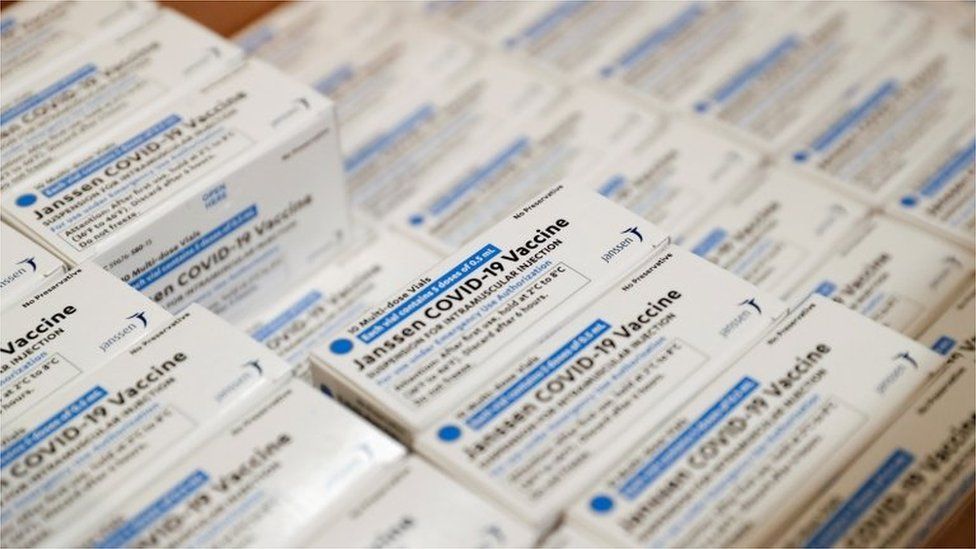
SharecloseShare pageCopy linkAbout sharingImage source, ReutersA panel of US experts has voted unanimously to recommend the Pfizer and Moderna Covid-19 vaccines over Johnson & Johnson’s, which has been linked to deadly side effects. According to the US Centers for Disease Control and Prevention (CDC), a total of 57 J&J patients have developed a rare blood clot disorder. Nine people are known so far to have died: seven women and two men. A total of 16 million US residents have received the single-dose J&J vaccine. On Thursday, the Advisory Committee on Immunization Practices (ACIP) recommended that the J&J vaccine be reserved for cases where patients are unable or unwilling to receive the more widely available Pfizer and Moderna jabs. The CDC must still decide whether to accept the panel’s recommendation. Do vaccines work against Omicron?US Covid deaths – in four graphicsThe blood-clotting side effect remains rare, with federal health officials estimating that it has been reported at a rate of 3.8 per million doses given. Of the 57 confirmed cases, 36 were admitted to intensive care units. The dead ranged in ages from 28 to 62, with obesity the primary underlying medical condition. All the cases so far have taken place within a month of the jab, the vast majority after nine days. “I don’t feel comfortable… not having the ACIP make a clear statement that reflects the recognition that we have of the concerns about these rare but oftentimes fatal side effects,” ACIP member Dr Beth Bell said on Thursday. A number of panellists warned against removing J&J as an option entirely, particularly at a time when US public health officials are trying to vaccinate the country’s remaining unvaccinated residents. “It’s really important, though, that we not completely eliminate this vaccine,” said Dr Jason Goldman, an assistant professor of clinical biomedical science at Florida Atlantic University. This video can not be playedTo play this video you need to enable JavaScript in your browser.The use of the J&J vaccine was temporarily halted in April due to concerns over blood clots. The CDC has noted that the use of the vaccine prevented thousands of Covid-19-related hospitalisations, compared to a relatively small number of people who experienced the side effects. The latest CDC statistics show that over 76% of US residents above the age of five have received at least one dose of the Covid-19 vaccines.

Read more →