The C.D.C. recommends that other vaccines be preferred over J.&J.
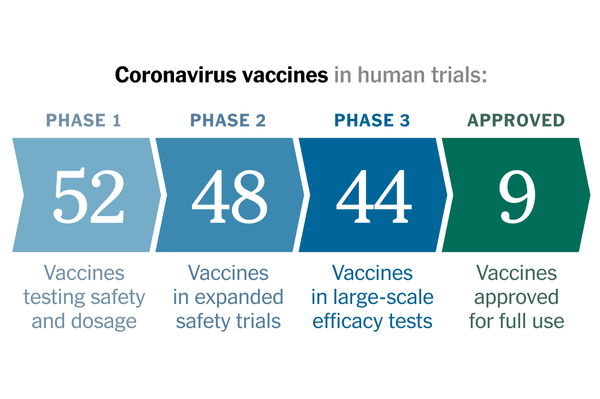
The agency’s advisers cited concerns about the increased incidence of a rare but potentially serious blood clotting condition among those who received the company’s shot.The Centers for Disease Control and Prevention recommended on Thursday that Covid vaccines other than Johnson & Johnson’s should be preferred, after its advisers cited increasing evidence that the company’s shots can trigger a rare blood clotting disorder now linked to dozens of cases and at least nine deaths in the United States in the past year.The decision adopted a recommendation by an expert panel that effectively discouraged vaccine providers and adults from using Johnson & Johnson’s shot. New data showed that there was a higher risk for the blood clotting condition than previously known. The risk was greatest among women 30 to 49, estimated at 1 in 100,000 who had received the company’s shot.Johnson & Johnson’s vaccine is not being removed from the market. It will remain an option for people who are “unable or unwilling” to receive the more popular shots from Moderna or Pfizer-BioNTech, the agency said.The recommendation is the latest setback for a vaccine that has largely fallen out of favor in the United States. The company’s vaccine has not fulfilled its early promise as a traditional, one-and-done format that would be easy to deploy in more isolated or rural communities, or among people skittish about receiving two doses.Coronavirus Vaccine TrackerA look at all the vaccines that have reached trials in humans.About 16 million people in the United States have received the Johnson & Johnson vaccine as their primary immunization, compared with 73 million fully immunized with Moderna’s vaccine and 114 million with the Pfizer-BioNTech shots. Among Americans who have received a booster, just 1.6 percent chose Johnson & Johnson.This week, the Food and Drug Administration issued updated guidance on the risks of the blood clotting disorder linked to Johnson & Johnson’s vaccine, but reiterated that the benefits outweighed its risks.Dozens of countries have authorized Johnson & Johnson’s vaccine and have been using it as part of their immunization campaigns. But while it remains in high demand in some parts of the world, it has lost popularity in many countries because of safety concerns and its relative lower effectiveness against Covid.Some governments have already moved to put restrictions on Johnson & Johnson’s shot because of the blood clotting risk. Finland, Denmark and Slovenia stopped using it, and several other nations have ranked it lower for use than Pfizer-BioNTech’s and Moderna’s vaccines. Some countries also have advised doctors to counsel women under 50 of the potential risk.The C.D.C. panel’s recommendation lands in the middle of a surge in virus cases driven by the Delta coronavirus variant and Omicron, the latest version that has already become dominant in some countries and is spreading fast in Britain and the United States.The Coronavirus Pandemic: Key Things to KnowCard 1 of 4A new U.S. surge.

Read more →

In last 15 years, deforestation made outdoor work unsafe for millions

The tropics is becoming hotter due to a combination of warming associated with deforestation and climate change — and that can reduce the ability of outdoor workers to perform their jobs safely. Researchers reporting in the journal One Earth on December 17 estimate how many safe working hours people living in the tropics have lost due to local temperature change associated with loss of trees during the past 15 years.
“There is a huge disproportionate decrease in safe work hours associated with heat exposure for people in deforested locations versus people in forestated locations just over the past 15 or 20 years,” says first author Luke Parsons (@LukeAParsons), a climate researcher at Duke University. “There is a small amount of climate change that has happened over the same 15-year period, but the increase in humid heat exposure for people living in deforested relative to forested locations was much larger than that from recent climate change.”
Previous research has revealed deforestation is associated with an increase in local temperature. Trees block out the sun’s radiation and provide shade. They also cool down the air via evapotranspiration, a process when plants transport water from the soil then evaporate water from the leaf surface, similar to how sweating cools the skin.
“The trees in the tropics seem to limit the maximum temperatures that the air can reach. Once we cut those trees down, we lose that cooling service from the trees, and it can get really, really hot,” Parsons says. “In the Brazilian Amazon, for example, where huge swaths of the rainforest have been cleared in the last 15 or 20 years, the afternoons can be up to 10 degrees Celsius warmer than forested regions.”
The One Earth study went a step further and estimated the number of people who live in locations affected by warming associated with deforestation. Using satellite data and meteorological observations, Parsons and his team tracked the local temperature and humidity in 94 low-latitude countries with tropical forests, including countries in the Americas, Africa, and Asia, from 2003 to 2018.
They estimated that in recently deforested locations, almost 5 million people lost at least half an hour of safe work time per day — when the weather outside is too hot and humid to safely conduct heavy labor. Among them, at least 2.8 million people are outdoor workers that perform heavy physical work in the agriculture and construction sectors. Heavy physical work increases heat generated within the human body, which when combined with hot and humid environments, increases the risk of heat strain and heat-related illnesses, including heat stroke, which can be fatal.
“Those tropical locations are already on the edge of being too hot and humid to safely work because of climate change. Deforestation may push these places over the edge into even more unsafe work environments,” Parsons says.
Notably, this study estimates that there are nearly 100,000 people living in the tropics in locations that lost more than 2 hours of safe work time per day due to temperature increases associated with deforestation, and over 90% of those people live in Asia. Parsons explains that the disproportionate distribution is likely due to Asia’s highly dense population.
“I think the research has a positive message and a negative message,” he says. “The negative message is that if we cut down trees, we not only cause problems for the ecosystem and global carbon emissions, but we also lose local cooling services that provide a comfortable and safe place to work. But the positive message is that if we can prevent forest loss, we can maintain cooling services along with all the other benefits forests provide. Importantly, the relationship between the health of the forests and nearby people offers an additional, locally relevant reason to prevent tree loss.”
Story Source:
Materials provided by Cell Press. Note: Content may be edited for style and length.

Read more →

Understanding cobalt’s human cost

While driving an electric car has fewer environmental impacts than gasoline-powered cars, the production of the parts necessary for these green technologies can have dire effects on human well-being.
After studying the impacts of mining cobalt — a common ingredient in lithium-ion batteries — on communities in Africa’s Democratic Republic of the Congo (DRC), an interdisciplinary team of researchers led by Northwestern University is calling for more data into how emerging technologies affect human health and livelihoods.
Such data can inform policymakers, industry leaders and consumers to make more socially and ethically responsible decisions when developing, funding and using green technologies.
The case study and perspective paper will be published on Dec. 17 in the journal One Earth.
“We have the framework and tools available to compare the environmental costs of automobiles that run on fossil fuels to battery-powered vehicles,” said Northwestern’s Jennifer Dunn, who led the study. “I can tell you the greenhouse gas emissions per mile for either one. But when it comes to the social effects, we don’t have the same capability for direct comparison. For many engineers, it’s easier to measure or calculate environmental effects than to understand the social conditions in a faraway country that they have never set foot in.”
Dunn is an associate professor of chemical and biological engineering at Northwestern’s McCormick School of Engineering and associate director of the Center for Engineering Sustainability and Resilience. To conduct the case study, Dunn led an interdisciplinary team of engineers, anthropologists and public health experts.

Read more →

Pain and anxiety impact breathing on a cellular level

You’re startled by a threatening sound, and your breath quickens; you smash your elbow and pant in pain. Why a person’s breathing rate increases dramatically when they’re hurting or anxious was not previously understood. Now, a team of Salk scientists has uncovered a neural network in the brain that coordinates breathing rhythm with feelings of pain and fear. Along with contributions to the fields of pain management, psychological theories of anxiety, and philosophical investigations into the nature of pain, their findings could lead to development of an analgesic that would prevent opioid-induced respiratory depression (OIRD), the disrupted breathing that causes overdose deaths.
In the study published on December 17, 2021, in Neuron, the Salk group focused on a group of neurons in the brainstem called the lateral parabrachial nucleus, which is arranged in a core-shell configuration. They found that neurons in the core project to the amygdala, an area of the brain that processes fear and the emotional experience of pain. Neurons in the shell project to the pre-Bötzinger complex, a region that generates breathing rhythm. The core and shell neurons influence each other according to inputs from these areas, making us breathe faster when we experience pain or anxiety.
“We are the first group to demonstrate how the lateral parabrachial nucleus coordinates breathing and pain,” says the paper’s senior author, Sung Han, assistant professor in Salk’s Clayton Foundation Laboratories for Peptide Biology. “By understanding the circuits in this brain region, we may be able to tease apart breathing regulation and pain regulation to develop a medication that inhibits feelings of pain without repressing breathing, like OIRD.”
In OIRD, opioids repress breathing as well as pain; it is the major cause of death from opioids. In previous work,Han’s lab showed that opiates like morphine repress breathing by triggering specific receptors, called mu opioid receptors (MOR), leading to the inhibition of neurons that express them. They also showed that reactivating the cells that express MOR can reverse OIRD. The current work suggests additional approaches for preventing OIRD, possibly by inhibiting neurons in the region’s core (blunting fear/anxiety) while exciting similar neurons in the shell (supporting breathing).
To show how these neurons coordinate breathing with pain and emotions, the researchers first used light and chemical agents to prove that manipulating the MOR-expressing neurons in the lateral parabrachial nucleus alters breathing rate in mice. They then used fluorescent tracers to map the inputs and outputs to the MOR-expressing neurons. Their results indicated that neurons clustered in the core of the region project to the central amygdala, while neurons clustered in the surrounding shell project to the pre-Bötzinger complex. Electrophysiological recordings of one population while stimulating the other population revealed that some of those subpopulations are reciprocally connected, with an excitatory network between them. Via this network, signals of fear and pain were coordinated with breathing rhythms.
“We have found very intricate circuits involving upstream and downstream input to these neurons. By uncovering this circuit mechanism, we can better explain why breathing can often be coordinated with pain and anxiety,” says first author Shijia Liu, a graduate student in Han’s lab.
Han is eager to see the team’s discovery have a translational application. “The biggest problem these days is that opioids reduce pain but also reduce breathing, so people die,” says Han, holder of the Pioneer Fund Development Chair. “By understanding those two mechanisms in our research, maybe we can manipulate certain populations of neurons by pharmacological intervention so that we can control pain without changing the breathing.”
Han’s group is currently working on genetic analyses of the core and shell population to identify functional markers that specifically regulate pain or breathing.
Other authors on the study are Mao Ye, Gerald M. Pao, Jinho Jhang, Jonghyun Kim, Sukjae Joshua Kang, Dong-Il Kim of Salk; and Samuel Myeongsup Song and Haibei Jiang of the University of California San Diego.
The research was supported by the National Institute of Mental Health, the Brain Research Foundation, the Mary K. Chapman Foundation, the Jesse & Caryl Philips Foundation, the National Institutes of Health-National Cancer Institute and the Waitt Foundation.
Story Source:
Materials provided by Salk Institute. Note: Content may be edited for style and length.

Read more →

Shark antibody-like proteins neutralize COVID-19 virus, help prepare for future coronaviruses

Small, unique antibody-like proteins known as VNARs — derived from the immune systems of sharks — can prevent the virus that causes COVID-19, its variants, and related coronaviruses from infecting human cells, according to a new study published Dec. 16.
The new VNARs will not be immediately available as a treatment in people, but they can help prepare for future coronavirus outbreaks. The shark VNARs were able to neutralize WIV1-CoV, a coronavirus that is capable of infecting human cells but currently circulates only in bats, where SARS-CoV-2, the virus that causes COVID-19, likely originated.
Developing treatments for such animal-borne viruses ahead of time can prove useful if those viruses make the jump to people.
“The big issue is there are a number of coronaviruses that are poised for emergence in humans,” says Aaron LeBeau, a University of Wisconsin-Madison professor of pathology who helped lead the study. “What we’re doing is preparing an arsenal of shark VNAR therapeutics that could be used down the road for future SARS outbreaks. It’s a kind of insurance against the future.”
LeBeau and his lab in the School of Medicine and Public Health collaborated with researchers at the University of Minnesota and Elasmogen, a biomedical company in Scotland that is developing therapeutic VNARs. The team published its findings in Nature Communications.
The anti-SARS-CoV-2 VNARs were isolated from Elasmogen’s large synthetic VNAR libraries. One-tenth the size of human antibodies, the shark VNARs can bind to infectious proteins in unique ways that bolster their ability to halt infection.

Read more →

Keeping active through varied activities can reduce risk of developing dementia

Older adults who participate in a variety of different activities are able to reduce their risk of developing dementia, according to a new study from researchers at Simon Fraser University.
The team found that engaging in a combination of hobbies, such as light exercise and connecting with loved ones, can reduce memory decline in adults between the ages of 65 and 89 more than any individual activity.
Their findings, published in the journal Aging show that the effects of engaging in a combination of activities increased with age and was more impactful than historical factors such as education level or baseline memory.
The study examined data from the National Institute on Aging’s Health and Retirement Study and included 3,210 participants aged 65 to 89. Study participants were asked how often they engaged in 33 activities from ‘never’ to ‘at least once a month’ to ‘several times a month’ up to ‘daily’.
Researchers created a machine learning model to analyze the activities’ impact on memory. The activities ranged from hobbies such as baking or cooking, reading, playing cards and games to walking for 20 minutes, or socializing with family and friends through letters, email, phone calls or in-person visits.
“Our study results show that the risk of developing dementia can be reduced through a combination of active, daily activities — things like using a computer and playing word games,” says study co-author Sylvain Moreno, an associate professor at SFU’s School of Interactive Arts and Technology (SIAT) and CEO/scientific director of the Digital Health Circle, based at SFU.
“Scientists believed that genetics were the main factor influencing cognitive health but our findings show the reverse. With age, your choice of daily activities is more important than your genetics or your current cognitive skills,” Moreno adds.
The researchers suggest their study results could have a significant impact on aging health policies, including promoting new social prescribing programs to help older adults keep mentally active into their senior years.
Social prescribing involves connecting older adults to a range of activities in the community such as gardening, art classes or volunteering.
Older adults are more at risk of developing dementia and other neurodegenerative disorders for which there is no cure, which is why prevention is so important.
“Today, around 55 million people have dementia and this number will almost triple by 2050 with an aging population,” says Moreno. “Care for patients with dementia is challenging, labour-intensive, and chronic, which generates high costs for health systems.”
Their research demonstrates that strategies for prevention are effective and a social prescribing approach to healthcare can help people maintain healthy cognitive function as they age.
Story Source:
Materials provided by Simon Fraser University. Original written by Melissa Shaw. Note: Content may be edited for style and length.

Read more →

Drug could more effectively treat patients hospitalized with COVID-19 pneumonia, early stage research finds

A proof-of-concept trial led by the Universities of Birmingham and University Hospitals Birmingham NHS Foundation Trust has identified a drug that may offer benefit some patients hospitalised with COVID-19 pneumonia.
The CATALYST trial tested UK-based bio-pharmaceutical company Izana Bioscience’s namilumab (IZN-101) as a potential therapeutic to treat patients who are hospitalised with COVID-19 pneumonia, and receiving ‘usual’ care, as well as having high levels in their blood of a marker of inflammation known as C reactive protein (CRP). CRP levels rise when there is inflammation in the body, and elevated levels of CRP have been found to be a potential early marker to predict risk for severity of COVID-19.
An antibody already in late-stage trials to treat rheumatoid arthritis, namilumab targets a ‘cytokine’ which is naturally secreted by immune cells in the body but, in uncontrolled levels, is believed to be a key driver of the excessive and dangerous lung inflammation seen in COVID-19 patients.
The trial, carried out in collaboration with the University of Oxford and funded by the Medical Research Council and carried out between June 2020 and February 2021, involved patients aged over 16 with COVID-19 pneumonia either being treated on a ward or Intensive Care Unit (ICU) at nine NHS hospitals across the UK.
The study, published Dec. 16 in The Lancet Respiratory Medicine, involved 54 patients receiving ‘usual care’ (steroids and oxygen or ventilation, depending on the severity of disease) and 57 patients given usual care as well as a single intravenous dose of 150mg of namilumab.
As well as COVID-19 pneumonia, all study participants had CRP levels greater than 40mg/l. The researchers compared the probability of the reduction of levels of CRP in patients. Compared to usual care alone, the researchers found there was a 97% probability of CRP being reduced over time in those given namilumab when compared with usual care alone.

Read more →

New device advances commercial viability of solar fuels

A research team has developed a new artificial photosynthesis device with remarkable stability and longevity as it converts sunlight and carbon dioxide into two promising sources of renewable fuels — ethylene and hydrogen.
The researchers’ findings, which they recently reported in the journal Nature Energy, reveal how the device degrades with use, then demonstrate how to mitigate it. The authors also provide new insight into how electrons and charge carriers called “holes” contribute to degradation in artificial photosynthesis.
“By understanding how materials and devices transform under operation, we can design approaches that are more durable and thus reduce waste,” said senior author Francesca Toma, a staff scientist in the Liquid Sunlight Alliance (LiSA) and Berkeley Lab’s Chemical Sciences Division.
For the current study, Toma and her team designed a model solar fuels device known as a photoelectrochemical (PEC) cell made of copper oxide or cuprous oxide (Cu2O), a promising artificial photosynthesis material.
Cuprous oxide has long puzzled scientists, because the material’s strength — its high reactivity to light — is also its weakness, as light causes the material to break down within just a few minutes of exposure. But despite its instability, cuprous oxide is one of the best candidate materials for artificial photosynthesis because it is relatively affordable and has suitable characteristics for absorbing visible light.
To better understand how to optimize the working conditions for this promising material, Toma and her team took a closer look at cuprous oxide’s crystal structure before and after use.

Read more →

Research takes early step towards drug to treat common diabetes complication hypoglycemia

New research has taken an important step towards the goal for a treatment for the common diabetes complication hypoglycaemia, or low blood sugar.
In all forms of diabetes, blood sugars become too high as the body is either unable to produce insulin, or cannot make enough of it, or the insulin it produces is not effective. This means people with diabetes have to manage their blood sugar levels themselves, and these levels can commonly become dangerously high (hyperglycaemia) or low (hypoglycaemia).
Episodes of hypoglycaemia, also known as “hypos” often occur at night, disrupting sleep and sometimes causing seizures. Hypoglycaemia cause unpleasant symptoms such as anxiety, palpitations, sweating and hunger. If extreme, they can also cause dizziness, confusion, loss of consciousness and, if untreated, coma and even death.
Now, research published in Frontiers in Endocrinology led by the University of Exeter, working with Rigel Pharmaceuticals, found a way help to defend against hypoglycaemia by boosting hormonal defence systems. The team believes they have identified a promising target in the brain could be useful for future drug development to create an anti-hypoglycaemia drug.
The researchers, funded by JDRF and supported by Diabetes UK, conducted laboratory experiments using a pre-clinical test compound (R481), that acts a little like metformin, a widely used type 2 diabetes drug. However, R481 works differently because it enters the brain and switches on an important brain fuel gauge called AMPK (AMP-activated protein kinase).
Lead study author Dr Ana Cruz, of the University of Exeter, said: “Our work highlights the importance of better understanding the brain-pancreas communication to boost the body’s defences against hypoglycaemia. I see the daily emotional and physical impact hypoglycaemia can have and believe that these findings have taken us one step closer to finding targets within this brain-pancreas network to attenuate the impact of hypoglycaemia.”
The researchers conducted experiments on specialised brain glucose-sensing neurons (GT1-7 cells) in petri dishes, and found that the compound works by activating this brain fuel gauge.

Read more →

Research breakthrough could see HIV drugs used to treat low-grade brain tumors

Drugs developed to treat AIDS and HIV could offer hope to patients diagnosed with the most common form of primary brain tumour.
The breakthrough, co-funded by the charity Brain Tumour Research, is significant because, if further research is conclusive, the anti-retroviral drugs could be prescribed for patients diagnosed with meningioma and acoustic neuroma brain tumours (also known as schwannoma).
More effective approaches are urgently needed as there are very few treatment options for these tumour types which frequently return following surgery and radiotherapy.
Meningioma is the most common form of primary brain tumour. Mostly low-grade, it can become cancerous over time, and develops from cells located in the meninges which protect the brain and spinal cord. Acoustic neuroma is a different type of low-grade, or non-cancerous brain tumour, which develops in nerve-protecting cells called Schwann cells. Both tumours may occur spontaneously, usually in adulthood, or in the hereditary disease Neurofibromatosis type 2 (NF2) in childhood/early adolescence.
Researchers at the Brain Tumour Research Centre at the University of Plymouth have shown previously that a tumour suppressor, named Merlin, contributes to the development of meningioma, acoustic neuroma and ependymoma tumours. It can also contribute to neurofibromatosis type 2 (NF2). Tumour suppressor genes play important roles in normal cells by controlling division or repairing errors in DNA. However, when tumour suppressors do not work properly or are absent, cells can grow out of control, leading to cancer.
In this latest study Dr Sylwia Ammoun, Senior Research Fellow, and her collaborator, Dr Robert Belshaw investigated the role that specific sections of our DNA play in tumour development. Named ‘endogenous retrovirus HERV-K’, these sections of DNA are relics of ancient infections that affected our primate ancestors, which have become stable elements of human DNA.
Dr Ammoun said: “High levels of proteins produced by HERV-K DNA have previously been linked to the development of different tumours. In this study, the team showed that high levels of HERV-K proteins were present in meningioma and schwannoma cells obtained from patients. The team was also able to identify molecular events that may enable HERV-K proteins to stimulate the growth of these tumours. Furthermore, several drugs were identified that target these proteins, reducing the growth of schwannoma and grade I meningioma cells in the laboratory.”
Professor Oliver Hanemann, Director of the Brain Tumour Research Centre of Excellence, added: “Significantly, these drugs — the retroviral protease inhibitors ritonavir, atazanavir, and lopinavir — have already been approved by the for use in the treatment of HIV/AIDS in the USA and are also available in the UK. These results revealed HERV-K proteins to be critical regulators of growth in tumours that are deficient in Merlin.”
Hugh Adams, spokesman for Brain Tumour Research, said: “These findings are extremely significant as drug repurposing is a valuable way to accelerate the testing of new approaches into clinical trials which, if successful, could reach patients sooner.
“This is particularly critical for patients with brain tumours as many of them do not have the luxury of time.”
Story Source:
Materials provided by University of Plymouth. Note: Content may be edited for style and length.

Read more →