In a Boston Court, a Superstar of Science Falls to Earth
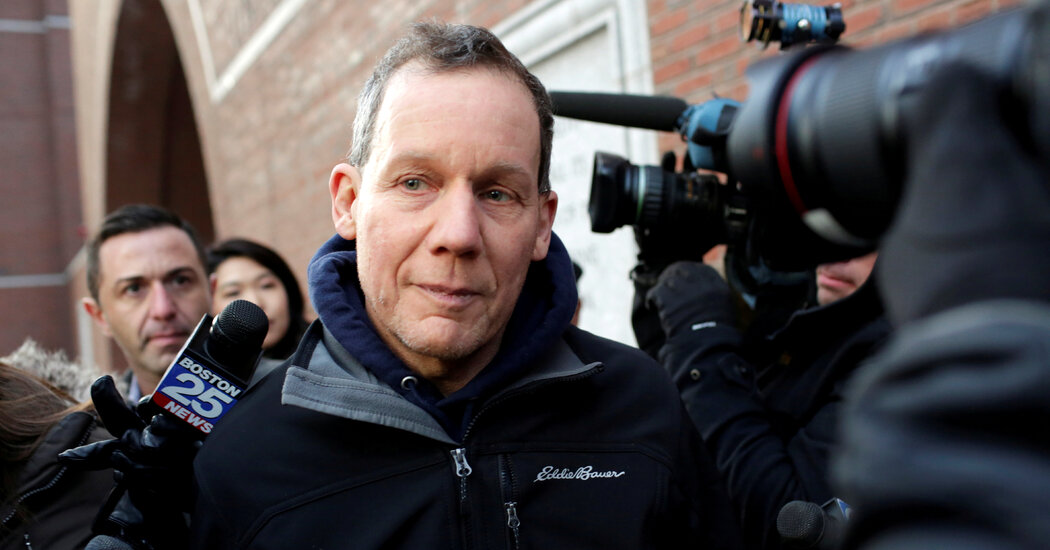
A jury found Harvard chemist Charles Lieber guilty of lying to the federal government about his participation in China’s Thousand Talents recruitment program.BOSTON — Charles Lieber, one of the country’s top research chemists, sat miserably in a chair at the Harvard Police Department, trying to explain to two F.B.I. agents why he had agreed to partner with a lesser-known Chinese university in a relationship that had soured and landed him in trouble with the U.S. government.The university had money to spend — “that’s one of the things China uses to try to seduce people,” Dr. Lieber said in the interrogation, clips of which were shown in court. But money wasn’t the reason, he said. By training young scientists in the use of technology he had pioneered, he hoped to burnish his credentials with the committee that decides the ultimate scientific honor.“This is embarrassing,” he said. “Every scientist wants to win a Nobel Prize.”On Tuesday, after deliberating for two hours and 45 minutes, a federal jury found Dr. Lieber guilty of two counts of making false statements to the U.S. government about whether he participated in Thousand Talents Plan, a program designed by the Chinese government to attract foreign-educated scientists to China. They also found him guilty of failing to declare income earned in China and failing to report a Chinese bank account. Though it is not illegal to participate in Chinese recruitment programs, scientists are required to disclose their participation to the U.S. government, which also funds their research and may view it as a conflict of interest. Dr. Lieber’s conviction is a victory for the China Initiative, an effort launched in 2018, under the Trump administration, to root out scientists suspected of sharing sensitive information with China. Of several dozen cases opened against academic researchers, most, like the case against Dr. Lieber, do not allege espionage or intellectual property theft, but failure to disclose Chinese funding, and the effort has been criticized for prosecutorial overreach. It suffered a series of setbacks over the summer, with half a dozen cases dismissed and the first case to reach the trial stage, against the researcher Anming Hu, ending in acquittal. Dr. Lieber’s trial was watched closely in scientific circles, as an indicator of whether the Justice Department will proceed with prosecutions of other researchers. Peter Zeidenberg, a Washington, D.C. lawyer who represents around a dozen researchers who are under investigation, said Dr. Lieber’s case stands out because he was specifically asked about his participation in the Chinese program, and denied it.“The reason people like Lieber lie is because they are afraid,” he said. “It’s really sad. They are afraid to answer truthfully, ‘Are you a member of the talent program?’ I’m sure in the Red Scare, people said they were not a member of the Communist Party. ”The department of chemistry and chemical biology at Harvard, where Dr. Lieber was chair. He is on leave from the university.Katherine Taylor/ReutersIn closing arguments on Tuesday, Dr. Lieber’s lawyer, Marc Mukasey, said the government had inadequate proof of wrongdoing and risked silencing a pioneering researcher. “Isn’t it troubling that nobody in this courtroom has explained what the Thousand Talents Plan is and who is in it?” he said. “Isn’t it troubling that Dr. Lieber’s work was all public, was for the benefit of the world, yet he is facing criminal charges for it?”He added, “No villains, no victims, no one got robbed, no one got rich, but over a few seconds of conversation — Special Agent Mousseau called it a blip on the radar — the world’s greatest nonscientist is facing multiple felonies.”Among the researchers prosecuted as part of the China Initiative, Dr. Lieber is by far the most prominent, chosen as chairman of Harvard’s chemistry and chemical biology department and seen by some as a potential Nobel Prize winner. Since 2008, prosecutors said, his laboratory at Harvard had received research grants totaling $18 million from the Department of Defense and the National Institutes of Health.At issue in this case was a joint venture that Dr. Lieber launched in 2011 with the Wuhan University of Technology, where one of his former students had taken a post. Outside employment is standard for high-level researchers, who often contract with private sector firms or universities overseas for part of the academic year. A three-year contract emailed to Dr. Lieber in 2012, and displayed to the jury by prosecutors, identified him as a “One Thousand Talent High Level Foreign Expert,” entitling him to $50,000 a month, plus about $150,000 in living expenses and more than $1.5 million for a laboratory, which they called the WUT-Harvard Joint Nano Key Laboratory.In 2018, as the China Initiative got underway, investigators from the Department of Defense and the National Institutes of Health approached Dr. Lieber to ask if he had taken part in the Thousand Talents programs. Over the week-long trial, jurors heard from a series of witnesses who said that in both instances, Dr. Lieber had denied participating. They also watched video clips from an F.B.I. interrogation, conducted on Jan. 28, 2020, the morning Dr. Lieber was arrested at 6:30 a.m. at his office at Harvard. After initially asking for a lawyer, Dr. Lieber went on to answer the agents’ questions for about three hours, acknowledging at several points that he had misled investigators.At first, he denied receiving income from the Wuhan university or participating in the Chinese recruitment program. Then the agents produced a series of documents, including contracts from 2011 and 2012, and Dr. Lieber examined them, remarking at one point, “I should pay more attention to what I’m signing.”“That’s pretty damning,” he said. “Now that you bring it up, yes, I do remember.”He went on to offer detail about his financial arrangements with the Wuhan university: A portion of his salary was deposited in a Chinese bank account and the remainder — an amount he estimated as between $50,000 and $100,000 — was paid in $100 bills, which he carried home in his luggage.“They would give me a package, a brown thing with some Chinese characters on it, I would throw it in my bag,” he said. After returning home, he said, “I didn’t declare it, and that’s illegal.”He acknowledged, as well, that he “wasn’t completely transparent by any stretch of the imagination” when approached by investigators from the Department of Defense in 2018, and that he was aware he might face charges.“I was scared of being arrested, like I am now,” he added.As the jury prepared to deliberate, Jason Casey, an assistant U.S. attorney, reminded jurors of Dr. Lieber’s demeanor in the F.B.I. interview and urged them to “use your common sense.” “It’s not that the defendant has no memory of events prior to 2015,” he said. “It’s that he does not want to remember. He does not want to remember that he participated in the Thousand Talents program. He does not want to remember that he took bags of cash on an airplane and never reported them to the I.R.S.”‘Scaring the scientific community’Dr. Lieber in 2002. He studies nanotechnologies and has pursued commercial nanotechnology projects outside of his work at Harvard. He was considered a contender for a Nobel Prize in chemistry.Volker Steger/Science SourceDr. Lieber’s arrest was one of the first signals that federal authorities were investigating scientists who had received funding from Chinese sources, and it sent shock waves through academic circles. It was followed, in January of 2021, by the arrest of Gang Chen, a professor of mechanical engineering at the Massachusetts Institute of Technology, on suspicion of hiding affiliations with Chinese government institutions in order to secure $19 million in U.S. federal grants.Brian Timko, who worked under Dr. Lieber as a graduate student and now heads his own laboratory at Tufts University, said he believed China Initiative had strayed from its original focus on espionage toward disclosure violations that, a few years ago, “would have been handled at the university level.” “I think these cases are about scaring the scientific community,” he said. Dr. Timko, who attended stretches of the week-long trial, said he was troubled by the way Dr. Lieber’s work had been “twisted” by prosecutors. He said Dr. Lieber had invented electronic chips so small and flexible that they could be injected into parts of the human body, like the brain or the retina. Eventually, he said, the technology could lead to breakthroughs in bioelectronic medicine, like restoring sight to blind people or movement to paralyzed limbs.“Charlie spent his whole career trying to help the world, and a handful of individuals who don’t even understand how science works tore the whole thing down,” he said. “And that is just not fair.”This year, the Justice Department has dropped cases against five researchers accused of hiding ties to the Chinese military, and one case, which reached the trial stage, ended in acquittal.Stefani Reynolds for The New York TimesWitnesses over the last week painted Dr. Lieber as a demanding, sometimes impatient academic star, who struggled to manage his relationship with his partners in Wuhan, and complained that Harvard was not acting vigorously to defend him. “I definitely do not have a good taste” about “many ‘friends’ in China,” Dr. Lieber wrote in an email to a Chinese colleague at another institution. “These people want to use me, so we will not let that happen, versus me using them. But we’ll be ever so polite in the mean time.”He expressed alarm, in 2018, when investigators Department of Defense and the National Institutes of Health began asking about his participation in the Thousand Talents plan. “They are threatening not only to end my funding (which supports much of my research) but also force me to pay back the last three plus years they supported much of my work,” he wrote to a Chinese colleague, adding, “perhaps someone (Chinese) who does not like me brought this to attention of N.I.H.?”In his conversation with the F.B.I. agents on the day of his arrest, Dr. Lieber was reflective about the role of international funding in the lives of researchers, saying that relationships with foreign partners were never as straightforward as they seemed at first.“Early on, if someone said, ‘We’ll give you this title and we’ll pay your travel to and from,’ you don’t think anything about it,” he explained, “but partners “always want something from you.”“A lot of countries, money is what they have in excess,” he said. He added, “that’s one of the things China uses to seduce people.”He tried to impress on the two special agents that a different motive, the desire for acclaim, had brought him to partner with Wuhan and train scientists there. “I was younger and stupid,” he said. “I want to be recognized for what I’ve done. Everyone wants to be recognized.” He offered a comparison he had given his son, a high school wrestler. The Nobel Prize is “kind of like an Olympic gold medal — it’s very, very rare,” he said.A prize he had won recently was more like a bronze medal, he said with a self-deprecating laugh. “That probably is the underlying reason I did this,” he said.

Read more →
Omicron Will Surge Despite Biden’s New Plan, Scientists Say

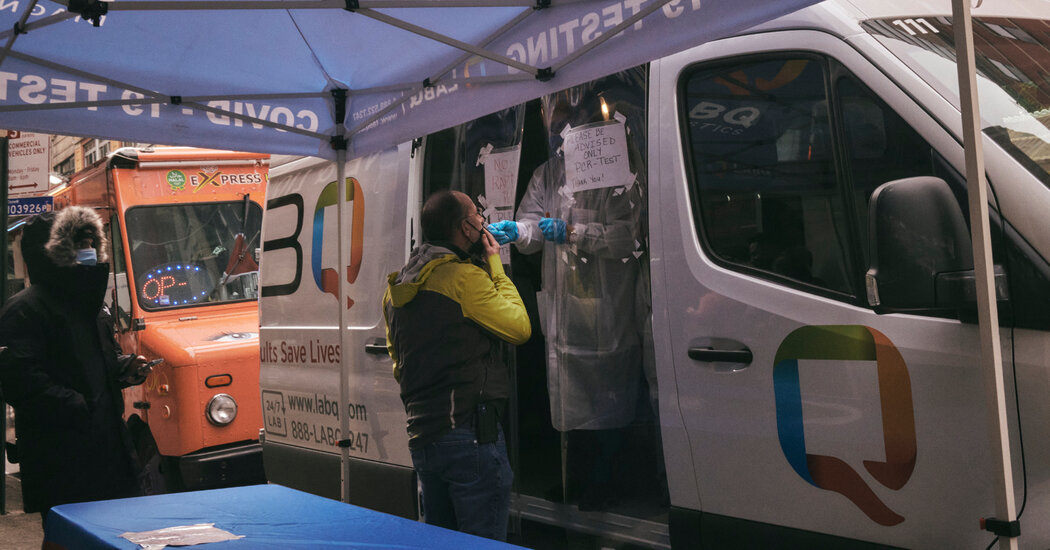
Public health experts fear that the highly contagious variant cannot be stopped without harsh measures that the public will no longer tolerate.Even as President Biden on Tuesday outlined new plans for battling the highly contagious Omicron variant, public health experts warned that the measures would not be sufficient to prevent a grim rise in infections and hospitalizations over the next few weeks.The administration’s strategy includes doubling down on vaccination campaigns and propping up hospitals as they confront a large influx of patients. Federal officials will direct resources, including Army doctors, to support health care systems and distribute rapid tests to Americans.But Mr. Biden explicitly ruled out lockdowns and other harsh measures of the kind put in place as the pandemic first unfolded in early 2020. In interviews on Tuesday, some scientists argued that the variant’s rapid spread requires more vigorous mitigation measures.Some expressed frustration and alarm about what they described as a timid public health response, and bemoaned the apparent lack of will among politicians and society at large for more aggressive steps.The crisis is brewing just as Americans prepare to travel to holiday gatherings, college students return home for vacation, and young and old converge for New Year’s parties or set off on trips that may further spread the virus.Federal health officials asked health care providers on Monday to advise their patients to conduct rapid home tests for Covid before holiday gatherings, and ask their guests to do the same. But while the tests are sold over the counter, prices start at $14 for a two-pack, and many stores are sold out.And in sharp contrast with the advice given out last year, Mr. Biden encouraged people to gather and celebrate the holidays, so long as they were vaccinated and took standard precautions.At the same time, he warned that the variant was spreading at unprecedented speed, and said there would be Omicron infections among the vaccinated, apparently resigned to the fact that even those who have received boosters may get infected with the highly contagious variant.“I still can’t quite wrap my head around how quickly this is moving,” said Joseph Fauver, a genomic epidemiologist at the University of Nebraska Medical Center. “I think it’s going to be really bad. I don’t know how else to put it.”It is not yet clear whether the variant causes milder illness than earlier variants. But there is a concern among some scientists that the notion has gained wide circulation and that the pandemic-weary public has let down its guard.“This is an incredibly contagious pathogen, and we don’t know yet its impact on severity and death,” said Galit Alter, an immunologist and virologist affiliated with the Ragon Institute of Massachusetts General Hospital, M.I.T. and Harvard.“We have to reestablish the importance and rigor of the first wave,” she added. “We are back in ‘flatten the curve’ mode.”Saskia Popescu, an infection prevention epidemiologist based in Arizona, said that Mr. Biden’s steps must be accompanied by greater vigilance at the community level.Indoor gatherings should be limited in areas of high transmission, and masks should be worn even at large events held outside, she said. Restaurants must have adequate outdoor seating and ventilation, and should check patrons’ vaccination status for indoor dining.“Now is the time to reinforce safety measures, and I think people are hesitant because everyone is burned out, but the truth is that we need them now more than ever,” she said.Omicron spreads so quickly that the United States cannot afford to wait to observe how things play out in other countries, as happened in previous waves, said Dr. Jacob Lemieux, of the Massachusetts Consortium on Pathogen Readiness.Nor can Americans “bet the farm” on the variant producing less severe disease, he said. The vaccines and booster shots encouraged by Mr. Biden should help reduce the incidence of severe disease, but the vaccinations are most effective two weeks after administration; in the meantime, those who have not gone for their shots are highly susceptible.The quick spread of the variant is likely to strain already overburdened hospitals and leave vulnerable Americans, including older adults and people who are immunocompromised, at risk.“We need to double down on keeping them protected,” said Dr. Megan Ranney, an emergency physician and the academic dean of Brown University’s School of Public Health. “Decreasing community spread in general helps them.”Vaccinations in San Ramon, Calif., this month.Jim Wilson/The New York TimesA line for Covid testing in Lower Manhattan.Gabby Jones for The New York TimesHow to do that? Proposals range from making vaccinations and negative Covid tests mandatory to board domestic flights to renewing the preventive behaviors recommended since the start of the pandemic, such as washing hands frequently, wearing masks in enclosed public spaces, avoiding crowds and keeping windows open for ventilation.“We have been through this many, many times,” said Alessandro Vespignani, director of the Network Science Institute at Northeastern University in Boston. “At this point we know that there is a portfolio of interventions that can be layered on top of each other.”Experts have recommended distributing free, high-quality masks alongside rapid tests, and creating a robust public educational campaign to ensure that people know how and when to use those tests.Hundreds of public health experts, aerosol scientists, heath providers and advocates signed a letter Monday urging the federal government to encourage the wearing of masks indoors regardless of vaccination status, saying the precaution can be swiftly implemented and is highly effective.The Biden administration plans to provide 500 million free rapid tests to Americans — a good start, experts said. But the tests are only expected to be available in January, after many experts fear the Omicron surge will be well underway, and the number is likely to be insufficient, as tests are intended to be used frequently.People will also have to use a website to request the free tests. At the moment, retail outlets in cities like New York have run out of rapid tests, so many Americans cannot easily get a diagnosis before a gathering or a flight.“People right now are having to work too hard to do the things that are necessary to prevent infection and transmission,” said Bertha Hidalgo, an epidemiologist at the University of Alabama at Birmingham School of Public Health.Ideally, she said, the tests would be made more widely available in places that people already routinely visit, such as schools and workplaces.The Coronavirus Pandemic: Key Things to KnowCard 1 of 4The Omicron variant.

Read more →

How to Travel Responsibly During the Holidays Amid Omicron Wave

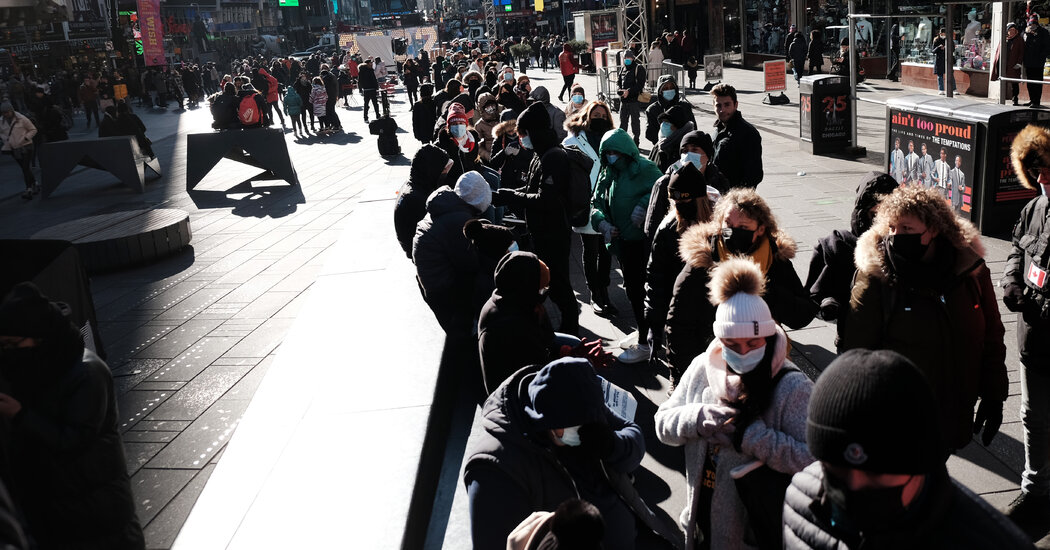
Even as the variant surges, the seasonal travel rush seems unstoppable, but there are steps you can take to travel more responsibly and mitigate the health risks for yourself — and others.Taylor Allen wanted to be a responsible traveler, but she was finding it difficult.Late last week at least seven people Ms. Allen knew in Brooklyn posted on Instagram that they’d tested positive for the coronavirus. She had not seen any of them in person. But after developing an intense headache and runny nose on Friday, she canceled her Saturday morning flight to Jacksonville, Fla., where she was planning to see her parents and grandparents.Two at-home tests — one Friday and one Saturday — came back negative. But Ms. Allen, 22, who is fully vaccinated but not yet boosted, wanted more official assurance before she rebooked her trip. On Sunday evening, long after her scheduled appointment at an urgent care clinic in Crown Heights, an employee told her and the 30 or so other people waiting for tests in the bitter cold that they’d have to come back at 8 a.m.“I really don’t want to put anyone in danger,” said Ms. Allen, who left the clinic with plans to return again the next day.Even as the number of coronavirus cases is skyrocketing in some parts of the country, largely driven by the Omicron variant, the holiday travel rush appears unstoppable. On Friday, Los Angeles International Airport reported its busiest day since early 2020, and on Sunday, 2.1 million people passed through airports in the United States, nearly twice as many as at this time last year.For those who are determined to keep their travel plans, figuring out how to do so responsibly has never been more confusing. Part of the problem is that testing has been hard to obtain in a timely way, particularly in hard-hit cities like New York. Another key challenge is that many people plan to stay in a house with fully vaccinated friends and family. Now, they are learning that vaccination is far from a guarantee that they won’t infect one another. So what can travelers do?1. Get a boosterOnly one in six Americans have received a booster, according to the Centers for Disease Control and Prevention. Fully vaccinated individuals without a booster are at least twice as likely to test positive as those who received a booster.If you plan to travel over the coming weeks and months, and you’re already fully vaccinated, one of the best ways to be a responsible traveler is to get a booster, said Jeffrey Kahn, the director of the Johns Hopkins Berman Institute of Bioethics.In terms of timing, the data show that the optimal immune response comes about two weeks after the booster, according to Dr. Wafaa El-Sadr, a professor of epidemiology and medicine at the Columbia University Mailman School of Public Health in New York. But many will see some protection within a few days, other experts noted, so getting a third shot today could still benefit those traveling over the holidays.2. Consider the worst-case scenarioWhen deciding what’s responsible in terms of holiday travel, Kelly Hills, a co-founder of Rogue Bioethics, a consulting firm in Boston, advises thinking about “moral injury” and asking whether you are mentally prepared for the consequences if you infect a vulnerable person.That doesn’t have to translate into canceling plans, but it may encourage you to wear an N95 instead of a homemade mask on a plane or to take a test even though it’s a hassle. If you are indoors, unmasked around many people in the days leading up to the trip, you may also want to pay extra to book a separate house or motel room, rather than staying with family or friends.“‘I don’t want to be a spreader’— that should be the motto today,” said Leonard J. Marcus, the co-director of the National Preparedness Leadership Initiative at Harvard University and the director of an initiative focused on public health on flights.Dr. Marcus said that though he’s not aware of any data suggesting children are likely to become infected on planes, he advises parents not to fly with unvaccinated children — if possible — until more is known about Omicron.“If it were my grandchildren, I would postpone,” he said. In general, if someone is wearing a proper mask on a plane, the risk of being infected should be low because the ventilation system is so good, he said.Dr. Anthony Fauci, the nation’s top infectious disease official, told CNBC that he feels safe having his adult children fly to see him over the holidays. He also noted that they are vaccinated.Experts advise getting tested as close to the day of a gathering as possible. If an at-home test is positive, double-check the results with a more accurate P.C.R. test. Above, getting tested in Manhattan.Carlo Allegri/Reuters3. Test as close to the gathering as possibleTesting in many parts of the country is challenging right now.“On a one to 10 scale of hard, it’s a 10,” said Mary Mathurin, 51, outside a testing site in Brooklyn on Sunday evening. As she waited for her name to be called, her cellphone emitted hold music from a call with another facility that had yet to send her P.C.R. results from several days earlier. After around 70 minutes, the call dropped. A few minutes later, a patient care assistant at the Brooklyn site told her the site could not accommodate her. She was supposed to fly to St. Lucia the next morning and was unsure what she was going to do.Many pharmacies and online retailers have sold out of at-home tests. The White House is planning to make 500 million free at-home tests available, but that won’t happen until January. For those who do manage to get a kit, use it as close to your departure date as possible, several experts said.The Coronavirus Pandemic: Key Things to KnowCard 1 of 4The Omicron variant.

Read more →

Could EKGs help doctors use AI to detect pulmonary embolisms?

Pulmonary embolisms are dangerous, lung-clogging blot clots. In a pilot study, scientists at the Icahn School of Medicine at Mount Sinai showed for the first time that artificial intelligence (AI) algorithms can detect signs of these clots in electrocardiograms (EKGs), a finding which may one day help doctors with screening.
The results published in the European Heart Journal — Digital Health suggested that new machine learning algorithms, which are designed to exploit a combination of EKG and electronic health record (EHR) data, may be more effective than currently used screening tests at determining whether moderate- to high-risk patients actually have pulmonary embolisms.
The study was led by Sulaiman S. Somani, MD, a former medical student in the lab of Benjamin S. Glicksberg, PhD, Assistant Professor of Genetics and Genomic Sciences and a member of the Hasso Plattner Institute for Digital Health at Mount Sinai.
Pulmonary embolisms happen when deep vein blood clots, usually formed in the legs or arms, break away and clog lung arteries. These clots can be lethal or cause long-term lung damage. Although some patients may experience shortness of breath or chest pain, these symptoms may also signal other problems that have nothing to do with blood clots, making it difficult for doctors to properly diagnose and treat cases. Moreover, current official diagnoses rely on computed tomography pulmonary angiograms (CTPAs), which are time-consuming chest scans that can only be performed at select hospitals and require patients to be exposed to potentially dangerous levels of radiation.
To make diagnoses easier and more accessible, researchers have spent more than 20 years developing advanced computer programs, or algorithms, designed to help doctors determine whether at-risk patients are actually experiencing pulmonary embolisms. The results have been mixed. For example, algorithms that used EHRs have produced a wide range of success rates for accurately detecting clots and can be labor-intensive. Meanwhile, the more accurate ones depend heavily on data from the CTPAs.
In this study the researchers found that fusing algorithms that rely on EKG and EHR data may be an effective alternative, because EKGs are widely available and relatively easy to administer.
The researchers created and tested out various algorithms on data from 21,183 Mount Sinai Health System patients who showed moderate to highly suspicious signs of having pulmonary embolisms. While some algorithms were designed to use EKG data to screen for pulmonary embolisms, others were designed to use EHR data. In each situation, the algorithm learned to identify a pulmonary embolism case by comparing either EKG or EHR data with corresponding results from CTPAs. Finally, a third, fusion algorithm was created by combining the best-performing EKG algorithm with the best-performing EHR one.
The results showed that the fusion model not only outperformed its parent algorithms but was also better at identifying specific pulmonary embolism cases than the Wells’ Criteria Revised Geneva Score and three other currently used screening tests. The researchers estimated that the fusion model was anywhere from 15 to 30 percent more effective at accurately screening acute embolism cases, and the model performed best at predicting the most severe cases. Furthermore, the fusion model’s accuracy remained consistent regardless of whether race or sex was tested as a factor, suggesting it may be useful for screening a variety of patients.
According to the authors, these results support the theory that EKG data may be effectively incorporated into new pulmonary embolism screening algorithms. They plan to further develop and test these algorithms out for potential utility in the clinic.
This study was support by the National Institutes of Health (TR001433).

Read more →

First model to predict lifetime risk of heart failure

Imagine visiting the doctor, answering a few basic questions and getting an on-the-spot estimate of whether you’ll experience heart failure in the next 30 years.
Such a model now exists, thanks to a new Northwestern Medicine study, which derived and validated the first set of risk prediction models for lifetime risk of heart failure.
The ability to identify who is at greatest risk for heart failure — especially among high-risk young adult populations — will allow physicians to start prevention measures sooner.
“Once someone develops symptoms of heart failure, the window for prevention has closed, which is a missed opportunity, given that the risk of dying in the five years after diagnosis is 50%, similar to a cancer diagnosis,” said corresponding study author Dr. Sadiya Khan, assistant professor of cardiology and epidemiology at Northwestern University Feinberg School of Medicine and a Northwestern Medicine physician.
Prior to this work, no models existed for estimating long-term risk for heart failure. Short-term models exist that estimate heart-failure risk in the next five to 10 years, But those aren’t as effective for young adults who may not develop heart failure until they are older.
Now, for the first time, the model will allow doctors to estimate a person’s risk of developing heart failure in the next 30 years based on their current risk factor levels, such as body mass index, blood pressure, cholesterol, diabetes and smoking status. The scientists are currently working on an online tool that could be used by physicians.
The study was recently published in Circulation Research, a journal of the American Heart Association.
Heart failure is the primary cause of one million hospitalizations and contributes to 300,000 deaths annually in the United States. That trend is only continuing to rise, Khan said.
Not all people with hypertension or obesity have the same risk for heart failure, Khan said. Currently, there are effective strategies to reduce a person’s risk of heart failure. These include lowering blood pressure or blood sugar with specific medications combined with diet and exercise. But without being able to quantify a person’s risk of developing heart failure, it is difficult to identify who should receive these prevention measures.
“These new models offer the opportunity for clinicians and patients to begin discussions at the individual level for opportunities to start prevention earlier in the life course,” Khan said. “This moves the field forward by offering a precision approach to prevention and moving beyond risk associated with having or not having hypertension or diabetes.”
Since it is well known that risk of heart failure differs between Black and white men and women, the risk-prediction models were derived in each individual demographic subgroup, Khan said.
For example, in an average 40-year-old non-smoker with an untreated systolic blood pressure of 140 mm Hg, which is high, and body mass index of 30 kg/m2 , which is considered obese, the risk of developing heart failure was estimated to be 22.8% in a Black man, 13.7% in a white man, 13.0% in a Black woman, and 12.1% in a white woman.
Story Source:
Materials provided by Northwestern University. Original written by Kristin Samuelson. Note: Content may be edited for style and length.

Read more →

All Anyone Wants for Christmas Is a Covid Test

Up until last week, many Americans were worried about their holiday presents arriving on time. Now, rapid tests are at the top of their list.When Amir Blumenfeld was deciding what to buy for a Secret Santa gift exchange, he landed on something practical: an at-home Covid-19 testing kit. “What better gift is there than peace of mind?” Mr. Blumenfeld, a 38-year-old comedian, wrote in a direct message on Twitter.At the heart of his quip was an urgent concern: Coronavirus cases are once again rising around the United States as the Delta variant has given way to Omicron, a highly contagious form of the virus. The surge has fueled demand for Covid tests ahead of the Christmas holiday as families seek ways to gather safely.Some have braved hourslong lines at local testing sites to receive polymerase chain reaction tests, whose results, obtained in a laboratory, are considered the gold standard for detecting the virus. Many others have rushed to buy rapid at-home tests, depleting the stock at pharmacies and online stores. The frenzy for at-home testing has turned the kits into a commodity and even made them covetable holiday presents.On Tuesday, President Biden is expected to share a plan to fight the spread of Omicron, which includes distributing 500 million free rapid tests to the public, though it is not yet clear how that target number will be met. Various states, including New York, New Jersey and Massachusetts, have also laid out plans for increasing access to free rapid tests.Abbott Laboratories, which made headlines back in August for destroying materials used in its tests, citing limited shelf life, said the company is currently making more than 50 million BinaxNOW rapid antigen test kits every month. In January, the company said, it will increase its output to 70 million a month.“We actually maintained usable test components, many of which have been in short supply during the pandemic — such as reagent bottles, cardboard packaging, swabs, nitrocellulose strips and even paper labeling — so that we could have them in the event that we needed to scale back up, which is exactly what’s happening now,” John Koval, a company spokesman, said in a statement.Pharmacies have seen a spike in demand for at-home tests, most of which cost between $7 and $24. Some are starting to place limits on how many each customer can buy.“Following Thanksgiving and leading into the upcoming holiday week, we’ve seen an unprecedented increase in demand for rapid OTC Covid-19 tests across the country,” a spokesperson for Walgreens said. “Some stores may experience a temporary shortage in rapid OTC testing solutions.” The spokesperson added that a four-item purchase limit on test kits went into effect on Tuesday.A representative for Amazon said: “At this time, we are experiencing inventory shortages on some Covid-19 tests due to increased demand” and that the company is working to “secure additional Covid-19 test inventory” from selling partners.Similarly, a Rite Aid spokesperson said in a statement that “in many areas, demand is simply outpacing supply from manufacturers.”A Target spokesperson said the company was working with vendors to meet the “strong” demand this holiday season. Representatives from Walmart and CVS said that online inventory for testing kits was limited. A spokesperson for Walmart said that the “inventory levels” in stores were substantial.Justin Vavrick, the creator of NowInStock.net, a website that has been tracking the availability of at-home Covid tests since the spring, corroborated the companies’ statements.“I think a lot of the inventory has been shifted to the stores,” Mr. Vavrick said in a phone interview. In-store pickup is where you’re probably going to have the best success.”The Coronavirus Pandemic: Key Things to KnowCard 1 of 4The Omicron variant.

Read more →

How Volunteering Can Help Ease Loneliness

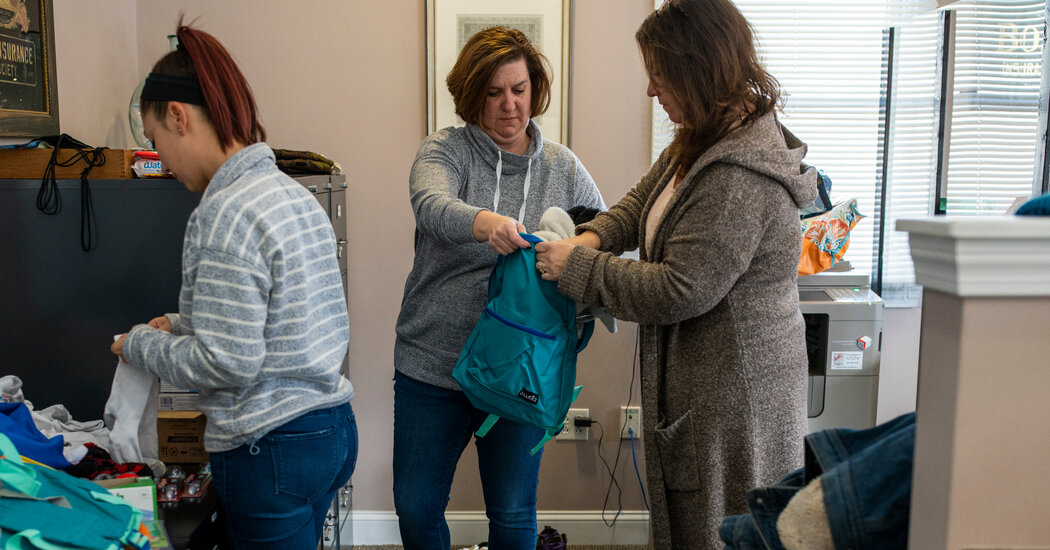
Science tells us the solution may lie in what we do for others, not ourselves.Well before a global pandemic tore us away from our loved ones, and the Omicron variant threatened to upend holiday plans, experts were warning of “an epidemic of loneliness” in the United States.Three in five Americans surveyed in 2019 reported feeling lonely, which the researchers attributed to a variety of factors, including a lack of social support, infrequent meaningful social interactions, poor physical and mental health and an imbalance in daily activities. In addition, nearly one quarter of those 65 and older are considered socially isolated, according to the National Health and Aging Trends Study.Loneliness often stems from unwanted solitude. But it is also driven by a discrepancy between how you perceive your relationships versus what you want (or expect) from them. That disconnect is why you can be surrounded by family at Christmas and still feel like an outsider.A potential cure? Kindness toward others. Something as simple as volunteering can improve our health, ease feelings of loneliness and broaden our social networks, studies suggest. Opportunities to give back — both in person and virtually — are more commonplace than they were last year, and the need for volunteers hasn’t let up, especially at food pantries.“Volunteering is one of the best, most certain ways we can find a purpose and meaning in our life,” said Val Walker, the author of “400 Friends and No One to Call: Breaking Through Isolation and Building Community.”The benefits of volunteering.In a study of 10,000 volunteers in Britain, about two-thirds agreed that their volunteering had helped them feel less isolated, particularly those ages 18 to 34.Sam Boyd, 24, the director of volunteer management at Special Olympics Maryland, said she sees even her most withdrawn volunteers “come alive” during a shift, and by the end of the day, “they’re fist bumping and elbow tapping with other people.”When volunteering, you can also “get to know more about yourself and broaden your view of the world,” she added.New York Cares volunteers arranging donated flowers with BloomAgainBklyn, a nonprofit that has continued to operate throughout the pandemic. The bouquets are delivered to people who are socially isolated.Simbarashe Cha for The New York TimesMill Jonakait, 75, has worked with BloomAgainBklyn since its inception. “Who wouldn’t love being able to make bouquets from a selection of dozens of different kinds of flowers?” she asked. “It’s just a lot of fun.”Simbarashe Cha for The New York TimesAmong older adults, social isolation and loneliness are associated with higher rates of mortality, depression and cognitive decline.Experts say that volunteering not only helps people feel less lonely, it can also improve physical well-being.A five-year study of more than 800 people in Detroit found that helping others who don’t live with you can act as a buffer against the negative effects of stress. Although the study participants encountered stressful life events like illness, job loss or financial difficulties, those who spent time doing tasks for others — like errands, child care and housework — were less likely to die than those who had not helped others.AARP Foundation Experience Corps, an intergenerational tutoring program, found numerous benefits to volunteering: More than 85 percent of volunteers felt that their lives had improved because of their involvement with the program and 98 percent reported that the program helped them stay physically and mentally active, said Lisa Marsh Ryerson, president of AARP Foundation, the charitable affiliate of AARP.“People want to matter and to be valued across their life,” Ms. Ryerson said.How much volunteering do you need to do?Meg Goble volunteering with BloomAgainBklyn. Research shows volunteering can have positive effects on not only mental health, but physical well-being. Simbarashe Cha for The New York TimesGary Bagley, executive director of New York Cares, the largest volunteer organization in New York City, suggested setting a small goal at first, like volunteering once a week or even once a month, and building from there.“One of the biggest mistakes you can make is to decide ‘I will volunteer twice everyday for the next year’ because you’ll burn yourself out on it,” he said. “So think of something that’s manageable for you — not frightening in its scope of commitment — and just take the first step.”Research suggests that volunteering consistently is what appears to reap the most benefits. In one study, widowers ages 51 and above who volunteered two or more hours a week felt less lonely — and were no lonelier than the married volunteers.Meg Goble, 68, a real estate lawyer who lives in Brooklyn, began volunteering with New York Cares 17 years ago.“In my other life, I’m a lawyer,” she said. “I like my job,” she added, but “it’s not as fulfilling as it used to be.”Ms. Goble lives alone, but in her work as a volunteer — helping elementary school students with their homework and arranging flowers with BloomAgainBklyn — she is continually socializing.During the pandemic, she also found ways to volunteer from a distance by doing virtual mock interviews with immigrants preparing to take the U.S. citizenship test and writing over 400 letters to seniors in nursing homes and assisted living facilities.Tips on choosing a volunteer activityIf you’re interested in volunteering, websites like Volunteer Match, AmeriCorps, Idealist, United Way and the AARP can direct you toward in-person or virtual volunteer opportunities in your area.Be sure to ask what rules the organization has in place to keep volunteers safe. Some require their volunteers to be fully vaccinated and masked, for example. If you’re feeling uneasy about indoor settings, you can choose to volunteer in well-ventilated, uncrowded places, or outdoors.Even during the height of the pandemic, Patricia Novy of Clark, N.J., 72, a retired art teacher and former Girl Scout leader, rallied former teachers, family members and neighbors to fill Easter baskets and Christmas stockings for those who could not afford them. They were distributed by Family Promise, an organization that assists low-income families with housing and other services.“I was determined not to let that lockdown situation bring my mood down,” Ms. Novy said.The type of activity you choose matters less than whether you find it meaningful, said Ms. Walker, the “400 Friends and No One to Call” author. In her 25 years as a rehabilitation counselor, mostly in Virginia and Maine, she placed her clients in volunteer activities to help them build confidence and develop social skills.“They used volunteering as a bridge to help them reconnect to the community,” Ms. Walker said.Some worked toward a political or environmental cause. Others were driven to share a passion, like woodworking.Think also about the type of environment in which you would like to volunteer and whether it will facilitate social interactions, Ms. Walker said.If you help out at a museum, for example, you can meet larger groups of people than if you were volunteering one-on-one as a tutor, she added.‘I have this whole real purpose now’Some volunteers are driven to heal others — and themselves.Robyn Houston-Bean, 52, said when her 20-year-old son Nick died of an accidental overdose in 2015 after participating in a drug-treatment program, she went from being “a real go-getter always doing a million things” to sitting numb on the couch for months.“The last thing I expected was for him to die,” she said.Ms. Houston-Bean founded The Sun Will Rise Foundation to help those suffering from substance abuse. She said it allows her to honor the memory of her son, who died of an overdose, “while at the same time helping so many other people.”M. Scott Brauer for The New York TimesHer friends and extended family were also in shock, she said, and she found it hard to process her grief with them, largely because this kind of loss was not something any of them had ever experienced. Several months after his death, Ms. Houston-Bean was discovered a volunteer organization that distributed clothing, food and other supplies to drug users living on the streets. She was intrigued. Her sister urged her to check it out in person.When she finally did, she found a nonjudgmental space full of volunteers whose loved ones had also been touched by addiction. Soon, she was heading out once a month to help those in need.“I felt like I could give my mothering to them that I couldn’t give to Nick anymore,” Ms. Houston-Bean said. Later that year she started a peer grief support group for those who have lost someone they love to substance abuse — the first of its kind in Braintree, Mass., her hometown. It became so popular that she created a nonprofit and found enough volunteer facilitators to run 13 groups in different parts of the state.“It takes the focus off of my grief and puts it somewhere else,” she said. “I have this whole real purpose now.”

Read more →

Form, function and a deadly fungus

The fungus, which led to deadly outbreaks in hospitals and other care settings, soon alarmed scientists worldwide as it evaded traditional medications to treat fungal infections. Since then, the race has been on to better understand the fungus and hopefully better control it.
New research from University of Michigan, published in Nature Communications, marks a major step forward in understanding C. auris biology, homing in on the genetics behind its ability to shape-shift from a round yeast form to a more hair-like, filamentous form.
“Almost all fungal pathogens, from valley fever to yeast infections, have morphological changes, and seem to couple virulence processes with the change in form,” said Teresa O’Meara, Ph.D., assistant professor in the Department of Microbiology and Immunology at the University of Michigan Medical School. “But people hadn’t figured out whether Candida auris could do it or how.”
Notably, the fungus has now been found on all inhabited continents and different variants and morphologies have emerged in different parts of the world. Determining the genetics behind these variants is key to determining how form and disease are related. But until now, studying C. auris’ genes has been incredibly difficult.
“It’s pretty well known in the field that it is hard to do genetic manipulation in this organism,” said Darian Santana, a Ph.D. student in O’Meara’s lab and first author on the paper. “I think a lot of researchers avoid it or spend a lot of time and energy to get something to work.”
He and O’Meara developed their own genetic tools using a DNA-based CRISPR-Cas9 technique and a bacterium that commonly infects plants.
Exploiting the bacteria’s ability to infect fungi as well, the team used it to insert DNA into the genome of C. auris. Screening the genetically modified cells for ones that had different morphologies, or structures, lent clues to which genes were controlling it. The team is the first to use these methods successfully in C. auris, says Santana.
“The genes are not only important for morphology, but they’re also important for virulence and for drug resistance,” said O’Meara. Their work is an important proof of concept for C. auris research, one they hope will aid the research community studying the deadly pathogen to more quickly evaluate strains and screen for the genetics behind why some are more disease-causing or drug resistant than others.
“The things you learn in one strain don’t necessarily apply to another, so it’s important to be able to do genetic manipulation in fungi with diverse backgrounds,” she added.
O’Meara and Santana next hope to uncover the genetic factors behind C. auris’ ability to spread so well on hospital and other surfaces.
“Once an infection in a patient is identified, infection prevention will swab the entire room. Generally, with Candida auris, you see that it ends up everywhere — on nurses’ lanyards, temperature probes, bedding, etc. Removal is a pretty extensive process, and this enhanced ability to transmit seems to be somewhat unique to Candida auris,” Santana said.
Story Source:
Materials provided by Michigan Medicine – University of Michigan. Original written by Kelly Malcom. Note: Content may be edited for style and length.

Read more →

3D-bioprinted tissues can now be stored in the freezer until needed

A major obstacle to widespread study and clinical use of 3D tissues is their short shelf-life, which may be anywhere from a just few hours to a few days. As in the case of an organ transplant, a bioprinted tissue must be transported rapidly to the location where it is needed, or it will not be viable. In the journal Matter on December 21st, researchers at Brigham and Women’s Hospital and Harvard Medical School describe their work combining 3D bioprinting with cryopreservative techniques to create tissues which can be preserved in a freezer at -196°C and thawed within minutes for immediate use.
“For conventional bioprinting, there is basically no shelf life. It’s really just print, and then use, in most cases,” says lead author Y. Shrike Zhang (@shrikezhang), a biomedical engineer at Brigham and Women’s Hospital. “With cryobioprinting, you can print and store in the frozen state for basically as long as you want.”
The use of 3D bioprinting to create artificial human tissue first appeared twenty years ago. As in conventional 3D printing, an ink is extruded layer by layer through a nozzle into a pre-specified shape. In the case of bioprinting, the ink is typically made up of a gelatin-like scaffolding embedded with living cells. Cryobioprinting works the same way, except the printing is performed directly onto a cold plate held at temperatures down to -20°C. After the tissues are printed, they are immediately moved to cryogenic conditions for long-term storage.
Printing at low temperatures has the added advantage that it can make more intricate shapes than traditional bioprinting methods. “The bioink filament freezes within milliseconds of reaching the cold plate, so it has no time to lose its original shape,” says Zhang. “Then you can build layers on top of each other, eventually creating a free-standing 3D structure that can withstand its own weight.”
The use of cryogenic temperatures also relieves limitations on what types of bioink can be used. In conventional bioprinting methods, the bioink must be viscous to hold its shape, but at a lower temperature, most fluids are naturally more viscous.
In order to survive cryogenic temperatures, cells must be accompanied by a cryopreservative agent, which prevents osmotic shock and limits the formation of ice crystals that can damage their cell membranes. Zhang’s team directed most of their efforts at finding the combination of cryopreservative agents that yielded the highest cell viability.
They demonstrated that the tissues could last for at least three months before being brought back to life. “Reviving the tissues is pretty easy,” says Zhang. “It’s like reviving any type of cryo-stored cells. You return them into a warm medium and use a rapid thawing process.”
To show that the tissues can retain their original functionality, Zhang and his colleagues performed a series of cell viability assays which demonstrated that the cells could undergo differentiation much like before.
In the future, 3D-bioprinted tissues may serve as realistic models for testing new drugs or helping patients in need of replacement tissues after injury or disease. Being able to freeze bioprinted tissues for an extended period of time will enable further collaboration between researchers to develop these applications and allow for extended storage for use in preclinical and clinical settings.
Story Source:
Materials provided by Cell Press. Note: Content may be edited for style and length.

Read more →

Your seat on public transportation determines level of exposure to exhaled droplets, study finds

The COVID-19 pandemic has revealed the urgency of understanding how public transportation ventilation systems transmit viruses and how exhaled droplets evolve in ventilated spaces. Researchers have wondered if those ventilation systems can be improved to mitigate virus transmission.
In Physics of Fluids, by AIP Publishing, researchers at IBM Research Europe developed a model with an unprecedented level of detail and focused on conditions that are more characteristic of asymptomatic transmission. The multiphysics model involved air and droplet dynamics, heat transfer, evaporation, humidity, and effects of ventilation systems.
“By visualizing the droplets and the flow, you realize the number of physical phenomena taking place around us that go unnoticed, such as the complex interactions between natural body plumes, exhalation, and ventilation,” said author Carlos Peña-Monferrer. “When it comes to preventing risk of infection, this is precisely what makes it difficult to contain.”
The researchers analyzed what happens when speech droplets are exhaled from a row of sitting passengers in a ventilated space, like those in public transportation vehicles. In some of these systems, air is injected at the top and extracted at the bottom through the vents near the window seats.
This generates an internal recirculation to enhance thermal comfort and remove contaminants, but the researchers were interested in whether certain seat positions affect the circulation adversely.
The team found droplets from the window seat rose more and invaded the space of other passengers to a lesser extent shortly after exhalation. Moreover, droplets released from the middle seat contaminated the aisle passengers more, indicating the downward flow of personal ventilation in aisle seats could move droplets down and increase the risk of infection.
Droplets released from the aisle were dragged down by the ventilation system immediately.
The researchers modeled various scenarios in close detail, such as a situation where passengers in different seats were pronouncing a vowel for a few seconds. By creating detailed representation of the flow field and tracking every single droplet, they were able to reconstruct their ventilation paths.
In the future, the team will reproduce conditions that more closely represent the diverse human activity on public transport vehicles to help inform actions, design, and operation of future ventilation systems for safer environments.
“These high-resolution simulations were focused on public transportation vehicles, but they could be extended to commercial or residential buildings, health care facilities, offices, or schools,” said Peña-Monferrer.
Story Source:
Materials provided by American Institute of Physics. Note: Content may be edited for style and length.

Read more →