Developing bioactive coatings for better orthopaedic implants

Bioactive coatings play a vital role in the success of implants such as those for knees or hips, because their properties induce a biological response that is good for the health. PhD student Imran Deen and Professor Federico Rosei from Institut national de la recherche scientifique (INRS) are working on a coating that mimics bone tissue.
“Traditional metal, ceramic, or polymer implants have limited bioactive properties. The healing process can be lengthy and have a higher risk of rejection. Developing a new generation of implant materials that promote compatibility and integration is crucial,” said Professor Rosei.
Bioactive materials
The research team is working on a cutting-edge coating based on three bioactive materials. Chitosan, found in shrimp shells, has antimicrobial properties. Collagen, the organic component of bone, facilitates cell migration and growth. And copper-doped phosphate glass stimulates blood vessel formation and bone reconstruction.
“The ability to deposit such coatings allows for the potential to make implants with tailored biological properties. It holds promise for biomedical applications, as these coatings can provide better implant-host interactions,” said Ph.D. student Imran Deen.
An innovative deposition method
The team uses electrophoretic deposition to make the coating. The implant acts as an electrode on which bioactive material particles are deposited, forming a layer. The method does not damage the structure and properties of bioactive materials. And unlike other deposition processes currently used, it can be used at standard ambient temperature and pressure on complex shapes without expensive equipment.
The process is also versatile since the deposition can be easily adapted to specific applications. For example, the technique can be applied to hydrophilic and antimicrobial coatings, bone surface reconstruction, or coatings that are biologically and chemically inert. The product could be used to produce coronary or venous stents, in bone transplants, or in medical environments to prevent the transmission of bacteria, and thus biological infections.
The next step is to conduct additional studies to validate the proof of concept, particularly biologically. Before this type of coating is used in clinical applications, cell proliferation at the surface of the coating needs to be measured and in vivo tissue adhesion assessed.
The study received funding from the Natural Sciences and Engineering Research Council of Canada, the Canada Research Chairs, the UNESCO Chair in Materials and Technologies for Energy Conversion, Conservation and Storage (MATECSS)and the University of Electronic Science and Technology of China.
Story Source:
Materials provided by Institut national de la recherche scientifique – INRS. Original written by Audrey-Maude Vézina. Note: Content may be edited for style and length.

Read more →

People with IBD have more microplastics in their feces

Microplastics — tiny pieces of plastic less than 5 mm in length — are everywhere, from bottled water to food to air. According to recent estimates, people consume tens of thousands of these particles each year, with unknown health consequences. Now, researchers reporting in ACS’ Environmental Science & Technology found that people with inflammatory bowel disease (IBD) have more microplastics in their feces than healthy controls, suggesting that the fragments could be related to the disease process.
The prevalence of IBD, which includes Crohn’s disease and ulcerative colitis, is rising globally. Characterized by chronic inflammation of the digestive tract, IBD can be triggered or made worse by diet and environmental factors. Microplastics can cause intestinal inflammation, gut microbiome disturbances and other problems in animal models, so Faming Zhang, Yan Zhang and colleagues wondered if they could also contribute to IBD. As a first step toward finding out, the researchers wanted to compare the levels of microplastics in feces from healthy subjects and people with different severities of IBD.
The team obtained fecal samples from 50 healthy people and 52 people with IBD from different geographic regions of China. Analysis of the samples showed that feces from IBD patients contained about 1.5 times more microplastic particles per gram than those from healthy subjects. The microplastics had similar shapes (mostly sheets and fibers) in the two groups, but the IBD feces had more small (less than 50 ?m) particles. The two most common types of plastic in both groups were polyethylene terephthalate (PET; used in bottles and food containers) and polyamide (PA; found in food packaging and textiles). People with more severe IBD symptoms tended to have higher levels of fecal microplastics. Through a questionnaire, the researchers found that people in both groups who drank bottled water, ate takeaway food and were often exposed to dust had more microplastics in their feces. These results suggest that people with IBD may be exposed to more microplastics in their gastrointestinal tract. However, it’s still unclear whether this exposure could cause or contribute to IBD, or whether people with IBD accumulate more fecal microplastics as a result of their disease, the researcher say.
Story Source:
Materials provided by American Chemical Society. Note: Content may be edited for style and length.

Read more →

How a Hearing Test for Babies Has Paid Off for a Big Medical Provider

Routine use of a more advanced screening method turns a low-cost procedure into a pricier one.After Christine Malik gave birth to her first daughter three years ago, a clinician affiliated with a company called Pediatrix entered the hospital room and fitted the infant with sensors and wires for a hearing test.The child failed the screen required by law for all newborns, the tester said, requiring a follow-up exam. “We were scared as first-time parents,” said Ms. Malik, who agreed to the second exam. The clinician, Ms. Malik said, didn’t tell them that infants often fail an initial screen because of fluid from the womb in the ears that soon dissipates. The second screening found no problem with the baby’s hearing.Last year, when her second daughter was born, Ms. Malik refused a hearing test after another Pediatrix clinician appeared at her bedside. (Parents are allowed to opt out but rarely do.)The infant hearing test — particularly the more advanced technology Pediatrix uses — is an example of how some common medical procedures have become significantly more profitable for their providers.Pediatrix and related companies have drawn a string of complaints from dissatisfied customers like Ms. Malik, who said she was surprised by Pediatrix charges for in-hospital infant care. Many of those complaints regard infant hearing tests. Such tests were once free or included in a hospital’s new-baby fees. Pediatrix earns tens of millions of dollars a year in revenue from them, according to regulatory filings.Founded in Florida decades ago, Pediatrix and its parent company, Mednax, have grown into a network of physicians and other clinicians delivering hearing screens, pediatric intensive care, pediatric surgery and obstetric services. They operate in more than 400 affiliated hospitals in some 40 states.Pediatrix now cares for about one in four babies in neonatal intensive care units, according to the company, and administers its hearing tests to nearly a million babies a year.“I’ve been involved with trying to prevent them coming into hospitals,” said Lisa Hunter, a professor and pediatric hearing specialist at the University of Cincinnati who objected generally to Pediatrix’s high charges for hearing screens and the billing confusion they can cause. “I’m very much empathetic with patients who have concerns.”Pediatrix officials say their doctors and other clinicians deliver top-level maternity and newborn medicine, often to smaller and community hospitals as well as large systems, providing not just hearing tests but surgery and lifesaving care for premature babies.“Doing what’s right for the patient is our highest priority,” said Dr. Roger M. Hinson, President of the Pediatrix and Obstetrix group.Dr. Michelle Barhaghi, an obstetrician herself, said she was shocked by the $6,538 that a Pediatrix doctor in California charged for the unplanned cesarean delivery of her baby in April while she was traveling.“When I saw that, my jaw dropped,” she said. “I sent that bill statement to all my OB-GYN friends.”Insurance paid Pediatrix $2,867, according to benefit statements. That’s still nearly three times the rate for the same procedure under Medicare’s schedule of physician fees. Pediatrix also billed Dr. Barhaghi $1,311 for charges that insurance didn’t cover for a physical and discharge prep for her baby. Pediatrix withdrew that bill after being contacted by Kaiser Health News for comment, she said.Three years ago, the insurance giant Aetna sued Mednax and Pediatrix, saying that they inflated charges by more than $50 million, performing unneeded tests and treatments and diagnosing babies as being sicker than they really were.Mednax denied Aetna’s allegations, and the case ended in July when Aetna withdrew it as part of a confidential agreement. Neither Aetna nor Mednax would disclose the terms.As part of the proceedings, Mednax admitted in court that it destroyed internal emails Aetna had sought as potential evidence of corporate coaching to nudge physicians to engage in “upcoding” to higher-value procedures.Pediatrix was a “premier sponsor” of a campaign in the early 2000s for state laws requiring hearing tests for babies, records show. Most states now have such laws, and the American Academy of Pediatrics recommends initial hearing screens for all newborns before they leave the hospital.The idea is that the rare baby with hearing deficiencies — two or three per thousand — needs to be identified quickly to ensure proper treatment and language development even if some false positives worry parents.A simple screen measures whether the baby’s inner ear responds to sound. A more expensive hearing screen, a procedure originally designed to assess patients with serious neurological or auditory disease, measures the brain’s electrical response to sound.Many hospitals reserve that screen for high-risk babies in intensive care or for those who fail an earlier, less expensive screen.Aetna’s claims analysis found that Mednax and affiliates billed three times more often for those kinds of tests than for those given by non-Mednax clinicians.Pediatrix charges $150 or more for the test, said audiologists familiar with the company. The company charged $326 for Ms. Malik’s first child’s screening, billing records show, and insurance paid a discounted price of $177.“The cost of doing the screening should be no more than $50,” said Professor Hunter, including the initial test and in-hospital follow-up. “To bill more than that, and to do this on every single baby that’s born, to me that sounds like a license to print money.”Dr. Hinson said Pediatrix uses the more expensive auditory brainstem screen because it tests the entire hearing pathway. He said it has a lower false-positive rate on infant screenings than the less expensive alternative.The Joint Committee on Infant Hearing, a board of experts considered authoritative for screening protocols, says either test may be used initially for babies.But done in the hospital soon after birth, both varieties produce a substantial number of initial false indications of hearing deficiency, research shows, often because of fluid in the ears from birthing.This requires a second test either in the hospital or sometimes weeks later in a doctor’s office. Meanwhile, families might believe their baby could be deaf. When parents are approached by an infant-hearing-screener in the hospital, they should make sure the procedure is covered by insurance, patient advocates say. If the child fails the test, parents should be aware it could be a fleeting result and request a follow-up before leaving the hospital.Surprise or mishandled bills from Pediatrix and Mednax have drawn complaints to the Better Business Bureau and on various online forums. When a Mednax or Pediatrix clinician is outside a patient’s insurance network, “we bill the balance to the patient,” the company says in filings with the Securities and Exchange Commission. At least one hospital, Inova Alexandria Hospital in Northern Virginia, has warned expectant parents that Pediatrix “may not be an approved provider” with their insurer.From the beginning of 2019 to now, 192 people filed complaints with the Better Business Bureau against Pediatrix and Mednax, according to data provided by B.B.B. Most of the complaints are about billing and collections issues, according to the data.“We have to do things that make things more seamless for our patients and more seamless for our payers,” Dr. Hinson said. When Pediatrix is out of network, the company works with families “to mitigate post-discharge surprise billing,” he said.It took more than a year, two dozen phone calls and the help of the Better Business Bureau to resolve one incorrect $1,010 bill. It was charged for a Pediatrix nurse practitioner who stood by while Sarah Tela’s twins were delivered by an obstetrician in 2018.After doing research, Ms. Tela, who lives near Seattle, realized that “I wasn’t the only one going through this battle with them.” She added: “I could have easily paid the bill. But I knew I was right.”The problem turned out to be an incorrect date of service on the bill, which caused the insurer’s claims software to reject it, she said.Mednax, which contacted Dr. Barhaghi and Ms. Malik after their cases were brought up by a reporter, is “confident that their respective matters are being resolved to their satisfaction,” the company said in an email.Jay Hancock is a senior correspondent for KHN (Kaiser Health News).KHN (Kaiser Health News) is a national newsroom that produces in-depth journalism about health issues. Together with Policy Analysis and Polling, KHN is one of the three major operating programs at KFF (Kaiser Family Foundation). KFF is an endowed nonprofit organization providing information on health issues to the nation.

Read more →

How Exercise May Impact Our Alcohol Consumption

People who are aerobically fit and work out a lot tend to imbibe more than their less fit peers.People who work out regularly and are aerobically fit tend to guzzle a surprising amount of alcohol, according to a new study, well timed for the holidays, of the interplay between fitness, exercise and imbibing. The study, which involved more than 40,000 American adults, finds that active, physically fit men and women are more than twice as likely to be moderate or heavy drinkers as people who are out of shape. The results add to mounting evidence from previous studies — and many of our bar tabs — that exercise and alcohol frequently go hand in hand, with implications for the health effects of each.Many people, and some researchers, might be surprised to learn how much physically active people tend to drink. In general, people who take up one healthy habit, such as working out, tend to practice other salubrious habits, a phenomenon known as habit clustering. Fit, active people seldom smoke, for instance, and tend to eat healthful diets. So, it might seem logical that people who often exercise would drink alcohol sparingly.But multiple studies in recent years have found close ties between working out and tippling. In one of the earliest, from 2001, researchers used survey answers from American men and women to conclude that moderate drinkers, defined in that study as people who finished off about a drink a day, were twice as likely as those who didn’t drink at all to exercise regularly. Later studies found similar patterns among college athletes, who drank substantially more than other collegians, a population not famous for its temperance.In another revealing study, from 2015, 150 adults kept online diaries about when and how much they exercised and consumed alcohol for three weeks. The results showed that on the days they exercised the most, they also tended to drink the most afterward.But these and other past studies, while consistently linking more physical activity and more drinking, tended to be small or centered on the young, or relied on somewhat casual reports of what people told researchers about their workouts and alcohol intake, which can be notoriously unreliable.So, for the new study, titled “Fit and Tipsy?” and recently published in the journal Medicine & Science in Sports & Exercise, researchers with The Cooper Institute in Dallas and other institutions turned to more objective data about tens of thousands of American adults. All were part of the large and ongoing Cooper Center Longitudinal Study, which looks at cardiovascular health and its relationship to various behavioral factors and other medical conditions.Study participants visited the Cooper Clinic in Texas for annual checkups and, as part of those exams, completed treadmill tests of their aerobic fitness. They also completed extensive questionnaires about their exercise and drinking habits and whether they worried about their alcohol intake. The researchers gathered records for 38,653 participants who were of legal age and reported drinking at least once a week. (The authors left teetotalers out of the study mix, because they wanted to compare light drinkers to heavier drinkers.) Then they ran numbers.As in earlier studies, the fitter people were, the more they tended to drink. The fittest women were about twice as likely to be moderate drinkers as women with low aerobic capacities. Moderate drinking meant the women drank between four and seven glasses of beer, wine or spirits in a typical week. The fittest men were more than twice as likely to be moderate drinkers — up to 14 drinks per week — than men who were less fit. The researchers considered people’s reported exercise habits and adjusted for age and other factors that could have influenced the results, and the odds remained consistently higher.Fit men and some women also had a slightly higher likelihood of being heavy drinkers — defined as having eight or more weekly drinks for women and 15 or more for men — than their less fit peers. Interestingly, fit women who were heavy drinkers often reported concerns about their level of alcohol intake, while fit men in that category rarely did.What might these results mean for those of us who work out regularly to try to stay in shape? While they clearly show that fitness and increased drinking go hand-in-hand, “most people probably don’t associate physical activity and alcohol intake as linked behaviors,” said Kerem Shuval, the executive director of epidemiology at the Cooper Institute, who led the new study. So, people who exercise should be aware of their alcohol intake, he said, even tracking how often they imbibe each week.Doctors and scientists cannot say with certainty how many drinks might be too many for our health and well-being, and the total likely differs for each of us. But talk to your doctor or a counselor if your drinking worries you (or worries your spouse or friends or training partners).Of course, this study has limits. It mostly involved affluent, white Americans, and it showed only an association between fitness and alcohol intake and not that one causes the other. It also cannot tell us why working up a sweat might lead to excess boozing, or vice versa.“There probably are social aspects,” Dr. Shuval said, with teammates and training groups bonding over beers or margaritas after a competition or workout. Many of us likely also put a health halo around our exercise, making us feel our physical exertions justify an extra cocktail — or three. And, intriguingly, some animal studies show that both exercise and alcohol light up parts of the brain related to reward processing, suggesting that while each, on its own, can be pleasurable, doing both might be doubly enticing.“We need a lot more research” into the reasons for the relationship. Dr. Shuval said. But for now, it is worth keeping in mind, especially at this festive time of year, that our running or cycling outings or trips to the gym could influence how often, and how enthusiastically, we toast the new year.

Read more →

Covid: Australian trial tests blood thinner as nasal spray

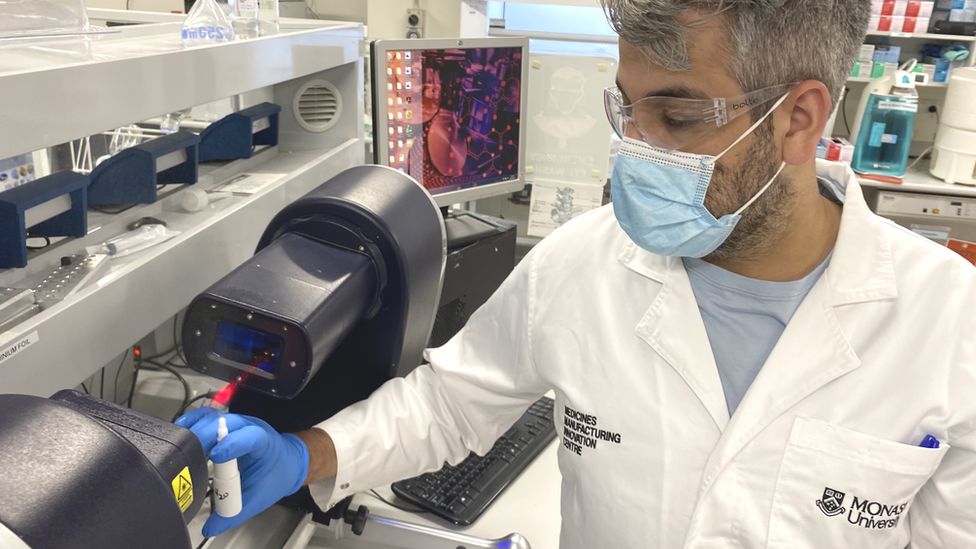
SharecloseShare pageCopy linkAbout sharingImage source, MONASH UNIVERSITYAustralian researchers are conducting a trial to see whether squirting a blood thinner into the nose could offer protection against Covid.The nasal spray uses the cheap drug heparin in an attempt to neutralise Covid’s spike protein.When sprayed into the nose of a Covid-infected person it appears to make them non-infectious, the researchers say.The trial will not conclude until mid-2022. If effective, it could be used with vaccines and other measures.Researchers hope the spray could help both as an early treatment and as a nasal mask to stop the virus spreading.It could be applied “anywhere where you mix with the public in a crowded situation”, lead researcher Prof Don Campbell told the BBC.”For people like me who are afraid of Covid, the idea that I might take a squirt before I go shopping or to the football is going make to feel a heck of a lot less anxious. It’s a tool that gives me control.”Though other nasal sprays are being tested globally in the fight against Covid, this the first to use heparin – a readily available drug given to people with clotting disorders.The researchers say that when heparin is inhaled, it doesn’t go into the bloodstream. Instead it sits in the nose – with the aim that the virus latches on to it instead of human cells. Victoria’s state government has funded the first A$4.2m (£2.3m; $3m) human trial in 400 Covid-affected homes, beginning in February.People will take two puffs, three times a day to see if it works to prevent household transmission from infected to non-infected residents. If it proves effective, it will be extended to wider social settings.The research comes from Melbourne University, Monash University, Melbourne’s Northern Health, the Peter Doherty Institute, the Murdoch Children’s Research Institute and the Commonwealth Scientific and Industrial Research Organisation (CSIRO). It is also affiliated with Oxford University’s respiratory trial group.”One of the wonderful things about heparin is it is already available on the market as an approved product for another purpose, it doesn’t require refrigeration and can be stored in plastic vials so it can be distributed very widely and effectively,” Prof Michelle McIntosh, another researcher on the team, told the ABC.”It’s also in a handy format that people understand,” says Prof Campbell. “We can just say to people: get an inhaler and squirt it up your nose.”Prof Campbell said he had already been using the spray on himself, and he’d had no side effects so far.”I’ve been using it for 20 months and my nose hasn’t fallen off and I haven’t bled to death,” he said.”We are very confident that it will work.”You might also be interested in:This video can not be playedTo play this video you need to enable JavaScript in your browser.LOOK-UP TOOL: How many cases in your area?SYMPTOMS: What are they and how to guard against them?YOUR QUESTIONS: We answer your queriesTREATMENTS: What progress are we making to help people?NEW VARIANTS: How worried should we be?

Read more →

Toxoplasma parasites manipulate brain cells to survive

WEHI researchers have discovered how dormant Toxoplasma parasites in the brain manipulate their host cells to ensure their own survival.
The researchers showed that the parasites were able to lay dormant and undetected inside neurons (brain cells) and muscle cells by releasing proteins that switch off the cells’ ability to alert the immune system. With expertise and technologies from WEHI’s Advanced Genomics facility and Centre for Dynamic Imaging, they were able to visualise the parasites in real-time.
The discovery provides a better understanding of how Toxoplasma parasites can hide in the brain and what triggers them to reactivate and cause disease. It could pave the way for new drug targets to treat patients suffering from chronic toxoplasmosis infections.
The research, led by Dr Simona Seizova, PhD student Ms Ushma Ruparel, Associate Professor Chris Tonkin and colleagues from WEHI, was published in the journal Cell Host & Microbe.
At a glance Researchers have discovered how dormant Toxoplasma gondii parasites manipulate host cells in the brain to foster their own survival. They showed that dormant parasites (called bradyzoites) exported proteins to silence immune signalling in infected host cells and hide undetected. The discovery could pave the way for new treatments for chronic toxoplasmosis infections.A ‘molecular battle’ for survival
Toxoplasmosis is a parasitic infection that affects humans and other mammals. It is caused by eating undercooked or contaminated meat, and from exposure to infected cat faeces.

Read more →

Hospitals are scrambling as antibody treatments fail against Omicron.

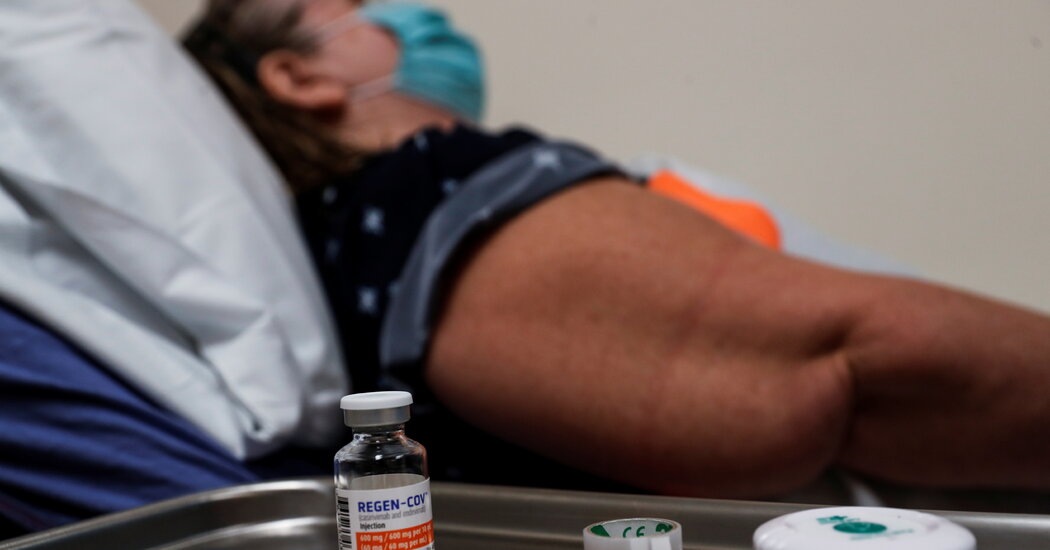
Hospitals, drug companies and Biden administration officials are racing to address one of the Omicron variant’s biggest threats: Two of the three monoclonal antibody treatments that doctors have depended on to keep Covid-19 patients from becoming seriously ill do not appear to thwart the latest version of the coronavirus.The one such treatment that is still likely to work against Omicron is now so scarce that many doctors and hospitals have already run through their supplies.Monoclonal antibodies have become a mainstay of Covid treatment, shown to be highly effective in keeping high-risk patients from being hospitalized. But even as infections surge and Omicron becomes the dominant form of new cases in the United States, some hospitals have begun scaling back the treatments, fearing they have become suddenly useless.In New York, hospital administrators at NewYork-Presbyterian, N.Y.U. Langone and Mount Sinai all said in recent days that they would stop giving patients the two most commonly used antibody treatments, made by Eli Lilly and Regeneron, according to memos obtained by The Times and officials at the health systems.“This is a dramatic change just in the last week or so,” said Dr. Daniel Griffin, an infectious disease specialist at Columbia University in New York. “And I think it makes sense.”Federal health officials plan to assess at the end of this week whether to pause shipments of the Eli Lilly and Regeneron products to individual states, based on how dominant Omicron becomes in different regions of the country, according to a senior administration official who spoke on condition of anonymity.The one monoclonal antibody treatment that has performed well against Omicron in laboratory experiments is also the most recently authorized: sotrovimab, made by GlaxoSmithKline and Vir Biotechnology and cleared in May.

Read more →

Covid-19: Israel could become the first country to give four vaccine doses

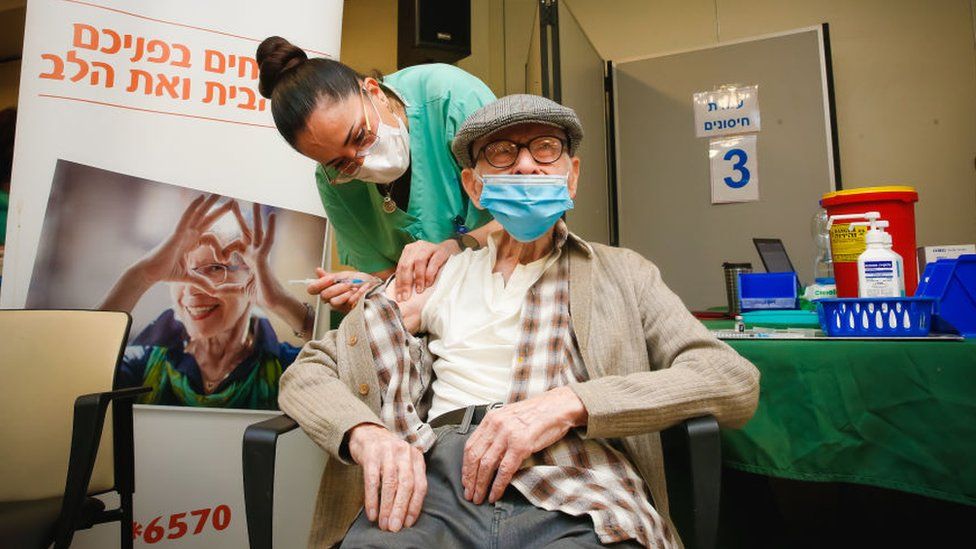
SharecloseShare pageCopy linkAbout sharingImage source, Getty ImagesIsrael says it plans to become the first country to roll out a fourth dose of the Covid-19 vaccine as the country prepares for a wave of infections driven by the new Omicron variant.Israel’s pandemic experts have recommended a fourth booster for the over-60s and health workers.PM Naftali Bennett welcomed the plan and told officials to start preparing.It comes as Israel confirmed the first known death of a patient with the Omicron strain on Tuesday.The health ministry said there were at least 340 known cases of the variant in Israel. Covid vaccines: How fast is worldwide progress?What Israel tells us about the way out of CovidThe decision to roll out a fourth booster is still pending approval by senior health officials, however Mr Bennett’s office told the BBC that it was hoping to administer the dose to people at least four months after their third dose.”This is wonderful news that will assist us in getting through the Omicron wave that is engulfing the world,” Mr Bennett said, as he urged people to take up the offer as soon as possible.When Covid-19 vaccination programmes were first launched, Israel’s jabs were rolled out quickly and there was a relatively high take-up. However despite this, only about 63% of its population of 9.3 million has had two doses. This is partly to do with Israel being a relatively young country – about a third of its population is under the age of 14.To help combat this, Israel announced in November that children aged from five years old could also get the jab. On Monday, Mr Bennett said he wanted every eligible child to get the vaccine within the next two weeks to help “delay and slow and diminish” the strength of another wave of infections.The country has already widened a travel ban to countries including the US, Germany, Italy and Canada to try to curb the spread of the virus.Israel has confirmed more than 1.36 million Covid infections since the start of the pandemic, with some 8,200 deaths, according to data from Johns Hopkins University.This video can not be playedTo play this video you need to enable JavaScript in your browser.

Read more →

‘We’re Still in It’: Biden Urges Calm as He Steps Up Omicron Fight

The president announced new plans including sending military medical professionals to overburdened hospitals and distributing 500 million free tests.WASHINGTON — President Biden accelerated his administration’s coronavirus response on Tuesday as the country faced a surge in cases from a highly contagious new variant, telling anxious Americans that “we should all be concerned about Omicron, but not panicked.”In a White House address delivered against the backdrop of a new global struggle to cope with the two-year-old pandemic, Mr. Biden said the government will buy a half-billion rapid coronavirus tests and distribute them free to Americans; create new vaccination and testing sites; and send 1,000 military medical professionals to help hospitals nationwide.“I know you’re tired, really, and I know you’re frustrated,” Mr. Biden said, adding that vaccinated Americans should feel comfortable celebrating with their friends and family for the upcoming holidays. “We all want this to be over, but we’re still in it.”The president said military troops will begin arriving in Wisconsin and Indiana this week to aid health care workers at hospitals. He said the first of the new testing sites will open in New York within days. And he promised to use the Defense Production Act to help manufacturers better meet the demand for testing.Mr. Biden acknowledged the political division in the country and the fierce opposition to vaccine requirements among some people, saying his administration has put some mandates in place “not to control your life, but to save your life and the lives of others.” And he pleaded with Americans who remained unvaccinated to get shots to protect themselves and the people around them from infection.“I honest to God believe it’s your patriotic duty,” Mr. Biden said.Some of Mr. Biden’s announcements — including the distribution of new at-home tests — are not intended to be implemented for weeks, if not longer, raising doubts about how much they will help in the short term. And most are incremental steps that many public health experts say fall far short of the kind of aggressive actions required.The president is not moving to mandate testing or vaccination for travelers on domestic flights, and he flatly ruled out on Tuesday returning to the kinds of restrictions that some European nations have once again imposed in an effort to slow the spread of the new variant, which doctors say is even more highly contagious than previous iterations of the virus.“That’s what I keep getting asked,” Mr. Biden said. “The answer is absolutely no. No.”Keeping the economy and schools open has been a high priority of the president’s; experts say last year’s school closures were traumatic for many students. Last week, the Centers for Disease Control and Prevention announced a new “test to stay” program, in which students exposed to the virus could take coronavirus tests to remain in the classroom, rather than quarantining at home.“We know how to keep our kids safe,” Mr. Biden said on Tuesday. “K-12 schools should be open.”Mr. Biden’s remarks came as officials across the nation, and the world, rushed to confront Omicron in different ways. In New York, Eric Adams, the incoming mayor, postponed his inauguration ceremony. The National Hockey League paused its season ahead of a holiday break, and on Tuesday said its players would not participate in the 2022 Winter Olympics in Beijing. In Massachusetts, state officials called out the National Guard to help staff hospitals with crushing caseloads.As Europe faced a new virus wave, Germany, Sweden, Portugal and Scotland imposed new restrictions on the movement and activities of their citizens.Omicron erupted at a precarious moment for the president, who ran on a promise to curb the pandemic, only to be confronted with a shape-shifting virus that is now claiming more than 1,000 American lives every day. It is also a divisive political climate in which many Americans, particularly supporters of former President Donald J. Trump, have refused to get vaccinated.In his remarks, Mr. Biden acknowledged the former president, noting that Mr. Trump recently said he had received a booster shot, and that “thanks to the prior administration and the scientific community, America is one of the first countries to get the vaccine.”But he also denounced the “dangerous misinformation on cable TV and social media,” and companies and personalities who were “making money by peddling lies and allowing misinformation that can kill their own customers and their own supporters.”The president’s moves build on a winter pandemic strategy that he announced three weeks ago, and reflect an awareness inside the White House of the growing threat from the Omicron variant. But Mr. Biden grew defensive in the face of questions about whether he had not moved quickly enough, especially in ensuring that free tests were widely available.“I don’t think anybody anticipated this was going to spread as rapidly,” Mr. Biden said, rejecting the characterization of his testing response as a failure. He said that over the last few days, “all of a sudden it was like everybody rushed to the counter.”“It was a big, big rush,” he said.Just two weeks ago, Jen Psaki, the White House press secretary, mocked the idea of sending a test to every American.“Should we just send one to every American?” she asked a reporter on Dec. 6. “Then what happens if you, if every American has one test? How much does that cost?”Critics characterized the White House steps as too little, too late. Just two weeks ago, Jen Psaki, the White House press secretary, had mocked the idea of sending a test to every American.Stefani Reynolds for The New York TimesAt least three experts who have been calling for months for the administration to ramp up testing said that the shortfall was entirely predictable, and that the administration’s new testing policy, while a promising first step, was belated.While Mr. Biden acknowledged that the virus was infecting some vaccinated people, he urged unvaccinated Americans to get their shots, and vaccinated people to get boosters if they are eligible, saying that the unvaccinated have “a significantly higher risk of ending up in the hospital — or even dying.”Some infectious disease experts say it is simply not possible now to stop the virus from spreading, and that the administration must focus on slowing the spread, protecting the most vulnerable and preventing already strained hospital systems from being overwhelmed.“The main goal, really, is to prevent people from losing their health and straining hospitals, delaying cancer care and surgeries for people who need it, delaying health care worker burnout,” Dr. Luciana Borio, a former acting chief scientist for the Food and Drug Administration, said in an interview. Preventing infection completely, she said, is “not a winnable battle.”The Centers for Disease Control and Prevention reported on Monday that Omicron, which was causing less than 1 percent of new Covid-19 cases in the United States as December began, now accounts for nearly three-quarters of new cases. So-called breakthrough infections among vaccinated people are also increasingly common, though many of those cases involve either mild symptoms or none at all.As a result, experts say, people will have to rely on tests not just to determine whether they are sick, but also to guide them in their daily activities, like going to work or social gatherings. Matching testing supply with demand has been a challenge for both the Trump and the Biden administrations, and the United States has lagged behind Europe in making at-home tests cheap and readily available.The 500 million tests that the administration intends to purchase, and the website where Americans will be able to request them, will not be available until sometime in January. Much will depend on precisely when that will be.A line for coronavirus tests in Miami on Tuesday. The federal government will create new testing sites as part of Mr. Biden’s plans.Saul Martinez for The New York Times“It’s fantastic to publicly and clearly acknowledge the important role of testing, but the success now depends on the speed in which these tests can be distributed, and making a clear and easy process to do so,” said Mara Aspinall, an expert in biomedical diagnostics at Arizona State University. “Time is of the absolute essence. January is realistic, but is it Jan. 4 or Jan. 24? There’s a big difference there.”The Coronavirus Pandemic: Key Things to KnowCard 1 of 4The Omicron variant.

Read more →