How brain cells die in prion diseases

Prion diseases, such as Creutzfeldt-Jakob Disease (CJD), are fast-moving, fatal dementia syndromes associated with the formation of aggregates of the prion protein, PrP. How these aggregates form within and kill brain cells has never been fully understood, but a new study from scientists at Scripps Research suggests that the aggregates kill neurons by damaging their axons, the narrow nerve fibers through which they send signals to other neurons.
The accumulation of protein aggregates in axons, along with axonal swellings and other signs of dysfunction, are also early features of other neurodegenerative disorders including Alzheimer’s and Parkinson’s diseases. The discovery of how these prion aggregates form in axons and how to inhibit them, reported in Science Advances, may ultimately have a significance that goes far beyond prion diseases.
“We’re hopeful that these findings will lead to a better understanding of prion and other neurodegenerative diseases, as well as new strategies for treating them,” says study senior author Sandra Encalada, PhD, Arlene and Arnold Goldstein Associate Professor in the Department of Molecular Medicine at Scripps Research.
The researchers in their study closely observed mutant, disease-causing copies of the prion-disease protein PrP forming large aggregates in the axons of neurons, but not in the neurons’ main cell bodies. The formation of these aggregates was followed by signs of axon dysfunction and ultimately neuronal death. The scientists found evidence that neurons’ waste-disposal processes normally are able to cope with such aggregates when they are within or close to neurons’ main cell bodies, but are much less able to do so when the aggregates accumulate far out within axons.
The researchers also identified a complex of key proteins as being responsible for steering PrP into axons and causing aggregation associated with large axonal swellings. They demonstrated that by silencing any one of these proteins they could inhibit the aggregates from forming and protect the neurons from damage and death.
Vulnerable axons
CJD is the most common human prion disease, occurring at the rate of about one case per million people per year worldwide. Most cases are thought to arise spontaneously when PrP somehow is altered in the brain and starts aggregating. Because these aggregates grow by a chain-reaction process that draws in healthy copies of PrP, they can transmit CJD in rare cases — for example, during corneal transplant surgery — from one person to another. About 15 percent of cases are hereditary, caused by mutations that make PrP more likely to aggregate. Prion disorders occur in other mammals and are thought to be due to similar toxic aggregations of different species’ PrP proteins.

Read more →

Humble lizards offer surprising approach to engineering artificial lungs

When it comes to studying lungs, humans take up all the air, but it turns out scientists have a lot to learn from lizards.
A new study from Princeton University shows how the brown anole lizard solves one of nature’s most complex problems — breathing — with ultimate simplicity. Whereas human lungs develop over months and years into baroque tree-like structures, the anole lung develops in just a few days into crude lobes covered with bulbous protuberances. These gourd-like structures, while far less refined, allow the lizard to exchange oxygen for waste gases just as human lungs do. And because they grow quickly by leveraging simple mechanical processes, anole lungs provide new inspiration for engineers designing advanced biotechnologies.
“Our group is really interested in understanding lung development for engineering purposes,” said Celeste Nelson, the Wilke Family Professor in Bioengineering and the study’s principal investigator. “If we understand how lungs build themselves, then perhaps we can take advantage of the mechanisms mother nature uses to regenerate or engineer tissues.”
While avian and mammalian lungs develop great complexity through endless branching and complicated biochemical signaling, the brown anole lung forms its relatively modest complexity through a mechanical process the authors likened to a mesh stress ball — the common toy found in desk drawers and DIY videos. The study, published Dec. 22 in the journal Science Advances, is the first ever to look at the development of a reptile lung, according to the researchers.
The anole lung starts a few days into development as a hollow, elongated membrane surrounded by a uniform layer of smooth muscle. During development the lung cells secrete fluid, and as they do so the inner membrane slowly inflates and thins like a balloon. The pressure pushes against the smooth muscle, causing it to tighten and spread apart into fiber bundles that ultimately form a honeycomb-shaped mesh. Fluid pressure continues pushing the stretchy membrane outward, bulging through the gaps in the sinewy mesh and forming fluid-filled bulbs that cover the lung. Those bulges create lots of surface area where the gas exchange occurs. And that’s it. The whole process takes less than two days and is complete within the first week of incubation. After the lizard hatches, air comes in at the top of the lung, swirls around the cavities, and then flows back out.
For engineers looking to crib nature’s short cuts on behalf of human health, this speed and simplicity make for a radical new design paradigm. The study also breaks new ground for scientists to study reptile development in far greater detail.

Read more →

National Guard Takes on New Roles in Understaffed Nursing Homes

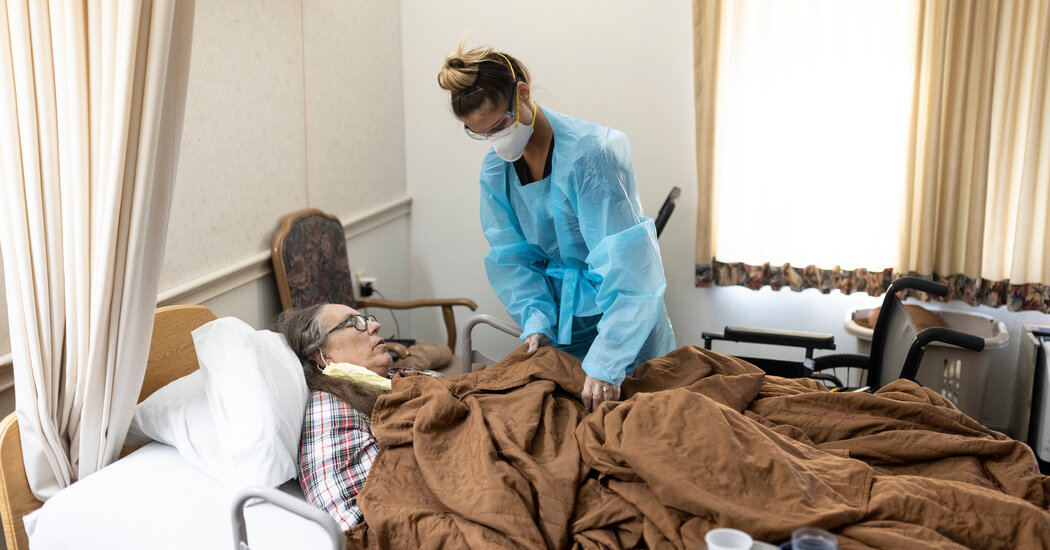
In Minnesota, an ambitious initiative is training hundreds of Guard members to become certified nursing assistants and relieve burned out nursing home workers.NEW HOPE, Minn. — Pfc. Shina Vang and his fellow soldiers in the Minnesota National Guard have had an exceptionally busy year. They helped process Afghan refugees fleeing Kabul for the United States, provided security at American military bases across the Horn of Africa and stood sentinel in Washington, D.C., following the Jan. 6 attacks on the U.S. Capitol.Closer to home, they have been deployed across Minnesota during the civil unrest prompted by the police killings of George Floyd in Minneapolis and Daunte Wright in nearby Brooklyn Center.But none of those experiences prepared Private Vang and his fellow Guard members for their latest deployment: collecting bedpans, clipping toenails and feeding residents at North Ridge Health and Rehab, a sprawling nursing home in suburban Minneapolis that is the largest in the state.“I’ve had protesters throw apples and water bottles at me but that doesn’t compare to the challenge of giving someone a bed bath,” Private Vang said.Over the past two weeks, 30 Guard members have been working as certified nursing assistants at North Ridge, which has been so badly hobbled by an exodus of employees that administrators have been forced to mothball entire wings, severely limiting new admissions.As a result, hospitals cannot send patients to long-term care centers like North Ridge, creating a backup that is eroding Minnesota’s capacity to treat people with Covid-19 and other medical emergencies. Similar backlogs — hospital patients well enough to be discharged but too fragile to go home — are choking health systems across the country.“It’s beyond a crisis,” said Katie Smith Sloan, the president of LeadingAge, an association of nonprofit long-term care facilities. “For many providers across the country, it’s a collapse.”Minnesota National Guard member Nena Yochim on dish duty at North Ridge Health and Rehab.Tim Gruber for The New York TimesGuard member Gabriel Adepoju served a meal to Donald Pike, a resident at North Ridge. The nursing home has been hit especially hard by the pandemic, with more than 592 cases and 52 Covid deaths among its residents since March 2020.Tim Gruber for The New York TimesOn Tuesday, President Biden announced that 1,000 military medical professionals would be dispatched to hospitals across the country this winter to help overwhelmed doctors and nurses.Public health experts fear the worst is yet to come as the highly transmissible Omicron variant spreads to communities where health care workers are already straining to handle the surge of patients sickened by Delta. Maine, New Hampshire, Indiana and New York have deployed the National Guard to overburdened hospitals and nursing homes in recent weeks, but Minnesota’s initiative may be the most ambitious, with 400 guard members who have no previous nursing experience going through rapid-fire training before being sent to long-term care facilities across the state.Last week, chief executives from nine of the state’s largest hospital networks took out advertisements in Minnesota newspapers beseeching residents to get vaccinated and to take other steps to limit transmission of the coronavirus. “We’re overwhelmed,” the ads said.Gov. Tim Walz, a Democrat and National Guard veteran whose mother was a nursing assistant, said he conceived of the program as a stopgap measure.“Our health care work force is heartbroken and fatigued,” Governor Walz said in an interview on Tuesday, not long after learning that he and his wife and son had tested positive for the coronavirus. “Having the Guard provide a bit of a respite is a godsend but just to be clear, looking to the horizon we don’t see an end to the surge right now.”Staffing shortages have long been a problem for nursing homes in the United States, but the coronavirus has pushed many to the brink as low-wage aides retire early or quit for jobs that are better paid and less taxing. “The pandemic has underscored the system’s fragility, and the need for fundamental change,” said R. Tamara Konetzka, an expert in the economics of long-term care at the University of Chicago.In Minnesota, that means 23,000 nursing home positions were unfilled in October, up from 8,000 last March, according to a survey of providers.North Ridge has been hit especially hard by the pandemic, with more than 592 cases and 52 Covid deaths among its residents since March 2020, according to the Centers for Medicare and Medicaid Services, though the vast majority of those cases, 472, were among patients already sickened by Covid when they arrived. Over the past four years, North Ridge has been fined more than $180,000 by federal inspectors, and cited for a number of health and safety violations. It has received two out of five stars for overall care from C.M.S., a “below average” rating.A study guide for training National Guard members.Tim Gruber for The New York TimesColin Jones, center, and other Guard members getting briefed before a shift this month.Tim Gruber for The New York TimesAustin Blilie, the vice president of operations, said the two-star rating was based on surveys from 2018, and that North Ridge had greatly improved the quality of care since then. He noted that the most recent rating from earlier this year gave the facility five stars for staffing quality. The 8.5 percent mortality rate for Covid patients at North Ridge, he added, was less than half the state average for patients in congregate care settings.“Every time I look at the numbers of those who we lost, I am struck anew by the fact that every one represents an individual person, with a life and a history, and connections to other people,” he said. “Please know that we never lose sight of that here.”A low-slung collection of brown and tan brick buildings, North Ridge has 320 beds, but 100 of those are empty at the moment because of staff shortages. The employees that remain have been running ragged as they work overtime, and on some days, administrators, dietitians and physical therapists are forced to help with making beds and filling water pitchers. “We do what we can because the show must go on,” said Liz Ellenz, 37, the director of dining, who often works weekends and stays until 9 p.m. washing dishes. “Some days are really dark.”But on Thursday, Ms. Ellenz was positively giddy as five Guard members zipped around the kitchen with soldierly purpose and precision. They hosed down food carts, bagged trash and helped prepare the day’s lunch: ham and macaroni au gratin, stir-fried snow peas and citrus gelatin cubes.One of them, Staff Sgt. Nathan Madden, 47, whose civilian job is an assistant manager at a home improvement store, said the past two weeks had given him a newfound appreciation for those who care for the sick and the elderly. His past deployments have taken him to Kuwait, Croatia and, more recently, the Minneapolis courthouse where Derek Chauvin was on trial for the murder of Mr. Floyd. “This kind of work is humbling for sure,” Sergeant Madden said, adjusting the hairnet on his head. “It’s great to help out in the community, but I have older parents, so in a way this is preparing me for what I might have to do one day.”Certified nursing assistants, the workhorses of long-term care facilities, normally go through five weeks of training before taking final exams, but nursing school leaders condensed the program to eight 10-hour days. “It feels like we’re supporting a natural disaster,” said Traci Krause, the director of nursing at Minneapolis Community & Technical College, as a group of students practiced pulse taking and face washing on bed-bound mannequins.Isabella Ommodt, left, and Noah Perron of the National Guard trained with a dummy at the Minneapolis Community & Technical College in Minneapolis.Tim Gruber for The New York TimesMr. Jones with a device for moving patients in a North Ridge hallway.Tim Gruber for The New York TimesBesides gestures like providing free pizza and ice cream, there isn’t much North Ridge’s administrators can do to stem the exodus of staff members; the number of employees at the nursing home has dropped to 450 from 590 since the start of the pandemic. Although burnout and fears of infection have spurred some nursing assistants to quit, the root of the problem is money, employees and administrator say.North Ridge and other long-term care facilities in Minnesota that serve mostly patients on Medicaid pay around $16 an hour for newly hired nursing assistants. That’s comparable to what some fast-food outlets in and around New Hope have been offering. (Kitchen staff at North Ridge are paid even less: $11.25 an hour.)Such low wages are essentially tied to the state’s reimbursement rate for nursing home patients, which averages about $270 a day, according to the Minnesota Department of Human Services. Efforts by Governor Walz to raise reimbursement rates have stalled in the state’s politically divided legislature, as has his push to use some of the $1.2 billion in unspent Recovery Act funds on bonuses and raises for nursing aides.Fatimate Massquoi, a nursing manager at North Ridge, said meager pay coupled with the physical demands of the job, the anxieties of treating Covid patients and the unending loss, inevitably takes a toll. “People don’t know what it’s like to hold the hand of someone dying alone because their family isn’t allowed to be here,” she said. “Sometimes after a patient dies, I have to go into the bathroom to cry so no one will see me because I have to stay tough.”With Omicron racing across the country, staff and administrators worry about the weeks ahead. Only 60 percent of residents have received their booster shots, slightly higher than the national average, and a federal appeals court ruling last week means that North Ridge may have to fire the 10 percent of employees who remain unvaccinated.But last Thursday, Ms. Massquoi and her colleagues were feeling buoyant after learning that the National Guard would be staying an extra week, including 18 soldiers who had volunteered to work over the Christmas holiday. Having extra hands available does not mean North Ridge can increase its number of admissions, but it does allow exhausted workers to take a few days off.“The Guard has really given us the opportunity to take a breather, and allow people to spend time with their families and try to deal with the emotional burnout of the last 18 months,” said Mr. Blilie, the vice president of operations. “Hopefully, they’ll come back feeling a bit refreshed, and ready to go back at it.”

Read more →

Omicron wave appears milder, but concern remains

SharecloseShare pageCopy linkAbout sharingImage source, Getty ImagesThe wave of Omicron appears to be milder according to preliminary studies published in the UK and South Africa.Early evidence suggests fewer people are needing hospital treatment than with other variants – with estimates ranging from a 30% to a 70% reduction.But the concern remains that even if Omicron is milder, the sheer number of cases could overwhelm hospitals. More than 100,000 cases have been reported in the UK in a single day for the first time.A deeper understanding of the severity of Omicron will help countries decide how to respond to the virus.Daily UK Covid cases top 100,000 for first timeVulnerable five to 11-year-olds should get the jabThe study in Scotland has been tracking coronavirus and the number of people ending up in hospital. It said that if Omicron behaved the same as Delta, they would expect around 47 people to have been admitted to hospital already. At the moment there are only 15.The researchers said they were seeing a roughly two-thirds reduction in the number needing hospital care, but there were very few cases and few at-risk elderly people in the study. Dr Jim McMenamin, the national Covid-19 incident director at Public Health Scotland, described it as a “qualified good news story”.He said the data was “filling in a blank” about protection against hospitalisation, but cautioned it was “important we don’t get ahead of ourselves”.The Omicron variant is spreading incredibly quickly and a high number of cases could wipe out any benefit of it being milder.Prof Mark Woolhouse, from the University of Edinburgh, said: “An individual infection could be relatively mild for the vast majority of people, but the potential for all these infections to come at once and put serious strain on the NHS remains.”Meanwhile, another study in South Africa also points to the Omicron wave being milder. It showed people were 70-80% less likely to need hospital treatment, depending on whether Omicron is compared to previous waves, or other variants currently circulating. However, it suggested there was no difference in outcomes for the few patients that ended up in hospital with Omicron. “Compellingly, together our data really suggest a positive story of a reduced severity of Omicron compared to other variants,” said Prof Cheryl Cohen of the National Institute for Communicable Diseases, in South Africa.Why milder?The reduction in severity is thought to be a combination of the fundamental properties of the Omicron variant as well as high levels of immunity from vaccinations and previous infections. An analysis of Omicron by Imperial College London suggests Omicron’s mutations have made it a milder virus than Delta. The researchers said the chances of turning up at A&E would be 11% lower with Omicron than Delta if you had no prior immunity. However, that now applies to relatively few people due to high levels of vaccination and infection. The same analysis said that accounting for immunity in the population meant a 25% to 30% lower risk of visiting A&E with Omicron and around a 40% reduction in needing to stay in hospital for more than a day. Prof Neil Ferguson, one of the researchers, said: “It is clearly good news, to a degree.”However, he warned the reduction is “not sufficient to dramatically change the modelling” and the speed that Omicron is spreading meant “there’s the potential of still getting hospitalisations in numbers that could put the NHS in a difficult position”. Laboratories studies have suggested potential reasons Omicron could be milder.The University of Hong Kong found Omicron was better at infecting the airways, but worse at getting into the deep tissues of the lungs, where it can do more damage.The University of Cambridge found the variant was not as good at fusing lung cells together, which happens in the lungs of people who become severely ill.The UK Health Security Agency is expected to publish early real-world data on Omicron soon, which could give further indications of the variant’s severity.Follow James on Twitter

Read more →

Innovative X-ray imaging shows COVID-19 can cause vascular damage to the heart

An interdisciplinary research team from the University of Göttingen and Hannover Medical School (MHH) has detected significant changes in the heart muscle tissue of people who died from Covid-19. Damage to lung tissue has been the research focus in this area for some time and has now been thoroughly investigated. The current study underpins the involvement of the heart in Covid-19 at the microscopic level for the first time by imaging and analysing the affected tissue in the three dimensions. The results were published in the journal eLife.
The scientists imaged the tissue architecture to a high resolution using synchrotron radiation — a particularly bright X-ray radiation — and displayed it three-dimensionally. To do this, they used a special X-ray microscope that the University of Göttingen set up and operates at the German Electron Synchrotron DESY in Hamburg. They observed clear changes at the level of the capillaries (the tiny blood vessels) in the heart muscle tissue when they examined the effects there of the severe form of Covid-19 disease.
In comparison with a healthy heart, X-ray imaging of tissues affected by severe disease, revealed a network full of splits, branches and loops which had been chaotically remodelled by the formation and splitting of new vessels. These changes are the first direct visual evidence of one of the main drivers of lung damage in Covid-19: a special kind of “intussusceptive angiogenes” (meaning new vessel formation) in the tissue.
In order to visualise the capillary network, the vessels in the three-dimensional volume first had to be identified using machine learning methods. This initially required researchers to painstakingly, manually label the image data. “To speed up image processing, we therefore also automatically broke the tissue architecture down into its local symmetrical features and then compared them,” explains Marius Reichardt, at the University of Göttingen and first author of the paper. “The parameters obtained from this then showed a completely different quality compared to healthy tissue, or even to diseases such as severe influenza or common myocarditis,” explain the leaders of the study, Professor Tim Salditt from the University of Göttingen and Professor Danny Jonigk from the MHH.
There is a very special feature of this study: in contrast to the vascular architecture, the required data quality could be achieved using a small X-ray source in the laboratory of the University of Göttingen. In principle, this means it could also be done in any clinic to support pathologists with routine diagnostics. In the future, the researchers want to further expand the approach of converting the characteristic tissue patterns into abstract mathematical values in order to develop automated tools for diagnostics, again by further developing laboratory X-ray imaging and validating it with data from synchrotron radiation. The collaboration with DESY will be further expanded in the coming years.
Story Source:
Materials provided by University of Göttingen. Note: Content may be edited for style and length.

Read more →

White matter microstructure reveals developmental risk for psychosis

Brain imaging studies have shown structural and functional abnormalities in people with psychosis in the connections between the cortex and the thalamus, the major waystation for incoming sensory information and a critical regulator of cortical activity. A new study shows that those differences are not present during development, but that the integrity of the connections is compromised in youth with psychosis spectrum symptoms.
“This work provides insight into the fundamental changes occurring over development in white matter connections linking the thalamus and cortex, and how developmental patterns differ in youth with psychosis spectrum symptoms at risk for developing a psychotic disorder,” said lead author, Suzanne Avery, PhD, Vanderbilt University Medical Center, Nashville, TN, of the study that appears in Biological Psychiatry: Cognitive Neuroscience and Neuroimaging, published by Elsevier.
White matter refers to parts of the brain made up of fatty, myelinated axons, which send information across wide-ranging brain areas. Myelin is generated in non-neuronal glial cells that wrap around neuronal axons as insulation to speed signaling. Disruption in white matter structure has been seen in the brains of people with psychosis and is hypothesized to play a role in cognitive deficits.
For the current study, Dr. Avery and colleagues examined data from 1,144 participants aged 8 to 22 years old; 316 were typically developing whereas the rest had psychosis spectrum symptoms or some other psychopathology.
Dr. Avery said, “Somewhat surprisingly, our findings show that white matter structural tracts are relatively stable throughout typical development and are similar in children at higher risk for psychosis, suggesting the structural deficits we find often detected in psychosis patients may have occurred later, near the onset of illness, or may be limited to only those individuals who will go on to develop a psychotic disorder.”
However, when the authors examined the white matter at a microstructural level, she said, “we found that the microstructural integrity of white matter tracts increases substantially over development, particularly in tracts linking the thalamus to the prefrontal and posterior parietal cortex.” Moreover, structural integrity of these tracts was lower in children exhibiting psychosis spectrum symptoms and was associated with cognitive function.
“This suggests a critical role for abnormal developmental processes, such as deficits in white matter myelination, in the risk for both cognitive deficits and psychosis,” Dr. Avery added. “This work could have implications for the early detection and treatment of children at risk for developing a psychotic illness. Novel therapeutic approaches should target mechanisms that increase myelination, as hypomyelination may increase cognitive deficits and risk for worsening psychosis symptoms.”
Cameron Carter, MD, Editor of Biological Psychiatry: Cognitive Neuroscience and Neuroimaging, said, “This important study complements the authors’ previous work on functional connectivity in the thalamocortical tracts in psychosis, mapping out a functional brain anatomy of these serious and distressing symptoms. It also places them in a developmental context and takes us a step closer to understanding the mechanisms underlying serious mental illness and suggests new venues for prevention and treatment.”

Story Source:
Materials provided by Elsevier. Note: Content may be edited for style and length.

Read more →

T cells: No time to die

They are at the forefront in the fight against viruses, bacteria, and malignant cells: the T cells of our immune system. But the older we get, the fewer of them our body produces. Thus, how long we remain healthy also depends on how long the T cells survive. Researchers at the University of Basel have now uncovered a previously unknown signaling pathway essential for T cell viability.
Like human beings, every cell in our body tries to ward off death as long as it can. This is particular true for a specific type of immune cells, called T-lymphocytes, or T cells for short. These cells keep viruses, bacteria, parasites and cancerous cells at bay. While T cell production is an active process in infants, children and young adults, it comes to a gradual stop upon aging, meaning that in order to maintain adequate immunity up to an old age, your T cells should better live as long as you.
How T cells manage to survive for such a long time, up to several decades in humans, has long remained unclear. In collaboration with scientists at the Department of Biomedicine and sciCORE, the Center for Scientific Computing of the University of Basel, Professor Jean Pieters’ research group at the Biozentrum has now revealed the existence of a hitherto unrecognized pathway promoting long-term survival of T cells. In Science Signaling they report that this signaling pathway, regulated by the protein coronin 1, is responsible for suppressing T cell death.
Coronin 1 enables long-term survival
In earlier research, Pieters’ team and others had shown that coronin 1 is essential for the survival of peripheral T cells while being dispensable for their production and maturation. In their current study, the team has now been able to show that pathways previously thought to be implicated in T cell survival were in fact independent of coronin 1, and they furthermore uncovered a unknown coronin 1-driven signaling pathway that regulates T cell survival.
To hunt down this coronin 1-dependent pathway, the researchers established a procedure to collect highly pure T cells and subsequently analyzed the whole set of RNA molecules in normal and coronin 1-deficient T cells. “Somewhat unexpectedly, in-depth bioinformatic analysis of the many gigabytes of data did not reveal any difference between these two groups of T cells. That’s when the Covid-19-induced lock down came in,” says Pieters, the lead author. “So, I decided to use the home-office time to sift through the many tables and lists of genes to see if there were any correlations with known signaling pathways whose deregulation could explain the disappearance of T cells upon coronin 1 depletion.”
Researchers reveal unrecognized pathway
Strikingly, there was a positive match linking coronin 1-dependent T cell survival to a pathway involving the modification of the plasma membrane composition by the lipid kinase PI3Kdelta. Together with PI3K expert Professor Matthias Wyman at the Department of Biomedicine, the researchers were able to put together the pieces of the puzzle, leading to their realization that coronin 1 maintains PI3Kdelta activity and, in this way, suppresses T cell death.
“It will now be exciting to follow up on these findings, not only to understand the role of other members of the coronin protein family in cell survival, but also how cell populations, such as circulating T cells in blood, are being maintained long-term,” says Pieters. Finally, given the importance of T cells for regulating processes as diverse as viral and microbial pathogen resistance, tumorigenicity and autoimmunity, this work may contribute to a better control of both appropriate as well as undesirable T cell activities.
Story Source:
Materials provided by University of Basel. Note: Content may be edited for style and length.

Read more →

For some Greenlanders, eating sugar is healthy

Imagine being able to swap out broccoli for sweets, Ben & Jerry’s or some other sugary treat and achieve the same health benefits. This is fact not fantasy for about two to three percent of the Greenlandic population.
Two copies of a gene variant make it so that they absorb sugar differently than other people do.
“Adult Greenlanders with the genetic variation have lower BMI, weight, fat percentage, cholesterol levels and are generally significantly healthier. They have less belly fat and might find it easier to get a six pack. It is amazing and surprising that a genetic variation has such a profoundly beneficial effect,” says University of Copenhagen biology professor Anders Albrechtsen.
Along with colleagues from the University of Copenhagen, the University of Southern Denmark and a number of research institutions and public agencies in Greenland, Professor Albrechtsen analysed data from 6,551 adult Greenlanders and conducted experiments on mice.
The results demonstrate that carriers of the genetic variation have what is known as sucrase-isomaltase deficiency, meaning that they have a peculiar way of metabolizing sugar in the intestine. Simply put, they do not absorb ordinary sugar in the bloodstream the way people without the genetic variation do. Instead, sugar heads directly into their intestine.
“Here, gut bacteria convert the sugar into a short-chain fatty acid called acetate, which in previous studies has been shown to reduce appetite, increase metabolism and boost the immune system. That is most likely the mechanism happening here,” explains Mette K. Andersen, an assistant professor at the Center for Metabolism Research at the University of Copenhagen and first author of the study.

Read more →

Novel biosensors set to revolutionize brain-controlled robotics

A novel carbon-based biosensor developed at the University of Technology Sydney (UTS) is set to drive new innovations in brain-controlled robotics.
Developed by Professor Francesca Iacopi and her team in the UTS Faculty of Engineering and IT, the biosensor adheres to the skin of the face and head in order to detect electrical signals being sent by the brain. These signals can then be translated into commands to control autonomous robotic systems.
A study of the biosensor is published in the Journal of Neural Engineering this month.
The sensor is made of epitaxial graphene — essentially multiple layers of very thin, very strong carbon — grown directly onto a silicon carbide on silicon substrate. The result is a highly scalable novel sensing technology that overcomes three major challenges of graphene-based biosensing: corrosion, durability and skin-contact resistance.
“We’ve been able to combine the best of graphene, which is very biocompatible, very conductive, with the best of silicon technology, which makes our biosensor very resilient and robust to use,” says Professor Iacopi.
Graphene is a nanomaterial used frequently in the development of biosensors. However, to date, many of these products have been developed as single-use applications and are prone to delamination as a result of coming into contact with sweat and other forms of moisture on the skin.

Read more →

Reduce frailty to lower dementia

Reducing frailty in older adults could be an effective strategy to prevent dementia, according to a largescale new study.
Published in the Journal of Neurology, Neurosurgery and Psychiatry, the study found that frailty was a strong risk factor for dementia, even among people who are at a high genetic risk for dementia, and that it might be modified through a healthy lifestyle.
The international team from Dalhousie University and Nova Scotia Health in Canada and the University of Exeter in the UK, worked with data from more than 196,000 adults aged over 60 in the UK Biobank. They calculated participants’ genetic risk and used a previously-developed score for frailty, which reflects the accumulation of age-related symptoms, signs, disabilities and diseases. They analysed this alongside a score on healthy lifestyle behaviours, and who went on to develop dementia.
“We’re seeing increasing evidence that taking meaningful action during life can significantly reduce dementia risk,” says lead author Dr David Ward, from the Division of Geriatric Medicine at Dalhousie University “Our research is a major step forward in understanding how reducing frailty could help to dramatically improve a person’s chances of avoiding dementia, regardless of their genetic predisposition to the condition. This is exciting because we believe that some of the underlying causes of frailty are in themselves preventable. In our study, this looked to be possible partly through engaging in healthy lifestyle behaviours.”
Over the 10-year UK Biobank study period, dementia was detected via hospital admission records in 1,762 of the participants — and these people were much more likely to have a high degree of frailty before their diagnosis compared with those who did not develop dementia.
The importance of preventing or reducing frailty was highlighted when the researchers examined the impact of genetic risk in people with different degrees of frailty. Genetic risk factors exerted their expected effect on risk of dementia in study participants who were healthy, but genes were progressively less important in study participants who were the most frail. In those frail study participants, risk of dementia was high regardless of their genes.
Even in those at the highest genetic risk of dementia, the researchers found that risk was lowest in people who were fit, and highest in people who were in poor health, which was measured as a high degree of frailty. However, the combination of high genetic risk and high frailty was found to be particularly detrimental, with participants at six times greater risk of dementia than participants without either risk factor.
Compared with study participants with a low degree of frailty, risk of dementia was more than 2.5 times higher (268 per cent) among study participants who had a high degree of frailty — even after controlling for numerous genetic determinants of dementia.
The research identified pathways to reducing dementia risk. Study participants who reported more engagement in healthy lifestyle behaviours were less likely to develop dementia, partly because they had a lower degree of frailty.
“The risk of dementia reflects genetic, neuropathological, lifestyle, and general health factors that in turn give rise to a range of abnormalities in the brain,” says Dr Kenneth Rockwood, a Professor of Geriatric Medicine and Neurology and the Kathryn Allen Weldon Professor of Alzheimer Research at Dalhousie University, and the Senior Medical Director of the newly formed Frailty and Elder Care Network at Nova Scotia Health. “Our study is an important step forward on the role of frailty, which appears to have a unique and potentially modifiable pathway in influencing dementia risk. That’s an incredibly exciting prospect that we must urgently explore to potentially benefit the growing number of people worldwide affected by dementia.
Co-author Dr Janice Ranson, from the University of Exeter Medical School, said: “These findings have extremely positive implications, showing it’s not the case that dementia is inevitable, even if you’re at a genetic high risk. We can take meaningful action to reduce our risk; tackling frailty could be an effective strategy to maintaining brain health, as well as helping people stay mobile and independent for longer in later life.”
Story Source:
Materials provided by University of Exeter. Note: Content may be edited for style and length.

Read more →