F.D.A. Clears Pfizer’s Covid Pill for High-Risk Patients 12 and Older
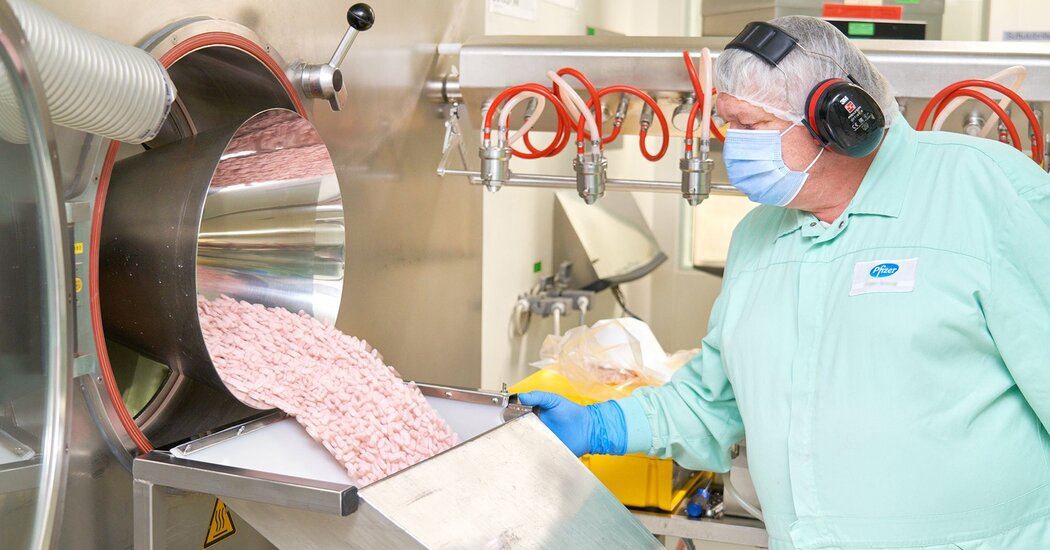
The first-of-its-kind treatment, Paxlovid, has been found to be highly protective against severe illness. It could be available within a few days.The Food and Drug Administration on Wednesday authorized the first pill for Covid-19, offering a highly effective defense against severe illness that will arrive as the country endures another major surge of the pandemic.The drug, developed by Pfizer and known as Paxlovid, is authorized for Covid patients age 12 and over who are vulnerable to becoming severely ill because they are older or have medical conditions such as obesity or diabetes. Tens of millions of Americans — including both vaccinated and unvaccinated people — will be eligible if they get infected with the virus. The treatment could be available within a few days.Pfizer’s laboratory studies indicate that its pills are likely to work against the Omicron variant, which has rapidly become the dominant form of new cases in the United States.A clinical trial indicated that Paxlovid is highly effective when taken soon after people start feeling sick. In a final analysis of a key study conducted while the Delta variant was surging, Pfizer’s drug reduced the risk of hospitalization or death by 88 percent when given to high-risk unvaccinated adults within five days of the start of their symptoms.Paxlovid appears to be substantially more effective than a similar antiviral pill from Merck, known as molnupiravir, that is still awaiting authorization by the F.D.A. In a clinical trial, Merck’s drug reduced risk of hospitalization and death for high-risk patients by 30 percent.Until now, monoclonal antibody drugs, which are typically infused into the bloodstream at a hospital or clinic, have been the only authorized treatments for Covid patients who are not hospitalized but at higher risk of developing severe disease. But the antibodies have gone to fewer people than the pills are expected to reach, and most of the country’s supply of the antibody treatments is unlikely to work against Omicron.The federal government has ordered enough of Pfizer’s pills to cover 10 million people, at a cost of about $530 per patient, but the supply will be limited at first.Within a week, Pfizer is expected to make available to the United States enough of its pills to cover 65,000 Americans. At current infection rates, that would be enough supply for less than one day if it were given to half of people in the United States who test positive for the virus.Pfizer is expected to make available to the United States another 200,000 treatment courses in January. The pace of deliveries is expected to increase sharply in the subsequent months, with Pfizer expected to fulfill the government’s full order by late summer.Coronavirus cases have been increasing since early November, particularly in the Midwest and Northeast, driven first by the Delta variant and now mostly by Omicron.The federal government will allocate the antiviral pills to states, which can then distribute them to local health departments and pharmacies, as was done with Covid vaccines. The government will also distribute the pills directly to community health centers.“The tough thing for states to figure out is who to make it available to, since there’s so few to begin with,” said Dr. Nahid Bhadelia, director of the Center for Emerging Infectious Diseases Policy and Research at Boston University. “You want to make sure that it’s at least given to people who are the most likely to benefit from it.”She said it would be important for state and local governments to prioritize getting the pills to medically vulnerable people, particularly in nursing homes and clinics in hard-hit communities.To get Pfizer’s pills, the F.D.A. said, patients will need to test positive for the virus and get a prescription from a health care provider, all within no more than five days after their symptoms start. Those requirements may pose serious challenges.While the agency did not specify which type of test will be needed, over-the-counter rapid antigen tests, which return results within 15 minutes, are expected to be widely used. President Biden announced on Tuesday that the administration is buying 500 million rapid tests to distribute free to the public, but it is not clear if that will be enough to meet what is expected to be very high demand.There is also a risk that Americans most in need of the pills will refuse them, just as they have spurned vaccines. About half of unvaccinated adults polled by Morning Consult said they would not take F.D.A.-authorized antiviral pills if they got sick with Covid.Pfizer expects to produce 120 million courses of Paxlovid in 2022. The company already has deals to sell its pills to a number of wealthy countries, and says it’s in discussions with dozens of governments around the world about additional supply deals. It has also agreed to allow other manufacturers to inexpensively make and sell the pills to poorer countries.The Coronavirus Pandemic: Key Things to KnowCard 1 of 5The holiday season.

Read more →

Researchers lay groundwork for potential dog-allergy vaccine

There have been many research efforts describing the nature and progression of dog allergies, but there have been very few applied studies that use this information to try to cure people of dog allergies entirely by artificially inducing immune tolerance. But researchers have now for the first time identified candidates for those parts of the molecules that make up dog allergens that could give us precisely that: a “dog allergy vaccine.”
Their findings were published in the Federation of European Biochemical Societies journal on October 26.
Being allergic to dogs is a common malady and one that is growing worldwide. Over the years, scientists have been able to identify seven different dog allergens — molecules or molecular structures that bind to an antibody and produce an unusually strong immune response that would normally be harmless.
These seven are named Canis familiaris allergens 1 to 7 (Can f 1-7). But while there are seven, just one, Can f 1, is responsible for the majority (50-75 percent) of reactions in people allergic to dogs. It is found in dogs’ tongue tissue, salivary glands, and their skin.
Researchers have yet to identify Can f 1’s IgE epitopes — those specific parts of the antigens that are recognized by the immune system and stimulate or ‘determine’ an immune response (which is why epitopes are also called antigen determinants). More specifically, epitopes are short amino acid sequences making up part of a protein that induces the immune response.
Epitopes bind to a specific antigen receptor on the surface of immune system antibodies, B cells, or T Cells, much like how the shape of a jigsaw puzzle piece fits the specific shape of another puzzle piece. (The part of the receptor that binds to the epitope is in turn called a paratope). Antibodies, also known as immunoglobulin, come in five different classes or isotypes: IgA (for immunoglobulin A), IgD, IgE, IgG, or IgM. The IgE isotype (only found in mammals) plays a key role in allergies and allergic diseases. There is also an IgE epitope that is the puzzle piece that fits the IgE isotype’s paratope.
In recent years, there has been extensive effort at developing epitope-focused vaccines — in this case, a vaccine against dog allergies.
“We want to be able to present small doses of these epitopes to the immune system to train it to deal with them, similar to the principle behind any vaccine,” said Takashi Inui, a specialist in allergy research, professor at Osaka Prefecture University and a lead author of the study. “But we can’t do this without first identifying the Can f 1’s IgE epitope.”
So the researchers used X-ray crystallography (in which the diffraction of x-rays through a material is analyzed to identify its ‘crystal’ structure) to determine the structure of the Can f 1 protein as a whole — the first time this had ever been done.
They found that the protein’s folding pattern is at first glance extremely similar to three other Can f allergens. However, the locations of surface electrical charges were quite different, which in turn suggest a series of ‘residues’ that are good candidates for the IgE epitope.
Using this basic data, further experimental work needs to be performed to narrow the candidates down, but the findings suggest the development of a hypoallergenic vaccine against Can f 1 — a dog-allergy vaccine — is within our grasp.
The production of a ‘hypoallergenic vaccine’ by use of such epitopes would not just be a world-first with respect to dog allergies but is rare with respect to any allergic reaction. If the researchers’ work is indeed used to develop a dog allergy vaccine, the principles behind it could be used much more widely against various allergies.
Story Source:
Materials provided by Osaka Prefecture University. Note: Content may be edited for style and length.

Read more →

Estimating the strength of selection for new COVID-19 variants

As the discovery of the new omicron variant illustrates, new COVID-19 variants will continue to regularly emerge. In an effort to make sense of these new variants, scientists at Los Alamos National Laboratory have developed methods to quantify how much more or less transmissible they are, which could have far-reaching implications for public health in terms of COVID-19 risk and the vaccination levels required to obtain herd immunity.
“Generally, new COVID-19 variants are simply discussed in terms of being more dangerous or spreading quicker than previous strains,” said Ethan Romero-Severson, a computational epidemiologist in Los Alamos’s Theoretical Division and senior author on the paper published in Nature Communications. “We showed that it is possible to calculate new strains’ transmission advantage while accounting for alternative explanations such as migration and random genetic drift. Our collection of methods allows us to look both broadly at the global situation and in greater detail at specific countries using publicly available genetic sequence data.”
The Los Alamos research is “a method for integrating molecular epidemiological surveillance into surveillance systems using publicly available data streams,” Romero-Severson noted.
The team used two distinct but complementary approaches. The first is derived from classical population genetic methods that relate the increased transmissibility of a COVID-19 variant to the expected frequency of that variant in the population over time.
“We modified that model to include migration as a possible alternative explanation to increased transmissibility and implemented it in a hierarchical modeling framework that allowed us to estimate the unique selection effect for each variant in each country in which it appeared,” he said.
The second, more detailed method used a stochastic (allowing for uncertainty) epidemiological model to predict both the changes in COVID-19 variant frequencies and deaths over time, accounting for natural and random variation in the virus both between and within countries over time.
Together, these approaches showed that the pattern of emerging and rising COVID-19 variants globally was driven by large increases in the transmissibility of the virus over time. The methods also clearly established that early detection of variants of concern is possible even when the global frequency of new variants is as small as 5 percent.
Story Source:
Materials provided by DOE/Los Alamos National Laboratory. Note: Content may be edited for style and length.

Read more →

How tissues form complex shapes that enable organ function

From the smooth tubes of our arteries and veins to the textured pockets of our internal organs, our bodies are made of tissues arranged in complex shapes that aid in performing specific functions.
But how do cells fold themselves so precisely into such complicated configurations during development? What are the fundamental forces driving this process?
Now, researchers at Harvard Medical School have discovered a mechanical process by which sheets of cells morph into the delicate, looping semicircular canals of the inner ear.
Published Dec. 22 in Cell, the research, done in zebrafish, reveals that the process involves a combination of hyaluronic acid, produced by cells, that swells with water, and thin connectors between cells that direct the force of this swelling to shape the tissue.
Although conducted in zebrafish, the work reveals a basic mechanism for how tissues take on shapes — one that is likely to be conserved across vertebrates, the researchers say, and may also have implications for bioengineering.
A Model of Transparency
Study senior author Sean Megason, professor of systems biology in the Blavatnik Institute at HMS, and his team study how cells develop into complex, three-dimensional structures. To address this question, they turned to a classic — and ideal — model organism: zebrafish.

Read more →

Study confirms nutrient’s role in childhood blood cancer

A molecular building block of many animal proteins, the amino acid valine, plays a key role in cancerous growth seen in T cell acute lymphoblastic leukemia, a new study shows.
Led by researchers at NYU Langone Health, its Department of Pathology, and the Laura and Isaac Perlmutter Cancer Center, the study showed that genes involved in using up valine in cells were more active in cancerous T cells than in normal T cells.
Blocking these valine-linked genes not only led to decreased valine in leukemia blood T cells, but also stalled these tumor cells from growing in the lab. Only 2 percent of cancerous T cells remained alive.
Further, experiments suggested that changes (mutations) in the DNA code of the gene NOTCH1, the most common seen in patients who develop leukemia, encourage cancer growth in part by increasing valine levels.
Publishing in the journal Nature online Dec. 22, the research involved experiments in human leukemia cells grown in the lab and also transplanted into mice that then develop this cancer, which has its origins in white blood cells in the bone marrow.
Further experiments showed that feeding the leukemic mice low-valine diets for three weeks interrupted tumor growth. The diet also reduced circulating blood cancer cells by at least half and in some cases to undetectable levels. By contrast, re-introduction of valine to the diets led to cancer progression.

Read more →

DNAzymes – how active DNA molecules with therapeutic potential work

DNAzymes are precision biocatalysts that destroy unwanted RNA molecules. However, major obstacles to their use in medicine remain. Together with Jülich Research Centre (FZJ) and the University of Bonn, a research team from Heinrich Heine University Düsseldorf (HHU) has investigated with atomic resolution how DNAzymes work in real time. They have now presented these important fundamental findings and their application in the journal Nature.
DNAzymes — a word made up of DNA and enzyme — are catalytically active DNA sequences. They comprise a catalytic core comprising around 15 nucleic acids flanked by short binding arms on the right- and left-hand sides, each with around ten nucleic acids. While the sequence of the core is fixed, the binding arms can be modified specifically match virtually any RNA target sequence.
The aim is to target unwanted RNA molecules of viruses, cancer or damaged nerve cells, using DNAzymes to attack and destroy them. This is achieved via binding sequences that match a sequence of nucleotides on the targeted RNA molecule. The DNAzyme docks precisely to the matching position and the core cleaves the RNA molecule, the fragments of which are then quickly degraded in the cell. The binding arms can be exchanged quickly and easily.
The therapeutic benefits are obvious: Unwanted RNA can be destroyed precisely, while other, useful RNA strands in a cell remain untouched. In some viruses like SARS-CoV2 and Ebola, the genetic material is coded on an RNA molecule. Like healthy cells, cancer cells use so-called messenger RNA (mRNA) to copy the blueprints for proteins from their DNA and transfer them to the molecule factories. The mRNA sequence in cancer cells is often slightly different to that of healthy cells or present in different amounts, meaning that DNAzymes can specifically attack cancer cells while sparing others.
“What sounds outstanding in theory and was already proposed 20 years ago, unfortunately doesn’t work like that in medical practice,” says Dr Manuel Etzkorn, working group leader at the HHU Institute of Physical Biology and last author of the study, which has now been published in Nature. “In a test tube, the DNAzymes are highly effective at destroying the RNA molecules, but this rarely happens in a cell. There must be a competing process that blocks the DNAzymes. However, without a fundamental understanding of how they function, it is very difficult to develop improved DNAzyme variants that can accomplish their work in cells. Our insights have now brought movement into this deadlocked situation.”
In their study, the authors from HHU and a team from Jülich Research Centre (FZJ), the University of Bonn and a Swiss company sought to understand how the system as a whole functions dynamically, what steps occur in the binding and cleaving process and what cofactors support the reaction.
The researchers observed the processes at atomic resolution and in part in real time using high-resolution nuclear magnetic resonance (NMR) spectroscopy. This enabled them to depict the three-dimensional atomic arrangement assumed by the DNAzyme to bind to and cleave the RNA: The core wraps around the RNA strand in a highly effective way, cleaving it into two pieces in several intermediate steps. After cleaving, the DNAzyme releases the fragments and can bind again elsewhere.
Professor Dr Holger Gohlke from the HHU Chair of Pharmaceutical and Medicinal Chemistry and the Institute of Bio- and Geosciences at FZJ, whose team conducted molecular dynamics simulations on the DNAzyme/RNA complex, adds: “In the best sense of integrative modelling, we were able to put forward a plausible RNA cleaving mechanism at atomic level and supply information on RNA base preference at the cleavage site.”
Jan Borggräfe, doctoral researcher in Etzkorn’s working group and lead author of the study, explains why the DNAzymes do not work well in cells: “We established that magnesium, as a key cofactor, plays various essential roles in the mechanism, but that it binds relatively poorly and only briefly to the DNAzyme. There are other components in the cell with a greater affinity for magnesium that “steal” the magnesium from the DNAzyme so to speak.”
The next step is to conduct structural investigations into cell cultures and organoids. The goal for therapeutic applications is to improve the magnesium affinity of the DNAzymes through targeted modifications in order to increase their activity in biological tissue.
Dr Etzkorn states a further area of application: “The focus of our Institute lies on research into neurodegenerative diseases, where we also see good potential for DNAzymes. In the case of Parkinson’s disease, they may under certain circumstances be able to destroy the mRNA sequence that drives the production of alpha-synuclein which, in large quantities, can promote neurotoxic processes.” DNAzymes could also give rise to a new class of antibiotics.
Story Source:
Materials provided by Heinrich-Heine University Duesseldorf. Original written by Arne Claussen. Note: Content may be edited for style and length.

Read more →

Metabolic syndrome increased risk of acute respiratory distress syndrome, death for hospitalized COVID-19 patients, study finds

Patients hospitalized with COVID-19 who had a combination of high blood pressure, obesity, diabetes, or other conditions associated with metabolic syndrome were at much higher risk of acute respiratory distress syndrome (ARDS) and death, according to an international study published in the medical journal JAMA Network Open.
The risk for developing ARDS, a life-threatening lung condition that causes low blood oxygen, grew progressively higher with each additional metabolic syndrome criteria present. The study, one of the largest to examine the link between metabolic syndrome and outcomes for COVID-19, examined records of more than 46,000 patients admitted in 181 hospitals across 26 countries.
“Our study found that if you have high cholesterol, high blood pressure, mild obesity and pre-diabetes or diabetes and are hospitalized with COVID-19, you have a one in four chance of developing ARDS, which is significant,” said lead author of the study Dr. Joshua Denson, pulmonary and critical care medicine physician and assistant professor of medicine at Tulane University School of Medicine. “We also found that at every level of respiratory support, patients with metabolic syndrome experienced worse outcomes. Metabolic syndrome patients experienced increased invasive mechanical ventilation, increased noninvasive ventilation, or high-flow oxygen support, and increased supplemental oxygen use compared to patients without metabolic syndrome.”
“These important findings are another example of possibilities from pooled data of hundreds of hospitals, in detecting meaningful associations during the pandemic,” said Rahul Kashyap, M.B.B.S., senior author of the study and principal investigator of the Discovery VIRUS: COVID-19 Registry. “These findings will assist with efforts for creating national infrastructures, for identifying critical illness risk factors and testing novel/re-purposed medications to help improve patient outcomes.”
Researchers from Tulane University, the Society of Critical Care Medicine and Mayo Clinic followed outcomes for patients hospitalized between mid-Feb. 2020 to mid-Feb. 2021 in the Discovery VIRUS: COVID-19 Registry. Researchers compared 5,069 patients (17.5%) with metabolic syndrome with 23,971 control patients (82.5%) without metabolic syndrome. They defined metabolic syndrome as having more than three of the following criteria: obesity, pre-diabetes or diabetes, hypertension and high cholesterol.
Patients with metabolic syndrome were 36% more likely to develop ARDS, almost 20% more likely to die in the hospital, more than 30% more likely to be admitted to an ICU, and 45% more likely to require mechanical ventilation. Researchers calculated these risks after adjusting for race, age, sex, ethnicity, other comorbid conditions, and hospital case volume.
Overall, slightly more than 20% of the patients with metabolic syndrome died in the hospital, 20% developed ARDS and almost half were admitted to the ICU. Approximately 16% of those without metabolic syndrome died, 12% developed ARDS and nearly 36% were admitted to the ICU.
Metabolic syndrome was significantly more common among patients with COVID-19 admitted to U.S. hospitals (18.8%) than those admitted to non-U.S. hospitals (8%). According to the Centers for Disease Control, more than a third of adults in the U.S. meet the criteria for metabolic syndrome, with some regions having a metabolic syndrome prevalence greater than 40%.
Severe cases of COVID-19 are characterized by a hyperinflammatory immune response to the infection throughout the body. Authors suspect that chronic low-grade inflammation from metabolic diseases, mainly when clustered together, could make these patients more vulnerable to COVID-19.
The researchers note that given the high rates of metabolic syndrome, obesity and diabetes in the U.S., one hypothesis for why the U.S. leads the world in COVID-19 cases and deaths could be the high prevalence of metabolic syndrome in this population.
This study was made possible by the Viral Infection and Respiratory Illness Universal Study (VIRUS) that reveals practice variations and provides a rich database for research into effective treatments and care. The Society of Critical Care Medicine’s Discovery, the Critical Care Research Network and Mayo Clinic launched this first global COVID-19 registry that tracks ICU and hospital care patterns in near real-time in March 2020.
Story Source:
Materials provided by Tulane University. Note: Content may be edited for style and length.

Read more →

How do our organs know when to stop growing?

The smallest fish in the world, the Paedocypris, measures only 7 millimeters. This is nothing compared to the 9 meters of the whale shark. The small fish shares many of the same genes and the same anatomy with the shark, but the dorsal and caudal fins, gills, stomach and heart, are thousands of times smaller! How do organs and tissues of this miniature fish stop growing very quickly, unlike those of their giant cousin? A multidisciplinary team led by scientists from the University of Geneva (UNIGE), Switzerland, and the Max Planck Institute for the Physics of Complex Systems (MPIPKS), Germany, was able to answer this fundamental question by studying its physics and using mathematical equations, as revealed by their work published in the journal Nature.
Cells of a developing tissue proliferate and organize themselves under the action of signaling molecules, the morphogens. But how do they know what size is appropriate for the living organism to which they belong? The research groups of Marcos Gonzalez-Gaitan, Professor at the Department of Biochemistry of the Faculty of Science of the UNIGE and Frank Jülicher Director at the MPIPKS in Dresden, have solved this mystery by following a specific morphogen in the cells of tissues of different sizes in the fruit fly Drosophila.
In Drosophila, the morphogen Decapentaplegic (DPP), a molecule required for the formation of the fifteen (deca-penta) appendages (wings, antennae, mandibles…) diffuses from a localized source within the developing tissue and then forms decreasing concentration gradients (or gradual variations) as it moves away from the source. In previous studies, Marcos Gonzalez-Gaitan’s group, in collaboration with the German team, has shown that these concentration gradients of DPP extend over a larger or smaller area depending on the size of the developing tissue. Thus, the smaller a tissue, the smaller the spread of the DPP gradient from its diffusion source. On the other hand, the larger a tissue, the larger the spread of the DPP morphogen gradient. However, the question remained as to how this concentration gradient scales to the growing size of the future tissue/organ.
A multidisciplinary approach to solve a biological question
“The original approach of my team, composed of biologists, biochemists, mathematicians, and physicists, is to analyze what happens at the level of each cell, rather than placing our observations at the scale of the tissue,” comments Marcos Gonzalez-Gaitan. “The central point is to deal with living matter as if it was just matter, that is to say, studying biology with the principles of physics,” says Frank Jülicher. The two teams have developed a battery of sophisticated tools to follow the fate of the DPP molecule in and between cells of a tissue with great precision using quantitative microscopy techniques. “These tools have allowed us to define a multitude of parameters, linked to cellular processes, for this morphogen. For example, we measured the efficiency with which it binds to cells, penetrates inside cells, is degraded or is recycled by the cell before diffusing back to other cells. In summary, we measured all the important transport steps of DPP,” explains Maria Romanova Michailidi, senior researcher in the Department of Biochemistry and first author of this study.
The mechanism of scaling explained by a mathematical equation
The scientists collected all this data on DPP in cells belonging to tissues of different sizes in normal flies and in mutants that failed to scale. They found that it is these different individual transport steps that define the extent of the gradient. Thus, in a small tissue, the DPP molecule is mainly spread by diffusion in between cells. Its concentration therefore falls quite rapidly around its source because of degradation, yielding a narrow gradient. On the other hand, in larger tissues, DPP molecules that went inside cells are also highly recycled, making it possible to extend the gradient over a larger area. “We were finally able to propose an unbiased, unified theory of morphogen transport, going down to the key equations of the system and to unravel the mechanism of scaling!” Maria Romanova enthuses.
The combination of theoretical physics and experimental approaches, established from the study of the DPP molecule in Drosophila, can be generalized to other molecules involved in the formation of various developing tissues. “Our singular and multidisciplinary approach allows us to provide a universal answer to a fundamental biological question that Aristotle was already asking himself nearly 2,500 years ago: how does an egg know when to stop growing to make a chicken?” concludes Marcos Gonzalez-Gaitan.
Story Source:
Materials provided by Université de Genève. Note: Content may be edited for style and length.

Read more →

Flexibility may be the key to potent peptides for treating diabetes

A little wiggle room might be just what the doctor ordered.
New research suggests that the peptides — short chunks of protein — used to treat Type 2 diabetes may be more effective if they’re able to flexibly move back and forth between different shapes.
The findings could help improve drug design for these diabetes drugs and possibly other therapeutic peptides.
More broadly, the discovery counters common wisdom that that molecular signaling machinery in the body is based on having one ideal — and static — partner to activate cellular receptors. Life’s machinery might be more dynamic than previously thought.
The peptide, known as GLP-1, had previously been known to adopt a rigidly helical, corkscrew shape. Compared to a peptide locked into this helical shape, a peptide engineered to form a sudden kink near its end better activated its cellular target, which promotes insulin release from the pancreas. It’s likely that, in the body, GLP-1 is able to switch back and forth between these two forms, maximizing its potency.
“I think most molecular scientists have an image of this peptide bound to the receptor as having a single ideal shape,” says Sam Gellman, a professor of chemistry at the University of Wisconsin-Madison who supervised the new research. “And what we’re saying is that this vision of an ideal interaction between these two units is probably too simplistic. That in order to be effective, that peptide needs to remain mobile in certain ways.”
Gellman and an international collaboration of researchers published their findings Dec. 22 in the journal Nature Chemical Biology. The work was led by Brian Cary when he was a doctoral student in Gellman’s lab.

Read more →

Solar flare throws light on ancient trade between the Islamic Middle East and the Viking Age

Mobility shaped the human world profoundly long before the modern age. But archaeologists often struggle to create a timeline for the speed and impact of this mobility. An interdisciplinary team of researchers at the Danish National Research Foundation’s Centre for Urban Network Evolutions at Aarhus University (UrbNet) has now made a breakthrough by applying new astronomical knowledge about the past activity of the sun to establish an exact time anchor for global links in the year 775 CE.
In collaboration with the Museum of Southwest Jutland in the Northern Emporium Project, the team has conducted a major excavation at Ribe, one of Viking-age Scandinavia’s principal trading towns. Funded by the Carlsberg Foundation, the dig and the subsequent research project were able to establish the exact sequence of the arrival of objects from various corners of the world at the market in Ribe. In this way, they were able to trace the emergence of the vast network of Viking-age trade connections with regions such as North Atlantic Norway, Frankish Western Europe and the Middle East. To obtain a chronology for these events, the team has pioneered a new use of radiocarbon dating.
New use of radiocarbon dating
“The applicability of radiocarbon dating has hitherto been limited due to the broad age ranges of this method. Recently, however, it has been discovered that solar particle events, also known as Miyake events, cause sharp spikes in atmospheric radiocarbon for a single year. They are named after the female Japanese researcher Fusa Miyake, who first identified these events in 2012. When these spikes are identified in detailed records such as tree rings or in an archaeological sequence, it reduces the uncertainty margins considerably,” says lead author Bente Philippsen.
The team applied a new, improved calibration curve, based on annual samples, to identify a 775 CE Miyake event in one floor layer in Ribe. This enabled the team to anchor the entire sequence of layers and 140 radiocarbon dates around this single year.
“This result shows that the expansion of Afro-Eurasian trade networks, characterised by the arrival of large numbers of Middle Eastern beads, can be dated in Ribe with precision to 790±10 CE — coinciding with the beginning of the Viking Age. However, imports brought by ship from Norway were arriving as early as 750 CE,” says Professor Søren Sindbæk, who is also a member of the team.

Read more →