Omicron: Half of colds will be Covid, warn UK researchers

SharecloseShare pageCopy linkAbout sharingImage source, Getty ImagesIf you have a sore throat, runny nose and a headache there is a good chance it will be Covid, warn UK researchers. The Zoe Covid study team has been tracking the pandemic using feedback from the general public, and estimates half of people with cold-like symptoms actually have Covid. They describe an “explosion” of Covid cases over the last week, driven by the new Omicron variant. About 144,000 people a day are catching it and then feeling unwell.For most, Covid is a mild disease. Some get no symptoms at all. But it can still cause very serious illness in some people, including those who have not been vaccinated.If you have cold-like symptoms, take a Covid test, says lead scientist Prof Tim Spector.”The number of new symptomatic cases has exploded over the last week,” he said.”For most people, an Omicron positive case will feel much more like the common cold, starting with a sore throat, runny nose and a headache. You only need to ask a friend who has recently tested positive to find this out.”We need to change public messaging urgently to save lives.”Is it a cold or Covid?How to look after yourself if you get CovidThe UK reported 106,122 new Covid cases on Wednesday – exceeding 100,000 on a single day for the first time.With infections doubling every two to three days, experts say, health officials are concerned about the pressure this could put on the NHS.Preliminary studies suggest the Omicron coronavirus variant is milder, with fewer people getting severely ill than with other variants. But a massive wave of infections would still mean many people needing hospital care, as well as lots of doctors and nurses being off sick with Covid. People are being advised to do rapid Covid tests before meeting up with friends and family at Christmas.Lateral flow tests help to find cases in people who may have no symptoms but are still infectious, meaning they can give the virus to others.

Read more →

What Does It Mean to Be ‘Fully Vaccinated’ Against Covid-19?

With all the uncertainty around the Omicron variant, vaccine guidelines are evolving.As evidence grows that the Delta and Omicron variants of the coronavirus are causing breakthrough infections in people who were once considered “fully vaccinated,” momentum seems to be growing to change the definition of that term to include booster shots.Some workplaces and college campuses are now mandating that vaccination include boosters. The governor of New York said that state officials planned to change the definition of “fully vaccinated” to include receiving a booster dose, and Britain’s government won’t be far behind. The N.F.L. last week issued a booster shot mandate for team staff members who work closely with players.And the speculation is growing that we may have to get boosters regularly in future years as new variants emerge.A few months ago, confirming full vaccination status was as simple as showing a card or QR code with proof that the required number of shots had been completed within six months. But in a world of multiple vaccines with varying effectiveness, and a variety of mixing and matching strategies, it will soon be harder to say who is “fully vaccinated.”A consensus will eventually emerge. But here is what some health experts had to say as another year of living with the pandemic was nearing a close.What is the official definition of ‘fully vaccinated’?For now, U.S. health officials say you are fully vaccinated two weeks after your second shot of a two-dose vaccine like Pfizer’s or Moderna’s or after a single-dose vaccine like Johnson & Johnson’s. They have not (yet) expanded that definition to include a booster shot.At a White House press briefing on Wednesday, Dr. Rochelle Walensky, the director of the Centers for Disease Control and Prevention, said the agency is “continuing to follow” the science around Omicron before it decides to expand the definition. However, the agency does recommend that people get booster shots.So does Dr. Anthony S. Fauci, the nation’s top infectious disease expert, who said at the same press briefing, “If you are unvaccinated, get vaccinated. And particularly in the arena of Omicron, if you are fully vaccinated, get your booster shot.”Other countries, like Britain and South Africa, also do not require booster shots for someone to be considered “fully vaccinated.”This was always going to change.As it became clear that the immunity conferred by the initial rounds of vaccines was waning, Israel announced in October that it would make a booster dose a requirement for its vaccine passport. It was believed to be the first country to do so, though it wouldn’t be the last.In late November, just before Omicron fast-forwarded booster programs around the world, the European Union began to discuss adding a nine-month expiration date to its digital certificates, a move it formally adopted this week.Some of the E.U.’s member nations, like Austria, had already enacted an expiration date for their residents. In France, where the certificates expire seven months after a second dose, all adults have until Jan. 15 to receive a booster, or their passes will no longer allow them access to places like restaurants and museums.A waiter checking a customer’s vaccine verification at a cafe in Paris in September. Dmitry Kostyukov for The New York TimesDo I need a booster shot to fend off Omicron?Early research indicates that the Omicron variant is somewhat less vulnerable to the body’s immune defenses. Booster shots help bolster your antibody response, said Michel Nussenzweig, an immunologist at Rockefeller University in New York.So, yes, you should get that additional jab, said Dr. Jesse L. Goodman, a former chief scientist at the Food and Drug Administration.“This booster dose has really protected people better against Delta,” he said. “Even without Omicron, there’s good reason to get the booster dose.”You can still get infected even after a booster, but the shot will probably protect you against severe illness or death, he said.The Coronavirus Pandemic: Key Things to KnowCard 1 of 4The Omicron variant.

Read more →

Beneath a Covid Vaccine Debacle, 30 Years of Government Culpability

WASHINGTON — As the Biden administration tries to stanch yet another wave of the coronavirus pandemic, senior White House officials have also been considering a proposal to ensure the nation is better prepared for the next infectious disease outbreak.Key to the plan is the creation of a taxpayer-funded “vaccine hub” where experienced drug makers would partner with the government, reliably churning out millions of doses under federal oversight.The proposal is partly a response to a searing failure by a once obscure Maryland biotech firm, Emergent BioSolutions. While Pfizer and Moderna had spectacular success producing vaccines, the government entrusted the manufacturing of two of the other leading candidates to Emergent, which was forced to toss tens of millions of doses of Johnson & Johnson’s vaccine and to quit producing the AstraZeneca vaccine because of serious quality problems that ultimately led the Biden administration to cancel its contract.The government’s partnership with Emergent, which cost taxpayers hundreds of millions of dollars over the past decade, was supposed to be a pillar of the nation’s pandemic preparedness. Instead, it proved to be the culmination of 30 years of frustrations.Three times over the past three decades, presidential administrations explored plans for a vaccine overhaul like the one President Biden is now considering, only to be thwarted by pharmaceutical lobbying, political jockeying and cost concerns, a New York Times investigation found.In each case, the nation was left ill prepared for the next crisis — while creating a vacuum that Emergent eagerly filled.“The reason why Emergent got so many contracts is mostly because they were the only ones willing to do the work,” said Dr. Kenneth Bernard, a top biodefense adviser to Presidents Bill Clinton and George W. Bush.To reconstruct the forgotten history that led to this year’s vaccine debacle, The Times reviewed thousands of pages of records — among them files from presidential and military archives, previously undisclosed government reports, industry correspondence and business plans.Reporters also interviewed more than 30 people who have helped shape U.S. biodefense policy, including officials from five presidential administrations, corporate executives and industry consultants.Time and again, The Times found, analyses commissioned by the federal government arrived at a similar conclusion: Ensuring access to specialized vaccines is a public good that cannot be left entirely to the market; yet it is unrealistic for the government to take on the task alone.But while the government has tried to enlist major pharmaceutical companies, they have largely been reluctant to divert resources from commercial products. At the same time, they have stood in the way when the government has proposed its own factory, fearing a taxpayer-backed competitor.Repeatedly, The Times found, a middle path won support in Washington: a government plant run by a major drugmaker. Budgets were drawn up and sites selected. In one case, the pre-eminent vaccine company Merck got on board.But the momentum always evaporated. The government opted for incremental changes, dangling incentives before less experienced companies — chief among them Emergent.Once again, a public health crisis has laid bare the heavy cost of that approach.Purchases in past years of Emergent’s anthrax vaccine severely strained the budget of the nation’s Strategic National Stockpile, crowding out investments in products like masks that were in critically short supply last year, as The Times reported in March.And as the government banked on Emergent to make both Johnson & Johnson’s and AstraZeneca’s Covid-19 vaccines, problems in Baltimore delayed immunization efforts around the globe. Nearly two years into the pandemic, the Baltimore plant has still not received final clearance from the Food and Drug Administration.The U.S. government last month canceled its $600 million deal with Emergent BioSolutions to produce Covid-19 vaccines.Jim Lo Scalzo/EPA, via ShutterstockAn Emergent spokesman, Matt Hartwig, acknowledged the company’s struggles but said it had taken on a difficult task that others would not.“While everything has not always gone exactly as planned, we have remained steadfast in our commitment to the American people,” Mr. Hartwig said in a statement.He noted that regulators ultimately authorized the release of 100 million Covid-19 vaccine doses made at the Baltimore site, with more still under review. Mr. Hartwig said the decision to end the federal contract was mutual. But a senior administration official said the government had stopped paying Emergent after discovering quality problems and later reached an agreement to terminate the partnership without a costly legal fight.Now, as President Biden considers a future less dependent on Emergent, the experience of his predecessors provides both a road map and a warning.The pandemic tested the current approach, said Dr. W. Craig Vanderwagen, who ran the federal office charged with preparing for health emergencies from 2007 to 2009 and is a business partner of Emergent’s founder.“It was pretty clear that we failed.”‘Over and Over Again’Long before Operation Warp Speed, there was Project Badger.Then, as now, the government scrambled to secure manufacturing capacity in the midst of a crisis, finding itself with effective vaccines but few places to mass-produce them. Then, as now, officials proposed greater federal intervention to ensure the nation wasn’t again caught unprepared.In 1990, as the U.S. military planned an operation to expel the invading Iraqi army from Kuwait, officials received a sobering intelligence report: Saddam Hussein was probably in possession of anthrax and botulinum toxin.The Defense Department had vaccines for both threats, but the supply was small. Project Badger searched for a solution.Officials identified over a dozen companies that might be able to make more of the vaccines and tried to persuade them to help. None of them agreed, unclassified documents show.The companies had concerns about legal liability and did not want to invest in switching production lines if the government couldn’t promise large purchases after the crisis. One company said that “the cost in lost business alone would have been $62M,” according to an Army memo.Ultimately, the military had to limit vaccination to troops considered at the highest risk. Chastened, the Pentagon commissioned a study that recommended a federal site run by an experienced manufacturer. The government had embraced the model previously for weapons plants and Energy Department labs.

Read more →

Omicron: Biden denies failure in pandemic testing response

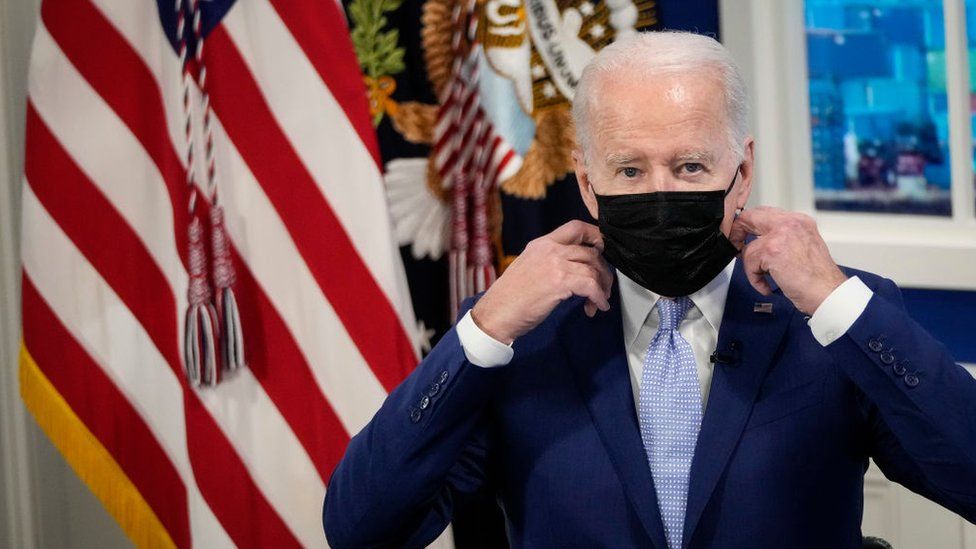
SharecloseShare pageCopy linkAbout sharingImage source, Getty ImagesUS President Joe Biden has denied his administration bungled its response to the emergence of the Omicron variant.He told a TV network that “nobody” could have predicted it. His top adviser Dr Anthony Fauci has said experts did foresee variants. It comes a day after the White House unveiled plans to order 500 million at-home coronavirus tests amid a shortage. There have been long waits for in-person tests as Christmas looms.”I don’t think it’s a failure,” Mr Biden said in a sit-down interview with ABC News on Wednesday. “I think it’s – you could argue that we should have known a year ago, six months ago, two months ago, a month ago.”The Democratic president said he wished he “had thought” about ordering the 500 million test kits “two months ago”.One year ago Mr Biden lambasted a shortfall in Covid-19 testing under the Trump administration as “a travesty”.Image source, Getty ImagesOn Wednesday, New York City recorded nearly 29,000 new cases – a new single day record during the pandemic and a 30% jump from the record set earlier this week. Pressed by ABC on US Vice-President Kamala Harris’ remarks to the Los Angeles Times last week that the White House did not see Delta or Omicron coming, Mr Biden laughed. “How did we get it wrong?” he responded. “Nobody saw it coming. Nobody in the whole world. Who saw it coming?” On Tuesday, the White House also pledged to open more testing sites around the country. What’s the risk of Covid for unvaccinated Americans?Omicron wave appears milder, but concern remainsIn a briefing on Wednesday, Biden spokeswoman Jen Psaki was unable to provide specifics about how and when the free test kits would be distributed.On Sunday, top White House coronavirus adviser Dr Fauci dismissed any suggestion that the emergence of new Covid variants could not have been predicted. “We certainly were anticipating that there were going to be variants,” he told CNN. “Because when you have so much replication going on in the community, if you give a virus enough opportunity to replicate you know it’s going to ultimately mutate.”And sometimes those mutations become a new variant, and that’s what happened with Delta, and certainly with Omicron.”This video can not be playedTo play this video you need to enable JavaScript in your browser.President Biden also told ABC News that he plans to run for re-election in 2024.”But look, I’m a great respecter of fate. Fate has intervened in my life many, many times. If I’m in the health I’m in now, if I’m in good health, then in fact, I would run again,” he said.Mr Biden added that the chance of facing his predecessor, Donald Trump, “would increase the prospect of running”.

Read more →

Colleges Fear Mental Health Crisis Amid Covid Surge

This article addresses mental health issues on college campuses, including suicide. If you are having thoughts of suicide, call the National Suicide Prevention Lifeline at 800-273-8255 (TALK) or go to SpeakingOfSuicide.com/resources for a list of additional resources.The mood was already strained at West Virginia University as students hunkered down for finals in December. Then an employee found an anonymous letter in a men’s bathroom, embellished with illustrations and poetry, that threatened suicide in or around the student union at noon on Monday, Dec. 6.Still reeling from a very public suicide of a 20-year-old business major in April, the university administration reacted swiftly. Officials posted a warning, highlighted in canary yellow, on the university’s website, pleading with the letter’s author to seek help, and asking students to be alert to their surroundings.“While we do not know your personal circumstances, we do know this is a very stressful time of year,” the university wrote, adding, “You are not alone.”As Monday came and went without incident, students and university officials expressed relief, but worried that the note was just one indicator of the fragile mental health of many students during the turmoil of the coronavirus pandemic.“People were disturbed and scared,” Emilie Charles, a sophomore at the university, said. “It’s a hard time for everybody. A lot of us had to grow up pretty quickly this semester.”Colleges across the country are facing a mental health crisis, driven in part by the pandemic. After almost two years of remote schooling, restricted gatherings and constant testing, many students are anxious, socially isolated, depressed — and overwhelming mental health centers. At a few institutions, there has been a troubling spate of suicides.Now another swell of Covid cases, driven by the Omicron variant, threatens to make life on campus worse.Notes of encouragement dangled from trees outside a library at the Claremont Colleges in California.Gabriella Angotti-Jones for The New York TimesIn the last few days, the list of universities that will go remote for at least the first few weeks of January has grown, and includes Stanford; Southern New Hampshire; DePaul; Northwestern; University of California, Los Angeles; and the University of Illinois Chicago. Other colleges, including Bowie State, Cornell, Princeton and Towson, moved exams online and urged students to go home for winter break as soon as possible.As cases surge, a big question is what campus life will look like in January. Will classes be remote? Will students be able to gather? Will there even be campus life?Loneliness or isolation, along with loss of motivation or focus, are among the top concerns of college students who have sought counseling during the pandemic, according to national data collected by the Center for Collegiate Mental Health at Penn State.Some administrators worry that there is a conflict between protecting students’ physical health and their mental health. “Restricting the ability to interact, there’s a price to pay for all that,” said Eli Capilouto, president of the University of Kentucky. “Somebody said if we’re not careful, we’re going to trade one epidemic for another, and in many ways I think we are.”To many students, the latest virus surge feels like a giant step back to the netherworld, where college just was not college.“It’s just ‘Waaaaaah!’ That’s how I would describe it,” said Ally Montgomery, a freshman majoring in comedy arts at DePaul University.When she heard that the first two weeks of winter classes would be online, she felt a sense of panic. She had missed all the rituals of senior year in high school — a real prom, college tours, graduation. She even missed the beginning of college last fall, because she tested positive for Covid.Now real college could be going up in smoke.Kieran Adams, a sophomore at Cornell University in Ithaca, N.Y., headed home this month after the school abruptly shut down all campus activities because of the coronavirus.Heather Ainsworth/Associated PressOver the past decade, the rate of depression, anxiety and serious thoughts of suicide has doubled among college students, according to Daniel Eisenberg, a professor at U.C.L.A. and a principal investigator of the Healthy Minds Study, an annual survey of thousands of students across the country.And the pandemic has only intensified those trends. Students reported lower levels of psychological well-being during the pandemic than before, according to a survey by the Healthy Minds Network and the American College Health Association. On the plus side, they reported higher levels of resiliency.“The water level seems like it has only crept up a little bit during the pandemic, but underneath the surface some people have been enormously harmed,” Dr. Eisenberg said.The academic atmosphere is tense. At the height of the pandemic, professors were more lenient, grading pass/fail and extending deadlines. In the most recent semester, students say, they have gone back to the stricter attitudes of the past, not recognizing that some mercy may still be needed.“You can just look around you and tell people need a rest,” said Flora Durgerian, a senior at Claremont McKenna. “I’m overwhelmed,” she added.Many parents and college administrators have been troubled by an outbreak of suicides. Among them: three, all first-year students, since November 2020 from Dartmouth; two, and possibly more, since July from Worcester Polytechnic Institute; two in September from St. Louis University; three in September and October from the University of North Carolina at Chapel Hill; and deaths from Yale and Princeton.It is unclear whether the number of suicides is going up.“You can just look around you and tell people need a rest,” said Flora Durgerian, a senior at Claremont McKenna.Gabriella Angotti-Jones for The New York TimesBut Colleen Wamback, a spokeswoman for Worcester Polytechnic, said the toll there had been “unprecedented.” The school had two suicides from 2006 to June 2021, she said. In the past six months, there have been four deaths, two of them confirmed suicides and two others still under investigation.There have been at least two suicides connected with West Virginia University since the pandemic began. Eric Domanico, a freshman on full scholarship there, died of suicide in July 2020, soon after students were sent home in the first wave of the pandemic.Eric was already emotionally fragile, his father, Frank Domanico, said. Remote learning was a “disaster” and he missed his friends at school.“My son died of loneliness,” Mr. Domanico said. “He didn’t have his friends, he didn’t have his support group.” Given a choice, he said, “I would rather die of a microbe than of loneliness.”In a poignant forecast of the perils of isolation, The Yale Daily News interviewed Rachael Shaw-Rosenbaum, a first-year student from Anchorage, in the fall of 2020 as she moved into her dormitory room alone — because of Covid restrictions — and went into pre-emptive quarantine. She was not afraid of Covid, Ms. Shaw-Rosenbaum told the paper in a Zoom interview; she was afraid for her mental health.“So I moved myself in for a couple of hours, and cried,” she said.In March, before she could finish her first year, she died of suicide in her dormitory room.Rachael Shaw-Rosenbaum, a freshman at Yale University, and Eric Domanico, a freshman at West Virginia University. Their families founded mental health advocacy organizations after their deaths.Bergen Community College, in suburban New Jersey, lost a student to suicide this semester, and demand for therapy has “exploded,” said Jennifer Migliorino-Reyes, the dean for student support. Her students often are balancing work, children and school — and can be under enormous financial pressure. “Definitely threats of suicide, anxiety attacks, not knowing how to socialize,” she said. “I’m not going to lie: It’s been exhausting.”Cassie Guinto, a second-year student there, offered tutoring services this semester to first-year students. But she noticed that many students who sought academic help did not need it.The Coronavirus Pandemic: Key Things to KnowCard 1 of 4The Omicron variant.

Read more →

Global Covid vaccine rollout a stain on our soul – Brown

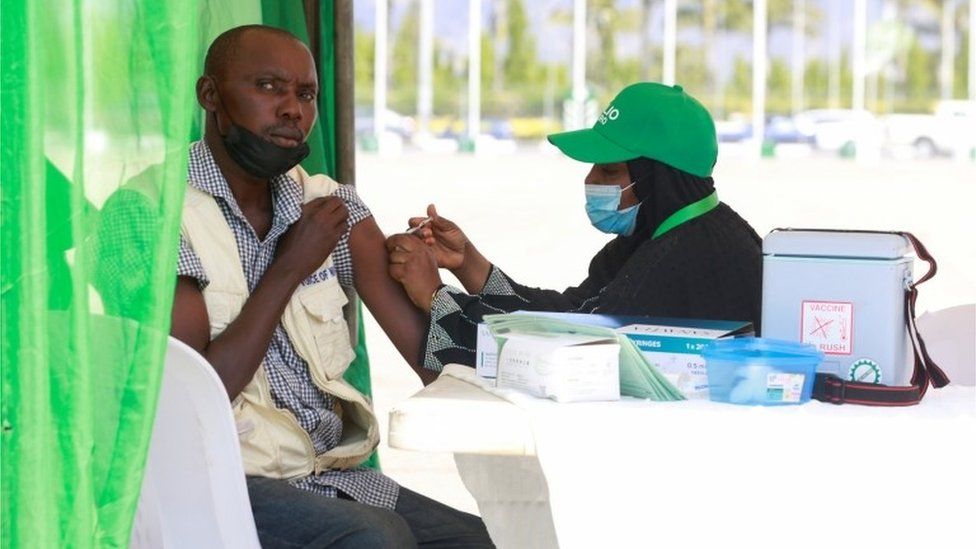
SharecloseShare pageCopy linkAbout sharingImage source, ReutersFormer prime minister Gordon Brown says the failure to distribute vaccines to poorer countries is a “stain on our global soul”. He said people were realising coronavirus would “come back to haunt” every country, without a push to get the whole world vaccinated next year. So far, eight billion Covid vaccines have been administered worldwide.But of those, the vast majority have been given in high and middle-income countries. Vaccinations: More than 50 nations miss target set by the WHOOmicron variant: Are low vaccination rates in South Africa a factor?Brown: £22bn for Covid vaccines ‘small price to pay’The World Health Organization (WHO) says 98 countries have not yet met the target of vaccinating 40% of their populations.About three-quarters of the population have received a vaccine in the UK, US and France, and 80% in Japan. In Nigeria only one in 20 people has been jabbed, and in Ethiopia the figure is just 8%.Only one in four African healthcare workers has been vaccinated. Some have linked low vaccination rates to the emergence of new coronavirus variants such as Omicron, first identified in South Africa and now spreading rapidly across the world.Millions more deathsIn an interview with the BBC World Service, Mr Brown said the uneven distribution of Covid vaccines “is one of the greatest policy failures of our times” and had been caused by wealthy countries hoarding and stockpiling vaccines. He predicted another five million people could die from the virus worldwide if better vaccine access was not achieved soon. Mr Brown, who was prime minister from 2007 to 2010, said: “It’s really a stain on our global soul and it affects us all – because I think people are beginning to realise that if we allow the disease to spread in poor countries and the virus mutates, it comes back to haunt even the fully-vaccinated.”He argued it was an achievable task, saying: “We have the technology. We have the expertise and we’re producing 1.5 billion vaccines now a month. We could get them out to people and we will all suffer if we don’t do this.”Image source, ReutersMr Brown said he hoped world leaders would come together and agree to make the distribution of vaccines a priority at the start of 2022. He also wants more funding for fragile healthcare systems, and better distribution of testing equipment and treatments for Covid-19.Mr Brown said that, as a father of teenage boys, he felt sorry for the young who had had a year or two taken out of their lives. Ensuring fairer access to vaccines, he argued, would be well worth it in economic terms given the trillions of dollars at stake in global trade – as well as improving everyone’s mental health. On Wednesday, a top WHO official said she believed the world was still in the “middle” of the pandemic. Dr Maria Van Kerkhove said: “Getting vaccines to those who need them most must be a priority for every single government – not just some.”If we don’t, we will continue to see the virus change and threaten us in ways that will bring us closer to the beginning rather than closer to the end.”

Read more →

Omicron Infections Seem to Be Milder, Three Research Teams Report

The data offer a rare bit of good news. Still, hospitalizations are likely to increase simply because the variant is so contagious.Three separate teams of scientists on two continents have found that Omicron infections more often result in mild illness than earlier variants of the coronavirus, offering hope that the current surge may not be quite as catastrophic as feared despite skyrocketing caseloads.The researchers examined Omicron’s course through populations in South Africa, Scotland and England. The results in each setting, while still preliminary, all suggested that the variant was less likely to send people in hospitals.“Given that this is everywhere and given that it’s going to be so transmissible, anything that would lower severity is going to be better,” said Natalie Dean, a biostatistician at Emory University in Atlanta.Since the discovery of the Omicron variant in southern Africa in November, scientists have struggled to learn whether it causes more severe illness compared with other variants — and if so, in whom.The new research suggests that the variant may have biological features that make it somewhat less dangerous than Delta, the variant that dominated the world from summer till now.But Omicron’s lowered risk of hospitalization in all three countries also appears to be due in large part to immunity in those populations. Many of the infected already had protection against severe disease, either because of previous infections or vaccinations.While the new research is heartening, experts warn that the surge coming to many countries still may flood hospitals with Omicron cases, simply because the variant spreads so much more easily than previous versions of the coronavirus.“I don’t want to be alarmist, but I don’t think that you can let your guard down,” said Christina Ramirez, a biostatistician at the University of California, Los Angeles.Americans should take rapid tests before holiday events and should gather outside, open windows or find other ways to improve ventilation, Dr. Ramirez said.While Omicron may be causing milder disease on average, it’s also spreading faster than any variant yet. It is now the dominant variant in the United States, Europe and many other regions of the world.Yet encouraging news came from South Africa on Wednesday, suggesting that these surges may not last as long as previous ones. Omicron has fueled a record number of daily new cases, but officials reported on Wednesday that the wave of infections may have peaked.As infections in the United States rose to 154,000 daily cases on average over the past week, federal health officials added a defense against the rising threat to hospitals. The Food and Drug Administration authorized the first pill to treat Covid-19 on Wednesday, offering a highly effective treatment against severe illness.Boxes of Paxlovid, the new Covid pill treatment, were prepared for shipment at a facility in Memphis. Tens of millions of Americans will be eligible for the pill.Pfizer, via ReutersThe drug, developed by Pfizer and known as Paxlovid, is authorized for Covid patients 12 and older who are at risk of becoming severely ill. Pfizer has reported that its pills are likely to work against the Omicron variant.The three studies from the United Kingdom and South Africa confirm that Americans will gain some protection against severe disease from vaccinations and booster shots. More than 200 million Americans — over 60 percent of the population — are now fully vaccinated.But the United States lags behind other countries, some of which have inoculated over 80 percent of their populations. And only 63 million Americans have received boosters, which provide the strongest protection against both serious disease and infection from Omicron.The South African study focused on the surge of Omicron cases since November. The risk of hospitalization was about 70 percent lower among people infected with Omicron, compared with those infected with other variants of the coronavirus, the researchers found.The authors speculated that the milder cases might be due in part to the fact that Omicron was more successful at reinfecting people who had already had Covid-19. While the variant can evade the antibodies from previous infections and establish itself in the body, it may not be able to escape the powerful but slower immune responses that prevent serious disease.In South Africa, researchers estimate that about 70 percent of people had Covid infections before the Omicron wave. About 30 percent have been vaccinated. The authors were not able to separate the protection afforded by infections from that resulting from vaccinations.A researcher at the Africa Health Research Institute in Durban, South Africa, worked on research related to the Omicron variant this month.Jerome Delay/Associated PressThey also cautioned that their data were gathered during an early stage of the Omicron wave, when the overall infection rate was quite low. Infected people with relatively mild symptoms might have been more likely to be admitted to hospitals back then, before the wards filled up.In Scotland, researchers examined Delta and Omicron cases in November and December, looking at how many patients with each variant were admitted to a hospital. Omicron infections are associated with a two-thirds reduction in the risk of hospitalization compared with the Delta variant, the researchers found.Mark Woolhouse, a professor of infectious diseases at the University of Edinburgh and a co-author of the new study, said that the dramatic surge of Omicron meant that even if these preliminary results held up, the variant would still put a lot of people into hospitals very quickly.Also on Wednesday, a team of researchers at Imperial College London compared Omicron and Delta cases in the first two weeks of December and reported a reduction in hospital visits, albeit a smaller reduction than that found by their Scottish colleagues.Initial estimates suggest that compared with Delta variant cases, individuals infected with Omicron are 15 to 20 percent on average less likely to turn up in hospitals overall and 40 to 45 percent less likely to be hospitalized for a night or more.The Coronavirus Pandemic: Key Things to KnowCard 1 of 4The Omicron variant.

Read more →
Biden Promised 500 Million Tests, but Americans Will Have to Wait

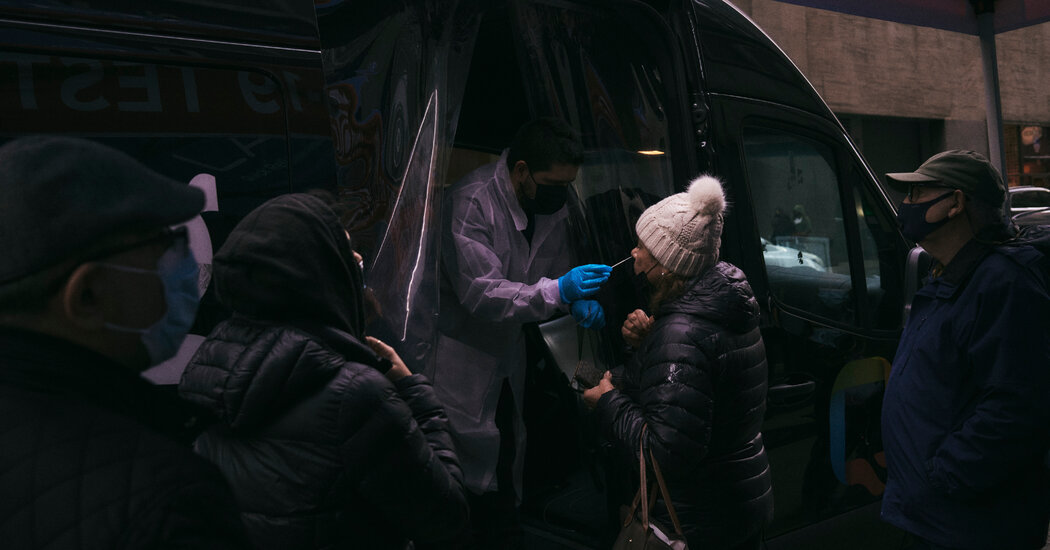
Contracts to purchase tests could be signed as soon as next week, but relief could be weeks away for people trying to buy the hard-to-find tests.WASHINGTON — President Biden promised Americans he is making 500 million coronavirus tests available free of charge, but help is at least weeks away — if not longer — for anxious Americans facing a surge of new virus cases.Mr. Biden’s administration has not yet signed a contract to buy the tests, and the website to order them will not be up until January. Officials have not said how many tests people will be able to order or how quickly they will be shipped once they begin to be available next month. Manufacturers say they are already producing tests as fast as they can.As a candidate, Mr. Biden excoriated the lack of testing during the Trump administration, saying in March 2020 that “the administration’s failure on testing is colossal, and it’s a failure of planning, leadership and execution.” But the Omicron variant caught the White House off guard, as the president has acknowledged, and cases have far outstripped the government’s ability to make tests available.The president’s pledge of a half-billion tests on Tuesday was the centerpiece of a newly aggressive testing effort, announced just days before Christmas, as Americans try to find the hard-to-find tests so they know whether they are infected during the holiday season.“That’s not a plan — it’s a hope,” said Jennifer Nuzzo, an epidemiologist at the Johns Hopkins Bloomberg School of Public Health, which tracks testing trends. “If those tests came in January and February, that could have an impact, but if they are spread out over 10 to 12 months, I’m not sure what kind of impact it is going to have.”Contracts to purchase tests could be finalized as soon as next week, officials said.Whether testing manufacturers can now ramp up to produce an extra 500 million at-home tests — and how soon — is unclear. John M. Koval, a spokesman for Abbott Laboratories, a major manufacturer of rapid at-home antigen tests, said in an email message that the company is seeing “unprecedented demand” for its tests, “and we’re sending them out as fast as we can make them.”The company is running its manufacturing plants around the clock, investing in automation and hiring more workers, Mr. Koval said. Abbott will make 70 million tests in January, he said, and “can scale significantly in the months ahead.”Ellume, an Australian manufacturer of a competing rapid test, said in a statement that it “stands ready to meet the increased demand” by supplying the government 8.5 million tests, and opening a new manufacturing facility in Frederick, Md., in January. Once fully operational, that plant will produce 15 million tests a month.The shortage of tests comes as Americans want to know whether they are infected during the holiday season.Saul Martinez for The New York TimesThe Biden plan is facing competition from state and local officials who got out ahead of the president. In Maryland, Gov. Larry Hogan announced last month that his administration was making 500,000 Abbott at-home tests available. Colorado began distributing free at-home tests in October. Dozens of cities and towns in Massachusetts are already sending out free tests under a new statewide program.Experts say it is unlikely that the 500 million new tests will become available all at once. Dr. Michael Mina, an epidemiologist and former Harvard professor who has repeatedly called for expanded use of testing, said he expected that they would be distributed over two to three months.“Had this been started a long time ago, maybe things would be a bit different,” said Dr. Mina, who recently became the chief science officer of eMed, which distributes at-home tests. “But this is where we are now, and we kind of have to deal with it.”Shortages of at-home tests are not unique to the United States. In the last week, headlines have blared about long lines for testing in Spain, Britain, Canada, Germany and Ireland.The White House also noted that the government has increased other methods of testing over the past several months, including sending 50 million free tests to community health centers and help to hot spots.By next week, a team from the Centers for Disease Control and Prevention will be in New York City helping to provide an additional 25,000 of the more sensitive laboratory-conducted tests. The first mobile site opened in Queens on Wednesday, and two more will open Thursday in Flushing and East Elmhurst, New York officials said.Jen Psaki, the White House press secretary, said Wednesday that the 500 million tests are “the biggest purchase that we have done to date.”“It certainly represents a significant commitment, a recognition by the president that we need to be doing more,” she said.For Mr. Biden, the scramble to address the shortfall in the availability of testing is an uncomfortable parallel with the Trump administration’s inability to roll out testing at the beginning of the pandemic in 2020.Mr. Biden acknowledged that the Omicron surge caught the White House off guard.Stefani Reynolds for The New York TimesThe Trump administration struggled with supply shortages and a president who complained that testing was driving up caseload reports and making him look bad.Mr. Biden came into office vowing to expand the supply of tests but later focused his response almost exclusively on vaccines, and demand for testing fell so low that Abbott destroyed millions of tests in August — just as the Delta variant was surging.The Coronavirus Pandemic: Key Things to KnowCard 1 of 4The Omicron variant.

Read more →
Exposure to formaldehyde at work linked to cognitive problems later

A variety of jobs expose people to formaldehyde, a strong-smelling gas used in manufacturing wood and chemical products, plastics and in other applications. A new study suggests that long-term exposure to formaldehyde during work may be associated with cognitive impairment later on. The research is published in the December 22, 2021, online issue of Neurology®, the medical journal of the American Academy of Neurology.
“We know that exposure to formaldehyde has been linked to certain cancers, and our results suggest that exposure to low amounts of formaldehyde also may be associated with lower level of cognitive functioning,” said study author Noemie Letellier, PhD, of the University of Montpellier in France. “People whose work exposes them to formaldehyde may want to take precautions, and companies may want to look at ways to reduce workers’ exposure to the hazardous chemical.”
The study looked at 75,322 people in France with an average age of 58. Of those, 8%, or 6,026, were exposed to formaldehyde during their working life. Their occupations included nurses, caregivers, medical technicians, workers in the textile, chemistry and metal industries, carpenters and cleaners.
Lifetime formaldehyde exposure was calculated with a tool used to estimate a person’s exposure to potential health hazards in different occupations. People were split into three equal groups according to their years of exposure to formaldehyde; low was considered six or fewer years, medium was seven to 21 years, and high was 22 or more years. Participants were also split into three groups according to their cumulative exposure, which is the total amount of formaldehyde a person is exposed to over their lifetime based on the probability, intensity and frequency of exposure.
Cognitive function was measured using seven common tests of word recall, memory, attention, reasoning and other thinking skills, to assess each domain and to come up with a global cognitive score.
After adjusting for age, sex, education and other factors, researchers found people who were exposed to formaldehyde on the job had, on average, a 17% higher risk of having thinking and memory problems compared to those who were not exposed. This was true in every type of cognitive function the researchers tested.
For example, one of the cognitive tests is to match symbols to numbers according to a key located on the top of the page. The subject copies the symbol into spaces below a row of numbers. In this study, the maximum possible score was 135. The group not exposed to formaldehyde had an average score of 66, compared to an average score of 63 in the group that was exposed to formaldehyde.
Workers who were exposed to formaldehyde for 22 years or longer had a 21% higher risk of global cognitive impairment compared to those who were never exposed. Workers with the highest cumulative exposure to formaldehyde had a 19% greater risk on average of having cognitive impairment compared to those who had not been exposed.
“The use of formaldehyde has decreased over the last few decades; however, our results highlight the fact that there are still thousands of people whose work exposes them to the chemical, and they may face the risk of cognitive impairment later because of it,” Letellier said.
The study does not prove that exposure to formaldehyde causes cognitive impairment, it only shows an association.
A limitation of the study is that it did not include self-employed or agricultural workers.
The study was supported by the French Agency for Food, Environmental and Occupational Health & Safety.
Story Source:
Materials provided by American Academy of Neurology. Note: Content may be edited for style and length.

Read more →