Best time for COVID-19 vaccination during your pregnancy may be now, study finds

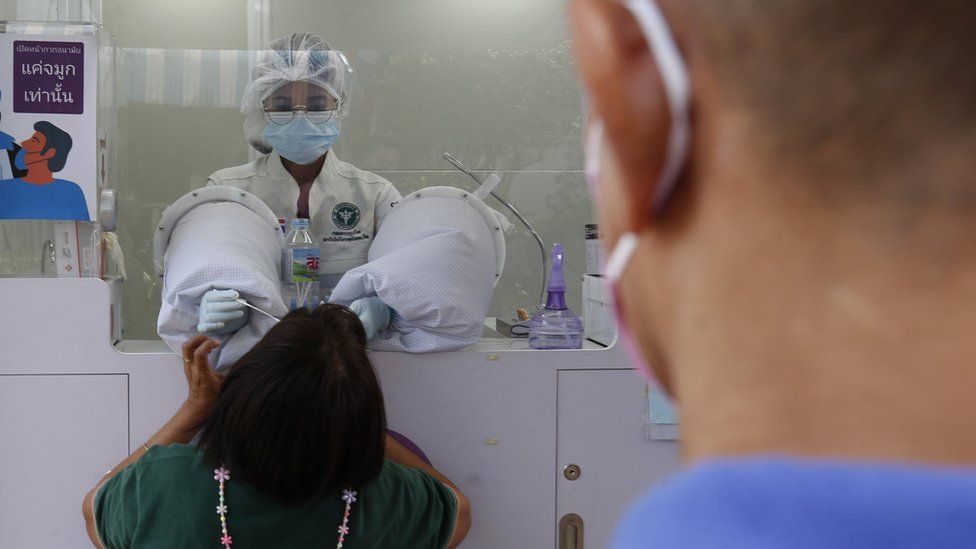
COVID-19 vaccination of expectant mothers elicits levels of antibodies to the SARS-CoV-2 outer “spike” protein at the time of delivery that don’t vary dramatically with the timing of vaccination during pregnancy and thus don’t justify delaying vaccination, according to a study from researchers at Weill Cornell Medicine and NewYork-Presbyterian.
The researchers, whose study was published Dec. 28 in Obstetrics & Gynecology, analyzed how anti-spike antibody levels in the mother’s blood and baby’s umbilical cord blood at delivery varied with the timing of prior vaccination in nearly 1,400 women and their babies.
They found that the levels of these antibodies at delivery tended to be higher when the initial vaccination course occurred in the third trimester. However, they also found that antibody levels at delivery are still comparably high, and probably still protective, when vaccination occurs in early pregnancy or even a few weeks before pregnancy — and a booster shot late in pregnancy can make those antibody levels much higher.
“Women often ask what is the best vaccination timing for the baby — our data suggest that it’s now,” said Dr. Malavika Prabhu, assistant professor of obstetrics and gynecology at Weill Cornell Medicine and an obstetrician and gynecologist at NewYork-Presbyterian/Weill Cornell Medical Center.
The U.S. Centers for Disease Control and Prevention recommends COVID-19 vaccination for pregnant women. Prior studies suggest that COVID-19 tends to be more severe for women when they are pregnant, and increases the risks of preterm birth, stillbirth and other adverse outcomes for their babies. COVID-19 vaccination protects pregnant women from severe COVID-19, and elicits antibodies that cross the placenta to circulate in their babies’ blood after delivery. Studies of the commonly used vaccines so far have found no increased rate of adverse side effects for mothers or their babies.
Dr. Prabhu and her colleagues set up the new study to address the question of the best timing for COVID-19 vaccination during pregnancy. The analysis covered 1,359 pregnant women who reported vaccination against COVID-19, during or up to six weeks before pregnancy, and gave birth at NewYork-Presbyterian/Alexandra Cohen Hospital for Women and Newborns after 34 or more weeks of gestation.

Read more →

Healthy diet in early pregnancy reduces risk of gestational diabetes

Obesity is a significant risk factor for developing gestational diabetes mellitus, and an increasing number of pregnant women are overweight or obese. Dietary habits have an impact on both obesity and the onset of gestational diabetes mellitus.
The mother-child study conducted at the University of Turku and Turku University Hospital in Finland examined the connection between dietary intake and onset of gestational diabetes in 351 overweight or obese women.
The women’s nutrient intake was calculated from food diaries, on the basis of which two dietary patterns, a healthier and an unhealthier dietary pattern, were recognised. In addition, the overall quality of the diet in reference to that recommended was described with a diet quality index and the inflammatory potential with a dietary inflammatory index.
“Our research results show that following a healthy diet in early pregnancy reduces the risk of gestational diabetes, says first author,” Doctoral Candidate Lotta Pajunen from the Institute of Biomedicine at the University of Turku.
Diet that increases body’s inflammation heightens the risk of gestational diabetes
The study also found that a higher dietary inflammatory index, meaning a diet that increases the low-grade inflammatory markers in the body was connected to an increased risk of developing gestational diabetes mellitus. Furthermore, a higher consumption of fat and especially saturated fats was connected to gestational diabetes. This is of interest as the intake of saturated fats is known to increase the body’s inflammation.
Several methods were used in the study to examine the dietary intake in early pregnancy. These analyses revealed that a diet comprehensively promoting health is associated with a smaller risk of developing gestational diabetes.
“Eating vegetables, fruit, berries, and wholegrain products as well as unsaturated fats is particularly important. These nutrients and foods reduce inflammation in the body and therefore also the risk of gestational diabetes. Mothers who are overweight or obese already before the pregnancy would most likely benefit from dietary guidance in early pregnancy,” says Associate Professor in Nutrition Kirsi Laitinen from the University of Turku, the PI of the Early Nutrition and Health research group that conducted the study.
Story Source:
Materials provided by University of Turku. Note: Content may be edited for style and length.

Read more →

Substantial weight loss can reduce risk of severe COVID-19 complications, study finds

A Cleveland Clinic study shows that among patients with obesity, prior weight loss achieved with bariatric surgery was associated with a 60% lower risk of developing severe complications from COVID-19 infection. The research was published in the journal JAMA Surgery.
Numerous studies have established obesity as a major risk factor for developing serious illness from an infection of SARS-CoV-2, the virus that causes COVID-19. Obesity weakens the immune system, creates a chronic inflammatory state, and increases risk for cardiovascular disease, blood clots, and lung conditions. All of these conditions can complicate COVID-19.
The aim of this study was to examine whether a successful weight-loss intervention in patients with obesity prior to contracting COVID-19 could reduce the risk of developing a severe form of this disease.
“The research findings show that patients with obesity who achieved substantial and sustained weight loss with bariatric surgery prior to a COVID-19 infection reduced their risk of developing severe illness by 60 percent,” said Ali Aminian, M.D., lead author of the study and director of Cleveland Clinic’s Bariatric & Metabolic Institute. “Our study provides strong evidence that obesity is a modifiable risk factor for COVID-19 that can be improved through a successful weight-loss intervention.”
A total of 20,212 adult patients with obesity were included in this observational study. A group of 5,053 patients with a body mass index (BMI) of 35 or greater who had weight-loss surgery between 2004 and 2017 were carefully matched 1:3 to non-surgical patients, resulting in 15,159 control patients. Compared with those in the non-surgical group, patients who had bariatric surgery lost 19% more body weight prior to March 1, 2020 (the beginning of the COVID-19 outbreak in Cleveland).
After the COVID-19 outbreak, researchers looked at four COVID-19-related outcomes: rate of contracting SARS-CoV-2 infection, hospitalization, need for supplemental oxygen and severe disease (defined as a combination of ICU admission, need for mechanical ventilation or death).
Although the rate of contracting SARS-CoV-2 was similar between the groups (9.1% in the surgical group and 8.7% in the non-surgical group), participants in the weight-loss surgery group experienced much better outcomes after contracting COVID-19 compared with those in the non-surgical group. Researchers found that patients with prior weight loss surgery had a 49% lower risk of hospitalization, 63% lower risk of need for supplemental oxygen, and 60% lower risk of developing severe COVID-19.
Although the exact underlying mechanisms are not known, these data suggest that patients who underwent weight-loss surgery were healthier at the time of contracting a SARS-CoV-2 infection, which resulted in better clinical outcomes.
“Striking findings from the current study support the reversibility of the health consequences of obesity in the patients with COVID-19,” said the study’s senior author, Steven Nissen, M.D., Chief Academic Officer of the Heart, Vascular and Thoracic Institute at Cleveland Clinic. “This study suggests that an emphasis on weight loss as a public health strategy can improve outcomes during the COVID-19 pandemic and future outbreaks or related infectious diseases. That is a very important finding considering that 40% of Americans have obesity. ”
This study was funded by a research grant from Medtronic. Medtronic had no role in the design, conduct and publication of the study.
Story Source:
Materials provided by Cleveland Clinic. Note: Content may be edited for style and length.

Read more →

Covid: Omicron and Delta driving tsunami of cases – WHO

SharecloseShare pageCopy linkAbout sharingImage source, EPAThe combination of Delta and Omicron variants is driving a dangerous tsunami of Covid-19 cases, the World Health Organization (WHO) chief has said.Tedros Adhanom Ghebreyesus’ words came as the US and countries across Europe reported record new cases.France reported Europe’s highest ever daily figure for the second day in a row, at 208,000 cases.And the US has reported a record average of 265,427 cases a day over the last week, according to Johns Hopkins.Denmark, Portugal and Australia have all also reported record-breaking figures.Poland reported 794 Covid-related deaths on Wednesday, the highest number in its fourth wave of the pandemic. More than three-quarters of the victims were unvaccinated.EXPLAINER: Omicron up to 70% less likely to need hospital careIN CHARTS:Tracking the pandemicStudies suggest that Omicron – which has quickly become dominant in numerous countries – is milder than the Delta variant, but more contagious. However, Dr Tedros warned the “twin threat” of the two variants was “leading to a tsunami of cases”. At the moment, some 900,000 new cases are being reported around the world every day, Reuters news agency reports.”This is and will continue to put immense pressure on exhausted health workers, and health systems on the brink of collapse,” Dr Tedro added.Rising cases in Europe and the US have prompted a push on booster doses of vaccines. In the UK, 57% of people over 12 have received all three jabs.This video can not be playedTo play this video you need to enable JavaScript in your browser.However, Dr Tedros told reporters richer countries’ large scale booster campaigns were “likely to prolong the pandemic”, as they diverted supplies away from poorer, less vaccinated countries, thereby “giving the virus more opportunity to spread and mutate”.According to a report published by the WHO on Tuesday, the number of new Covid infections of all variants grew by 57% in Europe in the week before 26 December, and by 30% in the Americas.Those numbers seem to be climbing still, with yet more records set on Wednesday:Italy’s new daily case count rose from 78,313 on Tuesday, to 98,020 new cases on WednesdayDenmark reported a record 23,228 new cases. Of those, some 1,205 had previously had CovidPortugal reported 26,867 cases – up from 17,172 the day beforeFrance reported 208,000 cases, with another 53 people in intensive care and 184 deathsAustralia reported 18,241 – far higher than Tuesday’s record-breaking 11,300Greece also reported a new 24-hour record of 28,828 casesOfficials have warned that some of the high figures may be due to delays in reporting because of Christmas.

Read more →

Stopping dementia at the nose with combination of rifampicin and resveratrol

Researchers from Osaka City University have shown in mice models of Alzheimer’s disease, frontotemporal dementia, and dementia with Lewy bodies, that the intranasal administration of rifampicin and resveratrol in combination is safer and improves cognitive function more than rifampicin alone. The research results are expected to lead to the development of safe and effective nasal spray for the prevention of dementia.
Dementia is thought to occur when proteins called amyloid-β, tau, and α-synuclein accumulate in the brain and form oligomers. A research group from the Department of Translational Neuroscience, Osaka City University Graduate School of Medicine, had previously shown in a study using mice that the antibiotic rifampicin removes oligomers from the brain and improves cognitive function. However, the drug has been associated with side effects such as liver damage. Resveratrol, a naturally occurring antioxidant in plants, is used as a supplement in Europe and the United States. “To combat the negative side effects of the existing drug rifampicin, we thought of combining it with the hepatoprotective effects of resveratrol,” illustrates Professor Takami Tomiyama, who acted as lead investigator for the current study.
This time, the research group administered a fixed dose combination of rifampicin and resveratrol intranasally five days a week for a total of four weeks to mice models of Alzheimer’s disease, frontotemporal dementia, and dementia with Lewy bodies, and observed their cognitive functions and brain pathology. The results showed that the combination significantly improved the cognitive function of the mice, inhibited the accumulation of oligomers, and restored synaptophysin levels — presynaptic proteins that facilitate synapses. Additionally, blood levels of liver enzymes, a marker of hepatic damage that normally increases with rifampicin, remained normal in the fixed-dose combination. Furthermore, increased levels of brain-derived neurotrophic factor (BDNF) expression were observed in the hippocampus, which was not seen with rifampicin alone. These results indicate that this fixed-dose combination is superior to rifampicin alone in terms of both safety and efficacy.
The results of this study were published online in the Swiss scientific journal Frontiers in Neuroscience on December 13, 2021.
“The number of patients with dementia has been increasing all over the world, with some sources predicting a doubling of patients every 20 years. However, there is still no effective treatment for the disease,” states Specially Appointed Lecturer Tomohiro Umeda, first author of the study. “Recent studies have shown that abnormalities begin to appear in the brains of dementia patients more than 20 years before the onset of the disease.” By investigating new therapeutic purposes with existing drugs in a process called drug repositioning, the research team hopes to diagnose and prevent dementia before the neurons start dying.
Furthermore, based on the team’s previous research experience, nasal administration of a fixed dose combination of rifampicin and resveratrol would increase drug transferability to the brain and further enhance both safety and medicinal effects. The dosage used in this study was 0.02 mg of rifampicin per mouse per day, or 1 mg/kg/day assuming a mouse weight of 20g. “Converted to a human dosage based on body surface area, it becomes 0.081 mg/kg/day,” states Prof. Tomiyama, “currently, rifampicin is prescribed at 10 mg/kg/day as an antibiotic, and compared to this, we confirmed an effect at a much lower dosage.”
The development of a fixed-dose combination of rifampicin and resveratrol nasal spray is currently being carried out by Medilabo RFP, a venture company originating from the research team’s laboratory. Following the publication of this paper, Medilabo RFP has begun preparations for global clinical trials. In November 2021, with the support of the Japan External Trade Organization (JETRO), Medilabo RFP has established a subsidiary in Massachusetts, USA.
Story Source:
Materials provided by Osaka City University. Note: Content may be edited for style and length.

Read more →

What Was Causing the Strange Grooves in the Man’s Scalp?

A dermatologist looks into a rare and generally benign condition and finds a more serious disorder.“Is there anything else?” asked Dr. Jason Mathis. His patient, a 58-year-old man, had come with his wife to see the young dermatologist at the University of Utah for his annual skin check. Mathis had looked over the handful of moles and skin tags and found nothing alarming. What else was bothering the man?There was one thing, the patient said after a pause. At the top of his head in the back, the skin seemed to sink into the bone in a few spots. It didn’t hurt; it was just weird. He asked another dermatologist about it a few years earlier. That doctor looked at his head, then checked in a textbook and said it was something or another — he couldn’t remember what the dermatologist called it. But he told the patient not to worry about it, and as far as that doctor was concerned, that was the end of it.Mathis looked at the scalp, still covered by mostly dark hair. It looked normal enough, but a light touch revealed several irregularities. He carefully moved the hair away to reveal four linear grooves distributed around the crown and back of the man’s head. Each was an inch and a half to two inches long. The patient described it as hair growing into the skull, but Mathis could see that it was actually folds of what looked like excess scalp bulging upward into little mounds, as if there were too much skin in too small an area. The lumps were firm and couldn’t be smoothed out. The skin there seemed thicker than on the rest of the scalp.Mathis recognized it immediately. It was a condition known as cutis verticis gyrata (C.V.G.), from the Latin meaning skin whorled at the scalp. It was first described in the mid-19th century by a French physician who called it cutis sulcata — furrowed skin. It’s rare, and progressive and usually benign, Mathis explained. It’s seen much more frequently in men than women, though it may be underdiagnosed in women because they wear their hair longer.And that first dermatologist was right, he added. Most of the time it comes on at puberty or early adulthood, and while it’s strange, it’s nothing to worry about. “But,” the man’s wife interjected, “he didn’t have it when we got married in 1982. It started maybe 15 or 20 years ago.”The man had discovered it one day in the shower. He was washing his hair and felt a strange dent on his scalp, then another, and another. He wasn’t sure how long they’d been there, but he never noticed them before. “Feel my head,” he asked his wife later that morning. She noted the grooves and furrows. “What is that?” she asked. No idea.He started looking at other men’s heads. He asked his barbers. They’d never seen anything like it, either. When the dermatologist told him not to worry about it, he tried not to. But it was weird, right?Thyroid Issues?It was weird. Mathis sat down at his computer. He turned to a website he often visited called VisualDX. It was a diagnostic resource, providing thousands of images and cases contributed by doctors from around the world. You could find just about everything here. He often used it to show patients what they had and to reassure them that they weren’t alone. But every now and then he also used it as a reference to learn more about a disease. The brief report on C.V.G. described three forms of the disorder. Primary essential C.V.G. appears with no other symptoms or medical problems. There was also primary nonessential C.V.G.; this was usually associated with intellectual disability, and sometimes psychiatric or ophthalmological problems. Each was seen mostly in men and usually started in adolescence or early adulthood. These were the forms Mathis was familiar with. But this patient had none of the associated comorbidities and had developed the condition later in life.And then there was secondary C.V.G., when the strange ridges and grooves were associated with a wide range of disorders, from eczema and folliculitis to thyroid diseases and cancer. This version of C.V.G. could come on at any age. The dermatologist reviewed the list. The patient had some folliculitis, but it was not on his scalp, so that wasn’t it. And no eczema. C.V.G. could be seen in diseases of the thyroid — when there was too much of the hormone made or too little. Thyroid hormone helps control how fast the biological engine of the body runs. Too much hormone, and it runs too fast, causing symptoms including a racing heart, insomnia and often weight loss. Too little of the hormone causes the opposite — fatigue, a slow heart, weight gain. Each condition can cause myxedema, the deposition of a mucuslike substance below the surface of the skin that makes the top layers, the epidermis, seem thicker. The man hadn’t complained of any of these thyroid symptoms, and the doctor found nothing besides the scalp abnormalities on examination. Still, he could send off a blood test look for this common problem as the potential source of this weird finding.Photo illustration by Ina JangOne Giant StepThe literature mentioned that another hormone abnormality can cause C.V.G.: acromegaly. This disorder is caused by an abnormal growth on the pituitary gland of the brain, a tumor that makes excess growth hormone. As a medical student, Mathis had been taught to recognize the disorder by looking for features of the most famous patient in his lifetime with acromegaly, André René Roussimoff, best known by the name he adopted first in his wrestling career and later as an actor: André the Giant. And he was a giant: 7-foot-4 and weighing over 500 pounds. His face, well known to so many of us thanks to his role as Fezzik, the kind giant in Rob Reiner’s classic movie “The Princess Bride,” serves as a template for the effects of acromegaly. The excess growth hormone causes enlargement of the soft tissues of the face, including the ears, the nose and the tongue, as well as the soft tissues of the hands and feet. Untreated, this kind of tumor causes premature death.Mathis looked at the patient — not just his skin but the whole person. He was a big man, over six feet tall and weighing more than 250 pounds. He had prominent ears and a large nose. Even his tongue was large. Acromegaly was certainly possible. He asked the patient if he had noticed any changes in the size of his feet or hands over the past few years. He certainly had, the man answered promptly. A few years ago, he and his wife replaced the wedding rings they bought each other when they married and didn’t have much money, and he needed a bigger ring. And his feet were growing, too. He used to wear a size 12 but now needed size 14. He figured it was because he was getting fatter. He had put on 75 pounds since their wedding day.The dermatologist explained his thinking. He had never made a diagnosis of acromegaly and quickly looked up how to do it. The first step was to check the level of one of the growth factors usually stimulated by this kind of brain tumor. If that was high, the patient would need imaging of his brain to look for a tiny tumor on the pituitary gland. The blood test took days to come back. It was abnormal. And the CT scan revealed a growth about the size of a lima bean on his pituitary. Mathis referred the patient to a neurosurgeon, who removed the tumor. He didn’t see the patient again until the following year. By then, the patient reported, his fingers and nose had gotten smaller, and his gratitude to the young doctor had grown. Mathis was thrilled with his diagnosis. “I’m curious,” he told me recently, and that has been one of his most reliable and valuable tools as a doctor. And he’s not ashamed to have to look things up.Two years have passed since the patient had his operation, and he and his wife have watched with interest as the man’s former face emerged. The lumpy scalp is unchanged, but his wife was particularly happy to welcome her husband’s old nose back. He is starting to lose his hair — maybe it needed the excess growth hormone to stay — but, his wife told me, she considers that a small price to pay.Lisa Sanders, M.D., is a contributing writer for the magazine. Her latest book is “Diagnosis: Solving the Most Baffling Medical Mysteries.” If you have a solved case to share, write her at Lisa.Sandersmd@gmail.com.

Read more →

The Year in Fitness: Shorter Workouts, Greater Clarity, Longer Lives

The most vital exercise science of 2021 provided a reminder that our bodies and minds can flourish, no matter our circumstances.In a year filled with Covid-related hopes, setbacks, advances and losses, the most vital exercise science of 2021 provided a reminder that for many of us, our bodies and minds can strengthen, endure and flourish, no matter our circumstances. If we move our bodies in the right ways, a growing body of evidence suggests we might live with greater stamina, purpose and cognitive clarity for many years to come. And it may not take much movement.In fact, some of the year’s biggest fitness news concerned how little exercise we might be able to get away with, while maintaining or even improving our health. A study from January, for instance, showed that just five minutes of intense calisthenics substantially improved college students’ aerobic fitness and leg strength. Another series of studies from the University of Texas found that four seconds — yes, seconds — of ferocious bicycle pedaling, repeated several times, was enough to raise adults’ strength and endurance, whatever their age or health when they started.Even people whose favorite workout is walking might need less than they think to reach an exercise sweet spot, other new research suggested. As I wrote in July, the familiar goal of 10,000 daily steps, deeply embedded in our activity trackers and collective consciousness, has little scientific validity. It is a myth that grew out of a marketing accident, and a study published this summer further debunked it, finding that people who took between 7,000 and 8,000 steps a day, or a little more than three miles, generally lived longer than those strolling less or accumulating more than 10,000 steps. So keep moving, but there’s no need to fret if your total doesn’t reach a five-figure step count.Of course, exercise science weighed in on other resonant topics this year, too, including weight. And the news there was not all cheering. Multiple studies this year reinforced an emerging scientific consensus that our bodies compensate for some of the calories we expend during physical activity, by shunting energy away from certain cellular processes or prompting us unconsciously to move and fidget less. A study from July, for example, that examined the metabolisms of almost 2,000 people concluded that we probably compensate, on average, for about a quarter of the calories we burn with exercise. As a result, on days we exercise, we wind up burning far fewer total calories than we might think, making weight loss that much more challenging.On the other hand, exercise seems essential for weight maintenance, according to other research this year. A new scientific analysis of participants from the TV weight-loss contest “The Biggest Loser” found that those who exercised the most in the years after the program ended were the least likely to have regained all of the pounds they shed during the show.Exercise also has a disproportionate impact on our odds of enjoying a long, healthy life. According to one of the most inspiring studies this year, overweight people who started working out lowered their risk of premature death by about 30 percent even if they remained overweight, with exercise providing about twice as much benefit as weight loss might.Exercise enhances our brain power, too, according to other, memorable experiments from this year. They showed physical activity fortifying immune cells that help protect us against dementia; prompting the release of a hormone that improves neuron health and the ability to think (in mice); shoring up the fabric of our brains’ white matter, the stuff that connects and protects our working brain cells; and likely even adding to our creativity. In a nifty study from February, physically active people tended to dream up more-inventive ways to use car tires and umbrellas, a standard test of creativity, than people who seldom moved around much. Taken together, this year’s exercise neuroscience research makes “a strong case for getting up and moving” if we hope to use our brains with ongoing clarity and in imaginative ways deep into our golden years, as one of the researchers said to me.Still, the study that stuck with me most this year had less to do with the myriad ways exercise remodels our bodies and brains and more with how it might shape our sense of what matters. In the study, which I wrote about in May, active people reported a stronger sense of purpose in their lives than inactive people. “A sense of purpose is the feeling you get from having goals and plans that give direction and meaning to life,” the study’s lead researcher told me. “It is about being engaged with life in productive ways.” The study found that exercise amplified people’s purposefulness over time, while simultaneously, a sturdy sense of purpose fortified people’s willingness to exercise. In effect, the more people felt their lives had meaning, the more they wound up moving, and the more they moved, the more meaningful they found their lives.It’s a result worth remembering as we look ahead with wary optimism. So stay healthy, active and in touch in 2022, everyone. Here’s to a happy new year!

Read more →

Neil Marcus, Whose Art Illuminated Disability, Dies at 67

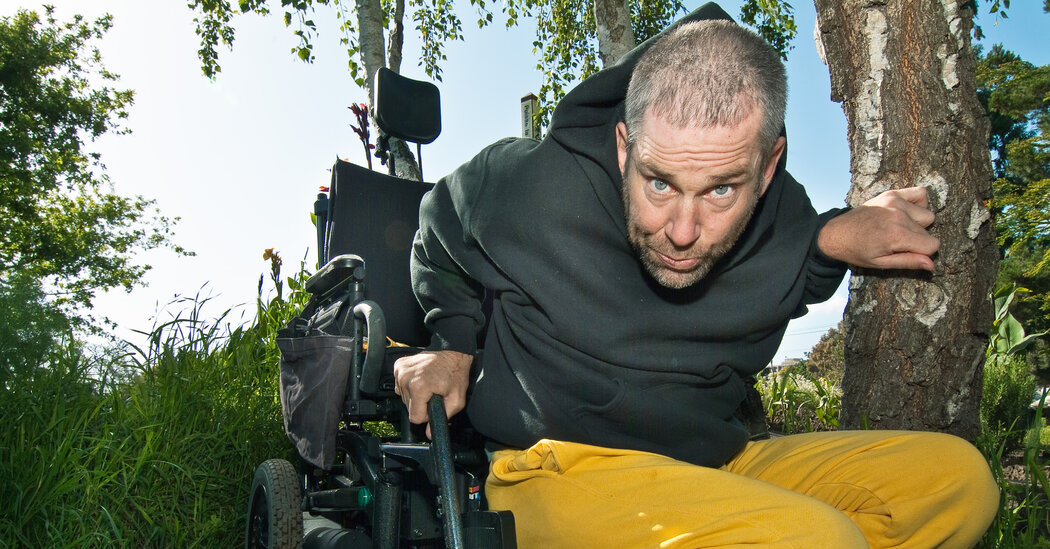
A playwright and actor, he saw his life as performance art. He was best known for his play “Storm Reading.”At each performance of his play “Storm Reading,” the writer and actor Neil Marcus offered his audience a reminder: “Disability is not a brave struggle or courage in the face of adversity. Disability is an art. It’s an ingenious way to live.”Mr. Marcus, who had dystonia, a neurological disorder that causes involuntary muscle contractions and affects speech, starred in the play, which comically illuminated how he passed through the world in a typical week, through vignettes of him conversing with grocery shoppers, doctors and passers-by.In 1988, when the show had its premiere at the Lobero Theater in Santa Barbara, Calif., people more often than not looked away from those with disabilities. “We’ve always been taught as kids we don’t point, don’t laugh, just basically ignore them,” Rod Lathim, the director of “Storm Reading,” said in an interview.In contrast, “Storm Reading” encouraged audiences to laugh with Mr. Marcus about his experiences.“Neil invited and welcomed, and in some cases demanded that people look,” Mr. Lathim said. “And so he brought them into his reality, which was not a reality of disability; it was a reality of his definition of life.”The success and longevity of the play, which toured throughout the country until 1996, turned Mr. Marcus into a pioneer of the disability culture movement. He called his work a reclamation of personhood in a world determined to deny people with disabilities their autonomy.Mr. Marcus died on Nov. 17 at his home in Berkeley, Calif. He was 67.His sister Kendra Marcus said the cause was dystonia,In 1987, Mr. Marcus and his brother Roger contacted Mr. Lathim, the director of Access Theater, a Santa Barbara company that regularly mounted plays featuring disabled artists. Neil Marcus sent over samples of his writing and asked Mr. Lathim if the theater would be interested in adapting them.Their conversation led to the genesis of “Storm Reading.” Mr. Marcus, his brother and Mr. Lathim worked together to draft the play, whose cast of three originally also included Roger as “The Voice,” who portrayed Neil’s thoughts during his interactions (the role was later played by Matthew Ingersoll), as well as a sign language interpreter.The show was physically taxing for Mr. Marcus. But it also invigorated him.“There’s no drug, there’s no treatment, that is, in my opinion, as powerful as the interaction between a live audience and an artist on the stage,” Mr. Lathim said. “And watching Neil transform from that was astounding.”Scenes from “Storm Reading” were filmed for NBC as part of a 1989 television special about disability, “From the Heart,” hosted by the actor Michael Douglas. The cast reunited in 2018 for a performance at the John F. Kennedy Center for the Performing Arts in Washington.Neil Marcus was born on Jan. 3, 1954, in Scarsdale, N.Y., the youngest of five children of Wil Marcus, who worked in public relations, and Lydia (Perera) Marcus, an actor. When Neil was 6, the family moved to Ojai, Calif.Neil was 8 when he learned he had dystonia, and he attempted suicide at 14 after a taxing series of surgeries, he said in a 2006 oral history interview for the Bancroft Library at the University of California, Berkeley.But counseling gave him confidence. He attended Ojai Valley School, where he was often spotted zooming around in a golf cart. After graduating from high school as valedictorian in 1971, he traveled to Laos; when he returned, he hitchhiked around the West Coast and eventually took classes at Fairhaven College, part of Western Washington University, and elsewhere. He moved to Berkeley in 1980 and became active in the disability activist community there.He explored art through various partnerships. With professional dancers, he participated in “contact improvisation” performances, which eschewed formal choreography and instead followed the seemingly frenetic movements of Mr. Marcus’s dystonia.He also wrote widely. He worked with the University of Michigan professor and activist Petra Kuppers on the Olimpias Performance Research Project, an artist collective that spotlights performers with disabilities in performances and documentaries. Their conversations on disability as art were published in a 2009 essay, “Research in Drama Education: The Journal of Applied Theatre and Performance.” The two also wrote a book, “Cripple Poetics: A Love Story” (2008), which features poetry and photography highlighting the physicality and sensuality of disability.The Neil Marcus Papers, including his essays, poems and correspondence, are held at the Bancroft Library.In addition to his sister Kendra, Mr. Marcus is survived by another sister, Wendy Marcus, and his brothers, Roger and Russell.In 2014 the Smithsonian National Museum of American History commissioned Mr. Marcus to write a poem dedicating its online exhibition “EveryBody: An Artifact History of Disability in America.”His poem began: “If there was a country called disabled, I would be from there./I live disabled culture, eat disabled food, make disabled love,/cry disabled tears, climb disabled mountains and tell disabled stories.”

Read more →

Microglial methylation 'landscape' in human brain

In the central nervous system, microglial cells play critical roles in development, aging, brain homeostasis, and pathology. Recent studies have shown variation in the gene-expression profile and phenotype of microglia across brain regions and between different age and disease states. But the molecular mechanisms that contribute to these transcriptomic changes in the human brain are not well understood. Now, a new study targets the methylation profile of microglia from human brain.
The study appears in Biological Psychiatry, published by Elsevier.
Microglia, the brain’s own immune cells, were once thought of as a homogenous population that was either “activated” or “inactivated,” with either pro-inflammatory or neuroprotective effects. But the cells are now recognized to have a vast array of phenotypes depending on environmental conditions with myriad functional consequences. Microglia are increasingly appreciated as critical players in neurologic and psychiatric disorders.
Fatemeh Haghighi, PhD, senior author of the new work, said: “To address this gap in knowledge, we set out to characterize the DNA methylation landscape of human primary microglia cells and factors that contribute to variations in the microglia methylome.”
DNA methylation is the main form of epigenetic regulation, which determines the pattern of which genes are being turned “on” or “off” in various circumstances over time.
The researchers studied isolated microglia cells from post-mortem human brain tissue from 22 donors of various age, including 1 patient with schizophrenia, 13 with mood disorder, and 8 controls with no psychiatric disorder, taken from 4 brain regions. They analyzed the microglia using genome-scale methylation microarrays.
Unsurprisingly, microglia showed DNA methylation profiles that were distinct from other cells in the central nervous system. But less expected, said Haghighi, “we found that interindividual differences rather than brain region differences had a much larger effect on the DNA methylation variability.” In addition, an exploratory analysis showed differences in the methylation profile of microglia from brains of subjects with psychiatric disorders compared to controls.
John Krystal, MD, Editor of Biological Psychiatry, said of the work, “These promising data point to pathology of the microglia, key immune cells of the brain, in the biology of depression.”
Story Source:
Materials provided by Elsevier. Note: Content may be edited for style and length.

Read more →