COVID-19 can trigger self-attacking antibodies

Infection with the virus that causesCOVID-19 can trigger an immune response that lasts well beyond the initial infection and recovery — even among people who had mild symptoms or no symptoms at all, according to Cedars-Sinai investigators. The findings are published in the Journal of Translational Medicine.
When people are infected with a virus or other pathogen, their bodies unleash proteins called antibodies that detect foreign substances and keep them from invading cells. In some cases, however, people produce autoantibodies that can attack the body’s own organs and tissues over time.
The Cedars-Sinai investigators found that people with prior infection with SARS-CoV-2, the virus that causes COVID-19, have a wide variety of autoantibodies up to six months after they have fully recovered. Prior to this study, researchers knew that severe cases of COVID-19 can stress the immune system so much that autoantibodies are produced. This study is the first to report not only the presence of elevated autoantibodies after mild or asymptomatic infection, but their persistence over time.
“These findings help to explain what makes COVID-19 an especially unique disease,” said Justyna Fert-Bober, PhD, research scientist in the Department of Cardiology at the Smidt Heart Institute and co-senior author of the study. “These patterns of immune dysregulation could be underlying the different types of persistent symptoms we see in people who go on to develop the condition now referred to as long COVID-19.”
To conduct their study, the Cedars-Sinai research team recruited 177 people with confirmed evidence of a previous infection with SARS-CoV-2. They compared blood samples from these individuals with samples taken from healthy people prior to the pandemic. All those with confirmed SARS-CoV-2 infection had elevated levels of autoantibodies. Some of the autoantibodies also have been found in people with diseases in which the immune system attacks its own healthy cells, such as lupus and rheumatoid arthritis.
“We found signals of autoantibody activity that are usually linked to chronic inflammation and injury involving specific organ systems and tissues such as the joints, skin and nervous system,” said Susan Cheng, MD, MPH, MMSc, director of the Institute for Research on Healthy Aging in the Department of Cardiology at the Smidt Heart Institute and co-senior author of the study.
Some of the autoantibodies have been linked to autoimmune diseases that typically affect women more often than men. In this study, however, men had a higher number of elevated autoantibodies than women.
“On the one hand, this finding is paradoxical given that autoimmune conditions are usually more common in females,” Fert-Bober said. “On the other hand, it is also somewhat expected given all that we know about males being more vulnerable to the most severe forms of COVID-19.”
The research team is interested in expanding the study to look for the types of autoantibodies that may be present and persist in people with long-haul COVID-19 symptoms. Because this study was in people infected before the advent of vaccines, the researchers will also examine whether autoantibodies are similarly generated in people with breakthrough infections.
“If we can better understand these autoantibody responses, and how it is that SARS-CoV-2 infection triggers and drives these variable responses, then we can get one step closer to identifying ways to treat and even prevent these effects from developing in people at risk,” Cheng said.
Story Source:
Materials provided by Cedars-Sinai Medical Center. Note: Content may be edited for style and length.
Read more →

Leveraging space to advance stem cell science and medicine

The secret to producing large batches of stem cells more efficiently may lie in the near-zero gravity conditions of space. Scientists at Cedars-Sinai have found that microgravity has the potential to contribute to life-saving advances on Earth by facilitating the rapid mass production of stem cells.
A new paper, led by Cedars Sinai and published in the peer-review journal Stem Cell Reports, highlights key opportunities discussed during the 2020 Biomanufacturing in Space Symposium to expand the manufacture of stem cells in space.
Biomanufacturing — a type of stem cell production that uses biological materials such as microbes to produce substances and biomaterials suitable for use in preclinical, clinical, and therapeutic applications — can be more productive in microgravity conditions.
“We are finding that spaceflight and microgravity is a desirable place for biomanufacturing because it confers a number of very special properties to biological tissues and biological processes that can help mass produce cells or other products in a way that you wouldn’t be able to do on Earth,” said stem cell biologist Arun Sharma, PhD, research scientist and head of a new research laboratory in the Cedars-Sinai Board of Governors Regenerative Medicine Institute, Smidt Heart Institute and Department of Biomedical Sciences.
“The last two decades have seen remarkable advances in regenerative medicine and exponential advancement in space technologies enabling new opportunities to access and commercialize space,” he said.
Attendees at the virtual space symposium in December identified more than 50 potential commercial opportunities for conducting biomanufacturing work in space, according to the Cedars-Sinai paper. The most promising fell into three categories: disease modeling, biofabrication, and stem-cell-derived products.

Read more →

Scientists retool CAR T cells to serve as ‘micropharmacies’ for cancer drugs

Immunotherapies called chimeric antigen receptor (CAR) T cells use genetically engineered versions of a patient’s own immune cells to fight cancer. These treatments have energized cancer care, especially for people with certain types of blood cancers. Now, scientists at Memorial Sloan Kettering Cancer Center’s Sloan Kettering Institute (SKI) have developed new CAR T cells that can do something their predecessors cannot: Make drugs.
Standard-issue CAR T cells are designed in the lab to recognize specific markers on cancer cells. When these CAR T cells are given back to a patient, they proliferate and go on the attack, acting as a kind of “living drug.”
Despite their usefulness for treating blood cancers, there are several limitations of current CAR T models. One is that the CAR T cells can only kill cancer cells that contain the marker they are designed to recognize. But it is not uncommon for cancer cells to stop making this marker and thus to “escape” from the therapy.
A second problem is that CAR T cells can become “exhausted” — and even inhibited by the cancer cells themselves. Lastly, existing CAR T cells work well only against blood cancers that the CAR T cells can easily reach. Against dense solid tumors in the lung or breast, they are mostly powerless.
To overcome these hurdles, a team of SKI researchers has designed an entirely new type of CAR T cell that acts as a “micropharmacy”: It can deliver a toxic drug payload directly to a tumor, killing both tumor cells that contain the cancer marker as well as those cancer cells nearby that do not. What’s more, the engineered cells can produce the drug even after they become exhausted, and the drug is not suppressed by the cancer.
“We call them SEAKER cells,” says physician-scientist David A. Scheinberg, Chair of the Molecular Pharmacology Program in SKI who also directs the Center for Experimental Therapeutics. “SEAKER stands for Synthetic Enzyme-Armed KillER cells. These cells combine the target-seeking power of immune cells with the ability to locally generate a potent anticancer drug for double effect.”
The cancer-fighting molecule is one that SKI Chemical Biology Program Chair Derek Tan — Dr. Scheinberg’s collaborator on the project — discovered previously while developing antibiotics. The molecule, called AMS, is so powerful that it cannot be injected directly into an animal’s bloodstream. But when it is produced locally just at the site of a tumor, it is effective at safely killing cancer cells in mice. The scientists have not yet tested the technology in people.

Read more →

Cancer deaths rose to 10 million worldwide in 2019

Cancer deaths rose to 10 million and new cases jumped to over 23 million globally in 2019, according to a new scientific study from the Institute for Health Metrics and Evaluation (IHME) at the University of Washington School of Medicine.
At the start of the decade in 2010, total cancer deaths numbered 8.29 million worldwide and new cancer cases were at 18.7 million; the counts by the end of the decade in 2019 represent increases of 20.9% and 26.3%, respectively.
The paper was published on December 30, 2021 in JAMA Oncology, and is part of the Global Burden of Diseases, Injuries, and Risk Factors Study 2019 (GBD 2019).
The researchers estimated cancer burden and trends globally for 204 countries and territories. They found that cancer was second behind only cardiovascular diseases in the number of deaths, disability-adjusted life years (DALYs), and years of life lost (YLLs) among 22 groups of diseases and injuries globally in 2019. Within the total cancer burden, the five leading causes of cancer-related DALYs for both sexes combined were tracheal, bronchus, and lung (TBL) cancer; colon and rectum cancer; stomach cancer; breast cancer; and liver cancer. TBL cancer was the leading cause of cancer deaths in 119 countries and territories for males and 27 countries and territories for females.
Although the absolute burden of cancer increased in both deaths and new cases from 2010 to 2019, the global age-standardized mortality and incidence rates decreased by 5.9% and 1.1%, respectively. From a country perspective, the age-standardized mortality rate decreased in 131 countries and territories and the age-standardized incidence rate lessened in 75 countries and territories. The small percentage declines globally are promising, but the researchers caution that there may be setbacks in cancer care and outcomes due to COVID-19. The effects of the pandemic on cancer morbidity, mortality, and prevention and control efforts were not accounted for in this GBD study, which analyzed global cancer burden through 2019.
The authors also analyzed cancer burden based on Socio-demographic Index (SDI), a composite measure of income per capita, average years of education, and total fertility rate for people younger than 25 years of age.
While the global trend for age-standardized mortality and incidence rates is encouraging, the reduction in rates appears to be driven by higher SDI locations. For mortality, age-standardized rates decreased in the middle, middle-high, and high quintiles and increased in the low and low-middle quintiles. Similarly, for incidence, the age-standardized rates decreased in the high-middle and high quintiles — with the largest decrease in the high SDI quintile — while increasing in the low, low-middle, and middle SDI quintiles.
“Ensuring that global progress against cancer burden is equitable is crucial,” said Dr. Jonathan Kocarnik, lead author on the study and Research Scientist at IHME. “This will require efforts to reduce disparities in cancer prevention, treatment, and survival, and the incorporation of local needs and knowledge into tailored national cancer control plans.”
Dr. Kocarnik and his co-authors suggested that the larger increases in the lower SDI quintiles likely reflect ongoing epidemiological transitions, demographic shifts, and disparities in cancer prevention, care, and control. Even without accounting for the COVID-19 pandemic, the absolute burden of cancer is already growing substantially worldwide.
Some additional findings from the study: Breast cancer was the leading cause of cancer-related deaths among females worldwide, including for 119 countries. On a global scale, 96.9% of cancer-related DALYs, which is the sum of YLLs and years lived with disability, can be attributed to YLLs or premature death. Of the 22 groups of diseases and injuries in the GBD study, total cancer is the leading cause of DALYs for the high SDI quintile and among the top five causes of DALYs for three of the remaining four SDI quintiles.

Read more →

J. & J. Booster Protects Against Severe Omicron, Study Says

A Johnson & Johnson booster shot provided strong protection against the Omicron variant, greatly reducing the risk of hospitalization, according to a clinical trial in South Africa.The study, which compared more than 69,000 boosted health care workers with a corresponding group of unvaccinated South Africans, found that two shots of the vaccine reduced the risk of hospitalization from Omicron by about 85 percent. In comparison, another study in South Africa found that two shots of the Pfizer-BioNTech vaccine reduced the risk of hospitalization by about 70 percent.Although the U.S. Food and Drug Administration has authorized the Johnson & Johnson vaccine as a booster shot, the Centers for Disease Control and Prevention recommended that other vaccines be preferred. The C.D.C. raised concerns about rare but life-threatening blood clots that have been linked to the Johnson & Johnson vaccine.But the authors of the new study, which was published on a preprint server and has not yet been peer-reviewed, said that the results were important for vaccination efforts in Africa, where the Johnson & Johnson vaccine is a mainstay of Covid public health efforts. As the continent braces for a wave of Omicron cases, a second dose of the vaccine could prevent a surge of hospitalizations.In a different clinical trial that ended in September, when Delta was still the dominant variant worldwide, Johnson & Johnson found that a second dose of its vaccine given eight weeks after the first greatly increased its efficacy. In the U.S. arm of the trial, efficacy against mild to severe Covid-19 rose to 94 percent, compared with 74 percent for one shot. Across trial sites in 10 countries, the vaccine protected all volunteers against severe disease.Those results prompted South Africa to launch a trial in November among health care workers who had already received one dose of the vaccine between six and nine months earlier. When the Omicron variant began surging across South Africa in late November, the researchers running the trial began tracking how boosted health care workers fared against the variant, finding that it worked well.This result was somewhat surprising, given that antibodies taken from people who had received one dose of the vaccine failed to block Omicron from infecting cells in laboratory experiments.It’s possible that the booster shots raised antibodies to protective levels. And while antibodies help the body fend off infections, they are just one of many parts of the immune system.Certain immune cells help fight Covid by attacking virus-infected cells. In a study posted online on Tuesday, South African researchers found that immune cells taken from people who received Johnson & Johnson vaccines recognized Omicron-infected cells almost as well as they recognized cells infected with other variants.It’s possible that in addition to raising antibodies, Johnson & Johnson booster shots also increase the army of immune cells that can wage war on Omicron.

Read more →

At-Home Covid Tests Raise Questions About Accurately Counting Cases

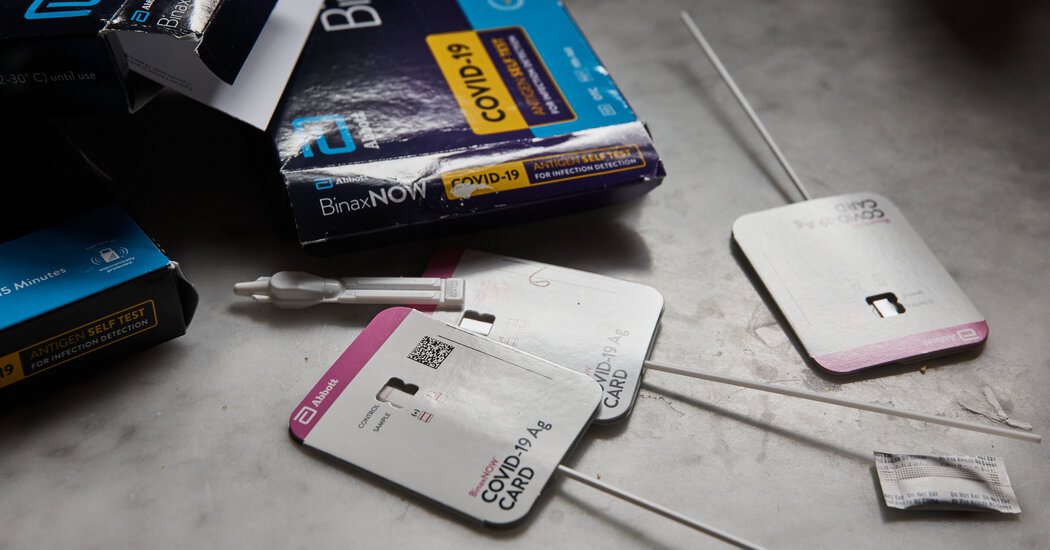
Most of the results of rapid tests are not reported. That’s magnifying questions about how best to measure the spread of the virus.Millions of rapid at-home Covid tests are flying off pharmacy shelves across the country, giving Americans an instant, if sometimes imperfect, read on whether they are infected with the coronavirus.But the results are rarely reported to public health departments, exacerbating the longstanding challenges of maintaining an accurate count of cases at a time when the number of infections is surging because of the Omicron variant.At the minimum, the widespread availability of at-home tests is wreaking havoc with the accuracy of official positivity rates and case counts. At the other extreme, it is one factor making some public health experts raise a question that once would have been unthinkable: Do counts of coronavirus cases serve a useful purpose, and if not, should they be continued?“Our entire approach to the pandemic has been case-based surveillance: We have to count every case, and that’s just not accurate anymore,” said Dr. Marcus Plescia, chief medical officer at the Association of State and Territorial Health Officials, a national nonprofit organization representing public health agencies in the United States. “It’s just becoming a time where we’ve got to think about doing things differently.”There is no comprehensive data on how many rapid tests are used every day, but experts say it is most likely far higher than the number of polymerase chain reaction, or P.C.R., tests, which are completed in a lab and require more time to deliver results, which are reported publicly as aggregate totals.At least one at-home test company has implemented a system to report results directly to the health authorities. And some local health departments have set up systems for people to report results from rapid at-home tests. But with such a voluntary system, it is possible that millions of tests per day are going unreported, estimates Mara Aspinall, an expert in biomedical diagnostics at Arizona State University who is also on the board of directors of OraSure, which makes rapid Covid tests.“We certainly don’t want to discourage testing, but at the same time we can’t leave public health authorities blind,” Ms. Aspinall said. “They rely on this information to take proactive and reactive precautions. It’s a very fine balance.”At-home Covid-19 tests have been flying off the shelves in parts of the country that have been hit hard by the Omicron variant.Jae C. Hong/Associated PressThe quick rise of at-home testing could be a tipping point in a conversation that began for public health experts months ago. At issue is the feasibility of shifting to less frequent case reporting or a “sentinel surveillance” system like the one that public health officials currently use to track other diseases like the flu, which relies on a network of health care centers that track instances of the virus. Overall case numbers are extrapolated based on those case numbers.Concerns have also emerged about the accuracy of the tests themselves. The Food and Drug Administration said on Tuesday that antigen tests do detect the Omicron variant but not as effectively as they detect other variants.Throughout the pandemic, daily case counts have played a central role in shaping the policy responses to the pandemic. Cities have instituted mask mandates and closed schools or businesses in response to positivity rates based on daily case counts. In New York City the public school system was shut down at one point when the positivity rate reached 3 percent.Public health officials, as well as news outlets like The New York Times, continue to use daily case counts to paint an up-to-date picture of the pandemic.But the case numbers have long been understood as artificially low because of limited access to testing and the prevalence of asymptomatic cases. And compiling those numbers is a labor-intensive task for already strained public health departments.As a result, many states began shifting away from daily case tallies to reporting fewer times a week over the summer, as cases dropped. Some returned to more frequent reporting as case numbers went back up. But with the Omicron variant fueling a rapid surge in positive cases, states are finding that they can’t keep up. And with so many more cases unreported through at-home tests anyway, there’s little incentive to try.Aaron Salvador swabbed his nose with a rapid antigen Covid test kit in Washington on Wednesday.Tom Williams/CQ-Roll Call, Inc, via Getty ImagesDr. Marcelle Layton, chief medical officer at the Council of State and Territorial Epidemiologists, said that her organization had been talking with its members about shifting away from daily case counts, with many that are still doing daily reporting eager to make the shift in the coming months. Her organization has also been in contact with the Centers for Disease Control and Prevention about possible guidance that would direct states to limit daily case reporting. A C.D.C. spokesperson said that the agency did not have plans to change reporting guidance for states.Tennessee announced last week that it would begin reporting Covid case data weekly, consistent with other infectious diseases. At-home testing and lags in reporting from health care facilities have made the state’s daily case counts inaccurate, the state’s health commissioner, Dr. Lisa Piercey, said at a news conference last week.“That’s not a sustainable way to do it in perpetuity,” she said. She added: “Daily reporting of numbers is really not that relevant any more. It’s relevant for trends, but the actual number is not that accurate when you don’t know what you don’t know.”The state will also begin reporting its test positivity rate based solely on P.C.R. tests rather than including the limited number of rapid tests on which it receives reports.The Coronavirus Pandemic: Key Things to KnowCard 1 of 4The U.S. surge

Read more →

Federal Officials Say Early Omicron Data Suggests a Less Deadly Wave

Dr. Rochelle P. Walensky and Dr. Anthony S. Fauci cautioned that hospitalizations and deaths could be lagging behind case counts.WASHINGTON — Top federal health officials emphasized on Wednesday that data on skyrocketing coronavirus cases in the United States and from other countries reinforced early signs that the highly contagious Omicron variant was milder and less lethal than previous variants, even as it threatened to overwhelm health systems already on the brink from earlier surges.Their comments at a White House news conference reflected a growing urgency in the administration to reassure Americans anxious about another winter of isolation as it races to respond to worsening outbreaks across the country.Dr. Rochelle P. Walensky, director of the Centers for Disease Control and Prevention, said that as cases increased by about 60 percent over the past week, to around 240,000 each day, hospital admissions and deaths had remained “comparatively low,” hinting at a less deadly wave of the virus.She pointed to a seven-day average of hospitalizations of 9,000 per day, an increase of about 14 percent from the previous week. The seven-day average of daily deaths stood at roughly 1,100 per day, she added, a decrease of about 7 percent.“This could be due to the fact that hospitalizations tend to lag behind cases by about two weeks,” she said, “but may also be due to early indications that we’ve seen from other countries like South Africa and United Kingdom of milder disease from Omicron, especially among the vaccinated and the boosted.”Dr. Anthony S. Fauci, President Biden’s chief medical adviser, said at the same news conference that “the pattern and disparity between cases and hospitalization strongly suggest that there will be a lower hospitalization-to-case ratio when the situation becomes more clear.”One report this week from a hospital in South Africa, Dr. Fauci said, showed significantly fewer patients needing supplemental oxygen, fewer intensive-care admissions and fewer deaths. A study in the United Kingdom that examined patients through Dec. 19 showed a much lower risk of hospital admission with Omicron compared with those infected with the Delta variant, data that a separate Scottish study backed up, he said.The more hopeful data on Omicron’s spread has been tempered by a crush of virus cases in hospitals around the country, where burned-out health care workers have clamored for help as mostly unvaccinated patients overwhelm emergency rooms and intensive-care units.Jeffrey D. Zients, the White House’s Covid-19 response coordinator, said that 13,000 National Guard members were in 48 states helping with vaccinations, testing and clinical work. The federal government has sent ambulances to states in need, he added, including to badly hit New York, where dozens of Federal Emergency Management Agency employees were aiding the effort. Reinforcements had arrived in or were headed to Arizona, Wisconsin and Indiana, Mr. Zients said.More federally run test sites would open in the coming days, Mr. Zients said, including in Philadelphia and Washington, D.C. Those commitments were still unlikely to dull criticism from public health experts that the Biden administration had neglected the nation’s testing stockpile ahead of Omicron’s arrival in the United States. Demand for tests has exploded this month, causing manufacturers to scramble to produce and distribute more of them.The Food and Drug Administration on Wednesday authorized an at-home test made by Siemens Healthineers, through a new accelerated review program, the Department of Health and Human Services said. And the Defense Department awarded a $136.7 million contract to MilliporeSigma, which manufactures a key ingredient in rapid tests. The contract allows a Wisconsin factory “to support more than 83.3 million tests per month,” the department said.Mr. Zients said a contract that would allow the government to deliver 500 million rapid tests for free would be finalized by the end of next week. Deliveries from manufacturers were still set to begin in January.Dr. Fauci said that the levels of mild infection suggested that the United States would have to transition to living comfortably with some amount of controlled spread of the virus. “This is a highly, highly transmissible virus. We know that from the numbers we’re seeing,” he said. “Each individual person throughout this country is now seeing around them the high degree of transmissibility.”He said that while it was safe for vaccinated people to gather in small groups with family and friends over New Year’s weekend, Americans should be cautious about staging traditional indoor parties.“If your plans are to go to a 40- or 50-person New Year’s Eve party with all the bells and whistles and everybody hugging and kissing and wishing each other a happy New Year, I would strongly recommend that this year we do not do that,” he said.But he said that public health policy would gradually have to reflect more social and financial concerns.“It becomes much more relevant as to what the seriousness of the impact on society is. We’re never going to stop counting tests,” he said. “But we’re looking forward, as I think everyone feels is appropriate, that, ultimately, when we’re going to have to, quote, ‘live’ with something that will not be eradicated and very likely would not be eliminated, but can actually be at such a lower level of control, namely a control that does not disrupt society, does not disrupt the economy.”The C.D.C. on Monday nodded to that idea when it shortened by half the recommended isolation period for many infected Americans, even if they have not been tested, a move criticized by some scientists and public health experts as premature. Dr. Walensky said in a Tuesday interview with The Times that rapid tests were not effective enough at diagnosing infectiousness in people.“You don’t necessarily do a test if you don’t know what you’re going to do with the result,” she said. “The anticipated number of cases that we were seeing required us to take action at this moment.”Dr. Walensky on Wednesday continued to defend the new recommendations, saying at the White House news conference that “the vast majority” of transmission of the virus was occurring two days before symptoms and two to three days afterward. “Any of that lingering small amount of transmission afterwards would be prevented by masking,” she said. “We are standing on the shoulders of two years of science, two years of understanding transmissibility.”

Read more →

What went wrong with vaccinating the world?

The coronavirus pandemic has been slowed in developed countries thanks to massive vaccination drives. Countries have bought stocks to cover their populations, and in many cases have far more than they need. However, poorer countries generally have failed to reserve, and buy the vaccine stock they need. Now the world is faced with a problem of re-distribution, and campaigners say that the answer is to force drug companies to share their secrets, in order to make manufacturing possible in any country in the world. Three experts explain how we arrived at this point and the challenges now facing everyone involved in the fight against Covid-19.

Read more →