Hockey Fan Spots Cancerous Mole at Game and Delivers a Lifesaving Note
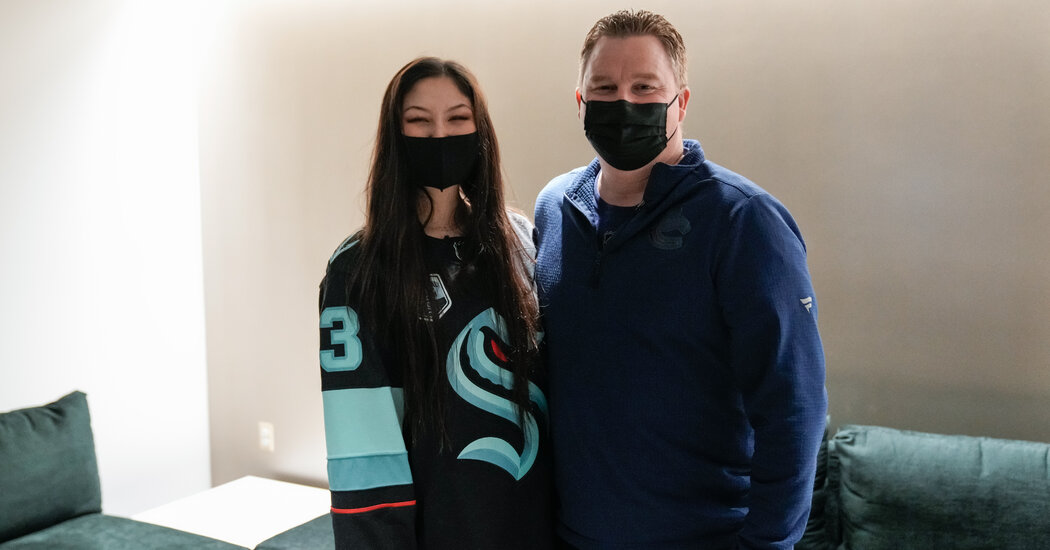
Nadia Popovici wrote a message on her phone, with “mole,” “cancer” and “doctor” in bright-red type to get the attention of Brian Hamilton, an assistant equipment manager for the Vancouver Canucks.Nadia Popovici kept shifting her eyes from the hockey game to the back of Brian Hamilton’s neck.Mr. Hamilton, an assistant equipment manager for the Vancouver Canucks, had a small mole there. It measured about two centimeters and was irregularly shaped and red-brown in color — possible characteristics of a cancerous mole, signs that Ms. Popovici had learned to spot while volunteering at hospitals as a nursing assistant.Maybe he already knew? But if so, why was the mole still there? She concluded that Mr. Hamilton did not know.“I need to tell him,” Ms. Popovici, 22, told her parents at the Oct. 23 N.H.L. game between the Canucks and the Seattle Kraken at the Climate Pledge Arena in Seattle.Ms. Popovici typed a message on her phone and waited for the game to end. After waving several times, she finally drew Mr. Hamilton’s attention, and placed her phone against the plexiglass.“The mole on the back of your neck is possibly cancerous. Please go see a doctor!” the message read, with the words “mole,” “cancer” and “doctor” colored bright red.Mr. Hamilton said he looked at the message, rubbed the back of his neck and kept walking, thinking, “Well, that’s weird.”Ms. Popovici said she regretted the message and thought at the time, “Maybe that was inappropriate of me to bring up.”After the game, Mr. Hamilton went home and asked his partner if she could spot the mole. She could. He asked the team doctor if it was worrisome. It was. Then after he had it removed, he waited for the biopsy results to see if the fan sitting behind the team’s bench had been right.Indeed, Ms. Popovici was correct, and she had just saved his life.“She took me out of a slow fire,” Mr. Hamilton said at a news conference on Saturday, his voice quavering at times. “And the words out of the doctor’s mouth were if I ignored that for four to five years, I wouldn’t be here.”Specifically, doctors later told him, it was type-2 malignant melanoma, a type of skin cancer that, because it was detected early, could be easily removed and treated.“With melanoma, just like many other cancers, the success of the treatment or the cure is often dependent on the stage of disease — and the sooner you find something, the better it is,” said Dr. Ashwani Rajput, the director of the Johns Hopkins Kimmel Cancer Center.Mr. Hamilton recalled the doctor telling him, “I’m going to diagnose you with cancer and I’m going to cure you of cancer in the same phone call.”Once he knew he was fine, Mr. Hamilton asked the Canucks franchise to help him find the woman he described as “a hero.”Mr. Hamilton wrote a letter that was posted on the team’s Twitter account on Saturday that said: “To this woman I am trying to find, you changed my life, and now I want to find you to say THANK YOU SO VERY MUCH! Problem is, I don’t know who you are or where you are from.”It took less than three hours to find Ms. Popovici, who had been sleeping at her home in Tacoma, Wash., that afternoon after working overnight as a crisis intervention specialist at a suicide prevention hotline.She woke up to texts and missed calls from her mother, Yukyung Nelson. “I think she was just shocked,” Ms. Nelson said.Ms. Popovici, who had already planned to attend the game on Saturday between the Canucks and Kraken in Seattle, was invited by both teams to meet Mr. Hamilton.He had just finished a news conference about what had happened. Referring to Ms. Popovici, he told reporters, “My mom wants her to know that she loves her.”Later that afternoon, he repeated the message to Ms. Popovici in person.“It was the sweetest thing when you were talking about your mom,” she told him as they met properly for the first time.At the game, both teams presented Ms. Popovici a combined $10,000 scholarship to use for medical school expenses.“Some people are saying this is not even going to be a drop in the bucket, but trust me, it feels like everything,” she said. “I’m really just so grateful.”She watched the game from the same seat where she had spotted the mole. Everything, she thought, had gone right that day: A future medical student had been sitting close enough to a team bench where an assistant equipment manager was, thankfully, not wearing a jacket large enough to cover the cancerous mole on his neck.“This entire experience has been so rare,” Ms. Popovici said. “And I will just cherish it.”

Read more →
Covid: Israel Omicron spike could bring herd immunity but with risks – health boss

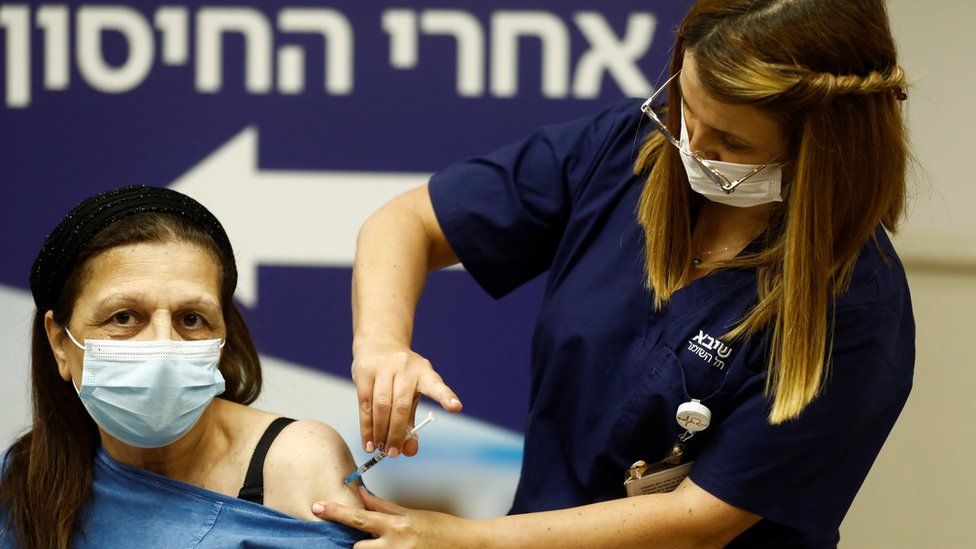
SharecloseShare pageCopy linkAbout sharingImage source, ReutersIsrael’s top health adviser says the surge of Omicron cases could see the country reach Covid herd immunity.Nachmann Ash said the country would pay a price for this and he wanted to see herd immunity achieved via vaccinations instead.Modellers have warned that up to four million people could be infected by the end of January.Prime Minister Naftali Bennett has admitted his current policy will not prevent a big rise in infections.On Sunday, he said a fourth Covid-19 vaccine would be offered to people over 60 as well as medical staff.The prime minister has previously insisted the aim is to prevent a spike in serious illness while keeping the economy open, even though he has not ruled out another lockdown.Confirmed daily infections in Israel have quadrupled to more than 3,500 in 10 days, but the number of deaths has not seen a similar rise.Herd immunity is a scientific term describing the point at which a population is protected from a disease, either by enough people being vaccinated or by people having developed antibodies by having the disease.Covid report: What is herd immunity?Is my Covid vaccine wearing off?Prof Ash said a surge in Omicron cases was inevitable.”The price of herd immunity is very many infections, and that may end up happening. The numbers need to be high to reach herd immunity, it’s something that is possible,” he said.”But we don’t want to reach it by means of infections, we want it to happen as a result of many people vaccinating.”Salman Zarka, head of the health ministry’s coronavirus taskforce, said herd immunity was not guaranteed.”We have to be very cautious with this particularly in light of our experience over the past two years in which we saw people who have recovered be re-infected,” Mr Zarka told the Ynet news website.Meanwhile another government adviser, Eran Segal from the Weizmann Institute, warned that cases would soon outstrip Israel’s testing capacity, leaving the country unable to identify new infections.He predicted that between two and four million people would be infected over the coming three weeks – but that a lower number of people would suffer severe illness than in the previous wave.He urged people to get vaccinated.”Everyone who walks around, no matter where, will be exposed and should be protected,” he tweeted.About two-thirds of Israel’s population of more than nine million have been fully vaccinated, which the health ministry defines as having either had a third dose or recently had a second dose.However many of those eligible for a third dose have not yet had one.Israel has already approved a fourth vaccine dose for immuno-compromised people and the elderly in care homes.Meanwhile just over a quarter of Palestinians have been fully vaccinated, according to Our World In Data.Why Palestinians are behind in Covid vaccinationsThe Palestinians have received vaccine doses from Israel, Russia, China, the United Arab Emirates and the global Covax vaccine-sharing initiative.UN experts had been critical of Israel’s failure to fully extend its vaccination programme to Palestinians under its control.The Israelis said the Palestinians were responsible for managing health matters in the Palestinian Territories.

Read more →

Weight loss transformation for army veteran with PTSD

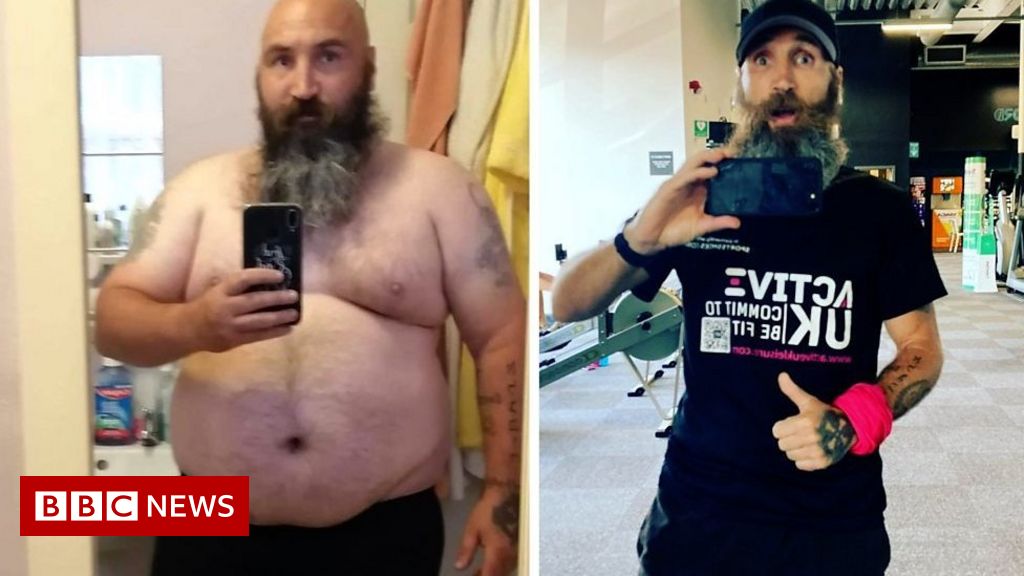
An ex-soldier who suffers from PTSD achieved a dramatic weight loss transformation after experiencing a mental health crisis during lockdown. Richard Wilcox, from Cannock in Staffordshire, left the army in 2001 and has struggled with weight gain and his mental health – but it was during the UK’s first lockdown where he reached his crisis point. Lockdown meant crucial mental health services were on pause and Richard says he was using food to cope with his feelings. At his heaviest he weighed 18 stone (114kg).After watching videos of ultra running online, Richard was inspired to take up the sport and began to transform his life for the better. He signed up for a 100-mile race and spent the year training for the event and lost eight stone (50kg) as a result.In a happier and healthier place, Richard wants to inspire others and is now taking on a 30 marathons in 30 days challenge to raise money for the mental health charity Combat Stress.

Read more →

Covid: UAE bans foreign travel for citizens without booster jab

SharecloseShare pageCopy linkAbout sharingImage source, ReutersThe United Arab Emirates has announced that it will ban citizens who have not had three doses of a vaccine against Covid-19 from travelling abroad. Officials said the exit ban, which comes into force on 10 January, would not apply to those who are medically exempt from receiving the vaccine.It is the latest country to announce new curbs amid a rise in infections. Many countries impose strict restrictions on unvaccinated people before they are allowed in. This varies from a requirement for a negative Covid test before travel to mandatory quarantine upon arrival. More than 90% of the population in the UAE has been fully vaccinated against Covid-19. About 34% had received the booster jab as of 24 December, according to Our World in Data.Studies have found that a booster shot offers better protection against the heavily-mutated Omicron variant. , which has been spreading rapidly in countries around the world.Covid vaccines: How fast is worldwide progress?Covid map: Where are cases the highest? The new travel rules in the UAE were announced by the National Emergency Crisis and Disaster Management Authority and the Ministry of Foreign Affairs.They were devised to “ensure that health and safety are prioritised”, the Emirates News Agency reported. They said the ban on unvaccinated passengers would also be lifted in “humanitarian cases” and in cases where people were travelling for medical treatment. Foreign workers make up the vast majority of the resident population in the Gulf state and will not be affected by the new restrictions, which only apply to citizens.The UAE has reported over 750,000 cases of coronavirus since the pandemic began, and more than 2,000 deaths.

Read more →

Coronavirus pandemic: Antarctic outpost hit by Covid-19 outbreak

SharecloseShare pageCopy linkAbout sharingImage source, International Polar FoundationA Belgian scientific research station in Antarctica is dealing with an outbreak of Covid-19, despite workers being fully vaccinated and based in one of the world’s remotest regions. Since 14 December, at least 16 of the 25 workers at the Princess Elisabeth Polar Station have caught the virus.Officials say cases remain mild so far.”The situation isn’t dramatic,” Joseph Cheek, a project manager for the International Polar Foundation, told the BBC.Coronavirus cases, deaths, vaccinations by country “While it has been an inconvenience to have to quarantine certain members of the staff who caught the virus, it hasn’t significantly affected our work at the station overall,” Mr Cheek said. “All residents of the station were offered the opportunity to leave on a scheduled flight on 12 January. However, they all expressed their wish to stay and continue their work,” he added.News of the outbreak was first reported in Belgian title Le Soir. The first positive test was recorded on 14 December, among a team who had arrived seven days earlier.They and others who tested positive were placed in quarantine but the virus continued to circulate.Staff arriving at the station must be vaccinated and tested for the virus. There are two emergency doctors at the station and new arrivals to the outpost have been suspended until the virus dissipates. Princess Elisabeth station is operated by the International Polar Foundation and went into service in 2009. It isn’t the first time research stations in Antarctica have been affected by a coronavirus outbreak. Last year, a number of Chilean military personnel based at Bernardo O’Higgins research station were infected after sailors on a supply ship tested positive for the virus.

Read more →

Omicron Doesn't Infect the Lungs Very Well, Animal Studies Find

Compared with earlier variants, Omicron may cause less damage to the lungs, new animal research suggests.A spate of new studies on lab animals and human tissues are providing the first hints of why the Omicron variant causes milder disease than previous versions of the coronavirus.In studies on mice and hamsters, Omicron produced less damaging infections, often limited largely to the upper airway: the nose, throat and windpipe. The variant did much less harm to the lungs, where previous variants would often cause scarring and serious breathing difficulty.“It’s fair to say that the idea of a disease that manifests itself primarily in the upper respiratory system is emerging,” said Roland Eils, a computational biologist at the Berlin Institute of Health, who has studied how coronaviruses infect the airway.In November, when the first report on the Omicron variant came out of South Africa, scientists could only guess at how it might behave differently from earlier forms of the virus. All they knew was that it had a distinctive and alarming combination of more than 50 genetic mutations.Previous research had shown that some of these mutations enabled coronaviruses to grab onto cells more tightly. Others allowed the virus to evade antibodies, which serve as an early line of defense against infection. But how the new variant might behave inside of the body was a mystery.“You can’t predict the behavior of virus from just the mutations,” said Ravindra Gupta, a virologist at the University of Cambridge.Over the past month, more than a dozen research groups, including Dr. Gupta’s, have been observing the new pathogen in the lab, infecting cells in Petri dishes with Omicron and spraying the virus into the noses of animals.As they worked, Omicron surged across the planet, readily infecting even people who were vaccinated or had recovered from infections.But as cases skyrocketed, hospitalizations increased only modestly. Early studies of patients suggested that Omicron was less likely to cause severe illness than other variants, especially in vaccinated people. Still, those findings came with a lot of caveats.For one thing, the bulk of early Omicron infections were in young people, who are less likely to get seriously ill with all versions of the virus. And many of those early cases were happening in people with some immunity from previous infections or vaccines. It was unclear whether Omicron would also prove less severe in an unvaccinated older person, for example.Experiments on animals can help clear up these ambiguities, because scientists can test Omicron on identical animals living in identical conditions. More than half a dozen experiments made public in recent days all pointed to the same conclusion: Omicron is milder than Delta and other earlier versions of the virus.On Wednesday, a large consortium of Japanese and American scientists released a report on hamsters and mice that had been infected with either Omicron or one of several earlier variants. Those infected with Omicron had less lung damage, lost less weight and were less likely to die, the study found.Although the animals infected with Omicron on average experienced much milder symptoms, the scientists were particularly struck by the results in Syrian hamsters, a species known to get severely ill with all previous versions of the virus.“This was surprising, since every other variant has robustly infected these hamsters,” said Dr. Michael Diamond, a virologist at Washington University and a co-author of the study.Several other studies on mice and hamsters have reached the same conclusion. (Like most urgent Omicron research, these studies have been posted online but have not yet been published in scientific journals.)Ravindra Gupta, a virologist at the University of Cambridge. “I’ve always been struck by the fact that you can’t predict the behavior of virus from just the mutations,” he said.Jane Stockdale for The New York TimesThe reason that Omicron is milder may be a matter of anatomy. Dr. Diamond and his colleagues found that the level of Omicron in the noses of the hamsters was the same as in animals infected with an earlier form of the coronavirus. But Omicron levels in the lungs were one-tenth or less of the level of other variants.A similar finding came from researchers at the University of Hong Kong who studied bits of tissue taken from human airways during surgery. In 12 lung samples, the researchers found that Omicron grew more slowly than Delta and other variants did.The researchers also infected tissue from the bronchi, the tubes in the upper chest that deliver air from the windpipe to the lungs. And inside of those bronchial cells, in the first two days after an infection, Omicron grew faster than Delta or the original coronavirus did.These findings will have to be followed up with further studies, such as experiments with monkeys or examination of the airways of people infected with Omicron. If the results hold up to scrutiny, they might explain why people infected with Omicron seem less likely to be hospitalized than those with Delta.Coronavirus infections start in the nose or possibly the mouth and spread down the throat. Mild infections don’t get much further than that. But when the coronavirus reaches the lungs, it can do serious damage.Immune cells in the lungs can overreact, killing off not just infected cells but uninfected ones. They can produce runaway inflammation, scarring the lung’s delicate walls. What’s more, the viruses can escape from the damaged lungs into the bloodstream, triggering clots and ravaging other organs.Dr. Gupta suspects that his team’s new data give a molecular explanation for why Omicron doesn’t fare so well in the lungs.Many cells in the lung carry a protein called TMPRSS2 on their surface that can inadvertently help passing viruses gain entry to the cell. But Dr. Gupta’s team found that this protein doesn’t grab on to Omicron very well. As a result, Omicron does a worse job of infecting cells in this manner than Delta does. A team at the University of Glasgow independently came to the same conclusion.Through an alternative route, coronaviruses can also slip into cells that don’t make TMPRSS2. Higher in the airway, cells tend not to carry the protein, which might explain the evidence that Omicron is found there more often than the lungs.Dr. Gupta speculated that Omicron evolved into an upper-airway specialist, thriving in the throat and nose. If that’s true, the virus might have a better chance of getting expelled in tiny drops into the surrounding air and encountering new hosts.“It’s all about what happens in the upper airway for it to transmit, right?” he said. “It’s not really what happens down below in the lungs, where the severe disease stuff happens. So you can understand why the virus has evolved in this way.”While these studies clearly help explain why Omicron causes milder disease, they don’t yet answer why the variant is so good at spreading from one person to another. The United States logged more than 580,000 cases on Thursday alone, the majority of which are thought to be Omicron.“These studies address the question about what may happen in the lungs but don’t really address the question of transmissibility,” said Sara Cherry, a virologist at the Perelman School of Medicine at the University of Pennsylvania.Dr. Diamond said he wanted to wait for more studies to be carried out, especially in people instead of animals, before endorsing the hypothesis that TMPRSS2 is the key to understanding Omicron. “I think it is still premature on this,” he said.Scientists know that part of Omicron’s contagiousness comes from its ability to evade antibodies, allowing it to easily get into cells of vaccinated people far more easily than other variants. But they suspect that Omicron has some other biological advantages as well.Last week, researchers reported that the variant carries a mutation that may weaken so-called innate immunity, a molecular alarm that rapidly activates our immune system at the first sign of an invasion in the nose. But it will take more experiments to see if this is indeed one of Omicron’s secrets to success.“It could be as simple as, this is a lot more virus in people’s saliva and nasal passages,” Dr. Cherry said. But there could be other explanations for its efficient spread: It could be more stable in the air, or better infect new hosts. “I think it’s really an important question,” she said.

Read more →

The Plane is Boarding, Where Are Your Test Results?

International travelers in search of Covid-19 tests are scrambling to find sites that can get them results before their flights take off — and sometimes failing.Christine Yi held out hope that the test results would come through until the doors to her flight’s boarding gate closed.Ms. Yi, 45, a content creator in New York, was attempting to fly to Grand Cayman in the Caribbean over the Christmas holiday weekend with her boyfriend, James Tracey, 47, the executive chef at Isabelle’s Osteria, a restaurant in New York’s Gramercy neighborhood.The Cayman Islands requires proof of a negative Covid test taken within 24 hours of departure to enter. Ms. Yi and Mr. Tracey had booked P.C.R. tests through N.Y.U. Langone medical center one day ahead of their Dec. 24 departure. She received her negative test results on the evening of the 23rd. Mr. Tracey’s test also came back negative — after 34 hours, a missed flight, $150 in change fees, a two-hour wait for two rapid antigen tests and a back-and-forth trip to John F. Kennedy International Airport.“It was definitely a memorable start to our trip,” said Ms. Yi.Frequent testing, combined with vaccines and masking, have been repeatedly cited as the key to a holiday season closer to the “normal” of prepandemic times. But for international travelers who need tests to enter their destinations, getting tested in time is easier said than done. Finding a test has become increasingly difficult — appointments are booked and walk-in sites often have hourslong waits. And even if you can get a test, it is far from guaranteed that your results will come back in time for you to board.Making it even more difficult are the ever-changing requirements for international travel, with the testing deadlines often a moving target. In recent weeks, some places have shortened the window for valid test results, including the Cayman Islands — previously, a negative P.C.R. test taken within 72 hours was sufficient for entry.Testing has been a repeated pain point throughout the pandemic, from the limited availability and turnaround times that could stretch as long as a week in the spring of 2020 to the shortage of at-home tests during the Delta surge last summer. But the one-two punch of the highly contagious Omicron variant and the holiday season has led to a huge demand for tests that the United States was, by and large, not prepared to meet. For some travelers, that means that the best-laid plans, and even backup plans, may fall through.“We have as much test volume now as we did in the large wave that we saw last holiday season,” said Alicia Zhou, the chief science officer of Color, a Burlingame, Calif., health technology company that has partnered with testing sites around California. Color guarantees that P.C.R. results will be turned around within 48 hours or less; according to Dr. Zhou, the majority of results are returned in 24 hours or less. The tests are free to the end user. They’ve been able to maintain that turnaround time in the latest surge, largely because they did not scale back operations when the demand for testing dropped in the middle of 2021, Dr. Zhou said.“It felt like it wasn’t time for us to step off the gas yet,” Dr. Zhou said. “Omicron snuck up on us, but it also came on the tail end of Delta.”Demand for at-home tests approved by the Food and Drug Administration, like iHealth and BinaxNow, has skyrocketed, too, with pharmacies largely out of stock and shipping significantly delayed. Unless these tests are proctored by a medical professional, they are not sufficient for international travel, but they do offer peace of mind for family gatherings.“We’re seeing unprecedented demand for BinaxNOW and we’re sending them out as fast as we can make them,” said a spokesman for Abbott, the company that produces BinaxNow.The uncertainty has some people hedging their bets, setting up multiple tests in case one doesn’t come through in time. Alle Pierce, a Palm Springs, Calif.-based travel adviser and the founder of Gals Abroad Getaways, recommended making an initial testing appointment through a primary care doctor and coming up with a backup plan, which could involve making a second appointment or scoping out a walk-in clinic, as Ms. Yi and Mr. Tracey were forced to do last-minute, in case those results don’t come back in time.If you are able to find a site offering a quick turnaround, “expect to pay more,” said Ms. Pierce.Dr. Zhou understood the need for that strategy, but encouraged promptly canceling any additional testing appointments as soon as you’ve received your results.“Try to make sure that you’re not overbooking and then not showing up to those appointments,” she said. “That leads to less availability for appointments for others.”The Coronavirus Pandemic: Key Things to KnowCard 1 of 4The global surge.

Read more →

F.D.A. Plans to Allow 12- to 15-Year-Olds to Receive Pfizer Boosters

Regulators are also expected to allow even younger children with immune deficiencies to get an extra shot.WASHINGTON — The Food and Drug Administration is planning to broaden eligibility for coronavirus vaccine booster shots on Monday, allowing 12- to 15-year-olds to receive third doses of Pfizer-BioNTech’s vaccine, according to people familiar with the agency’s deliberations.Regulators are also expected to authorize an extra shot of Pfizer’s vaccine for both adolescents and adults five months after receiving a second dose, instead of the current interval of six months. Younger children, ages 5 to 11, with immune deficiencies would be able to receive booster shots as well.The decision to expand the use of the shots would come just as schools begin to reopen after the holiday break, and as governments around the world try to respond to the fast-spreading Omicron variant. Israel on Thursday approved a fourth dose of vaccine for people with weakened immune systems, and Britain’s National Health Service said its hospitals would erect field wards to help deal with the surge in coronavirus cases.Several U.S. states hit their all-time case records for the coronavirus this week, disrupting the lives of millions of Americans. New York’s mayor-elect, Eric Adams, vowed to keep the city’s vaccine mandate for private-sector employees in place, and the C.D.C. issued a blunt warning to potential travelers: “Avoid cruise travel regardless of vaccination status.”Health officials are trying to encourage more Americans to get a booster shot — just over a third of fully vaccinated adults have received one — and warn that the unvaccinated face the greatest risk of severe illness and death from Omicron.“Our C.D.C. guidance has been very clear that people should get their boost when they are eligible,” Dr. Rochelle P. Walensky, the C.D.C. director, told reporters this week. “That is both for — because of waning immunity and because we need more protection against Omicron.”Dr. Walensky said on Wednesday that even as daily case counts had climbed by roughly 60 percent in the past week, hospitalizations and deaths were still relatively low, a suggestion that Omicron might be less lethal. She and Dr. Anthony S. Fauci, President Biden’s chief medical adviser, cited international research hinting at the same conclusion.Studies have shown that while two doses of the Pfizer-BioNTech vaccine have provided strong protection as the Delta variant swarmed the country, Omicron can evade the defenses of fully vaccinated people, heightening fears about the risks for young people.More than 70 percent of people 12 and older in the United States are fully vaccinated, according to the C.D.C. Around a quarter of children between 5 and 11 have received at least one dose. Children under 5 are still not eligible for a vaccine.The latest surge has caused a concerning rise in hospitalizations among children. But early data suggests that Omicron appears to be causing milder illness for children, similar to findings for adults. And hospital officials and physicians have said that nearly all children hospitalized with Covid-19 were unvaccinated or partially vaccinated.Children can better withstand coronavirus infections, but in rare instances can still become very sick and even die. At least 1.8 million adolescents between 12 and 15 years old have tested positive for the virus, according to the C.D.C.A series of studies published on Thursday by the agency underscored how important vaccination can be for children and adolescents. In one study spanning July through early December that examined hundreds of adolescents in Arizona, researchers said two doses of the vaccine reduced the risk of infection by 92 percent.Two other C.D.C. studies showed that there were few serious side effects reported among 5- to 11-year-olds who had received the Pfizer-BioNTech vaccine, and that pediatric hospitalizations occurred mostly among children who had not been fully vaccinated.One recent South African study showed that the effectiveness of Pfizer’s vaccine against severe illness and hospitalization was about 70 percent after two doses, against Omicron in particular.Pfizer-BioNTech’s vaccine is the only of the three federally authorized coronavirus shots that is approved for use in people under 18.The Centers for Disease Control and Prevention’s vaccine advisory committee is planning to meet by the middle of next week to weigh in on whether to recommend the changes in the F.D.A.’s booster policy. If the committee agrees with the F.D.A.’s authorizations, Dr. Walensky is expected to promptly endorse the revisions.Dr. Kathryn M. Edwards, a vaccine expert and professor of pediatrics at Vanderbilt University School of Medicine, said the F.D.A.’s expected decision was justified.“We’re having a lot of suggestions and a lot of experience with Omicron that it’s infecting people that have been boosted. But fortunately, we’re not seeing a lot of severe disease,” she said. “So I think if you look at the immune responses, at least in adults, you’ll see that this booster dose does enhance your neutralization capacity against Omicron.”Other vaccine experts said the administration’s continued attention to offering boosters to younger, healthier people was misguided.Dr. Paul Offit, the director of the Vaccine Education Center at Children’s Hospital of Philadelphia and a member of the F.D.A.’s vaccine advisory committee, said research on vaccine effectiveness, including against Omicron, had revealed substantial and durable protection from two doses against severe disease, including in adolescents — the purpose of vaccination, he said.A booster dose could increase one’s protection for several months, he said, but delivering extra shots to young Americans was “focusing on the people who are already protected.”The Coronavirus Pandemic: Key Things to KnowCard 1 of 4The global surge.

Read more →

Omicron: South Africa ends night-time curfew

SharecloseShare pageCopy linkAbout sharingImage source, AFPSouth Africa has lifted overnight curfew rules, with officials saying the country may have passed the peak of its fourth wave of Covid-19 infections.A government statement said the Omicron variant, while highly transmissible, had seen lower hospitalisation rates than previous waves.There had been “a marginal increase” in the number of deaths, it added. The variant – first reported by South Africa last month – is spreading fast elsewhere leading to widespread curbs. The World Health Organization (WHO) has warned of a “tsunami” of infections from Delta and Omicron variants that could overwhelm health systems.But in South Africa, the government announced on Thursday that some rules were being relaxed.A statement released after a special cabinet meeting said cases and hospital admission rates had dropped in almost all provinces across the country. For the week ending 25 December 2021, the number of confirmed infections stood at 89,781 – down from 127,753 the week before.The changes announced include lifting restrictions on movement between midnight and 04:00. Businesses will also be allowed to sell alcohol under normal licensing rules, instead of closing at 23:00.Overnight curfew rules of varying severities have been in place since a national state of disaster was declared in late March 2020. The country still has “spare capacity for admission of patients even for routine health services” despite the Omicron wave. What can South Africa teach us about Omicron?Tracking the pandemicOmicron less likely to need hospital careThe public are still urged to get vaccinated and follow public health protocols, including mandatory mask-wearing.Gatherings remain capped at 1,000 people indoors and 2,000 outdoors or 50% at venue capacity to allow for social distancing.The National Coronavirus Command Council (NCCC) will monitor the situation and make adjustments if necessary or if hospital pressure increases, officials said.South Africa has recorded almost 3.5 million Covid-19 cases and more than 90,000 deaths during the pandemic. This video can not be playedTo play this video you need to enable JavaScript in your browser.

Read more →