Covid-19: India records first death linked to Omicron variant

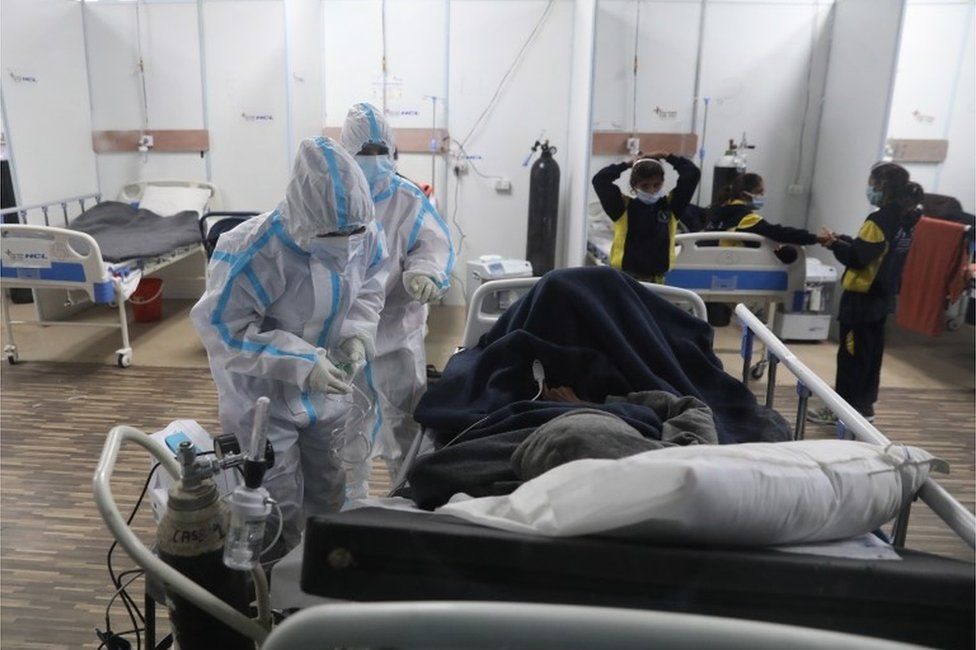
SharecloseShare pageCopy linkAbout sharingImage source, EPAA 74-year-old man who died in the western state of Rajasthan was India’s first death with the Omicron variant, the health ministry said on Wednesday.Officials said the man had been suffering from diabetes and other comorbid conditions.India has reported 2,630 Omicron cases so far.It reported more than 90,000 cases on Thursday – a nearly six-fold rise over the past week that experts say is fuelled by the Omicron variant.India recorded 325 deaths in the 24 hours but only one has been linked to Omicron, officials said. “Technically it is an Omicron-related death. He was an elderly person who had diabetes and comorbid conditions,” Health Ministry Joint Secretary, Lav Agarwal said at the daily press briefing on Wednesday. Curfew in Delhi as Covid cases surgeThe Indian Express newspaper reported that the patient was admitted to a hospital in Udaipur city in Rajasthan state on 15 December and died 15 days later. Doctors said the man was fully vaccinated.During Wednesday’s briefing, Indian Council of Medical Research (ICMR) chief Balram Bhargava said that the Omicron variant is the “predominant circulating strain in cities and all mass gatherings must be avoided”.Mr Agarwal said the states of Maharashtra, West Bengal, Delhi, Kerala, Tamil Nadu, Karnataka, and Jharkhand are “some of the emerging states of concern”, with a sharp increase in weekly cases and positivity rates.India has so far recorded more than 35 million Covid cases and around 482,000 deaths from the virus. A disastrous second wave in April and May 2021 saw infections and deaths climb as hospitals ran out of beds, oxygen and life-saving drugs. Preliminary data suggests that those with Omicron are less likely to spend time in hospital in critical care compared to previous variants. But experts and doctors fear that a surge could still derail healthcare services – especially as India is headed for multiple state elections, which are often accompanied by massive rallies. Several states, including Delhi and Maharashtra, have reintroduced curbs and temporary curfews to limit gatherings and arrest the spread of the virus. This video can not be playedTo play this video you need to enable JavaScript in your browser.

Read more →

For C.D.C.’s Walensky, a Steep Learning Curve on Messaging

Dr. Rochelle Walensky, the director of the Centers for Disease Control and Prevention, has stumbled in explaining her policy decisions.WASHINGTON — Two days before Christmas, with the Omicron variant driving a near-vertical rise in new coronavirus cases, the director of the Centers for Disease Control and Prevention alerted the White House that she planned to recommend that people infected with the virus isolate for five days instead of 10.The director, Dr. Rochelle P. Walensky, had faced previous criticism for issuing recommendations that confused the public and in some cases caught the White House off guard. Determined to avoid that this time, she briefed other top Biden health officials on her proposal so they would all be on the same page, according to two people familiar with her actions.It did not work out that way. Dr. Anthony S. Fauci, the nation’s top infectious disease expert, and Dr. Vivek H. Murthy, the surgeon general, were concerned that the new guidance did not urge people to get a negative Covid test before ending their isolation. After the new recommendation became public, they both took issue with it on national television, saying they expected the C.D.C. to clarify its advice.On Wednesday, nine days after the guidance was issued and a day after it was slightly modified to include some advice on testing, the C.D.C. was still having a hard time explaining itself. “How do you expect people to keep track of what they can and can’t do?” a CNN reporter demanded of Dr. Walensky at a White House briefing.It was a familiar refrain.President Biden came into office vowing to restore public trust in the C.D.C. after the Trump White House had tied the agency’s hands and manipulated its scientific judgments on the pandemic for political ends. Yet in his first year of battling the coronavirus, Mr. Biden has presided over a series of messaging failures that have followed a familiar pattern, with Dr. Walensky and her team making what experts say are largely sound decisions, but fumbling in communicating them to America.Dr. Walensky, a highly regarded infectious disease expert from Boston with no prior government experience, insisted in February that schools must keep students six feet apart; in March, she said three feet was enough. She said in February that teachers did not need to be vaccinated to reopen schools; the White House said the next day that she was speaking “in her personal capacity.”In May, she said that vaccinated people generally did not need to wear masks in public, a sudden change that flummoxed state health officials. Two months later, she reversed that guidance after it was shown that vaccinated people could still transmit the virus.With the virus throwing one curveball after another, changing advice from the C.D.C. is a given. But Dr. Walensky’s critics say the C.D.C.’s recommendations are sometimes so confusing or abruptly modified that they seem more like drafts than fully vetted proclamations.“I don’t think that the C.D.C. guidelines were significantly wrong,” Dr. Tom Frieden, the agency’s director under former President Barack Obama, said of the latest recommendations on isolation for those with Covid. But he added, “I think the way they were released was very problematic.”The crux of the problem, several administration officials said, is a failure by the C.D.C. and the Biden administration’s messaging experts to work in concert. Who is to blame for that is a matter of debate. Dr. Walensky’s critics say she is not collaborative enough, too often springing decisions on other federal officials who then struggle to defend them in public. Her defenders say she strives to coordinate, but that it is not her job to ensure consensus across the entire administration.Some suggest the White House has gone too far in its hands-off, let-the-scientists-rule approach, leaving a vacuum of leadership and forcing ad-hoc coordination between the various public health agencies. That has been exacerbated by a health secretary, Xavier Becerra, who receives routine briefings from scientists but does not settle interagency disputes about the pandemic response.Dr. Fauci, the administration’s best-known spokesman on the pandemic, has further muddied the waters at times, publicly contradicting the C.D.C. as he did this week or making statements he has later walked back.He said in late December, for instance, that a vaccination requirement for domestic airline passengers should be seriously considered, leaving the White House to field a flurry of questions on a policy it was not prepared to recommend. Later, he said a mandate was unlikely.On Wednesday, Jen Psaki, the White House press secretary, said it was OK for the C.D.C. to modify its guidance, adding that, for one thing, “if they hadn’t changed their recommendations over the course of time, schools would probably be closed across the country.”But even some within Dr. Walensky’s own agency agree that the C.D.C.’s public pronouncements on the pandemic have repeatedly fallen short, long after experts say the agency should have mastered clear and concise public messaging on the worst public health crisis in a century.The handling of the isolation guidance was a case study in how to confuse the public. And the controversy is not over: health experts continued on Wednesday to criticize the C.D.C.’s decision not to recommend a negative test before people with Covid end a five-day isolation.“The new recommendations on quarantine and isolation are not only confusing, but are risking further spread of the virus,” the American Medical Association said in a statement on Wednesday.Dr. Walensky said that she and career staff finished devising the guidance over the Christmas weekend. Officials decided that people with Covid-19 could end their isolation after five days instead of 10 if they were asymptomatic or if their symptoms were “resolving,” meaning no fever for 24 hours. The agency said 85 to 90 percent of viral transmission occurred within that initial five-day period. Dr. Walensky verbally briefed other senior federal officials on the new guidance at least twice that weekend, defending her decision not to recommend that people test negative first. One person familiar with Dr. Walensky’s account said no one raised serious objections.But Dr. Fauci said in an interview that he did not see the final version before it was released. Others familiar with the situation said the C.D.C. did not share it before posting it publicly on Dec. 27.Although the Food and Drug Administration now typically holds a news briefing after major regulatory moves on Covid vaccines or treatments, the C.D.C. held no briefing on the decision. Indeed, it has not held regular news conferences since former President Donald J. Trump put an end to them in early 2020. Dr. Walensky does take questions at least once a week during the White House’s pandemic news briefings.The agency’s minimalist explanation immediately set off a fraught debate: Why not recommend a negative test before ending isolation? Was it because tests were in short supply? Was the agency shortening the isolation period to keep the economy running instead of for science-based reasons?“Where the messaging gets muddled is where it is unclear what is driving the decision,” said Dr. Celine R. Gounder, an infectious disease expert at Bellevue Hospital Center in New York who considers Dr. Walensky a mentor.Dr. Gounder said she and other experts suspected that a shortage of tests was behind the decision, and that if Dr. Walensky had said so, “the public health community would have been more understanding.” Dr. Walensky said Wednesday that the guidance had “nothing to do with the shortage of available tests.”In an interview with The Times last week, Dr. Walensky said the advice was carefully crafted with a team of career officials. She said rapid tests were meant to diagnose infection, not predict the risk of spreading it — a position echoed by the F.D.A., which regulates the tests.The Coronavirus Pandemic: Key Things to KnowCard 1 of 6The global surge.

Read more →

Portable prostate cancer test may help reach underserved men

A highly portable and rapid prostate cancer screening kit could provide early warning to populations with higher incidence of prostate cancer and particularly those with limited access to health care, such as African American men.
The proof-of-concept test, described online Nov. 12 in the journal Current Research in Biotechnology, is inexpensive and uses a test strip and a small cube-shaped 1.6-inch reader to quantify a marker of prostate cancer — called prostate-specific antigen (PSA) — from a drop of blood in minutes.
“We’ll be able to take a drop of blood in a community setting such as a barbershop and be able to deliver results in 10 to 15 minutes right there, which can indicate when somebody needs to come in for further tests,” said Dr. Saurabh Mehta, the Janet and Gordon Lankton Professor in the Division of Nutritional Sciences and the paper’s senior author. Balaji Srinivasan, a research associate in Mehta’s research group, is the paper’s first author.
“It’s creating that first point of contact that hopefully builds rapport and brings health care services to the people at the point of need,” Mehta said.
The kit comes with a test strip, similar to those found in at-home COVID-19 antigen or pregnancy tests. Users would draw a drop of blood and apply it to the test strip, and in about 15 minutes, two lines appear on the strip.
The color of the two lines is due to 150-nanometer gold nanoshells, which greatly enhance the test’s sensitivity to detect PSAs and make the lines appear more intense in their presence, Srinivasan said. While a pregnancy test gives a positive or negative result, the cube reader senses the intensity of the test strip lines and then calculates and displays a measurement of PSA concentration in the blood.

Read more →

Nearly 2 million children worldwide develop asthma as a result of breathing in traffic- related pollution

Nearly 2 million new cases of pediatric asthma every year may be caused by a traffic-related air pollutant, a problem particularly important in big cities around the world, according to a new study published today. The study is the first to estimate the burden of pediatric asthma cases caused by this pollutant in more than 13,000 cities from Los Angeles to Mumbai.
“Our study found that nitrogen dioxide puts children at risk of developing asthma and the problem is especially acute in urban areas,” Susan Anenberg, a co-lead author of the article and a professor of environmental and occupational health at the George Washington University, said. “The findings suggest that clean air must be a critical part of strategies aimed at keeping children healthy.”
Anenberg and her colleagues studied ground concentrations of nitrogen dioxide, or NO2, a pollutant that comes from tailpipe vehicle emissions, power plants and industrial sites. They also tracked new cases of asthma that developed in children from 2000 until 2019. Asthma is a chronic illness that causes inflammation of the lung’s airways.
Here are some key findings from the study: Out of the estimated 1.85 million new pediatric asthma cases attributed to NO2 globally in 2019, two-thirds occurred in urban areas. The fraction of pediatric asthma cases linked to NO2 in urban areas dropped recently, probably due to tougher clean air regulations put in place by higher income countries like the United States. Despite the improvements in air quality in Europe and the U.S., dirty air, and particularly NO2 pollution, has been rising in South Asia, Sub-Saharan African and the Middle East. Pediatric asthma cases linked to NO2 pollution represent a large public health burden for South Asia and Sub-Saharan Africa.A previous study by the GW researchers found that NO2 was linked with about 13% of the global pediatric burden of asthma and up to 50% of the asthma cases in the most populated 250 cities worldwide.
Overall, the fraction of pediatric asthma cases linked to NO2 declined from 20% in 2000 to 16% in 2019. That good news means that cleaner air in Europe and parts of the U.S. have resulted in big health benefits for children, especially those living in neighborhoods near busy roadways and industrial sites.
Much more needs to be done, both in higher income countries and in parts of the world still struggling to curb harmful emissions from vehicles and other sources of NO2, the researchers conclude.
A second study by Veronica Southerland at GW, Anenberg and their colleagues finds that 1.8 million excess deaths can be linked to urban air pollution in 2019 alone. This modeling study shows that 86% of adults and children living in cities around the world are exposed to a level of fine particulate matter that exceeds the guidelines set by the World Health Organization.
“Reducing fossil fuel-powered transportation can help children and adults breathe easier and may pay big health dividends, such as fewer cases of pediatric asthma and excess deaths,” Anenberg said. “At the same time, it would also reduce greenhouse gas emissions, leading to a healthier climate.”
NO2 concentrations and disease burden in 13,000 cities worldwide: https://blogs.gwu.edu/sanenberg/pm2-5-no2-and-ozone-data-for-13000-cities-worldwide/
Story Source:
Materials provided by George Washington University. Note: Content may be edited for style and length.

Read more →

Synovial sarcoma diagnosis: Encouraging others to trust their instincts

Jo Georgiou was diagnosed with synovial sarcoma in 2021, five years after finding a lump on her leg. She now has to have it amputated in order to get rid of the cancer. The 31-year-old from north London wants her story to inspire others to trust their instincts and push for care.She said: “I always feel like, if in your gut you know something is wrong with your body, something is wrong.”Soft tissue sarcomas make up 1% of all cancers, with synovial being one of the rarest subtypes – about 80 people a year are diagnosed with it in England. Source: Sarcoma UKVideo by Gem O’Reilly and Nicola Ford

Read more →

Study identifies biomarkers linked to autism risk

A large study by researchers at Columbia University Mailman School of Public Health and the Norwegian National Institute of Public Health has identified molecular signatures of gestational inflammation linked to the risk of developing autism spectrum disorder (ASD). These findings, which provide insights into abnormal brain development, could eventually lead to a test to screen for ASD at birth. The study is published in the journal Molecular Psychiatry.
The new research aligns with growing evidence that the risk of ASD is increased by fetal exposure to inflammation. In earlier studies, the researchers linked ASD risk to prenatal exposure to maternal fever, and to influenza infection and herpesvirus type 2 infection — two of many potential triggers for maternal inflammation and ASD.
In the new study, researchers analyzed the presence of 60 molecular markers of immune response, including cytokines and growth factors. Blood samples were collected during pregnancy (maternal mid-gestational blood sample) and at birth (cord blood) from 957 children, roughly half of whom were later diagnosed with ASD. The study linked ASD risk to groupings of inflammation-related molecules, with different groupings seen in boys versus girls. Among the most predictive molecules were interleukins like IL1RA and IL4. Four molecules thought to be involved in fetal brain development were also linked to ASD risk in both sexes: TNFα, Serpin E1, VCAM1, and IL1β. Biomarkers collected at birth were only slightly less predictive than those collected during pregnancy.
“Our research suggests a period of vulnerability during gestation when inflammation can interfere with central nervous system development,” says first author Xiaoyu (Jason) Che, PhD, assistant professor of biostatistics in the Center for Infection and Immunity at Columbia Mailman School.
“We found immune signatures in mid-pregnancy blood samples from mothers and in umbilical cord blood from children later diagnosed with autism that correlate with responses to infection, and molecules important for the development of the brain and its blood supply,” says study co-first author Mady Hornig, MD, associate professor of epidemiology at Columbia Mailman School.
“This work illustrates the unique power of prospective cohorts for elucidating the roots of disease,” says corresponding author, Ezra Susser, professor of epidemiology and psychiatry.
“This paper is the culmination of more than 20 years of data and sample collection and analysis in collaboration with our colleagues in the Norwegian Institute of Public Health. Our future research will focus on finding the triggers for inflammation and links between those triggers and genetic susceptibility,” said W. Ian Lipkin, John Snow Professor of Epidemiology and professor of neurology and pathology.
About the Autism Birth Cohort (ABC) Study
The Autism Birth Cohort (ABC) study was conducted within a large Norwegian cohort of more than 100,000 children who have been followed since before their birth. ABC is a joint effort of the Norwegian National Institute of Public Health (NIPH) and Columbia Mailman School investigators, overseen by a Steering Committee of four people: Camilla Stoltenberg and Per Magnus in Norway; and Ian Lipkin and Ezra Susser at Columbia. “The ABC study is unique for the scope, depth, and breadth of both biological and social data on ASD,” notes Susser.
The research was supported by the National Institutes of Health (grants NS047537, NS086122), Jane Botsford Johnson Foundation, Korein Foundation, Simons Foundation Autism Research Initiative, the Norwegian Ministry of Health and Care Services, the Norwegian Ministry of Education and Research, and Research Council of Norway (grants 189457, 190694, 196452).
The funders had no role in study design, data collection, and interpretation, or the decision to submit the work for publication. None of the authors reported biomedical financial interests or potential conflicts of interest.

Read more →

Tests for travellers to England to be scrapped

SharecloseShare pageCopy linkAbout sharingImage source, Getty ImagesThe rules on testing are to be eased for people travelling to England, the government has announced, following calls from the travel industry.From 04:00 GMT on Friday, fully vaccinated travellers coming to England will no longer have to take a test before they travel.And from Sunday, rather than taking a PCR test on day two of arrival, they can take a cheaper lateral flow.The rules for self-isolating on arrival will also change.The shake-up was confirmed by Boris Johnson earlier, following calls from travel firms who said the measures were not effective now that Omicron was spreading widely.Under the current rules in force until Friday, all fully-vaccinated travellers over the age of 12 must show proof of a negative test lateral flow or PCR test taken in the two days before coming to the UK. Fully vaccinated people must also pay for a PCR test within two days of arrival and self-isolate while waiting for the result. People who aren’t fully vaccinated must currently take PCR tests on both day two and day eight after arriving, and self-isolate for 10 days.But under the new rules: From 04:00 GMT on Friday 7 January, people who are fully vaccinated and those aged under-18 will no longer need to take a test two days before travelling to England from countries outside the UK and the Common Travel Area. On arrival, they will have to take a PCR test but they will no longer have to self-isolate while awaiting the resultFrom 04:00 GMT on Sunday 9 January they will only have to take a lateral flow test instead of a PCR test on day two. But this test must be bought from a private test provider – free NHS tests are not allowedUnvaccinated passengers will need to continue to take a pre-departure test, PCR tests on day two and day eight, and self-isolate for 10 daysPrime Minister Boris Johnson said the pre-departure test “discourages many from travelling for fear of being trapped overseas and incurring significant extra expense”.The announcement comes after airlines said passenger testing was making no real impact, with data last week suggesting one in 25 people in England had the virus.They also said compulsory testing had held back the sector’s recovery.Mr Johnson met his cabinet earlier and alongside changes to travel tests, the government has said it will ease Covid testing rules for people without symptoms, who will no longer need to confirm a positive lateral flow test with a PCR.On Tuesday, Mr Johnson said he hoped the country could “ride out” the current wave, although he acknowledged parts of the NHS would feel temporarily overwhelmed. That rule change will come into force on 11 January and apply to England only for now.Following the announcement for England, Health Minister for the Welsh government Eluned Morgan said: “I have today reluctantly agreed to remove the requirements for fully vaccinated travellers and under 18s to take a pre departure test (PDT) and a day 2 PCR test when arriving in the UK.” What are the current travel rules?Currently, all travellers to the UK aged 12 and over have to show proof of a negative test, which can be a PCR or a lateral flow test, and must be taken up to two days before departure for the UK.They then have to take another test – which this time must be a PCR test – within the first two days after their arrival in the UK.But at the time that rule was brought in a month ago, the number of new cases reported in the UK each day was running between 40,000 and 50,000 – and was only rising relatively slowly because it was almost entirely made up of the Delta variant of Covid.But UK cases have now risen sharply and Omicron is the dominant variant – so airlines can argue that there is no longer any hope of relying on testing to “keep out Omicron”.Read more.’I’ll feel unsafe on flights’John Wyndham, who is currently planning a third trip to the US for February, said that scrapping pre-departure tests will make him feel unsafe on flights. “I’m frustrated because pre-departure was the most important as an effective control and also the cheapest test,” he told the BBC. Mr Wyndham runs a start-up company that is organising marching bands across the world to participate in London Band Week. He went to the US in December along with three colleagues, who paid £212 each for PCR testing.However, he said that the eliminating pre-departure testing will only save him around £30 per person and wasn’t worth the added worry about new variants. “It’s bonkers that we could now sit on the plane with someone who has it,” he said, adding that it would “worsen what has already been the most stressful travelling of my life”. £800 savingImage source, David HughesHowever, holidaymaker David Hughes welcomed the scrapping of PCR tests before returning to the UK. Currently on holiday in Dubai, the rule change will save his family of 4 around £400 and another removing the Day 2 PCR will also save the family another £400. “Having returned from a country where there were strict entry requirements and we were tested on arrival I would be very confident that we’ll be returning to the UK Covid free,” he told the BBC. Cancellation fees and no longer having to test before returning would mean significantly less hassle and stress, Mr Hughes added.Peak booking period In response, Mark Tanzer, Chief Executive of ABTA – The Travel Association, said the two announcements were “potentially very positive” for the travel sector, but that damage had “already been done”. “We now hope to see confidence return as we enter what is usually the peak booking season for summer holidays,” he added. Steve Heapy, boss of the airline Jet2 and tour operator Jet2 Holidays, also said the timing of the announcement will make a “huge difference”. Numbers of customers on their website, he said, were already increasing “exponentially” after the rule change. Shai Weiss, chief executive of Virgin Atlantic, agreed that the announcement meant customer demand would be boosted in a “critical booking window” for the industry.EasyJet chief executive Johan Lundgren also welcomed the news, saying it would make travel “much simpler and easier”, as customers could now book and travel with “confidence”.The trade body Airlines UK has argued that continuing the current measures would be financially disastrous for the industry. UK air travel sees huge slump in 2021 due to CovidWhere will I need to use a Covid passport?Will Omicron stall airlines’ recovery in 2022? Ahead of the test changes, Manchester Airports Group (MAG) sent the government research it commissioned, which it claimed shows that pre-departure testing has had little or no impact on the spread of Omicron.It said that passenger numbers at MAG’s airports fell by more than 30% after Omicron measures were introduced. Tim Hawkins, chief of staff at MAG, told the BBC’s Today programme the research showed there was a “basis for taking out all tests” related to international travel, due to the high number of Covid cases in the UK.”We are beyond the point where international travel restrictions can play a role in managing that peak and if there is no benefit to it then we shouldn’t be doing it and we should take those measures out,” he added.Separately, European airline and tour operator stocks rose on Tuesday amid a rise in investor confidence in the sector. Hargreaves Lansdown analyst Susannah Streeter told Reuters: “With so many people in the short-term being forced to isolate at home, it’s likely many people will be spending the next few weeks browsing travel blogs for inspiration, given there is so much desperation for a holiday.”A recent report by aviation analytics firm Cirium found that the Covid pandemic triggered a 71% drop in international flights in and out of the UK in 2021.

Read more →

Hedgehogs Are a Source of Drug-Resistant Bacteria, Study Finds

Scientists chart how a battle between fungus and bacteria living on the skin of hedgehogs led to the emergence of a strain of MRSA that can infect cows and humans.The tiny, spiny and adorable hedgehog is helping to upend conventional wisdom about the origins of drug-resistant bacterial infections that kill thousands of people each year.In a study published Wednesday in Nature, a group of international scientists found that the bacteria that cause a tough-to-treat infection existed in nature long before modern antibiotics began to be mass produced in the 1940s. The drugs have saved countless lives, but the wide distribution of antibiotics in the decades since then has also spurred an evolutionary arms race with the pathogens they target, leading to the emergence of dreaded superbugs that have evaded our efforts to vanquish them with pharmaceuticals.The key to the scientists’ paradigm-altering theory? Danish roadkill.When researchers examined hundreds of dead hedgehogs from Denmark and other countries in Western Europe, they found MRSA, or methicillin-resistant staphylococcus aureus, living on the skin of the vast majority of the animals. That was surprising, given that the animals had not been exposed to penicillin, though MRSA does colonize many mammals, including humans, where they can live harmlessly inside the nose or on the skin. The danger arises when these bacteria enter the bloodstream through a wound or intravenous tube, with potentially deadly consequences for those with weakened immune systems.The scientists were also intrigued by another pathogen they found on many of those same hedgehogs: a skin fungus that produces a penicillin-like substance which inhibits the growth of staphylococcus aureus. Like modern antimicrobials, this naturally occurring antibiotic is in constant battle with the staph bacteria that compete for nutrients on the hedgehog’s skin. Over time, some of those bacteria developed an ability to outsmart their fungal rivals and thrive on their hedgehog hosts, the study showed.What likely happened next is a familiar tale in the annals of infectious disease. The particular strain of MRSA that colonized the hedgehogs, known as mecC-MRSA, later found its way to dairy cows in rural areas where both creatures flourish, and eventually to humans. In Denmark, mecC-MRSA sickens 10 to 30 people a year.Through genetic coding of the hedgehog-borne mecC-MRSA, researchers were able to establish a timeline of its evolution back to the early 1800s, long before Alexander Fleming stumbled on a speck of mold in a petri dish that was repelling a spreading Staphylococcus colony.Anders Rhod Larsen, a microbiologist and a lead author of the paper, said the findings added a new wrinkle to the predominant narrative that the overuse of antibiotics was solely responsible for the rise of superbugs. “The main message is that MRSA predates antibiotic use in humans, but the broader theme is that we are not alone in this world,” said Dr. Larsen, who leads the National Reference Laboratory for Antimicrobial Resistance at Statens Serum Institut in Copenhagen. “Antibiotic resistance does not have any boundaries and it can be transmitted between species.”Anders Rhod Larsen, a microbiologist at Statens Serum Institut in Copenhagen, with samples of MRSA bacteria.Ciril Jazbec for The New York TimesResearchers not involved with the study said the findings helped to confirm long-held assumptions about the dynamics of antibiotic resistance. Antimicrobial substances, after all, are abundant in nature, and bacteria and fungi have long found ways to outsmart these compounds.Lance Price, who leads the Antibiotic Resistance Action Center at George Washington University, commended the research for documenting the process in the real world, and with such precision.“This is such an interesting story because who doesn’t love hedgehogs,” he said. “But what’s important about this paper is it shows the natural evolution of a drug-resistant human pathogen.”Tara C. Smith, an epidemiologist at Kent State University College of Public Health who studies livestock-associated MRSA, said the study helped highlight the role that animals played as reservoirs of antimicrobial resistance. “It really just steps up the need for better antibiotic stewardship and to take heed of what we’re using, both in human medicine and animal medicine,” she said.The MRSA that infected the hedgehogs did not appear to sicken them, but its overwhelming presence on the animals sampled from Denmark largely corresponded with mecC-MRSA’s prevalence among humans in that country. First discovered in 2011, mecC-MRSA has since spread to dairy herds across northern Europe and it can sometimes cause infections in cows but has rarely sickened humans.Jesper Larsen, another lead author of the paper and a senior researcher at Statens Serum Institut, said the results had already inspired him and other researchers to expand their focus on antibiotic resistance in wild animals. But he cautioned against any notion that naturally occurring resistance somehow lessened the urgency to curb the use of antimicrobial drugs to treat illness in humans.“The lesson here is that when we overuse antibiotics, we accelerate what is already happening in nature,” he said.There is perhaps another lesson from the study, Dr. Larsen added. Although the risks of humans contracting MRSA directly from hedgehogs are likely minimal, maintaining a healthy distance from the animals was always prudent.“If you see a hedgehog in your backyard,” he said, “you should probably avoid kissing it.”And responsible pet hedgehog owners already knew that it’s best not to snuggle with the animals.

Read more →

Findings open the way to more precise diagnoses and treatments of Alzheimer’s disease

An international team lead by Case Western Reserve University’s School of Medicine has made a significant breakthrough in understanding why Alzheimer’s disease progresses so rapidly in some people that they die within three years.
The researchers found a link between strains of misshapen and fast-replicating tau protein and accelerated cognitive decline — a critical result that illuminates the variations in Alzheimer’s disease and could help lead to more precise diagnoses and targeted therapies.
Such work could lead to changes in Alzheimer’s care, possibly giving patients and families more accurate prognoses.
“For the first time, we established the link between the behavior of tau protein in the test tube and the clinical duration of the disease in patients,” said Jiri Safar, a professor in the departments of pathology, neurology, and neurosciences at the Case Western Reserve School of Medicine. “What the research says in general is that Alzheimer’s is not a single disease. There is a spectrum, and different cases have distinct biological drivers of the progression — and they should be handled as separate diseases.”
Their findings appeared Jan. 5 in Science Translational Medicine.
“We have to understand the disease and then sort it out into the different subsets or categories,” Safar said, “and that’s effectively where we are now with Alzheimer’s disease.”
Safar’s co-authors include CWRU colleagues Alan Lerner, a professor of neurology, and Mark Cohen, a professor of pathology and neurology; David Westaway, a professor in the Department of Medicine at University of Alberta and director of its Centre for Prions and Protein Folding Diseases; and Rohan de Silva, a professor of molecular neuroscience at University College London’s Queen Square Institute of Neurology.

Read more →

Engineered nanomaterial captures off-target cancer drug to prevent tissue damage

Standard chemotherapies may efficiently kill cancer cells, but they also pose significant risks to healthy cells, resulting in secondary illness and a diminished quality of life for patients. To prevent the previously unavoidable damage, researchers, led by Penn State, have developed a new class of nanomaterials engineered to capture chemotherapy drugs before they interact with healthy tissue.
“To reduce the off-target effects of cancer drugs during and after localized chemotherapy, eliminating their systemic circulation is necessary,” said principal investigator Amir Sheikhi, assistant professor of chemical engineering and biomedical engineering at Penn State. “Available and proposed platforms to remove unwanted drugs — primarily the chemotherapy drug doxorubicin (DOX) — from blood are exceedingly ineffective, failing to remove enough of the drug to prevent damage. We have developed a highly efficient approach that captures DOX at a capacity more than 3,200% higher than other platforms, such as DNA-based materials.”
The method, now available online prior to the March issue of Materials Today Chemistry, is based on hairy cellulose nanocrystals — nanoparticles developed from the main component of plant cell walls and engineered to have immense numbers of polymer chain “hairs” extending from each end. These hairs increase the potential drug capture capacity of the nanocrystals significantly beyond that of conventional nanoparticles and ion exchange resins, according to Sheikhi.
“To the best of our knowledge, there is currently no nanoparticle-based super-capacity drug capture system,” Sheikhi said, noting that the development of such a system could have significant impact on cancer treatment plans. “For some organs, like the liver, chemotherapy can be locally administered through catheters. If we could place a device based on the nanocrystals to capture the excess drugs exiting the liver’s inferior vena cava, a major blood vessel, clinicians could potentially administer higher doses of chemotherapy to kill the cancer more quickly without worry about damaging healthy cells. Once the treatment is finished, the device could be removed.”
To produce the hairy cellulose nanocrystals capable of capturing chemotherapy drugs, the researchers chemically treated cellulose fibers found in softwood pulp and imparted a negative charge on the hairs, making them stable against the ionic composition of blood. According to Sheikhi, this corrects a fault of conventional nanoparticles, whose charge can be rendered inert or reduced when exposed to blood, limiting the number of positively charged drug molecules it can bind with to insignificant numbers.
The nanocrystals’ binding efficacy was tested in human serum, the protein-rich portion of blood that does not contain red or white blood cells or platelets. For every gram of hairy cellulose nanocrystals, more than 6,000 milligrams of DOX were effectively removed from the serum.

Read more →