U.S. Officials Defend Omicron Response at Senate Hearing

Lawmakers accused top Biden administration health officials of neglecting virus testing and mangling key messaging around the pandemic.WASHINGTON — Top federal health officials on Tuesday defended the Biden administration’s efforts to protect Americans from the highly contagious Omicron variant, facing withering accusations from senators about the scarcity of coronavirus tests and confusing guidance on how soon people who test positive for the virus can return to normal life.In a nearly four-hour hearing, lawmakers charged that the administration remained woefully unable to meet the demand for at-home tests, noting that the White House would fulfill its pledge to send 500 million of them to American households for free only after the current surge had peaked.The health officials testified before the Senate Committee on Health, Education, Labor and Pensions during one of the most trying weeks yet in the administration’s struggle with the pandemic. Infection rates are skyrocketing nationwide, and hospitals set a single-day record on Sunday for the number of patients with the virus, surpassing last winter’s peak.While Democratic senators offered only gentle criticism, Republicans were unsparing, claiming that President Biden and his pandemic response team had mangled public health strategy and messaging.“Most Americans can’t make heads or tails of anything coming out of this administration,” Senator Tommy Tuberville, Republican of Alabama, said. “I’m getting texts as we speak, sitting here, asking, ‘Where do I get the test?’ We spent billions on this.”The officials who testified said they had mounted an all-out effort to test, treat and vaccinate Americans in the middle of a shape-shifting pandemic that had suddenly reached a new inflection point with the Omicron variant.“It’s hard to process what’s actually happening right now, which is, most people are going to get Covid,” said Dr. Janet Woodcock, the acting commissioner of the Food and Drug Administration, offering one of the federal government’s most pointed acknowledgments of Omicron’s impact since the variant arrived in the United States.“What we need to do is make sure the hospitals can still function, transportation, you know, other essential services are not disrupted while this happens,” she added.Dr. Anthony S. Fauci, Mr. Biden’s chief medical adviser, said the virus had “fooled everybody all the time, from the time it first came in, to Delta, to now Omicron,” adding, “We’re doing the best we possibly can.”Dr. Anthony S. Fauci, President Biden’s chief medical adviser, said the virus had “fooled everybody all the time, from the time it first came in, to Delta, to now Omicron.”Pool photo by Greg NashThe hearing came as the Omicron variant, coupled with the Delta variant, has strained hospital systems and caused businesses to struggle to stay open because of staff shortages. An average of more than 735,000 infections are being reported in the United States each day, according to a New York Times database.On average over the last seven days, more than 135,000 people were hospitalized with the virus, an 83 percent increase from two weeks ago. The hospitalization totals include people who test positive for the virus incidentally after being admitted for conditions unrelated to Covid-19, but there is no national data showing how many people are in that category.Modeling scenarios cited in an internal government document dated Jan. 5 and obtained by The New York Times suggest there will be more than a million confirmed infections per day by the end of the month.That number is widely viewed as a vast undercount because of the scarcity of tests and the widespread failure of people to report positive results from at-home tests to government authorities. The Institute for Health Metrics and Evaluation, an independent health research center at the University of Washington, estimated last week that daily infections had already risen to six million, and it predicted that more than half of Americans would be infected by the Omicron variant over the next six weeks. Public health experts have said that many cases will be mild or asymptomatic.Senior Biden administration officials said in interviews on Monday that infections and hospitalizations were expected to peak nationwide by the end of January and then plummet sharply. But Dr. Fauci warned on Tuesday that peaks and valleys would not look the same across the United States.The hearing took a detour early on with a fierce back-and-forth between Dr. Fauci and Senator Rand Paul, Republican of Kentucky. The senator accused Dr. Fauci of working to undermine scientists with opposing views on the virus, something Dr. Fauci strongly denied.His voice raised, Dr. Fauci said personal attacks from Republicans had put his safety and his family’s safety at risk. He held up a copy of a fund-raising webpage for Mr. Paul that featured a “Fire Dr. Fauci” graphic, and he said the senator had targeted him to score points with conservatives.After nearly a year of concerted effort to tame the pandemic, Mr. Biden is facing an exhausted public and a new burst of alarming headlines. Asked by reporters on Tuesday whether he was worried about the nation’s fight against the virus, the president said that he was “concerned about the pandemic, just because worldwide it’s not slowing up very much.” He added that federal officials were working to help states and hospitals.Hospitals set a single-day record on Sunday for the number of patients with the virus, surpassing last winter’s peak.Dave Sanders for The New York TimesLast week, a group of former pandemic advisers to Mr. Biden published a series of articles calling on the administration to reset its response to Covid in a way that would acknowledge the “new normal” of living with the virus indefinitely.Federal officials on Tuesday also hinted at that. Dr. Rochelle P. Walensky, the director of the Centers for Disease Control and Prevention, told lawmakers that it was more important for Americans to use rapid tests to guide their behavior than to report every positive result to government agencies.The Coronavirus Pandemic: Key Things to KnowCard 1 of 5The latest Covid data in the U.S.

Read more →
Alcohol consumption is affected by a protein linked to the circadian rhythm

It’s a commonly heard question after New Year’s: “Why do we drink the way we do?” A group of researchers has found that at least some of it has to do with a particular protein in the part of the forebrain that regulates, among other things, decision-making and reward perception.
That’s the focus of an article published recently in the Nature journal Communications Biology. In it, the researchers announce that the presence of the Bmal1 gene in the striatum affects alcohol consumption in both male and female mice — but in a sexually dimorphic manner. Male mice without the protein consumed more alcohol than those that had it, while female mice without the protein consumed less than females with it.
Bmal1 is also an integral element in the suprachiasmatic nucleus, the master circadian clock found in all mammals that regulates the sleep-wake cycle. Previous association analyses of clock genes revealed a potential role for Bmal1 in alcohol-drinking behaviour. Expanding on this — and given evidence of sex differences in alcohol consumption and in some functions of clock genes — the researchers hypothesized that Bmal1 may affect alcohol intake in a sex-dependent manner.
The study was led by Nuria de Zavalia, a research associate and lab manager at the Center for Studies in Behavioral Neurobiology and supervised by Shimon Amir, a professor of psychology and Distinguished University Research Professor. The co-authors are research associate Konrad Schoettner, undergraduate student Jory Goldsmith, research assistant Pavel Solis, alumna Sarah Ferraro (PhD 21) and research assistant Gabrielle Parent.
Risk in females, protection in males
The researchers created two lines of mice, using molecular biology methods to delete or “knock out” the Bmal1 gene from the striatum’s medium spiny neurons in one of them. The gene remained present in other parts of the body, since it plays a critical role in the circadian clock. The other line was used as a control.

Read more →

Researchers determine nutritional properties of protein in cricket, locust and silkworm pupae insect powders

As the human population grows to a predicted 10 billion by 2050 and overall land mass remains constant, traditional animal farming may become a less viable method for food production.
Animal farming has traditionally fulfilled human nutritional requirements for protein, but insects may serve as an alternative for direct human consumption in the future.
Jacek Jaczynski, professor of food science and muscle food safety at West Virginia University’s Davis College of Agriculture, Natural Resources and Design, Yong-Lak Park, professor of entomology, and Kristen Matak, professor of animal and nutritional sciences, determined the nutritional and functional properties of protein for cricket, locust and silk worm pupae powders, therefore laying a foundation to develop efficient protein isolation techniques.
Their findings are published in LWT.
“We have a patent on a protein isolation procedure,” Jaczynski said. “We use our patented technique to isolate protein and then we also learn about properties of isolated protein and how it can be potentially used in food for human consumption.”
Protein isolation is a process that allows purification and up-concentration of protein from various sources, according to Jaczynski.

Read more →

Using only 100 atoms, electric fields can be detected and changed

Bioelectricity, the current that flows between our cells, is fundamental to our ability to think and talk and walk.
In addition, there is a growing body of evidence that recording and altering the bioelectric fields of cells and tissue plays a vital role in wound healing and even potentially fighting diseases like cancer and heart disease.
Now, for the first time, researchers at the USC Viterbi School of Engineering have created a molecular device that can do both: record and manipulate its surrounding bioelectric field.
The triangle-shaped device is made of two small, connected molecules — much smaller than a virus and similar to the diameter of a DNA strand.
It’s a completely new material for “reading and writing” the electric field without damaging nearby cells and tissue. Each of the two molecules, linked by a short chain of carbon atoms, has its own separate function: one molecule acts as a “sensor” or detector that measures the local electric field when triggered by red light; a second molecule, “the modifier,” generates additional electrons when exposed to blue light. Notably, each function is independently controlled by different wavelengths of light.
Though not intended for use in humans, the organic device would sit partially inside and outside the cell’s membrane for in vitro experiments.

Read more →

What your sweat says about your health

Sweating it out through exercise may be a New Year’s resolution but it could also help to provide new insights into the state of your health, according to new sensing technology being developed at Simon Fraser University.
SFU researcher Woo Soo Kim is part of an international research team that is developing a low-cost, 3D-printed wearable sweat sensor. The research is being carried out in SFU’s Additive Manufacturing Lab in collaboration with researchers from Zhejiang University. The team recently published a sweeping review of sweat sensor advances in the journal Bio-Design and Manufacturing.
According to Kim, innovation in technology design over the past decade has seen the rapid development of wearable sensors — including sweat sensors. These wearable sensors can assess an individual’s health by analyzing the chemicals and other health information contained in sweat.
Unlike collecting and testing other biofluids such as saliva or blood, the method is non-invasive and does not require assistance. These sweat sensors can monitor human biochemical information during exercise, including ions or lactate levels, which can serve as indicators of hydration and overall physiological and psychological wellness. The data collected can also play a role in assessing various health factors, including stress and nutrition.
“The chemical composition and physical information derived from sweat are of great value in terms of how it reflects human health status,” says Kim. “Direct sweat collection from the skin surface is an easy-to-perform, straightforward method that avoids privacy concerns in physical implementation. These features mean that sweat has the potential to become a widely accessible sample type that can be monitored in a non-invasive manner.”
While there is a growing range of low-cost wearable sensors that can collect and analyze sweat to assess a person’s health, Kim’s 3D printable model integrates mechanically flexible electro-chemical sensors and wireless communication functions.
Typically, sensors can be attached to the skin using a flexible material such as foam, fabric, flexible plastics or rubber and ideally, be powered by wireless chargers.
Sweat metabolites can provide important information that can effectively be used to evaluate the wearer’s overall health condition, notes Kim. However, he cautions that further research is needed to verify the correlation between information from sweat and blood, using in-vivo validation tests to advance meaningful bio-medical applications.
Story Source:
Materials provided by Simon Fraser University. Note: Content may be edited for style and length.

Read more →

Covid: Quebec to impose health tax on unvaccinated Canadians

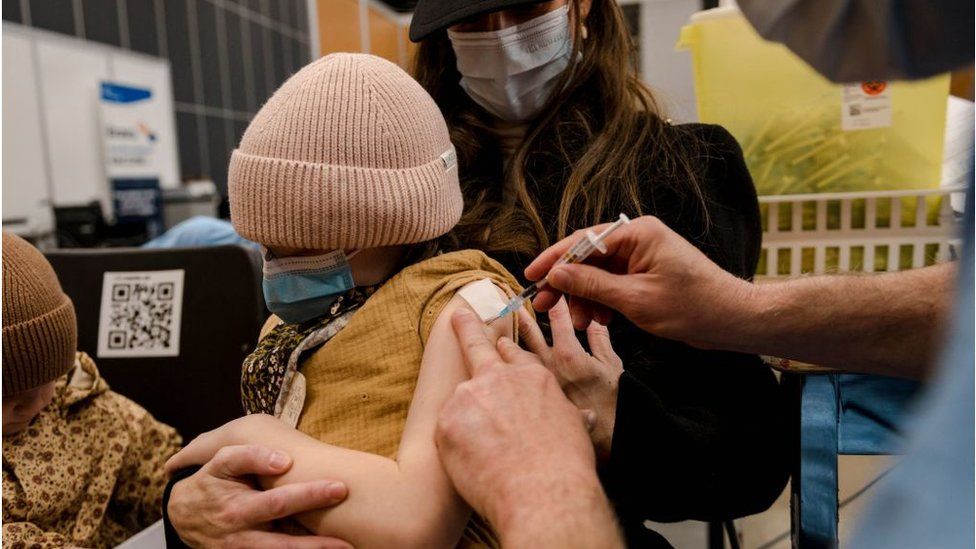
SharecloseShare pageCopy linkAbout sharingImage source, Getty ImagesThe Canadian province of Quebec will charge a health tax to residents who are not vaccinated against Covid-19.Quebec, which has seen the highest number of Covid-related deaths in Canada, is currently struggling with a surge in cases. On Tuesday, the premier announced that it would be the first in the nation to financially penalise the unvaccinated. Only about 12.8% of Quebec residents are not vaccinated, but they make up nearly a third of all hospital cases. According to federal data, just over 85% of Quebec residents had received at least one vaccine dose by 1 January. Premier Francois Legault said during a news conference that people who have not received their first dose of vaccine will have to pay a “contribution”. The fee has not yet been decided, but will be “significant”, he said. “I think right now it’s a question of fairness for the 90% of the population who made some sacrifices,” Mr Legault said. “I think we owe them this kind of measure.”Last week, the province announced that it would require proof of vaccination to shop in government cannabis and liquor stores. A curfew is also in place, the second one of the pandemic, running from 22:00 to 05:00 each day.On Tuesday, Quebec’s death toll from Covid reached 12,028. It comes after 62 deaths were recorded in the previous 24-hour period. The daily figure represents a similar rate to January 2021, before widespread vaccinations had begun in the province. The percentage of Covid patients in intensive care who have not been vaccinated is 45%, provincial data shows.The premier’s press conference was attended by his interim public health director, who took over after the long-serving previous director resigned over criticism of his handling of the latest Omicron-driven surge. Hospitals in Montreal, the province’s largest city, are nearing 100% capacity and have already started limiting non-Covid related care. Over 200 members of the city’s unhoused population have also tested positive, indicating an outbreak. It comes amid a severe cold snap, which is overwhelming shelters. Quebec reported 8,710 new cases on Tuesday. The figure represents a 20% positivity rate. There are currently 2,742 Covid patients in Quebec hospitals, including 244 in intensive care. While rare, Quebec is not the only region in the world seeking to impose a financial penalty on those unwilling to get jabbed. Starting later this month, Greeks over age 60 are being required to pay a €100 (£85; C$142; $113) fine for each month that they remain unvaccinated. Singapore has required Covid patients to pay for their own medical bills if they are not vaccinated.

Read more →

Abbott BinaxNOW Detects Most Infectious Omicron Cases, Study Suggests

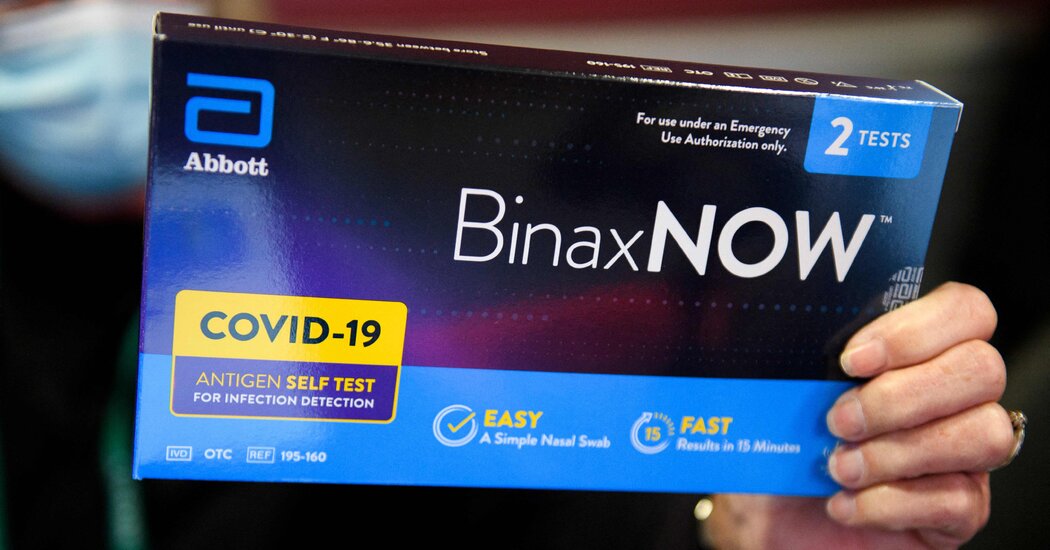
The Abbott BinaxNOW, a widely used at-home coronavirus test, can detect the vast majority of people who are infected with the new Omicron variant and are carrying high levels of the virus, according to a new, real-world study of more than 700 people who visited a walk-up testing site in San Francisco.The BinaxNOW is a rapid antigen test, which is designed to detect proteins on the outside of the coronavirus. Like all rapid antigen tests, it is less sensitive than P.C.R. tests, which can find even very small traces of the virus. But rapid antigen tests have generally been good at catching people who have high viral loads and are most likely to be infectious, although federal health officials have recently sent mixed messages about their usefulness.The new study, which has not yet been reviewed by experts, found that overall, the BinaxNOW detected 65 percent of the infections identified via P.C.R. testing, but 95 percent of people who had the highest viral loads. Among those who had high levels of the virus, the tests caught 98 percent of those with symptoms and 90 percent of those without symptoms, the researchers found.The test’s performance was roughly on par with what the scientists had observed in prior real-world studies, before Omicron emerged, they said.“It’s working as it was designed,” said Joseph DeRisi, a biochemist at the University of California, San Francisco, and co-president of the Chan Zuckerberg Biohub and an author of the paper. “There does not seem to be any performance deficit with Omicron.”The findings come after some preliminary studies raised questions about whether rapid antigen tests might be less sensitive for Omicron than for other variants — and whether saliva samples might be a better way to detect the variant than the nasal swabs currently used in antigen tests.At a Senate hearing on the federal coronavirus response on Tuesday, Dr. Janet Woodcock, the acting commissioner of the Food and Drug Administration, said that scientists were still trying to determine how well the currently authorized at-home tests work for the new variant.“We believe all of them detect Omicron,” she said. “We simply feel they are somewhat less sensitive than they were to some of the previous variants.”The new research, which relied on nasal swabs, does not address how early in the course of an infection the antigen tests can detect the variant, as one small previous study did, or whether the tests would perform better with saliva samples. And the results cannot be extrapolated to other antigen tests, which need to be evaluated individually, the researchers cautioned.But they suggest that one widely used test — the BinaxNOW — should still be able to pick up most infectious Omicron cases.“This tool continues to be very important,” said Dr. Diane Havlir, an infectious disease physician specialist at the University of California, San Francisco, and an author of the paper.The Coronavirus Pandemic: Key Things to KnowCard 1 of 5The latest Covid data in the U.S.

Read more →
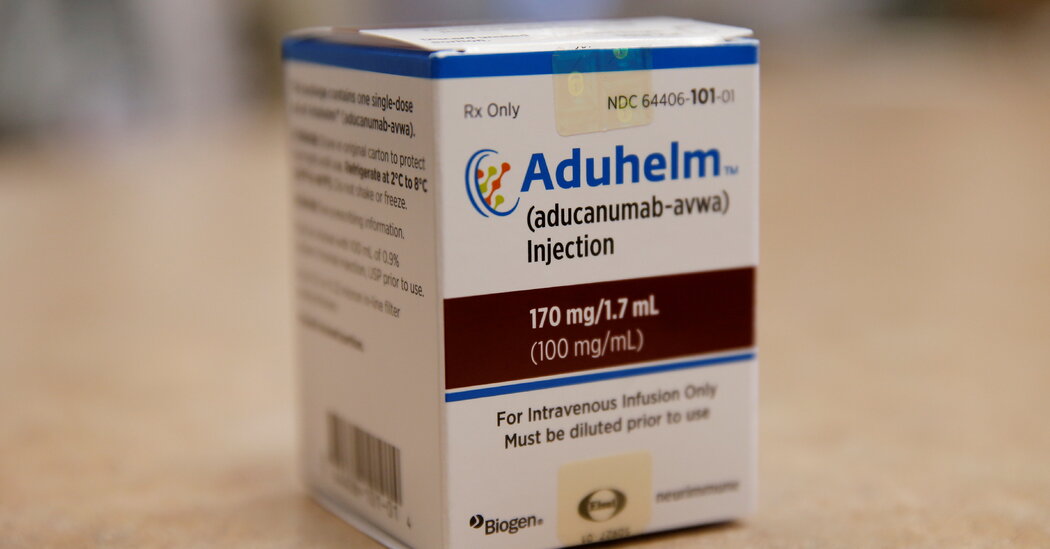
Medicare Proposes to Cover Aduhelm Only for Patients in Clinical Trials

If the preliminary decision is finalized this spring, it would sharply limit the number of patients who use the expensive drug.Medicare officials have decided that the federal health insurance program should only cover the controversial new Alzheimer’s drug Aduhelm for patients who are participating in approved clinical trials. The preliminary decision, reached after lengthy deliberations, was released on Tuesday by the Center for Medicare and Medicaid Services, or C.M.S. If it is finalized later this year, it would significantly limit the number of patients who could use the expensive drug.The decision said that coverage should be provided for patients in “C.M.S. approved randomized controlled trials” and trials supported by the National Institutes of Health. The decision said “all trials must be conducted in a hospital-based outpatient setting.”The agency added that Aduhelm of other similar drugs for Alzheimer’s that are provided outside of these trials “are nationally non-covered.”“Alzheimer’s disease is a devastating illness that has touched the lives of millions of American families. Throughout this National Coverage Determination process, CMS has been and remains committed to providing the American public with a clear, trusted, evidence-based decision that is made only after a thorough analysis of public feedback on the benefits and risks of coverage for Medicare patients,” said the C.M.S. administrator, Chiquita Brooks-LaSure. “C.M.S. has proposed an evidence-based coverage policy after experts reviewed all relevant publicly available evidence and feedback received from stakeholders.”Whether Medicare ends up covering Aduhelm is considered pivotal to the future of the drug, which is made by Biogen and priced at $28,200 a year per patient. Roughly 80 percent of the 1.5 million Americans who have the type of condition the F.D.A. approved the drug to treat — mild Alzheimer’s-related cognitive decline — are old enough to receive coverage under Medicare.For the next 30 days, C.M.S. will have a public comment period on the preliminary decision, and the agency is expected to announce its final decision about covering the drug by mid-April.The fact that Medicare is conducting an extensive review of Aduhelm is itself unusual. The program almost always pays for F.D.A.-approved drugs, at least for the medical conditions designated on their label, health policy experts said.Biogen initially priced the drug at $56,000 a year, but slashed the price in half last month after months of weak sales. Before Biogen’s price cut, Medicare’s actuarial division, acting without knowing what the coverage decision would be, imposed one of the biggest-ever increases in Medicare Part B premiums for 2022, partly driven by the possibility of Aduhelm coverage.After Biogen’s price cut, advocacy groups for Alzheimer’s patients urged C.M.S. to lower the premium increase. On Monday, the secretary for health and human services, Xavier Becerra, said that he was instructing C.M.S. to re-examine the premium hike “given the dramatic price change of the Alzheimer’s drug, Aduhelm.”Aduhelm was approved by the Food and Drug Administration in June in a decision vigorously criticized by many doctors and Alzheimer’s experts because clinical trial results showed it had significant safety risks and unclear benefit to patients.Congress is investigating whether the F.D.A. worked too closely with Biogen and why Aduhelm was approved despite strong objections from some senior F.D.A. officials and the agency’s independent advisory committee.So far, only a small number of patients — a fraction of the number Biogen and industry analysts had initially expected — have used Aduhelm, a monoclonal antibody administered as a monthly infusion. Many large American health care systems have declined to offer the drug, citing questions about its benefits and risks. Medicare officials are supposed to determine coverage based on whether a drug is a “reasonable and necessary” treatment, a phrase that usually “means adequate evidence of improved health outcomes,” said Dr. Sean Tunis, a former official with C.M.S. who is now a senior fellow at the Center for the Evaluation of Value and Risk in Health at Tufts Medical Center.Medicare’s decision on Aduhelm will also establish standards for evaluating several similar Alzheimer’s drugs in the pipeline.The F.D.A. itself acknowledged in its approval of Aduhelm that there was insufficient evidence it would help patients. Instead, it greenlighted the medication — the first new treatment for Alzheimer’s in 18 years — under a program called “accelerated approval,” which allows authorization of unproven drugs for serious diseases with few treatment options if the drug affects a biological mechanism in a way considered “reasonably likely to predict clinical benefit.”The F.D.A. said it based accelerated approval on Aduhelm’s reduction of a protein, called amyloid, that clumps into plaques in the brains of people with Alzheimer’s. But many Alzheimer’s specialists say that extensive research has shown little evidence that reducing amyloid slows cognitive decline. The F.D.A. also required Biogen to conduct another clinical trial to determine if the drug provided any evidence of benefit. In the years it will take for that trial to be completed, Aduhelm will be available to patients.

Read more →

New knowledge about the 'happiness hormone' dopamine

New findings provide a better understanding of how the synthesis of dopamine is regulated in the brain. It may shed new light on the mechanism behind diseases such as Parkinson’s.
In our brain, there are billions of nerve cells that talk to each other using signaling substances called neurotransmitters. One of these neurotransmitters is dopamine, known to many as one of the happiness hormones. In addition to giving us a sense of reward and satisfaction, dopamine is also important for motor control, concentration, learning and attention. The importance of dopamine becomes very clear in patients with Parkinson’s disease. In the brains of these patients, cells that synthesize and secrete dopamine die. These cells are called dopaminergic neurons and act as small dopamine factories. The mental and physical symptoms in Parkinson’s patients only occur when about half of these cells are gone. This means that the disease is not discovered until a lot of damage has occurred. One of the goals of research on the brain’s dopamine system is to find out how Parkinson’s and related diseases can be detected at an earlier stage.
“In this way, you can find drugs that can prevent the disease from developing further,” says researcher Marte Innselset Flydal, at the Department of Biomedicine, University of Bergen.
Understand how dopamine regulates its own production
Enzymes are proteins that act as catalysts for chemical reactions in the body. The three-dimensional structure of the enzymes is absolutely essential for their activity and regulation. Inside the dopamine-producing cells, there are large amounts of an enzyme called tyrosine hydroxylase (TH).
“Such 3D structures can tell us how the cellular processes take place at the atomic level and thus also how we can find targeted treatment to correct errors in enzymes, which, for example, occur by disease mutations. For TH, such mutations cause TH deficiency, a neurological disease classified as a subgroup of parkinsonism,” says Professor Aurora Martinez, at the Department of Biomedicine, UiB.

Read more →

Study identifies predictors of severe outcomes in children with COVID-19

A new international study offers a clearer picture of the impact of COVID-19 infection and the risk of severe outcomes on young people around the world.
The study was co-led by a team of researchers from the University of Calgary’s Cumming School of Medicine (CSM), Ann & Robert H. Lurie Children’s Hospital of Chicago, and University of California-Davis Medical Center. It followed more than 10,300 children at 41 emergency departments in 10 countries including Canada and the United States, Italy, Spain and Australia.
Researchers followed more than 3,200 children who visited hospital emergency departments and tested positive for COVID-19. Approximately three percent (107 total) of those diagnosed with COVID-19 experienced severe outcomes within two weeks of their visit to an emergency room. In addition, 23 percent (735 total), were hospitalized for treatment. Severe outcomes included cardiac or cardiovascular complications, such as myocarditis (inflammation of the heart), as well as neurologic, respiratory, or infectious problems. Four children died. The study was published in JAMA Network Open.
“The study sought to quantify the frequency of and risk factors for severe outcomes in children with COVID-19,” says study co-lead Dr. Stephen Freedman, MD, a pediatrician and professor at the CSM. “We found that older age, having a pre-existing chronic condition and symptom duration were important risk factors for severe outcomes.”
Researchers also found children deemed healthy at an initial emergency department visit rarely deteriorated significantly after the first visit.
“Fortunately, the risk of developing severe disease in children with COVID-19 discharged from the emergency department is very low,” says study co-lead Dr. Todd Florin, MD, MSCE, director of Research in Emergency Medicine at Ann & Robert H. Lurie Children’s Hospital of Chicago and associate professor of Pediatrics at Northwestern University Feinberg School of Medicine. “Our findings can provide reassurance to parents and clinicians for children well enough to be managed in the community, while also providing important insights on which children may be at particular risk for severe outcomes.”
Although asthma has previously been suggested as a risk factor for severe outcome, this study was not able to confirm a link. It also did not find that very young infants were at a higher risk for severe outcomes.
“With emergency departments across the world seeing an influx of patients due to the COVID-19 pandemic and stressing capacity, this study will help address the surge by providing an estimate of the risk among pediatric COVID-19 patients screened in an emergency department,” said Dr. Nathan Kuppermann, MD, MPH, chair of Emergency Medicine at University of California Davis Medical Center and co-lead of the study. “It will support emergency physicians triage of pediatric patients more efficiently by knowing who has risk factors for severe outcomes and focus advanced level care to those who do.”
The study occurred within the Pediatric Emergency Research Network, a global consortium of the world’s major pediatric emergency care research networks. It received support from the Canadian Institutes of Health Research, Alberta Innovates, Alberta Health Services and the University of Calgary. It also received COVID grant funding from the University of California Davis, Cincinnati Children’s Hospital Medical Center and Ann and Robert H. Lurie Children’s Hospital of Chicago. Dr. Anna Funk, PhD, an epidemiologist and UCalgary postdoctoral fellow, was lead author of the study.
“There are no specific evidence-based treatments and therapies for children at this time and detailed research data describing outcomes in young people with COVID-19 has been lacking, so this study offers important insights that we believe will be helpful into front-line care providers treating children with COVID-19,” adds Freedman.
Story Source:
Materials provided by University of Calgary. Original written by Kyle Marr, Cumming School of Medicine. Note: Content may be edited for style and length.

Read more →