Study identifies mutations specific to Omicron variant

While the Omicron variant continues to infect people around the world, researchers at the University of Missouri have identified the highly prevalent, specific mutations that are causing the Omicron variant’s high rate of infection.
The findings help explain how the new variant can escape pre-existing antibodies present in the human body, either from vaccination or naturally from a recent COVID-19 infection.
“We know that viruses evolve over time and acquire mutations, so when we first heard of the new Omicron variant, we wanted to identify the mutations specific to this variant,” said Kamlendra Singh, a professor in the MU College of Veterinary Medicine, assistant director of the MU Molecular Interactions Core and Bond Life Sciences Center investigator.
Singh collaborated with Saathvik Kannan, a freshman at Hickman High School in Columbia, Missouri, and Austin Spratt, an undergraduate student at MU, and Sid Byrareddy of the University of Nebraska Medical Center, to analyze protein sequences of Omicron samples from around the world, including South Africa, Botswana and the United States. The team identified 46 highly prevalent mutations specific to Omicron, including several located in the region of the virus’ spike protein where antibodies bind to the virus in order to prevent infection.
“The purpose of antibodies is to recognize the virus and stop the binding, which prevents infection,” Singh said. “However, we found many of the mutations in the Omicron variant are located right where the antibodies are supposed to bind, so we are showing how the virus continues to evolve in a way that it can potentially escape or evade the existing antibodies, and therefore continue to infect so many people.”
As antiviral treatments for individuals infected with COVID-19 continue to be developed, Singh explained that having a better understanding of how the virus is evolving will help ensure future antiviral treatments will be targeted toward the specific parts of the virus to produce the most effective outcomes.
In a recent trip to his native India, Singh met with Manish Sisodia, the deputy chief minister of Delhi, to discuss the launch of CoroQuil-Zn, a supplement that can be taken while infected with COVID-19 to help reduce one’s viral load. The supplement, which Singh helped to develop, is now being used by patients in Tamil Nadu, a state in India. The manufacturer will soon seek FDA approval for its distribution in the United States.
“The first step toward solving a problem is getting a better understanding of the specific problem in the first place,” Singh said. “It feels good to be contributing to research that is helping out with the pandemic situation, which has obviously been affecting people all over the world.”
“Omicron SARS-CoV-2 variant: Unique features and their impact on pre-existing antibodies” was recently published in Journal of Autoimmunity. Funding for the study was provided by the Bond Life Sciences Center, the National Institute of Allergy and Infectious Diseases and the National Strategic Research Institute at the University of Nebraska. Siddappa Byrareddy of the University of Nebraska Medical Center, Hitendra Chand of Florida International University and Kalicharan Sharma of Delhi Pharmaceutical Sciences and Research University were co-authors on the study.
Story Source:
Materials provided by University of Missouri-Columbia. Note: Content may be edited for style and length.

Read more →

Booster jab gives 90% Covid protection, study says

SharecloseShare pageCopy linkAbout sharingImage source, Getty ImagesBooster doses of the Pfizer and Moderna vaccines offer improved protection against hospitalisations due to Covid-19 variants, new studies show.Data released on Friday by the US Centres for Disease Control found that a third dose of either vaccine is more than 90% effective against both the Delta and Omicron variants.The effectiveness of only two doses was found to wane to 57% after six months.US officials have pleaded with the public to get boosted when eligible.According to the CDC study, vaccine effectiveness against hospitalisation after two doses was 90% until six months after the second dose but fell to 81% afterwards.Two weeks after the third dose, however, effectiveness against hospitalisation rose to 94%.During the more recent surge in Omicron cases, the rate of effectiveness after two doses stood at 81% from the two weeks to six month-mark, before falling to 57%. Two weeks after the booster, effectiveness rose to 90%.The CDC study was based on data from 88,000 hospitalisations in 10 US states.A second CDC study, also released on Friday, examined data from 25 state and local health departments and found that people with booster shots are significantly less likely to get infected with Omicron.The research found that among boosted patients, there were an average of 149 cases per 100,000 people, compared to 255 among those who had so far only had two doses.A separate study, published in the Journal of the American Medical Association, determined that the chances of contracting Covid-19 and developing symptoms was 66% lower for those who have received a booster.The spread of the Omicron variant of Covid-19 led to a record number of hospitalisations in the US. The number of hospitalised patients in the country currently stands at more than 150,000, surpassing a previous record set in January 2021.In the Northeast of the country – including New York and Washington DC – the number of hospitalisations has since fallen, leading some experts to speculate that Omicron has begun to peak in some areas. Officials warn, however, that other parts of the US may still be several weeks away from their peak.Earlier this week, US President Joe Biden was asked why the definition of ‘fully vaccinated’ had yet to be changed to mean three shots, rather than two.”You are better protected with the booster shot,” he answered. “It’s all part of the same thing.”

Read more →

Research finds patients and providers differ in opinions about immediate access to medical records

While both patients and clinicians prioritize information transparency, a 21st Century Cures Act requirement for the immediate release of test and lab results is proving more controversial, according to recently published survey results of clinicians and patients.
The study, published recently in The American Journal of Surgery, found that of the clinicians surveyed, nearly 63% agreed that immediately released results would be more confusing than helpful for patients, whereas about 16% of patients surveyed agreed with that statement.
“I think for clinicians, the concern has been that it’s going to cause stress to patients getting these really complex reports that are not written at a level that’s easy for non-medical professionals to understand,” says Laura Leonard, MD, the study’s primary author and chief resident of quality and safety for the University of Colorado Department of Surgery.
“I’ve called patients back within 20 minutes of receiving their results and they’re already down in the fine print,” adds Sarah Tevis, MD, a study co-author and an assistant professor of surgical oncology. “As clinicians, we may have just received the results ourselves, so we’re not only going through them for the first time, but trying to help patients know where to focus and to know what these results mean for them.”
Studying the impact in real time
The 21st Century Cures Act, which became law in 2016, includes a requirement that went into effect in 2021 requiring health care institutions to release all electronic health information (EHI) to patients immediately.

Read more →

In Science, small groups create big ideas

In research and development, new topics are always emerging, maturing, and converging. Some of them quietly fade away, but others become the fundamental driving forces of innovation. Research organizations want to encourage the development of emerging topics, but small groups of scientists can find it risky to spend time on an unproven approach. Even if a new topic turns out to be important, it might be co-opted by larger research groups with more resources, which may discourage some researchers from exploring them further.
However, it is exactly these small groups that are more likely to discover emerging topics, according to researchers from the University of Tsukuba in a study recently published in Scientometrics. The researchers clustered PubMed data and keywords to identify past and current emerging topics in life science and medicine. They then looked at how individual researchers engaged with these topics using author lists of related articles published between 1970 and 2018.
“We specifically keyed in on when researchers first started to focus on specific research keywords that later became emerging keywords,” explains Professor Ryosuke Ohniwa, lead author of the study. “We also followed their activities afterwards.”
They found that the number of authors per article has increased, particularly since 2000. They also found that, over the past 40 years, emerging keywords tend to be generated by a small pool of authors who repeatedly publish on those topics. After the 1990s, smaller teams with fewer publications were key in generating topics that included high-performance emerging keywords, and since 2002, teams who have generated such keywords often continue to report progress on the same topic.
“Many of these changes happened around the time the Human Genome Project was completed,” says Ohniwa. Until the late 1990s, interesting and novel findings could be generated by the identification and manipulation of genes. By contrast, in the modern “post-genomic era,” there is a greater focus on studies that re-analyze old topics using newly developed methods such as computational techniques, large-scale analyses, and nano-scale analyses, which require more researchers.
One interpretation of the team’s findings is that small and large research teams have different roles to play in the development of new ideas in science. Although large groups have many benefits, Professor Ohniwa stresses that it remains important to retain small research groups to generate and nurture emerging topics, which ultimately drive innovation in research.
Story Source:
Materials provided by University of Tsukuba. Note: Content may be edited for style and length.

Read more →

Reinterpreting our brain's body maps

Our brain maps out our body to facilitate accurate motor control; disorders of this body map result in motor deficits. For a century, the body map has been thought to have applied to all types of motor actions. Yet scientists have begun to query how the body map operates when executing different motor actions, such as moving your eyes and hands together.
A recent research paper by Professor Kazumichi Matsumiya from Tohoku University’s Graduate School of Information Sciences has revealed that the body relies on multiple maps based on the choice of motor system.
Details of his research were published in the journal Proceedings of the National Academy of Sciences on January 19, 2022.
Patients with motor dysfunction have abnormalities in their hands and feet that are felt in the brain. Traditional rehabilitation takes in to account the physical dysfunctions. But recovery of the neurological aspects is not visible and subjective.
To reveal more behind our body map, Matsumiya organized an experiment where participants were instructed to point to various parts of their right hand with the index finger on their left hand whilst simultaneously following with their eyes. This enabled him to measure the mind’s perception of the right hand for the eyes and the left hand movements.
Even though the eye and the left hand were pointing to the same spots, the imaging from the pointing was more distorted, demonstrating the existence of a separate body map.
Matsumiya expects his findings to contribute to the development of new diagnostic techniques for motor dysfunction. “Today, Japan’s population is aging rapidly, so we are experiencing a sharp increase in the number of patients with motor dysfunctions. Better understanding of how patients’ bodies are perceived by their minds will help to build a more effective rehabilitation technique.”
Story Source:
Materials provided by Tohoku University. Note: Content may be edited for style and length.

Read more →

Late-life exercise shows rejuvenating effects on cellular level

For people who hate exercising, here comes some more bad news: it may also keep you younger. Not just looking younger, but actually younger, on an epigenetic level. By now, the benefits of exercise have been well established, including increased strength of bones and muscles, improved mobility and endurance, and lower risk of heart disease, diabetes and high blood pressure.
But younger?
A study recently published in Aging Cell, “Late-life exercise mitigates skeletal muscle epigenetic aging,” suggests this could be the case. The paper was written by a team of seven researchers across three institutions, including Kevin Murach, an assistant professor in the Department of Health, Human Performance and Recreation at the U of A. Murach’s grant from the National Institute of Health funded the study, and he was one of three co-first authors.
Bootcamp for Mice
While the paper is dense with data, reflecting the use of several analytic tools, the experiment that generated the data was relatively straightforward. Lab mice nearing the end of their natural lifespan, at 22 months, were allowed access to a weighted exercise wheel. Generally, mice require no coercion to run and will do so voluntarily. Older mice will run anywhere from six to eight kilometers a day, mostly in spurts, while younger mice may run up to 10-12 kilometers. The weighted wheel ensured they built muscle. While there isn’t a direct analogue to most human exercise routines, Murach likened it to “a soldier carrying a heavy backpack many miles.”
When the mice were studied after two months of progressive weighted wheel running, it was determined that they were the epigenetic age of mice eight weeks younger than sedentary mice of the same age — 24 months. Murach noted that while the specific strain of mice and their housing conditions can impact lifespans, “historically, they start dropping off after 24 months at a significant rate.” Needless to say, when your lifespan is measured in months, an extra eight weeks — roughly 10 percent of that lifespan — is a noteworthy gain.

Read more →

COVID virus linked with headaches, altered mental status in hospitalized kids

Of hospitalized children who tested or were presumed positive for SARS-CoV-2, 44% developed neurological symptoms, and these kids were more likely to require intensive care than their peers who didn’t experience such symptoms, according to a new study led by a pediatrician-scientist at UPMC and the University of Pittsburgh School of Medicine.
The most common neurologic symptoms were headache and altered mental status, known as acute encephalopathy. Published in Pediatric Neurology, these preliminary findings are the first insights from the pediatric arm of GCS-NeuroCOVID, an international, multi-center consortium aiming to understand how COVID-19 affects the brain and nervous system.
“The SARS-CoV-2 virus can affect pediatric patients in different ways: It can cause acute disease, where symptomatic illness comes on soon after infection, or children may develop an inflammatory condition called MIS-C weeks after clearing the virus,” said lead author Ericka Fink, M.D., pediatric intensivist at UPMC Children’s Hospital of Pittsburgh, and associate professor of critical care medicine and pediatrics at Pitt. “One of the consortium’s big questions was whether neurological manifestations are similar or different in pediatric patients, depending on which of these two conditions they have.”
To answer this question, the researchers recruited 30 pediatric critical care centers around the world. Of 1,493 hospitalized children, 1,278, or 86%, were diagnosed with acute SARS-CoV-2; 215 children, or 14%, were diagnosed with MIS-C, or multisystem inflammatory syndrome in children, which typically appears several weeks after clearing the virus and is characterized by fever, inflammation and organ dysfunction.
The most common neurologic manifestations linked with acute COVID-19 were headache, acute encephalopathy and seizures, while youths with MIS-C most often had headache, acute encephalopathy and dizziness. Rarer symptoms of both conditions included loss of smell, vision impairment, stroke and psychosis.
“Thankfully, mortality rates in children are low for both acute SARS-CoV-2 and MIS-C,” said Fink. “But this study shows that the frequency of neurological manifestations is high — and it may actually be higher than what we found because these symptoms are not always documented in the medical record or assessable. For example, we can’t know if a baby is having a headache.”
The analysis showed that neurological manifestations were more common in kids with MIS-C compared to those with acute SARS-CoV-2, and children with MIS-C were more likely than those with acute illness to have two or more neurologic manifestations.
According to Fink, the team recently launched a follow up study to determine whether acute SARS-CoV-2 and MIS-C — with or without neurologic manifestations — have lasting effects on children’s health and quality of life after discharge from hospital.
“Another long-term goal of this study is to build a database that tracks neurological manifestations over time — not just for SARS-CoV-2, but for other types of infections as well,” she added. “Some countries have excellent databases that allow them to easily track and compare children who are hospitalized, but we don’t have such a resource in the U.S.”
This study was partly funded by the Neurocritical Care Society Investing in Clinical Neurocritical Care Research (INCLINE) grant.
Other researchers who contributed to the study include Courtney L. Robertson, M.D., Johns Hopkins Children’s Center; Mark S. Wainwright, M.D., Ph.D., University of Washington and Seattle Children’s Hospital; Juan D. Roa, M.D., Universidad Nacional de Colombia and Fundación Universitaria de Ciencias de la Salud; Michelle E. Schober, M.D., University of Utah, and other GCS-NeuroCOVID Pediatrics investigators who are listed in the paper.

Read more →

People who are depressed may be more susceptible to misinformation about COVID-19 vaccines

A general bias toward negativity — or the tendency to focus on negative rather than positive information — may exacerbate the spread of misinformation. Because depression may contribute to such negativity bias, a team led by investigators at Massachusetts General Hospital (MGH) examined whether people who experience depressive symptoms may be more receptive to misinformation related to COVID-19 vaccines. Their findings are published in JAMA Network Open.
“One of the notable things about depression is that it can cause people to see the world differently — sort of the opposite of rose-colored glasses. That is, for some depressed people, the world appears as a particularly dark and dangerous place,” says lead author Roy H. Perlis, MD, MSc, associate chief of research in the Department of Psychiatry and director of the Center for Quantitative Health at MGH. “We wondered whether people seeing the world this way might also be more susceptible to believing misinformation about vaccines. If you already think the world is a dangerous place, you might be more inclined to believe that vaccines are dangerous — even though they are not.”
To investigate, Perlis and his colleagues examined responses from 15,464 adults from all 50 U.S. states and Washington, D.C., who completed an internet survey between May and July 2021 that included statements related to COVID-19 vaccines after answering a questionnaire that measured depressive symptoms.
The team found that levels of depression are at least three times higher than what they were before the COVID-19 pandemic. Participants with moderate or greater major depressive symptoms on the initial questionnaire were more likely to endorse at least one of four false statements about COVID-19 vaccines on the subsequent survey, and those who endorsed these statements were less likely to be vaccinated. Specifically, the presence of depression was associated with a 2.2-times higher likelihood of endorsing misinformation, and respondents endorsing at least one misinformation statement were half as likely to be vaccinated and 2.7 times more likely to report vaccine resistance.
Perlis and his colleagues also analyzed data from the subset of 2,809 respondents who answered a subsequent survey two months later. Those with depression in the first survey were twice as likely as those without depression to endorse more misinformation than they did in the prior survey.
“While we can’t conclude that depression caused this susceptibility, looking at a second wave of data at least told us that the depression came before the misinformation. That is, it wasn’t that misinformation was making people more depressed,” Perlis notes. Because the study also included questions about social media and news sources, the investigators were also able to exclude the possibility that the effect of depression was a result of getting news from different places. They also found that the effect was not limited to people with particular political beliefs or members of particular demographic groups.
The researchers note that the findings provide an additional motivation to ensure that people have access to treatment for depression and anxiety. “Our result suggests that, by addressing the extremely high levels of depression in this country during COVID, we might decrease people’s susceptibility to misinformation,” says Perlis. “Of course, we can only show an association — we can’t show that the depression causes? the susceptibility, but it’s certainly suggestive that it might.”
Perlis stresses that the results in no way blame misinformation on people with depression but rather suggest that depression may cause people to be more vulnerable to believing this misinformation.
Co-authors include Katherine Ognyanova, PhD, Mauricio Santillana, PhD, Jennifer Lin, BA, James Druckman, PhD, David Lazer, PhD, Jon Green, PhD, Matthew Simonson, PhD, Matthew A. Baum, PhD, and John Della Volpe, BA.
This study was supported by the National Science Foundation, the National Institute of Mental Health, Northeastern University, Harvard Kennedy School of Government, and Rutgers University.

Read more →

Preoperative shear wave elastography helps predict rotator cuff repair, study finds

According to an article in ARRS’ American Journal of Roentgenology (AJR), preoperative shear wave elastography (SWE) can play a complementary role with existing imaging as a prognostic marker for achieving successful rotator cuff repair.
Noting that SWE-derived elasticity is higher in patients with insufficient rotator cuff repair, “elasticity ratio independently predicted insufficient repair,” wrote corresponding author Eun Kyung Khil of Hallym University Dongtan Sacred Heart Hospital in Korea.
From May 2019 to January 2021, Khil’s team prospectively studied 74 patients (37 men, 37 women; mean age, 63.9 years) who underwent rotator cuff repair, including preoperative shoulder MRI and investigational shoulder ultrasound using SWE. The researchers measured mean elasticity of the supraspinatus and trapezius muscles, then calculated the elasticity ratio between the two.
Ultimately, preoperative elasticity ratio of the supraspinatus muscle — determined via SWE — was significantly higher in patients with insufficient rather than sufficient repair (3.66 vs. 1.83) and predicted insufficient repair (odds ratio=15.6) independently of tear size and muscle characteristics assessed by MRI and grayscale ultrasound.
Having measured SWE values in the supine position, rather than in a sitting position, to decrease tone, stiffness, and gravitational load of the trapezius muscle, “future studies are warranted to assess for differences in SWE values between the two positions,” the authors of this AJR article acknowledged.
Story Source:
Materials provided by American Roentgen Ray Society. Note: Content may be edited for style and length.

Read more →

Booster Shots Instrumental in Fighting Omicron, C.D.C. Data Show

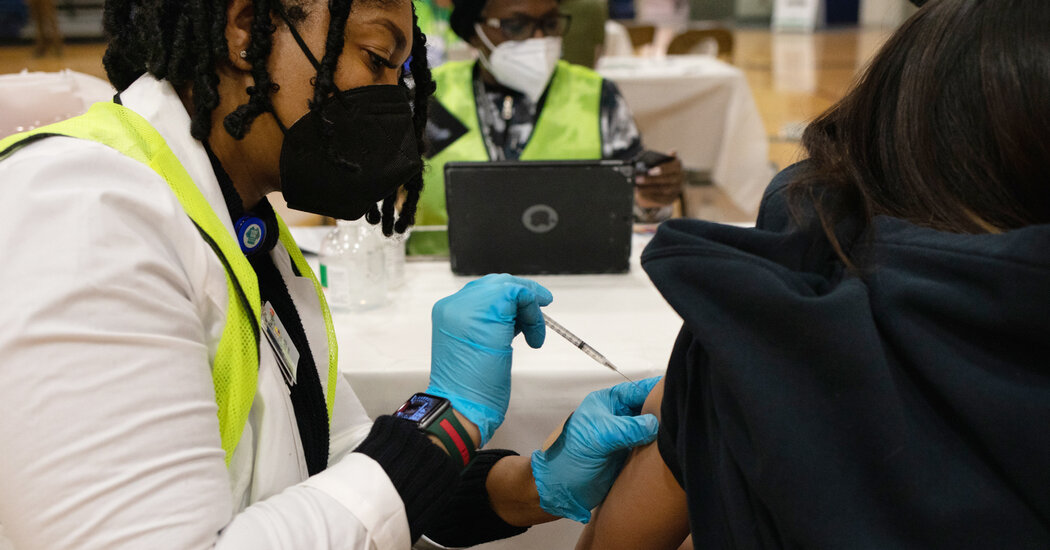
Booster shots of the Pfizer-BioNTech and Moderna vaccines aren’t just preventing infections with the contagious Omicron variant — they’re also keeping infected Americans from ending up in the hospital, according to data published on Friday by the Centers for Disease Control and Prevention.The extra doses are 90 percent effective against hospitalization with the variant, the agency reported. Booster shots also reduced the likelihood of a visit to an emergency department or urgent care clinic. The extra doses were most effective against infection and death among Americans aged 50 and older, the data showed.Over all, the new data show that the vaccines were more protective against the Delta variant than against Omicron, which lab studies have found is partially able to sidestep the body’s immune response.It is generally accepted that booster shots keep people from becoming infected, at least for a while. Data from Israel and other countries have also suggested that boosters can help prevent severe illness and hospitalization, especially in older adults.“Data from other countries have also shown significant benefit of getting the booster, but this is really showing it in the U.S.,” Akiko Iwasaki, an immunologist at Yale University, said of the figures released on Friday. “These numbers should be very convincing.”On Thursday night, the C.D.C. published additional data showing that in December, unvaccinated Americans 50 years and older were about 45 times more likely to be hospitalized than those who were vaccinated and got a third shot. Yet less than 40 percent of fully vaccinated Americans who are eligible for a booster shot have received one.

Read more →