China Holds the Line on ‘Zero Covid,’ but Some Wonder for How Long
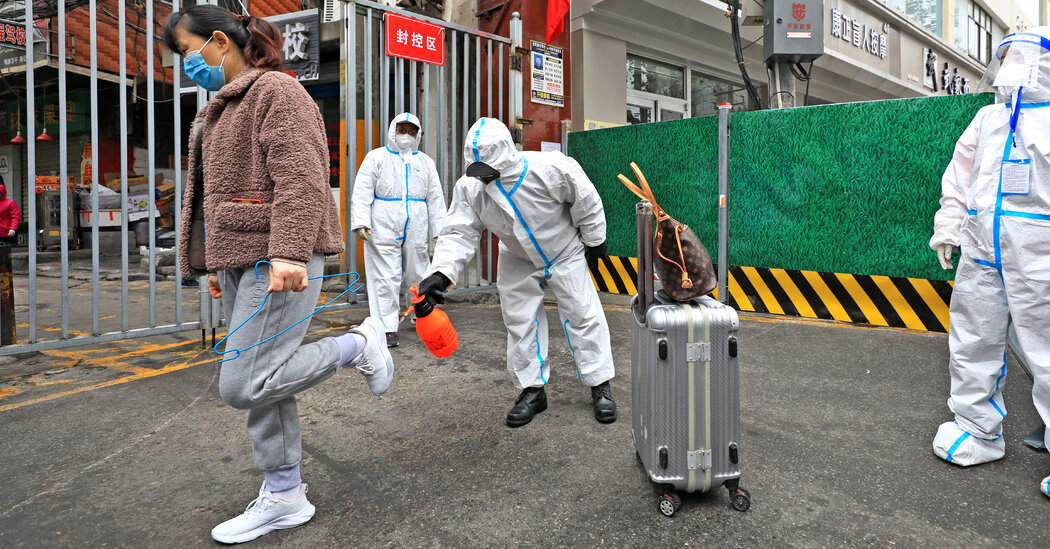
More people are being caught up in the country’s virus-control dragnet. Some think the no-tolerance policy is unsustainable.In a glitzy Shanghai shopping district, about 40 people who happened to be at a Uniqlo store were informed that they would be spending the night there. A suspected Covid case had been traced to the shop.Elsewhere in the same city, Anna Rudashko was told to return to an office building she had visited for a meeting the day before. She spent 58 hours there with more than 200 strangers, waiting for test results.Across China, in Shaanxi Province, Zhao Xiaoqing was on a second date, visiting a man at his parents’ home, when the local authorities locked down the neighborhood. She quarantined with them for nearly 30 days. (Fortunately, she said, “I got along well with his family.”)China, which has largely kept the coronavirus at bay since 2020, is going to ever more extreme lengths to quell outbreaks that have proliferated around the country in recent weeks, and a growing number of people are finding their lives suddenly upended as a result.At least 20 million people in three cities were under full lockdown as recently as last week, and many more cities across the country have been subjected to partial lockdowns and mass testing. During the past month, at least 30 major Chinese cities have reported locally transmitted Covid cases.The case numbers themselves are minuscule by global standards, and no Covid deaths have been reported in China’s current wave. On Friday, the health authorities reported a total of 23 new locally transmitted cases in five cities.But many cases have involved the highly transmissible Omicron variant, and with each passing day, the government’s dogged pursuit of “zero Covid” is looking harder to achieve. Many wonder how long it can be maintained without causing widespread, lasting disruptions to China’s economy and society.“At this point, it’s really almost like a last-ditch, or certainly very stubborn and persistent, effort to stave off the virus,” said Dali Yang, a professor of political science at the University of Chicago. “They are really stuck.”So far, the leadership has only doubled down on its strategy — which relies on mass testing, stringent border controls, extensive contact tracing and snap lockdowns — to extinguish nascent outbreaks.Adding to the sense of urgency, 24 locally transmitted cases have been discovered in Beijing, where the Winter Olympics are set to open in two weeks. Several neighborhoods have been sealed off, and the authorities have stepped up testing requirements for entering and leaving the capital. Officials said this week that Olympics tickets would not be sold to the public because of concerns about the virus.A private testing site in Beijing this week. Kevin Frayer/Getty ImagesThe authorities have suggested that the first Omicron case in Beijing may have come from a package in Canada. They have since called on people across China to use caution when opening mail from overseas. In Beijing, mail is being subjected to at least four rounds of disinfection, even though experts say the risk of contracting the virus from surfaces, especially paper or cardboard, is very low.Sorting packages at a logistics center in Xi’an. Chinese officials have said the virus can be spread by mail, though experts say that is unlikely.Liu Xiao/Xinhua, via Getty Images“It sounds unlikely to me, but I wouldn’t say it’s impossible,” said Ben Cowling, an epidemiologist at the University of Hong Kong. “I would certainly suggest that the authorities keep looking in case there’s other things that could maybe explain it.”Chinese officials previously pushed the conspiracy theory that the virus had been brought to Wuhan, where it first emerged, by American military personnel. More recently, the central government blamed local officials in Xi’an for disruptions of food supplies and medical care when the city of 13 million was locked down in December.“Beijing is finding it increasingly difficult to defend its Covid-zero policy,” said Lynette H. Ong, a professor of political science at the University of Toronto. “The costs are rising so high that they are starting to put the blame not only on local officials, but also on foreigners — it’s never the central policymakers’ fault.”Government and community workers prepared to distribute groceries to Xi’an residents. Roy Stone/Future Publishing, via Getty ImagesMany in China support the zero-Covid strategy, which may have saved hundreds of thousands of lives and which has allowed most people to live fairly normally during the pandemic. But the recent outbreaks have led to frustration and grumbling as more and more people have been caught up in the virus-control dragnet.This month, Lilian Lin, 29, was forced to suspend her modest online business selling basic goods like towels and stationery after she was locked down in her apartment in the northern city of Tianjin over a cluster of cases in the neighborhood.To make matters worse, going home for the upcoming Lunar New Year holiday looks increasingly unlikely: Restrictions have also been imposed in her hometown, the central city of Zhengzhou.“I know others have it worse,” said Ms. Lin, who had been in her apartment for more than 10 days and counting, with only her plants for company. “But I’m so tired of the endless lockdowns.”Lining up for testing in Tianjin, a port city near Beijing. China Daily, via ReutersIn Xi’an and other cities, officials said this week that restrictions would soon be eased because case numbers were falling. But in the longer term, there is concern that China, the last major country to hold fast to a zero-Covid strategy, may have backed itself into a corner.While more than 80 percent of the population — over 1.2 billion people — has had at least two vaccine doses, most received Chinese-made vaccines, which studies have found to provide little defense against Omicron infections. Experts speculate that China’s leaders may be holding out for a more effective vaccine or therapeutic, or waiting for a milder strain of the virus to emerge.Until then, analysts say, the increasing complaints are unlikely to persuade Beijing to change its Covid policy. Eurasia Group, a consultancy, recently put China’s zero-tolerance strategy at the top of its list of political risks for the year, suggesting that it would ultimately backfire for the country and roil the global economy.The Coronavirus Pandemic: Key Things to KnowCard 1 of 4Omicron in retreat.

Read more →

Vegan Travel: It’s Not Fringe Anymore

From Mexico to Greece, plant-centric hotels, restaurants and tours are proliferating.When she went vegan about four years ago, Colleen Corbett, a bartender based in Tampa, Fla., thought she might starve or be forced to eat meat when traveling abroad. Instead, it was just the beginning of her explorations of the burgeoning vegan destinations that have flourished around the world.“It’s changed how I make my bucket list,” she said in an interview between trips to Peru in December and Dublin in March. “It used to be just scenic stuff. Now, I find myself adding cities I wouldn’t have had an interest in before, but have booming vegan scenes. I just added Warsaw.”While vegans and vegetarians are minorities in the United States, a growing number of people are more interested in reducing their meat consumption, often for environmental reasons, as livestock operations significantly produce climate-disruptive methane gas.The travel industry is countering with plant-centric hotels, restaurants, festivals and tours as veganism becomes increasingly associated with sustainable travel, and not just during what some people are calling Veganuary, an annual January campaign to highlight the plant-based diet in the month traditionally associated with good intentions.“Collectively, we’re far more aware of the planetary impacts of food than we were even five years ago,” said Justin Francis, the co-founder and chief executive of Responsible Travel, a sustainability-focused tour operator, which has seen demand for its vegan trips quadruple in the past decade. “As more people switch to planet-friendly diets, travel is responding to that.”The Anse Chastenet resort in St. Lucia offers vegan cooking classes, a vegan restaurant and an on-site craft brewery that produces vegan beers.Anse ChastenetFavoring plantsVegan diets consist exclusively of plant-based foods, excluding meat as well as animal-derived foods such as eggs, dairy products and honey.It’s hard to say how many vegans exist in the United States. A 2019 survey by Ipsos Retail Performance found that 9.7 million Americans were vegan compared to about 300,000 15 years before. However, a 2018 Gallup poll found the 5 percent of Americans who said they were vegetarian and the 3 percent who said they were vegan were little changed from 2012.Still, many are eating greener. In a 2019 Nielsen survey, 62 percent of Americans said they were willing to reduce meat consumption based on environmental concerns. Many have satisfied their carnivorous cravings with fake meats by brands like Beyond Meat and Impossible Foods. The nonprofit Good Food Institute, which promotes alternative proteins, said 2020 was a record year for investment in alternatives at $3.1 billion, more than three times the $1 billion invested in 2019.“Never before has the demand for plant-based fine dining been as popular,” said Joan Roca, the founder and chief executive of Essentialist, a members-only travel-planning service company, referencing Eleven Madison Park, the lauded New York City restaurant that went vegan last year. She expects “environmentally conscious dining” to grow in 2022.The Koukoumi Hotel in Mykonos offers a vegan restaurant, coconut-fiber mattresses and plant-based massage oils.Stavros Habakis/Koukoumi Hotel Vegan bed and boardHotels are rolling out the plant-based welcome mat with vegan menus and interior design.Vegan restaurant additions span the range of lodgings, from Marriott Bonvoy’s Aloft Hotels — which recently added vegan and vegetarian breakfast items in its grab-and-go lobby markets at more than 150 North American hotels — to the high-end Peninsula Hotels, which will launch a new wellness initiative in March, including plant-based dishes as well as sleep-promoting aromatherapy.Some used the pandemic hiatus of 2020 to turn over a new leaf, so to speak, including Andaz Mayakoba resort on Mexico’s Riviera Maya, which introduced VB, short for vegan bar, serving rice ball salads and Chaya leaf wraps beside the beach.Since 2017, when it hired the vegan chef Leslie Durso, the Four Seasons Resort Punta Mita in Mexico has been accommodating an expanding range of diets. She now offers more than 200 vegan menu items and creates dishes based on guest allergies and dietary restrictions.The udon noodle bowl at Four Seasons Resort Punta Mita in Mexico.Four Seasons Resort Punta Mita“Instead of dealing with this as an afterthought, we are providing a safe place for travelers to relax and unwind that has already anticipated their needs,” she wrote in an email.Menus aren’t the only vegan aspects of hotels in the animal-free vanguard. Rooms are going vegan with plant-based amenities and interior design.On Mykonos, in Greece, Koukoumi Hotel opened in 2020 with a vegan restaurant, a spa that uses only plant-based massage oils and rooms furnished with vegan mattresses made with coconut fiber. In the United Arab Emirates, the 394-room Emirates Palace, Abu Dhabi plans to open two vegan rooms in February with vegan mini-bars and room service.In London, among its 292 rooms, Hilton London Bankside offers a vegan suite built with plant-based materials, including bamboo flooring and pineapple-based plant-leather cushions. A pillow menu offers down-free stuffing options such as buckwheat and millet and vegan snacks fill the minibar. Guests have designated plant-leather seating in the restaurant.“People love it because we take it so seriously,” said James Clarke, the general manager of the hotel, adding that “it’s not cheap,” running upward of $800 a night.Many new vegan hotels tend to be high-end, such as the all-inclusive Palmaia — The House of Aia in Playa del Carmen, Mexico, where all the food is vegan and the furnishings are leather- and feather-free (doubles start around $900 a night).At the all-inclusive Palmaia — The House of Aia in Playa del Carmen, Mexico, all the food is vegan and the furnishings are leather- and feather-free.Palamaia-The House of AiaVegan activities have grown at Anse Chastanet Resort on St. Lucia, which added a vegan restaurant four years ago. Its vegan chef offers Rastafarian Creole cooking classes, which are vegan. Chocolate-making classes produce vegan bars and an on-site craft brewery uses fruit and cassava in its vegan beers.Karolin Troubetzkoy, the co-owner of the resort, compared having vegan options to maintaining eco-centric operations. “A certain percent of travelers check, and vegan is the same thing,” she said. “A small percent say they come here because you have a vegan restaurant, but that will grow,” she added, noting the resort recently held a vegan wedding for 24 people.Chick-pea fritters with mango chutney at the Anse Chastenet resort in St. Lucia.Anse Chastenet No more French fries for dinnerFor travelers who don’t want to research each meal, vegan tour operators and travel agents offer the assurance that they will be able to maintain their diets and eat well, particularly abroad.Last year, Responsible Travel added roughly 1,000 vegan-friendly trips as part of its commitment to becoming “nature positive,” a vow to not harm wildlife or habitats but leave them more protected and supported, by 2030.Its vegan-only vacations include a 10-day vegan tour of Ethiopia (from roughly $2,300; prices exclude flights), seven days of hiking volcanoes in Guatemala (from about $1,360) and eight days of snowshoeing in Austria (from about $1,160).“I think this decade we’ll see travel companies not just improve in catering to veganism, but actively working to offer the best food and experiences,” Mr. Francis of Responsible Travel said.Brighde Reed and Sebastien Ranger were disappointed with expensive plates of pasta with tomato sauce and a lack of soy milk on the breakfast buffet at high-end hotels, experiences that helped guide their company World Vegan Travel, which offers trips including gorilla safaris in Rwanda and villa-based tours of Tuscany.“When 20 people are coming for three nights, hotels are more likely to make an effort than they are for one person,” Ms. Reed said.Leslie Lukas-Recio, a former food importer who lives in Portland, Ore., was experienced at traveling abroad when she joined a World Vegan trip to Alsace, France, in 2018.“If you want to experience the culture or focus on the outdoors, the last thing you want to worry about is trying to find something that isn’t French fries and a green salad,” she said.Donna Zeigfinger, the owner of Green Earth Travel and a co-founder of a vegan travel summit running online through Jan. 30, said the diet has become much more mainstream in the more than 30 years she’s been organizing vegan travel.“There are countries I started going to in the 80s that I thought wouldn’t do vegan that are now some of the top vegan countries,” she said, citing Spain and France. “The joke used to be, you’d show up at the French border and show your vegan passport and they’d turn you away.”For her vegan clients, Ms. Zeigfinger makes sure hotels know they are vegan and gets them to swap out feather bedding. For Heidi Prescott, a client and frequent cruiser based in North Potomac, Md., the notification often triggered a shipboard letter from the culinary staff requesting a meeting.“I always hated meeting with the chef,” Ms. Prescott said. “I would eat around it.”Now, there is much more vegan variety at sea — Regent Seven Seas Cruises offers more than 200 plant-based dishes and Virgin Voyages has a plant-focused restaurant aboard its ship, Scarlet Lady — and the letters have stopped. Last fall, Ms. Prescott sailed with Oceania Cruises around the Baltic Sea, her 11th cruise with the line, which carries staples like cashew cheese and identifies vegan choices on pasta and grain-bowl bars.Paul Tully, a vegan and the chief executive of Better Safaris, organizes vegan-friendly sustainable trips to Africa, where he said it’s relatively easy to eat vegan.“Surprisingly, it’s been the airlines which appear to be slow on this uptick in veganism, many still offering extremely bland food and limited options for vegans,” he wrote in an email.In Tel Aviv, Eager Tourist offers vegan culinary tours that visit food markets, farmers and restaurants.Eager TouristVegan-friendly destinationsDestinations, by contrast, are keen to trumpet their vegan cred. The tourism office in Virginia said visitors spend an average of more than five minutes on pages related to vegetarian and vegan content at its Virginia.org website, almost two minutes more than for general travel content.Through Jan. 30, the global fair Expo 2020 Dubai is holding what it calls the Middle East’s first vegan food festival. In September, the tour operator Vegan Travel Asia by VegVoyages is planning what it calls the first vegan festival in the Himalayan region, taking place in Nepal and Bhutan with panel discussions, cooking workshops and a Vegan Village of more than 100 exhibitors.Big cities have long been vegan refuges. Happycow, a digital platform for vegan dining, ranks London as the top city globally for vegan dining with more than 150 vegan restaurants, followed by New York, Berlin, Los Angeles and Toronto.But veganism is becoming easier to find in more rural areas — Argyll, in western Scotland, has a new vegan trail connecting vegan cafes and inns — and in smaller cities like Boise, Idaho, home to a vegan food truck, soul food restaurant, tattoo shop and dining tour.Dining tours have flourished from Greenville, S.C. to Scottsdale, Ariz. as ways to introduce vegan visitors to local options. In Tel Aviv, Eager Tourist began offering vegan culinary tours that visit food markets, farmers and restaurants in 2019.“To be honest, it’s more interesting than a non-vegan tour,” said Ross Belfer, a partner in the company, who is an American living in Israel. “What Israelis can do with a vegetable is rather unparalleled, in my humble opinion.”Elaine Glusac writes the Frugal Traveler column. Follow her on Instagram @eglusac.Follow New York Times Travel on Instagram, Twitter and Facebook. And sign up for our weekly Travel Dispatch newsletter to receive expert tips on traveling smarter and inspiration for your next vacation.

Read more →

Tonga: International aid efforts ramp up for tsunami-hit nation

SharecloseShare pageCopy linkAbout sharingImage source, NZ DEFENCE FORCEAid is trickling into Tonga from around the world, as more governments deploy ships and flights to the country following Saturday’s volcanic eruption.The underwater explosion triggered tsunami waves across the Pacific, killing at least three people in Tonga.It caused significant damage and crippled communications – the true extent of the damage is still unknown.A New Zealand vessel which is expected to arrive on Friday is the first major supply ship. The captain of the HMNZS Aotearoa had earlier told news site Reuters that the ship was carrying 250,000 litres of water, along with other supplies. The UN says clean water supplies are the top priority for the Pacific nation. Australia has deployed its largest ship, the HMAS Adelaide, which set off for Tonga on Friday. The vessel can carry helicopters which can be deployed from the ship to bring supplies to Tonga’s smaller outer islands. That vessel is due to arrive mid-next week. The UK also announced on Friday it was also redeploying its HMS Spey to the Tongan response and had sent aid supplies ahead with the Australian ship.”The UK will work closely with Australia and New Zealand to assist the recovery effort in Tonga and stands ready to support our long-standing Commonwealth partner,” said UK Defence Minister Ben Wallace.

Read more →

Oral immunotherapy induces remission of peanut allergy in some young children

A clinical trial funded by the National Institutes of Health has found that giving peanut oral immunotherapy to highly peanut-allergic children ages 1 to 3 years safely desensitized most of them to peanut and induced remission of peanut allergy in one-fifth. The immunotherapy consisted of a daily oral dose of peanut flour for 2.5 years. Remission was defined as being able to eat 5 grams of peanut protein, equivalent to 1.5 tablespoons of peanut butter, without having an allergic reaction six months after completing immunotherapy. The youngest children and those who started the trial with lower levels of peanut-specific antibodies were most likely to achieve remission. The results of the trial, called IMPACT, were published today in the journal The Lancet.
“The landmark results of the IMPACT trial suggest a window of opportunity in early childhood to induce remission of peanut allergy through oral immunotherapy,” said Anthony S. Fauci, M.D., director of the National Institute of Allergy and Infectious Diseases (NIAID), part of NIH. “It is our hope that these study findings will inform the development of treatment modalities that reduce the burden of peanut allergy in children.” NIAID sponsored the trial and funded it through its Immune Tolerance Network.
Peanut allergy affects about 2% of children in the United States, or nearly 1.5 million individuals ages 17 years and younger. The risk of a life-threatening allergic reaction to accidentally eaten peanut is significant for these children, most of whom remain peanut-allergic for life.
When designing the study, the IMPACT trial investigators reasoned that because oral immunotherapy has the potential to change the immune system, providing peanut oral immunotherapy early in life, when the immune system is still maturing, might modify a child’s immune response to peanut. Two previous studies provided proof of concept that peanut oral immunotherapy could be given safely to very young children and have a therapeutic effect.
Nearly 150 children ages 1 to 3 years participated in the IMPACT trial at five academic medical centers in the United States. Only children who had an allergic reaction after eating half a gram of peanut protein (about 1.5 peanuts) or less were eligible to join the study. The children were assigned at random to receive either flour containing peanut protein or a placebo flour of similar appearance. The flours were mixed with foods such as applesauce or pudding to help mask their taste. No one except a site pharmacist and a site dietician knew who received peanut flour or placebo flour until all the data were gathered and study visits had ended.
During a 30-week period, the children in the treatment group ate gradually escalating daily doses of up to 2 grams of peanut protein, equivalent to about six peanuts. The children then continued to consume their daily dose of peanut or placebo flour for an additional two years.

Read more →

Coronavirus: Austrian parliament approves mandatory vaccination order

SharecloseShare pageCopy linkAbout sharingImage source, Getty ImagesAustria has moved closer to introducing a compulsory vaccination order after parliament’s lower house voted in favour of new government proposals. The law, which is due to come into effect on 1 February, would make Austria the first European country to introduce a mandatory jab. From mid-March the law will see adults unvaccinated against Covid-19 subjected to fines of up to €3,600 (£2,994). So far, 72% of Austrians have been fully vaccinated against the virus. The bill must now pass the upper house and be signed into law by President Alexander Van der Bellen, steps largely expected to be formalities.The vaccine order is expected to remain in force until January 2024, with the government investing €1.4bn in measures designed to encourage unvaccinated people to come forward for the jab. Addressing lawmakers on Thursday afternoon, Health Minister Wolfgang Mueckstein called the measure a “big, and, for the first time, also lasting step” in Austria’s fight against the pandemic.Chancellor Karl Nehammer told reporters ahead of the vote that vaccines were “an opportunity for our society to achieve lasting and continuous freedom, because the virus cannot restrict us any further”. A majority of MPs, including those from Mr Nehammer’s governing centre-right coalition and the three main opposition parties, backed the bill, by 137 votes to 33. The far-right Freedom Party, which has courted the votes of Austria’s substantial anti-vaccine minority, has taken a stand against the bill. Its leader, Herbert Kickl, said the mandate “paves the way to totalitarianism in Austria” and vowed he would continue to refuse vaccination in defiance of the new law.Image source, Getty ImagesSince authorities announced they intended to introduce the mandate in November the capital, Vienna, has seen regular protests, with some numbering over 40,000 people.The demonstrations have attracted a coalition of anti-vaccine campaigners and far-right extremists, and authorities have warned that they have been radicalising in recent weeks, with new “protective zones” declared around healthcare facilities and vaccination centres to protect workers. Similar vaccine mandates are being introduced in several other countries, including in Greece, where jabs are now obligatory for everyone aged 60. In neighbouring Germany, the new government led by Chancellor Olaf Scholz has said it will introduce a vaccination bill in the Bundestag in March. Mandatory vaccinations: Three reasons for and againstWatch: Ros Atkins on… Compulsory Covid vaccinationsWhy mandatory vaccination is nothing newAustria’s move comes as some European countries begin to tenuously loosen restrictions introduced to tackle the highly infectious Omicron variant. In the UK, Prime Minister Boris Johnson has announced the end of mandatory face coverings in public places and Covid passports on 26 January. Mr Johnson also suggested that the government intended to end the legal requirement for people who tested positive for Covid to self-isolate – and replace it with advice and guidance at the end of March. The Irish government also looks set to end a raft of coronavirus restrictions introduced over the Christmas period, including rules mandating the closure of hospitality settings by 20:00.And in the Netherlands 30 mayors, including Femke Halsema in Amsterdam, have urged Prime Minister Mark Rutte to curb tough restrictions amid a fall in hospitalisations and deaths. This video can not be playedTo play this video you need to enable JavaScript in your browser.

Read more →

New MRI expands access to life-saving imaging

New MRI technology, developed by Siemens in collaboration with researchers at The Ohio State University College of Medicine and College of Engineering, will expand imaging access for patients with implanted medical devices, severe obesity and claustrophobia. The Ohio State University Wexner Medical Center is the first in the United States to install this recently FDA-approved full body MRI for patient care. The technology uses a lower magnetic field to open up new possibilities for imaging the lungs and patients with implanted devices and will potentially support new interventional procedures that could result in less radiation exposure.
The 0.55T MAGENTOM Free.Max features the largest MRI opening to date, 80 cm compared to the typical 60-70 cm, and a lower magnetic field strength that offers the potential for it to be used for lung imaging without X-ray radiation. MRI uses a powerful magnetic field and radio waves to produce detailed images of a patient’s body to help diagnose conditions, plan treatments and determine the effectiveness of previous treatments. MRI is used predominantly to image the brain, spine and joints but can also be used to image the heart and blood vessels. Today’s clinical MRIs usually have magnetic field strengths of 1.5 or 3.0 Tesla, whereas the Free.Max is much lower at 0.55 Tesla.
“Many of our patients have pacemakers or defibrillators and while many of those devices are now safe for MR scanning, the metal in them can distort the magnetic field and corrupt the image quality. We were looking for ways to improve the quality of images in these patients, and lower magnetic field strength could offer an advantage. The problem with low field MRI is that there is less signal to work with, and we needed to find ways to boost that signal,” said Orlando Simonetti, research director of cardiovascular magnetic resonance, professor of Internal Medicine and Radiology and John W. Wolfe professor in cardiovascular research.
Simonetti teamed up with Rizwan Ahmad, an assistant professor of biomedical engineering at Ohio State, to develop techniques that could suppress noise, or interference in the images, and produce clearer images at lower field strength. They shared their ideas and techniques with Siemens, leading to development of the 0.55T Free.Max scanner.
“There’s no doubt in my mind that low-field MRI will play an important role in the future and will become more mainstream,” Simonetti said. “Going to lower field can reduce the cost of MRI systems and installation considerably, and with modern techniques for scanning and image processing, we can overcome the inherent loss of signal.”
Ohio State researchers have partnered with Nationwide Children’s Hospital to study use of the 0.55T with heart catherization. Children with congenital heart disease must undergo repeated heart catheterizations throughout their lives, and they are exposed to radiation every time they have an X-ray to guide the tube through a blood vessel to the heart.

Read more →

Researchers highlight COVID-19 neurological symptoms and need for rigorous studies

SARS-CoV-2 was initially identified as a respiratory virus, but it can affect the entire body, including the nervous system. In a new Viewpoint published in Science, Avindra Nath, M.D., clinical director of the National Institutes of Health’s National Institute of Neurological Disorders and Stroke (NINDS), and Serena Spudich, M.D., Yale School of Medicine, New Haven, Connecticut, highlight what is currently known about the effects of SARS-CoV-2 on the brain, the importance of increased research into the underlying causes of Long Covid and possible ways to treat its symptoms.
Neurological symptoms that have been reported with acute COVID-19 include loss of taste and smell, headaches, stroke, delirium, and brain inflammation. There does not seem to be extensive infection of brain cells by the virus, but the neurological effects may be caused by immune activation, neuroinflammation, and damage to brain blood vessels.
Acute COVID-19 infection can sometimes lead to long-lasting effects, that have collectively been termed “Long Covid,” and can include a wide variety of symptoms in the brain and nervous system that range from a loss of taste and smell, impaired concentration, fatigue, pain, sleep disorders, autonomic disorders and/or headache to psychological effects such as depression or psychosis.
Drs. Nath and Spudich outline the current scientific understanding of the potential body responses to acute COVID-19 infection and how those responses could lead to Long Covid symptoms. They also draw parallels between the symptoms experienced by individuals with Long Covid to those living with myalgic encephalomyelitis/chronic fatigue syndrome (ME/CFS) or post-Lyme disease, which suggests there could be common risk factors involved.
Finally, owing to the significant variability in symptoms from person to person and the fact that many individuals with Long Covid were healthy prior to a relatively mild COVID-19 infection, the authors highlight the urgent need for significant research efforts into identifying the full extent of Long Covid complications and their causes. This kind of research, which would include the careful study of individuals with Long Covid categorized by their specific symptoms, is crucial to the development of diagnostic and therapeutic tools to identify and treat what is becoming an ever-increasing public health concern. The NIH RECOVER COVID initiative is an ambitious research program to reach these goals.
Story Source:
Materials provided by NIH/National Institute of Neurological Disorders and Stroke. Note: Content may be edited for style and length.

Read more →

Most ‘Havana Syndrome’ Cases Unlikely Caused by Foreign Power, C.I.A. Says

A report concluded that most cases have environmental or medical causes, but the government remains focused on investigating two dozen incidents that remain unexplained.WASHINGTON — The C.I.A. has found that most cases of the mysterious ailments known as Havana syndrome are unlikely to have been caused by Russia or another foreign adversary, agency officials said, a conclusion that angered victims.A majority of the 1,000 cases reported to the government can be explained by environmental causes, undiagnosed medical conditions or stress, rather than a sustained global campaign by a foreign power, C.I.A. officials said, describing the interim findings of a comprehensive study.The C.I.A. is continuing its investigation into two dozen cases that remain unexplained. Those cases, said a U.S. official briefed on the findings, offer the greatest chance of yielding clues to whether a foreign power is responsible for some of the unexplained health incidents that have plagued American diplomats and C.I.A. personnel in Havana and Vienna, among other cities.In addition to those two dozen cases, a significant number of others remain unexplained, the official said.The idea that Russia, China or Cuba was responsible for attacking hundreds of diplomats around the world was never backed up by any evidence that the Biden administration could unearth. But the F.B.I., the Pentagon and others continue to investigate whether a foreign power was involved in a smaller number of incidents, the U.S. official said. Clusters of incidents in Havana beginning in 2016 and some in Vienna in 2021, along with other individual incidents, remain a focus of such investigations.The interim findings left many victims dissatisfied, particularly current and former officials who have been battling chronic ailments for years without being given a clear explanation. In a statement, a group of victims said the C.I.A. interim findings “cannot and must not be the final word on the matter.” The release of the findings, the victims said, was a breach of faith.“The C.I.A.’s newly issued report may be labeled ‘interim’ and it may leave open the door for some alternative explanation in some cases, but to scores of dedicated public servants, their families and their colleagues, it has a ring of finality and repudiation,” the statement said.William J. Burns, the director of the C.I.A., said the agency was pursuing a complex issue with “analytic rigor, sound tradecraft and compassion,” emphasizing that agency officers have experienced real symptoms.“While we have reached some significant interim findings, we are not done,” Mr. Burns said in a statement. “We will continue the mission to investigate these incidents and provide access to world-class care for those who need it.”The agency has never accused Russia or another power of being responsible, but some officials, particularly in the Pentagon, said they believed there was evidence of the involvement of Moscow’s spy agencies, and many victims concurred. When Mr. Burns traveled to Moscow in December to warn Russia against invading Ukraine, he raised the issue of the health incidents and said if Russia was found responsible, there would be consequences.Marc Polymeropoulos, a former C.I.A. officer who suffered Havana syndrome symptoms on a trip to Moscow in 2017, said it was critical to continue to investigate the cases that remain unexplained. Praising Mr. Burns’s efforts to improve care for injured officers, he added that the C.I.A. should not revert to a culture where victims were denigrated and dismissed.“It took us 10 years to find Osama bin Laden,” Mr. Polymeropoulos said. “I would just urge patience and continued investigation by the intelligence community and the Department of Defense.”Another victim, who asked that his name not be used because of his work for the agency, said the government had erred by pushing for more people to report ill health or unexplained symptoms. That brought in thousands of extraneous cases, the victim said, making it harder for the agency’s analysts to focus on the real cases. The government official briefed on the findings said the effort to bring in large numbers of reports was not a mistake because it allowed the United States to speed up treatment for people suffering from symptoms. The effort also helped provide needed treatment to people with previously undiagnosed conditions, officials said.C.I.A. officials said there was agreement within the intelligence community about the finding that the majority of Havana syndrome incidents were not the work of an adversarial power conducting a sustained campaign around the globe. Still, confidence in that assessment ranged from low to high across various intelligence agencies.In addition to the C.I.A., an expert panel has been looking at classified information about the incidents. The panel, which has provided its findings to the government but is still finishing its report, explored technologies that could result, at least theoretically, in the symptoms being reported.When made public, that report is expected to provide information on whether directed energy or microwaves could account for some of the unexplained incidents.A directed energy weapon remains the hypothesis that a number of victims who have studied the incidents believe is most likely. Some of these current or retired officials believe government investigators have dismissed evidence they have collected of strange sounds or electromagnetic readings.But late last year, officials said the C.I.A. had been unable to find any evidence that a directed energy device was responsible, neither intercepting communications from a foreign government that suggested the use of such a device or readings showing the presence of microwaves at the location of an incident.The Havana Syndrome MysteryCard 1 of 4What is the Havana Syndrome?

Read more →

Deborah Nickerson, Pioneering Genome Researcher, Dies at 67

Using the Human Genome Project as her guide, she helped find genes responsible for cardiovascular disease, autism and a rare disorder called Miller syndrome.Deborah Nickerson, a human genomics researcher who helped discover genes responsible for cardiovascular disease, autism and Miller syndrome, a rare condition that causes malformations of the face and limbs, died on Dec. 24 at her home in Seattle. She was 67.Her brother, William Nickerson, who is her only immediate survivor, said the cause was abdominal cancer, which had been diagnosed less than a week earlier.In her research, Dr. Nickerson employed the findings of the Human Genome Project, which completed its historic genetic sequencing of every human gene in 2003, and made them medically useful. By sequencing the genes of thousands of healthy people, she revealed how genetic variation could be used to target specific genes that cause inherited disorders.“Her imprint on genomic medicine is profound,” said Dr. Gail Jarvik, a professor of medicine and genome science at the University of Washington School of Medicine. “Her role was in really helping us understand what changes in DNA among people meant, and in identifying what gene was changed in rare diseases.”Dr. Nickerson was also a professor of genome sciences at the University of Washington and was a founder and director of one of the five clinical sites that comprise the Gregor Consortium, the successor to the Centers for Mendelian Genomics, named after Gregor Mendel, a 19th-century Austrian monk known as the father of genetics.Funded by the National Institutes of Health, the consortium seeks to identify gene mutations responsible for what are known as Mendelian disorders, in which patients have a mutation in one gene, like that for cystic fibrosis or sickle cell anemia.Working with Drs. Michael Bamshad and Jay Shendure, Dr. Nickerson found the gene for Miller syndrome, one of about 7,000 Mendelian disorders, in 2009. Dr. Francis Collins, the former director of the N.I.H. who is now a senior investigator at the National Human Genome Research Institute, a part of the N.I.H., called the discovery of the Miller syndrome gene “an explosive moment” and a “jaw-dropping” example of genome sequencing, the technique used to read all or part of a person’s genome, an organism’s complete set of DNA.“I never envisioned that we’d be able to do that in my career or lifetime,” he said in a phone interview, referring to the ability to determine a person’s illness by reading his genome.Dr. Bamshad, also by phone, said: “Debbie was instrumental in developing the technology so that we could prove it could be done on other conditions. She was a great, hard-nosed scientist passionate about the role of trainees and women in science.”The technology that Dr. Miller and her colleagues used led a year later to the discovery of genetic alterations that are responsible for Kabuki syndrome, a rare congenital disorder that causes children to be born with elongated eyes and arched eyebrows (The term derives from the appearance of actors using exaggerated makeup in Kabuki theater.)Deborah Ann Nickerson was born in Mineola, N.Y., on Long Island, and grew up in Jamaica, Queens, and West Islip, also on Long Island. Her parents, William and Josephine (Veccia) Nickerson, owned a garden center.She graduated from Adelphi University in 1974 with a bachelor’s degree in biology and received her Ph.D in immunology from the University of Tennessee. She was a postdoctoral scholar in the division of infectious diseases from 1978-79 at the University of Kentucky’s college of medicine.“I love science,” she said in a video on her university home page. “It was probably my hardest subject in school, and that’s why it drives me. You want to get better and understand more.”Starting in 1979, Dr. Nickerson spent nearly a decade teaching biology at the University of South Florida before joining the biology department at the California Institute of Technology, first as a visiting associate and then as a senior research scientist. There she worked under Dr. Leroy Hood, who led the team that invented the DNA sequencer, which made the Human Genome Project possible.She followed Dr. Hood to the University of Washington’s newly-created department of molecular biotechnology in 1992. After it merged with the university’s department of genetics in 2001, she stayed to form the department of genome sciences.Dr. Nickerson was an early adapter of technologies that made DNA sequencing less expensive; using them, she created a catalog of human genetic variation from a diverse population by sequencing the genes of more than 6,500 volunteers. She then made it available online to other researchers, who have advanced it further.She also led a group of researchers who in 2017 reported finding genetic variants among patients’ different responses to the blood thinner Warfarin, which had been a longstanding clinical problem.Dr. Nickerson’s creative, unfiltered, tenacious style served her well in advising women and underserved minorities in her field, having risen in what had been a male-dominated world; in fighting for what she wanted when applying for grants; and in dealing with the leadership of the N.I.H. and its National Human Genome Research Institute.“I was the N.H.G.R.I. director for less than an hour, and she was telling me how to do my job,” said Eric Green, who was appointed to that position in 2009. “The remarkable part is that she was almost always completely right.”Dr. Jarvik recalled how Dr. Nickerson would counsel her on seeking grant money, encouraging her to ask for more and to aim higher. “She had entrepreneurial instincts,” she said, “and she understood big opportunities.”She added, “I’m not a native risk-taker, and I’ve tried to ask myself, ‘What would Debbie do?’”

Read more →

At Sundance, Two Films Look at Abortion and the Jane Collective

In the years leading up to Roe v. Wade, a Chicago group helped thousands of women obtain the procedure safely. A documentary and a feature tell their story.Judith Arcana was 27 and recently separated from her husband when she began driving women surreptitiously for safe — but illegal — abortions. The year was 1970, she was an out-of-work teacher on the South Side of Chicago, and she was spending her days counseling women in need.“I don’t think we were crazy,” said Arcana, now 78. “I don’t think we were stupid. I think that we had found something that was so important, so useful in the lives of women and girls.”“We were radicalized in the arena of women’s bodies,” she said. “We knew that what we were doing was good work in the world. And we knew that it was illegal.”Arcana was part of the Jane Collective, a disparate, rotating group of women who ensured safe abortions for thousands of women in Chicago between 1968 and 1973. Despite the law, women were still getting abortions. But they were often performing them on themselves and winding up in the hospital, or paying the mob with no guarantee of survival.During these years, because of Arcana and other women, if you lived in Chicago and needed help, you could call a number and talk with a woman who would offer a safer alternative. Members of the collective provided counseling and arranged the procedures, which they eventually administered — 11,000 all told during that period. But then in 1972, Arcana and six other members of the group were arrested, each charged with 11 counts of abortion or conspiracy to commit an abortion with a possible 10-year sentence for each charge. Roe v. Wade, the Supreme Court decision issued in 1973, saved them all.Mugshots of members of the Jane Collective who were arrested in 1972. HBONow, close to 50 years later, members of the collective are sharing their stories in a pair of movies at the Sundance Film Festival, which begins Thursday: the HBO documentary “The Janes”; and a fictionalized account titled “Call Jane,” starring Elizabeth Banks and Sigourney Weaver, and looking for distribution.The movies are debuting at a particularly crucial time for abortion rights. The Supreme Court heard arguments in December over the legality of a Mississippi law that bans abortion after 15 weeks; it is expected to issue a decision this summer. Should the court uphold the law, the ruling would be at odds with Roe v. Wade, which declared abortion a constitutional right and forbade states from banning the procedure before fetal viability (23 weeks). The Sundance filmmakers make no secret that they support abortion rights but say they want their work to show the complexity of the subject.In “Call Jane,” Banks plays Joy, a mother and housewife who seeks out an illegal abortion after learning that her pregnancy is life-threatening — her attempt to secure one legally having been denied by an all-male hospital board. The movie’s director, Phyllis Nagy (whose credits include the screenplay for “Carol”), said she wished she could show it to the Supreme Court’s conservative justices. “I would sit there and say, ‘Now, talk to me,’ and it wouldn’t make any difference, probably,” she said. “But artists need to start having the kinds of political conversations with society that aren’t didactic,” she added. “Nothing else has worked.”Elizabeth Banks in “Call Jane,” about a woman trying to terminate a life-threatening pregnancy. Wilson Webb, via Sundance InstituteThe makers of “The Janes” hope those with differing views will allow themselves a look at life before Roe v. Wade. “This is a glimpse at history; I don’t think it’s an advocacy film,” said Tia Lessin, who directed with Emma Pildes, whose father used to be married to Arcana. Arcana’s son, Daniel, is a producer on the film. Lessin added, “It’s a real life story about what happened and the lengths that women went to to have abortions and to enable other women to have abortions.”“Do I hope that people’s takeaway will be ‘let’s not go back there’? Sure. But I really hope it moves people to engage in conversation. Love the film, hate the film,” she said before Pildes jumped in: “Talk about the issue.”And there is plenty to discuss.The Jane Collective was formed when a college student, Heather Booth, now 76, received a desperate call from a friend looking for an abortion. Booth, active in the civil rights movement, found a doctor willing to help and passed along the information. “I made what I thought was a one-time arrangement,” she said in an interview. Soon another woman called. Then another. Booth found herself negotiating fees and learning the intricacies of the procedure so she could counsel women. After a few years, Booth, by then a mother working on her graduate degree at the University of Chicago, recruited others to fulfill the growing need.“I was working full time. The number of calls were increasing. It was certainly too much for one person,” she added.Marie Leaner, now 80, was raised Roman Catholic and taught to believe that abortion was a sin. At a community center on the West Side of Chicago, she ran a program for teenage mothers. “I just thought it was atrocious that these women didn’t want to carry the babies but they felt this was their punishment for being in love or being sexually involved with someone,” she recalled. “I decided I wanted to do something about it.”She offered up her apartment for the procedures and occasionally held the hands of the women who came through. As one of the few Black women in the group, she said, “I knew that Black and brown people wouldn’t partake of the service if they couldn’t see themselves involved in it.”The State of Abortion in the U.S.Card 1 of 5Abortion at the Supreme Court.

Read more →