Feelings of fatigue predict early death in older adults

How fatigued certain activities make an older person feel can predict the likelihood death is less than three years away, according to research published today in the Journal of Gerontology: Medical Sciencesby University of Pittsburgh epidemiologists. It is the first study to establish perceived physical fatigability as an indicator of earlier mortality.
Older people who scored the highest in terms of how tired or exhausted they would feel after activities were more than twice as likely to die in the following 2.7 years compared to their counterparts who scored lower. Fatigability was assessed for a range of activities using the novel Pittsburgh Fatigability Scale.
“This is the time of year when people make — and break — New Year’s resolutions to get more physical activity,” said lead author Nancy W. Glynn, Ph.D., associate professor in the Department of Epidemiology at Pitt’s Graduate School of Public Health. “I hope our findings provide some encouragement to stick with exercise goals. Previous research indicates that getting more physical activity can reduce a person’s fatigability. Our study is the first to link more severe physical fatigability to an earlier death. Conversely, lower scores indicate greater energy and more longevity.”
Glynn and her colleagues administered the Pittsburgh Fatigability Scale to 2,906 participants aged 60 or older in the Long Life Family Study, an international study that follows family members across two generations. Participants ranked from 0 to 5 how tired they thought or imagined that certain activities — such as a leisurely 30-minute walk, light housework or heavy gardening — would make them.
Follow-up for this work concluded at the end of 2019, to avoid any increased mortality impact from the COVID-19 pandemic, which gave the team an average of 2.7 years of data on each participant. After accounting for a variety of factors that influence mortality, such as depression, pre-existing or underlying terminal illness, age and gender, the team found that participants who scored 25 points or higher on the Pittsburgh Fatigability Scale were 2.3 times more likely to die in the 2.7 years after completing the scale, compared to their counterparts who scored below 25.
“There has been research showing that people who increase their physical activity can decrease their fatigability score,” said Glynn, a physical activity epidemiologist. “And one of the best ways to increase physical activity — which simply means moving more — is by setting manageable goals and starting a routine, like a regular walk or scheduled exercise.”
Beyond tying high fatigability to an earlier death, Glynn said the study demonstrates the value of the Pittsburgh Fatigability Scale, which she and colleagues created in 2014. It has since been translated into 11 languages.
“While the Pittsburgh Fatigability Scale has been widely adopted in research as a reliable, sensitive way to measure fatigability, it is underutilized in hospital settings and clinical trials,” Glynn said. “My ultimate goal is to develop a physical activity intervention targeting a reduction in fatigability as a means to stem the downward spiral of impaired physical function common with the aging process. By reducing fatigability, one can change how they feel, potentially motivating them to do more.”
Additional authors on this research are Theresa Gmelin, M.S.W., M.P.H., Yujia (Susanna) Qiao, Sc.M., Robert M. Boudreau, Ph.D., Kaare Christensen, M.D., and Anne B. Newman, M.D., all of Pitt; Sharon Renner, Ph.D., of Columbus State University; Mary F. Feitosa, Ph.D., of Washington University in St. Louis; Stephanie Cosentino, Ph.D., of Columbia University, and Stacy L. Andersen, Ph.D., of Boston University.
This research was supported by the National Institutes of Health’s National Institute on Aging grants U01 AG023712, U01 AG023744, U01 AG023746, U01 AG023749, U01 AG023755, P01 AG08761, U19 AG063893, T32 AG000181 and K01 AG0057798.

Read more →

Cataract Surgery May Reduce Your Dementia Risk

Older adults who had cataract removal to restore their vision had a lower risk of Alzheimer’s disease and other forms of dementia.Surgery to remove cataracts, which cause the eye’s normally clear lens to become cloudy, can restore vision almost instantaneously. New research suggests cataract surgery may have another benefit as well: a reduced risk for Alzheimer’s disease and other forms of dementia.For the study, scientists looked at 3,038 men and women with cataracts who were 65 or older and free of dementia at the time of their diagnosis. Of these, 1,382 had cataract surgery, and the rest did not. All of the subjects were part of a decades-long memory study that followed them over decades.The researchers found that the overall risk for dementia was 29 percent lower in those who had cataract surgery compared with those who did not.The researchers also looked at glaucoma surgery, another type of eye operation that does not restore vision but can help prevent vision loss. It had no effect on dementia risk.The study, in JAMA Internal Medicine, adjusted for age at first diagnosis of cataracts as well as various risk factors for dementia, including few years of education, smoking, a high body mass index and hypertension. The only trait that had a bigger impact on dementia risk than cataract surgery was not carrying a gene called APOE-e4 that is linked to increased risk of Alzheimer’s disease.“The authors were incredibly thoughtful in how they approached the data and considered other variables,” said Dr. Nathaniel A. Chin, an assistant professor of medicine at the University of Wisconsin, who was not involved in the study. “They compared cataract surgery to non-vision-improving surgery — glaucoma surgery — and controlled for many important confounding variables.” Dr. Chin is the medical director of the Wisconsin Alzheimer’s Disease Research Center.“We were astounded by the magnitude of the effect,” said the lead author, Dr. Cecilia S. Lee, an associate professor of ophthalmology at the University of Washington.The authors note that this is an observational study that does not prove cause and effect. But they suggest that this may be the best kind of evidence attainable, since a randomized trial in which only some people are allowed to get cataract surgery would be both practically and ethically impossible.“People might say that those who are healthy enough to have surgery are healthier in general, and therefore less likely to develop dementia in any case,” Dr. Lee said. “But when we see no association in glaucoma surgery, that supports the idea that it isn’t just eye surgery, or being healthy enough to undergo surgery, but rather that the effect is specific to cataract surgery.”The findings bolster earlier research showing that vision loss — as well as hearing loss — are important risk factors for cognitive decline. People who have trouble seeing or hearing, for example, may withdraw from activities like exercise, social interactions, reading or intellectual pursuits, all of which are tied to a lower risk of dementia.But the researchers also suggested a possible physiological mechanism. The visual cortex undergoes changes with vision loss, they wrote in the paper, and impaired vision may lessen input to the brain, leading to brain shrinkage, also a risk factor for dementia. At least one previous study found an increase in the brain’s gray matter volume after cataract surgery.While the exact mechanism for the benefits of cataract surgery remains unknown, Dr. Lee said it’s not surprising that some of the changes we see in the eye might reflect processes in the brain. “The eye is very strongly connected to the brain,” he said. “The eye develops in utero from the brain and shares the same neural tissue. The eye in development comes out of the forebrain.”Dr. Chin said that the most important question for him going forward is what this means for doctors and patients. Doctors in primary care clinics or those who treat memory need to screen more for visual decline, he said, adding that, “We can talk to people about potential brain health improvements with cataract surgery as well as the need to address vision throughout one’s life as a means of protecting cognition.”

Read more →

Rich Countries Lure Health Workers From Low-Income Nations to Fight Shortages

Huge pay incentives and immigration fast-tracks are leading many to leave countries whose health systems urgently need their expertise.LUSAKA, Zambia — There are few nurses in the Zambian capital with the skills and experience of Alex Mulumba, who works in the operating room at a critical care hospital. But he has recently learned, through a barrage of social media posts and LinkedIn solicitations, that many faraway places are eager for his expertise, too — and will pay him far more than the $415 per month (including an $8 health risk bonus) he earns now.Mr. Mulumba, 31, is considering those options, particularly Canada, where friends of his have immigrated and quickly found work. “You have to build something with your life,” he said.Canada is among numerous wealthy nations, including the United States and United Kingdom, that are aggressively recruiting medical workers from the developing world to replenish a health care work force drastically depleted by the Covid-19 pandemic. The urgency and strong pull from high-income nations — including countries like Germany and Finland, which had not previously recruited health workers from abroad — has upended migration patterns and raised new questions about the ethics of recruitment from countries with weak health systems during a pandemic.“We have absolutely seen an increase in international migration,” said Howard Catton, the chief executive of the International Council of Nurses. But, he added, “The high, high risk is that you are recruiting nurses from countries that can least afford to lose their nurses.”About 1,000 nurses are arriving in the United States each month from African nations, the Philippines and the Caribbean, said Sinead Carbery, president of O’Grady Peyton International, an international recruiting firm. While the United States has long drawn nurses from abroad, she said demand from American health care facilities is the highest she’s seen in three decades. There are an estimated 10,000 foreign nurses with U.S. job offers on waiting lists for interviews at American embassies around the world for the required visas.Since the middle of 2020, the number of international nurses registering to practice in the United Kingdom has swelled, “pointing toward this year being the highest in the last 30 years in terms of numbers,” said James Buchan, a senior fellow with the Health Foundation, a British charity, who advises the World Health Organization and national governments on health worker mobility.“There are 15 nurses in my unit and half have an application in process to work abroad,” said Mike Noveda, a senior neonatal nurse in the Philippines who has been temporarily reassigned to run Covid wards in a major hospital in Manila. “In six months, they will have left.”As the pandemic enters its third year and infections from the Omicron variant surge around the world, the shortage of health workers is a growing concern just about everywhere. As many as 180,000 have died of Covid, according to the W.H.O. Others have burned out or quit in frustration over factors such as a lack of personal protective equipment. About 20 percent in the United States have left their jobs during the pandemic. The W.H.O. has recorded strikes and other labor action by health workers in more than 80 countries in the past year — the amount that would normally be seen in a decade. In both developing countries and wealthy ones, the depletion of the health work force has come at a cost to patient care.European and North American countries have created dedicated immigration fast-tracks for health care workers, and have expedited processes to recognize foreign qualifications.A jumble of wheelchairs and hospital beds in an empty room in a clinic outside Lusaka. João Silva/The New York TimesThe British government introduced a “health and care visa” program in 2020, which targets and fast tracks foreign health care workers to fill staffing vacancies. The program includes benefits such as reduced visa costs and quicker processing.Canada has eased language requirements for residency and has expedited the process of recognizing the qualifications of foreign-trained nurses. Japan is offering a pathway to residency for temporary aged-care workers. Germany is allowing foreign-trained doctors to move directly into assistant physician positions.In 2010, the member states of the W.H.O. adopted a Global Code of Practice on the International Recruitment of Health Personnel, driven in part by an exodus of nurses and doctors from nations in sub-Saharan Africa ravaged by AIDS. African governments expressed frustration that their universities were producing doctors and nurses educated with public funds who were being lured away to the United States and Britain as soon as they were fully trained, for salaries their home countries could never hope to match.The code recognizes the right of individuals to migrate but calls for wealthy nations to recruit through bilateral agreements, with the involvement of the health ministry in the country of origin.In exchange for an organized recruitment of health workers, the destination country should supply support for health care initiatives designated by the source country. Destination countries are also supposed to offer “learn and return” in which health workers with new skills return home after a period of time.Lillian Mwape, left, the chief nursing officer for the National Heart Hospital in Lusaka. “We are always overstretched for critical care,” she said. “You cannot just put any nurse into the operating theatre.”João Silva/The New York TimesBut Mr. Catton, of the international nurses organization, said that was not the current pattern. “For nurses who are recruited, there is no intention for them to go back, often quite the opposite: They want to establish themselves in another country and bring their families to join them,” he said.Zambia has an excess of nurses, on paper — thousands of graduates of nursing schools are unemployed, although a new government has pledged to hire 11,200 health workers this year. But it is veteran nurses such as Lillian Mwape, the director of nursing at the hospital where Mr. Mulumba works, who are most sought by recruiters.“People are leaving constantly,” said Ms. Mwape, whose inbox is flooded with emails from recruiters letting her know how quickly she can get a visa to the United States.The net effect, she said, “is that we are handicapped.”“It is the most-skilled nurses that we lose and you can’t replace them,” Ms. Mwape said. “Now in the I.C.U. we might have four or five trained critical-care nurses, where we should have 20. The rest are general nurses, and they can’t handle the burden of Covid.”Dr. Brian Sampa, a general practitioner in Lusaka, recently began the language testing that is the first step to emigrate to the United Kingdom. He is the head of a doctor’s union and vividly aware of how valuable physicians are in Zambia. There are fewer than 2,000 doctors working in the public sector — on which the vast majority of people are reliant — and 5,000 doctors in the entire country, he said. That works out to one doctor per 12,000 people; the W.H.O. recommends a minimum of one per 1,000.Twenty Zambian doctors have died of Covid. In Dr. Sampa’s last job, he was the sole doctor in a district with 80,000 people, and he often spent close to 24 hours at a time in the operating theater doing emergency surgeries, he said.The pandemic has left him dispirited about Zambia’s health system. He described days treating critically ill Covid patients when he searched a whole hospital to find only a single C-clamp needed to run oxygenation equipment. He earns slightly less than $1000 a month.Dr. Brian Sampa with his daughter, Yasa, outside his home in Lusaka. He is taking steps to emigrate to the U.K. In his last job, he was the only doctor in the district and often spent nearly 24 hours at a time in the operating room doing emergency surgeries.João Silva/The New York Times“Obviously, there are more pros to leaving than staying,” Dr. Sampa said. “So for those of us who are staying, it is just because there are things holding us, but not because we are comfortable where we are.”The migration of health care workers — often from low-income nations to high-income ones — was growing well before the pandemic; it had increased 60 percent in the decade to 2016, said Dr. Giorgio Cometto, an expert on health work force issues who works with the W.H.O.The Philippines and India have deliberately overproduced nurses for years with the intention of sending them abroad to earn and send remittances; nurses from these two countries make up almost the entire work force of some Persian Gulf States. But now the Philippines is reporting shortages domestically. Mr. Noveda, the nurse in Manila, said his colleagues, exhausted by pandemic demands that have required frequent 24-hour shifts, were applying to leave in record numbers.Yet movement across borders has been more complicated during the pandemic, and immigration processes have slowed significantly, leaving many workers, and prospective employers, in limbo.While some countries are sincere about bilateral agreements, that isn’t the only level at which recruitment happens. “What we hear time and time again is that recruitment agencies pitch up in-country and talk directly to the nurses offering very attractive packages,” Mr. Catton said.The United Kingdom has a “red list” of countries with fragile health systems from which it won’t recruit for its National Health Service. But some health workers get around that by entering Britain first with a placement through an agency that staffs private nursing homes, for example. Then, once they are established in Britain, they move over to the N.H.S., which pays better.An ultrasound technician used her cellphone to illuminate a broken machine gathering dust in a clinic in Ngwerere, Zambia.João Silva/The New York TimesMichael Clemens, an expert on international migration from developing countries at the Center for Global Development in Washington, said the growing alarm about outflows of health workers from developing countries risks ignoring the rights of individuals.“Offering someone a life-changing career opportunity for themselves, something that can make a huge difference to their kids, is not an ethical crime,” he said. “It is an action with complex consequences.”The United Kingdom went into the pandemic with one in 10 nurse jobs vacant. Mr. Catton said it some countries are making overseas recruitment a core part of their staffing strategies, and not just using it as a pandemic stopgap. If that’s the plan, he said, then recruiting countries must more assiduously monitor the impact on the source country and calculate the cost being borne by the country that trains those nurses.Alex Mulumba, the Zambian operating room nurse, says that if he goes to Canada, he won’t stay permanently, just five or six years to save up some money. He won’t bring his family with him, because he wants to keep his ties to home.“This is my country, and I have to try to do something about it,” he said.Miriam Jordan

Read more →

Tonga volcano: 84% of population affected by ash fall and tsunami

SharecloseShare pageCopy linkAbout sharingImage source, Consulate of the Kingdom of TongaThe Tongan government has said that as many as 84% of its 105,000 population had been affected by ash fall and a tsunami triggered by an underwater volcanic eruption. Tsunami waves from the volcano swept Tonga last week, destroying villages, buildings and the coast.The government did not report any deaths besides the three people known to have been killed in the tsunami.It said there were under two dozen injuries, most from Nomuka island. The three victims have been identified as Lataimaumi Lauaki a 49-year-old woman from Nomuka, Telai Tetu’ila, a 65-year-old man from Mango, and British national Angela Glover, 50, whose death was confirmed by her family last week.Tonga’s deadly tsunamiVISUAL GUIDE: How volcano’s impact spread so widelyANALYSIS: Scientists explain explosion’s ferocityVIDEO: The radio station bringing worried Tongans togetherRESPONSE: How to get aid safely into Covid-free TongaHEALTH: Warnings over danger of volcanic ashThe latest update from the Tongan authorities was shared on Monday by Australia’s diplomatic mission on the island, but dated to Friday.It noted that 62 people on Mango, one of the worst-hit islands, had to be relocated to Nomuka “after losing their homes and all of their personal belongings.” Rescuers have set up a field hospital there after the existing clinic was swept away in the tsunami. The government added however, that many of those residents may be moved again to the main island Tongatapu due to a lack of food and supplies.Water remains the key need on the islands. But officials noted that despite the ash fall, testing in recent days had cleared ground water and rainwater as safe to drink.Ships and planes carrying foreign aid have been arriving in Tonga since last week, after locals were finally able to clear the island’s only airport runway of ash.New Zealand and Australia have led the international response, using their airforce and naval carriers to make contact-less drops of supplies including water, food, hygiene kits, tents as well as water-treating and telecommunications repair equipment.The remote archipelago was cut off for five days because the explosions severed the sole fibre-optic sea cable bringing internet to the island.A patchy telephone line was restored last week, allowing “limited international phone calls”.This video can not be playedTo play this video you need to enable JavaScript in your browser.But even communication between Tongatapu, the main island, and the outer islands remains “an acute challenge”, the Tongan government statement said.They added that a ship was due to arrive this week to repair the internet cable. Firms had previously estimated the cable could take up to four weeks to repair.The arrival of foreign aid has vastly accelerated the flow of information from the stricken island.Due to Covid fears, the aid work is still all being carried out by locals through groups like the Red Cross. Tonga, which is effectively Covid-free, has requested no foreign aid workers land in the country to prevent an outbreak.But the UN’s representative in the region told the BBC that could change given the scale of damage. “It was practice in previous disasters like Cyclone Gita [in 2018], and this disaster is a lot more severe than that,” said Sione Hufanga, the UN representative in Tonga.”This is a global response that we provide humanitarian and technical support to the country affected,” he said.

Read more →

These Mothers Were Exhausted, So They Met on a Field to Scream

The pandemic has been relentless for mothers, many of whom have been stuck in an endless cycle of work and child care. Some Massachusetts mothers gathered to do something about it.In Boston, many mothers were exhausted. The pandemic had been so draining that they wanted to scream.But they had to hold it in because they had children to raise, careers to build and chores to finish. For nearly two years, they have been trapped.But on a night this month, about 20 mothers ditched their duties. They left their children and homes behind and headed to a high school football field.One by one, they emerged from the shadows and gathered at the 50-yard line.They stood in a circle under the soft lights, and for 20 glorious minutes they screamed and screamed and screamed, said Sarah Harmon, a therapist, yoga teacher and mother who organized the gathering.Their voices, which carried years of pain and rage that they could finally release, merged into an anguished chorus, according to videos of the gathering. Meghan B. Kelly/WBUR“It was so nice to feel out of control for the first time,” one mother told Ms. Harmon, who lives in Boston.One of the participants, Jessica Buckley, said many of the mothers were unaware of The New York Times’s primal scream hotline, which is available to mothers who want to yell, laugh, cry or vent for a solid minute.Ms. Harmon, 39, first held what she called a primal scream gathering last year, after her clients had suggested it. She counsels mothers who, like herself, have gone through varying stages of despair, anger and anxiety as the pandemic has lingered.Ms. Harmon, a mother of 3- and 5-year-old daughters, said that her children were driving her “absolutely nuts” during the pandemic.At the gathering on Jan. 13, which was previously reported by the radio station WBUR and The Boston Globe, she said a lot of the mothers were feeling bitter.They questioned why the pandemic was still going on and why children under 5 could not be vaccinated, said Ms. Harmon, the founder of the School of MOM, a mindfulness website for mothers. (Children under 5 have still not been approved to get a coronavirus vaccine.)That is why the gathering was so cathartic, she said. For once, the mothers could just let go.“It’s just amazing how light you can feel after you do that,” she said on Sunday. “I slept better.”At the football field, Ms. Harmon signaled the start of a new round of screaming by raising two light-up unicorn wands that belong to her daughters.The gathering, she said, unfolded in five parts, the first four of which were a normal scream, a round of swearing, a “free-for-all” of screams or shouts, and a scream in honor of the mothers who were too busy to attend.Some of the mothers put their all into the screaming, hunching over and throwing their arms back, according to videos Ms. Harmon shared.The fifth part was a contest to see who could scream the longest. The winner, who screamed for about 30 seconds, was Ms. Buckley, a 36-year-old therapist and mother of two.“I probably could’ve kept screaming,” she said on Sunday. “It’s been a really, really tough time.”She said that, as a mother of 2- and 4-year-old daughters, she felt left behind.“We’re still trying to navigate quarantines and stuff when the country seems to have moved on,” she said.She is one of millions of mothers in the United States who have confronted a mental health crisis during the pandemic. So many mothers have been brought to the breaking point as they juggle more child care and domestic work along with their own lives.Everyone has been touched by the pandemic in some way, but mothers often have no place to escape and no time to take a break, said Dr. Ellen Vora, a psychiatrist in Manhattan.Mothers, unlike their children, usually do not have the time or the space to have a meltdown, Dr. Vora said.“If you have two to three years of pent-up pressure,” she said, “going and being in a community of other moms and having a big release in the form of a scream is really healthy.”Ms. Harmon said that she had received an overwhelming response to the gathering from other mothers. Many older mothers told her they used to scream alone in a closet.But she says a new generation of mothers have normalized the frustrations of their roles — leading to screaming in an open field.Groups across Massachusetts have now invited Ms. Harmon to lead primal screams.“The scream resonated for people because it normalized their anger,” she said. “It’s been very powerful and quite healing.”

Read more →

Biden’s Pandemic Fight: Inside the Setbacks of the First Year

WASHINGTON — Dr. Rochelle Walensky was stunned. Working from her home outside Boston on a Friday night in late July, the director of the Centers for Disease Control and Prevention had just learned from members of her staff that vaccinated Americans were spreading the coronavirus.Vaccines had been the core of President Biden’s pandemic strategy from the moment he took office. But as Dr. Walensky was briefed about a cluster of breakthrough cases in Provincetown, Mass., the reality sank in. The Delta variant, which had ravaged other parts of the world, was taking hold in the United States. And being vaccinated would not, it turned out, prevent people from becoming infected with the variant or transmitting it.It was a “heart sink” moment, Dr. Walensky recalled in a recent interview. The discovery called into question the Biden administration’s almost single-minded focus on vaccination as the path out of the pandemic. And it made Mr. Biden’s July 4 message that the nation had moved “closer than ever to declaring our independence from a deadly virus” sound naïve.Mr. Biden took office last January with a 200-page coronavirus response strategy, promising a “full-scale wartime effort” rooted in science and competence. The C.D.C.’s July discovery marked the point at which the virus began ruthlessly exposing the challenges it would present to his management of the pandemic.About 17 million children between the ages of 12 and 15 became eligible for the vaccine in May.Christopher Capozziello for The New York TimesMr. Biden and his team have gotten much right, including getting at least one dose of a vaccine into nearly 85 percent of Americans 12 and older and rolling out life-saving treatments. Those achievements have put the United States in a far better place to combat the virus than it was a year ago, with most schools and businesses open and the death rate lower because the vaccine significantly reduces the chance of illness or death, even from the highly contagious Omicron variant.But an examination of Mr. Biden’s first year of fighting the virus — based on interviews with scores of current and former administration officials, public health experts and governors — shows how his effort to confront “one of the most formidable enemies America has ever faced,” as he recently described it, has been marked by setbacks in three key areas:The White House bet the pandemic would follow a straight line, and was unprepared for the sharp turns it took. The administration did not anticipate the nature and severity of variants, even after clear warning signals from the rest of the world. And it continued to focus almost single-mindedly on vaccinations even after it became clear that the shots could not always prevent the spread of disease.The administration lacked a sustained focus on testing, not moving to sharply increase the supply of at-home Covid tests until the fall, with Delta tearing through the country and Omicron on its way. The lack of foresight left Americans struggling to find tests that could quickly determine if they were infected.The president tiptoed around an organized Republican revolt over masks, mandates, vaccine passports and even the vaccine itself, as he worried that pushing certain containment measures would only worsen an already intractable cultural and political divide in the country. The nation’s precarious economic health, and the political blowback that Mr. Biden and members of his party could face if it worsened, made him all the more cautious. So rather than forcing Americans to get shots, he spent months struggling to accomplish it through persuasion.Mr. Biden took over the task of distributing vaccines from former President Donald J. Trump, and by all accounts he brought order to a rollout that had been dysfunctional and chaotic in its first month.But he also inherited a bureaucracy that had been battered by the Trump White House, which undermined the C.D.C., strained the government’s credibility with the public and helped foment virulent anger throughout the country over masks, social distancing and other efforts to contain the virus. Mr. Biden has been unable to bridge those divisions.A memorial in Washington representing each American death from Covid-19.Stefani Reynolds for The New York TimesTwo years into the pandemic, even as the Omicron variant has begun to recede in parts of the country, Mr. Biden is facing huge economic and political pressures. He has rejected lockdowns, school closures or other extreme measures that could help contain future mutations but drive the country back into a punishing recession. His decisions will carry a cost no matter which way he turns.Mr. Biden has battled the virus while also trying to make headway on other priorities: a bipartisan infrastructure deal, appointments to the federal bench and far-reaching social spending legislation. In August and September, as Delta surged, the White House was consumed by a chaotic exit from America’s 20-year war in Afghanistan.But the pandemic loomed over everything, dragging down Mr. Biden’s approval ratings as his handling of it became for many the measuring stick by which to judge his presidency. Since he was inaugurated on Jan. 20 last year, 438,110 people have died from the virus, a number that is still increasing by more than 10,000 people every week.“You cannot fight today’s pandemic,” said Dr. Luciana Borio, a former acting chief scientist of the Food and Drug Administration who advised Mr. Biden’s transition team. “You have to prepare for what’s next.”Dr. Rochelle Walensky, the C.D.C. director, was brought on by Mr. Biden to restore faith in an agency that had been battered by his predecessor. Stefani Reynolds for The New York Times‘No Policy’On March 2, officials from the C.D.C. and other agencies held a conference call to discuss creating a federal “passport” to enable airlines, restaurants and other venues to electronically verify vaccination status.A 27-page presentation prepared for the meeting underscored how critical the issue was: “A chaotic and ineffective vaccine credential approach could hamper our pandemic response by undercutting health safety measures, slowing economic recovery and undermining public trust and confidence.”But within weeks, public health officials began hearing a different message from the White House, where Mr. Biden and his team were wary of Republican politicians like Gov. Ron DeSantis of Florida, who railed against such passports as “completely unacceptable.”“The policy is no policy” was the unofficial word from the White House, one federal health official recalled.The scientists at the C.D.C. dismantled their working group, ceding to a patchwork of state and private efforts to track inoculations and the paper coronavirus vaccination record cards that can be lost or counterfeited.Vaccines had been the core of Mr. Biden’s pandemic strategy from the moment he took office.James Estrin/The New York TimesBy the summer, Mr. Biden’s push to get Americans vaccinated was stalling and a chorus of voices inside and outside the government was urging him to mandate the shots.Public health experts insisted that pleading with people to get vaccinated was not enough. But most Republican governors fiercely opposed vaccine requirements, and some asserted their own considerable power to prevent schools and businesses in their states from putting them in place.The president believed federal vaccine mandates would backfire, according to several of his advisers. He shut down the idea of requiring domestic airline passengers to be vaccinated, which Dr. Anthony S. Fauci, Mr. Biden’s chief medical adviser for the pandemic, has supported.Even more modest initiatives drew instant attacks. In early July, when the administration announced an enhanced door-to-door outreach campaign to get Americans vaccinated, Representative Jim Jordan of Ohio, a Trump ally and a frequent Biden critic, was among the many Republicans who pounced.“The Biden Administration wants to knock on your door to see if you’re vaccinated,” he tweeted. “What’s next? Knocking on your door to see if you own a gun?”Nurses in Mountain Home, Ark., moved a patient with complications from Covid-19 in July.Erin Schaff/The New York TimesThe Arrival of DeltaThroughout the spring, Mr. Biden was relentlessly hopeful, even as ominous signs loomed.Scientists, including some in the federal government, warned that the world was caught in a sprint between vaccines and variants — and the virus was winning. In India, the newly arrived Delta variant pushed Covid cases from 10,000 per day in February to 414,000 in a single day in May. Weeks later, Delta cases spiked across England, too.But the president and his team thought the United States would be spared Delta’s ravages, Dr. Fauci said, because the “vaccine push would be able to, for the most part, nullify a Delta surge.” At the White House, Jeffrey D. Zients, Mr. Biden’s pandemic czar, was counting on it.“The important thing was that the vaccines worked,” he recalled in an interview.In mid-May, Dr. Walensky added to the sense of optimism with an announcement that caught much of the country by surprise: Vaccinated Americans could take their masks off with little to no risk of spreading the virus, she said.Jeffrey D. Zients, the White House’s Covid-19 coordinator, and  Dr. Anthony S. Fauci, Mr. Biden’s chief medical adviser for the pandemic, speaking to reporters.Pete Marovich for The New York TimesMr. Biden, Mr. Zients and others in the White House were ecstatic, even as they worried the public would be confused by the sudden change. Being able to drop masks indoors could mean a huge economic boost, a psychological reprieve for the public and an opportunity to ease the fierce cultural battles over Covid.But three weeks after Mr. Biden declared on July 4 that the country was “emerging from the darkness,” the outbreak in Provincetown forced Dr. Walensky to confront a painful truth: Her decision about masks had been wrong. Vaccinated people could transmit the virus to others, after all.Now she had some fast decisions to make. She did not want to “put masks on all of America again” based on a single outbreak, she recalled in an interview. But soon, outbreak investigations in Texas and elsewhere confirmed the findings.A July 27 internal assessment at the Department of Health and Human Services delivered grim news: Deaths were up 45 percent from the previous week, hospitalizations were up 46 percent and cases had increased by 440 percent since June 19, when they had reached a low.Dr. Terese Hammond looked at a chest X-ray for a Covid-19 patient. Scientists, including some in the federal government, warned that the world was caught in a sprint between vaccines and variants — and the virus was winning.Isadora Kosofsky for The New York TimesLater that day, Dr. Walensky reversed herself, telling Americans they should resume wearing masks in areas where case counts were high.A highly respected infectious disease expert, Dr. Walensky had been brought on by Mr. Biden to restore faith in an agency that had been battered by his predecessor. But the new guidance, which essentially left it to local health officials to determine where masking was required, based on ever-changing data, only confused the public further.Most governors and many mayors had abandoned mask mandates by then, and showed little appetite to reinstate them.And still looming over the Biden team was the question of vaccination mandates. With vaccine uptake stalled and the more contagious Delta variant now a serious concern, Dr. Fauci had concluded that the voluntary measures his boss favored would not be enough.His private message to the president: “No way were we going to get people vaccinated unless we mandate.”The president agreed in September, after meeting in the Oval Office with four business leaders who told him they had successfully required all of their employees to get vaccinated. One of them, Greg Adams, the chief executive of the Kaiser Permanente health system, told the president about an unvaccinated colleague who had died of Covid, saying he wished he had required vaccines sooner.On the Sunday before Labor Day — two weeks after the F.D.A. gave formal approval to the Pfizer vaccine — Mr. Biden was ready to go beyond pleading with people. He wanted a meeting with his Covid team, planned for the next day, to happen sooner.Mr. Zients called his deputy and told her to drop everything. “We’ve got 58 minutes,” he said.Four days later — more than seven months into his presidency — Mr. Biden announced mandates for health care workers, federal contractors and the vast majority of federal workers, and a requirement that all companies with more than 100 workers require vaccination or weekly testing.Public health experts said the mandates were appropriate and even long overdue. But the president’s prediction had been correct: The new policy fueled the growing sentiment, especially in conservative parts of the country, that the federal government had become too intrusive in too many areas of American life during the pandemic.This month, the administration won half a victory: The Supreme Court allowed the health care mandate to stand, even as it struck down the requirement for large employers.Mr. Biden’s premature announcement of the booster rollout had its own repercussions, bringing what some saw as political pressure to bear on a fraught scientific debate.Doug Mills/The New York Times‘Who Is in Charge?’“WTF?” a senior federal health official scribbled on a note one day in August.Word had just come down that on Aug. 18, Mr. Biden would announce a plan to roll out booster shots, starting the third week of September with adults who had completed their initial shots at least eight months earlier.Dr. Janet Woodcock, the acting F.D.A. commissioner, had not wanted the White House to announce a start date, according to two people familiar with her stance. While publicly endorsing the strategy, she privately warned that her regulators most likely could not act that fast, because they were still waiting on data from the vaccine manufacturers that they would then need to review.Two weeks after Mr. Biden’s announcement, she and Dr. Walensky called Mr. Zients with bad news: The booster rollout plan would have to be scaled back. They were met with “a long silence,” according to one person with knowledge of the call, who spoke on the condition of anonymity.The episode laid bare a fundamental problem. Some of the administration’s most difficult public health decisions are essentially hammered out by a handful of senior health officials who hold roughly the same status, none of whom are in charge. They are overseen by Mr. Zients, a former economic policy adviser to President Barack Obama who is known for his logistical and planning skills but has no public health expertise. No single public health expert has the role of guiding the response, running interference between various players or standing up to the White House when necessary.“There is no formal decision-making process,” one senior federal official said, speaking on the condition of anonymity. “Who is in charge of all this?”Elizabeth Gillander, a resident at Fircrest Senior Living in McMinnville, Ore., received a booster shot at a mobile vaccine clinic in October.Alisha Jucevic for The New York TimesThe weaknesses in the command structure have played out in disparate ways. In the case of the booster rollout, the White House appeared to overstep its bounds and left itself open to accusations that political considerations were coloring decision-making. More frequently, Dr. Walensky has announced changes in public health guidance without anyone fully vetting them with colleagues, leading to backtracking and revisions.The Coronavirus Pandemic: Key Things to KnowCard 1 of 4Omicron in retreat.

Read more →

Fauci, Cautiously, Says U.S. Wave Seems Like It’s Going in ‘Right Direction’

Dr. Anthony S. Fauci, President Biden’s top medical adviser for Covid-19, sounded cautiously optimistic on Sunday that the current Omicron wave was peaking nationally in the United States and that the coronavirus cases could fall to manageable levels in the coming months.“What we would hope,” Dr. Fauci said during an appearance on ABC’s “This Week,” “is that, as we get into the next weeks to month or so, we’ll see throughout the entire country the level of infection get to below what I call that area of control.”That did not mean eradicating the virus, Dr. Fauci said. Infections will continue. “They’re there but they don’t disrupt society,” he said. “That’s the best case scenario.”Coronavirus cases in the United States by regionThis chart shows how reported cases per capita have changed in different parts of the country. The state with the highest recent cases per capita is shown.

Read more →

Passenger Exposed Buttocks and Threw a Can During Flight, Prosecutors Say

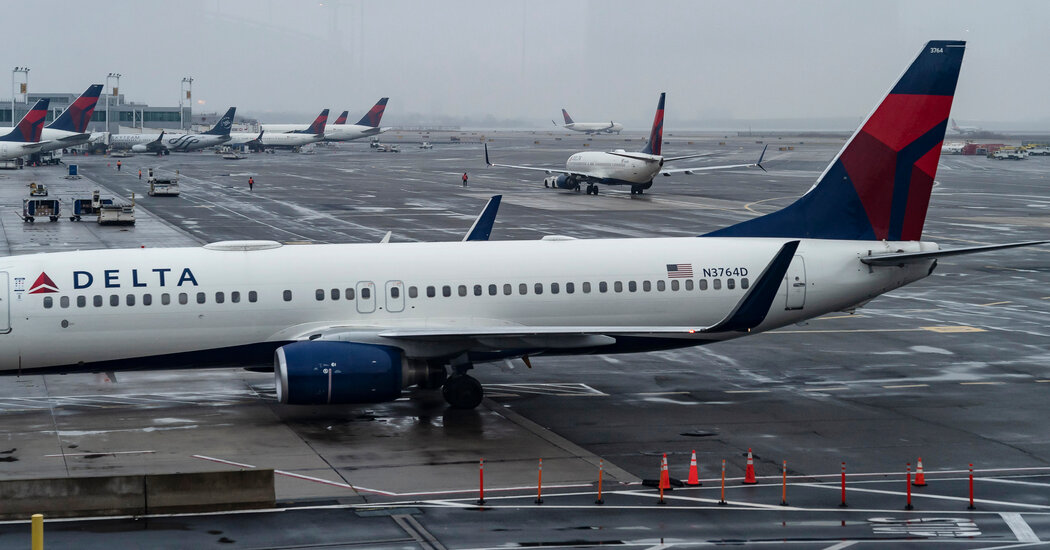
Shane McInerney, 29, was charged after his disruptive behavior aboard a flight from Dublin to John F. Kennedy International Airport on Jan. 7.A passenger who refused to wear a mask on a flight from Dublin to New York pulled down his pants and exposed his buttocks, threw a can at a passenger and put his cap on the captain’s head and told him, “Don’t touch me,” prosecutors said in a case unsealed on Friday.After the Delta flight from Dublin to John F. Kennedy International Airport on Jan. 7, the passenger, Shane McInerney, 29, of Galway, Ireland, was charged with intentionally assaulting and intimidating a crew member, prosecutors said. If convicted, he faces up to 20 years in prison, prosecutors said.On Saturday, Mr. McInerney’s lawyer, Benjamin Yaster, declined to comment on the charges. Mr. McInerney made an initial appearance in federal court in Brooklyn on Jan. 14 and was released on a $20,000 bond, prosecutors said.The charges represent the latest example of the unruly and sometimes violent behavior that has surged on airplanes since the start of the pandemic. Many of the disturbances have involved passengers who refused to wear masks, as required by the federal government.On Wednesday, an American Airlines flight from Miami to London turned around about an hour into its journey because of a passenger who refused to wear a mask, the airline said.In October, a passenger was accused of punching an American Airlines flight attendant in her nose, giving her a concussion, after a mask dispute. And in December, a California woman pleaded guilty to repeatedly punching a flight attendant on a Southwest Airlines flight, bloodying her face and chipping three teeth.“Over the past year, we had seen a dramatic uptick in unruly passenger incidents, and we’ve undertaken a number of measures to get that under control,” Steve Dickson, the administrator of the Federal Aviation Administration, said during an online discussion this week.“And I’m happy to say that the rates are down significantly, year over year, but we’ve still got more work to do,” Mr. Dickson said. “And this is, again, something that we need to continue to stay focused on.”In a statement filed in court, an F.B.I. agent said that Mr. McInerney had refused to wear a mask despite being asked to do so “dozens” of times during the eight-hour flight. He threw an empty beverage can, hitting another passenger in the head, and kicked the seat back in front of him, disturbing the passenger there, the statement said.At one point, he walked from his seat in the economy section to the first-class section and complained to a flight attendant about the food. While being escorted back to his seat, Mr. McInerney “pulled down his pants and underwear and exposed his buttocks” to the flight attendant and passengers sitting nearby, the statement said.About two hours into the flight, the captain, while on a break, spoke to Mr. McInerney, the statement said. During the conversation, Mr. McInerney twice took off his cap, put it on the captain’s head and then removed it again, the statement said.He also put a fist close to the captain’s face and said, “Don’t touch me,” the statement said.At least one of the passengers found Mr. McInerney’s behavior to be “scary,” and members of the flight crew considered diverting the plane to another airport so that Mr. McInerney could be removed from the plane, the statement said.The flight continued to New York. As the plane was making its final approach to J.FK. and everyone was buckled in their seats, Mr. McInerney again disobeyed the orders of flight attendants, according to the statement, which said he stood up, walked into the aisle and “refused to sit back down.”

Read more →

Mushie & Co Recalls FRIGG Pacifiers Over Choking Hazard

Mushie & Co, a baby goods store, announced a voluntary recall of its FRIGG pacifier after more than 200 reports that the pacifier’s silicone nipple detached from its base.More than 330,000 pacifiers have been voluntarily recalled by their manufacturer after reports that they could pose a choking hazard, according to a notice posted by the U.S. Consumer Product Safety Commission.Mushie & Co, a baby goods store, is recalling its FRIGG silicone pacifiers because the “base of the silicone nipple has a fine slit that can cause the nipple to detach from the plastic shield, posing a choking hazard,” according to the recall notice, which was posted on Wednesday.Mushie received more than 200 reports internationally that the nipple detached from the plastic shield of the pacifier, according to a company statement. No injuries have been reported, the company said.Mushie was founded in 2018 by Mushie and Levi Feigenson, according to the company’s website. The company’s owners did not immediately respond to a request for comment on Friday afternoon.Mushie told consumers that they should stop using the pacifiers immediately and contact the company for a full refund or store credit. To obtain the refund, customers should cut the silicone nipple from the base of the pacifier and send a photo of both the detached silicone nipple and the pacifier base to the company.The FRIGG silicone pacifiers came in two designs, Classic and Daisy.The Classic design is an all-silicone nipple attached to a round plastic shield. The Daisy design is the same, except the shield is scalloped.Each design was made in two sizes: one for infants up to six months old, and a larger size for babies six to 18 months old. The FRIGG silicone pacifiers were sold in more than 40 colors.The Daisy and Classic pacifiers were sold at various stores in the United States, such as SpearmintLOVE, T.J. Maxx, Lil’ Tulips and Olivia & Jade Company, as well as on Mushie’s website and on Amazon.Both models were sold from April 2021 through December 2021 and cost about $8 for a single pacifier and about $15 for a pack of two.

Read more →

Breakthrough COVID-19 infections spur strong antibody responses

A recent study looked at the strength, durability and breadth of neutralizing antibody responses generated by breakthrough infections in individuals vaccinated against SARS-CoV2.
The findings are published this week in Cell, one of the scientific journals of Cell Press. Alexandra Walls and David Veesler in the Department of Biochemistry at the University of Washington in Seattle led the project.
Characteristics of the Delta and Omicron coronavirus variants of concern include enhanced transmissibility and immune evasion even in non-immunologically naïve individuals, compared to the ancestral pandemic coronavirus.
These characteristics, and the waning of immunity from vaccines, have led to breakthrough infections in vaccinated individuals. For the most part, otherwise healthy people who are vaccinated against the SARS-CoV-2 usually do not have severe symptoms if they do end up contracting the virus.
The researchers wanted to understand what effect catching the virus after being vaccinated has on neutralizing antibodies, and to see how durable and broad these responses are. Their hope is that advancing such knowledge will help guide vaccination policies and pandemic mitigation strategies.
Through their project the researchers learned that the degree of antibody response depended on whether a person has had one, two, three, or four exposures to the spike protein through infection, vaccination, or a mixture of the two. The scientists also checked antibody responses in groups of individuals who had been vaccinated after having COVID-19, those who were previously vaccinated and experienced a breakthrough infection, those who were vaccinated only, and those who were boosted and therefore vaccinated three times.
Among their study subjects, those who had completed a three-vaccination protocol, and those who had been vaccinated after recovering from COVID-19, and those with a breakthrough infection after vaccination launched almost comparable neutralizing antibody responses, in terms of magnitude and breadth. Their serum binding and antibody neutralizing responses to the spike protein in the current pandemic coronavirus variants were much more potent and lasting than those generated by people who had received only two doses of COVID-19 vaccine or who had a previous infection not followed by vaccination.
This observation suggested that the increased number of exposures to SARS-CoV-2 antigens, either through infection and vaccination or triple vaccination, enhanced the quality of antibody responses.
The researchers also looked at how broad the elicited antibodies could be. They investigated neutralization of the divergent Omicron SARS-CoV-2 variant of concern, currently responsible for the majority of cases in the United States. Their findings showed that boosted individuals (or those that have a mixture of infection and double vaccination) have neutralizing antibodies at similar levels to subjects vaccinated twice against the original ancestral strain. This suggests a large amount of immune evasion, but that vaccine boosters can help close the neutralizing antibody gap caused by Omicron.
Looking outside of the SARS-CoV-2 family shows a similar pattern, where repeated and multiple exposures improves the otherwise weak neutralizing antibody response to SARS-CoV. Finally, the authors did not identify improvements in antibody binding to common cold causing coronavirus spike proteins like OC43 or HKU1. This suggests that repeated SARS-CoV-2 exposure does not improve spike reactivity to more divergent coronaviruses. These findings support the development of broader sarbecovirus or coronavirus vaccines to be prepared in the event of a future spillover event.
The study groups consisted of about 15 people, from the Hospitalized or Ambulatory Adults with Respiratory Viral Infections, or HAARVI, project at the UW in Seattle. HAARVI, led by UW Medicine infectious disease physician Helen Chu, looks at recovered COVID-19 patients to study immune responses over time, to understand the long-term consequences of the infection, and to compare immune responses from vaccines and natural infections.
Researchers from the Department of Medicine and the Department of Laboratory Medicine and Pathology at the UW School of Medicine, and from Humabs Biomed SA, a subsidiary of Vir Biotechnology, also helped conduct the study.

Read more →