Complex three-dimensional kidney tissue generated in the lab from the scratch

A research team based in Kumamoto University (Japan) has created complex 3D kidney tissue in the lab solely from cultured mouse embryonic stem (ES) cells. These organoids could lead the way to better kidney research and, eventually, artificial kidneys for human transplant.
By focusing on an often-overlooked tissue type of organoid generation research, a type of organ tissue made up of various support and connective tissues called the stroma, Dr. Ryuichi Nishinakamura and his team were able to generate the last of a three-part puzzle that they had been working on for several years. Once the three pieces were combined, the resulting structure was found to be kidney-like in its architecture. The researchers believe that their work will be used to advance kidney research and even lead to a transplantable organ in the future.
The kidney is a very important organ for continued good health because it acts as a filter to extract waste and excess water from blood. It is a complex organ that develops from the combination of three components. Protocols have already been established by various research teams, including Dr. Nishinakamura’s team at the Institute of Molecular Embryology and Genetics (IMEG) at Kumamoto University, to induce two of the components (the nephron progenitor and the ureteric bud) from mouse ES cells.
In this, their most recent work, the IMEG team has developed a method to induce the third and final component, kidney-specific stromal progenitor, in mice. Furthermore, by combining these three components in vitro, the researchers were able to generate a kidney-like 3D tissue, consisting of extensively branched tubules and several other kidney-specific structures.
The researchers believe that this is the first ever report on the in-lab generation of such a complex kidney structure from scratch. The IMEG team has already succeeded in inducing the first two components from human iPS cells. If this last component can also be generated from human cells, a similarly complex human kidney should be achievable.
“We are now working very hard to generate a fully functional human kidney,” said Dr. Nishinakamura. “We hope to use our developments to screen drugs for various diseases, and for transplantation in the long run.”
Story Source:
Materials provided by Kumamoto University. Note: Content may be edited for style and length.

Read more →

Sweet pressure: Scientists discover link between high blood pressure and diabetes

The long-standing enigma of why so many patients suffering with high blood pressure (known as hypertension) also have diabetes (high blood sugar) has finally been cracked by an international team led by the universities of Bristol, UK, and Auckland, New Zealand.
The important new discovery has shown that a small protein cell glucagon-like peptide-1 (GLP-1) couples the body’s control of blood sugar and blood pressure.
Professor Julian Paton, a senior author, and Director of Manaaki Mãnawa — The Centre for Heart Research at the University of Auckland, said: “We’ve known for a long time that hypertension and diabetes are inextricably linked and have finally discovered the reason, which will now inform new treatment strategies.”
The research, published online ahead of print in Circulation Research today [1 February], involved contributions from collaborating scientists in Brazil, Germany, Lithuania, and Serbia, as well as the UK and New Zealand.
GLP-1 is released from the wall of the gut after eating and acts to stimulate insulin from the pancreas to control blood sugar levels. This was known but what has now been unearthed is that GLP-1 also stimulates a small sensory organ called the carotid body located in the neck.
The University of Bristol group used an unbiased, high-throughput genomics technique called RNA sequencing to read all the messages of the expressed genes in the carotid body in rats with and without high blood pressure. This led to the finding that the receptor that senses GLP-1 is located in the carotid body, but less so in hypertensive rats.

Read more →

Human gut bacteria have 'sex' to share vitamin B12

Your gut bacteria need vitamin B12 just as much as you do. Though DNA is usually passed from parent to child, new research shows gut bacteria transfer genes through “sex” in order to take their vitamins.
Without vitamin B12, most types of living cells cannot function. As a result, there is strong competition for it in nature. A new UC Riverside study demonstrates beneficial gut microbes share the ability to acquire this precious resource with one another through a process called bacterial sex.
“The process involves one cell forming a tube that DNA can pass through to another cell,” said UCR microbiologist and study lead Patrick Degnan. “It’s as if two humans had sex, and now they both have red hair.”
Scientists have known about this process for decades, and its ability to transfer what are known as “jumping genes” between organisms. Until now, the majority of studied examples have been responsible for helping bacterial cells stay alive when people ingest antibiotics.
“We’re excited about this study because it shows that this process isn’t only for antibiotic resistance. The horizontal gene exchange among microbes is likely used for anything that increases their ability to survive, including sharing vitamin B12,” Degnan said.
Results of the study have been published in the journal Cell Reports.
Previously, Degnan worked on a project in which he and his colleagues identified an important transporter responsible for getting B12 into gut microbial cells. More recently, he was studying jumping genes, trying to identify what kinds of information they were transferring. Quickly, Degnan recognized the vitamin B12 transporters as the cargo.

Read more →

Lunar New Year: Covid thwarts travel plans for millions

SharecloseShare pageCopy linkAbout sharingImage source, Getty ImagesCovid-19 has dampened the travel plans of millions of Chinese for the Lunar New Year for a third straight year.Pre-pandemic, the celebration would see as many as 3 billion trips made across China, and was the world’s largest annual migration of people. But resurgent virus outbreaks have forced many to cancel their plans. Chinese officials – still pursuing a zero-Covid strategy – have enforced strict measures with days to go before the 2022 Winter Olympics begin. The Lunar New Year – also known as the Spring Festival in China – falls on 1 February this year. Widely regarded as the most important time to be with family, hundreds of millions of people who have carved out a livelihood in cities make their way back to their hometowns to celebrate together. Tigers and travel – Chinese New Year explainedThe Chinese Ministry of Transportation estimates that 1.18 billion trips will be made this year. While the figure remains a far cry from pre-pandemic numbers, there are still worries that it may turn into a super-spreader event.Chinese citizens have been placed under strict government surveillance, with a colour-coded system determining whether they can travel. They are required to display a green health code on their phone – which indicates they have not been in Covid-infected areas – before boarding public transport and passing through highway points. China’s insistence on pursuing a virus elimination policy has seen officials carry out rounds of mass testing and impose sudden lockdowns affecting millions of people in response to sporadic outbreaks across the country. The Winter Olympics, which is scheduled to kick off on the first day of the Spring Festival, has further intensified pressure on local officials, who have shut down local municipalities and entire towns to battle the spread of the virus. The measures have been met with dismay. Migrant workers especially remain the hardest-hit, as the Spring Festival represents the few precious days a year where they can return to see their loved ones back home. “Is it wrong for a migrant worker who toils day and night, who lives far away from home, to return to his hometown and reunite with his family during his only few days of annual holiday?” wrote a user on Chinese social media platform Weibo. This video can not be playedTo play this video you need to enable JavaScript in your browser.

Read more →

Austria's Covid vaccine law comes into force amid resistance

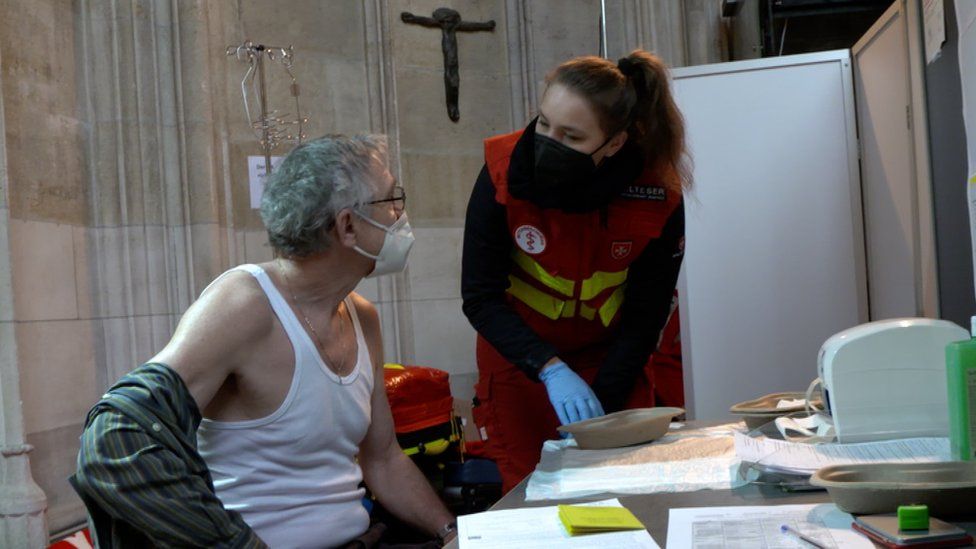
SharecloseShare pageCopy linkAbout sharingA new law comes into force in Austria this week that makes vaccination against Covid-19 compulsory for anyone over-18. Several countries have introduced mandates for the elderly or medical staff, but this is the first nation in Europe to adopt such sweeping measures. LOu Moser, a ceramic artist who lives south of Vienna, is not vaccinated against Covid-19 and neither is her husband, Gus. They strongly disagree with Austria’s new vaccine mandate.Vaccination, she says, should be a personal choice. “I’ve had Covid-19. And so I actually don’t see the point of being jabbed when I’ve got sufficient antibodies,” LOu tells me. “And so I chose not to get vaccinated. And it’s not for any authority to tell me what to put into my body.””It has shown that the vaccines haven’t really stopped the pandemic yet,” LOu says.BBCPeople keep being vaccinated, and they’re still getting ill from Covid-19. Maybe not as badly, but they’re still getting ill.LOu MoserAustrian ceramic artistAustria’s government says vaccinations are effective at combating severe disease, and that the law is needed to prevent future lockdowns. Karoline Edtstadler, minister for the EU and Constitution, says the government is “very aware that it is really a strong step and really hard measure”.But, she says, it is necessary. BBCWe as politicians have the responsibility to be sure that the healthcare system is still working, that society, as a whole, can live normallyKaroline EdtstadlerMinister for EU and ConstitutionShe says, though, that mandatory vaccination is an “interference with human rights”. “But in this case, this interference can be justified,” she adds. “We have the need to get out of the pandemic and we know that vaccination is the only way to get out of it and to get back to a normal life.”Image source, Getty ImagesThe vaccine mandate, she says, will expire in January 2024, and could be ended earlier if the pandemic allows. The law comes into force on 3 February, but the authorities will not start checking people’s vaccination status until mid-March. Those who refuse to get the shot will face fines ranging from €600 (£500; $670) to €3,600. Exceptions apply for those who cannot get vaccinated for medical reasons or who are pregnant. About 72% of Austrians are fully vaccinated. At a vaccination centre at Vienna’s St Stephan’s cathedral, Carlos is having a booster shot. It was an easy decision, he says. “I wanted to get vaccinated because I want to protect my family and the people I know,” he tells me. “I want to travel and it’s for me easier when I’ve been vaccinated for the third time.”Dr Klaus Markstaller, head of Department of Anaesthesia and Intensive Care at the Medical University of Vienna and the city’s biggest hospital, says the vaccine saves lives.”It’s clearly shown that the vaccination impedes severe courses of the disease, and therefore it reduces ICU admissions significantly,” he says. “So if you want to reduce your personal risk significantly, and the risk for your loved ones, get vaccinated.”Image source, Getty ImagesSome Austrians are wondering how strictly the law will be enforced. Thomas Hofer, a political analyst, says it all depends on how Covid-19 spreads in the future. “I think a lot of people hope that this won’t be as strict as the government proposed in the first place. I think there’s some kind of Austrian solution, which means, you’re never carrying it the whole way through,” he says.”Even the government might think, okay, maybe in March or April, it’s not necessary anymore. But it depends on how the pandemic develops, if it comes back in the autumn and winter.”But strong resistance to the vaccine mandate remains. The far-right, anti-vaccine Freedom Party says it will fight the measure in court. Its leader, Herbert Kickl, has said the law “paves the way to totalitarianism in Austria”.Many opponents of the law are taking to the streets. Demonstrators from many different parts of society have protested, week after week, against mandatory vaccinations and Covid-related restrictions. CONTEXT: Mandatory jabs: Three reasons for and againstIN CHARTS: Tracking the pandemicAt a protest in Vienna on Saturday, one woman told me she was pleased to be vaccinated but opposed compulsory jabs. On a podium behind her, an anti-vaxxer told a cheering crowd the Covid-19 vaccine was “the biggest genocide” in history.Austria has gone farther than any of its neighbours with this vaccine mandate. Other European countries will be watching closely.

Read more →

Measles warning for England as child jab rate drops

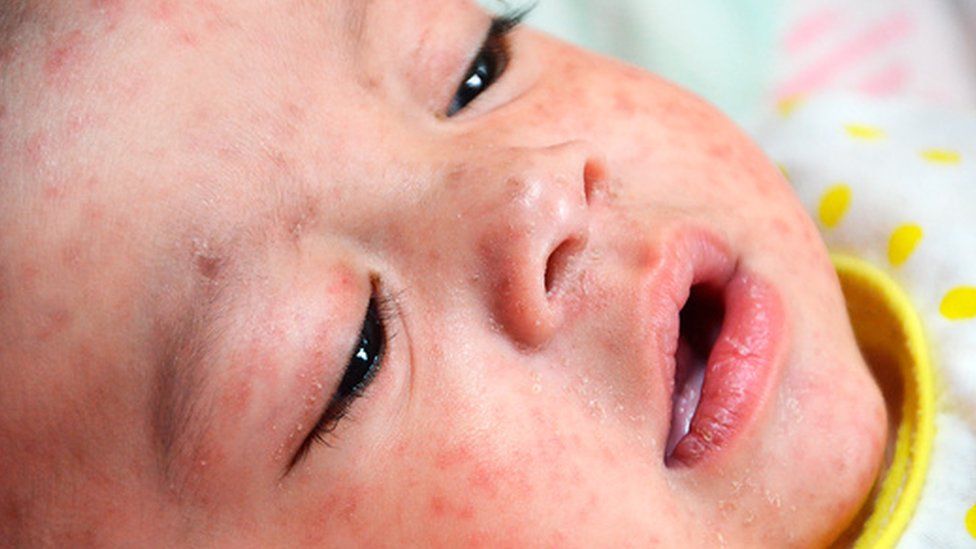
SharecloseShare pageCopy linkAbout sharingImage source, SPLMore than one in 10 school entry-age children in England are at risk of measles because they have not had their vaccine jabs, data reveals.Coverage for the two doses of MMR that helps protect five-year-olds against measles, mumps and rubella is currently at 85.5%. That is the lowest for a decade, and well below the 95% target recommended to stop a resurgence of measles. Measles is highly contagious, more than Covid, and can cause serious illness.Nine in every 10 people can catch it if they are unjabbed and exposed.As well as a distinctive rash, measles can lead to severe complications, such as pneumonia and brain inflammation, and sometimes can be fatal.Vaccination can remove almost all of these risks.Two doses of the MMR vaccine give 99% protection against measles and rubella and about 88% protection against mumps.When a high percentage of the population is protected through vaccination, it becomes harder for the disease to pass between people.But since the start of the Covid pandemic, there has been a concerning drop in the number of children receiving these vaccines on time. Experts say some parents may not have realised doctors were still offering appointments, or did not want to burden the NHS.Coverage of the first dose of the MMR vaccine in two-year-olds has now fallen below 90%. This means that more than one in 10 children under the age of five are not fully protected from measles and are at risk of catching it.Among all five-year-olds in England, 93.7% have had one dose and 85.5% have had the recommended two doses. In 2017 the World Health Organization declared that the UK had eliminated measles – meaning that although some cases could still occur, the disease was not widely circulating and spreading. Measles remains more common in some other countries, meaning it can return to the UK and spread in people who are unvaccinated, if given the chance. The UK lost its elimination status after cases ticked up again in 2018, with 991 confirmed ones in England and Wales, compared with 284 in 2017. Measles cases have plummeted during the Covid pandemic, largely because of social distancing and less travel. But the UK Health Security Agency is concerned that measles could make a comeback in the unvaccinated when restrictions are fully lifted.It is asking parents and carers to make sure children are up to date with their jabs. NHS vaccinations and when to have themWhy is the UK seeing a rise in measles cases?The MMR vaccine is free on the NHS when a child turns one, with a second dose offered at about three-and-a-half, before they start nursery or school.Dr Nikki Kanani, from NHS England, said: “If your child has missed a vaccination, please contact your GP practice to book an appointment as soon as you can to make sure they have maximum protection against disease.”Vaccines minister Maggie Throup added: “If you are unsure whether your child has had their full course of the MMR vaccine, check their red book or talk to your GP. The vaccine is safe, it will protect your child and their school friends and is very easy to access.”Unvaccinated teenagers and adults are eligible too.Prof Helen Bedford, an expert from London’s Great Ormond Street Institute of Child Health, said: “It is never too late for children, young people and young adults to have their MMR vaccine and they can have a second dose even where there has been a long gap since the first.”MMR vaccine – NHSUK Health Security AgencyThe BBC is not responsible for the content of external sites.

Read more →

Lyme disease: Man spent £25,000 before getting diagnosis

A 36-year-old man spent £25,000 on tests and failed treatments before finally being diagnosed with Lyme disease.Steven Williams, of Maesteg, Bridgend, was healthy and active when he was hit by extreme anxiety and left bed-ridden and shaking for 18 hours a day.But despite seeking help from his GP and private healthcare, he struggled to get answers.He said the battle to get a diagnosis for the disease, which can be very difficult to identify, had “totally devastated” his life. Video by Gwyndaf Hughes

Read more →

'Boot camp' enzyme prevents autoimmune conditions

WEHI researchers have identified an enzyme in the thymus that is essential for immune T cells to correctly identify threats, safeguarding them from going rogue and attacking healthy tissue in the body.
The thymus is an important organ where immune T cells learn to fight infection. The new findings revealed that the enzyme KAT7 is necessary to activate thousands of genes required for ‘training’ immune T cells not to attack healthy tissue. Without proper training, immune T cells are at risk of sabotaging the immune system which could lead to autoimmune conditions such as Type 1 diabetes, or multiple sclerosis.
Published in Science Immunology, the research paves the way for potential treatments to target KAT7, which could modify the training of immune T cells as needed. Such treatments could be used to either restrain immune T cells from drivingautoimmune conditions, or to supercharge immune T cells to better fight diseases such as cancer.
The research was led by former WEHI PhD student Dr Melanie Heinlein, along with Associate Professor Tim Thomas and Associate Professor Daniel Gray from WEHI, in collaboration with researchers at Monash University and the Weizmann Institute of Science in Israel.
At a glance Researchers have discovered that the enzyme KAT7 is crucial for ‘training’ immune T cells to correctly identify and fight threats in the body. They showed that blocking the function of KAT7 in pre-clinical models sent the immune system into overdrive, leading to a range of autoimmune conditions. These findings show that KAT7 could be targeted therapeutically to either dampen or boost the immune system as required.A ‘preview’ of threats
The thymus is like a ‘boot camp’ where immune T cells are trained to identify and fight pathogens, and taught not to attack healthy organs. As part of this preparation, immune T cells are shown a ‘preview’ of all the various components of healthy tissues they could encounter once they exit the thymus.

Read more →

Brain function boosted by daily physical activity in middle-aged, older adults

A new study by researchers at University of California San Diego School of Medicine adds to the canon of research associating physical activity with cognitive performance, this time using 90 middle-aged and older subjects who wore accelerometers while physically active and completed mobile cognitive testing from home.
“The future of lifestyle interventions really needs to be remote-based,” said Raeanne Moore, PhD, associate professor in the Department of Psychiatry at UC San Diego School of Medicine and principal investigator of the study. “The pandemic has made this especially clear.”
On the days their physical activity increased, the study found, the 50- to 74-year-old participants performed more effectively on an executive function task, and on the days when their physical activity decreased, so too did their cognitive performance.
The findings published Jan. 31, 2022 in the journal JMIR mHealth and uHealth.
“It was a very linear relationship,” Moore said. “We hypothesized that we would find this, but we couldn’t be sure because we weren’t telling people to increase their physical activity. They just did what they do every day.”
First author Zvinka Zlatar, PhD, a clinical psychologist at UC San Diego School of Medicine, added: “Future interventions, in which we ask people to increase their physical activity, will help us determine if daily changes in physical activity lead to daily gains in cognition measured remotely or vice versa.”
The correlation between physical activity and cognition remained when adjustments were made for various co-morbidities, such as HIV status, age, sex, education and race/ethnicity. But it held only for persons who function dependently — who rely on others to perform the tasks of daily living, such as managing household activities or paying the bills.

Read more →

Foamy cells inspire better way to predict heart attacks

A heart attack or stroke can blindside people who thought they were at low risk. Now, research led by UConn Health has found a new model that could improve how we assess heart disease. The study is published in the January 18 issue of Circulation.
Heart attacks and strokes are the number one cause of death in the United States, and 70% of them are caused by plaques of cholesterol clogging blood vessels. Despite the prevalence of cardiovascular disease, our best attempts to predict who is at risk of major events like a stroke or heart attack are not very good. The current risk models look at body mass, waist circumference, and the ratio of various fats in a person’s blood. But it’s hard to use that model to confidently predict whether someone is likely to have a heart attack within the next five years, for example. Many researchers believe there must be other factors at work.
“We started looking at macrophages, cells that eat lipids stuck to the walls of blood vessels,” says Beiyan Zhou, a UConn Health School of Medicine immunologist. Macrophages eat the fatty deposits on the walls of arteries. After eating the fat, they become foamy. “They look foamy because the fat droplets are contained in the cell and look like a clump of bubbles,” Zhou says.
Foamy macrophages have a bad reputation among cardiologists. They are often found in plaques along inflamed sections of blood vessels. Foamy plaque is known to be the worst plaque, associated with advanced cardiovascular disease.
But foamy macrophages may be both more neutral, and more interesting, then they’re currently given credit for being. Zhou, along with colleagues on the MultiEthnic Study of Artherosclerosis (MESA) took a closer look at the foamy cells to see how their lipid consumption related to heart attacks, arthritis, and even irritable bowel syndrome.
The group found that foamy macrophages are mostly a clean-up crew that eats fat smeared in the wrong places. If the macrophages are prevented from cleaning up, cardiovascular disease worsens. But in people with diabetes, autoimmune disease, or who take certain immunotherapies, the lipid eating macrophages behave differently. They still consume lipids, but they also get inflamed and can worsen plaques in the arteries, and even precipitate ruptures that lead to chunks of plaque flowing down the bloodstream until they catch somewhere else, potentially causing a clog.
“Foaming is not necessarily bad; this is the first time that we can distinguish good and bad foaming. It is the bad foaming that can cause heart attack,” Zhou says.
Zhou and her colleagues are collaborating with UConn Health cardiologists Annabelle Rodriguez-Oquendo and Patrick Murphy, and immunologist Anthony Vella on MESA, which runs a longterm study that tracks how cardiovascular disease develops. They want to find the key switch that causes foaming cells to become unhealthy and cause disease. MESA gave the team access to a large dataset of people who did, or did not, develop heart disease over the past 20 years. The database tracks monocytes, precursors of macrophages, as well as participants’ genetic backgrounds.
MESA’s data allowed the team to come up with a 30 gene model from a pool of bad foaming genes revealed by AtheroSpectrum, a program created by Zhou’s team. Combined with clinical data on blood pressure, current medications, and diabetes status, the model gave a very accurate score of a person’s chances of having a stroke or heart attack over the next 5 years. Their score was better at predicting adverse events than the current best practices used by cardiologists.
Profiling the 30 genes expressed by patients’ monocytes is not an easy test for a cardiologist to order right now. But maybe it should be, Zhou and her colleagues say.
Understanding pathogenic foaming has provided novel strategies” to develop future risk assessment for people with heart disease, Zhou says. She adds “this could also provide a gene pool for drug design specifically targeting bad foaming” in macrophages.
Story Source:
Materials provided by University of Connecticut. Original written by Kim Krieger. Note: Content may be edited for style and length.
Read more →