Covid: Australia's border reopens to international visitors

SharecloseShare pageCopy linkAbout sharingThis video can not be playedTo play this video you need to enable JavaScript in your browser.Australia has reopened its international border for the first time in nearly two years, bringing joyful family reunions and a boost to tourism.The country imposed some of the world’s strictest travel bans after shutting itself off in March 2020 due to Covid.Australians and some others were allowed to return from late last year, but most foreigners have had to wait.There were tearful reunions at Sydney Airport on Monday as hundreds of people began arriving on flights.One young girl, Charlotte, shared an emotional hug with her grandfather. She told the local Nine Network: “I’ve missed him so much and I’ve looked forward to this trip for so long.”Double-jabbed visitors do not need to quarantine, but unvaccinated travellers must do so in a hotel for up to 14 days at their own expense.More than 50 international flights were due to land on Monday. Travellers can enter all states except Western Australia, which remains closed until 3 March and will require three jabs.”What wonderful, wonderful news for our tourism industry and the 660,000 people employed in it,” said Minister for Trade, Tourism and Investment Dan Tehan.Rugby player in Australia emotional over reunionAustralia revisited – a country changed by CovidCelebrity rush exposes Australian ‘double standard’Australia had about 9.5 million overseas visitors in 2019. Mr Tehan said he hoped for a strong rebound in the tourism sector, which has been hit by domestic travel bans too.The country’s strict measures drew criticism for separating families and stifling businesses, but they were also credited with preventing many deaths before vaccines were available. Australia has had about 4,900 Covid deaths.Morale boost for tourism operatorsPhil Mercer, BBC News in SydneyLike the sunrise, Dawn the koala is a sign of brighter times ahead for Australia’s beleaguered tourism industry. She is one of the star attractions at the Featherdale Wildlife Park in Sydney. International tourists were its lifeblood accounting for two-thirds of its revenue before Australia’s borders were slammed shut. Domestic visitors have helped to keep the park afloat, but the reopening of Australia’s borders is a big moment. “The fact that we can really start welcoming people back is going to do a lot for our morale,” said the park’s managing director, Chad Staples. But while there is optimism about the future, in the tourist town of Leura in the World Heritage-Blue Mountains there’s also a wariness about expecting too much, too soon. “It is not going to be a magic recovery,” said Careem Angel, from Josophan’s Fine Chocolates. Rebuilding Australia’s multi-billion-dollar travel industry will take time. You may also be interested in: This video can not be playedTo play this video you need to enable JavaScript in your browser.More on this storyRugby player in Australia emotional over reunionAustralia revisited – a country changed by CovidCelebrity rush exposes Australian ‘double standard’The battle to open up ‘Fortress Australia’

Read more →

Smell training to 'bring back the senses'

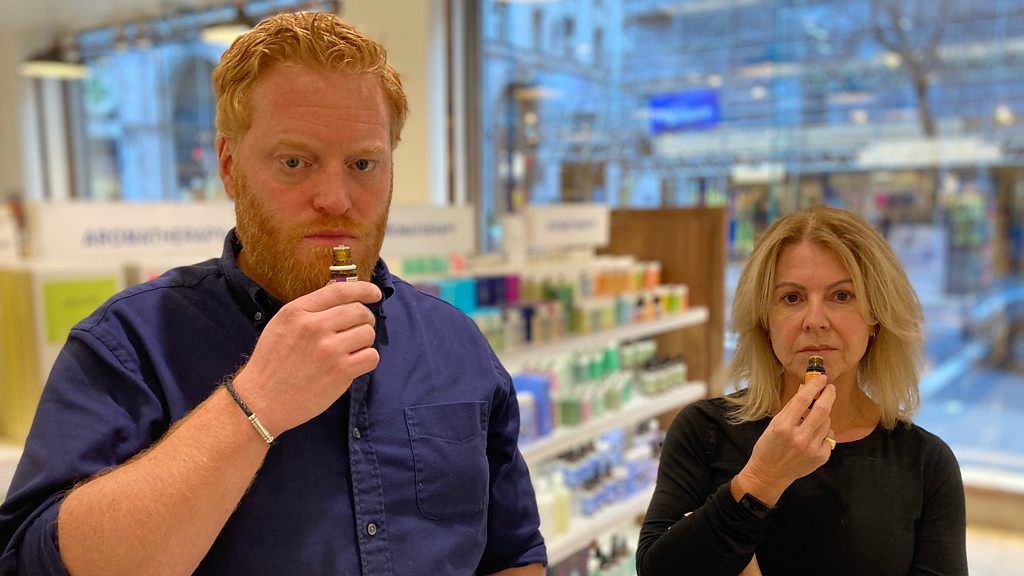
Throughout the pandemic many people have reported losing their sense of smell and taste. Smell loss can be caused by viral infections and brain injuries.The charity AbScent, which aims to end smell disorders, has been hosting smell training workshops in central London. Rob Rooke is a street food chef and is one of those who has lost his ability to smell. He is hoping the training will allow him to smell again. He said: “It’s a massive factor in your life, you take it for granted. People don’t realise how bad smell blindness actually is.”Video by Gem O’Reilly

Read more →

The Problem With the Pandemic Plot

Literary novelists are struggling with whether, and how, to incorporate Covid into their fiction.Twelve years ago, Sigrid Nunez published “Salvation City,” a novel about a boy whose parents die from a mysterious respiratory illness. She conjured a near-future America that seemed like a far-off dystopia, one where a rapidly spreading virus upends society, as schools close, supplies of hand sanitizer and surgical masks dwindle, understaffed hospitals run out of ventilators, and new viral variants emerge, causing infections to surge and recede in waves.Ms. Nunez, who based her fictional illness on the 1918 flu, figured that “Salvation City” would be her one and only pandemic novel.Then history repeated itself, and she found the subject was unavoidable. Last winter, holed up in her small apartment in downtown Manhattan, she started writing a novel that features a woman living in New York during the first wave of coronavirus infections, who starts to fray from the unrelenting fear and uncertainty.“It seemed too soon to be writing about the pandemic, which we were living through, but it also seemed hard to be writing about anything else,” Ms. Nunez said. “If it’s set now, it has to be part of the story.”More than two years into a global health crisis that has reshaped society and daily life, Covid-19 is leaving an inexorable mark on literary fiction. In a new crop of books, celebrated authors like Anne Tyler, Ian McEwan, Isabel Allende, Louise Erdrich and Roddy Doyle are exploring, sometimes reluctantly, the emotional and psychological reverberations of the pandemic.Many of the new pandemic-themed novels seek to capture the texture of daily life in the Covid era: the corrosive effect of isolation, the tedium and monotony of lockdowns and quarantines, the strain on relationships, the way the virus changed casual interactions and ripped some families apart and brought others together.The pandemic is also presenting new narrative and artistic pitfalls. Some writers worry a pandemic plot might drive away readers who want to escape our grim reality, but ignoring it might feel jarringly unrealistic. Others wonder if it’s too soon to recreate the atmosphere of a tragedy that’s still killing thousands of people every day. Then there’s the awkward narrative problem of how to turn what some have termed the “boring apocalypse” — a period of stasis that, for the most fortunate, has been defined by staying home and doing nothing — into a gripping story.“The PTSD we’re all going to have is not only going to affect how it’s written about, but whether or not anyone will want to read about it,” said the writer Tom Bissell, who advised novelists to steer clear of the topic in an essay for The Los Angeles Times. “When you have a horrible global experience in which millions of people have died, what is there to explore artistically other than the fact that it was terrible?”Given how much the virus has dominated our lives, a flood of pandemic fiction is perhaps inevitable. And several authors said they believe it is necessary, noting that unlike the fire hose of news coverage about Covid, which can leave readers feeling numb and overwhelmed, fiction can provide a way to process the emotional upheaval of the past two years.“I had no particular ambition to write about the pandemic, but it was like a giant tree trunk that fell across my path,” said Ian McEwan, whose forthcoming novel, “Lessons,” follows a British man from the 1940s to his twilight years in 2021, when he’s living alone in London during lockdown, looking back on his life. “It’s going to be in literary novels simply because there’s no way around it, if you’re writing a socially realist novel.”Anne Tyler’s “French Braid,” which comes out next month, follows a Baltimore family from the late 1950s to the upheaval of 2020, when a retired couple finds unexpected joy after their adult son and their grandson come to live with them to ride out the pandemic. Nell Freudenberger’s novel in progress, tentatively titled “The Limits,” explores the feelings of dread and uncertainty that the virus unleashed, and features a teenager struggling to balance remote learning with caring for a child, a biologist unnerved by climate change and a doctor who feels helpless as he treats Covid patients.In Isabel Allende’s “Violeta,” the narrator’s life is bookended by two pandemics, the Spanish flu and the coronavirus, a “strange symmetry” that she reflects on as she’s dying in isolation. “The experience of the whole planet frozen in place because of a virus is so extraordinary that I am sure it will be used extensively in literature,” Ms. Allende said in an email. “It is one of those events that mark an era.”There’s been no shortage of pandemic-themed content, from TV shows and documentaries, to long-form nonfiction, poetry and short stories. But novels often take longer to gestate, and the first wave of pandemic-inflected literary fiction is arriving at a nebulous moment, when the virus has started to feel both mundane and insurmountable, and it’s unclear when the crisis will end, making it an unwieldy subject for fiction writers.“You couldn’t yet have the great coronavirus novel, because we don’t know how this story ends yet,” said the writer and critic Daniel Mendelsohn.As the first trickle of Covid-centric novels began last year, some critics questioned whether the pandemic could yield worthwhile literature. “I am a little fearful of the onslaught of Covid-19 fiction heading toward us in the coming years,” the reviewer Sam Sacks wrote in The Wall Street Journal.Last November, when the English author Sarah Moss published her novel “The Fell” — about a woman who defies a mandatory quarantine order after she’s exposed to Covid — a handful of reviewers in Britain panned it for recreating the grueling experience of lockdown.“There was a lot of finger wagging and saying, It’s too soon,” Ms. Moss said. “Quite a few of the reviews said no one is going to want to read a pandemic novel.” Still, Ms. Moss said, many readers related to the claustrophobia, anxiety and boredom that her characters endure in “The Fell,” which will be released in the United States next month. “Some people are enormously comforted to find that we can begin to make art of this,” she said.“The experience of the whole planet frozen in place because of a virus is so extraordinary that I am sure it will be used extensively in literature,” said Isabel Allende, the author of “Violeta.”Plagues have been a plot staple throughout literary history, from the “Iliad” and the Bible to classics like Boccaccio’s “Decameron” and Daniel Defoe’s “A Journal of the Plague Year.” But earlier pandemics have also shown the difficulty of drawing literary inspiration from deadly viral outbreaks.Very little noteworthy fiction was written in direct response to the 1918 flu, which killed an estimated 50 million to 100 million people but left barely a mark in the literary record. Most writers at the time avoided the topic or referenced it only obliquely, perhaps because it followed on the heels of World War I and, unlike a rousing war story, an invisible virus that strikes indiscriminately doesn’t make for a dramatic narrative.“The flu drops out of cultural memory,” said Elizabeth Outka, author of “Viral Modernism: The Influenza Pandemic and Interwar Literature.”The Coronavirus Pandemic: Key Things to KnowCard 1 of 3Queen Elizabeth tests positive.

Read more →

Newsom's New Covid Plan Aims to Move California Out of 'Crisis Mode'

Gov. Gavin Newsom of California on Sunday described the new pandemic plan he released last week as a “more sensible and sustainable” approach that would lead the state out of “crisis mode” now that Omicron cases had dropped significantly and many residents were eager to move on.His comments on MSNBC followed an announcement from state officials last week about a “next-phase” plan, which would prioritize strategies like coronavirus vaccination and stockpiling supplies while easing away from emergency response measures like mask mandates.“A year and a half, two years ago, we had a war metaphor and we were hoping there would be a day where there would be a ticker-tape parade à la World War II,” Governor Newsom said. “At the end of the day, though, I think we are realizing that we’re going to have to live with different variants and this disease for many, many years. And that’s what this plan does, it sets out a course to do it sustainably.”The Omicron variant sparked an enormous surge in California. Though the state has seen a sharp decline in known infections since mid-January, new cases are still hovering at more than 13,000 per day. Overall through the pandemic, the coronavirus has infected at least 1 in 5 Californians and killed more than 84,000, according to a New York Times database.California is among the many states to loosen masking requirements in recent weeks, with Hawaii as the last state holding onto a statewide mandate. Puerto Rico also has yet to announce upcoming changes.But federal health officials have yet to release any new recommendations that reflect the lifting of restrictions — including mask mandates in schools — in nearly every state, and the U.S. path in the next phase remains complicated.Dr. Rochelle Walensky, the director of the Centers for Disease Control and Prevention, last week cited the need to “remain vigilant” so that infections continue their promising decline nationwide. She said the C.D.C. would soon be releasing new “relevant” guidelines that would suggest adjusting restrictions, including for mask-wearing, based on factors like hospital capacity, not just case counts.Despite the rollbacks across the country, many people remain extremely vulnerable and feel left behind by the changes. More than seven million adults in the United States are considered to be immunocompromised, meaning they have diseases or are receiving treatments like chemotherapy that reduce their ability to fight coronavirus infections or respond well to vaccines. And tens of millions have other conditions that put them at greater risk for severe illness or death.California’s new plan emphasizes surveillance and preparedness, focusing on continuing to promote vaccines while stockpiling medical supplies, ensuring surge staffing, combating disinformation and increasing wastewater and genomic tracking to spot new variants. Under the plan, mask requirements would be subject to change based on the severity and volume of new infections.In his remarks on MSNBC, Mr. Newsom acknowledged the fatigue felt by people because of the “whipsaw component” of changing rules and policies depending on each surge or wave. “We’re exhausted. Everybody is exhausted. And at the same time we’re also a little bit anxious. What does the future hold?” he said.The Coronavirus Pandemic: Key Things to KnowCard 1 of 3Queen Elizabeth tests positive.

Read more →

The C.D.C. Isn’t Publishing Large Portions of the Covid Data It Collects

The agency has withheld critical data on boosters, hospitalizations and, until recently, wastewater analyses.For more than a year, the Centers for Disease Control and Prevention has collected data on hospitalizations for Covid-19 in the United States and broken it down by age, race and vaccination status. But it has not made most of the information public.When the C.D.C. published the first significant data on the effectiveness of boosters in adults younger than 65 two weeks ago, it left out the numbers for a huge portion of that population: 18- to 49-year-olds, the group the data showed was least likely to benefit from extra shots, because the first two doses already left them well-protected.The agency recently debuted a dashboard of wastewater data on its website that will be updated daily and might provide early signals of an oncoming surge of Covid cases. Some states and localities had been sharing wastewater information with the agency since the start of the pandemic, but it had never before released those findings.Two full years into the pandemic, the agency leading the country’s response to the public health emergency has published only a tiny fraction of the data it has collected, several people familiar with the data said.Much of the withheld information could help state and local health officials better target their efforts to bring the virus under control. Detailed, timely data on hospitalizations by age and race would help health officials identify and help the populations at highest risk. Information on hospitalizations and death by age and vaccination status would have helped inform whether healthy adults needed booster shots. And wastewater surveillance across the nation would spot outbreaks and emerging variants early.Without the booster data for 18- to 49-year-olds, the outside experts whom federal health agencies look to for advice had to rely on numbers from Israel to make their recommendations on the shots.Kristen Nordlund, a spokeswoman for the C.D.C., said the agency has been slow to release the different streams of data “because basically, at the end of the day, it’s not yet ready for prime time.” She said the agency’s “priority when gathering any data is to ensure that it’s accurate and actionable.”Another reason is fear that the information might be misinterpreted, Ms. Nordlund said.Dr. Daniel Jernigan, the agency’s deputy director for public health science and surveillance said the pandemic exposed the fact that data systems at the C.D.C., and at the state levels, are outmoded and not up to handling large volumes of data. C.D.C. scientists are trying to modernize the systems, he said.“We want better, faster data that can lead to decision making and actions at all levels of public health, that can help us eliminate the lag in data that has held us back,” he added.The C.D.C. also has multiple bureaucratic divisions that must sign off on important publications, and its officials must alert the Department of Health and Human Services — which oversees the agency — and the White House of their plans. The agency often shares data with states and partners before making data public. Those steps can add delays.“The C.D.C. is a political organization as much as it is a public health organization,” said Samuel Scarpino, managing director of pathogen surveillance at the Rockefeller Foundation’s Pandemic Prevention Institute. “The steps that it takes to get something like this released are often well outside of the control of many of the scientists that work at the C.D.C.”The performance of vaccines and boosters, particularly in younger adults, is among the most glaring omissions in data the C.D.C. has made public.Last year, the agency repeatedly came under fire for not tracking so-called breakthrough infections in vaccinated Americans, and focusing only on individuals who became ill enough to be hospitalized or die. The agency presented that information as risk comparisons with unvaccinated adults, rather than provide timely snapshots of hospitalized patients stratified by age, sex, race and vaccination status.President Biden joined a virtual meeting with the White House Covid-19 Response Team in December. Cheriss May for The New York TimesBut the C.D.C. has been routinely collecting information since the Covid vaccines were first rolled out last year, according to a federal official familiar with the effort. The agency has been reluctant to make those figures public, the official said, because they might be misinterpreted as the vaccines being ineffective.Ms. Nordlund confirmed that as one of the reasons. Another reason, she said, is that the data represents only 10 percent of the population of the United States. But the C.D.C. has relied on the same level of sampling to track influenza for years.Some outside public health experts were stunned to hear that information exists.“We have been begging for that sort of granularity of data for two years,” said Jessica Malaty Rivera, an epidemiologist and part of the team that ran Covid Tracking Project, an independent effort that compiled data on the pandemic till March 2021.A detailed analysis, she said, “builds public trust, and it paints a much clearer picture of what’s actually going on.”Concern about the misinterpretation of hospitalization data broken down by vaccination status is not unique to the C.D.C. On Thursday, public health officials in Scotland said they would stop releasing data on Covid hospitalizations and deaths by vaccination status because of similar fears that the figures would be misrepresented by anti-vaccine groups.But the experts dismissed the potential misuse or misinterpretation of data as an acceptable reason for not releasing it.“We are at a much greater risk of misinterpreting the data with data vacuums, than sharing the data with proper science, communication and caveats,” Ms. Rivera said.When the Delta variant caused an outbreak in Massachusetts last summer, the fact that three-quarters of those infected were vaccinated led people to mistakenly conclude that the vaccines were powerless against the virus — validating the C.D.C.’s concerns.But that could have been avoided if the agency had educated the public from the start that as more people are vaccinated, the percentage of vaccinated people who are infected or hospitalized would also rise.“Tell the truth, present the data,” said Dr. Paul Offit, a vaccine expert and adviser to the Food and Drug Administration. “I have to believe that there is a way to explain these things so people can understand it.”Knowing which groups of people were being hospitalized in the United States, which other conditions those patients may have had and how vaccines changed the picture over time would have been invaluable, Dr. Offit said.Relying on Israeli data to make booster recommendations for Americans was less than ideal, Dr. Offit noted. Israel defines severe disease differently than the United States, among other factors.“There’s no reason that they should be better at collecting and putting forth data than we were,” Dr. Offit said of Israeli scientists. “The C.D.C. is the principal epidemiological agency in this country, and so you would like to think the data came from them.”It has also been difficult to find C.D.C. data on the proportion of children hospitalized for Covid who have other medical conditions, said Dr. Yvonne Maldonado, chair of the American Academy of Pediatrics’s Committee on Infectious Diseases.The academy’s staff asked their partners at the C.D.C. for that information on a call in December, according to a spokeswoman for the A.A.P., and were told it was unavailable.The Coronavirus Pandemic: Key Things to KnowCard 1 of 3Queen Elizabeth tests positive.

Read more →
How to Decide if You Should Still Wear a Mask

Experts weigh in on where, and when, you can safely take one off.As masking mandates lift and new coronavirus infections fall across the United States, there’s lots of confusion about if, and when, to wear a mask.“This is the hardest thing of all, because it’s not just the risks and benefits to you,” said Dr. Robert Wachter, a professor and the chair of the medicine department at the University of California, San Francisco. “It’s the risks and benefits to the people around you.”One good way to frame the issue is to ask: Who is the most vulnerable person in your immediate circle?If you have compromised immunity, for example, or live with someone who does, it’s a good idea to continue to wear a mask and maintain social distance around strangers, especially in indoor areas with standing air where the virus may collect. Masks are also important if you’re unvaccinated or spending time with others who are unvaccinated. Unvaccinated people are at overwhelmingly higher risk of hospitalization and death from Covid-19. Masks are also a must in hospitals, where there are many vulnerable people.But if you’re otherwise healthy and have received your vaccine and booster shots, your risk of getting seriously ill with Covid is extraordinarily small. It’s about in line with other risks people take every day, such as driving in a car.Many people “are weighing the fact that they would love to go back to normal and may be willing to accept a little bit of risk in order to gain a level of simplicity that they last knew in 2019,” Dr. Wachter said. “That’s not irrational.”There’s also always the risk that someone may develop long-Covid, even if they are vaccinated, though much about the condition remains unknown.If infection rates where you live are high, which has been pretty much everywhere during the latest Omicron wave, the Centers for Disease Control and Prevention continues to recommend masks in most indoor spaces. But in many situations, the decision to wear a mask is becoming a personal one.We spoke to experts to help give you a guide to the places, and the situations, where it’s a good idea to cover your face.Should you mask outside?There’s little scientific evidence to show that face coverings offer much added protection in many outdoor spaces such as sidewalks or parks. Things get a little hairier with crowds, like at a concert or sports venue.“If you can’t feel wind on your cheeks, you’re probably not in an area of great outdoor ventilation,” said Dr. Asaf Bitton, a primary care doctor who is the executive director of Ariadne Labs, a public health innovation center at Brigham and Women’s Hospital and the Harvard T.H. Chan School of Public Health. “If you’re really shoulder-to-shoulder with people, that might be a case of outdoor mask wearing, at least for now.”Erin Bromage, an associate professor of biology who studies infectious diseases at the University of Massachusetts Dartmouth, has helped touring music bands assess Covid risks throughout the pandemic. The main place he’s seen risk of transmission in concerts is in the standing-room-only area close to the stage.“Where the risk is mainly focused is the pits at the very, very front of the stage where people are on top of each other singing, physically exerting,” Dr. Bromage said.Most outdoor concerts, though, are generally safe, he said. “If you’re standing on a lawn watching a show, there’s really no data to support that a mask does anything to protect you that Mother Nature’s not taking care of.”And if the venue requires vaccines or a recent negative Covid test, you’re in even better shape.How about indoor spaces, like supermarkets or gyms?First and foremost, follow the norms and the rules of the business you’re entering. If the sign at the door says “Mask Required,” you don’t want to make retail workers have to enforce policies over which they have no control. Their jobs are hard enough, and everyone can wear a mask with little to no sacrifice.If the business is mask optional, consider the space, the crowds and the airflow.Dr. Bromage suggests a cigarette analogy: If someone were smoking, would the smell and taste of cigarettes quickly fill the air? If yes, so would the virus. You’d be smart to wear a mask. If not, it’s unlikely that you’ll get infected.“When I walk into a space, I always do that,” Dr. Bromage said. “How high are the ceilings? Is the air moving? Can I create my own little buffer of space?”Take a big box store with high ceilings. “Those tend to have good ventilation and because of the high ceilings, there’s a lot of dilution,” said Linsey Marr, an engineering professor at Virginia Tech who studies the airborne transmission of viruses. “The risks are pretty low, unless you’re in a crowded line waiting to check out.”“If it’s a smaller space and crowded space, Trader Joe’s, for example, or some New York market with tiny aisles and people are really packed in there, the risk is higher,” she continued. “You might want to wear a mask.”A hair salon might be a small space, Dr. Bromage said, but there typically won’t be that many people inside the business, so the risk of an infected person passing through will generally be low, especially as case counts fall.At a restaurant, one person’s cigarette smoke at the next table over wouldn’t fill the air above yours. But you would smell someone smoking at your own table, so your direct dining companions pose the highest risk, Dr. Bromage said.The gym may feel especially scary. Heavier breathing can expel more virus particles, but most gyms have excellent ventilation systems. (“If gyms did not have good air circulation, they would stink,” Dr. Bromage said.) That means any virus particles that may be floating around are also being sucked away with the sweat smell.Dr. Bromage again uses the cigarette analogy. He’d run on the treadmill unmasked, but he’d put an extra treadmill between himself and another runner. But a spin class, in a small room with “people shouting, yelling, huffing puffing”? Probably not yet, he said.What about on public transit or airplanes?Public transit is exempt from local mandates: You are still required to wear a mask, per federal requirements.It’s also just a good idea — On buses and subways, there are a lot of strangers moving in and out of a tight, enclosed space.The Coronavirus Pandemic: Key Things to KnowCard 1 of 3The virus in the U.S.

Read more →

Why beatboxer Shlomo stepped back from the limelight

Shlomo is a beatboxer who has performed with the likes of Ed Sheeran, Bjork and Damon Albarn. But, after struggling with depression and PTSD, he decided he had to take a step back from the limelight. Shlomo, from Fleet, Hampshire, is now drawing on his experience with a show for families, most recently staged in Sussex and Kent, showing how beatboxing can help with children’s mental health.Video journalist: Tim Everest

Read more →

More Teenage Girls With Eating Disorders Wound Up in the E.R. During the Pandemic

A new C.D.C. study underscored the mental health issues facing teenagers in the past few years.During the pandemic, emergency rooms across the country reported an increase in visits from teenage girls dealing with eating and other disorders, including anxiety, depression and stress, according to new data from the Centers for Disease Control and Prevention.The report provides new detail about the kinds of mental health issues affecting a generation of adolescents.Mental health experts hypothesize that the pandemic prompted some youth to feel isolated, lonely and out-of-control. Some coped by seeking to have control over their own behavior, said Emily Pluhar, a pediatric psychologist at Boston Children’s Hospital and instructor at Harvard Medical School.“You take a very vulnerable group and put on a global pandemic,” she said. “The eating disorders are out of control.”In the C.D.C. study, the agency said that the proportion of eating disorder visits doubled among teenage girls, set off by pandemic-related risk factors, like the “lack of structure in daily routine, emotional distress and changes in food availability.”The agency said that the increase in tic disorders was “atypical,” as these disorders often present earlier, and are more common in boys. But the C.D.C., reinforcing speculation from other clinicians and researchers, said that some teenage girls may be developing tics after seeing the phenomenon spread widely on social media, notably on TikTok.“Stress of the pandemic or exposure to severe tics, highlighted on social media platforms, might be associated with increases in visits with tics and tic-like behavior among adolescent females,” the C.D.C. wrote.In a related report, the C.D.C. also said on Friday that the increase in visits for mental health issues occurred as emergency rooms reported sharp declines overall in visits during the pandemic. As compared with 2019, overall visits fell by 51 percent in 2020 and by 22 percent in 2021, declines that the agency attributed in part to families delaying care, and a drop in physical injuries from activities like swimming and running.There was a decline in overall emergency room visits for mental health conditions among all youths, up to age 17. Increases occurred for particular maladies and, particularly among teenage girls.More broadly, the surge in adolescent mental health distress appears to have intensified during the pandemic, but it began earlier. Emergency room visits among youths related to depression, anxiety and similar issues rose by 28 percent from 2007 to 2018, according to another report by the surgeon general.In its report on Friday, the C.D.C. said that mental health-related emergency room visits for teenage boys fell in both 2020 and 2021 as compared with 2019. But the C.D.C. also reported that the data was nuanced and that the visitation patterns for boys, as well as girls, depended on specific mental health condition and time period.“These sex differences might represent differences in need, recognition and health care-seeking behavior,” the C.D.C. wrote.For teenage girls, weekly emergency room visits rose for eating and tic disorders during 2020; and for those conditions and obsessive compulsive disorders in 2021. During January of 2022, the C.D.C. said there also was an increase in anxiety, trauma and stress-related issues.

Read more →

Seeing 'green' can ease confusion, anger in navigating hospitals

Navigating large hospitals can feel like a mouse circling around in a maze. For patients and visitors, finding the way from Point A to Point B inside a visually-bland medical complex exacerbates an already stressed mental state.
One landscape architecture researcher at West Virginia University has a potential solution: Let nature in.
Research conducted by Shan Jiang showed that introducing nature into large hospitals can humanize the institutional environment and reduce the stress of patients, visitors and healthcare providers.
An associate professor at the Davis College of Agriculture, Natural Resources and Design, Jiang utilized immersive virtual environments — digitally-created “worlds” that users are engrossed in — for a controlled experiment that asked participants to complete various wayfinding tasks.
All participants saw the same hospital layout and room arrangements. However, for one group, participants encountered large windows and nature views among the corridor walls. In contrast, the control group saw solid walls without any daylight or nature views. Participants in the greenspace group used shorter time and walked less distance to complete wayfinding tasks.
“In terms of spatial orientation and wayfinding, window views of nature and small gardens can effectively break down the tedious interiors of large hospital blocks,” Jiang said, “and serve as landmarks to aid people’s wayfinding and improve their spatial experience.”
The study also revealed that participants’ mood states, particularly anger and confusion, were “significantly relieved” in the greenspace group.

Read more →

Hepatitis C patients cured with antiviral medicines are less likely to be hospitalized, need ER care for liver, other health-related issues

Researchers at Henry Ford Health System, as part of a national hepatitis C collaborative, report that patients with chronic hepatitis C who are treated with direct-acting antiviral medicines are less likely to be hospitalized or seek emergency care for liver and non-liver related health issues.
The study, published online in Clinical Infectious Diseases, underscores the extraordinary effect of these newer antivirals, which have been shown to cure hepatitis C in 98 percent of patients who take them. Patients are said to be cured when the virus is no longer detectable in their blood.
“The findings of our study show that curing hepatitis C not only gets rid of the virus, it also improves the overall health of patients,” said Stuart Gordon, M.D., Director of the Division of Hepatology at Henry Ford and the study’s lead author. “This is consistent with our earlier studies that showed effective treatment of hepatitis C also reduces the risk of patients developing other health conditions like diabetes, kidney disease, stroke and heart attacks.”
According to federal data, at least 2.4 million people are living with hepatitis C in the United States and most don’t know they have the virus. As a result, they are at risk for life threatening liver disease and cancer. Rates of new liver cancer cases have increased 38 percent from 2003 to 2012.
The Henry Ford-led study was conducted in collaboration with researchers from Geisinger Health System, Kaiser Permanente in Hawaii and Oregon and Centers for Disease Control and Prevention. They comprise the Chronic Hepatitis Cohort Study, which has been collecting and analyzing data drawn from the four health systems to assess the impact of hepatitis C and B on the U.S. population.
This observational study is believed to be the first to examine healthcare utilization involving hepatitis C patients with and without advanced liver disease and treated with the direct-acting antivirals, or DAAs.

Read more →