Sacklers Raise Their Offer to Settle Opioid Lawsuits by More Than $1 Billion

But they continue to insist on protection from civil liability claims over opioids, an unusual and controversial measure that derailed a previous deal.Members of the billionaire Sackler family have sweetened their cash offer to settle thousands of opioid-related lawsuits against them and their company, Purdue Pharma, offering up to $6 billion, an increase of more than $1 billion from an earlier offer, according to a mediator’s report filed Friday afternoon in bankruptcy court.But the deal is not done. The Sacklers have not budged from the line they drew in the sand at the outset of the case. In exchange for their billions, they are continuing to demand an end to all civil claims against them related to Purdue and opioids, and that future such claims be prohibited.Legal experts and the public have criticized efforts by the Sackler family to seek personal protection from liability. It is a shield typically granted to companies seeking bankruptcy restructuring, as Purdue is, but rarely extended to owners who do not file for personal bankruptcy. Eight states and the District of Columbia refused to sign on to an earlier proposal because of the Sackler liability shields.The mediator, Judge Shelley Chapman, a federal bankruptcy judge, said in her report that a “supermajority” of those states had now agreed to the new offer. But holdouts remain and the deal is not yet done.The earlier offer included a pledge from the Sacklers of $4.55 billion, including a $225 million federal settlement, to be paid out over roughly nine years. Under the new offer, the Sacklers would pay a total of $5.5 billion, with an additional contribution of up to $500 million, contingent on the sale of their international pharmaceutical companies. The Sacklers would have 18 years to make payments of the additional $1 billion.The bankruptcy plan requires that the Sackler money, plus billions more from Purdue, be given to funds for states, municipalities and tribes dedicated to the treatment and prevention of opioid addiction, and to compensate victims.Known as “the Nine,” the holdouts, including Connecticut, Washington, California and Maryland, have been at the mediation table with Purdue and the Sacklers since January.While negotiations continue, a stay against all litigation against both Purdue and the Sacklers, which has been in place since September 2019, was extended this week and is now set to expire on March 3.A representative of one branch of the family, descendants of Mortimer Sackler, declined to comment; representatives of another branch, descendants of Raymond Sackler, did not respond to a comment request.Judge Chapman has requested an extension of the deadline for mediation talks through February 28. Noting that the “unanimous acceptance” that the Sacklers require has not yet been achieved, she suggested that further talks could either reach that end or craft a different set of plans that would not necessitate unanimity.In the meantime, Purdue, whose plan was rejected by U.S. District Judge Colleen McMahon in December, is pursuing an appeal in the Second Circuit Court of Appeals. Oral arguments are expected in April.Purdue released a statement saying: “We remain focused on achieving our goal of providing urgently needed funds to the American people for opioid crisis abatement. We believe a global settlement is the swiftest and most cost-effective exit path from Chapter 11 and we will continue working to build consensus as we proceed through the appeal process with the United States Court of Appeals for the Second Circuit.”

Read more →

Research advances knowledge of the battle between viruses and human cells

In the long-term battle between a herpesvirus and its human host, a University of Massachusetts virologist and her team of students have identified some human RNA able to resist the viral takeover — and the mechanism by which that occurs.
This discovery, described in a paper published Feb. 15 in Proceedings of the National Academy of Sciences, represents an important step in the effort to develop anti-viral drugs to fight off infections.
“This paper is about trying to understand the mechanism that makes these RNA escape degradation,” says senior author Mandy Muller, assistant professor of microbiology. “The next step is to figure out if we can manipulate this to our advantage.”
In the Muller Lab, student researchers work with Muller studying how Kaposi sarcoma-associated herpesvirus (KSHV) hides for years inside the human body before seeking to gain control over human gene expression to complete the viral infection. At that point, people with a weakened immune system may develop Kaposi sarcoma cancer lesions in the mouth, skin or other organs.
The researchers use genome-wide sequencing, post-transcriptional sequencing and molecular biology to examine how the human cell or the virus knows how to prevent degradation.
“Viruses are very smart, that’s what I love to say,” Muller says. “They have lots of strategies to stick around, and they don’t do a lot of damage for a very long time, because that’s one way to hide from the immune system.

Read more →

Scientists map entire human gut at single cell resolution

If you get nervous, you might feel it in your gut. If you eat chili, your gut might revolt, but your friend can eat anything and feel great. You can pop ibuprofen like candy with no ill effects, but your friend’s belly might bleed and might get no pain relief. Why is this? The quick answer is because we’re all different. The next questions are how different exactly, and what do these differences mean for health and disease? Answering these is much more difficult, but the UNC School of Medicine lab of Scott Magness, PhD, is revealing some interesting scientific answers.
For the first time, the Magness lab used entire human GI tracts from three organ donors to show how cell types differ across all regions of the intestines, to shed light on cellular functions, and to show gene expression differences between these cells and between individuals.
This work, published in Cellular and Molecular Gastroenterology and Hepatology, opens the door to exploring the many facets of gut health in a much more precise manner at greater resolution than ever before.
“Our lab showed it’s possible to learn about each cell type’s function in important processes, such as nutrient absorption, protection from parasites, and the production of mucus and hormones that regulate eating behavior and gut motility,” said Magness, associate professor in the Joint UNC-NC State Department of Biomedical Engineering and senior author of the paper. “We also learned how the gut lining might interact with the environment through receptors and sensors, and how drugs could interact with different cell types.”
The Sensitive Gut
Think of a typical pharmaceutical commercial voiceover when the voice actor pleasantly recites possible side effects, such as diarrhea, vomiting, intestinal bleeding, and other unpleasant collateral damage. Well, the Magness lab is attempting to understand why those side effects happen, down to the level of individual cells, their functions, their locations, and their genes.

Read more →

Steroid treatments for Duchenne muscular dystrophy may depend on the clock

Each year, about 20,000 children are diagnosed with Duchenne muscular dystrophy, a rare genetic condition that causes progressive muscle weakness and other systemic damage.
Duchenne primarily affects males and is usually diagnosed by age 4. While a variety of therapies can slow progression and extend life expectancy, the disease has no cure yet. Those born with Duchenne seldom live beyond their mid-20s.
In 2017, researchers learned that weekly doses of prednisone, a widely prescribed steroid, appear to provide better support for weakening muscles compared to daily doses while also reducing the significant side effects induced by daily intake. Now, a new study reports that the time of day for providing the drug may be crucial to the effectiveness of such treatments.
Detailed findings, based on mouse models, were published online Feb. 18, 2022, in Science Advances. Mattia Quattrocelli, PhD, a researcher with the Heart Institute at Cincinnati Children’s, is the study’s corresponding author. Co-authors included lab team members Michelle Wintzinger and Karen Miz of Cincinnati Children’s and Northwestern University researchers Daniel Levine, PhD, Clara Peek, PhD, Joseph Bass, MD, PhD, and Elizabeth McNally, MD.
The findings represent another advance in the growing field of chronopharmacology, which examines how medications work in sync — or in conflict — with the circadian rhythms of our bodies. A number of important findings in this field have been led by experts at Cincinnati Children’s, which recently launched the country’s only clinic dedicated to childhood circadian sleep disorders.
Confirming a clear time-based influence for the use of prednisone among Duchenne patients very likely will help improve outcomes for affected children, but it also raises questions about the time of day for other uses of the steroid. More than 2.5 million Americans use prednisone and similar drugs to manage inflammation for conditions ranging from allergy treatment to preventing organ transplant rejection.

Read more →

What to Know About Boosters and Vaccine Restrictions for International Travel

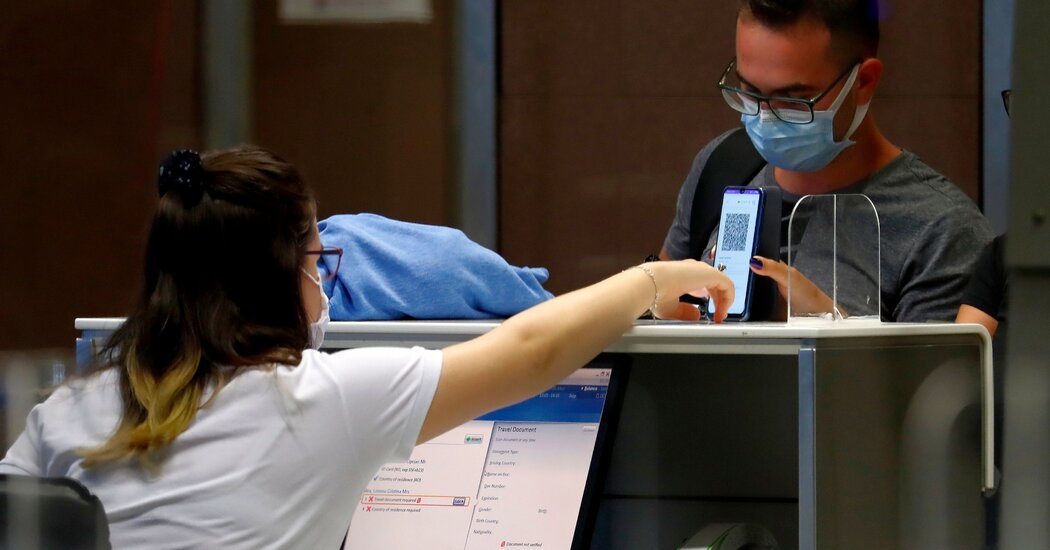
The requirements for entering foreign countries during the pandemic can be confusing and ever-changing, especially when it comes to boosters. Here’s what to expect.John Henretta had been looking forward to his June hiking trip to Switzerland for months.Recently he noticed something surprising: Starting in February, travelers would need to show that they’d gotten their last shot within 270 days of entering Switzerland.Mr. Henretta, who is 75 and lives in Gainesville, Fla., calculated forward from when he got his booster in September. That seemed to mean that any time after June 22, he would no longer be considered fully vaccinated. According to the Swiss consulate in Atlanta, Americans must be fully vaccinated to enter the country, which suggested that he would be prohibited from entering the country in late June when his tour began. Could that really be, he wondered?The answer is yes. But arriving at that conclusion was not easy, given that a number of government and airline sites seemed to contradict one another.“You have to be considered fully vaccinated,” said Divine Bonga, the head of Switzerland’s media team for tourism from North America. If American or Canadian tourists got their booster or second shot more than 270 days before their arrival — a situation that will become more common in late summer and fall — “you cannot enter the country,” she said, adding that the rules could change again before then.Mr. Henretta said he thought he was doing the smart thing by getting his booster when he did. “The real irony is that I made the earliest approved appointment and then it comes back to bite me,” he said.Switzerland is an outlier in limiting boosted visitors in this way. But other governments have also begun to put time limits on how long a visitor is considered fully vaccinated with just one or two doses.Mr. Henretta’s situation offers a particularly thorny illustration of just how confusing and changeable vaccination rules are becoming. Here is a look at how some of these new requirements are playing out across the world.Do other countries put a time limit on vaccinations and boosters?Yes, but most still allow visitors into the country.Malta, for example, puts a time limit on shots. Those who have received two doses must have gotten their last shot within three months. Boosters expire after nine months. But unlike the situation in Switzerland, it’s still possible for travelers with a timed-out vaccine to enter. Those individuals are treated as if they are unvaccinated, meaning that they must present a negative P.C.R. test result and quarantine at a designated facility for 14 days after arrival.Similarly, in Bulgaria, vaccination certificates are considered valid from the 15th to the 270th day after the last dose, with no apparent exception for boosters. But because unvaccinated people may enter, those who have timed out must simply show a negative Covid-19 test result to enter.Israel’s policy is currently the closest to Switzerland’s, but it is likely to change yet again. A second or third shot is only valid for six months, so under those rules someone who got their booster in December wouldn’t be able to enter come June or July unless a fourth shot became available. But according to Tourist Israel, a tour provider which closely tracks the rules, the country is expected to waive time limits on boosters in March. (Exceptions are currently made for people who can show a certificate of recovery from Covid.)How do other types of vaccine expiration dates affect travelers?In some cases — for example, in France and Estonia — there are time limits on the validity of full vaccinations without a booster (nine months for France and a year for Estonia). Because these countries prohibit tourists from the United States and some other countries from visiting if they are not fully vaccinated, that means that a traveler who got their second Moderna shot before May 17 can’t enter France unless they first get a booster. Having a booster makes things easier when it comes to timing constraints since these places treat boosters as a sort of expiration-free additional dose.Ireland and the Czech Republic treat anyone who got their second dose more than nine months ago as if they are unvaccinated. Croatia takes the same approach, but makes it more than a year. But their governments do not prohibit unvaccinated American tourists from entering. A traveler who got their second Moderna shot before May 17 could take a test or get a booster to enter these countries.Are there any countries that require being boosted for entry?Not currently.Austria, for example, does not consider someone fully vaccinated unless they’ve had the booster. But travelers who do not meet that requirement can still enter the country by obtaining a negative result from a P.C.R. test.Why do countries impose these time limits?One reason, Ms. Bonga said, is to encourage people to get boosters.There is also some evidence that coronavirus vaccines stop providing as much protection as time goes on.What if different entities and sites are giving me conflicting information?This may happen. Getting the answer to Mr. Henretta’s query about traveling to Switzerland, for example, was far from straightforward. The fact that the last shot of a vaccine timed out after 270 days was clear, but some sources could not agree on whether unvaccinated Americans could enter the country or not. A representative for the country’s information line for travelers suggested that they could; in that case, Mr. Henretta could simply provide a negative test result. Swiss International Air Lines initially offered the same answer on its site and by email. But the State Secretariat for Migration, two representatives from the Swiss tourism office, and the official Swiss entry tool took a different position: Unvaccinated and partially vaccinated American tourists could not enter. Eventually, a representative from Swiss International Air Lines clarified that although unvaccinated visitors from some countries can enter with a test, unvaccinated Americans cannot because the United States is currently classified as a high-risk country.In the end, almost everyone was finally in agreement: Mr. Henretta could not take his long booked flight unless a fourth shot becomes available or the rules change, which happen fairly frequently.Typically airlines are the best entities to verify requirements with, given that their employees are responsible for deciding who meets entry requirements. (The New York Times also keeps guidelines for American travelers going abroad, which includes links to government sites that can be reviewed.)So what should early booster adopters do if they’ve already planned trips in the summer or fall?Keep checking the rules for their destinations, as they change frequently.In the case of Switzerland, there is a chance the country will change its policy before late June, when early booster adopters begin to find that their last shot is considered too old. In Mr. Henretta’s case, he considered moving up his flight so that he’d arrive several days before his group hiking tour began. But this made him nervous because, as of last week, Switzerland still required proof of vaccination — using the same dating system — to enter a wide range of establishments including restaurants. (In an announcement this week, Switzerland said it has lifted most of its Covid-related restrictions, including vaccination requirements at restaurants, but the entry requirements for Americans and other third country nationals have not changed.)“It’s their country, they can do what they want,” he said of the approach to boosters. But it no longer seemed like the ideal destination for him. Instead he decided he’d apply his deposit toward a hiking tour in another country.Paige McClanahan contributed reporting from Samoëns, France.Follow New York Times Travel on Instagram, Twitter and Facebook. And sign up for our weekly Travel Dispatch newsletter to receive expert tips on traveling smarter and inspiration for your next vacation. Dreaming up a future getaway or just armchair traveling? Check out our 52 Places list for 2022.

Read more →

Three-drug combination prolongs survival in men with metastatic, hormone-sensitive prostate cancer

Results from an international, randomized, double-blind, placebo-controlled, phase 3 clinical trial indicate that adding the androgen-receptor inhibitor darolutamide to androgen-deprivation therapy and chemotherapy prolongs the survival of men with metastatic, hormone-sensitive prostate cancer, a disease that is fatal in most cases. The study, which was conducted by a team led by investigators at Massachusetts General Hospital (MGH), is published in the New England Journal of Medicine.
Standard treatment for patients with metastatic, hormone-sensitive prostate cancer includes the addition of either the chemotherapy drug docetaxel or an androgen-receptor pathway inhibitor to androgen-deprivation therapy, with the latter two treatments acting to lower the effects of androgen hormones, such as testosterone. Clinical trials that have combined all three treatments have generated conflicting results. To provide clarity, investigators designed the large, international ARASENS Trial and randomly assigned 1,306 patients with metastatic, hormone-sensitive prostate cancer in a 1:1 ratio to receive the oral androgen-receptor inhibitor darolutamide or placebo, both in combination with androgen-deprivation therapy and docetaxel.
Survival rates in the two groups were compared after 533 patients had died. Patients were followed for a median of approximately 3.5 years, and those who received darolutamide had a 32.5% lower risk of dying during that time than patients not taking darolutamide. Patients taking darolutamide also experienced greater delays in developing castration-resistant prostate cancer (which no longer responds to treatments that lower testosterone), pain, and the need for other anti-cancer therapies. The combination of three medications did not result in more toxic effects compared with the combination of androgen-deprivation therapy and docetaxel alone.
“Despite progress in recent years, survival is short for patients with metastatic prostate cancer. Results from ARASENS are an important step forward, and triplet therapy with darolutamide should become a new standard of care for the treatment of patients with metastatic hormone-sensitive prostate cancer,” says lead author Matthew R. Smith, MD, PhD, director of the Genitourinary Oncology Program at the Mass General Cancer Center and an associate professor of medicine at Harvard Medical School.
The study was supported by Bayer and Orion Pharma.
Story Source:
Materials provided by Massachusetts General Hospital. Note: Content may be edited for style and length.

Read more →

Unraveling Booster and Vaccine-Timing Rules for International Travelers

The requirements for entering foreign countries during the pandemic can be confusing and ever-changing, especially when it comes to boosters. Here’s what to expect.John Henretta had been looking forward to his June hiking trip to Switzerland for months.Recently he noticed something surprising: Starting in February, travelers would need to show that they’d gotten their last shot within 270 days of entering Switzerland.Mr. Henretta, who is 75 and lives in Gainesville, Fla., calculated forward from when he got his booster in September. That seemed to mean that any time after June 22, he would no longer be considered fully vaccinated. According to the Swiss consulate in Atlanta, Americans must be fully vaccinated to enter the country, which suggested that he would be prohibited from entering the country in late June when his tour began. Could that really be, he wondered?The answer is yes. But arriving at that conclusion was not easy, given that a number of government and airline sites seemed to contradict one another.“You have to be considered fully vaccinated,” said Divine Bonga, the head of Switzerland’s media team for tourism from North America. If American or Canadian tourists got their booster or second shot more than 270 days before their arrival — a situation that will become more common in late summer and fall — “you cannot enter the country,” she said, adding that the rules could change again before then.Mr. Henretta said he thought he was doing the smart thing by getting his booster when he did. “The real irony is that I made the earliest approved appointment and then it comes back to bite me,” he said.Switzerland is an outlier in limiting boosted visitors in this way. But other governments have also begun to put time limits on how long a visitor is considered fully vaccinated with just one or two doses.Mr. Henretta’s situation offers a particularly thorny illustration of just how confusing and changeable vaccination rules are becoming. Here is a look at how some of these new requirements are playing out across the world.Do other countries put a time limit on vaccinations and boosters?Yes, but most still allow visitors into the country.Malta, for example, puts a time limit on shots. Those who have received two doses must have gotten their last shot within three months. Boosters expire after nine months. But unlike the situation in Switzerland, it’s still possible for travelers with a timed-out vaccine to enter. Those individuals are treated as if they are unvaccinated, meaning that they must present a negative P.C.R. test result and quarantine at a designated facility for 14 days after arrival.Similarly, in Bulgaria, vaccination certificates are considered valid from the 15th to the 270th day after the last dose, with no apparent exception for boosters. But because unvaccinated people may enter, those who have timed out must simply show a negative Covid-19 test result to enter.Israel’s policy is currently the closest to Switzerland’s, but it is likely to change yet again. A second or third shot is only valid for six months, so under those rules someone who got their booster in December wouldn’t be able to enter come June or July unless a fourth shot became available. But according to Tourist Israel, a tour provider which closely tracks the rules, the country is expected to waive time limits on boosters in March. (Exceptions are currently made for people who can show a certificate of recovery from Covid.)How do other types of vaccine expiration dates affect travelers?In some cases — for example, in France and Estonia — there are time limits on the validity of full vaccinations without a booster (nine months for France and a year for Estonia). Because these countries prohibit tourists from the United States and some other countries from visiting if they are not fully vaccinated, that means that a traveler who got their second Moderna shot before May 17 can’t enter France unless they first get a booster. Having a booster makes things easier when it comes to timing constraints since these places treat boosters as a sort of expiration-free additional dose.Ireland and the Czech Republic treat anyone who got their second dose more than nine months ago as if they are unvaccinated. Croatia takes the same approach, but makes it more than a year. But their governments do not prohibit unvaccinated American tourists from entering. A traveler who got their second Moderna shot before May 17 could take a test or get a booster to enter these countries.Are there any countries that require being boosted for entry?Not currently.Austria, for example, does not consider someone fully vaccinated unless they’ve had the booster. But travelers who do not meet that requirement can still enter the country by obtaining a negative result from a P.C.R. test.The Coronavirus Pandemic: Key Things to KnowCard 1 of 3The virus in the U.S.

Read more →

Researchers identify protein complex critical in helping control cell death

Cell death plays an important role in normal human development and health but requires tightly orchestrated balance to avert disease. Too much can trigger a massive inflammatory immune response that damages tissues and organs. Not enough can interfere with the body’s ability to fight infection or lead to cancer.
Zhigao Wang, PhD, associate professor of cardiovascular sciences at the University of South Florida Health (USF Health) Morsani College of Medicine, studies the complex molecular processes underlying necroptosis, which combines characteristics of apoptosis (regulated or programmed cell death) and necrosis (unregulated cell death).
During necroptosis dying cells rupture and release their contents. This sends out alarm signals to the immune system, triggering immune cells to fight infection or limit injury. Excessive necroptosis can be a problem in some diseases like stroke or heart attack, when cells die from inadequate blood supply, or in severe COVID-19, when an extreme response to infection causes organ damage or even death.
A new preclinical study by Dr. Wang and colleagues at the University of Texas Southwestern Medical Center identifies a protein complex critical for regulating apoptosis and necroptosis — known as protein phosphatase 1 regulatory subunit 3G/protein phosphatase 1 gamma (PPP1R3G/PP1γ, or PPP1R3G complex). The researchers’ findings suggest that an inhibitor targeting this protein complex may help reduce or prevent excessive necroptosis.
The study was reported Dec. 3, 2021, in Nature Communications.
“Cell death is very complicated process, which requires layers upon layers of brakes to prevent too many cells from dying,” said study principal investigator Dr. Wang, a member of the USF Health Heart Institute. “If you want to protect cells from excessive death, then the protein complex we identified in this study is one of many steps you must control.”
Dr. Wang and colleagues conducted experiments using human cells and a mouse model mimicking the cytokine storm seen in some patients with severe COVID-19 infection. They applied CRISPR genome-wide screening to analyze how cell function, in particular cell death, changes when one gene is knocked out (inactivated).

Read more →

Nebulin no longer nebulous! Scientists obtain first high-resolution 3D image of muscle protein

Scientists have obtained the first high-resolution 3D image of nebulin, a giant actin-binding protein that is an essential component of skeletal muscle. This discovery has brought to light the chance to better understand the role of nebulin, as its functions have remained largely nebulous due to its large size and the difficulty in extracting nebulin in a native state from muscle. The team of Max Planck researchers, led by Stefan Raunser, Director at the Max Planck Institute of Molecular Physiology in Dortmund, in collaboration with Mathias Gautel at King’s College London, used electron cryo-tomography to decipher the structure of nebulin in impressive detail. Their findings could lead to novel therapeutic approaches to treat muscular diseases, as genetic mutations in nebulin are accompanied by a dramatic loss in muscle force known as nemaline myopathy.
An elusive protein
Skeletal and heart muscles contract and relax upon sliding of parallel filaments of the proteins myosin and actin. Nebulin, another long slender protein, which is present only in skeletal muscle, pairs up with actin, stabilising and regulating it. Mutations in the gene encoding nebulin can produce an abnormal nebulin that causes nemaline myopathy, an incurable neuromuscular disorder with various degrees of severity, from muscle weakness to speech impediments and respiratory problems.
Knowing the structure of nebulin and how it interacts with actin could be pivotal to the development of new treatments. But traditional experimental approaches that reconstitute nebulin in vitro have failed because of the size of the protein, its flexibility, and the fact that it is intertwined with actin. Raunser and his team take a different approach: they visualise these proteins directly in their native environment, the muscle, by using a powerful microscopy technique called electron cryo-tomography (cryo-ET). A cryo-ET experiment in the Raunser lab begins with flash-freezing muscle samples. Then, scientists apply a gallium-based ion beam to the sample to shave away extra material from it and reach an ideal thickness of around 100 nanometres for the transmission electron microscope. This powerful tool then acquires multiple images of the sample tilting along an axis. Finally, computational methods render a three-dimensional image at an impressively high resolution.
Pushing the limits of cryo-ET
In a 2021 publication, the Max Planck researchers produced the first detailed 3D image of the sarcomere, the basic contractile unit of skeletal and heart muscle cell that contains actin, myosin and, eventually, the nebulin protein. The resolution of one nanometre (a millionth of a millimetre) was good enough to image actin and myosin but too low for visualising nebulin. This time, the team improved their data acquisition and processing pipeline to obtain a 3D picture of skeletal muscle filaments at near atomic resolution (0.45 nanometres). By comparing the images of the skeletal muscle with the nebulin-free cardiac muscle, the structure of the long nebulin protein became distinct and the researchers were able to build an atomic model of nebulin. “This is the first high-resolution structure using FIB-milling and cryo-ET and it proves that we can reach atomic models in a reliable way. It’s a quantum leap!,” says Raunser.
The findings reveal that each nebulin repeat binds with an actin subunit, demonstrating nebulin’s role as a ruler that dictates the length of the actin filament. Besides, each nebulin repeat interacts with every neighbouring actin subunit, which explains its role as a stabiliser. Finally, the scientists propose that nebulin regulates the binding of actin and myosin, and hence muscle contraction, by interacting with another protein called troponin. Experiments were done on mouse muscles that are very similar to the human ones — and were isolated at King’s College London.
“We obtained a detailed in situ 3D structure of nebulin, actin and myosin heads that can be used to pinpoint the mutations leading to myopathies,” notes Raunser. Pharmaceutical developers can then take advantage of this new structure to locate binding sites for small molecules of pharmaceutical interest, he adds. Driven by their recent success, the group will now concentrate on unveiling the structural details of myosin, the other sliding filament. Such findings could finally help paint the complete picture of the intricate details behind skeletal muscle contraction.
Story Source:
Materials provided by Max Planck Institute of Molecular Physiology. Note: Content may be edited for style and length.

Read more →

Gut health compromised in severe COVID-19

New research of samples of intestine from people who have died of COVID-19 has shown the impact of the virus on the gut immune system.
The study is published today in Frontiers in Immunology by researchers from King’s College London with funding by the Medica Research Council via the UK Coronavirus Immunology Consortium, and support from the NIHR Guy’s and St Thomas’ BRC. It looked at samples of gastrointestinal tract from patients who died after being diagnosed with COVID-19 during the first wave of the pandemic.
Lymphoid tissue in the gut normally maintains healthy intestinal microbial populations which are essential for good health. Researchers observed that the system that would normally regulate the composition of the microbial communities — otherwise known as Peyer’s Patches — were severely disrupted in severe COVID-19. This was irrespective of whether there was evidence of virus present in the gut or not.
While severe COVID-19 can lead to breathing problems and high fever, some patients can experience diarrhoea, nausea and vomiting, which suggests involvement of the gastrointestinal tract.
Professor Jo Spencer, from King’s College London said: “This study shows that in severe COVID-19, this key component of the immune system is disrupted, whether the intestine itself is infected with SARS-CoV-2 or not. This would likely contribute to the disturbances in intestinal microbial populations in COVID-19 reported by others.”
Observations of the samples found the structure and cellularity in Peyer’s Patches — a grouping of lymphoid follicles that lines the small intestines — had been altered independent of the local levels of the virus. This included depletion of the germinal centres, which normally propagate antibody producing cells, in patients who died with COVID-19.
This resulting poor local immunity could lead to a reduction in microbial diversity, known as dysbiosis. Researchers also noted that the findings suggest that oral vaccination may not be effective if the patient is already ill, as the gut immune system is already compromised.
Professor Spencer added: “In the future it will be important to understand factors driving such lymphoid tissue dysregulation in severe inflammatory responses.”
Story Source:
Materials provided by King’s College London. Note: Content may be edited for style and length.

Read more →