Uproar Over ‘Crack Pipes’ Puts Biden Drug Strategy at Risk
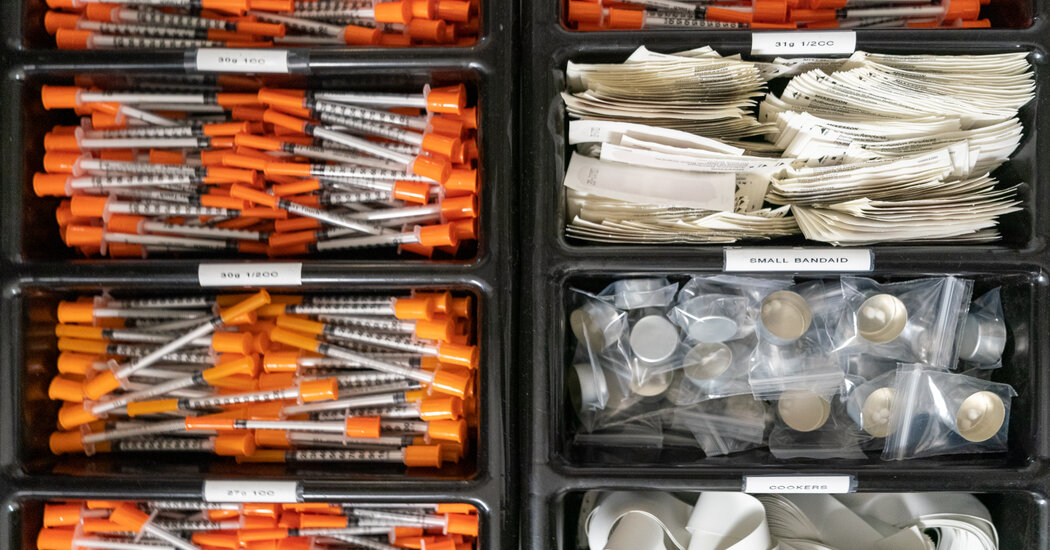
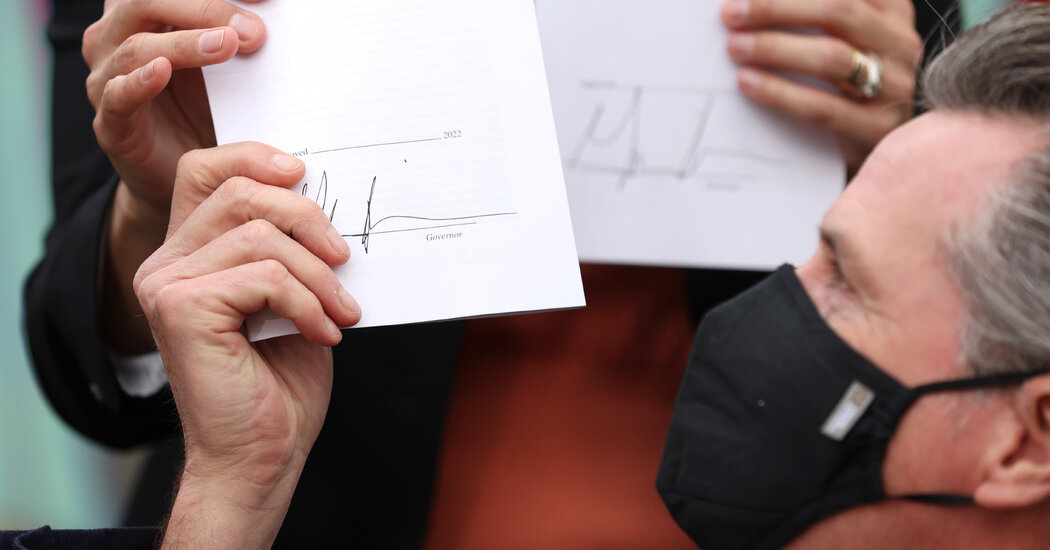
President Biden has made “harm reduction” a central pillar of his plan to fight a record number of drug-related deaths, but a conservative backlash is threatening the effort.WASHINGTON — President Biden came into office vowing to make “harm reduction” — a public health approach geared toward helping drug users stay safe rather than abstain — a central pillar of his drug policy agenda, at a time when illicit fentanyl has driven a surge in overdose deaths.Instead, his strategy is in danger of being derailed by a Washington drama over “crack pipes” that is more about political gamesmanship than public health. The clash is a revival of decades-old fights over clean needle exchange programs that addiction experts hoped had finally been laid to rest.Lawmakers of both parties introduced legislation last week to bar federal funding for “drug paraphernalia” in response to a story in the Washington Free Beacon, a conservative website, asserting that federally funded addiction treatment programs would distribute pipes for smoking crack cocaine as part of “safe smoking kits.” In response, the White House said tax dollars would not be spent on pipes.But with the Beacon story ricocheting around the conservative ecosystem — amplified by Republican including Senators Tom Cotton of Arkansas and Ted Cruz of Texas — Congress is pursuing plans not only to bar federal funding for “crack pipes,” but to impose restrictions on a new program that would have, for the first time, allowed federal funds to be spent on sterile needles for “syringe services” programs.Multiple studies have shown that distributing new syringes to drug users reduces the spread of blood borne diseases among drug users, including H.I.V., hepatitis C and lethal heart infections. The programs also provide naloxone, the overdose-reversing drug, and connect drug users to treatment and other resources.Some harm reduction programs do include sterile pipes — which are used for smoking methamphetamine and fentanyl as well as crack cocaine — in such kits, with the intent of preventing infectious disease or injury in drug users who might otherwise rely on contaminated paraphernalia. Harm reduction workers often try to steer users toward smoking rather than injecting, which poses a higher risk of infection and overdose.But there is no evidence that the Biden administration intended to pay for distribution of pipes. Nonpartisan fact checkers have debunked the claim.“This is tragic — we’ve gone full circle,” said Donna E. Shalala, who fought — and lost — a battle to get federal funding for needle exchange programs in the 1990s, when she was President Bill Clinton’s health secretary. Harm reduction, she added, “is a respectable, important strategy.”Yet even now, decades into a pervasive opioid epidemic that has led to hundreds of thousands of overdose deaths from prescription painkillers, heroin and synthetic fentanyl, which now also frequently turns up in stimulants like methamphetamine and cocaine — and many more from infectious diseases stemming from drug use — addiction experts say the backlash is not entirely surprising.As Regina LaBelle, an addiction policy expert at Georgetown University and the architect of Mr. Biden’s harm reduction policy, said in an interview: “We knew it wasn’t going to be easy.”Roughly 100,000 Americans died last year from drug overdoses, according to preliminary data from the Centers for Disease Control and Prevention — a record number that has more than doubled since 2015.Emergency personnel responded to a call in 2020 for a drug overdose in Paterson, N.J.Chang W. Lee/The New York TimesThe crack pipe fracas arrived just as experts thought they were making progress in getting politicians, including conservative Republicans, to accept harm reduction as a valid strategy. A case in point is former Vice President Mike Pence.In 2015, when Mr. Pence was the governor of Indiana, H.I.V. was spreading with terrifying speed among intravenous drug users in Scott County, a rural pocket of the state. Local, state and federal health officials were urging Mr. Pence to allow clean needles to be distributed to slow the outbreak, but Indiana law made it illegal to possess a syringe without a prescription.Mr. Pence, a steadfast conservative, was morally opposed to syringe exchanges on the grounds that they enabled drug abuse. But when the county sheriff urged him to allow the programs, Mr. Pence prayed about it — then signed an executive order doing so. It helped slow the H.I.V. outbreak to a trickle.Nearly two decades earlier, in 1998, Mr. Clinton blocked federal funding for clean needle programs, despite a personal appeal from Ms. Shalala. In an interview, she said Mr. Clinton had buckled under pressure from Democrats in Congress, who worried they would lose elections by being portrayed as soft on crime.Undeterred, Ms. Shalala encouraged philanthropies to finance needle exchange programs, and instructed National Institutes of Health experts to conduct trainings on needle exchange. Mr. Clinton later said he regretted his decision.When Mr. Biden was elected, addiction experts were elated. The American Rescue Plan, the coronavirus relief package he signed into law last year, set aside $30 million for a new Harm Reduction Grant Program to “support community-based overdose prevention programs, syringe services programs, and other harm reduction services.”It was the first time Congress had created a specific grant for harm reduction programs — which often run on shoestring budgets — and the grant program was exempt from a longstanding ban, renewed annually in spending measures, on using tax dollars to purchase clean needles. Some experts thought the ban might be lifted for good.“We finally got to a place where that ban was going to be lifted, we would see sustainability, we would see a massive shift in our current state of infectious disease,” said Chad Sabora, vice president of government and public relations at the Indiana Center for Recovery, a treatment center. He called the new controversy “heartbreaking.”Safe smoking kits are often distributed by syringe service programs, and often include glass stems, which function as pipes, as well as lip balm, alcohol swabs, rubber tips and other items to protect against mouth sores and cuts that can spread disease. The guidelines for the new federal grant program are not specific about it about whether the kits can include pipes.The law is murky; a 1986 law classifies crack pipes (but not needles) as drug paraphernalia and makes it illegal to sell or ship them. Ms. LaBelle said that law, and similar state laws, arguably could preclude the government from funding the glass stems that serve as pipes.After the uproar over the Free Beacon article, the White House Press Secretary, Jen Psaki, said glass pipes were “never a part of the kit,” insisting the story was untrue.Conservatives accused the White House of reversing itself.“The Biden administration is in cleanup mode because they got caught funding crack pipe distribution,” Mr. Cotton wrote on Twitter.Many addiction experts saw the political blowup over crack pipes as having racist undertones. Dahlia Heller, an addiction policy expert at Vital Strategies, a global nonprofit organization that supports harm reduction, said the Beacon story was “calling up a racist trope, very clearly, of Black people smoking crack. It was dog whistling a 1980s war on drugs.”Mr. Cotton, who leads a bipartisan commission to combat the trafficking of synthetic opioids — particularly fentanyl — was among those who responded by introducing legislation to ban funding for drug paraphernalia. Yet even as he expressed his outrage over crack pipes, he issued a commission report citing needle exchange programs as a well-documented way to get people struggling with drug abuse into treatment.Drug treatment programs funded by the federal government also include the use of naloxone, or Narcan, which can save drug users who overdose.Whitney Curtis for The New York TimesMr. Cotton’s spokeswoman, Caroline Tabler, said the commission did not suggest expanding needle exchange programs. Mr. Cotton opposes syringe services programs, which he believes “would enable drug use, empower drug suppliers, and harm Americans,” she said. Mr. Cotton is not the only lawmaker parsing his words. Senator Joe Manchin III, Democrat of West Virginia, reacted to the Beacon story by joining with Senator Marco Rubio, Republican of Florida, to introduce the PIPES Act, which would bar federal funds from being used to purchase “drug paraphernalia, such as crack pipes or needles.” The initials stand for Preventing Illicit Paraphernalia for Exchange Systems.Mr. Manchin’s home state is West Virginia, a longtime epicenter of the opioid crisis. The state capital, Charleston shuttered its harm reduction program in 2018; by the end of the year Charleston was leading the state in overdose deaths. West Virginia is among a number of states that have recently passed laws making it more difficult for syringe services to operate, as state lawmakers continue to oppose them on the grounds that they enable drug use and draw community complaints.“Manchin was never going to save us, but now it looks like he is going to bury us,” said Joe Solomon, a founder of Solutions Oriented Addiction Response, or SOAR, a which ran a syringe exchange program in Charleston until last year, when the City Council imposed restrictions that effectively forced its closure.Yet in 2016, Mr. Manchin praised President Barack Obama for an initiative that included needle exchange programs. That program was the result of a compromise: after nearly 30 years of an outright ban on any funding for needle exchange programs, Congress agreed to pay for program operations — but not the needles themselves — so long as state and local authorities, in consultation with the C.D.C., determined that a community was in danger of an infectious disease outbreak.The Manchin-Rubio bill would retain the current language about the C.D.C., but would extend the ban on purchasing needles to the American Rescue Plan funding. Its fate, and the fate of bills like it, is uncertain. Mr. Rubio tried unsuccessfully to force senators to vote on the measure before passing a spending resolution last week, and Congress is now on recess until the end of the month.In the meantime, Ms. LaBelle said, she and other experts have some work to do.“We have a lot of ingrained ideas about substance use and people are working hard to make sure that the general public understands what addiction is, what a substance use disorder is — that it’s not a moral failing,” she said. “But we’re still not at that point.”

Read more →
Got a Covid Booster? You Probably Won’t Need Another for a Long Time

A flurry of new studies suggest that several parts of the immune system can mount a sustained, potent response to any coronavirus variant.As people across the world grapple with the prospect of living with the coronavirus for the foreseeable future, one question looms large: How soon before they need yet another shot?Not for many months, and perhaps not for years, according to a flurry of new studies.Three doses of a Covid vaccine — or even just two — are enough to protect most people from serious illness and death for a long time, the studies suggest.“We’re starting to see now diminishing returns on the number of additional doses,” said John Wherry, director of the Institute for immunology at the University of Pennsylvania. Although people over 65 or at high risk of illness may benefit from a fourth vaccine dose, it may be unnecessary for most people, he added.Federal health officials including Dr. Anthony S. Fauci, the Biden administration’s top Covid adviser, have also said that they are unlikely to recommend a fourth dose before the fall.The Omicron variant can dodge antibodies — immune molecules that prevent the virus from infecting cells — produced after two doses of a Covid vaccine. But a third shot of the mRNA vaccines made by Pfizer-BioNTech or by Moderna prompts the body to make a much wider variety of antibodies, which would be difficult for any variant of the virus to evade, according to the most recent study, posted online on Tuesday.The diverse repertoire of antibodies produced should be able to protect people from new variants, even those that differ significantly from the original version of the virus, the study suggests.“If people are exposed to another variant like Omicron, they now got some extra ammunition to fight it,” said Dr. Julie McElrath, an infectious disease physician and immunologist at Fred Hutchinson Cancer Research Center in Seattle.What’s more, other parts of the immune system can remember and destroy the virus over many months if not years, according to at least four studies published in top-tier journals over the past month.Specialized immune cells called T cells produced after immunization by four brands of Covid vaccine — Pfizer-BioNTech, Moderna, Johnson & Johnson and Novavax — are about 80 percent as powerful against Omicron as other variants, the research found. Given how different Omicron’s mutations are from previous variants, it’s very likely that T cells would mount a similarly robust attack on any future variant as well, researchers said.This matches what scientists have found for the SARS coronavirus, which killed nearly 800 people in a 2003 epidemic in Asia. In people exposed to that virus, T cells have lasted more than 17 years. Evidence so far indicates that the immune cells for the new coronavirus — sometimes called memory cells — may also decline very slowly, experts said.“Memory responses can last for ages,” said Wendy Burgers, an immunologist at the University of Cape Town who led one of the studies, published in the journal Nature. “Potentially, the T-cell response is extremely long lived.”Throughout the pandemic, a disproportionate amount of research attention has gone to antibodies, the body’s first line of defense against a virus. That’s partly because these molecules are relatively easy to study: They can be measured from a drop of blood.Analyzing immune cells, by contrast, requires milliliters of blood, skill, specialized equipment — and a lot of time. “It’s orders of magnitude slower and more laborious,” Dr. Burgers said.Few labs have the wherewithal to study these cells, and their findings lag weeks behind those on antibodies. Perhaps as a result, scientists have frequently overlooked the importance of other parts of the immune system, experts said.“Most people don’t even know what they are — a lot of doctors and scientists are not completely clear what a T cell is,” said Dr. Dan Barouch, a virologist at Beth Israel Deaconess Medical Center in Boston who led one of the T-cell studies.Researchers found that all four vaccines studied — Pfizer-BioNTech, Moderna, Johnson & Johnson and Novavax — produce T cells that retain much of their potency against the Omicron variant.Kenny Holston for The New York Times“Fundamentally, I would argue that T cells are probably more important than what many people have given them credit for,” Dr. Barouch said.Antibodies spike after every shot of vaccine — or after each exposure to the virus — and inevitably decline within a few weeks to months.Waning antibody levels after two vaccine doses prompted federal officials to recommend boosters for everyone older than 12. The extra shots fortified antibody levels and helped to contain Omicron’s spread, but they too appear to lose some of their ability to prevent infections within four months, according to recent data from the Centers for Disease Control and Prevention.Antibodies recognize two or three key parts of the spike protein, a protrusion on the outside of the coronavirus that allows it to latch on to human cells. But T cells detect many more parts of the spike, and so are less likely to fail when the virus gains mutations in some of them.Vaccines also encode a memory of the virus in B cells, which can churn out fresh batches of antibodies within four or five days after a new exposure to the virus.The Coronavirus Pandemic: Key Things to KnowCard 1 of 3C.D.C. data.

Read more →

Extra Covid booster in spring for over-75s and high risk

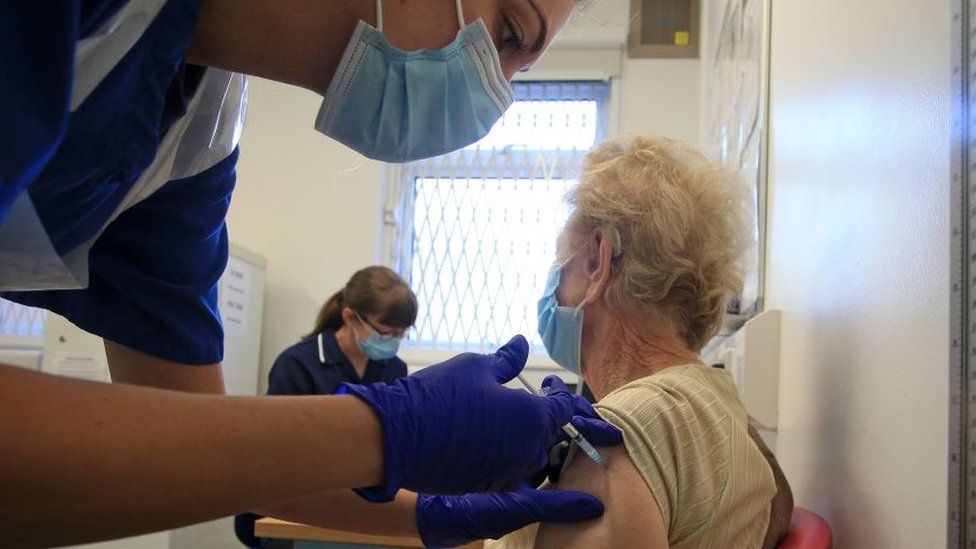
SharecloseShare pageCopy linkAbout sharingImage source, Getty ImagesAn additional booster dose will be offered to all adults over-75 and the most vulnerable over-12s in the UK this spring.The UK’s vaccines advisers said an extra dose would help top up their protection against severe Covid-19.Many of the oldest received their latest shot back in the autumn and immunity may now be waning, it said.An autumn booster programme, aimed at a wider group of people, is also planned later this year.Up until now, only people with severely weakened immune systems had been eligible for a fourth dose – three doses plus a booster.Those now being offered a second booster this spring, to be administered six months after their previous dose, are:adults aged 75 years and over residents in a care home for older adultsindividuals aged 12 years and over who are immunosuppressedAdults will be offered a Pfizer or Moderna vaccine, while children aged 12-18 will receive Pfizer.Around 7.2 million people in the UK aged over 75, who have already had their primary course of Covid vaccines, will be eligible for the extra spring booster.Another half a million people who are immunosuppressed, with diseases such as blood cancer or who’ve had an organ transplant or are receiving chemotherapy, will also be eligible for the additional booster.How many people have had boosters so far?Living with Covid plan to restore our freedom – PMWhat Covid rules remain across the UK?Booster at least 80% effective against severe Omicron How do we know Covid vaccines are safe?The Joint Committee on Vaccination and Immunisation (JCVI) said vaccinating these groups was a “precautionary” move and did not mean there was any current danger to their health.But because people in these groups are at higher risk from Covid-19, have weaker immune systems than other people and were last vaccinated in September of October 2021, their protection from vaccines might be waning more quickly.Data suggests that older people who have had two doses of a Covid vaccine have about 45% protection against hospital admission with Omicron, rising to 90% straight after their first booster.Ten weeks later, that protection has dropped to about 88% but the JCVI believes that even a small drop-off in protection among vulnerable and older people can have a large impact, including on hospital admissions and the NHS.Winter is seen to be the season which poses the greatest threat from Covid, particularly for older adults, the NHS and case homes.Top-up jabsProf Wei Shen Lim, chair of Covid vaccination at the JCVI, said: “Last year’s booster vaccination programme has so far provided excellent protection against severe Covid-19.”To maintain high levels of protection for the most vulnerable individuals in the population, an extra spring dose of vaccine is advised ahead of an expected autumn booster programme later this year.” Health and Social Care Secretary Sajid Javid said he had accepted the JCVI’s advice and asked the NHS to prepare to offer a vaccine to those eligible. He added that further details would be sent out in due course. “We know immunity to Covid-19 begins to wane over time. That’s why we’re offering a spring booster to those people at higher risk of serious Covid-19 to make sure they maintain a high level of protection,” he said. “It’s important that everyone gets their top-up jabs as soon as they’re eligible.”More on this storyAre we ready for last Covid rule to be ditched?How do I book my Covid booster?Booster at least 80% effective against severe OmicronEngland to offer Covid jab to five to 11-year-oldsScotland offers Covid jabs to children aged 5-11Five to 11-year-olds in Wales offered Covid jabsVaccinated less likely to develop long CovidCoronavirus (COVID-19) vaccine for people with a severely weakened immune system – NHSThe BBC is not responsible for the content of external sites.

Read more →

Blueprint for proteins: How mRNA gets its final shape

Proteins need to interact in a complex manner for a so-called “messenger RNA” (mRNA) to be created in human cells from a precursor molecule. mRNA provides a blueprint for proteins; the first vaccines against the coronavirus are also based on mRNAs. A team from Martin Luther University Halle-Wittenberg (MLU) and the Max Planck Institute (MPI) of Biochemistry in Martinsried has discovered how an essential final step in the production of mRNA precisely works. The study was published in Genes & Development.
Proteins are responsible for all of the body’s essential processes. In a sense, the genes in the human genome act as building instructions for them. However, an intermediate step is necessary before new proteins can be created: “First the DNA must be transcribed: A chain-like precursor RNA is produced which is an exact copy of the DNA. From this, several steps are required to create the mature mRNA. This process is essential for the cell to build new proteins,” says biochemist Professor Elmar Wahle from MLU who led the team alongside Professor Elena Conti, an expert in structural biology at the MPI of Biochemistry.
There is no room for error in this complicated process — even the smallest changes in the structure of a protein can impair its function and lead to the development of diseases. “The mRNA not only determines the structure of a protein, but also how much of it is produced. Therefore, it is important that its structure is also precisely controlled,” Wahle adds. The proteins involved in reading out and transcribing DNA into precursor RNA are already known to scientists. However, an important sub-step in the process of creating mature mRNA has only been vaguely understood until now. First, the chains of the mRNA precursors are cleaved at a specific point to create uniform products. Then, a long molecular chain, the so-called poly(A) tail, is attached to one end of the strand. This ensures that the mRNA is not directly degraded again in the cells, and it is also important for protein synthesis.
The researchers from Halle and Martinsried joined forces to investigate these final steps in the production of mRNA more closely. To do this, the team from MLU first recreated the process in a test tube. The scientists had to pick the right proteins from a pool of 80 possible candidates. Those had to be mixed with the precursor RNA in a correct ratio before both reactions could take place. The researchers at MPI studied the process in more detail using cryo-electron microscopy. “We basically reproduced the conditions in a normal cell, although the natural process is probably even more complex,” explains Wahle. Sixteen proteins are involved in creating the final molecules. “The process is universal, affecting every cell and every mRNA molecule in the body,” says Felix Sandmeir from the MPI of Biochemistry.
On a side note, the process used to produce the Pfizer/Biontech and Moderna vaccines is much simpler: “The mRNA is created according to the same principle, but in contrast to the human cell, very simple enzymes are used and the complicated conversion of a precursor into the mature mRNA can be avoided,” says Wahle in conclusion.
The study was funded in part by the Deutsche Forschungsgemeinschaft (DFG, German Research Foundation).
Story Source:
Materials provided by Martin-Luther-Universität Halle-Wittenberg. Note: Content may be edited for style and length.

Read more →

When People Take Pandemic Precautions, Gorillas Breathe Easier

A preliminary report suggests that mask wearing and social distancing may curb the spread of disease from humans to great apes.The mountain gorillas that live in Rwanda’s Volcanoes National Park have frequent encounters with humans. On any given day, the animals might come across smartphone-toting tourists, fecal-sample-swiping biologists or antibiotic-administering veterinarians.So when the coronavirus started spreading around the world in early 2020, experts worried that people might unwittingly pass the virus to the endangered apes, which are known to be vulnerable to a variety of human pathogens.“In the past, other human viruses have caused respiratory illness in the gorillas,” said Dr. Kirsten Gilardi, the executive director of Gorilla Doctors, an international team of veterinarians that provides care for wild gorillas. “We were on pins and needles wondering, OK, if this virus gets into the mountain gorillas, what’s it going to do?”In March 2020, in an effort to safeguard the animals, Rwanda temporarily closed Volcanoes National Park. When the park reopened a few months later, it had strict new precautions in place, including requiring tourists and researchers to wear masks and keep their distance from the gorillas. These rules, plus a general drop-off in tourism, mean that the park’s gorillas have had relatively few close encounters with humans during the pandemic, Dr. Gilardi said.And so far, there have been no signs of the coronavirus among the gorillas. But in trying to control an extraordinary health threat, officials may have also alleviated a more everyday one — the routine transmission of respiratory diseases from humans to great apes. Since March 2020, the number of outbreaks of respiratory illness among the park’s gorillas has fallen to 1.6 a year, on average, from 5.4.“The takeaway is these best-practice measures for protecting great ape populations appear to be working,” said Dr. Gilardi, who reported the findings in Nature this month. The report was co-written by Prosper Uwingeli, the chief warden of Volcanoes National Park.The analysis is preliminary, and the researchers cannot prove that the gorillas’ health improved because humans kept their distance. But the findings suggest that even after the pandemic wanes, stricter controls may be needed to help protect endangered apes from catching diseases from people, scientists said.Rwanda’s Volcanoes National Park now requires tourists, park personnel, researchers and other people encountering gorillas to wear face masks.Skyler Bishop for Gorilla Doctors“The same types of things that can protect wild animals that are susceptible to Covid can also protect them from other human pathogens,” said Thomas Gillespie, a disease ecologist at Emory University who frequently works with wild primates but was not involved in the new research.Just over 1,000 mountain gorillas remain in the wild, divided between national parks in Rwanda, Uganda and the Democratic Republic of Congo. Many gorillas have been deliberately habituated to humans to help facilitate both research and eco-tourism.The apes face a variety of threats, including poaching and habitat loss, but respiratory disease is also a major concern and a leading cause of death in mountain gorillas.Outbreaks of respiratory illnesses have become common among the animals. “They happen with regularity,” said Dr. Gilardi, who is also a wildlife veterinarian at the University of California, Davis. “And we don’t always know what causes them.”Bacteria and viruses circulate naturally among gorillas and other apes, some of which can cause respiratory infections. But scientists have also documented numerous instances in which human pathogens, including the rhinoviruses and coronaviruses responsible for common colds, found their way into great apes.In many instances, respiratory viruses cause relatively mild, and familiar, symptoms in infected gorillas.“They cough, they sneeze, they have runny noses, they might have goopy eyes, they might be off their feed, lethargic, literally not wanting to get out of bed in the morning,” Dr. Gilardi said. (Gorillas make, and slumber in, night nests.) “They look and act just like we do when we have an upper respiratory tract infection.”But these outbreaks can sometimes cause severe illness, including pneumonia, or even death. In 2009, a human respiratory virus sickened 11 of the 12 gorillas in a single family group in Rwanda. Five of the animals required veterinary care and two others, including an infant, died.To curb this cross-species disease transfer, the International Union for Conservation of Nature issued a set of guidelines in 2015 for scientists, tourists and other people who might encounter great apes. The recommendations include remaining at least 23 feet from the animals and wearing a face mask when near them. (Dr. Gilardi and Dr. Gillespie were both among the authors of the guidelines.)But not all countries adopted, or enforced, the recommendations, Dr. Gillespie said. Until the pandemic hit. “The pandemic has really brought everyone up toward full adherence,” he said.Volcanoes National Park now requires tourists, park personnel, researchers and other people encountering gorillas to wear face masks, which had not previously been mandated. It also requires people to remain nearly 33 feet away from the animals. Tourism has not fully rebounded either, Dr. Gilardi said.The difference has been noticeable, she said: “We’re just not seeing as much respiratory disease right now as we have in years past.’”Other great ape sites are currently collecting their own data on how, and whether, the incidence of infectious disease has changed since the beginning of the pandemic, Dr. Gillespie said. And the same precautions can be used to help safeguard a wide range of wild primates, he added.“Many of these best practices can be applied very successfully to other endangered and threatened species,” Dr. Gillespie said. “People need to be doing these things Covid or not.”

Read more →

A Key to Returning to Normal Is Paid Sick Leave, Democrats Say

There were a record number of people home sick with Covid in January. Democrats are trying to revive paid pandemic sick leave.The Omicron wave hammered the American work force, sending more people home sick than at any other point in the pandemic. Yet unlike in 2020, there is no federally required paid sick leave for workers — and none at all for the one-fifth of workers who don’t receive it from their employers.Now, as Omicron recedes and many restrictions are being lifted, and as more of the country begins to treat Covid as an unavoidable part of life, some Democratic lawmakers and others are trying to revive paid leave for Covid-related reasons.In January, 2.3 percent of the American work force was home sick, according to the Bureau of Labor Statistics — three times that of a typical prepandemic month.The Rate of People Out Sick in JanuaryShare of employed people who were not at work because of illness

Read more →

In an Arctic Outpost, Friday Nights Are for Curling

INUVIK, Northwest Territories — Alison Lennie steps out of her house into 29 degrees below zero.It’s twilight, and the cold stings instantly. Eyelashes crystallize. In five minutes, exposed skin goes numb. Car engines strain against the cold, which thickens motor oil and slows the chemical reactions inside the batteries.Ms. Lennie grew up here, 120 miles north of the Arctic Circle, so she knows all of this. She turns the key in her ignition 25 minutes before she has to leave.To drive through Inuvik at night is to navigate whiteness, guessing where the edge of the road drops off under layers of ice and snow. If you pass people, they’re hard to recognize, blobs in parkas. Tonight, the moon is full, the air still.Ms. Lennie, 36, pulls her truck into the parking lot of the recreation center, a windowless, warehouse-size structure of corrugated metal, and slams the door behind her.She steps inside, and they look up at her from round tables — women, like herself, peeling off their layers of clothing, cheeks still burning from the outdoors. Her girls. They were waiting for her.The ice road leading north out of Inuvik is open only in winter months. Alison Lennie walking through the snow on her way into the recreation center, a windowless structure of corrugated metal where she curls.Friday Night Fun Night at the Inuvik Curling Center.Eleven years ago, when Heather Mair, a sociologist at the University of Waterloo in Ontario, began a survey of female curlers in the Northwest Territories of Canada, she found something she had not expected: Many of them said curling had helped with their mental health.It pushed them to go out during the darkest months of the year, when the sun barely crosses the horizon and people withdraw into their houses. For women who curled, withdrawing was not an option, because the team depended on them.“They know they need to get out,” Ms. Mair said. “When they stay home, they are unwell.”The communities of the Northwest Territories, with a population descended from Indigenous and white settler families, stand out for their struggles with mental health, which are in many cases connected to Canada’s damaging colonial history.This is a familiar story to Ms. Lennie, the daughter of an Inuvialuit man and a white woman who moved to the Far North as a nurse. At the age of 7, Ms. Lennie’s father was sent to a residential school with the aim of “westernizing” him, taught by priests and nuns who punished him for using his native language, she said.He learned silence there, and it stayed with him as an adult.“You didn’t talk, you didn’t cry, you didn’t have emotion,” she said. “You grew up in a system that taught that out of you.”She can’t remember anyone talking about mental health when she was growing up, not even after her uncle, and then her cousin, died by suicide. That history has spilled into a third generation, she said, children growing up around addiction and violence, paying for what happened to their parents. She carries images of the dog tags that her uncle and grandmother were asked to wear, the “Eskimo IDs.”Still, when Ms. Lennie tried living in the south, she couldn’t wait to return. She hated the traffic and the pollution. She was used to being near bodies of water. Her husband, who is from Tuktoyaktuk, on the Arctic Ocean, didn’t belong in the city.And, she said, something about the dark months pulls people together.When Ms. Lennie tried living briefly in Edmonton, she couldn’t wait to return to Inuvik. She hated the traffic and the pollution. Ms. Lennie and her husband, Tony, play with their children in minus 34 degree weather.Ms. Lennie serving dinner to her children. In the winter months, family life can settle into a grim, repetitive pattern. Curling provides a break.Inuvik is a town with one stoplight. One dive bar, with a reputation for rowdiness. Two restaurants. No movie theater.Tannis Bain, 39, curls with Ms. Lennie. In the winter months, family life settles into a grim, repetitive pattern. Ms. Bain’s children leave for school in the dark, and return home in the dark.“Sometimes you would be inside every day,” she said. “You work, go home, work, go home.”The coronavirus pandemic made their world narrower. Now there was no small talk with neighbors in the grocery store. She began to notice herself receding into a bubble, with less and less interest in meeting new people.“I was like, I’ve got to snap out of it,” Ms. Bain said.Ms. Lennie keeps an eye on the other women, takes note when they seem to be struggling. She prods them, in a friendly way, with a speech about “keeping each other accountable.”It goes like this: “Sometimes there are nights where I’m like, It’s so warm inside, I don’t feel like getting out on the ice. But I signed up for a team and I said I would.”Ms. Bain’s three daughters curl. Tyra, who is 15, goes to the recreation center four times a week, after school and work and on her lunch hours, which often feels like a huge effort.But when she gets onto the ice, Tyra said, she is totally immersed.“When I’m curling, I’m so focused on curling, you don’t think about anything else,” she said.Tannis Bain, left, and Ms. Lennie play together on a curling team. Team members hold one another accountable.In winter months, when the sun barely crosses the horizon and people withdraw into their houses, curling is a reason for people to go out and get together.During the winter, Tyra Bain walks to school in the dark and walks home in the dark. On this particular Friday night, Ms. Lennie’s team is curling against a team of teachers from Ontario, women they have never met.The Ontario women are horsing around — bumping hips, bopping up and down on the ice, celebrating raucously when they score. They are new to curling, and to Inuvik, which one of them describes as “this little slice of heaven in the Arctic.”Ms. Lennie is as she always is. Serious. Focused. No dancing.“Yeah, we’re there to play,” she said. “It’s fun to win, and it’s fun to make good shots.”In a game of curling, brought over by Scottish settlers in the 18th century, two teams of players slide granite orbs across a long sheet of ice, competing to see which team, after 16 throws, has its rocks closest to a target, known as a button.On this night Ms. Lennie is the team’s skip, or captain, which requires a constant focus on strategy. Her babysitter keeps texting her, breaking her focus. She wishes she could just play, without all the thinking. But this is where she is tonight, always having to stay a rock ahead.The ice is different this time, because the regular ice makers aren’t in town. It is a game of flukes. And the women from Ontario surprise themselves, a little, by scoring two on the first end. It begins to look like a tie.With a few minutes left, Ms. Lennie is staring at a problem: Two of the other team’s rocks are in the ring, having come to rest six inches apart. To win, she must somehow use one stone to knock both of them outside the house, as the ring is called.She releases it, and then it is all physics. It hits the first, and bounces off it with such force that it careens into the other, and both of the other team’s rocks slide out: a double.Then there is only one turn left, for one of the teachers from Ontario, Jenn Schuett. Eight women stare at the shot, which is not easy. Ms. Shuett takes a deep breath and throws, hoping to connect to anything at all that might break up the other team’s shots.Ms. Lennie watches as the shot veers left, and then something happens — a nub on the ice? a quirk of rotation? — so that the shot slides to the right, almost as if someone had grabbed it. It scatters her team’s stones.Ms. Schuett watches in disbelief.“I’ll never be able to do that again,” she said.It isn’t enough to change the outcome of the game. It’s just another night of small-town sports, under fluorescent lighting, in a recreation center surrounded by tundra.But they will talk about it days later, what happened with that rock. The women touch elbows. And then they go off to drink beer.On nights when Ms. Lennie doesn’t feel like leaving the house, she reminds herself that her teammates are counting on her.The winning teams buy their opponents beers after curling on Friday nights.A full moon over Dempster Highway, the road to the next closest town, Tuktoyaktuk, gateway to the Arctic Ocean.

Read more →

Jane Brody: Here's How Health Advice Changed Since I Joined The Times

Before I go, I want to highlight the breathtaking evolution in health advice that has occurred since I joined The Times in 1965.The very first Personal Health column, published in The New York Times on Nov. 10, 1976, appeared under a headline that I, its author, took seriously and hoped readers would too: “Jogging Is Like a Drug: Watch Dosage, Beware the Problems.”In the decades that followed, Personal Health by Jane E. Brody has had a very rewarding run. Countless readers have told me how one or more of my columns had improved — or even saved — their lives or that of their loved ones. Doctors often wrote to say they used my columns to help inform their patients.When The Times asked me to take on this weekly assignment, I was assured I could discuss any topic relevant to people’s health and well-being. Rarely was there any debate over the topics I wanted to take on — though there was the column on masturbation in 1982, which was ultimately published four years later when the paper overcame its squeamishness about sexuality.However, the times, and The Times, have changed and, dear readers, I’ve decided the time has come for me to say farewell to writing this column. Others may well take up the cudgel. But before I go, I want to highlight the breathtaking evolution in information and advice about several major health topics that has occurred since I joined The Times as a health and science writer in 1965.I based the advice in these columns on the best available evidence at the time I wrote them. But the very nature of the scientific process dictates that medicine evolves, and will continue to do so. As occurred with the coronavirus, this evolution will necessarily spawn new health recommendations. Only one thing remains static and continues to jeopardize the health of all who fall for it: quackery.The developments I’ve highlighted below are ones that touched many of your lives, but they merely scratch the surface of health and lifesaving improvements I’ve witnessed during my 58 years in health journalism.Diet. One of the most significant shifts has concerned dietary fats. Having been schooled in research-based nutrition and health during my first job writing science in Minneapolis from 1963 to 1965, I cheered the 1977 Dietary Goals issued by the Senate Select Committee on Nutrition that urged Americans to eat less high-fat meat, butter, eggs and refined sugar and eat more fruits, vegetables and complex carbohydrates. The report fostered a dietary change that was already underway to replace heart-damaging saturated fats from animals, like butter and lard, with less saturated vegetable-based margarines and other solid vegetable fats.Then studies found the trans fats in these hydrogenated vegetable products were even more damaging to arteries than animal fats. Dietary recommendations evolved to feature olive oil, a mainstay of a Mediterranean style of eating, and other unsaturated fats like canola, grapeseed and nut oils. More recently, dietary advice has shifted away from labeling foods as “good” or “bad” and focusing instead on overall patterns of eating that promote good health. But time will tell whether specific dietary fats, or the much vaunted Mediterranean diet currently embraced by many doctors, will fall prey to future findings.Smoking. I’m very proud of the fact-based campaign I waged in The Times to curb Americans’ most dangerous yet readily avoidable habit. I reported on every new finding of smoking’s health-damaging effects and suggested paths to quitting. I hope I played a role in the albeit painfully slow decline in smoking by adults, from its peak of 42 percent in 1964 to 14 percent in 2019, the latest statistics from the Centers for Disease Control and Prevention. Alas, the recent resurgence of smoking by young adults after a 30-year decline is truly alarming. It remains to be seen where vaping and marijuana smoking will take us.Surgery. Early in my career, radical mastectomy was the gold standard for treating breast cancer, and I recall saying that would be my choice if I got this disease. Little by little, through large, costly clinical trials, this body-deforming operation has been almost entirely replaced by early detection and minimal surgery, often followed by radiation and chemotherapy, while survival rates have soared.Likewise, I’ve witnessed major improvements in surgery to remove cataracts (now an outpatient procedure); replace hips, knees, shoulders, elbows and even finger joints crippled by arthritis; and prevent heart attacks and strokes by bypassing obstructed arteries. Not to mention the ability to transplant organs between genetically different people, or even from animals to humans. Today, most recipients of heart and lung transplants achieve long-term benefits.Pediatric surgeons now operate to correct or minimize major potentially fatal defects, including spina bifida and obstructed airways, while babies are still in the womb. Intrauterine gene therapy, now being tested in fetal animals, is likely next. And bariatric surgeons can now safely facilitate substantial weight loss in teenagers and adults with health-threatening obesity when dietary changes don’t suffice.Sexuality and gender. Our understanding of human sexuality has also undergone a cataclysmic shift toward medical and cultural acceptance of lesbian, gay, transgender and queer people. It may shock you to learn that a Page 1 article I wrote in 1971 suggested that psychotherapy could help homosexuals become heterosexual, an idea that I, along with health professionals, now scorn as abusive.Medicine now recognizes and accepts a wide range of gender and sexual identities. Increasingly, people who identify as transgender, for example, are able to adopt a gender identity or gender expression that differs from what is typically associated with the “male” or “female” sex they were assigned at birth.Mental health. The closing of most psychiatric hospitals and deinstitutionalization of people with serious emotional disorders during the 1950s and ’60s lit a fire under long-needed efforts to develop better therapies for mental illness. There are now many effective medications and other treatments for common conditions including bipolar disorder, depression, anxiety, attention deficit hyperactivity disorder, post-traumatic stress disorder and psychosis.The recognition of autism as a spectrum disorder is fostering greater understanding of children and adults with this condition. Leaders in their field, like the animal scientist Temple Grandin and the actor Sir Anthony Hopkins, who have talked openly about being on the spectrum, are helping others find acceptance in society.More than anything else, what’s kept me writing beyond age 80 is the feedback I’ve received from readers with heartwarming personal accounts of lives transformed through the information and advice my column provided. May my successors glean as much satisfaction as I have from researching and writing about whatever the future holds.

Read more →

Covid: Living with Covid plan will restore freedom, says Boris Johnson

SharecloseShare pageCopy linkAbout sharingImage source, Getty ImagesBoris Johnson is due to set out his plans to scrap all remaining Covid legal restrictions in England, including the requirement to isolate. The prime minister is to meet the Cabinet this morning before updating MPs in the Commons.Mr Johnson said the end to restrictions will return people’s freedom and “mark a moment of pride as we begin to learn to live with Covid”.Some experts urged caution and Labour questioned plans to reduce testing.Speaking before Monday’s announcement, Mr Johnson said his plan for moving out of the pandemic would bring society “towards a return to normality” after “one of the most difficult periods in our country’s history”.No 10 said the success of the Covid vaccination programme had put England in a “strong position to consider lifting the remaining legal restrictions”.It added the pandemic was “not over” and the plan for living with Covid would take a “cautious approach”, which would retain “some surveillance systems and plans for contingency measures which can be stood up if needed to respond to new variants”.Prof Sir Andrew Pollard, who helped develop the Oxford-AstraZeneca vaccine, told the BBC’s Today programme that “there isn’t a right or wrong answer” to when restrictions change. He said: “If restrictions change this week, next week, or the week after, in six months’ time the number of transmission events will likely be very similar.”Prof Pollard said short-term delays in when the government makes a decision about easing Covid restrictions “probably doesn’t have a huge impact”. He added that having a surveillance system – “an early warning system” – in place whenever restrictions are eased will be “critical”. This is because scientists will be able to monitor new variants of concern.A controversial call for governmentCovid is no longer an exceptional threat. Despite the huge wave of infections, the numbers dying in recent months has been similar to what you would expect during a normal winter.Most agree some scaling back is warranted, but it needs to be done carefully.During the pandemic £37 billion has been set aside for test and trace. This is a huge sum – more than has been spent on GP care.Mass PCR testing in the community is almost certain to go. But these gold standard tests will be kept in hospitals to diagnose patients who are seriously ill and to keep an eye out on variants.Many believe the Office for National Statistics surveillance survey can be done on a smaller scale, but it is essential to have something to keep a check on how the virus is spreading. Then there are rapid tests. They will be vital for high-risk settings such as care homes. But to what extent should the government make them available to the wider public so they can test themselves when mixing with vulnerable friends and family? That’s the really difficult and controversial call. Read more analysis here.Just over 91% of people in the UK aged 12 and over have had a first dose of a vaccine, 85% a second jab, and 66% a booster or a third dose, according to official data. which has been collated daily since the vaccine rollout began in December 2020.The government has announced it will offer a low-dose Covid vaccine to children aged between five and 11 in England during April Northern Ireland, Wales and Scotland have also said they will be offering young children the same vaccine.The prime minister’s announcement will come a day after Buckingham Palace revealed the Queen, 95, had tested positive for Covid.The monarch was said to be experiencing “mild cold-like symptoms” but expected to continue “light duties” at Windsor over the coming week.Queen tests positive for CovidJohnson: Do not throw Covid caution to the windHow new drugs are finally taming the virusThe legal requirement to self-isolate for a fixed period after testing positive in England has been in place ever since mass testing was rolled out. Before that, most Covid testing was limited to people as they arrived in hospital with symptoms, so self-isolation was not an issue.Currently positive or asymptomatic people have to isolate for up to 10 days, but can end their isolation earlier if they register negative lateral flow tests on both days five and six.Mr Johnson said on Sunday that Covid testing would take place at a “much lower level” after revealing £2bn was spent on the system in January alone.Community PCR testing for people with symptoms was expected to stop under the new plan, but it is unclear whether the availability of free lateral flow tests will be reduced.This video can not be playedTo play this video you need to enable JavaScript in your browser.The plans would also see councils in England become responsible for managing Covid outbreaks using existing powers.The Office for National Statistics infection survey, which randomly tests a sample of the population, is also expected to be replaced with a slimmed down surveillance programme.The expected axing of remaining virus restrictions is likely to appeal to some backbench MPs who had been critical of retaining any measures after the end of the third England-wide lockdown last July.Last year, Mr Johnson faced the largest backbench rebellion of his premiership when nearly 100 Tory MPs voted against plans for Covid passes in England.On Sunday, the UK recorded another 25,696 new infections and a further 74 deaths within 28 days of a positive coronavirus test – although Sunday figures do tend to be among the lowest of any typical week.Shadow health secretary Wes Streeting said he was “particularly concerned” about the end of free testing. He said the decision was “like being 2-1 up with 10 minutes left of play and subbing your best defender”, adding: “We are not out of the woods yet”.Some scientists, health leaders and charities helping vulnerable people have also voiced concern at the plans to lift all legal restrictions.Dr Chaand Nagpaul, the chair of the British Medical Association, said infections need to fall further before the rules were relaxed and called on ministers to release data to support their decision.”It does appear as if the government is trying to pretend that Covid doesn’t exist in the day-to-day lives of so many people,” he told the BBC, suggesting it should stick to the original plan to keep the rules in place until the end of March.This video can not be playedTo play this video you need to enable JavaScript in your browser.Plan B measures – introduced in December to stem the spread of the Omicron variant – including the requirement to wear masks in public places and the use of Covid passes for large events, were abolished in England last month. Throughout the pandemic, England, Scotland, Wales and Northern Ireland have moved at different speeds in introducing or relaxing restrictions.In Northern Ireland, all remaining Covid measures – such as Covid certificates in nightclubs, face coverings, and limits on gatherings in homes – stopped being legally binding on Tuesday.Wales is currently at alert level zero, its lowest level of Covid rules. In Scotland, First Minister Nicola Sturgeon will update MSPs on the pandemic on Tuesday. Legislation covering face coverings and vaccine passports had been due to expire next Monday but earlier this month ministers extended it for another six months.At-a-glance: England’s changing Covid curbsImage source, Getty ImagesMarch 2020: First national lockdown announcedMay to July 2020: Roadmap out of lockdown, leading to lifting of many, but not all, restrictionsSeptember to October 2020: Restrictions including the “rule of six” and regional tiers introducedNovember 2020: Second national lockdown, intended as a “firebreak” to slow a noticeable rise in hospital admissionsDecember 2020: Tiered system returns with new tier four and specific guidelines covering ChristmasJanuary to March 2021: Third national lockdownMarch to July 2021: Roadmap out of lockdown, but this time with almost all measures removedDecember 2021 to February 2022: “Plan B” measures put in place in response to the Omicron variantWhat have been your experiences of the pandemic? Have you had to shield? Share your experiences by emailing haveyoursay@bbc.co.uk.Please include a contact number if you are willing to speak to a BBC journalist. You can also get in touch in the following ways:WhatsApp: +44 7756 165803Tweet: @BBC_HaveYourSayUpload pictures or videoPlease read our terms & conditions and privacy policy

If you are reading this page and can’t see the form you will need to visit the mobile version of the BBC website to submit your question or comment or you can email us at HaveYourSay@bbc.co.uk. Please include your name, age and location with any submission. GRAVITY DEFYING TRICKS: James Woods introduces possibly the greatest skier you’ve never heard of BOOST YOUR BRAIN: Find out how to banish brain fog with these free and simple stepsMore on this storyQueen tests positive for CovidEngland to offer Covid jab to five to 11-year-oldsJohnson: Do not throw Covid caution to the windHow new drugs are finally taming the virus

Read more →