New Drug Slashed Deaths Among Patients With Severe Covid, Maker Claims
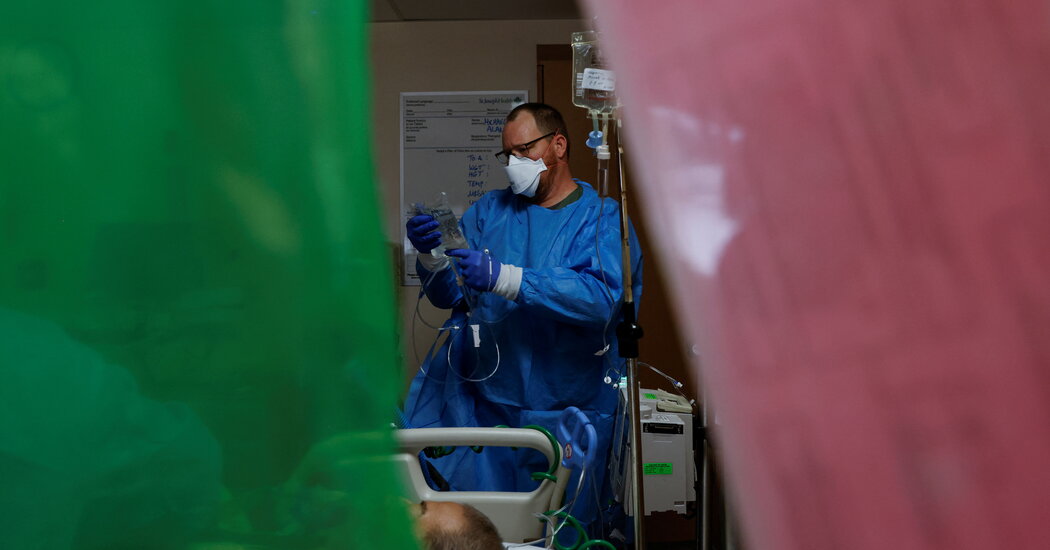
A late-stage trial was halted after strong early results, according to the company, but outside scientists have not yet seen the data.An experimental drug halved the death rate among critically ill Covid patients who were receiving supplemental oxygen and were at high risk for serious lung disease and death, the drug’s developer announced on Monday.There is a pressing need for new treatments for critically ill patients. Drugs like Paxlovid, made by Pfizer, are aimed primarily at patients who have mild or moderate disease. Other treatments administered to hospitalized patients in serious condition have shown limited effectiveness.The new drug, sabizabulin, reduced deaths among hospitalized Covid-19 patients so drastically in a clinical trial that independent safety monitors recommended stopping it early, officials at Veru Inc., the drug’s maker, said. The trial was halted on Friday.The results of that trial have not been reviewed by outside experts or published in a medical journal. Veru announced the findings at an early-morning news conference. The company’s stock soared in trading Monday following the announcement.About half of the 52 trial participants given a placebo or dummy pill along with regular care died within 60 days, an indicator of how very sick they were. But the death rate was 20 percent among the 98 participants who received sabizabulin, who were just as ill. The drug was given once a day for up to 21 days.“Sabizabulin is the first drug to demonstrate a clinically and statistically meaningful reduction in deaths in hospitalized patients,” Dr. Mitchell Steiner, chief executive of Veru, said. “This represents a big step forward.”Most Covid restrictions have been lifted in the United States after declining case numbers, but cases, hospitalizations and deaths around the world continue to be high, Dr. Steiner added. New variants are bound to emerge, and surges will follow.Close to a million Americans have died of Covid, and there are still 570 fatalities every day on average.The drug was granted so-called fast-track status by the Food and Drug Administration in January, Dr. Steiner said. The designation is intended to prompt faster development and review of new treatments that address unmet medical needs and target serious or life-threatening conditions.Dr. Steiner said the company plans to meet with the agency later this month and will be applying for emergency-use authorization for sabizabulin. An F.D.A. spokeswoman declined to comment, saying the agency did not confirm, deny or comment on pending applications.No safety concerns related to the drug were identified in the course of the clinical trial, company officials said.“Despite it being two and a half years into the battle, we are still working hard to get highly effective drugs into the mix to treat this specific population of patients, and this is a fairly dramatic improvement in 60-day mortality,” said Dr. Michael Gordon, one of the trial investigators and chief medical officer at HonorHealth Research and Innovation Institute in Scottsdale, Ariz.But Dr. Gordon leavened his optimism with caution, saying he was eager to see more detailed analyses. Additional data were still being analyzed on Monday, including the proportion of treated patients without respiratory failure, the number of days they spent in intensive care, the length of their hospital stay and how long they were on mechanical ventilation.“No drug works for everybody,” Dr. Gordon said. “The benefit that was seen is mortality — who is living and who is dying — not who is getting off oxygen, though I anticipate we will see improvement in other parameters, too.”Patients on both arms of the multicenter trial received all standard care and treatment. The participants were in the United States, Brazil, Argentina, Mexico, Colombia and Bulgaria, and they had been infected with both the Delta and Omicron variants. The drug is effective regardless of the variant type, Dr. Gordon and company officials said.Sabizabulin was given in a 9-milligram dose in a capsule that was taken once a day. It doesn’t require refrigeration, and the capsule can be given by mouth or opened up so that the contents can be added to a feeding tube.The drug is intended only for hospitalized patients at this point, so making it accessible to patients in the United States will be simpler than making it available to outpatients, which requires distributing it to pharmacies and educating general doctors about its use.Sabizabulin works by disrupting the transport of the coronavirus through microtubules in cells. “It disrupts these ‘highways’ and breaks them down, so the virus can’t get from Point A to Point B,” Dr. Steiner said.The disruption also interferes with the movement of the body’s own cytokines, which works to tamp down inflammation, he added.

Read more →

Psilocybin Spurs Brain Activity in Patients With Depression, Small Study Shows

The chemical derived from psychedelic mushrooms helped alleviate symptoms of depression and generated detectable neural responses that lasted weeks.Psychedelic compounds like LSD, Ecstasy and psilocybin mushrooms have shown significant promise in treating a range of mental health disorders, with participants in clinical studies often describing tremendous progress taming the demons of post-traumatic stress disorder, or finding unexpected calm and clarity as they face a terminal illness.But exactly how psychedelics might therapeutically rewire the mind remains an enigma.A group of neuroscientists at Kings College London thought advanced neuroimaging technology that peered deep into the brain might provide some answers. They included 43 people with severe depression in a study, giving them either psilocybin, the active ingredient in magic mushrooms, or a conventional antidepressant; the participants were not told which one they would receive. Functional magnetic resonance imaging, which captures metabolic function, took two snapshots of their brain activity — the day before receiving the first dose and then roughly three weeks after the final one.What they found, according to a study published Monday in the journal Nature Medicine, was illuminating, both figuratively and literally. Over the course of three weeks, participants who had been given the antidepressant escitalopram reported mild improvement in their symptoms, and the scans continued to suggest the stubborn, telltale signs of a mind hobbled by major depressive disorder. Neural activity was constrained within certain regions of the brain, a reflection of the rigid thought patterns that can trap those with depression in a negative feedback loop of pessimism and despair.By contrast, the participants given psilocybin therapy reported a rapid and sustained improvement in their depression, and the scans showed flourishes of neural activity across large swaths of the brain that persisted for the three weeks. That heightened connectivity, they said, resembled the cognitive agility of a healthy brain that, for example, can toggle between a morning bout of melancholia, a stressful day at work and an evening of unencumbered revelry with friends.Although the authors acknowledged the limitations of the study, including its small size and short time frame, they said psilocybin appeared to have a “liberating” effect on the brains of people with severe depression.Understand Post-Traumatic Stress DisorderThe invasive symptoms of PTSD can affect combat veterans and civilians alike. Early intervention is critical for managing the condition.Removing the Stigma: Misconceptions about how PTSD develops and its symptoms, can prevent people from seeking treatment. Psychedelic Drugs: As studies explore the therapeutic value of substances like MDMA, veterans are becoming unlikely advocates for their decriminalization. Virtual Reality: A treatment using new technology to immerse patients in a simulation of a memory could help them overcome trauma. Pandemic Trauma: Covid-19 has exacerbated mental health issues among medical workers, putting them at great risk of developing PTSD.“Psilocybin, it would seem, allows you to see things in an entirely new light, particularly when you have a psychotherapist who can help guide you through that experience,” said Richard Daws, a cognitive neuroscientist and a lead author of the study. “You can unpack difficult experiences that might define how you see the world, which is interesting because that’s exactly what traditional cognitive behavioral therapy is trying to do.”Experts not involved with the study said that the results were not entirely surprising but that they provided a possible biologic explanation for the anecdotal accounts about therapeutic breakthroughs with psychedelic medicine.Patrick M. Fisher, a neuroscientist at the Neurobiology Research Unit in Copenhagen who studies psilocybin’s affects on the brain, said the findings could help explain why study subjects in psychedelic research often report long-term relief from psychological ailments. “One or two doses of psychedelic drugs seem to impart lasting clinical benefits and changes in personality and mood, and that’s an unusual characteristic of drugs,” he said. “Although these brain imaging data are important for resolving the brain mechanisms that support these lasting changes, this study leaves prominent questions unanswered.”Other researchers agreed, saying the results highlighted the need for further study. Dr. Stephen Ross, associate director of the N.Y.U. Langone Center for Psychedelic Medicine, who has been studying the antidepressant effects of psilocybin on cancer patients, cautioned against drawing sweeping conclusions given the relatively brief monitoring period of participants’ brain activity. “It’s a little bit like looking out into the universe with a telescope and seeing interesting things and then starting to build theories based on that,” he said. “This is an important contribution though I’m more interested in what happens in three months or six months.”A separate, smaller experiment that was included in the Nature Medicine paper appeared to support the notion that psilocybin therapy could provide enduring benefits. In that trial, 16 patients were recruited with the knowledge that they would receive psilocybin for their treatment-resistant depression. Brain scans taken a day after the final doses were administered showed similar results to the other study. And when the researchers followed up six months later, many participants reported that the improvements to their depression had not subsided.“These results are very promising, but obviously no one should go out and try and procure psychedelics without speaking to a doctor or a therapist,” Dr. Daws said.The field of psychedelic medicine is still in its infancy following a decades-long gap in research, a direct result of antidrug policies that prevented most scientists in the United States from investigating mind-altering compounds. But as the stigma has faded and research funding has begun to flow more freely, a growing number of scientists have begun exploring whether such drugs can help patients suffering from a wide range of mental health conditions, including anorexia, substance abuse and obsessive-compulsive disorder.Along with psilocybin, MDMA, popularly known as Ecstasy, has been especially promising. A study last May in Nature Medicine found that the drug paired with talk therapy could significantly lessen or even eliminate symptoms of PTSD. Phase 3 clinical trials are now underway, and some experts believe the Food and Drug Administration could approve MDMA therapy for PTSD as soon as next year.Depression remains one of most common and intractable mental health challenges in the United States, with an estimated 21 million adults reporting a major depressive episode in 2020, according to the National Institute of Mental Health. Although Prozac and other antidepressants known as S.S.R.I.s have been effective for many, they have significant side effects and the drugs do no work for everyone.For that reason, the handful of small studies on psilocybin and depression have electrified mental health experts and patients.Another author of the Nature Medicine article published on Monday, Robin Carhart-Harris, director of the Neuroscape Psychedelics Division at the University of California, San Francisco, said the functional magnetic resonance imaging scans offered intriguing clues about the way depression inhabits the brain. The resulting images, he suggested, might be best compared to an undulating pastoral landscape marked by hills and deep valleys. People with depression, he said, often get stuck in a valley. Although S.S.R.I.s can make them feel better, the drugs do not appear to change the overall landscape of their brain, as it were, suggesting that the drugs do little more than ease the symptoms of their depression.But the psilocybin treatments, he said, seemed to provide a way out of those metaphorical valleys by inducing what scientists call global increases in brain network integration — essentially touching off activity across parts of the brain that were previously cut off from one another.“Psilocybin therapy seems to flatten the landscape so you move out of the valley,” Dr. Carhart-Harris said. “It makes you freer to move on.”Still, he acknowledged that the two trials raised a multitude of unanswered questions that he hoped researchers would explore. And he expressed caution against the headlong embrace of psychedelics without supervision, noting the acute vulnerability of patients experiencing a psychedelic journey.“It might sound trite to say, but I think psilocybin therapy opens up the mind, and that’s its strength,” Dr. Carhart-Harris said. “But that’s also arguably where the risk comes in, which is why it needs to be managed and to happen alongside psychological support.”

Read more →

UMass Amherst ensemble model most accurate for predicting COVID-19 deaths

The University of Massachusetts Amherst-based U.S. COVID-19 Forecast Hub, a collaborative research consortium, has generated the most consistently accurate predictions of pandemic deaths at the state and national level, according to a paper published April 8 in the Proceedings of the National Academies of Sciences. Every week since early April 2020, this international effort has produced a multi-model ensemble forecast of short-term COVID-19 trends in the U.S.
The COVID-19 pandemic has highlighted the vital role that collaboration and coordination among public health agencies, academic teams and industry partners can play in developing modern modeling capabilities to support local, state and federal responses to infectious disease outbreaks.
“Anticipating outbreak change is critical for optimal resource allocation and response,” says lead author Estee Cramer, a UMass Amherst Ph.D. epidemiology candidate in the School of Public Health and Health Sciences. “These forecasting models provide specific, quantitative and evaluable predictions that inform short-term decisions, such as healthcare staffing needs, school closures and allocation of medical supplies.”
An unprecedented global cooperative effort, the Forecast Hub represents the largest infectious disease prediction project ever conducted. The ensemble research includes just under 300 authors affiliated with 85 groups, including U.S. governmental agencies such as the Centers for Disease Control and Prevention (CDC); universities in the U.S., Canada, China, England, France and Germany; and scientific industry partners in the U.S. and India. The authors also include independent data analysts with no affiliation, such as Youyang Gu, who took the internet by storm with his early successful modeling efforts of the pandemic.
The Forecast Hub is directed by Nicholas Reich and Evan Ray, faculty in the UMass School of Public Health and Health Sciences. “It has been an incredible experience to collaborate directly with so many talented and motivated groups to build this ensemble forecast,” says Reich, a biostatistician and the senior author of the paper. “In addition to the operational aspect of the Hub, where the forecasts have been used by CDC every week for the last two years, this paper shows how we can use these data, collected in real-time across the entire pandemic, to better understand which modeling approaches worked and which did not, and why. It’s going to take many years to unpack all of the lessons of the last few years. In some ways, this is just the beginning.”
In April 2020, the CDC partnered with the Reich Lab to create the COVID-19 Forecast Hub and fund it. At this time, the Hub began collecting, disseminating and synthesizing specific predictions from different academic, industry and independent research groups. The effort grew rapidly, and in its first two years the U.S. Forecast Hub collected over half a billion rows of forecast data from nearly 100 research groups. The CDC uses the Hub’s weekly forecast in official public communications about the pandemic.
The paper compared the accuracy of short-term forecasts of U.S.-based COVID-19 deaths during the first year and a half of the pandemic. The 27 individual models that submitted forecasts consistently during that period showed high variation in accuracy across time, locations and forecast horizons. The ensemble model that combined individual forecasts was more consistently accurate than those individual forecasts.
“This project demonstrates the importance of diversity in modeling approaches and modeling assumptions,” Cramer says. “Including a variety of models in the ensemble contributes to its robustness and ability to overcome individual model biases. This is a really important consideration for public health agencies when using forecasts to inform policies during an outbreak of any size.”
The Forecast Hub ensemble was the only model that ranked in the top half of all models for more than 85% of the forecasts it made, that had better overall accuracy than the baseline forecast in every location and that had better overall four-week-ahead accuracy than the baseline forecast in every week.
All the forecasts, including those of the ensemble model, made less consistent and less accurate forecasts during the four waves of the pandemic that occurred during the study period: the summer 2020 wave in the South and Southwest, the late fall 2020 rise in deaths in the upper Midwest, the spring 2021 Alpha variant wave in Michigan and the nationwide Delta variant wave in the summer of 2021. “Models in general systematically underpredicted the mortality curve as trends were rising and overpredicted as trends were falling,” the paper states.
Forecasts became less accurate as models made longer term predictions. Probabilistic error at a 20-week horizon was three to five times larger than when predicting a one-week horizon. This resulted from underestimating the possibility of future increases in cases, the paper concludes. “Because many of us interact with weather forecasts almost every day on our phones, we know not to trust the daily precipitation forecasts much past a two-week horizon,” Reich says. “But we don’t have the same intuition yet as a society about infectious disease forecasts. This work shows that the accuracy of forecasts for deaths is pretty good for the next four weeks, but at horizons of six weeks or more, the accuracy is typically substantially worse.”
The open-source infrastructure built by the U.S. COVID-19 Forecast Hub team has also been used around the world, including by hubs run by the European Centers for Disease Control and Prevention, by German academic researchers and other U.S. researchers looking at longer-term modeling of different “what if” scenarios.

Read more →

Heart inflammation rare among people hospitalized with COVID-19, study finds

Acute myocarditis, inflammation of the heart muscle typically triggered by a virus, occurred in about two out of every 1,000 people hospitalized with COVID-19, and was associated with more severe illness and complications in people with COVID-19, especially among people who also had pneumonia, according to new research published today in the American Heart Association’s flagship, peer-reviewed journal Circulation.
Myocarditis is a rare but serious condition that causes inflammation of the heart muscle. It can weaken the heart and its electrical system, and it can make it difficult for the heart to pump blood. An episode of myocarditis may resolve on its own or with treatment or may result in long-lasting damage.
“While COVID-19 is a virus that predominantly leads to acute respiratory illness, there has been a small group of individuals who also experience cardiac complications,” said Enrico Ammirati, M.D., Ph.D., co-lead author of the study and a cardiologist at De Gasperis Cardio Center and Transplant Center at Niguarda Hospital in Milan, Italy. “A small study previously indicated acute myocarditis is a rare occurrence in people infected with COVID-19. Our analysis of international data offers better insight to the occurrence of acute myocarditis during COVID-19 hospitalization, particularly before the COVID-19 vaccines were widely available.”
The international study examined health data for almost 57,000 people who were hospitalized with COVID-19 from February 2020 until April 2021, and who received care at 23 hospitals across the United States and Europe.
Within the large study group, a total of 54 people hospitalized with COVID-19 were identified as having definite or probable acute myocarditis, based upon results of heart muscle biopsy and/or magnetic resonance imaging. Most of the people in this study were non-Hispanic white adults (76.5%), with an average age of 38 years, and more than half were male (61%). All had confirmed cases of COVID-19 infection based upon standard laboratory testing, and none had received a COVID-19 vaccination prior to developing myocarditis.
The study analysis found: An estimated 2.4 per 1,000 people hospitalized for COVID-19 had acute myocarditis. Acute myocarditis occurred more frequently in people who did not have pneumonia (57.4%) and was complicated by abnormal or unstable blood flow (hemodynamic instability) in 32% of cases. The people found to have both COVID-19-related acute myocarditis and pneumonia had a mortality rate of 15.1%, compared to no deaths during hospitalization in the people who did not have pneumonia. The people with pneumonia were older than those without pneumonia (average age of 45 years vs. 30 years, respectively). One in five of the people with confirmed myocarditis (20.4%), most of whom also had pneumonia, needed mechanical support for circulation or died while in the hospital. Twenty-one individuals (38.9%) had fulminant (severe and/or sudden) acute myocarditis, and due to shock, they needed immediate medication support and mechanical circulatory support.The authors note the potential rate of COVID-19 related myocarditis may be between 1.2-5.7 per 1,000 people hospitalized for COVID-19. Some people were identified with possible myocarditis based on preliminary testing, yet they were not included in the final analysis because they did not meet all of the study’s protocols.
“This analysis indicates that, although rare, hospitalized patients with acute myocarditis associated with COVID-19 infection have a much greater need for intensive care unit admission, in up to 70.5% of the cases, despite the average age of the individuals in the study being much younger than expected at 38 years old,” said co-lead study author Marco Metra, M.D., a cardiology professor at the Institute of Cardiology and in the department of medical and surgical specialties, radiological sciences and public health at the University of Brescia in Brescia, Italy.
The study has several limitations. Because the analysis was retrospective, there may have been some potential selection bias. Additionally, 43 individuals with possible acute myocarditis were excluded due to a lack of imaging or biopsy information. People older than 70 years of age were also not included because of a higher chance of age-related cardiac issues visible on magnetic resonance imaging. Some people were not screened for other viruses or immunological causes of myocarditis, so there may have been other contributing factors. Further, in some of the hospitals that were heavily hit early in the pandemic, some people with acute myocarditis may have been missed.
Co-authors are Laura Lupi, M.D.; Matteo Palazzini, M.D.; Nicholas S. Hendren, M.D.; Justin L. Grodin, M.D., M.P.H.; Carlo V. Cannistraci, Eng., Ph.D.; Matthieu Schmidt, M.D.; Guillaume Hekimian, M.D.; Giovanni Peretto, M.D.; Thomas Bochaton, M.D.; Ahmad Hayek, M.D.; Nicolas Piriou, M.D.; Sergio Leonardi, M.D.; Stefania Guida, M.D.; Annalisa Turco, M.D.; Simone Sala, M.D.; Aitor Uribarri, M.D.; Caroline M. Van de Heyning, M.D., Ph.D.; Massimo Mapelli, M.D.; Jeness Campodonico, M.D.; Patrizia Pedrotti, M.D.; Maria Isabel Barrionuevo Sánchez, M.D.; Albert Ariza Sole, M.D.; Marco Marini, M.D.; Maria Vittoria Matassini, M.D.; Mickael Vourc’h, M.D.; Antonio Cannatà, M.D.; Daniel I. Bromage, M.D.; Daniele Briguglia, M.D.; Jorge Salamanca, M.D.; Pablo Diez-Villanueva, M.D., Ph.D.; Jukka Lehtonen, M.D.; Florent Huang, M.D.; Stéphanie Russel, M.D.; Francesco Soriano, M.D.; Fabrizio Turrini, M.D.; Manlio Cipriani, M.D.; Manuela Bramerio, M.D.; Mattia Di Pasquale, M.D.; Aurelia Grosu, M.D.; Michele Senni, M.D.; Davide Farina, M.D.; Piergiuseppe Agostoni, M.D.; Stefania Rizzo, M.D., Ph.D.; Monica De Gaspari, M.D.; Francesca Marzo, M.D.; Jason M. Duran, M.D., Ph.D.; Eric D. Adler, M.D.; Cristina Giannattasio, M.D., Ph.D.; Cristina Basso, M.D., Ph.D.; Theresa McDonagh, M.D.; Mathieu Kerneis, M.D.; Alain Combes, M.D.; Paolo G. Camici, M.D.; and James A. de Lemos, M.D. Authors’ disclosures are listed in the manuscript.
This study was funded by an Italian Ministry Grant and the Registry for Cardio-Cerebro-Vascular Pathology in Veneto Region, Italy.

Read more →

Researchers have uncovered a regulator of body weight that could lead to new treatments for metabolic disorders

Yale scientists uncover key regulator of body weight.
Yale scientists have discovered that a protein known as augmentor-alpha regulates body weight in mice, an insight that could lead to new treatments for metabolic disorders.
The findings were published April 11 in the Proceedings of the National Academy of Sciences.
The research team decided to take a closer look at augmentor-alpha because of its connection to cancer. The protein is known to bind to and activate the anaplastic lymphoma kinase receptor (ALK), a molecule that, when mutated, drives a variety of human cancers, including pediatric neuroblastoma, B-cell lymphomas, and certain lung cancers.
To better understand this protein and the role it plays in the body, Yale researchers first wanted to pinpoint where it is commonly located. Looking in mice, they found that augmentor-alpha was most strongly expressed in the hypothalamus region of the brain.
In particular, they found it was expressed within cells called agouti-related peptide (AgRP) neurons, which are known to promote hunger.

Read more →

Research in human kidney organoids reveals target to prevent irreversible kidney damage

A compound called SCR7 supports DNA repair to prevent irreparable tissue damage and chronic kidney disease progression. To a certain extent, kidneys have the capacity to repair themselves after being injured, but a switch can occur from such intrinsic repair to incomplete repair that leads to irreversible damage and chronic kidney disease (CKD). A team led by researchers at Massachusetts General Hospital (MGH) recently used kidney organoids derived from human stem cells to identify genes that are important for maintaining healthy repair in the kidneys. The findings, which are published in Science Translational Medicine, may lead to new targets to help prevent or treat CKD.
Although various factors involved in kidney repair have been identified in animal studies, translating these findings into the clinical been difficult because many treatments deemed safe and effective in animals have subsequently been found to be toxic or ineffective in clinical trials. Human kidney organoids, which are like miniature kidneys, may help investigators avoid these setbacks.
“We have pioneered the work of human kidney organoids and think they’ll be useful for therapeutic development for CKD,” says lead author Navin Gupta, MD, an investigator in the Division of Nephrology at MGH. “As physician-scientists, we wanted to create a new CKD model in human cells to facilitate drug development.”
When Gupta and his colleagues exposed human kidney organoids to the chemotherapy drug cisplatin, which can damage the kidneys, the treatment altered the express of 159 genes and 29 signal pathways within kidney cells undergoing intrinsic repair. Many of the genes they identified, including 2 called FANCD2 and Rad51, were activated during intrinsic repair, but their expression dropped as kidney damage became irreversible. These genes code for proteins that play a role in the repair of DNA when it becomes damaged within cells. Additional experiments in mouse models of kidney injury and in human kidney biopsies confirmed the findings discovered in the kidney organoids.
Finally, through drug screening tests, the scientists identified a compound known as SCR7 that helped to maintain FANCD2 and RAD51 activity to rescue normal tissue repair and prevent the progression of CKD in the researchers’ cisplatin-induced organoid injury model.
“We have shown that the activation of a DNA repair mechanism can help to maintain healthy kidney status,” says senior author Ryuji Morizane, MD, PhD, a principal investigator in the Division of Nephrology at MGH. “In the future, this approach might become a new therapeutic option for patients with CKD.”
Additional study authors include Takuya Matsumoto, Ken Hiratsuka, Edgar Garcia Saiz, Pierre Galichon, Tomoya Miyoshi, Koichiro Susa, Narihito Tatsumoto, and Michifumi Yamashita.
This work was supported by a National Institutes of Health (NIH) T32 fellowship training grant, a Harvard Stem Cell Institute interdisciplinary grant, two Brigham and Women’s Hospital Research Excellence Awards, a Cell Science Research Foundation Award, an NCATS UCLA CTSI KL2 grant, a Cedars-Sinai CTSI Clinical Scholar Grant, a Brigham and Women’s Hospital Faculty Career Development Award , a Harvard Stem Cell Institute Seed Grant, a DiaComp Pilot & Feasibility Program, an NIH DP2EB029388 award, and an NIH U01EB028899 grant.
Story Source:
Materials provided by Massachusetts General Hospital. Note: Content may be edited for style and length.

Read more →

New approach for delivery of anti-HIV antibody therapy shows promise in phase I clinical trial

Since the first reports of HIV infection in the early 1980s, multiple clinical trials have tested potential vaccines against the virus, but unfortunately, HIV has numerous defense mechanisms that prevent a person’s immune system from mounting an effective response following HIV vaccination. An alternative anti-HIV strategy called Vectored ImmunoProphylaxis (VIP) designed by researchers at the Ragon Institute of MGH, MIT and Harvard and Massachusetts General Hospital (MGH) involves an adeno-associated viral (AAV) vector to deliver instructions to muscle cells to pump out antibodies that block the virus. The strategy recently generated promising results in a phase I clinical trial that was conducted by the National Institutes of Health and is published in Nature Medicine.
AAV vectors can be safely used in humans to deliver DNA to cells, and two AAV-based gene therapies are currently FDA approved. In this clinical trial, the AAV vector designed by MGH investigators carries the genetic sequence for what is called a broadly neutralizing HIV-1 antibody that blocks HIV’s ability to bind to CD4, an immune cell’s receptor that HIV targets before infecting the cell. When injected into a patient, the AAV therapy (called AAV8-VRC07) enters muscle cells, where the genetic sequence is read and translated to produce large quantities of the broadly neutralizing antibody (called VRC07) that are pumped out of the cells and travel through the blood to seek out their target. The result is that numerous antibodies circulate to block any interaction between HIV and the CD4 receptor on immune cells, essentially shutting the door on HIV’s entry into the cells.
The phase I clinical trial enrolled eight adults with HIV who were on stable antiretroviral therapy for at least three months. Investigators found that intramuscular injection of AAV8-VRC07 was safe and well tolerated. All eight individuals produced measurable amounts of VRC07 in the blood, with maximal VRC07 concentrations in three individuals. In six individuals, these amounts remained stable and near maximal concentration for up to three years of follow-up. (The trial is ongoing, and some participants have not been followed as long as others.) Three of the eight participants showed signs of an anti-drug antibody response directed against a portion of VRC07, and this response appeared to decrease the production of VRC07 in two of the participants.
“This work represents the first successful AAV-based production of a monoclonal antibody of any kind in people,” says co-author Alejandro B. Balazs, PhD, who created the vector used in the trial and is a principal investigator at the Ragon Institute of MGH, MIT and Harvard, where his laboratory is continuing to develop this technology. “It’s also the first time we’ve had an approach capable of yielding broadly neutralizing antibodies against HIV in humans,” he says.
Balazs notes that the results have wide-ranging clinical implications for potentially preventing or treating HIV and other infections. “The findings prove that the platform we designed is capable of producing long-lived expression of an antibody from a single injection. Given our ability to encode any desired antibody into these vectors, we may be able to produce effective preventive treatments against a wide range of infectious diseases from malaria to COVID-19,” he says. “This technology also has the potential to be applied to the delivery of other biologic drugs to treat a wide range of conditions from autoimmunity to cancer.”
The technology was initially developed at the California Institute of Technology in the laboratory of Nobel laureate David Baltimore, PhD, by Balazs when he was a postdoctoral fellow. The Vaccine Research Center of the NIH supported the clinical study, which was conducted at the National Institutes of Health Clinical Center.
Additional study authors include Joseph P. Casazza, Evan M. Cale, Sandeep Narpala, Galina V. Yamshchikov, Emily E. Coates, Cynthia S. Hendel, Laura Novik, LaSonji A. Holman, Alicia T. Widge, Preeti Apte, Ingelise Gordon, Martin R. Gaudinski, Michelle Conan-Cibotti, Bob C. Lin, Martha C. Nason, Olga Trofymenko, Shinyi Telscher, Sarah H. Plummer, Diane Wycuff, William C. Adams, Janardan P. Pandey, Adrian McDermott, Mario Roederer, Avery N. Sukienik, Sijy O’Dell, Jason G. Gall, Britta Flach, Travis L. Terry, Misook Choe, Wei Shi, Xuejun Chen, Florence Kaltovich, Kevin O. Saunders, Judy A. Stein, Nicole A. Doria-Rose, Richard M. Schwartz, David Baltimore, Gary J. Nabel, Richard A. Koup, Barney S. Graham, Julie E. Ledgerwood, and John R. Mascola, and the VRC 603 Study Team.
This work was supported by intramural funding from the National Institute of Allergy and Infectious Diseases through the NIH Intramural Research Program.

Read more →

Study identifies therapeutic target for Alzheimer’s disease, revealing strategy for preventing or slowing disease progression

About 11% of the U.S. population 65 and older has been diagnosed with Alzheimer’s disease (AD), the most common form of dementia that results in memory loss and cognitive impairment, according to the Alzheimer’s Association.
And the World Health Organization predicts the number of people living with Alzheimer’s will grow by millions each year.
Despite decades of research, scientists don’t fully understand what causes the brain condition. And there is no known therapeutic treatment.
But a new study published recently in Nature Communications by a team of researchers from the Case Western Reserve University School of Medicine suggests a key protein molecule plays a major role in the accumulation of brain cholesterol, triggering the development of Alzheimer’s.
The lab of Xin Qi, professor of physiology and biophysics at the School of Medicine, developed and patented a peptide inhibitor earlier in hopes of treating AD and Huntington’s disease. She said this study found that mice, when treated with the peptide inhibitor, demonstrated 50% restored memory function, based on testing such as navigating mazes.
The impact of Alzheimer’s disease
AD is an age-related neurodegenerative disorder that results in progressive cell death, leading to memory loss and cognitive dysfunction.

Read more →

COVID-19 vaccine protects patients with inflammatory bowel disease from SARS-CoV-2

COVID-19 vaccines taken by people with inflammatory bowel disease (IBD), which affects millions worldwide, safely and effectively protects them from the SARS-CoV-2 virus, a Rutgers study finds.
The comprehensive review, published in the journal Alimentary Pharmacology & Therapeutics, focused on all studies describing the response of patients with IBD who were administered a COVID-19 vaccine. People with IBD are commonly treated with drugs that suppress the immune system and have reported concerns over whether such treatments might weaken their response to the vaccine.
“We wanted to demonstrate in a systematic way that the vaccines will safely protect our IBD patients from COVID-19,” said study author Abhishek Bhurwal, an Advanced IBD Fellow in the Division of Gastroenterology and Hepatology at the Rutgers Robert Wood Johnson Medical School. “Our systematic review and meta-analysis confirmed that the vaccines are safe and work well in our patients.”
An estimated 3.1 million adults in the United States have been diagnosed with IBD, according to the Centers for Disease Control and Prevention. The disease, which includes Crohn’s disease and ulcerative colitis, causes chronic inflammation of the gastrointestinal tract. The numbers of such patients, Bhurwal said, are growing.
The study focused on four key aspects of COVID-19 vaccination of IBD patients: the strength of their immune response to the vaccine; the occurrence of breakthrough infections after taking the vaccine; the occurrence of adverse events to the vaccine; and whether differing IBD treatments affected vaccine effectiveness.
The analysis found the following: Vaccinated IBD patients showed high levels of antibody response, known as seroconversion, two weeks after the first vaccine, indicating a strong, positive response to the vaccine. The response was even higher after two doses, as compared with one dose. Vaccinated IBD patients did not experience a higher or lower rate of breakthrough infections than the control group in studies. However, the studies analyzed were likely not designed to allow for more subtle distinctions. Additionally, further studies regarding effectiveness for variants and booster doses are needed. Vaccinated IBD patients experienced a low rate of adverse events, and the most common events have also been seen in the general population: reactions at the injection site; headaches; backache; and joint pain. Vaccinated IBD patients on different immunosuppressive treatments had a similar response to the vaccine. Further studies are needed for assessing patients on corticosteroids for IBD.Because of their treatment with immunosuppressive drugs, IBD patients are more susceptible to infectious disease than the general population. As a result, they have been encouraged to receive COVID-19 vaccines.
“Because members of the IBD population are immunocompromised, it was important to document that the SARS-CoV-2 vaccines work for them,” Bhurwal said. “With this analysis, we can say that two doses of the SARS-CoV-2 vaccines are safe and effective in the IBD population. But we need further studies regarding booster doses and COVID variants.”
Other Rutgers authors in the study were from the Division of Gastroenterology and Hepatology at Rutgers Robert Wood Johnson Medical School: Steven Brant, Lea Ann Chen, Carlos Minacapelli and Darren Seril.
Story Source:
Materials provided by Rutgers University. Original written by Kitta MacPherson. Note: Content may be edited for style and length.

Read more →

Regular cycling helps patients with ‘accelerated aging’ disease

A study led by McMaster University researchers has found that regular cycling can greatly improve mobility in patients with myotonic dystrophy (MD), a genetic disease that causes muscle degeneration.
Senior author Mark Tarnopolsky said that cycling for 35 minutes three times a week for 12 weeks led to a 32 per cent increase in overall fitness in people with MD.
Patients who took part in the study also saw a 1.6-kilogram increase in their muscle mass and a two per cent reduction of body fat. They were also able to walk an extra 47 metres in six minutes, when tested by researchers at the end of the 12-week trial.
Tarnopolsky’s team recruited 11 patients with MD to examine how effective cycling was in restoring and maintaining their physical health. Researchers also studied the underlying molecular mechanisms through which exercise strengthens the skeletal muscles, which can be severely weakened by MD.
“Exercise really is medicine — we just need to get the message out,” said Tarnopolsky, a professor of the departments of pediatrics and medicine at McMaster.
“Myotonic dystrophy is a progressive condition that will impair your mobility and can put you in a wheelchair. There is no cure for it and only regular exercise helps you achieve better function.”
Tarnopolsky said that some patients with MD are even advised by their doctors not to exercise, for fear of making their condition worse, but that is now proven false.

Read more →