Red States Push L.G.B.T.Q. Restrictions as Education Battles Intensify

With an eye toward parents’ anxiety, Republicans have put forward a wave of laws on classroom instruction, youth sports and health care. Some of the young people at the center feel isolated.Last April, a high school senior in Utah named Gabriela Merida joined a student town hall hosted by her governor. She introduced herself, noted the pronouns she used and broached the subject of mental health challenges facing young L.G.B.T.Q. people. How, she asked, did the state plan to help constituencies like hers?“My preferred pronouns are ‘he,’ ‘him’ and ‘his,’ so thank you for sharing yours with me,” Gov. Spencer J. Cox, a Republican, replied. “We want everyone to feel included. We want everyone to feel safe. And we want everyone to understand that they belong.”One year later, the Republican-controlled Utah State Legislature has passed a measure to bar transgender girls from competing in girls’ sports, overriding Mr. Cox’s veto. His mention of his pronouns has become fodder for right-wing derision and misleading video clips. And deep-red Utah is now at the center of a new fight that is reordering the nation’s politics, roiling its education system — and, for some Americans, shaking their sense of belonging as a midterm election year unfolds.From state capitals to schools, Americans are increasingly at odds over issues of identity and language, who can play on which youth sports teams and what can and cannot be said in classrooms. These issues are pitting governors against their state legislatures, business leaders against conservative activists and, in some places, Republicans against one another, while Democrats calibrate their responses and some transgender people feel increasingly isolated.To Democrats and some Republicans, the legislative pushes on these issues amount to an effort to inflame the G.O.P. base at all costs — even when it means children and their families see their governments singling them out.Much of the policy dispute in the first months of 2022 has centered on two issues: efforts to restrict transgender youths’ health care and participation in girls’ sports, and a sweeping Florida law signed by Gov. Ron DeSantis, a possible presidential candidate. That legislation, which prohibits classroom instruction about sexual orientation and gender identity in some elementary school grades, is called the “Parental Rights in Education” measure — or, to its critics, the “Don’t Say Gay” law.Gov. Ron DeSantis of Florida signing the “Parental Rights in Education” measure, known to its critics as the “Don’t Say Gay” law.Douglas R. Clifford/Tampa Bay Times, via Associated PressState Representative Michele Rayner of Florida, left, hugging her spouse, Bianca Goolsby, during a protest against the law in St. Petersburg, Fla., last month.Martha Asencio-Rhine/Tampa Bay Times, via Associated PressSuch efforts come as parents have spent two years navigating exceptionally difficult questions about schooling, from mask mandates to divisive debates over curriculums. Some parents have also grown anxious about what young children are being taught about sexual orientation and gender identity. At the same time, debates regarding transgender athletes have grabbed headlines and raised questions about how transgender children participate in sports.At the University of Pennsylvania, a transgender woman named Lia Thomas dominated swim meets and won a national title, drawing criticism from rivals and some teammates as well as from prominent female athletes.There is relatively sparse nonpartisan polling on these issues, but a survey from the Public Religion Research Institute last year found that while 82 percent of Americans supported laws that protect L.G.B.T.Q. people from discrimination, they were more uneasy about other questions.Only 36 percent of Americans surveyed said transgender girls should participate with other girls in high school sports. A Gallup poll last May found that 62 percent of Americans said transgender athletes should be allowed to play only on sports teams that matched their gender assigned at birth, though an earlier Marist Poll survey found far more opposition to a bill barring transgender student athletes from sports teams that reflected their gender identity.In all that turmoil, Republicans see a political opening.Lawmakers in states beyond Florida have recently signaled intentions to emulate the state’s new law. Opponents warn that parts of the law may have a chilling effect on teachers and on students of all ages, including some who have relied on schools as a safe place to talk about personal issues.The debate has turned ugly: Some proponents of the Florida law call its critics “groomers” — a term associated with pernicious decades-old smears suggesting that L.G.B.T.Q. people pose a threat to children.Several states have also passed restrictions on transition care for minors, and the governor of Texas directed state officials to view medically accepted treatments for transgender youths like puberty blockers and hormones as abuse, a policy that quickly became the subject of litigation. On Friday, Alabama’s governor signed legislation that stops medical professionals from providing care that helps transgender young people in transitioning, among other sweeping restrictions.Supporters of the bills frame the push on girls’ sports — a subject that has appeared in some Republican campaign ads — as a matter of fairness for female sports competitions and part of a broader set of parental concerns, even as Democrats and some Republicans question what real-world problems these measures are intended to solve.“I hope the left doesn’t understand how big of a deal it is,” said Tony Perkins, the head of the Family Research Council. “They’ll never know what hit them.”And the Republican National Committee is eager to discuss the schools issue, pledging in a statement that the party would battle “attempts to force conversations around sex and transgender issues on our youngest children,” while also alluding to the committee’s gay outreach initiative.For a while, the power of the right on L.G.B.T.Q. issues seemed diminished as growing numbers of Americans, including Republicans, accepted same-sex marriage. After an outcry, North Carolina repealed a law targeting transgender people’s use of public bathrooms. And other efforts to limit transgender rights, from Texas to Kentucky, sputtered.Tony Perkins’s group, the Family Research Council, is one of several national socially conservative organizations that have long organized against L.G.B.T.Q. rights.Cheriss May for The New York TimesBut activists on both sides see this moment as different.During the pandemic, new sports-related bans have not always attracted the kind of national blowback that the North Carolina bill did. Former President Donald J. Trump rolled back protections for transgender people with his base’s support. And with a solidly right-leaning Supreme Court at their backs, many Republicans are going on offense on cultural issues like L.G.B.T.Q. rights.The number of transgender-rights-related measures in statehouses has risen significantly.The Human Rights Campaign, an L.G.B.T.Q. rights organization, said that in 2020, state legislatures introduced a then-record 79 bills that the group considered to be anti-transgender. In the first months of 2022, that number is already at 140, Cathryn Oakley, the organization’s state legislative director and senior counsel, said in an interview last week.“They just kept pivoting until they could find the thing that they thought would capture the public’s imagination and turn them against L.G.B.T.Q. equality and acceptance,” she said. “They’ve cared about women’s sports for exactly as long as it was politically expedient.”A year after she spoke with Mr. Cox during that town hall, Ms. Merida, now 19 and a student at the University of Utah, has watched the developments in her state with alarm. As a bisexual teenager who has confronted mental health challenges, she said she had engaged Mr. Cox because she was worried about higher suicide risk among L.G.B.T.Q. youths.“It’s tragic. It’s devastating, especially for trans youth,” she said. “During these times, you feel kind of helpless. But you keep on fighting.”President Biden made overtures to transgender Americans in his State of the Union address, and the administration has taken other steps. But some want other Democrats to push back harder.“Republicans are trying to weaponize fear and ignorance of L.G.B.T.Q. people, and specifically trans children, in order to gain an advantage in the midterms,” said Charlotte Clymer, a writer and transgender activist, who lamented “a vacuum” of information and advocacy from Democrats. “Republicans are all too happy to fill that void.”The Push to Restrict Rights for Young Transgender PeopleCard 1 of 8A growing trend.

Read more →
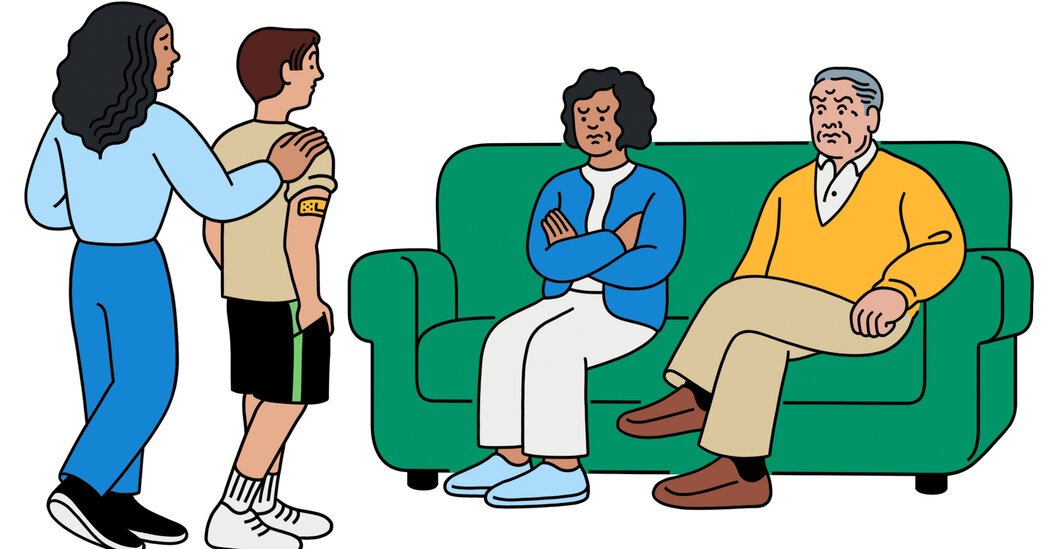
Should I Have Lied to Help My Kid Brother Get Vaccinated?

The magazine’s Ethicist columnist on what we gain from making hard choices.My brother is 16 and lives with my parents. I am in my 30s and live several hours away. We have good relationships with one another, although my parents are extremely anti-Covid vaccine and anti-mask. They cannot be reasoned with over the issue.After the Delta surge died down, I went home to visit. My brother — who is no rebel — asked for my help to get vaccinated because my parents would not let him.I filled out the paperwork and accompanied him to the appointments as if I were his parent. This was illegal, but I thought it was the right thing to do. Although my brother is not legally an adult, he is competent to make this choice; if I had refused to help and my brother had become severely ill or died of Covid, I don’t know that I could have forgiven myself.My parents just found my brother’s vaccine card, and the truth came out. They blame me, and I am second-guessing myself. Did I do the right thing? I thought so at the time. I realize now I should have tried to talk to them first (even if it was impossible to convince them), and I should have come clean to my parents after the fact. I have broken their trust, and my father isn’t speaking to me now.Was I wrong? And more important, how do I fix this? Name Withheld, TexasThe philosopher Ruth Chang has a theory about “hard choices.” Hard choices, in her account, arise when your options aren’t equally good but none is better overall. They’re good and bad in different ways.You had sound reasons for making the choice you did. Your brother, you say, was competent to opt for vaccination, and in some states, he’d be legally entitled to. As his much older sibling, you rightly feel a special sense of responsibility when it comes to his care. The authorized Covid-19 vaccines are safe and effective at bringing down rates of infection and transmission and at significantly reducing the chance of serious illness. Your parents’ views on this topic are flatly wrong.To be sure, a 16-year-old with no special medical conditions isn’t likely to suffer severe illness from Covid; your concerns for his welfare may have been overblown. Still, he should have been allowed to get vaccinated, whether to protect others or to alleviate his anxiety about his own risks. In helping him to make this happen, you were doing something your parents should have been willing to do for him — and for themselves and their community.It’s when we are making hard choices that we become ‘the authors of our own lives.’Yet had you declined to help your brother get vaccinated, you would have been justified too. It’s certainly a problem that what you did violated a reasonable law issued by a legitimate authority. And it was disrespectful to your parents; you indeed betrayed their trust, in defying their strong (albeit misguided) wishes.To see it from your parents’ point of view, imagine that you have two kids. Your son wants to get treated by a traditional healer who serves a god your religion believes it is sinful to honor, and his big sister, who worships that god, too, arranges for this. She has provided a treatment for your son that served no purpose. Worse, she led him to betray his faith. It would be natural for you to feel resentment. The point is that for some people, opposing what we know to be sensible public-health measures is central to their identities, in the way religion can be. That’s deeply unfortunate. But it’s important in understanding your parents’ reaction. If you had helped your brother get a fake ID, I suspect, your father might have been mad, but you’d be back on speaking terms. In this instance, you showed not only that you disagreed with your parents about their views but also, more wounding, that you didn’t trust them to look after your brother — to fulfill the basic responsibilities of parenting.Many people are drawn to a bookkeeping model of morality: Tot up a row of numbers, determine whether there’s a plus or a minus in front of the sum and proceed with no regrets. Suppose that, owing to personal or public obligations, you have to tell a lie. The moral bookkeepers would assure you: The math works out, your conscience is clean, don’t give it a second thought. The greater wisdom is in both regretting the deception and understanding why it was justified. With hard choices, there’s no option that’s best in every way. We can, coherently, feel bad about actions we would not undo. It speaks well of you, as a loving child and as a caring sibling, that you’re uneasy. I can see why you didn’t simply start by trying to persuade your parents to let your brother get vaccinated. You’ve plainly had unrewarding conversations with them about these issues and found that they are firmly in the grip of their delusions. Telling them about your intentions in advance would have been respectful but surely futile; indeed, they may have taken steps to keep your brother out of your hands. Still, if you hadn’t had a conversation in advance, it would, I agree, have been more respectful to come clean once it was done. So tell your parents that you acted out of love and concern for your brother but that you understand and are sorry that you betrayed their trust. Of course, you’re sorry too that your parents have these gravely mistaken views — but you don’t need to say so, because they know it already. Often we face choices where we can reason our way to one clear answer. We can then say that we’re “complying” with what moral reason dictates. But sometimes complexity swamps compliance: We simply have to turn inward for guidance and own our decisions. In fact, Chang argues, it’s when we’re making hard choices that we become “the authors of our own lives.” We decide what we’re for — we decide who we are. Helping your younger brother get vaccinated and setting out to repair your relations with your parents aren’t self-canceling impulses; they’re self-defining ones.I’m writing from a nonprofit Zen center, technically a church in the eyes of the I.R.S. We’ve been holding monthly board meetings by Zoom, and one member has been attending in a state of inebriation. The meetings start midmorning and last up to two hours. During that time, the officer drinks from a cup, and her speech becomes increasingly slurred. All of the board members, including the officer in question, are members of our church, and all are highly regarded. Our ethics policy discourages intoxication at the center, but doesn’t refer to Zoom meetings.As a church, we are inclined to be as accepting as possible, but the behavior is disturbing. Her intoxication also causes her to become argumentative. On the other hand, isolating her, by removing her from the board, is not an appealing solution, and she does occasionally have good suggestions. Her term was recently renewed.All of us think that turning difficult members away is more harmful than keeping them close. And the situation is aggravated by the pandemic. We are meeting in person for meditation and services, but not for board meetings, and perhaps we ought to. How should we deal with this? Name WithheldThe issue isn’t so much whether this woman is keeping to the ethics rules as whether she’s OK, and plainly she isn’t. You’re not a canasta club; you’re a Zen center, one that’s presumably devoted to contemplative care and support for participants. It’s entirely appropriate for members to try to help a peer who has an unacknowledged difficulty. You’ll be doing her a favor if you can get her to recognize that she has a problem and that your community will support her if she sets herself on the path to recovery. Not that you’ll want to bring this up at a virtual board meeting. Taking her aside after an in-person one would be easier. And you don’t have to wait for an in-person board meeting if she’s coming to services and meditation. There are ways of raising the issue that are gentle, firm and loving. Her first reaction may be a mixture of embarrassment and denial, and it may take more than one conversation. But surely you believe that zazen is among the practices that can assist in the hard work of breaking an addiction. You’ll be helping your group by supporting a struggling member.Kwame Anthony Appiah teaches philosophy at N.Y.U. His books include “Cosmopolitanism,” “The Honor Code” and “The Lies That Bind: Rethinking Identity.” To submit a query: Send an email to ethicist@nytimes.com; or send mail to The Ethicist, The New York Times Magazine, 620 Eighth Avenue, New York, N.Y. 10018. (Include a daytime phone number.)

Read more →

Concussion worse if fighters rapidly cut weight before boxing and MMA matches

Fighters who rapidly cut weight before bouts are at a higher risk of suffering concussions or being misdiagnosed with head trauma, researchers have revealed for the first time.
More than 60 per cent of athletes in combat sports like boxing and mixed martial arts (MMA) revealed their symptoms were worse after dehydrating themselves to make stringent weight classes before contests.
The controversial techniques see competitors stop drinking water and endure long periods in saunas to rapidly drop weight.
MMA athletes reported concussion severity to be 40 per cent higher compared to other sports, particularly boxing — believed to be due to the mix of striking and contact with the ground.
The study by academics from St Mary’s University, the University of Essex, and Swansea University comes after a string of tragedies linked to weight cuts, with some athletes even dying in the attempt to achieve a perceived competitive edge, by competing in a smaller weight class.
They found that as competitors dramatically dehydrate themselves to meet stringent weight classes, the associated symptoms may ‘muddy the waters’ of baseline concussion testing, due to similar symptoms.

Read more →

Global estimates of headaches suggest disorder impacts over 50 percent of the population

A new review of the evidence suggests 52% of the global population are affected by a headache disorder every year, with 14% reporting migraines. The review is published in The Journal of Headache and Pain.
Headaches are one of the most prevalent and disabling conditions worldwide. However, studies of headache prevalence can vary greatly in their methods and samples, which may impact how the global rates of headaches are estimated.
Authors from the Norwegian University of Science and Technology reviewed 357 publications from between 1961 and the end of 2020 to estimate the global prevalence of headaches. The majority of publications considered in the review reported on adults between 20 and 65, but some also included adolescents and children down to 5, and elderly people above 65. Building on a previous report from 2007, Lars Jacob Stovner and colleagues also measured the differences in methods across the studies they reviewed. They modelled these differences in methods and how they are associated with estimates in headache prevalence. Most studies reported on headache prevalence during the past year. However, some studies reported on headache prevalence across the whole lifetime and some for much shorter periods, including instances of headache within the last day.
Based on the 357 publications reviewed, the authors estimate that 52% of the global population have experienced a headache disorder within a given year, with 14% reporting a migraine, 26% reporting a tension-type headache and 4.6% reporting a headache for 15 or more days per month. From the 12 studies that reported on headache during the last day, the authors estimate that 15.8% of the world’s population have a headache on any given day, and almost half of those individuals report a migraine (7%).
Lars Jacob Stovner, lead author, said: “We found that the prevalence of headache disorders remains high worldwide and the burden of different types may impact many. We should endeavour to reduce this burden through prevention and better treatment. To measure the effect of such efforts, we must be able to monitor prevalence and burden in societies. Our study helps us understand how to improve our methods.”
All types of headache were more common in females than males, most markedly for migraines (17% in females compared to 8.6% in males) and headaches for 15 or more days per month (6% in females compared to 2.9% in males).
The authors also investigated the association between study methods and headache estimates. Some of the different measures the authors looked at, such as screening questions, sample size, publication year, and how diagnostic criteria are applied, amongst others, explained 29.9% of the variation in migraine estimates and less for other headache disorders. This suggests that there may be other methodological factors accounting for the greater variations across the studies. When modelling the variation in migraine prevalence estimates, the publication year of studies was associated to 6% of the variation in headache estimates, with higher prevalence estimates associated with more recent publication. The publication year was not associated with other headache types. The authors propose that this might reflect a real change with migraines becoming more common over the last three to four decades. Alternatively, this finding could suggest improved methods of diagnosing migraines.
The authors also acknowledge that the majority of publications they reviewed came from high-income countries with good healthcare systems so this may not reflect every country. Further investigation into middle and low-income countries would help present a more accurate global estimate. However, to obtain data from as many countries as possible, the authors did use a broad range of studies that sampled participants outside of clinical settings, such as employees of a company, university students and hospital staff, amongst others.
Lars Jacob Stovner said: “Compared to our previous report and global estimates, the data does suggest that headaches and migraines rates may be increasing. However, given that we could explain only 30% or less of the variation in headache estimates with the measures we looked at, it would be premature to conclude headaches are definitively increasing. What is clear is that overall, headache disorders are highly prevalent worldwide and can be a high burden. It may also be of interest in future to analyse the different causes of headaches that varied across groups to target prevention and treatment more effectively.”
The authors conclude that this study provides a baseline in how to estimate headache rates across the world and future research could build on this to improve methods for measuring the success of interventions and treatment.
Story Source:
Materials provided by BMC (BioMed Central). Note: Content may be edited for style and length.

Read more →

AURORA study identifies molecular features tied to breast cancer tumor spread

Susana Garcia-Recio, PhD, a research associate in the lab of Charles M. Perou, PhD, at UNC Lineberger Comprehensive Cancer Center, will present findings that identified molecular features responsible for the development and progression of metastatic breast cancer at the 2022 American Association for Cancer Research annual meeting. 
Focused on understanding the difference in the microenvironments that surround cancer cells in original, or primary tumors, versus sites where the tumor metastasizes, the investigators studied tumor tissue from 55 metastatic breast cancer patients, representing 51 primary cancers and 102 metastases. The investigators used advanced genetic tools to identify significant differences in tumor cells and immune features, or markers of change in the immune response, between primary tumors and their metastatic progeny.
They discovered genetic changes that led to lower levels of immune cells being able to infiltrate and attack tumor cells, which were more common at metastatic sites. The lower levels were notable in the two central components of any immune response, namely T cells and B cells, that largely direct the anti-tumor immune response. The researchers also looked at differences between various sites of metastasis; liver and brain metastasis showed lower levels of an immune cell response compared to levels of immune cells found in lung metastases.
“We had two pressing questions we wanted to answer: starting at the genetic level, does the way genes are expressed in a cancer vary in primary tumors compared to its metastases and do these gene expression features vary according to the site of metastasis?” Garcia-Recio said. “We found that around 17% of metastatic tumors had reduced expression of a gene that affects cellular immunity, had specific changes to their DNA and reduced ability of immune cells to infiltrate their environment and fight off cancer cells.”
Knowledge gained from this research could have important clinical implications: one in eight women will be diagnosed with breast cancer and one-third of those diagnosed will develop metastatic breast cancer, pointing to the need for a diversity of treatment options. “We will probably need to take immune response differences into account when we treat individual patients based upon their biopsies as well as their immune system biomarkers,” Garcia-Recio noted.
These and other tumor research efforts in the Perou lab were made possible, in large part, by tissue samples gathered by the multi-institutional national AURORA US Project, which has a major component at UNC. This project provided investigators with a unique ability to look at hundreds of primary tumor and metastatic specimens, including metastases to the liver, lung, brain, and lymph nodes. AURORA also utilized three different genetic technologies on each tumor or metastasis specimen, using facilities at three institutions that give the consortium of researchers a leg up in helping to elucidate key differences between primary and metastatic tumors.
The resources made available by AURORA point out the importance of getting biopsies from the metastases as many current treatments are based on just the profile of a primary tumor, and the AURORA project learned that often the metastases are different. “This is where patients play such a key role,” said Garcia-Recio. “We used tissue samples from the AURORA tumor bank, but we need a higher number of biopsy samples to be able to carry out more expansive future research efforts. We owe our patients a tremendous round of thanks for helping us advance our research efforts to this point and for any contributions they make in the future.”
Story Source:
Materials provided by UNC Lineberger Comprehensive Cancer Center. Note: Content may be edited for style and length.

Read more →

Decoy particles trick coronavirus as it evolves

They might look like cells and act like cells. But a new potential COVID-19 treatment is actually a cleverly disguised trickster, which attracts viruses and binds them, rendering them inactive.
As the ever-evolving SARS-CoV-2 virus begins to evade once promising treatments, such as monoclonal antibody therapies, researchers have become more interested in these “decoy” nanoparticles. Mimicking regular cells, decoy nanoparticles soak up viruses like a sponge, inhibiting them from infecting the rest of the body.
In a new study, Northwestern University synthetic biologists set out to elucidate the design rules needed make decoy nanoparticles effective and resistant to viral escape. After designing and testing various iterations, the researchers identified a broad set of decoys — all manufacturable using different methods — that were incredibly effective against the original virus as well as mutant variants.
In fact, decoy nanoparticles were up to 50 times more effective at inhibiting naturally occurring viral mutants, compared to traditional, protein-based inhibitor drugs. When tested against a viral mutant designed to resist such treatments, decoy nanoparticles were up to 1,500 times more effective at inhibiting infection.
Although much more research and clinical evaluations are needed, the researchers believe decoy nanoparticle infusions someday could potentially be used to treat patients with severe or prolonged viral infections.
The study was published late last week (April 7) in the journal Small. In the paper, the team tested decoy nanoparticles against the parent SARS-CoV-2 virus and five variants (including beta, delta, delta-plus and lambda) in a cellular culture.

Read more →

How to rejuvenate the immune system of elderly people and reduce their risk of infectious disease

A new study, led by researchers from the University of California, Irvine, identifies a reason for why older adults are significantly more susceptible to infectious diseases than younger people, a critical societal issue most recently exemplified by the COVID-19 pandemic.
Study results also pave the way for new potential therapeutic targets to rejuvenate the immune system in older adults and thereby reduce their risk of infectious disease.
“Through this study, we have gained a new understanding of why older adults are more susceptible to infectious diseases, which will enable us to identify potential new treatments,” said senior author Michael Demetriou, MD, PhD, a professor of neurology at the UCI School of Medicine and chief of the Division of Multiple Sclerosis and Neuroimmunology at UCI. First author and assistant professor in the UCI Department of Pathology, Haik Mkhikian, MD, PhD, added, “We’ve identified a potential fountain of youth for the immune system.”
The study, titled, “Age-associated impairment of T cell immunity is linked to sex-dimorphic elevation of N-glycan branching,” was published in Nature Aging.
T cell immunity declines with aging, thereby increasing severity and mortality from infectious disease. T cells are the quarterback of the immune system and coordinate immune responses to fight off infections. The addition of complex and branched carbohydrate chains (‘glycans’) to proteins suppresses T cells function.
In this study, researchers show that the branched glycans increase with age in T cells from females more than in males due to age-associated increases in an important sugar metabolite (N-acetylglucosamine) and signaling by the T cell cytokine interleukin-7.
“Our research reveals that reversing the elevation in branched glycans rejuvenates human and mouse T cell function and reduces severity of Salmonella infection in old female mice,” said Demetriou.
Mkhikian added, “This suggests several potential novel therapeutic targets to revitalize old T cells, such as altering branched glycans or the age-triggered elevation in serum N-acetylglucosamine and IL-7 signaling.”
Aging-associated immune dysfunction, referred to as immunosenescence, contributes to increased morbidity and mortality from both infectious and neoplastic diseases in adults aged 65 years and older. In the U.S, for example, around 89 percent of annual deaths from influenza are in people at least 65?years old, despite this age group representing only around 15 percent of the nation’s population. More recently, the vulnerability of older adults to viral infections has been tragically highlighted by the recent emergence of severe acute respiratory syndrome coronavirus 2 (SARS-CoV-2). Increased morbidity and mortality in older adults also occurs with common bacterial infections such as those caused by the enteric pathogen Salmonella. Furthermore, efficacy of immunizations declines with age, further increasing risk of infection in older adults. The rapidly aging population in the developed world exacerbates this issue and heightens the need for interventions that effectively target immunosenescence.
Previous studies examined transcriptome changes in highly purified aged T cell subsets. In this study, researchers analyzed T cell populations by age and sex, with results suggesting sex-specific differences that imply that effective interventions to reverse immune dysfunction in older adults may require sex-specific strategies.
The study was supported by funding from the National Institute of Allergy and Infectious Disease, the National Center for Complementary and Integrative health, The Burroughs Wellcome Fund and a predoctoral fellowship from the American heart Association.
Story Source:
Materials provided by University of California – Irvine. Note: Content may be edited for style and length.

Read more →

New study reveals that exposure to a group of widely used ‘forever chemicals’ may increase diabetes risk in middle-aged women

A new study published in Diabetologia (the journal of the European Association for the Study of Diabetes [EASD]) finds that exposure to per- and polyfluoroalkyl substances (PFAS) — a large and diverse group of industrial chemicals found in many everyday products — is associated with an increased risk of developing diabetes in midlife women. The study is by Dr Sung Kyun Park and colleagues at the Department of Epidemiology, School of Public Health, University of Michigan, Ann Arbor, Michigan, USA.
PFAS are a group of more than 4,700 synthetic chemicals, first developed in the 1940s and which are widely used in industry as well as in consumer products such as non-stick cookware, water and stain-repellent coatings, food packaging, carpeting, firefighting foam, and even cosmetics. Their molecular structure is based on a linked chain of carbon atoms with one or more fluorine atoms attached, and the extreme stability of those carbon-fluorine bonds make PFAS highly resistant to being broken down. This durability causes PFAS to persist and accumulate in the environment as well as in the bodies of humans and animals where they can remain for years, leading to them being referred to as “forever chemicals.”
Their ubiquity and persistence in both the environment and the human body has led to PFAS exposure becoming a serious public health concern, resulting in restrictions and even bans on their use. At least one type of PFAS was present in the blood samples of nearly every American tested by the US Biomonitoring Program, and they were also detected in the drinking water supply of more than 200 million people in the USA. A recent review of possible health effects of these chemicals suggests that exposure to some may be associated with pre-eclampsia, altered levels of liver enzymes, increased blood fats, decreased antibody response to vaccines, and low birth weight, although causal relationships have yet to be established.
Many PFAS have molecular structures which resemble those of naturally occurring fatty acids, resulting in them having similar chemical properties and effects on the human body. Fatty acids act on a class of protein molecules found in cells called peroxisome proliferator-activated receptors (PPARs), which act as fat and insulin sensors and are the main regulators of the formation and development of new adipocytes (fat cells) as well as the control of the body’s fat and glucose levels. Structurally and chemically similar PFAS compounds could potentially interact with the same PPARs, disrupting their regulatory behaviour and suggesting a possible mechanism for these substances to affect diabetes risk.
Experimental studies with cell cultures suggest that exposure to the high levels of PFAS found in some humans may interfere with PPAR function, leading to increased production of fat cells, changes to fat and sugar metabolism, and abnormal inflammatory responses.
The sample group for the study was selected from the Study of Women’s Health Across the Nation (SWAN), an ongoing multi-site, multi-ethnic, community-based prospective cohort study of midlife women to characterise the menopausal transition and its association with subsequent health endpoints. A total of 3302 premenopausal participants aged 42-52 years who met the selection criteria for SWAN were recruited at seven locations in the USA during 1996-1997, and given a baseline clinical examination which was repeated annually.

Read more →

Researchers map lung development after birth into late childhood

How do the lungs develop after taking their first breaths outside the womb? What cellular events and changes early in life give rise to lung malfunction and disease? To help answer these questions, scientists have constructed the first single-cell atlas of postnatal lung development in humans and mice.
The research could help provide a more detailed understanding — at the level of individual cells — of which genetic and epigenetic factors affect lung health across the human lifespan, starting from birth.
The work, recently published in Cell Genomics, was led by a team of researchers at the University of California San Diego and the University of North Carolina at Chapel Hill.
By analyzing lung tissue samples from newborn and young humans and mice, the researchers were able to gain insights on how certain cell types in the lung originate and change during childhood.
“These are unique samples that we’ve collected information on during a time in lung development that has not been well studied,” said first author Thu Elizabeth Duong, a physician-scientist in pediatric respiratory medicine at UC San Diego School of Medicine and pulmonologist at Rady Children’s Hospital-San Diego. “What’s exciting is being able to see, at single-cell resolution, what the lung cells are doing at this stage in development.”
The goal is to build a so-called “reference map” of the human lungs. Such a map would serve as a foundation to understand the cellular differences between healthy and diseased lungs. This work represents a small step toward building a reference for the pediatric population.

Read more →

Lead as a social determinant of child and adolescent physiological stress and behavior

Lead is an environmental neurotoxicant that causes neurocognitive deficits and cardiovascular and metabolic disorders. It also disproportionately affects socially disadvantaged communities. The association between lead exposure and children’s IQ has been well studied, but few studies have examined the effects of blood lead on children’s physiological stress and behavior. Three University of Pennsylvania School of Nursing (Penn Nursing) studies shed light on how lead can affect children and adolescents’ physiological stress and emotional/behavioral development.
Lead Exposure and the Psychological Stress Response
Exposure to lead during childhood and adolescence is associated with a host of detrimental outcomes that persist into adulthood. Until now, however, few studies have tested the association between lead exposure and the physiological stress response, which in and of itself may act as a precursor to and/or underlying mechanism of detrimental health outcomes.
A study from Penn Nursing adds new evidence suggesting that early childhood lead exposure is significantly associated with dysregulated heart rate variability during an induced stress task in early adolescence, indicative of a dysregulated stress response. These findings hold implications for cardiovascular health and overall growth and development.
“The biological mechanisms underpinning the relationship between lead and physiological stress functionality are relatively unknown,” said first-author Olivia M. Halabicky, PhD, RN, who completed this work as a doctoral student at Penn Nursing. Dysregulated stress responses are associated with a host of health consequences including cardiovascular and metabolic diseases as well as impaired neurodevelopment and neurocognitive outcomes of general and higher-order cognition. “Understanding these relationships could help to develop interventions to target this biological mechanism and thereby reduce the harmful effects of lead exposure for children at greatest risk,” said senior-author and principal investigator Jianghong Liu, PhD, RN, FAAN, the Marjorie O. Rendell Endowed Professor in Healthy Transitions and the Faculty Director of Global Health Minor. Liu is also Director of the NIH-funded China Jintan Child Health Project, which follows more than 1,000 children in Jintan, China from pre-school into adolescence to understand the influence of exposure to environmental lead, nutrition, and psychosocial factors on their behavior.
The article “Early Childhood Lead Exposure and Adolescent Heart Rate Variability: A Longitudinal Cohort Study” was published in the journal Environmental Research and is available online. Co-authors also include Penn Nursing’s Jennifer A. Pinto-Martin, PhD, MPH, and Peggy Compton, PHD, RN, FAAN. A similar study from Liu, published in the International Journal of Hygiene and Health in 2020, investigated the gaps in understanding about the effects of lead on resting heart rate.
Lead Exposure Explains Adversity-Antisocial Relationship
In another novel investigation, Liu and collaborative researchers recently documented that blood lead in adolescents from Philadelphia aged 11 and 12 was positively correlated with both more social adversity and more externalizing behavior, and importantly that blood lead levels mediated the social adversity-externalizing behavior relationship.
“These findings have potentially important implications for public health and environmental regulation as well as understanding biological mechanisms that link social inequality with health outcomes, especially in youth from low-income, urban areas,” says Liu.
These findings also highlight the importance of both social and environmental determinants of adolescent health. They underline the need to mitigate adverse social influences and monitor lead exposure in children’s environments to reduce likelihood of developing problems with externalizing behaviors, a risk factor for criminality and lower social mobility later in life. The article “Blood Lead Levels Mediate the Relationship Between Social Adversity and Child Externalizing Behavior” was published in the journal Environmental Research and is available online. Coauthors include Jill Portnoy and Presley McGarry, both of the University of Massachusetts; Adrian Raine, Margaret Gladieux and Aimin Chen of the University of Pennsylvania.

Read more →