Iron deficiency suppresses important arm of the innate immune system

Two proteins ensure that cells can take up iron when needed. If both control proteins are switched off in mice, the animals develop severe anemia, as expected. Supprisingly, at the same time a cell type of the innate immune defense, the neutrophils, also dramatically decreases, as scientists from the German Cancer Research Center now have shown for the first time. Iron deficiency, a known defense mechanism against infectious pathogens, is a double edged sword, as it simultaneously curbs the defensive power of an important arm of the innate immune system.
A balanced iron metabolism is an essential prerequisite for our health. Drugs that target iron deficiency or iron excess are among the most widely prescribed therapies worldwide. The fact that iron is an indispensable component of the blood is almost common knowledge: The metal is an important component of the blood pigment hemoglobin, which is responsible for transporting oxygen in the red blood cells.
The iron supply to the cells is controlled by the two proteins IRP-1 and IRP-2. If the cell lacks iron, IRP-1 and IRP-2 crank up the production of the various iron transporter proteins that take iron into the cell. IRP-1 and IRP-2 also ensure that an equally dangerous excess of iron does not occur.
IRP-1 and IRP-2 are essential for survival: mice lacking both control proteins during embryonic development die while still in the womb. But what happens when IRP-1 and IRP-2 fail in adult mice? A team led by Bruno Galy at DKFZ has now investigated this in mice whose IRP production can be shut down by injecting a drug.
As the researchers had expected, the most striking change after IRPs were switched off was a pronounced decrease in red blood cells. Due to the lack of hemoglobin, these erythrocytes reached only a minimal size.
However, the researchers were surprised to see that white blood cells also decreased extremely. Closer examination revealed that this decline was mainly due to a deficiency of neutrophils. These immune cells account for up to two-thirds of white blood cells in humans and are an important component of the innate immune system.
This decline is not a caused by a mass death of neutrophils, but a developmental blockade in the hematopoietic system: the precursor cells in the bone marrow no longer develop into mature neutrophils, as this differentiation process is apparently iron-dependent. Other types of white blood cells, such as monocytes, were not affected by the IRP-dependent developmental blockade.
Iron limitation is a double-edged sword
“This strong iron dependence of neutrophils was previously unknown. It possibly affects the immune defense against bacterial pathogens,” says Bruno Galy. Interestingly, on the other hand, iron deficiency is one of the body’s defense strategies in bacterial infections: many pathogens are dependent on iron. To slow down their multiplication, the body hoards the metal in certain cells that serve as a storage chamber to make it more difficult for pathogens to access this valuable resource.
Another publication in the same issue of the journal Science Advances, in which Galy is also involved, demonstrates that iron deficiency in blood serum, as typically occurs with infections, leads to a decrease in neutrophils in mice and limits the ability of these immune cells to fight bacteria. “Iron deficiency apparently modulates the innate immune system. It suppresses the maturation of neutrophils and also throttles their defensive power,” says Bruno Galy, adding: “The limitation of available iron is apparently a double-edged sword: On the one hand, the body thereby prevents bacteria from spreading. On the other hand, the function of an important arm of the innate immune system suffers.”
Not only infections but also inflammations often lead to iron deficiency and thus to anemia. Cancer patients whose disease is accompanied by chronic inflammatory conditions are therefore often affected by anemia, which can severely limit their quality of life. “Next, we want to investigate whether iron deficiency in chronic inflammation also impairs immune function,” Galy says.
Michael Bonadonna, Sandro Altamura Elisabeth Tybl, Gael Palais, Maria Qatato, Maria Polycarpou-Schwarz, Martin Schneider, Christina Kalk, Wibke Rüdiger, Alina Ertl, Natasha Anstee, Ruzhica Bogeska, Dominic Helm, Michael D. Milsom, Bruno Galy: Iron regulatory protein (IRP-)mediated iron homeostasis is critical for neutrophil development and differentiation in the bone marrow.
Read more →

80-year-old mystery in static electricity finally solved

Historically, contact electrification (CE) was humanity’s first and only source of electricity up until ca. 18th century yet its true nature is still elusive. Today it is considered a core component of technologies such as laser printers, LCD production processes, electrostatic painting, separation of plastics for recycling, etc., as well as a major industrial hazard (damage to electronic systems, explosions in coal mines, fires in chemical plants, etc.) due to electrostatic discharges (ESD) accompanying CE. In a vacuum, ESDs of a simple adhesive tape are so powerful that they generate enough X-rays to take an X-ray image of a finger [Nature 455, 2008, 1089-1092].
For the longest time, it was assumed that two contacting/sliding materials are charging oppositely and uniformly. In the 1940s though it was observed that each of the separated surfaces is carrying both, (+) and (-) charges, after CE. The creation of so-called charge mosaics was attributed to the irreproducibility of experiments, inherent inhomogeneities of contacting materials, or a general “stochastic nature” of CE.
A research team, led by Professor Bartosz A. Grzybowski (Department of Chemistry) from the Center for Soft and Living Matter, within the Institute for Basic Science (IBS) at UNIST has investigated the possible sources of charge mosaics for over a decade. Published online and will be included in the October 2022 issue of Nature Physics, this study is expected to help control the potentially harmful electrostatic discharges.
“In our 2011 Science paper [Science 333, 2011, 308-312], we showed sub-micrometer-scale charge non-uniformity of unknown origin. At that time, our hypothesis was to attribute these (+/-) mosaics to the transfer of microscopic patches of materials between the surfaces being separated. However, over many years of work on the problem, this and related models were simply not holding up, as it was gradually becoming unclear to us (and many other colleagues with whom we discussed) how these microscopic patches can explain even millimeter-scale regions of opposite polarity coexisting on the same surface. Nonetheless, we and the community had no better answer why the (+/-) mosaics are seen at all and over so many length scales,” says Professor Grzybowski.
In the paper published recently in Nature Physics, the group of Professor Grzybowski shows that charge mosaics are a direct consequence of ESD. The experiments demonstrate that between delaminating materials the sequences of “sparks” are created and they are responsible for forming the (+/-) charge distributions that are symmetrical on both materials.
“You might think that a discharge can only bring charges to zero, but it actually can locally invert them. It is connected with the fact that it is much easier to ignite the ‘spark’ than to extinguish it,” says Dr. Yaroslav Sobolev, the lead author of the paper. “Even when the charges are reduced to zero, the spark keeps going powered by the field of adjacent regions untouched by this spark.”
The proposed theory explains why charge mosaics were seen on many different materials, including sheets of paper, rubbing balloons, steel balls rolling on Teflon surfaces, or polymers detached from the same or other polymers. It also hints at the origin of crackling noise when you peel off a sticky tape — it might be a manifestation of the plasma discharges plucking the tape like a guitar string. Presented research should help control the potentially harmful electrostatic discharges and bring us closer to true understanding of the nature of contact electrification, noted the research team.
Story Source:
Materials provided by Ulsan National Institute of Science and Technology(UNIST). Original written by JooHyeon Heo. Note: Content may be edited for style and length.

Read more →

Generative design offers solution to patient-specific knee implants

An advanced design technique, used to develop components for aerospace and automotive industries, has been harnessed in the production of bespoke medical devices.
Researchers at the University of Birmingham, working in partnership with design software specialists Autodesk, Manufacturing Technology Centre (The UK National Centre for Additive Manufacturing), and the University Hospitals Birmingham have used a technique called Generative Design to produce a knee implant that can be used to treat osteoarthritis.
A proof-of-concept paper describing the comprehensive workflow of detailed design and advanced manufacturing processes for a generatively designed patient-specific bone fixation device has been published in Progress for Additive Manufacturing.
Generative design uses artificial intelligence (AI) and machine learning to design parts that can be manufactured to be absolutely optimal for their intended use. For an aircraft or a car, for example, this might be a component that is both lighter and stronger, leading to increased fuel efficiency and lower CO2 emissions. This study is the first known application of Generative Design to a biomedical implantable device.
There are several advantages to being able to use this technology in medical applications. For example, current knee implants for treating knee arthritis are manufactured in a limited number of shapes and sizes. Although new 3D printing techniques are starting to be employed to make implants designed to an individual patient’s shape, this doesn’t take into account the constraints imposed by surgical planning, as well as the patient’s weight or activity levels. These are important elements to understand how a patient’s anatomy and a knee implant will interact and are crucial to the implant design and post-surgical rehabilitation.
Generative design allows the implants to be biomechanically specific, so the implant is tailored to the load it will be bearing. This also allows the end product to be lighter, less prominent and minimally invasive, which means the patient will heal more quickly and is also less likely to need revision surgery.
In the new study, the researchers set out how the design produced by Autodesk’s software can be manufactured and processed into a functional prototype, including how much of the process can be automated.
Postgraduate and lead researcher, Mr Sanjeevan Kanagalingam, of the University of Birmingham, said: “The ‘one-size-fits-all’ approach used in knee surgery to treat osteoarthritis can result in major complications, primarily due to overengineered implant designs and therefore limits surgical adoption and patient outcomes. This AI integrated design interface allows us to configure tailored surgical planning parameters and take personal biomechanical information into account, and synergistically combine it with the embedded manufacturing intelligence to model medical-grade titanium implants that are specific to each patient.”
Principal Investigator and Senior Lecturer, Dr Lauren Thomas-Seale, also at the University of Birmingham, added: “The combination of the academic, industrial and clinical knowledge of team working on this project, and the vast design space offered by Generative Design, has yielded implant designs beyond anything that has been seen before. Such an approach, noting the diversity of the project team, has enabled the development of a design process which can take into account the many differences between patients, for example the variation between male and female body mass.”
The next steps will be to mechanically test the devices to see how much they bend and flex under loads. If successful, the team will eventually move on to clinical testing.
Kanagalingam concluded: “This generative design approach not only increases the patient-specificity of bone fixations but also serve as a novel, versatile framework in the design of load-bearing patient-specific implants for the hips, shoulders and maxillofacial surgeries”
Story Source:
Materials provided by University of Birmingham. Note: Content may be edited for style and length.

Read more →

COVID-19 rebound not caused by impaired immune response, findings suggest

Findings from a small study of eight patients published in Clinical Infectious Diseases suggest that COVID-19 rebound is likely not caused by impaired immune responses. The study, led by scientists at the National Institute of Allergy and Infectious Diseases (NIAID), part of the National Institutes of Health, aimed to define the clinical course and the immunologic and virologic characteristics of COVID-19 rebound in patients who have taken nirmatrelvir/ritonavir (Paxlovid), an antiviral therapeutic developed by Pfizer, Inc.
COVID-19 rebound is characterized by a recurrence of COVID-19 symptoms and/or a new positive viral test after having tested negative, according to the Centers for Disease Control and Prevention. According to the study authors, the results do not support the hypothesis that the five-day course of Paxlovid is too short for the body to develop a strong immune response to SARS-CoV-2, the virus that causes COVID-19.
Participants were selected from adults enrolled in an ongoing COVID-19 study at the NIH Clinical Center in Bethesda, Maryland, and other local hospitals. The study aims to better understand how SARS-CoV-2 affects white blood cells. Participants provide blood and other samples as well as access to their COVID-19 medical records as part of the study. The study to evaluate COVID-19 rebound included six participants (three men and three women with a median age of 42 years) who took Paxlovid within four days of initial symptom onset and then experienced recurrent symptoms; two participants (a 54-year-old man and 35-year-old woman) who experienced recurrent symptoms who did not take Paxlovid; and a control group of six people who had COVID-19 but did not experience symptom rebound. All participants were previously vaccinated and boosted against COVID-19, and none developed severe disease requiring hospitalization during acute infection or rebound. Investigators collected data on each participant’s clinical course and performed laboratory tests on blood and nasal swab samples.
Investigators found no evidence of genetic mutations that would suggest participants who experienced COVID-19 rebound were infected with a strain of SARS-CoV-2 that was resistant to Paxlovid. They also found no evidence of delayed development of antibodies in participants experiencing rebound after taking Paxlovid. Investigators detected robust SARS-CoV-2 T-cell responses in rebound patients. Overall, the level of T-cell responses was greater in rebound patients than in patients with early acute COVID-19 who did not experience rebound. Infectious SARS-CoV-2 was detected by viral culture in one out of eight rebound participants.
The findings suggest that rebound symptoms could be partially driven by the robust cellular immune response to residual viral RNA throughout the respiratory tract, rather than an impaired immune response allowing viral replication, according to the authors. Larger, more detailed epidemiologic studies are needed to further understand the clinical importance and epidemiologic consequences of COVID-19 rebound, the authors write. The authors note that the current data support the need for isolation in symptomatic rebound persons and the need to evaluate, in a clinical trial, longer courses of Paxlovid in immunocompromised individuals where the immune response may be ineffective.
Story Source:
Materials provided by NIH/National Institute of Allergy and Infectious Diseases. Note: Content may be edited for style and length.

Read more →

U.S. Health Officials Urge Vigilance as Ebola Spreads in Uganda

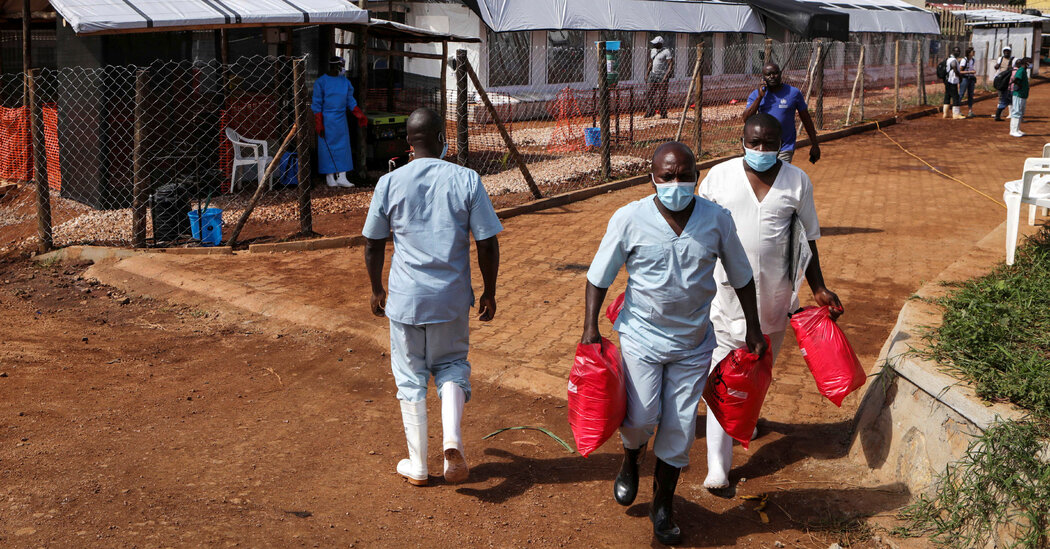
There are no cases in the United States, but the C.D.C. wants doctors to be on the alert for patients with telltale symptoms.The Centers for Disease Control and Prevention on Thursday asked U.S. physicians to watch for cases of Ebola, which has been surging in Uganda in recent weeks.As of Thursday, there were 44 confirmed cases and 10 deaths in Uganda, with a few dozen possible cases and 20 deaths still under investigation, making this the largest outbreak in that country in 20 years. At least six infections and four deaths occurred among health care workers.No cases have yet been reported outside Uganda, and American doctors are being alerted as a precaution, according to the agency’s alert. There are no approved drugs or treatments for the type of Ebola virus causing the outbreak in Uganda.The agency urged physicians to obtain a travel history from patients whom they suspect of having Ebola.“While there are no direct flights from Uganda to the United States, travelers from or passing through affected areas in Uganda can enter the United States on flights connecting from other countries,” the C.D.C. alert said.Ebola is a rare and deadly disease, seen mostly in sub-Saharan Africa. The infection begins with mild respiratory symptoms, but left untreated can rapidly damage internal organs.Patients eventually bleed from their eyes, nose, mouth and rectum — dramatic symptoms that have stoked fear of the virus. Ebola kills about half of those infected on average, usually within two weeks of the appearance of symptoms.The C.D.C. and the World Health Organization both provide information on how to diagnose and treat patients infected with the virus.The outbreak was first detected in Mubende, Uganda, but has already spread to four other districts in a 75-mile radius. There will be many more cases and deaths before the virus can be contained, said Dr. Fiona Braka, emergency operations manager at the W.H.O. regional office for Africa, based in Brazzaville.“We are concerned because we still haven’t reached the peak,” Dr. Braka said.The virus was circulating undetected for some time, and even after the first patient was diagnosed, health officials have been able to trace only three-quarters of the people who may have been exposed, Dr. Braka said.The remaining contacts have scattered, raising the possibility that cases will sprout in other parts of the country or the world.Ebola is highly contagious, and previous outbreaks have quickly spiraled out of control. The largest tore through West Africa in 2014 and accounted for more cases than all previous ones combined. By its end, the W.H.O. reported 28,616 cases and 11,310 deaths.The toll included 11 Americans, nine of whom contracted the disease outside the United States. Two of them died.The World Health Organization has twice declared a public health emergency of international concern — the organization’s highest alert — for Ebola: in 2014, and again in 2019, when the virus surfaced in the Democratic Republic of the Congo.The vaccines and treatments approved for Ebola target the Zaire species, the primary source of previous outbreaks. But they are ineffective against the Sudan species now circulating in Uganda.A public awareness campaign warned of Ebola in Kampala. The latest outbreak, the worst in 20 years, so far has 43 confirmed cases and 10 deaths, and a few dozen others are under investigation.EPA, via ShutterstockAnticipating that vaccines against the Sudan species might someday be necessary, scientists have been working on at least eight candidates.The furthest in development is a single-dose vaccine developed by the Vaccine Research Center at the National Institutes of Health, which has been licensed to the Sabin Vaccine Institute.The vaccine has been shown to be safe, produces copious antibodies against the virus, and is highly protective against the Sudan virus in monkeys. About 100 doses are readily available.Another vaccine candidate, made by a British team, targets both Zaire and Sudan species, but is in early-stage trials. Only 81 doses are available.Both candidates could be made available in clinical trials during the current outbreak, pending approval from Ugandan health authorities. Sabin also has enough bulk material to produce 40,000 doses of its vaccine, stored at a biotech company called ReiThera, in Italy. But filling and finishing those doses in vials will take at least until the end of the year, according to Dr. Rick Koup, acting director of the federal vaccine center.Health officials came up against similar hurdles in acquiring doses of the monkeypox vaccine, which hindered the response in the initial weeks of the U.S. outbreak. That vaccine is still in short supply worldwide.“These are two rapid succession cases where clearly we need to come up with a better solution,” Dr. Koup said.Few facilities can fill and finish vaccines, creating a bottleneck when doses are urgently needed. On the other hand, finished doses expire more quickly, requiring emergency stocks to be constantly replenished.Two months ago, Dr. Koup said, he would have predicted that finishing doses of a suddenly needed vaccine was “not going to be a big issue.” But in hindsight, he said, “obviously, we should have had a few thousand doses filled.”Activists lauded federal scientists for having the foresight to develop vaccines for emerging pathogens. But instead of relying on private companies, the government should own and control a vaccine manufacturing facility that can be used during an outbreak, said James Krellenstein, a founder of PrEP4All, a group that promotes access to H.I.V. care.“How many outbreaks do we have to watch spiral out of control because of the lack of vaccine manufacturing capacity before the U.S. government fixes this problem?” Mr. Krellenstein said. “The thing that’s very frustrating is, this is really a fixable problem.”Scientists have also been developing so-called monoclonal antibodies that can broadly neutralize multiple species of Ebola and reverse symptoms. One dose of an antibody cocktail has been shown to ease even severe symptoms in monkeys infected with the Zaire, Sudan and Bundibugyo species of Ebola. But the treatment is still in early-stage trials.“If you go fishing for these rare rainbow unicorn antibodies, you can certainly find ones that are cross-neutralizing and cross-protective” against various types of Ebola, said Kartik Chandran, a virologist at the Albert Einstein College of Medicine in New York who helped develop the treatment.“We knew it was only a matter of time before we had another Ebola outbreak that wasn’t caused by Zaire,” he added.In Uganda, officials have moved quickly to scale up the response to the unexpected outbreak. Contact-tracing continues to increase, and about 950 village health officials in the affected districts have been trained to watch for symptoms. They have been given personal protective equipment, thermometers and beds, Dr. Braka said.Learning from previous outbreaks, officials moved testing from the Uganda Virus Research Institute in Entebbe to a mobile lab in Mubende, the outbreak’s epicenter, she added. Confirmation of the diagnosis now takes just six hours.

Read more →

Very low incidence of severe COVID-19 following vaccination and booster, large study reports

A large study of COVID-19 disease following vaccination and booster, published in the Journal of the American Medical Association (JAMA), reports surprisingly low incidence, especially in individuals younger than 65 years of age with no high-risk conditions.
Hospitalizations for COVID-19 disease among individuals who had received vaccines and boosters occurred almost exclusively among high-risk patients including older adults and adults of all ages with certain comorbidities or immunocompromising conditions.
This retrospective study of 1.6 million patients at Veterans Health Administration facilities, the largest integrated healthcare system in the U.S., found the incidence — new cases over time — of hospitalization for COVID-19 pneumonia or death was 8.9 per 10,000 persons who had been vaccinated and boosted. While the incidence for vaccinated and boosted older adults with comorbid or immunocompromising conditions was tenfold higher, it was still a relatively low rate of occurrence of bad outcomes.
“This is remarkable, good news about the power and effectiveness of receiving COVID-19 boosting for all groups,” said co-author Regenstrief Institute and Roudebush VA Medical Center research scientist Dawn Bravata, M.D., who led the study’s chart review core. “With the power of VA data, we had such complete information on a large number of patients including many who are older and those who have comorbidities or are immunocompromised, that we could examine this issue thoroughly.
“These results, from a period of Delta and Omicron predominance, should encourage people to get vaccinated and boosted,” said Dr. Bravata, who is also a professor of medicine at Indiana University School of Medicine.
To avoid misclassification of death or other serious outcomes due to COVID rather than to other health issues, the study authors rigorously evaluated patient medical records for breakthrough COVID-19, COVID-19 pneumonia and death, as opposed to simply considering all hospitalizations among patients with a positive COVID-19 lab test.
“Early in the pandemic, many researchers, including our own group, published studies about COVID-19 hospitalizations. But we’re in a different era now when patients who are admitted to the hospital with a non-COVID illness are screened; some of whom will test positive. Evaluating outcomes such as COVID-19 pneumonia or mortality — as opposed to simply considering all hospitalization — makes more sense,” said Dr. Bravata.
Authors of”Incidence of Severe COVID-19 Illness Following Vaccination and Booster With BNT162b2, mRNA-1273, and Ad26.COV2.S Vaccines” are J. Daniel Kelly, M.D., PhD, San Francisco VA Medical Center and University of California; San Francisco; Samuel Leonard, M.S., San Francisco VA Medical Center; Katherine J. Hoggatt, PhD, San Francisco VA Medical Center and University of California, San Francisco; W. John Boscardin, Ph.D.; University of California, San Francisco; Emily N. Lum, MPH, San Francisco VA Medical Center; Tristan A. Moss-Vazquez, B.A., San Francisco VA Medical Center; Raul Andino, PhD, University of California, San Francisco; Joseph K. Wong, M.D., San Francisco VA Medical Center and University of California, San Francisco; Amy Byers, PhD, San Francisco VA Medical Center; Dawn M. Bravata, M.D., Richard Roudebush VA Medical Center (Indianapolis), Regenstrief Institute and Indiana University School of Medicine; Phyllis C. Tien, M.D., San Francisco VA Medical Center and University of California, San Francisco; Salomeh Keyhani, M.D., MPH, San Francisco VA Medical Center and University of California, San Francisco.
This work was supported by VA Clinical Science Research and Development grant I01 CX002417 and the National Institute of Allergy and Infectious Diseases (NIAID), part of the National Institutes of Health, grant K23 AI146268.

Read more →

Barnard College Plans to Offer Abortion Pills on Campus

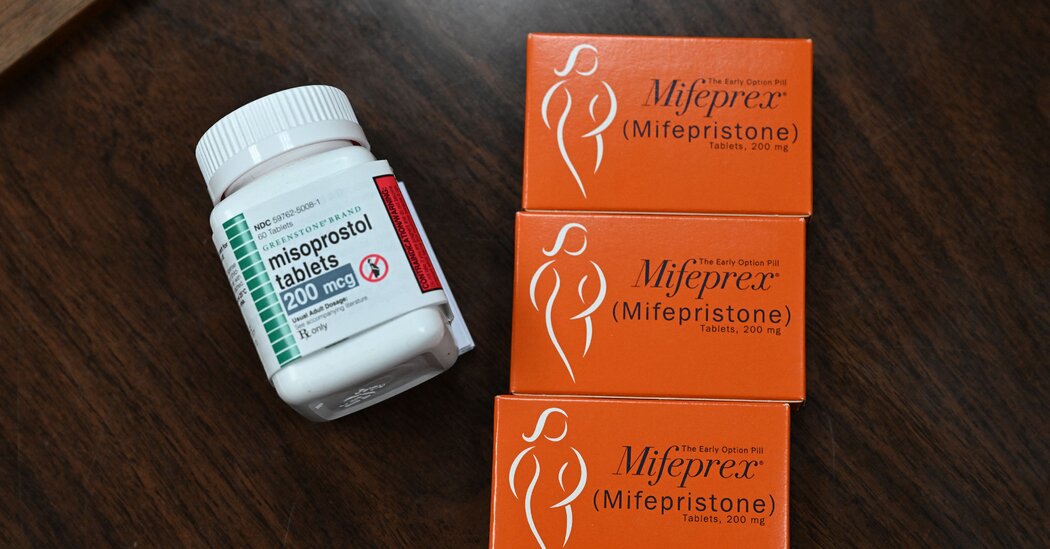
It is one of many colleges and universities deliberating over how to respond to the fall of Roe v. Wade.Barnard, the private women’s college in New York City, will begin offering abortion pills on campus next year, college officials announced Thursday.The decision, to take effect in September, signals how the nation’s colleges and universities are becoming another front in the nation’s pitched battle over abortion after the Supreme Court decision to overturn Roe v. Wade.“I think we’re putting a stake in the ground that we believe that health and wellness is really the institution’s responsibility for students, and we want to do everything we can to support our students,” Sian L. Beilock, the president of Barnard, which operates in partnership with Columbia University, said in an interview.In an email sent out to the campus Thursday, Barnard officials wrote, “The overturning of Roe v. Wade after 50 years will likely decrease college accessibility, result in lower graduation rates, and derail employment trajectories.” The email said that while abortion access in New York was currently strong, “we are also preparing in the event that there is a barrier to access in the future, for any reason.”This summer, Massachusetts enacted a law requiring the state’s public colleges and universities to submit plans by November 2023 to provide abortion pills to students, either through their campus health centers or through a local service that is readily accessible to students. By January, California’s public colleges and universities will be required by a state law enacted in 2019 to offer the pills.At the same time, colleges in states with abortion bans or strict restrictions are imposing measures to rein in campus reproductive health services.Last month, the general counsel of the University of Idaho sent a memo to all employees saying that under Idaho’s near-total ban on abortion, which took effect in August, employees of the state university cannot counsel patients about abortion or refer them to abortion services. If employees do so, the memo said, they could be charged with a misdemeanor or a felony under the new law, lose their job and be permanently barred from state employment.The memo also said that the Idaho law prohibited employees from dispensing emergency contraception, except in cases of rape, and added that, because it was unclear how broadly the law applied to other methods of contraception, “we are advising a conservative approach here, that the university not provide standard birth control itself.”Condoms can be provided only if they are intended to stop the spread of sexually transmitted diseases, the memo said, “not for purposes of birth control.”Dr. Marina Catallozzi, Barnard’s vice president of health and wellness and chief health officer. “We feel like this is of course a natural step in caring for a population of college students who are at risk of pregnancy,” she said.Barnard CollegeSian L. Beilock, Barnard’s president. “We believe that health and wellness is really the institution’s responsibility for students,” she said.Barnard CollegeIn general, colleges and universities have cautiously approached the question of whether to offer medication abortion. Rachel Mack, a spokeswoman for the American College Health Association, which represents more than 700 institutions of higher education, said the issue was being discussed among colleges and the association’s reproductive rights task force.“Not all schools have the resources to provide such a service and may refer out to community providers,” Ms. Mack said. “Campuses vary greatly in their available resources — this can be due to location, the needs of their student population and many other factors.”A few colleges decided to offer abortion pills long before this year’s Supreme Court decision overturning Roe. The University of California, Berkeley, has been doing so for a couple of years. A study published in 2018 estimated that 322 to 519 students at California’s public universities sought medication abortion each month and that many faced obstacles of cost, of travel distance to providers and of long waits for appointments.In a survey by the American College Health Association in 2020, 2.5 percent of 122 college health centers said they provided medication abortion on campus, while 87 percent said they provided referrals to patients seeking abortion.At Barnard, Dr. Marina Catallozzi, the vice president of health and wellness and chief health officer, said that adding medication abortion was already on the college’s radar before some students met with health services officials this year to ask the school to provide it.“We feel like this is of course a natural step in caring for a population of college students who are at risk of pregnancy,” Dr. Catallozzi said, noting that Barnard already offered a range of reproductive health services, including a campus vending machine for emergency contraception for students who want to obtain the morning-after pill in a more private way than visiting the wellness center.“With every reproductive health decision, but particularly around a pregnancy,” she said, “we want to make sure that students have all of the options — if they want to continue a pregnancy, if they want to continue and go on to adoption, if they want to terminate.”The Wellness Spot at Barnard College, a health hub that offers services, workshops and other assistance to students.Barnard CollegeBarnard officials said they decided not to offer the pills immediately in order to spend the next several months training staff, developing protocols and working out logistics. They said that the pills would be covered by the college’s health insurance plan and that there would be emergency funding available for students without insurance or those who do not want to use their parents’ insurance policies.Medication abortion, legalized in the United States in 2000, typically involves two drugs: mifepristone, which blocks a hormone necessary for pregnancy development, followed 24 to 48 hours later by misoprostol, which causes contractions that expel pregnancy tissue. The Food and Drug Administration requires that mifepristone be dispensed by specially certified providers, but patients can take the pills on their own at home or any location they choose.Patients with some medical issues, like bleeding disorders, are not prescribed abortion pills. But for the many patients who are medically eligible, data indicates medication abortion is safe and effective, with a small percentage of patients requiring a procedure to fully remove pregnancy tissue and an even smaller proportion experiencing serious complications.Dr. Catallozzi and Dr. Beilock said very few students at Barnard had sought abortions in recent years. Those who do are typically referred to services affiliated with Columbia University Irving Medical Center, and that relationship will continue. Dr. Catallozzi said she expected that some students who live in dorms may prefer to go to the medical center for surgical abortions, which do not involve the days of bleeding that typically follow taking the pills.Dr. Catallozzi also said that the college wanted to offer the option in case New York’s abortion services become overwhelmed with patients from states with restrictions. “It makes sense for us to say, ‘Hey, the landscape’s changing all over the country. Let’s make sure that if needed, we’re prepared,’” she said.In the 2023 academic year, Dr. Beilock will become the president of Dartmouth College. Asked if she would recommend that Dartmouth offer abortion pills, Dr. Beilock said: “I’m looking forward to getting to know the Dartmouth community better. Right now, I’m president of Barnard and thinking, with our experts, about what’s best for Barnard.”

Read more →

The costs of caring for a graying population

With the “graying population” phenomenon becoming widespread, many countries are facing the challenge of caring for their elderly population. In Japan, the country with the oldest population, a universal long-term care (LTC) insurance system was established in 2000 to help meet this need. Now, researchers from the University of Tsukuba have revealed the considerable variation between Japan’s municipalities in spending on LTC.
In Japan, everyone older than 65 years of age and everyone with a health-related disability older than 40 years of age is eligible to receive LTC. Home-based, community, and facility-based care services are provided by the municipalities, which also act as insurers. There is a classification system for individuals with disabilities, ranging from “Care Level 1” for light disabilities to “Care Level 5” for severe disabilities.
“We were interested in seeing how much variation there is between municipalities in terms of their spending on LTC,” says lead author of the study Professor Nanako Tamiya. “As health inequalities are currently widening in Japan, it is essential for us to understand how spending on LTC varies across the country.”
To do this, the researchers examined municipality-level data from across Japan. They calculated per-capita spending on LTC and ran a series of statistical tests to determine which factors were behind the differences in spending they observed.
“At first glance, the differences between municipalities were surprisingly large,” notes co-author Dr. Xueying Jin. “We found that the per-capita spending on LTC was four times higher in the highest-spending municipalities than in the lowest. We also noticed a ‘west high, east low’ trend, with higher spending in western Japan.”
However, the researchers also found that the levels of supply and demand (e.g., the numbers of facilities and candidates for LTC) and other structural factors, which were obtained from publicly available municipality-level statistical sources, mostly explained the regional differences.
“We found that demand factors such as the proportion of the population over 85 years of age, the proportion of individuals certified as needing LTC, and the proportion of individuals who had been classified as belonging to a high care level played the greatest roles in driving up per-capita spending,” says Associate Professor Masao Iwagami, another of the study’s authors.
One of the study’s major implications is that preventive efforts may help lower per-capita spending on LTC. Measures aimed at helping healthy individuals avoid developing lifestyle-related health problems should lead ultimately to lower numbers of individuals who require LTC. For those classified as having a disability, preventing their condition from deteriorating should result in lower numbers of individuals requiring high levels of care, and thus lower costs.
This study was supported by a grant-in-aid from Japan Society for the Promotion of Science; (JP22K17299). The funders had no role in the study design, data collection and analysis, decision to publish, or preparation of the manuscript.
Story Source:
Materials provided by University of Tsukuba. Note: Content may be edited for style and length.

Read more →

Mouthwashes may suppress SARS-CoV-2, study finds

SARS-CoV-2, the virus that causes COVID-19, is an airborne disease transmitted via aerosols, which are spread from the oral and nasal cavities — the mouth and the nose. In addition to the well-known division and spread of the virus in the cells of the respiratory tract, SARS-CoV-2 is also known to infect the cells of the lining of the mouth and the salivary glands.
A team of researchers led by Professor Kyoko Hida at Hokkaido University have shown that low concentrations of the chemical cetylpyridinium chloride, a component of some mouthwashes, has an antiviral effect on SARS-CoV-2. Their findings were published in the journal Scientific Reports.
Commercially available mouthwashes contain a number of antibiotic and antiviral components that act against microorganisms in the mouth. One of these, cetylpyridinium chloride (CPC), has been shown to reduce the viral load of SARS-CoV-2 in the mouth, primarily by disrupting the lipid membrane surrounding the virus. While there are other chemicals with similar effects, CPC has the advantage of being tasteless and odorless.
The researchers were interested in studying the effects of CPC in Japanese mouthwashes. Mouthwashes in Japan typically contain a fraction of the CPC compared to previously tested mouthwashes. They tested the effects of CPC on cell cultures that express trans-membrane protease serine 2 (TMPRSS2), which is required for SARS-CoV-2 entry into the cell.
They found that, within 10 minutes of application, 30-50 µg/mL of CPC inhibited the infectivity and capability for cell entry of SARS-CoV-2. Interestingly, commercially available mouthwashes that contain CPC performed better than CPC alone. They also showed that saliva did not alter the effects of CPC. Most significantly, they tested four variants of SARS-CoV-2 — the original, alpha, beta and gamma variants — and showed that the effects of CPC were similar across all strains.
This study shows that low concentrations of CPC in commercial mouthwash suppress the infectivity of four variants of SARS-CoV-2. The authors have already begun assessing the effect on CPC-containing mouthwashes on viral loads in saliva of COVID-19 patients. Future work will also focus on fully understanding the mechanism of effect, as lower concentrations of CPC do not disrupt lipid membranes.
Story Source:
Materials provided by Hokkaido University. Note: Content may be edited for style and length.

Read more →

Wear and tear from lifelong stress can increase cancer mortality

The wear and tear on the body from chronic and lifelong stress can also lead to an increased risk of dying from cancer, Medical College of Georgia researchers report.
That wear and tear, called allostatic load, refers to the cumulative effects of stress over time. “As a response to external stressors, your body releases a stress hormone called cortisol, and then once the stress is over, these levels should go back down,” says Dr. Justin Xavier Moore, epidemiologist at the Medical College of Georgia and Georgia Cancer Center. “However, if you have chronic, ongoing psychosocial stressors, that never allow you to ‘come down,’ then that can cause wear and tear on your body at a biological level.”
Investigators, led by Moore, performed a retrospective analysis of more than 41,000 people from the National Health and Nutrition Examination Survey, or NHANES, collected between 1988-2019. That database includes baseline biological measures of participants — body mass index, diastolic and systolic blood pressure, total cholesterol, hemoglobin A1C (higher levels indicate a risk for diabetes), albumin and creatinine (both measures of kidney function) and C-reactive protein (a measure of inflammation) — that the researchers used to determine allostatic load. Those with a score of more than 3 were categorized as having high allostatic load.
Then they cross referenced those participants with the National Death Index, maintained by the National Center for Health Statistics and the Centers for Disease Control and Prevention, to determine which people died from cancer and when, Moore explains.
“To date, there has been limited research on the relationship between allostatic load and cancer among a current, nationally representative sample of US adults,” Moore and his colleagues write in the journal SSM Population Health. “Examining the association of allostatic load on cancer outcomes, and whether these associations vary by race may give insight to novel approaches in mitigating cancer disparities.”
The researchers found that, even without adjusting for any potential confounders like age, social demographics like race and sex, poverty to income ratio and educational level, those with a high allostatic load were 2.4 times more likely to die from cancer than those with low allostatic loads.

Read more →