
Researchers map the effects of dietary nutrients on disease


The vital role of oxytocin — the “love hormone” — for social attachments is being called into question. More than forty years of pharmacological and behavioral research has pointed to oxytocin receptor signaling as an essential pathway for the development of social behaviors in prairie voles, humans, and other species, but a genetic study publishing in the journal Neuron on January 27 shows that voles can form enduring attachments with mates and provide parental care without oxytocin receptor signaling.
Prairie voles are one of only a few monogamous mammalian species. After mating, they form lifelong partnerships known as “pair-bonds.” Pair-bonded voles share parental responsibilities, prefer the company of their partner over unknown members of the opposite sex, and actively reject potential new partners. Previous studies that used drugs to block oxytocin from binding to its receptor found that voles were unable to pair-bond when oxytocin signaling was blocked.
Neuroscientists Devanand Manoli of UCSF and Nirao Shah of Stanford University wanted to know whether pair-bonding was really controlled by oxytocin receptor signaling. To test this, they used CRISPR to generate prairie voles that lack functional oxytocin receptors. Then, they tested these mutant oxytocin-receptor-less voles to see whether they could form enduring partnerships with other voles. To their surprise, the mutant voles formed pair-bonds just as readily as normal voles.
“We were all shocked that no matter how many different ways we tried to test this, the voles demonstrated a very robust social attachment with their sexual partner, as strong as their normal counterparts,” says Manoli.
Next, the researchers wondered whether oxytocin receptor signaling is similarly dispensable for its other functions — parturition, parenting (which, in prairie voles, is a shared responsibility between the two parents), and milk release during lactation.
“We found that mutant voles are not only able to give birth, but actually nurse,” says Shah. Both male and female mutants engaged in the usual parental behaviors of huddling, licking, and grooming, and were able to rear pups to weaning age.
However, the mutant prairie voles did have limited milk release compared to normal voles. As a result, fewer of their pups survived to weaning age, and those that did survive were smaller compared to the pups of normal prairie voles. The fact that the voles could nurse at all is in contrast to equivalent studies in oxytocin receptor-deficient mice, who completely failed to lactate or nurse, and whose pups consequently died within a day or so of being born. The authors hypothesize that this species difference could be due to the inbred nature of laboratory mouse strains in contrast to the genetically heterogenous voles. “It could be that inbreeding in mice has selected for a large dependence on oxytocin signaling, or this may represent a species-specific role of oxytocin receptor signaling,” says Shah.
When asked why their results differ from previously published studies that used drugs to block oxytocin receptor signaling, the authors point to the key difference between genetic and pharmacological studies: precision. “Drugs can be dirty,” says Manoli, “in the sense that they can bind to multiple receptors, and you don’t know which binding action is causing the effect. From a genetics perspective, we now know that the precision of deleting this one receptor, and subsequently eliminating its signaling pathways, does not interfere with these behaviors.”
“For at least the last ten years people have been hoping for the possibility of oxytocin as a powerful therapeutic for helping people with social cognitive impairments due to conditions ranging from autism to schizophrenia,” Manoli says. “This research shows that there likely isn’t a magic bullet for something as complex and nuanced as social behavior.”
Another key difference is that, whereas most pharmacological studies suppress oxytocin receptor signaling in adult animals, this study switched it off when the voles were embryos. “We’ve made a mutation that starts from before birth,” says Shah. “It could be that there are compensatory or redundant pathways that kick-in in these mutant animals and mask the deficits in attachment, parental behaviors, and milk let-down.”
Working with prairie voles presented an obstacle, but one worth overcoming. Because prairie voles are not commonly used in genetic studies like laboratory mice, the team needed to develop all of their molecular tools and protocols from scratch. Now that they have these vole-specific pipelines and tools, the authors are excited about the doorways this opens, both for them and for other researchers.
“We’re very happy to be part of a community and to have this technology that we can share,” says Manoli. “Now we have this trove that we can start to mine. There are so many other questions that prairie voles could be interesting and useful for answering, both in terms of potential clinical implications for models of anxiety or attachment and also for basic comparative biology.”

The Labour leader says it is “absolutely fundamental” that health care remans free at the point of need.Sir Keir Starmer was visiting Harlow Hospital in Essex, a day after nearby resident Sir Rod Stewart offered to pay for medical scans to help people get treatment more quickly.The musician also gave his backing to Labour after being a previous Conservative supporter.Rod Stewart: Tories should stand down and give Labour a go
Read more →
Published4 hours agoShareclose panelShare pageCopy linkAbout sharingImage source, Bharat Biotech / TwitterIndia has approved its first nasal Covid vaccine.Made by Bharat Biotech, iNCOVACC is administered in the form of drops and stimulates an immune response in the tissues that line the nasal cavity.In September 2022, China had approved an inhaled Covid vaccine, administered in the form or a spray.Scientists say that nasal vaccines may offer added immunity in the lining of the nose and upper airways, where Covid typically enters the body.Research teams in the UK and the US have also been investigating nasal spray vaccines.In November, India’s drug regulator approved the use of iNCOVACC as a heterologous booster dose – a booster for people who had previously received two doses of Covishied or Covaxin, the two main Indian vaccines – in emergency situations among adults. In December, it was approved by the drug regulator as a primary vaccine and as a subsequent booster shot in adults.The vaccine will cost 800 rupees ($10; £8) per dose in private hospitals and 325 rupees per dose in government hospitals and can be booked on the government’s online platform. Two doses are to be taken 28 days apart.iNCOVACC uses a adenovirus as a carrier for the genetic code that teaches the body how to fight the infection. Adenoviruses used in the vaccines are harmless transporters which have been modified so they cannot replicate or cause infection.Dr Krishna Ella, chairman of Bharat Biotech, told ANI news agency that the vaccine was “easy to deliver” as it didn’t need a syringe or needle, and that it produced a broader immune response as compared to injectable Covid vaccines. India has administered over two billion Covid jabs so far. More than 70% of the Indian population has taken at least two doses, according to the federal health ministry.In January 2022, India began giving boosters to healthcare and frontline workers, and those above 60 years with comorbidities. It was later expanded to all adults. However, the pace of booster doses administrated has been slow.Read more India stories from the BBC:India set to mark Republic Day with colourful paradeIndia and Pakistan came close to nuclear war: PompeoIndian screenings of BBC Modi documentary blockedWomen’s Indian Premier League franchises go for £465mThe growing row over picking judges in IndiaEight-year-old Indian diamond heiress who became a nun
Read more →
Published16 minutes agoShareclose panelShare pageCopy linkAbout sharingImage source, Getty ImagesBy Michelle RobertsDigital health editorTracking what shoppers buy, via loyalty-card data, can help spot those with early signs of cancer, doctors who have been running a study say. Frequent purchases of over-the-counter painkillers and indigestion tablets revealed a higher risk of ovarian cancer, they found.Ovarian cancer is often diagnosed late.There is no reliable screening test and the symptoms, such as bloating, can be vague and confused with other common, harmless conditions. Symptoms include:swollen or bloated stomachindigestionpelvic or abdominal painloss of appetite or feeling full quickly after eatingneeding to urinate more oftenEarly diagnosis improves the chance of successful treatment. Fiona’s storyImage source, Fiona MurphyFiona Murphy was 25 when she was diagnosed and treated for a rare type of ovarian cancer. She had been having stomach cramps and indigestion for a couple of years, which other doctors had repeatedly thought might be irritable-bowel syndrome. She told BBC News: “I lived on Gaviscon for months and months before my ovarian cancer diagnosis. It went everywhere with me. I couldn’t leave the house without it.”My symptoms were vague but they were frequent and continuous. That’s what you need to be looking for.”Her symptoms continued and a scan revealed a large mass or growth. Now 39, Fiona has been helping the team at Imperial College London with their research. “I wanted to help with developing this study because I had the wrong diagnosis for nearly two years,” she said.”If there is a way to get an earlier diagnosis, I want to help people who are in the same position I was in.”Getting diagnosed early is vital. Had my cancer been spotted sooner, I might have had far less surgeries and better fertility options.”Am I at risk?Smear test could check risk for other cancersDr James Flanagan, lead author of the Cancer Research UK-funded work, said: “The cancer symptoms we are looking for are very common – but for some women, they could be the first signs of something more serious.”Using shopping data, our study found a noticeable increase in purchases of pain and indigestion medications among women with ovarian cancer, up to eight months before diagnosis, compared with women without ovarian cancer. “This suggests that long before women have recognised their symptoms as alarming enough to go to the GP, they may be treating them at home.”The researchers worked with two big High Street retailers and 283 female customers, who agreed to share their shopping data over six years. Most had been diagnosed with ovarian cancer. More research is needed to confirm the findings. The team now plans to test if shopping data can help spot other cancers too – such as stomach, liver and bladder cancer. The latest work is published in the journal JMIR Public Health and Surveillance. More on this storyWoman with ovarian cancer told ‘just overweight’28 January 2022Smear test could check risk for some other cancers1 February 2022Related Internet LinksTarget Ovarian CancerOvarian Cancer ActionCancer Research UKThe BBC is not responsible for the content of external sites.
Read more →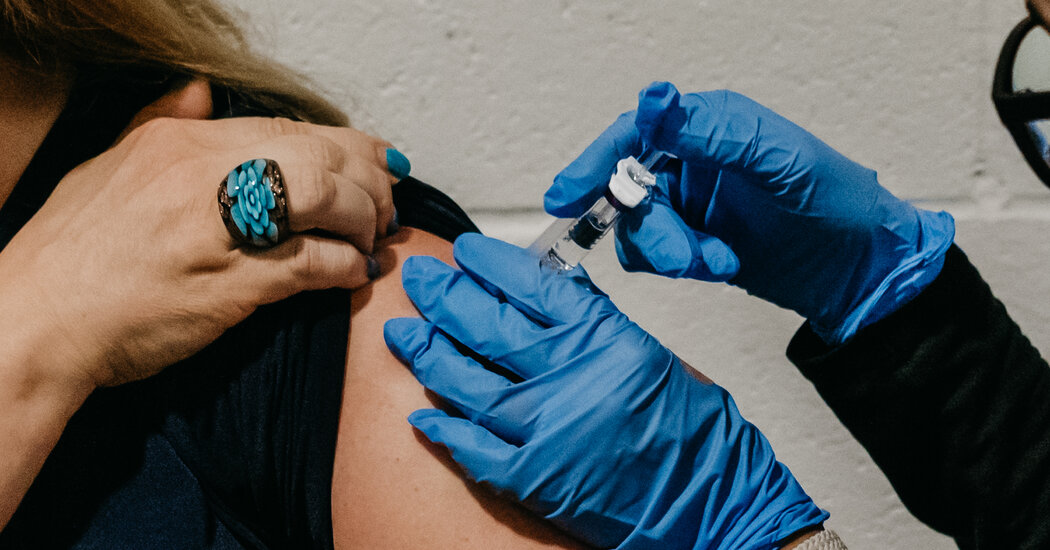
California’s law sought to punish doctors who give patients false information about Covid-19.SAN FRANCISCO — A federal judge in California has temporarily blocked enforcement of a new state law allowing regulators to punish doctors for spreading false or misleading information about Covid-19 vaccinations and treatments to their patients.The law, signed by Gov. Gavin Newsom last year, had been intended to address the waves of misinformation that have churned through the course of the pandemic.Though the wording of the law had been narrowly tailored, the judge, William B. Shubb of the U.S. District Court for the Eastern District of California, ruled on Wednesday that its definitions of misinformation and the uncertainty about its enforcement were “unconstitutionally vague.”The case is one of two legal challenges facing the law, the first of its kind in the nation to try to address a problem that the U.S. Surgeon General, the American Medical Association and others have said has cost unnecessary illnesses and lives.In December, another judge in the Central District of California denied an injunction in a similar case. The split verdicts raises the likelihood that the law’s fate could ultimately be decided at the U.S. Court of Appeals for the Ninth Circuit in San Francisco.“I think the judge saw the law for what it was: an attempt to silence doctors who disagree” with recommendations of the Centers for Disease Control and Prevention or other regulatory bodies, said Jenin Younes, a lawyer with the New Civil Liberties Alliance in Washington who represented five doctors who brought the lawsuit.Judge Shubb, who was appointed by President George H.W. Bush in 1990, wrote in his ruling that he did not consider the question of whether the law violates First Amendment protections of free speech. Instead, he found that the law’s provisions violated the plaintiffs’ rights of due process under the 14th Amendment.The law expanded the authority of the Medical Board of California, which licenses doctors, to designate spreading false or misleading medical information to patients as “unprofessional conduct.” That could lead to a suspension or revocation of a doctor’s license to practice in the state.Judge Shubb ruled that the definition of misinformation — “false information that is contradicted by contemporary scientific consensus contrary to the standard of care” — could have a chilling effect on doctors’ interactions with their patients. He granted a preliminary injunction to block the law, pending a full hearing of the complaint.One of the plaintiffs, Aaron Kheriaty, a psychiatrist who has challenged many government policies that emerged during the pandemic, said in an interview on Thursday that the law was too rigid, especially given the evolving understanding of how best to address a pandemic like this one.“Today’s quote-unquote misinformation is tomorrow’s standard of care,” he said.Governor Newsom’s office did not immediately respond to a request for comment.
Read more →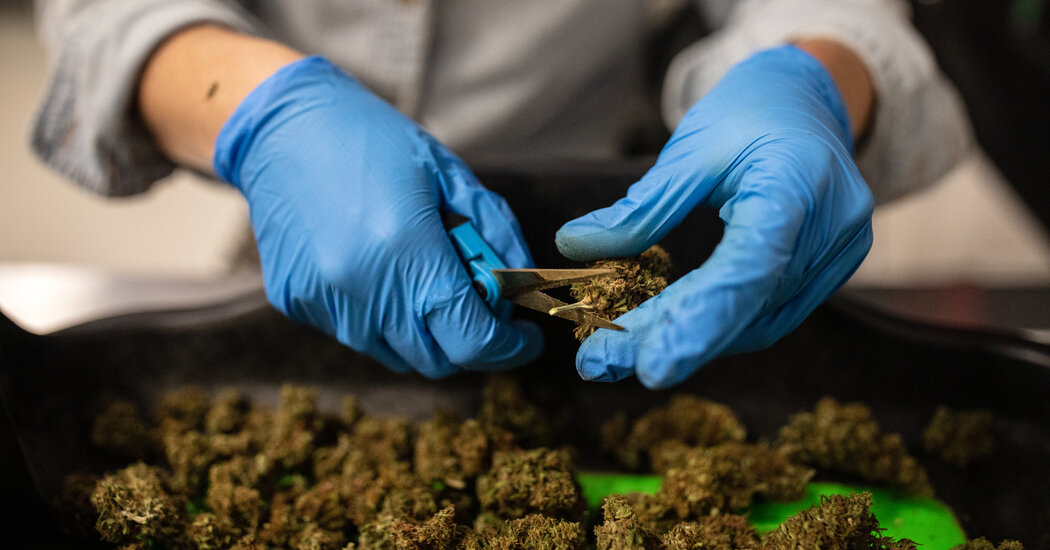
The agency wants Congress to intervene, saying it does not have adequate oversight powers to ensure the safety of the myriad cannabidiol products derived from hemp.Four years after Congress legalized hemp, spawning a vast, unregulated market for cannabidiol-infused beverages, gummies and lotions, the Food and Drug Administration said on Thursday it lacked the authority to regulate such products. Instead, the agency called on federal lawmakers to give it a stronger regulatory framework to address the health claims and safety concerns that have dogged the prolific CBD industry.Dr. Janet Woodcock, the F.D.A.’s principal deputy commissioner, said the agency’s existing regulatory methods governing the sale of food additives and dietary supplements were inappropriate for products containing CBD, the hemp-derived chemical whose promoters ascribe to it a dizzying welter of health benefits.Unlike tetrahydrocannabinol, or THC, the cannabis component that gets users high, CBD is not psychoactive. But there is little data to back up marketing claims that CBD can prevent diabetes, soothe anxiety or ease menstrual cramps.In a statement, Dr. Woodcock said an internal committee that she led at the agency was concerned about the overall paucity of scientific literature on CBD, and that some research suggested long-term use might be associated with liver toxicity and damage to men’s reproductive systems. Also unclear, she said, was whether CBD was safe for pregnant women and children. “For example, we have not found adequate evidence to determine how much CBD can be consumed, and for how long, before causing harm,” she said.The agency, which has a stricter review process for prescription drugs, has very relaxed oversight powers for consumer products like cosmetics and dietary supplements. It does not vet such products before they reach the market, but mainly responds to complaints of dangerous ingredients before investigating or trying to get them removed from store shelves.More About CannabisWith recreational marijuana becoming legal in several states, cannabis products are becoming more easily available and increasingly varied.A Weed Pioneer: Roland Conner is the first person with a criminal conviction to open a licensed cannabis dispensary with the state’s help.Risk for Children: A new study found that the ingestion of edibles by children under 6 has risen rapidly since the start of the pandemic, contributing to a “significant increase” in hospitalizations.Marijuana Pardons: President Biden pardoned thousands of people convicted of marijuana possession under federal law. But many others, including those convicted on state charges, are not eligible.A New Competition: The New York Growers Cup showcases small craft growers who are hoping to come up with the next big strain in weed.While waiting for Congress to decide whether to give it more control, the agency will continue to take action against companies that make specific health claims about CBD products, she said. “We will remain diligent in monitoring the marketplace,” Dr. Woodcock said.Industry groups expressed disappointment with the decision. They said they worried that the matter could languish in a closely divided Congress, despite bipartisan support for an industry that grew to nearly $6 billion in the four years since lawmakers removed hemp from the federal list of controlled substances.“The idea that we need to start from scratch on a completely new regulatory pathway is of great concern to us,” said Jonathan Miller, counsel for the U.S. Hemp Roundtable, a trade association.He and other industry supporters had been urging the F.D.A. to use existing regulatory frameworks for CBD. On Thursday, the agency definitively quashed that idea by rejecting petitions from three groups that had asked the F.D.A. to regulate CBD products the way it oversees dietary ingredients like caffeine, ginseng and echinacea.Jonathan Havens, a former legal counsel at the F.D.A. who now represents companies in the CBD industry, said many growers and manufacturers had grown frustrated with the F.D.A.’s inaction, which has contributed to a chaotic marketplace that has created confusion for consumers and financial uncertainty for businesses.“The F.D.A. has never wanted to deal with this issue,” he said. “And although that’s regrettable, it would be less regrettable if we knew that in 2018 and Congress could have dealt with it, particularly at a time when Congress wasn’t so sharply divided and bills more regularly emerged from both houses and reached the president’s desk.”Amid the regulatory vacuum, more than two dozen states have taken up CBD legislation, producing a patchwork of laws.Members of Congress have long expressed impatience with the F.D.A. on CBD regulation. Last September, a bipartisan group of legislators sent a letter to the agency complaining about its lack of cooperation on proposed legislation aimed at resolving the matter.On Thursday, several lawmakers who have worked on the issue expressed guarded optimism that Congress would be able to tackle the issue.“I’m encouraged by the F.D.A.’s announcement today and looking forward to finding a path forward,” Representative Angie Craig, Democrat of Minnesota, said in a statement, echoing remarks from Representative Morgan Griffith, a Virginia Republican who previously joined Ms. Craig to sponsor CBD legislation in the House.But other legislators struck a more combative tone. Representative James Comer, a Republican from Kentucky and the new chairman of the House Oversight and Accountability Committee, said he would use his committee position to investigate the F.D.A.’s decision to shift the matter to Congress.“The F.D.A. failed for too long to take steps to ensure the safety of hemp-derived dietary products, putting the health and safety of the American people at risk,” he wrote. “We need to be sure that the F.D.A. is not using this as an opportunity simply to leverage more authority and resources from Congress.”
Read more →