The new tech offering relief from the misery of period pain
Published1 day agoShareclose panelShare pageCopy linkAbout sharingImage source, Paula FischerBy Kitti PalmaiBusiness reporterWhen Paula Fischer first read about the development of a wearable bodysuit that helps to relieve menstrual pain, the 33-year-old says she was “very excited to try it”.Like many women, she experiences severe discomfort during her periods, and she was hoping to find an alternative solution to painkillers, which only helped for a couple of hours.”I was often in so much pain during my periods that I couldn’t get up from the couch to do my work,” says Paula, who lives in Budapest, Hungary. “This affected everything – my mood, motivation, my ability to perform.”Then two years ago, she saw a notice on social media from a Hungarian start-up called Alpha Femtech, asking for volunteers to help in the testing and development of a new bodysuit that aims to reduce period pain. Applicants had to complete a survey about their menstrual cycle, and then a doctor who specialises in women’s health chose the most suitable participants. Paula was one of those picked.The resulting bodysuit, called Artemis, will be available to buy in the UK and the EU for the first time later this year. It works via built-in heat panels and tens (transcutaneous electrical nerve stimulation) gel pads. Image source, Marton MartosThe latter, which are often used by women during childbirth, emit electrical pulses. These are said to block pain signals from reaching the brain. Meanwhile, the heat panels soothe the uterus and surrounding muscles.To power the bodysuit the user attaches a small, palm-sized, combined battery pack and tens machine that fits in a small pocket on the suit, or can just be clipped on. This then connects wirelessly by Bluetooth to an app on the user’s smartphone, which is used to adjust both heat and electricity levels.Paula says that when she wore the bodysuit during testing her periods were “a completely different experience”, with little to no pain. She adds that the bodysuit’s material, which is made of a blend of merino wool and artificial fibres is “comfortable… nice to wear”.The only side effect she says she had was that her period was heavier than usual. “I assume due to the muscle-relaxing effects.”The period kit designed for remote environmentsThe bodysuit is the brainchild of Alpha Femtech’s co-founder Anna Zsofia Kormos, who has a doctorate in wearable smart tech, focusing specifically on menstrual health. Her business partner, Dora Pelczer, comes from a marketing background.”We spoke to 350 women about their menstrual habits, so that we could develop the most user-friendly product,” says Ms Pelczer. She adds that she and Ms Kormos wanted the €220 ($240; £194) bodysuit to look more like a fashion item than a medical device.Dubliner Rebecca Powderly not only has painful periods, but she also has to endure a medical condition called endometriosis.Said to affect one in 10 women, endometriosis occurs when tissue similar to the lining of the womb grows elsewhere inside the body, such as around the ovaries and bladder. This build-up leads to internal lesions and scars, and the pain can be extreme.To try to offer herself some comfort, Rebecca says she used to walk around with a hot water bottle. The 28-year-old would even do so on nights out, which she says resulted in her getting “a few odd looks”.But since September, Rebecca has swapped the hot water bottle for another wearable tech product that has been designed to reduce period pain.Image source, Rebecca Powderly Called the Myoovi, it is a small, wireless tens machine that the user sticks on her skin either below the belly button or on the lower back. A disc-shaped central unit with a diameter of around 8cm (three inches) houses a tens gel pad, a USB-charged battery, and the control buttons. This slots into a replaceable strip of butterfly-shaped fabric, which, like a large plaster, is sticky on one side, and is said to be good for between 20 and 30 uses before you need to use another one.”The tens is a strange sensation alright,” says Rebecca. “It is a hard one to describe. On the higher settings the pulses can get intense, but it really does work for my pain.Image source, Myoovi “For me the pain relief kicks in instantly. It doesn’t completely get rid of the endo stabbing pains I get, but it does reduce them. I find the biggest relief I get is from the constant, dull cramping pain I experience.”The Myoovi was launched in October 2021, with prices from £60. For that you get one of the discs, and two of the sticky strips.The product is made by a Manchester-based start-up of the same name. Its chief executive, Dr Adam Hamdi, came up with the idea after seeing the effectiveness of tens machines first-hand while working for the NHS.He wanted to create a portable, discreet version with no wires, so women with period paid, endometriosis, or another condition called polycystic ovary syndrome, could use it anywhere.New Tech Economy is a series exploring how technological innovation is set to shape the new emerging economic landscape.Dr Karen Morton, an obstetrician and gynaecologist, and founder of Dr Morton’s medical helpline, explains how tens machines work. “They use the ‘gating theory of pain’ – by putting a stimulus into the spinal cord above where the pain comes in, they block the route of the pain from getting to your brain,” she says. “Heat can do the same thing.”However, she stresses that any women suffering from bad period or other gynaecological pain should first get the matter medically investigated.Dr Steve Allder is a consultant neurologist – a doctor who diagnoses and treats diseases of the brain, spinal cord and wider nervous system.He says that while studies have shown that tens machines are effective in reducing pain, there are potential issues to using them. “It’s not exactly clear what the optimal duration, number, and frequency of treatments are, because of the possibility of the development of habituation and tolerance in repeated usage of tens.”Dr Hamdi from Myoovi insists that there is no limit on how long such tens devices can be used, and that it instead depends on how comfortable the person is with the electrical sensation.Back in Budapest, Paula says she is keen to get an Artemis bodysuit that she won’t have to hand back. “I can’t wait for it to be on the market so I can finally use it regularly.”

Read more →


Barbara Stanley, Influential Suicide Researcher, Dies at 73

Her simple idea, for patients to write down a plan that would help them weather a suicidal crisis, rapidly spread in clinical settings.Barbara H. Stanley, a psychologist and researcher who developed a simple, effective tool for suicide prevention, died on Wednesday in a hospice in Scotch Plains, N.J. She was 73.Her daughter, Melissa Morris, said the cause was ovarian cancer.Dr. Stanley, a professor of psychology at Columbia University and the director of suicide prevention training at New York State Psychiatric Institute, helped propel a major shift in the field of mental health as researchers began to view suicide as a distinct problem that could be directly addressed, rather than as a symptom of another disorder.Her most prominent contribution was an idea that is deceptively simple. The Stanley-Brown Safety Planning Intervention asks patients struggling with suicidal urges to compose a written plan that lists coping strategies, as well as sources of support or distraction that could help them weather a suicidal crisis.The idea of a written document was not new. For years, clinicians had asked patients to sign a “no-suicide contract,” effectively promising their doctors not to engage in self-harm. But there was little evidence that these agreements had much effect, said Gregory K. Brown, Dr. Stanley’s research partner and the director of the Penn Center for the Prevention of Suicide at the University of Pennsylvania.In 2008, when they first tested the written safety plans, Dr. Stanley and Dr. Brown envisioned them as a short-term measure to tide adolescent patients over while they waited for slow, labor-intensive courses of therapy — the real treatment — to have an effect.But patients right away singled out the written safety plan as so helpful that the team developed it as a free-standing intervention. The researchers often compared the written plans to “stop, drop and roll” fire-safety training, or to the safety cards distributed on airplanes — a way to provide very simple instructions to help people make sound decisions in the midst of overwhelming emotions.“There is something about this kind of intervention,” Dr. Stanley said in a 2019 interview, “that helps them get through that period of time.” Patients, she said, “actually really like the piece of paper.” She recalled hearing from two separate patients who, while standing on bridges considering suicide, changed their minds because they pulled out their safety plan and read it. Even years after composing a safety plan, she said, “almost everybody could tell you the exact location, where it was at that exact moment.”“Over two-thirds of the people had used their safety plan at least once,” she said. “So it was a living, breathing document for them.”Clinicians treating veterans showed immediate interest, and the researchers were inundated with requests for training programs, manuals and handouts, even before the technique’s effectiveness could be demonstrated in randomized controlled trials.Research did eventually bear out their enthusiasm. In 2018, a study of 1,200 suicidal patients at Veterans Affairs hospitals around the country found that two simple interventions in emergency departments — a written safety plan combined with follow-up phone calls — reduced suicidal behavior by 45 percent. The patients were also twice as likely to receive mental health treatment in the six months following their visit.Dr. Stanley’s work helped shift the focus of suicide research toward practical, concrete and timely interventions, said Paul Nestadt, an associate professor of psychiatry at Johns Hopkins School of Medicine who studies suicide and access to lethal weapons.“Whether someone dies of suicide comes down to that act,” he said. “Intervening in those most important few minutes, between the decision to die by suicide and the act of suicide, is key. It is one of the few things that makes a difference. She knew that.”Dr. Stanley went to great lengths to support young scientists, said Kelly L. Green, a senior research investigator at the University of Pennsylvania Perelman School of Medicine.She recalled being overawed when she met Dr. Stanley for the first time, at an academic conference in Baltimore. Later, when they ran into each other at the railroad station, Dr. Stanley insisted that the two ride the same train back together so they could have time to talk.“She took such an interest in me, and she didn’t have to,” said Dr. Green, who went on to collaborate with Dr. Stanley for years. “No one else at that conference would have gone up to the ticket counter and said, ‘No, I need her on my train.’”Dr. Stanley wrote more than 200 papers. She was president of the International Academy for Suicide Research and served on boards and committees of many professional organizations. She also continued her clinical practice, treating patients who struggled with suicidal feelings.Ms. Morris, Dr. Stanley’s daughter, said that her mother was modest about her professional success but was always thrilled to hear from clinicians in far-flung places who had used the techniques she developed to help patients.“She was deeply touched by that, no doubt,” she said in an interview. “She found it very, very, very meaningful and very passionate. The work was so fulfilling to her, both on a personal level and on a larger level, to have been of service.”Barbara Hrevnack was born on Aug. 13, 1949, in Newark. Her father, John Hrevnack, worked as a tool-and-die maker, and her mother, Marie (Wnukowski) Hrevnack, worked in the claims department of an insurance company.She earned a bachelor’s degree at Montclair State College and a doctorate in clinical psychology at New York University.She married Michael Edward Stanley, a neuroscientist, in 1970, and the two published a number of research papers together on such topics as informed consent and borderline personality disorder. He died in 1993.In addition to her daughter, Dr. Stanley, who lived in Chatham, N.J., is survived by her son, Thomas Stanley, and her siblings, John Hrevnack, Michael Hrevnack and Joanne Kennedy.

Read more →

Senior Housing That Seniors Actually Like

“Granny flats” are popping up in backyards across the country, affording Americans a new housing option. Some communities are not happy about it.Forty-five years ago, Betty Szudy and her wife, Maggie Roth, both 70, bought a Craftsman bungalow in Oakland, Calif. In 2017, at the same time their son and his wife were fruitlessly searching for an affordable apartment in the neighborhood, California was liberalizing its housing laws to encourage so-called accessory dwelling units, or A.D.U.s.So, the family looked into building one. The parents now live in the main house and the adult children in the A.D.U. — in this case, a once-decrepit garage transformed into a 400-square-foot studio with a kitchen and bath.The arrangement makes it simple to share meals, planned or spontaneous, and to pick up items for the other household at Trader Joe’s. “I love having them around,” Ms. Szudy said.“It made total sense,” she said. “The idea of having a family compound, being close but having separate spaces.”In Portland, Ore., on the other hand, it’s the younger family — Jules Radkin and Pia da Silva, their two children and a dog — who occupy the primary four-bedroom house. Ms. da Silva’s parents moved into the A.D.U., a 740-square-foot, two-bedroom structure also converted from a garage.Vona da Silva and her husband, Richard Silva, Ms. da Silva’s parents, had been planning to age in place in a downtown condo. But with their daughter’s expanding family outgrowing their small house, the older couple sold their condo. In 2014, they bought the property both families now share, designing and building their backyard A.D.U. with plenty of grab bars. Since Mr. Silva died last year at 83, Ms. da Silva, 80, has lived there alone.“It absolutely exceeded all our expectations,” she said of the arrangement. With the children so close, “if they need child care, I pitch in. If I need care in the future, they will pitch in. They are prepared to be caregivers.”The elder Ms. da Silva, right, with her grandson Henry and her daughter Pia.Tojo Andrianarivo for The New York TimesAccessory dwelling units — also known as in-law suites, granny flats, casitas or guest cottages — come in many forms. They can be free-standing or attached to the main house on the property they share; they can be apartments in basements or atop garages. An A.D.U., which is typically 600 to 1,000 square feet, has a bathroom, a kitchen or kitchenette, and, usually, a separate entrance.Its function can change over the decades. A rental that generates income for young homeowners might later become a refuge for returning young adults, then become a way for older homeowners to defray housing costs and remain in their neighborhoods.In an aging nation, an A.D.U. makes particular sense for people in their 60s and up who don’t want to move and will need nearby caregivers, either family members or hired aides. Mr. Silva died at home of pulmonary fibrosis, and in his final weeks and months, his daughter and son-in-law had to walk only a few yards to help care for him.“They came over and did whatever needed to be done,” Ms. da Silva said. With such proximity, “everybody has to be respectful,” she acknowledged. “But for us, it’s been wonderful.”As affordable housing grows increasingly scarce for both young and old, A.D.U.s provide several advantages. “They create housing that doesn’t alter the look or feel of a community,” said Zoe Baldwin, the New Jersey director of the Regional Plan Association, a nonprofit group in the Northeast.“It’s a way to add capacity within the existing footprint,” she said, a strategy planners sometimes call “gentle density.” A.D.U.s don’t require much government investment in infrastructure, and they reduce energy consumption and costs.Accordingly, they are growing more popular. Ten states and the District of Columbia, as well as many municipalities, have adopted or revised laws to encourage A.D.U. construction, reducing barriers like zoning, parking restrictions and onerous approval processes.In California, which has passed a series of laws enabling the use of A.D.U.s, permits rose to nearly 20,000 in 2021 from about 1,200 in 2016, the year before the first law took effect, the state has reported.AARP, which supports A.D.U.s, has helped 17 cities pass such legislation in the past two years, among them Pittsburgh; Denver; Louisville, Ky.; Raleigh, N.C.; and Kansas City, Mo. “It’s encouraging to see the numbers growing,” said Rodney Harrell, the organization’s housing expert.By analyzing real estate listings, Freddie Mac, the federally chartered housing finance company, estimated in 2020 that the United States had 1.4 million legal A.D.U.s, half of them in California, Florida, Texas and Georgia. Between 2009 and 2019, sales listings of houses with A.D.U.s rose an average 8.6 percent annually, the company found.Further growth is “just inevitable,” said Harold Simon, the retired editor of the community development magazine Shelterforce. “1.4 million units is not a fad.” He helped draft one of three accessory unit bills now working their way through the New Jersey Legislature.Ms. da Silva said that with her daughter’s family so close, “if they need child care, I pitch in. If I need care in the future, they will pitch in.”Tojo Andrianarivo for The New York TimesStill, accessory units face suspicion and opposition from some quarters. Single-family zoning, widely used since the 1950s to control development, but also to maintain racial and economic exclusion, is often “sacrosanct, the 11th commandment,” Mr. Simon said. About 80 percent of the nation’s neighborhoods permit only single-family homes, AARP has found.Besides, “towns don’t like being told what to do,” said Melissa Kaplan-Macey, director of the Regional Plan Association in Connecticut, which helped enact statewide A.D.U. legislation in 2021. To pass the bill, supporters included a provision allowing municipalities to opt out, and a number have. Some towns are adopting their own A.D.U. laws, and others are continuing to bar A.D.U.s altogether.In some locations, laws ostensibly enabling accessory units create so many restrictions — including parking and owner-occupancy requirements — that they actually discourage construction.“A.D.U.s should be treated similarly to other forms of housing, to the single-family house next door,” Dr. Harrell said.Creating these units can be dauntingly expensive. A Berkeley study in 2021 found that median construction costs in California were $150,000, and even higher in the Bay Area, for an average 615-square-foot unit.Ms. Szudy and Ms. Roth refinanced their primary house to spend between $150,000 and $200,000 building their backyard studio in Oakland.“The financing is the next big frontier,” Ms. Kaplan-Macey said. A.D.U. proponents will have to work with lenders, manufacturers and property tax authorities to make the option affordable for homeowners with more modest incomes.But the idea is clearly catching on. In Bend, Ore., Julie and Paul Anderson built a contemporary-style house four years ago and added an attached one-bedroom apartment. Her parents have spent four months there each summer, escaping the heat in Tucson, Ariz., where they live; a tenant rents it the rest of the year.Ms. Anderson and her husband have considered moving into the ground-floor A.D.U. when they retire and renting out the larger space upstairs to supplement their income. But the needs of their parents, all in their 70s and 80s, take precedence for now.“We have peace of mind,” Ms. Anderson said, “knowing that if an older family member needs care, we have this space.”

Read more →

How a Pre-Wedding Diet Led to an Eating Disorder

One bride talks about how the desire to lose weight quickly spiraled out of control.The comments started the day I became engaged in December 2018: “You’re going to be such a beautiful bride.” “I can’t wait to see you in your dress.” “Everything is going to be perfect.”Before my fiancé and I even booked our wedding date, originally April 25, 2020, or saved a color scheme on Pinterest, I felt an intensifying pressure to live up to the high expectations that I thought my friends and family already had for my wedding day. I was determined to meet those expectations.But the innocent, wedding-driven diet that commenced shortly after my engagement ultimately spiraled into a full-fledged eating disorder. I was shocked by how quickly I fell ill and how deep that illness was.There was nothing about my journey, however, that surprised Robyn L. Goldberg, a registered dietitian and author of “The Eating Disorder Trap.”“The research shows one out of three people who diet develop an eating disorder — it’s very, very common,” said Ms. Goldberg, who has worked in private practice for the last 25 years with clients who have eating disorders, including many future brides. Some have ended up in residential treatment, she said. “You get so consumed that to pull yourself out of that dark hole seems impossible.”In the early days of wedding planning, my lifestyle changes were subtle. I bought an elliptical machine, took note of my calorie intake and found healthier meal options. But when the pandemic hit and kept me at home with my gym equipment, measuring cups and extra time on my hands, the opportunities to try new weight loss methods and obsess over my progress grew. It also forced us to postpone our wedding date.In just a few months, I was severely limiting my calorie intake, weighing myself several times a day and adhering to strict, self-proclaimed exercise rules. This included 45 minutes of running on a treadmill and 120 minutes of walking (180 minutes on weekends) daily.Before my engagement, I had never heard of intermittent fasting, but it didn’t take long for me to master it.These behavioral changes happened so gradually that I didn’t even recognize something was wrong until nearly two years later. By then I had lost 50 pounds, though initially I had wanted to shed only 25.My emotions became closely intertwined with my diet agenda. If my morning weigh-in was 0.2 pounds higher than the previous day, my entire day was ruined. And if the scale read 0.2 pounds less, I spent the day cautiously choosing a meal plan that would ensure that the fifth of a pound wouldn’t return the next day. I went so far as not to allow myself to drink water in the late evening or overnight, so that it wouldn’t affect the scale the next morning.My personality also changed. I began arguing with my fiancé for the first time. I panicked if I couldn’t eat alone. I cried when friends asked if I wanted to meet over ice cream or pancakes. I went to bed whenever I started to feel hungry so I wouldn’t have to worry about it.Worst of all, I was careful to keep all of these behaviors hidden, eliminating any chances for the people in my life to intervene.An Inward PandemicCovid made us postpone our wedding. We ended up marrying on Sept. 19, 2020, but postponed our large reception to Sept. 11, 2021, which meant more time to ensure my body was “dress ready.”This lengthened my wedding-planning period to two and a half years, giving my newly developed disordered eating habits ample time to solidify and making them harder to break.I quickly became acclimated to new, even higher perceived expectations from comments from family and friends like, “When your wedding day does arrive, it’ll be even more worth the wait.” Consistently earning praise from those around me for my weight loss only fueled that line of thinking further.I felt as if I were the only one going through this, but clinical experts say the situation is more common than you’d think.“If you’re dieting and then have an extension of dieting caused by a global pandemic, it’s like throwing gasoline on an already-lit fire,” said Becca Clegg, an eating disorder specialist and author of “Ending the Diet Mindset.” “Someone can think they’re trying to lose weight for a wedding, and before you know it, they’re in this compulsive relationship with regulating their food,” she said.Eating disorders have become more common during the pandemic, especially among young women. The number of women under 30 with eating disorders rose 15.3 percent, according to a 2021 study published in The British Journal of Psychiatry. And since the start of the pandemic, the National Eating Disorder Association help line has reported a 107 percent jump in people seeking help.Some probable factors in the increase in disordered eating are isolation, difficulty in coping with emotions and a desire to control something in a highly unpredictable environment.The rise in virtual meetings may have also played a role, Ms. Clegg said, as people began looking at themselves far more often than they normally would have. “This has caused an uptick in fixation, dysregulation with anxiety and going back into dieting behaviors,” she said.Thom Rutledge, a psychotherapist with more than 40 years of clinical experience and co-author of “Life Without Ed,” thinks we are living in a “diet culture.”“So much eating disorder thinking is so normalized in our world,” he said. “People don’t even question you when you say, ‘I need to lose weight to fit into that dress.’ Nobody flinches, and that’s a very negative view of yourself.”Ms. Goldberg has seen wedding postponements affect eating disorders in her clients. She also feels that eating disorder symptoms have become more severe in the pandemic, leading to an increased demand for treatment.Eating disorders aren’t the only mental illnesses to become more widespread in the pandemic. According to the World Health Organization, the global incidence of anxiety and depression increased by 25 percent in the first year of the pandemic alone. Ms. Goldberg believes that this growing mental health crisis is why many treatment centers are full and people are on waiting lists.The Pendulum EffectAfter my official wedding, I decided to take a break from restricting my food intake until closer to my reception. Food freedom, I told myself, would begin with my wedding cake.It took less than two months for me to become trapped in a cycle of bingeing and restricting that I fastened to my self-worth, which is one of the characteristics of bulimia. I would binge because I could, restrict because I felt ashamed, then binge out of starvation before I even realized it was happening.It wasn’t until I binged an entire loaf of bread straight from the package in under 15 minutes that I realized I needed help. My husband found me on the kitchen floor, sobbing and doubled over in pain from being so full.According to Mr. Rutledge, wedding-related eating disorders almost always grow worse after the event. “People don’t usually show up in therapy around the time of the wedding, they show up afterward,” he said. “And soon after that, some of them end up dealing with the same stuff when they’re having babies. Don’t be too quick to assume that it’s just a momentary thing. Do yourself, your marriage and your family a favor and pay attention afterward.”The National Eating Disorder Association helped me connect with a therapist in my area, who then referred me to a psychiatrist to discuss whether medication might help. (It did.) It took a while to develop an effective treatment plan with the right balance of medication and psychotherapy. But once we did, it made a world of difference.Alternatives to DietingInstead of dieting before a wedding, here’s some advice from experts on what to do instead:Focus on what you can eat more of instead of what you can eat less of. This could include fruit, leafy greens or other healthy foods.Learn to be more conscious and present when eating.Explore foods you find to be both physically and emotionally satisfying.Avoid preset diets if you’re at risk for an eating disorder or have had one in the past. Instead, let hunger be your compass.If you’re struggling with your body image, talk to someone or seek professional help.Knowing that eating disorders don’t go away on their own has been hard for me to accept. I find myself frustrated that even though I had previously spent nine years in therapy, I was never once told that my history of anxiety and depression predisposed me to developing an eating disorder.No one warned me that dieting would be a slippery slope. Instead, I was left with a chronic disorder I’ll have to be conscious of the rest of my life.“It’s an individual thing of how long eating disorders last, but they can last decades and lifetimes, sadly,” Ms. Clegg said. According to a report published by Striped, a public health initiative, one death occurs every 52 minutes as a direct result of an eating disorder in the U.S., making them among the deadliest psychiatric illnesses.Full recovery is also possible. Ms. Clegg says she has been recovered for more than 20 years. And through patience and grace, I, too, can see a way out.Kelsey Herbers is a freelance writer and mental health advocate based in Charleston, S.C.

Read more →

'I couldn't read or write but now I'm saving lives'

A man who couldn’t read or write until he was in his 20s has spoken of his pride after becoming a paramedic.Richard Henton, from Bestwood Village, Nottinghamshire, who has dyslexia, had always dreamed of wearing the green uniform but some teachers told him he was not working hard enough at school.”[For the] first time in my life I feel proud of myself and I don’t feel like I’m stupid,” he said. “I know I’m not. I’ve earned my place.”Video journalist: Alex ThorpFollow BBC East Midlands on Facebook, on Twitter, or on Instagram. Send your story ideas to eastmidsnews@bbc.co.uk

Read more →

Expert Panel Votes for Stricter Rules on Risky Virus Research

The White House will decide whether to adopt the panel’s recommendations on so-called gain of function experiments.An expert panel on Friday endorsed a sweeping set of proposed changes to the federal government’s program for regulating experiments that involve tinkering with risky viruses and other pathogens. The move sets the stage for a closely watched decision by the Biden administration about its approach to protecting against lab disasters that could kick off a pandemic.The experts unanimously approved draft recommendations that, among other things, ask health officials to extend their oversight to less dangerous pathogens, including ones similar to the coronavirus. They also recommended an end to exemptions for research related to vaccine development and surveillance of emerging viruses.“We have a lot of oversight on paper, but not really a lot of oversight,” said Dr. Kenneth Bernard, a retired rear admiral and a member of the expert panel, making the case for the proposed changes, which will still receive some slight modifications.The proposals have added to the momentum in Washington for tightening government oversight of studies of dangerous pathogens.Two internal federal watchdogs recently issued reports that criticized the monitoring of such studies. Congressional Republicans are preparing to seek testimony from Dr. Anthony S. Fauci, who until recently directed the institute responsible for funding much of the country’s pathogen research. And the Biden administration has signaled a willingness to act, describing biological threats as among the most serious dangers facing the United States.The expert panel, the National Science Advisory Board for Biosecurity, is charged with advising the government on biosecurity issues. Its proposals emerged out of a decade of debate over so-called gain of function studies, in which pathogens are endowed with new abilities. Members of the board began discussing their latest reforms in January 2020, only to put the process on hold so they could focus on pandemic-related research.The pandemic, though, reinforced what some critics of risky pathogen research saw as a need for oversight of a broader set of viruses: Despite killing only a tiny fraction of those it infected, the coronavirus created a global catastrophe.More on the Coronavirus PandemicLong Covid: An analysis of workers’ compensation claims in New York found that 71 percent of claimants with long Covid needed continuing medical treatment or were unable to work for six months or more.End of an Era: An expert committee advising the Food and Drug Administration recommended that regulators phase out the original versions of the Covid-19 vaccines.Annual Boosters: The Food and Drug Administration proposed that most Americans be offered a single dose of a Covid vaccine each fall, much as they are given flu shots.New Subvariant: A highly contagious version of the Omicron variant — known officially as XBB.1.5 or by its subvariant nickname, Kraken — is quickly spreading in the United States.Now, the question is whether the advisory board’s proposals sweep up too broad a range of pathogens or fail to reach far enough.Proponents of stronger oversight have largely been heartened by the recommendations and applauded their focus on any experiments that could be expected to produce a pathogen with pandemic potential.“If the government implements the spirit of what they’ve written, this would be a major overhaul of dual-use research oversight in the United States,” said Gregory Koblentz, a biodefense specialist at George Mason University, referring to research that could also be used to do harm.Still, he said, the White House should go beyond the board’s recommendations in creating an independent agency to perform that oversight, streamlining a system he considered too fragmentary.Other experts have warned that even the existing proposals go too far. Some have said that the recommendations would create an oversight system so expansive and confusing that it could discourage minimally risky experiments with huge potential public health benefits.“There’s a lot that could potentially fall into this because it’s so vaguely written,” said Gigi Gronvall, a biosafety specialist at the Johns Hopkins Bloomberg School of Public Health. She suggested that the type of research used to make the Ebola vaccine could fall under the new policy. “You could potentially be creating a huge oversight burden,” she said, “which the government does not have the technical capacity to implement.”Those concerns were echoed by 150 virologists, who in a commentary published on Thursday cautioned against hampering researchers with needless burdens. They warned that cumbersome regulations “will lead to unwarranted constraints on pandemic preparation and response and could leave humanity more vulnerable to future disease outbreaks.”Seema Lakdawala, a virologist at Emory University, told the advisory board on Friday that additional regulations could, for example, interfere with efforts to track the bird flu epidemic that has killed millions of chickens and driven up egg prices. Influenza strains that infect people evolve from bird flu viruses that gain new mutations.The advisory board’s final report will be sent to the White House’s Office of Science and Technology Policy, which will have further discussions with different government agencies before issuing a new policy.“I’d be hesitant to even guess what the time frame is, but I am sure that it will be longer than one month,” Dr. Lawrence Tabak, who is performing the duties of director at the National Institutes of Health, said in a news conference after the meeting.Proponents of stronger oversight have been lobbying in recent days for more aggressive controls. For example, the board recommended that the government be more transparent about its reviews of potential pathogens. A group of scientists including Dr. Tom Inglesby, the director of the Johns Hopkins Center for Health Security at the Bloomberg School of Public Health, have argued that the public should be allowed to see the resulting risk-benefit assessments before any research begins.One board member, Mark Denison, a virologist at Vanderbilt University, who voted for the recommendations, said he nevertheless had reservations about their potential to constrain testing of new monoclonal antibody treatments for viral infections.Even if the White House embraces the core of the advisory board’s recommendations, it is unclear whether it will adopt some of the experts’ more ambitious proposals. For example, the board suggested evaluating research for its impact on not only humans, but also animals or even plants.The board proposed that experiments be subject to oversight whether or not they receive government funding. Currently, only government-funded research is subject to monitoring.That loophole drew attention recently when Boston University came under fire for an experiment in which researchers tinkered with the Omicron variant to learn about its severity. The experiment was not vetted by a government dangerous pathogen committee in part because it was conducted without federal funds, the university said, even though federal money went to develop the tools used in the research.Board members said closing that loophole would most likely require federal legislation. “This will be a hard one to solve,” Gerald Parker, an associate dean at Texas A&M University and chairman of the board, said at the news conference.Much of the debate over the board’s proposals has turned on whether biosecurity oversight should be limited to specific pathogens and types of experiments or should instead apply broadly to any research that could plausibly result in a dangerous outbreak.The proposals, for example, suggest a high-level review of any research that is “reasonably anticipated” to create a more dangerous pathogen. Dr. Inglesby applauded that language.“The outcome is what matters,” he said. “If that is a reasonable possible outcome of your work, then it should be governed in the same way as something that we know already has pandemic potential.”Some virologists said that the threat posed by an experiment could only be determined by evaluating the details of its methodology, like whether a virus was being modified to grow better in a petri dish or in a mosquito.“Who decides what’s reasonable, and who decides what’s anticipated?” said Angela Rasmussen, a virologist at the Vaccine and Infectious Disease Organization at the University of Saskatchewan in Canada. “Is it going to affect just a few more studies or basically every virology study?”

Read more →

Why Experts Are Urging Swifter Treatment for Children With Obesity

Growing research has shown that intensive interventions are needed, scientists say. Here is why their advice is changing.The American Academy of Pediatrics recently issued new guidelines for treating the more than 14 million children and adolescents with obesity in the United States. The recommendations came as a surprise to many parents, and to some experts, as they encourage vigorous behavioral interventions even for very young children, as well as drug treatment or surgery for adolescents.The guidelines spring from a scientific understanding of obesity that has been evolving for decades. Obesity is a risk factor for a number of disorders, including Type 2 diabetes, high blood pressure, joint and back pain, and several cancers. Treating the problem as early as possible may help prevent a lot of misery.Here are answers to some questions about pediatric obesity research and why experts are now advising aggressive treatment.What do the new guidelines say about the causes of obesity?The A.A.P. recommendations stress that obesity is not just a consequence of poor eating habits and a lack of exercise. Obesity is a chronic disease with many intertwined causes, including genetics.Researchers now know that obesity is one of the most strongly inherited traits. Studies conducted decades ago showed that identical twins reared apart usually grow up to have similar body shapes and weights. Adopted children tend to have the same shapes and weights as their biological parents.A genetic predisposition sets the stage for some children to gain weight in an environment in which food — often poor-quality food — is everywhere. And weight gain can become a vicious cycle.Children and adolescents with obesity often experience teasing and bullying, which, the A.A.P. committee wrote, contribute to “binge eating, social isolation, avoidance of health care services and decreased physical activity, further complicating the health trajectory.”How do scientists define overweight and obesity?They are defined by body mass index, a measure of weight and height. (It is an imperfect measure; many muscular athletes, for example, have high B.M.I.s but are in excellent shape.)Overweight means a B.M.I. at or above the 85th percentile but below the 95th percentile for children and teenagers of the same age and sex. Obesity is a B.M.I. at or above the 95th percentile for children and teenagers of the same age and sex. (The Centers for Disease Control and Prevention offers B.M.I. growth charts here.)When did pediatric obesity become such a problem?For scientists, the alarms went off in the 1980s and 1990s. Before then, experts took comfort in data from the 1960s indicating that just 5 percent of children and adolescents had obesity. It just did not seem like a pressing issue.But national data in the 1980s showed that the rate had doubled. By 2000, it had tripled, and by 2018, quadrupled. As the epidemic began, expert opinions about why it was happening circulated widely, often citing favorite villains like Big Food, too little exercise or a lack of fresh fruits and vegetables. But rigorous evidence was scarce and solutions evasive.Didn’t anyone try to do intervention studies?Yes, but results were disappointing. In the 1990s, for example, the National Institutes of Health sponsored two large, rigorous studies. The researchers asked whether weight gain in children could be prevented by intervening in schools by expanding physical education, offering more nutritious cafeteria meals, teaching students about proper eating habits and the need to exercise, and involving parents.One study, an eight-year, $20 million project sponsored by the National Heart, Lung and Blood Institute, followed 1,704 third graders in 41 elementary schools in the Southwest. Students there were mostly Native Americans, a group at high risk for obesity.The schools were divided into two groups. Some schools got intensive intervention, while others were left alone. Researchers determined, beginning in fifth grade, whether the children in the intervention schools were weighing less than those in the other schools.Sadly, they were not, although the students were deeply familiar with the importance of activity and proper nutrition. The children who got intensive treatment also ate less fat, going from 34 percent to 27 percent in the total diet.“It was not enough to change body weight,” said Benjamin Caballero of the Johns Hopkins Bloomberg School of Public Health, the study’s principal investigator.Dr. Fatima Cody Stanford, an obesity medicine specialist at Harvard, recalled her own experiences in the 1980s. Children with obesity were sent to a “healthy lifestyle” clinic where they were told to eat healthier food and to exercise more. Often, it did not help.She recalled a 15-year-old boy who weighed more than 300 pounds. “Maybe he should switch to skim milk, maybe increase his vegetables,” she told his parents. “Oh, he’s working out for half an hour every day? Let’s increase it to an hour.”That, she said, is how she was taught, and looking back “it breaks my heart.” Dr. Stanford now believes that the advice set up obese children for failure. (She has consulted for companies investigating weight loss drugs.)In a departure from past advice, the American Academy of Pediatrics recommends that children 12 and older with obesity should be offered treatment with approved drugs like Wegovy.Novo Nordisk, via Associated PressWhat do the guidelines say should be done now?It’s not that lifestyle interventions cannot work for some. The A.A.P. says that children and adolescents with overweight and obesity should be offered “intensive behavioral and lifestyle treatment,” which is the most effective intervention short of medications and surgery.The most effective programs involve at least 26 hours of in-person treatment over three to 12 months and include the family. The treatment focuses on nutrition, physical activity and behavior change. The expected result? A decline of one to three points in B.M.I.But intensive programs are not always available, and insurers often do not pay for them. The A.A.P. advises that doctors instead should “provide the most intensive program possible,” referring families to additional programs to help with food insecurity and to community recreation programs.The underlying message is one of urgency. In a significant departure from past advice, for example, the A.A.P. recommends that children 12 and older with obesity should be offered treatment with any of the few approved drugs, including newer ones like Wegovy (a brand name for semaglutide) that elicit significant weight loss by suppressing the appetite.Those 13 and older with severe obesity should be offered bariatric surgery, the academy says. These are drastic (and expensive) interventions for doctors and parents to contemplate, but the authors of the recommendations note that obesity rarely ends without a concerted effort.Are researchers focusing too much on weight loss?Although it generally raises the risks of other health problems, many people with obesity remain healthy. Weight loss is not the only route to good health, and one of the perpetual risks of intensive medical intervention is that a child with obesity may come to feel stigmatized.The conundrum here is that researchers say these children usually are already feeling stigmatized. They are frequently socially isolated, anxious and depressed, and far too often they are made to feel that they are failures who lack the willpower to control their weight. Doing nothing may deepen their isolation, not lessen it.Will the new recommendations make a difference?If they are “fully implemented and supported,” the guidelines may lower obesity rates in children, said Dr. Stephen Cook, an obesity specialist at the University of Rochester. But there are no guarantees.Insurers and the Food and Drug Administration treat obesity differently from other chronic diseases. People with obesity may need drug treatment for a lifetime, for example. But insurers have insisted on paying only for short-term treatments, like six months’ or a year’s worth of medications — if they pay at all.“If there continues to be no payment for treatment services, health systems will not put resources to delivering this care,” Dr. Cook said. “There will be none to minimal training in medical and professional schools for the next generation of health care providers to address this issue.”It takes years for doctors to start using new guidelines, noted Dr. Louis Aronne, an obesity medicine specialist at Weill Cornell Medicine in New York. “The ones for adult obesity have never really been adhered to,” he noted. Adults with obesity are already advised to get surgery or drug treatment, but just 2 percent ever do. (Dr. Aronne has consulted for companies looking into weight-loss drugs.)Researchers hope that at the very least the A.A.P. guidelines will help doctors understand that obesity is a chronic disease that afflicts children and adolescents, and that the old strategy — a kind of watchful waiting, or delayed treatment — won’t help.The new recommendations may also prod insurers, including Medicaid, to start paying for intensive lifestyle treatment and for medications that these children need.

Read more →

US to make it easier for gay men to donate blood

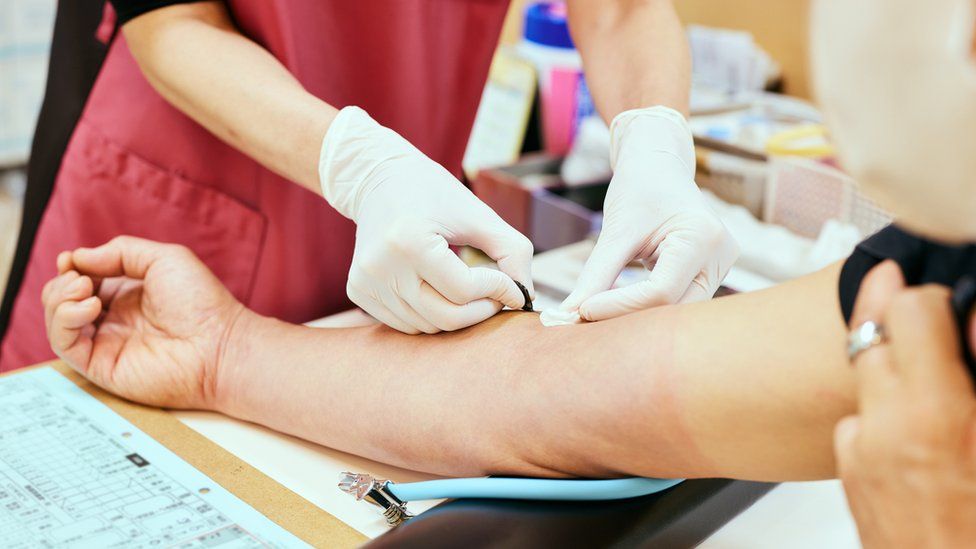
Published41 minutes agoShareclose panelShare pageCopy linkAbout sharingImage source, Getty ImagesBy Chloe KimBBC News, WashingtonThe Food and Drug Administration (FDA) has announced it will be changing a current three month abstinence policy for blood donations from gay men. Current rules only allow donations if a man has not had sex with another man for that period. Under new “individual risk-based” draft rules, all potential donors would be asked about new or multiple sexual partners in the past three months.The FDA hopes this change will encourage more blood donations.”This proposal for an individual risk assessment, regardless of gender or sexual orientation, will enable us to continue using the best science” to ensure an adequate and safe blood supply, said FDA Commissioner Robert Califf in a statement on Friday.Advocacy groups have for years called the current restrictions discriminatory against the LGBT community since modern technologies screen blood for infectious diseases. According to the draft recommendations, all people seeking to donate blood will be asked if they’ve had new or multiple sexual partners within three months and if they have had anal sex. If the answer is yes to both, a person would have to wait three months to donate blood. Anyone who has tested positive HIV will still be barred from donating blood. All blood will continue to be screened for diseases like HIV, and Hepatitis B and C.Country bans on blood donations from gay and bisexual men started in the 1980s in an effort to curb the Aids epidemic. It was only in 2015 when the FDA changed its lifetime ban to a one year abstinence policy for blood donations from gay men. The changes will take a few months as the FDA will receive public feedback for 60 days before finalising the guidelines. “We feel confident that the safety of the blood supply will be maintained,” said Dr Peter Marks, director of the Center for Biologics Evaluation and Research at the FDA. Just last year Canada lifted its three month abstinence policy. The UK, France, Greece, Israel, Hungary, Denmark and Brazil also recently lifted restrictions on blood donations. More on this storyCanada removes ban on blood donations from gay men28 April 2022Couple ‘thrilled’ to donate blood as rules change14 June 2021

Read more →

Milk's packaging influences its flavor

The dairy industry strives to preserve the quality and safety of milk products while maintaining the freshest possible taste for consumers. To date, the industry has largely focused on packaging milk in light-blocking containers to preserve freshness, but little has been understood about how the packaging itself influences milk flavor. However, a new study in the Journal of Dairy Science®, published by Elsevier, confirms that packaging affects taste — and paperboard cartons do not preserve milk freshness as well as glass and plastic containers.
Lead investigator MaryAnne Drake, PhD, of the North Carolina State University Department of Food, Bioprocessing and Nutrition Sciences, Raleigh, NC, USA, explained that “milk is more susceptible to packaging-related off-flavors than many other beverages because of its mild, delicate taste.” Besides light oxidation, “milk’s taste can be impacted by the exchange of the packaging’s compounds into the milk and by the packaging absorbing food flavors and aromas from the surrounding refrigeration environment.”
To quantify the flavor impacts of packaging, the researchers examined pasteurized whole and skim milk stored in six half pint containers: paperboard cartons, three plastic jugs (made from different plastics), a plastic bag, and glass as a control. The milk was stored in total darkness to control for light oxidation and kept cold at 4°C (39°F).
The samples were tested on the day of first processing, then again at 5, 10, and 15 days after. A trained panel examined the sensory properties of each sample, and the research team conducted a volatile compound analysis to understand how the packaging was intermingling with the milk. Finally, the samples underwent a blind consumer taste test on day 10 to see whether tasters could tell any difference between milk stored in the paperboard carton or the plastic jug compared with milk packaged in glass.
The results showed that package type doesinfluence milk flavor, and skim milk is more susceptible to flavor impacts than whole milk. Of the different packaging types, paperboard cartons and the plastic bag preserved milk freshness the least due to the paperboard’s absorption of milk flavor and the transfer of paperboard flavor into the milk. Milk packaged in paperboard cartons, in fact, showed distinct off-flavors as well as the presence of compounds from the paperboard. The final results show that, while glass remains an ideal container for preserving milk flavor, plastic containers provide additional benefits while also maintaining freshness in the absence of light exposure.
Paperboard cartons are the most widely used packaging type for school meal programs in the United States, so these findings are especially relevant for the consideration of how young children consume and enjoy milk.
“These findings suggest that industry and policymakers might want to consider seeking new package alternatives for milk served during school meals,” said Drake. Over time, the consequences of using milk packaging that contributes significant off-flavors may affect how young children perceive milk in both childhood and adulthood.

Read more →

New test could detect Alzheimer's disease 3.5 years before clinical diagnosis

New research from the Institute of Psychiatry, Psychology & Neuroscience (IoPPN) at King’s College London has established a blood-based test that could be used to predict the risk of Alzheimer’s disease up to 3.5 years before clinical diagnosis.
The study, published in the journal Brain, supports the idea that components in the human blood can modulate the formation of new brain cells, a process termed neurogenesis. Neurogenesis occurs in an important part of the brain called the hippocampus that is involved in learning and memory.
While Alzheimer’s disease affects the formation of new brain cells in the hippocampus during the early stages of the disease, previous studies have only been able to study neurogenesis in its later stages through autopsies.
To understand the early changes, researchers collected blood samples over several years from 56 individuals with Mild Cognitive Impairment (MCI), a condition where someone will begin to experience a worsening of their memory or cognitive ability. While not everyone experiencing MCI goes on to develop Alzheimer’s disease, those with the condition progress to a diagnosis at a much higher rate than the wider population. Of the 56 participants in the study, 36 went on to receive a diagnosis of Alzheimer’s disease.
Dr Aleksandra Maruszak, one of the study’s joint first authors from King’s IoPPN explains, “In our study, we treated brain cells with blood taken from people with MCI, exploring how those cells changed in response to blood as Alzheimer’s disease progressed.”
In studying how blood affected the brain cells, the researchers made several key discoveries. The blood samples collected from participants over the years who subsequently deterioratedand developed Alzheimer’s disease promoted a decrease in cell growth and division and an increase in apoptotic cell death (the process by which cells are programmed to die). However, the researchers noted that these samples also increased the conversion of immature brain cells to hippocampal neurons.

While the underlying reasons for the increased neurogenesis remain unclear, the researchers theorise that it may be an early compensating mechanism for the neurodegeneration (loss of brain cells) experienced by those developing Alzheimer’s disease.
Professor Sandrine Thuret, the study’s lead author from King’s IoPPN said, “Previous studies have shown that blood from young mice can have a rejuvenating effect on the cognition of older mice by improving hippocampal neurogenesis. This gave us the idea of modelling the process of neurogenesis in a dish using human brain cells and human blood. In our study, we aimed to use this model to understand the process of neurogenesis and to use changes in this process to predict Alzheimer’s disease and found the first evidence in humans that the body’s circulatory system can have an effect on the brain’s ability to form new cells.”
When the researchers used only the blood samples collected furthest away from when the participants were diagnosed with Alzheimer’s disease, they found that the changes in neurogenesis occurred 3.5 years prior to a clinical diagnosis.
Dr Edina Silajdži?, the study’s joint first author added, “Our findings are extremely important, potentially allowing us to predict onset of Alzheimer’s early in a non-invasive fashion. This could complement other blood-based biomarkers that reflect the classical signs of the disease, such as the accumulation of amyloid and tau (the ‘flagship’ proteins of Alzheimer’s disease).”
Dr Hyunah Lee, the study’s joint first author said, “It is now essential to validate these findings in a bigger and more diverse group of people. We are excited about the potential applications of the blood-based test we used. For example, it can help stratify individuals with memory problems for a clinical trial of disease-modifying drugs for Alzheimer’s.”
The researchers say that these findings could present an opportunity to further understand the changes the brain goes through at the earliest stages of Alzheimer’s disease.
This study was possible thanks to funding from the John and Lucille van Geest Foundation, the Medical Research Council UK, the Cohen Charitable Trust, the Galen and Hilary Weston Foundation and the Rhodes Trust.

Read more →