Covid Vaccines Targeting Omicron Should Be Standard, Panel Says
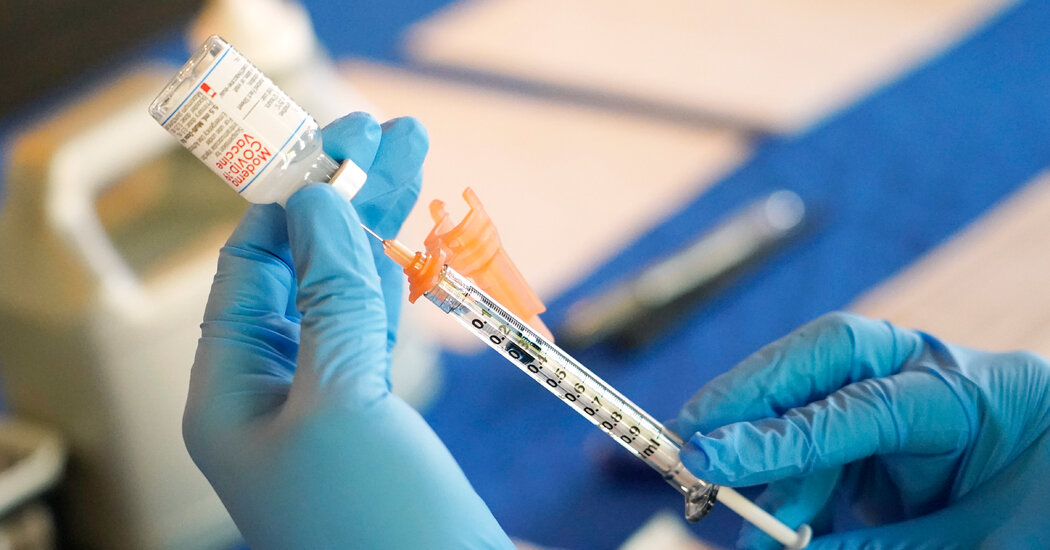
As advisers to the Food and Drug Administration endorsed ending one era of the Covid vaccination campaign, they also grappled with its future.An expert committee advising the Food and Drug Administration recommended on Thursday that regulators phase out the original versions of the coronavirus vaccines, allowing Americans getting their first shots to receive the updated formulations now used as boosters.As the advisers endorsed ending one era of the Covid vaccination campaign, they also grappled with its future. F.D.A. scientists on Thursday described a broad series of possible changes to the country’s vaccination program, all of them aimed at simplifying what has become an elaborate set of inoculation guidelines and defending against wintertime hospital surges.Among their proposals was adopting a streamlined dosing schedule for all Covid vaccines, one that would apply to Americans based on their age and health risks. Under that proposal, most adults and children with previous vaccines could receive a single extra Covid shot each fall, while older adults, people with weakened immune systems and unvaccinated children could be given more than one additional dose.The expert advisers did not vote on that proposal. But they offered an outline for how they wanted federal health officials to consider making the Covid vaccination program more routine, pressing them on how to time boosters for greatest protection and formulate them for the best defenses against new variants.Jerry Weir, the director of the division of viral products at the F.D.A., said, “We think that simplification of the vaccination regimen would contribute to easier vaccine deployment, better communication and improved vaccine coverage.”Committee members overwhelming endorsed that view. “We can’t keep doing what we are doing,” said Dr. Bruce Gellin, chief of global public health strategy at The Rockefeller Foundation. “This is a good path forward.”The pandemic’s threat has significantly abated since last winter. The vast majority of Americans have been infected with the virus, been vaccinated or both, federal experts said.More on the Coronavirus PandemicLong Covid: An analysis of workers’ compensation claims in New York found that 71 percent of claimants with long Covid needed continuing medical treatment or were unable to work for six months or more.Annual Boosters: The Food and Drug Administration proposed that most Americans be offered a single dose of a Covid vaccine each fall, much as they are given flu shots.A Better Covid Winter: Some of the worst days of Covid in the United States have come as winters have settled in. But a surge in hospitalizations has yet to materialize this season.New Subvariant: A highly contagious version of the Omicron variant — known officially as XBB.1.5 or by its subvariant nickname, Kraken — is quickly spreading in the United States.Yet an average of more than 560 Americans a day are still dying from Covid, the highest toll since late August, federal data shows. Many more are suffering the prolonged effects of infections. And Ruth Link-Gelles, a C.D.C. epidemiologist, warned on Thursday that those who had received the original vaccine formulation many months ago had considerably less protection against being hospitalized for Covid than people with bivalent booster doses did.Only about 40 percent of adults aged 65 and older, and only 16 percent of those 5 and older, have received the updated booster shot that was rolled out in September. Experts have said that the doses are most urgently needed by Americans at high risk of severe disease and death from Covid: older adults, people with immune deficiencies, pregnant women and those with multiple underlying conditions.At the committee meeting on Thursday, the advisers wrestled with how frequently to offer shots, what variants to defend against, and whether the vaccines were meant to stop only hospital admissions or infections altogether.Some experts said that it was too soon to say whether annual doses were needed, as they are for the flu.“I think we need to see what happens with disease burden,” said Dr. Cody Meissner, the director of pediatric infectious disease at Tufts University School of Medicine. “We may or may not need annual vaccination. It’s just awfully early, it seems to me, in the process to answer that question.”Several new studies in recent days have reported results that, while riddled with gaps in the data and other uncertainties, their authors said reinforced the benefits of the updated bivalent booster shots. Those vaccines were designed to defend against both the original version of the virus and the BA.5 Omicron subvariant that spread across the United States in the fall.One of them, published in the New England Journal of Medicine, found that the bivalent boosters generated stronger protection than the original formulations of booster shots did.The so-called bivalent booster was about 62 percent effective against severe Covid, the study found, compared with the original booster, which was 25 percent effective. (The study examined the original booster during last summer, and the updated booster during the fall.)Another study, conducted by the Centers for Disease Control and Prevention, suggested that the updated booster shot performed as well against the newest Omicron subvariant, XBB.1.5, as it did against the earlier version of Omicron, BA.5. For adults under 50, a bivalent booster was 48 percent effective against Covid infections caused by XBB.1.5, the C.D.C. found, and 52 percent effective against infections caused by BA.5.Those results could have been skewed, however, by a number of factors. The C.D.C. study, for example, could have been affected by differences in testing behavior among vaccinated and unvaccinated people, and difficulty catching all previous infections in the group. It also remains unclear long added protection against infection from a bivalent shot will last.Nonetheless, health officials cast the data as an encouraging sign that the updated boosters were holding up against the latest variants, even though they were designed to counter versions of the virus that started disappearing this winter.Officials from Moderna, a vaccine manufacturer, cited at Thursday’s meeting a third study from Kaiser Permanente of nearly half a million vaccinated individuals without immune deficiencies. Moderna said the data showed that those who had received its bivalent booster were significantly less likely to be hospitalized for Covid symptoms or to seek urgent care than were those who only received two or more doses of the original vaccine.As of November, C.D.C. officials said on Thursday, people with a bivalent booster were experiencing a 13-fold reduction in the risk of death from Covid compared with unvaccinated people, and a twofold reduction in the risk of death compared with people who were vaccinated but had not received an updated booster.Pressed by the expert committee on Thursday, F.D.A. scientists also weighed in on the contentious question of whether updated vaccines in the future should be designed in part against the original version of the virus, as the current bivalent boosters are, or be designed solely against a new version of the virus. They indicated that future vaccine formulations could be aimed exclusively at new variants, rather than the original version of the virus.F.D.A. officials told the committee that an extensive investigation has alleviated worries that the updated booster shot made by Pfizer-BioNTech could increase the risk of strokes in people aged 65 and older. One surveillance system suggested a possible heightened risk. But federal regulators said other major safety monitoring systems failed to validate that concern and there was no reason not to recommend the shot.

Read more →

Most U.S. children use potentially toxic makeup products, often during play

A study by scientists at Columbia University Mailman School of Public Health and Earthjustice found that most children in the United States use makeup and body products that may contain carcinogens and other toxic chemicals.
Results are published in the peer-reviewed International Journal of Environmental Research and Public Health.
The study, based on more than 200 surveys, found that 79 percent of parents say their children 12 or younger use makeup and body products marketed to children, like glitter, face paint, and lip gloss.
Prior research has shown that these products often have toxic chemicals, like lead, asbestos, PFAS, phthalates, and formaldehyde in them. Toxic chemicals found in children’s makeup and body products (CMBP), like heavy metals, are especially harmful to infants and children. These chemicals, whether intentionally added or present as contaminants, have been linked to cancer, neurodevelopmental harm, and other serious and irreversible health effects.
“There is increasing evidence of harmful ingredients often included in adult cosmetics and CMBPs, and children are more biologically susceptible to the effects of toxicants,” says study co-first author Eleanor A. Medley, who co-led the study with Kendall E. Kruchten while both completed their MPHs in environmental health sciences at Columbia Mailman.
“In this context, it is important to uncover how makeup and body products are being used by children to characterize risk and improve safety,” adds Kruchten.
According to the Columbia and Earthjustice’s study, of the surveyed children, about 54 percent use CMBP at least monthly, 12 percent use CMBP daily, about 20 percent use CMBP for eight hours or more at a time, and a third of them reported unintentionally ingesting the products in the last year. Over one-third of the surveyed children are Latino and 65 percent of those children use CMBP. Compared to other racial groups, Latino children reported using CMBP more often and more for play.
This study comes as some states, like New York and Washington, consider tightening their consumer regulations around toys, makeup, and personal care products.
“Children are particularly vulnerable to adverse health risks associated with chemicals often found in makeup and body products,” says study senior author Julie Herbstman, PhD, professor of environmental health sciences and director of the Columbia Center for Children’s Environmental Health at Columbia University Mailman School of Public Health. “In addition to dermal exposure through the skin, behavioral patterns such as hand-to-mouth activity may increase exposure to products through unintentional ingestion. Additionally, children’s small body size, rapid growth rate, developing tissues and organs, and immature immune systems make them biologically susceptible to the effects of toxicants.”
“It is alarming that industry is being allowed to sell makeup and body products marketed to children that contain extremely toxic chemicals. Findings from this study can help federal agencies better understand how children are using these products and will hopefully spur agencies to act to protect children from toxic chemical exposures,” said Earthjustice Attorney Lakendra Barajas. “Unfortunately, currently little is being done at the federal level to protect children from toxic chemicals in children’s makeup and body products.”
Co-authors include Miranda J. Spratlen, Maricela Ureño, Anabel Cole — all at Columbia Mailman — as well as Rashmi Joglekar at Earthjustice.
This work was supported in part by the Marisla Foundation.

Read more →

How Do Heavy Metals Like Lead Get in Baby Food?

The problem begins at the farm where plants draw toxins from the soil. There’s no washing them away.The Food and Drug Administration’s new plan to keep high levels of lead out of baby foods like mashed sweet potatoes, apple sauce and dry cereal is part of a larger effort to eliminate heavy metals from the foods the youngest children eat.The push follows years of studies by public health, consumer and government experts revealing concerning levels of arsenic in rice cereal and other items fed to infants, including big-name brands like Gerber and organic staples like Earth’s Best.This problem is not confined to baby-food factories, though. Metals like cadmium and mercury often get into crops as the plants burrow into the ground, drawing in nutrients from contaminated soil — or from naturally occurring compounds. Here are some possible answers to how these heavy metals get into food, what growers can do to keep it out — and how parents of the tiniest diners can steer clear of tainted food.How do heavy metals get into foods in the first place?Rain washes pollutants from factories, landfills, animal feed lots or from roadway auto emissions into lakes, rivers and streams. These pollutants can travel through groundwater or irrigation streams and contaminate crops or soil, according to Laurie Beyranevand, director of the Center for Agriculture and Food Systems at Vermont Law and Graduate School.Some of the metals occur naturally in the soil. Others can get added by certain fertilizers and insecticides, said Arthur Villordon, a professor at Louisiana State University who specializes in sweet potato farming.As plants grow, some, like leafy greens, are particularly efficient at drawing in heavy metals and storing them in their leaves, roots or fruit.Why do these metals get into baby foods?Beyond contamination because of absorption from the soil, heavy metals can also find their way into baby food through additives like fortified vitamin mixes, said Evelyn Rusli, co-chief executive of Yumi, a baby food company that does extensive testing of its ingredients and finished products.Why is that a particular concern for babies?Heavy metals are not healthy for adults, but they are particularly bad for babies. Infants and toddlers grow rapidly, developing key body systems and laying the foundation for lifelong cardiovascular, immune and brain health. Because they are far smaller than adults, a small dose of any toxin can be harmful. They may also be less efficient at metabolizing toxins than adults. Small amounts of lead, for instance, have been found to affect behavior, I.Q. and academic achievement, according to the American Academy of Pediatrics.What products should I avoid if I’m feeding a baby?Rice, used in baby cereal and snack puffs, is consistently identified in studies as the food with the highest levels of arsenic, which is associated with cancer. The problem is believed to stem from rice farming in fields that are flooded year after year with water that can contaminate the soil. (Scientists are working on ways to minimize the problem.)Dry rice cereal is often one of the first foods parents are urged to mix with breast milk or formula when a baby begins the transition from a liquid diet to solid food. Dry oatmeal cereal is a better alternative, according to a report by Healthy Babies Bright Futures, an advocacy group.Other foods found to have the lowest levels of heavy metals include peas, green beans, butternut squash and bananas. Beans, eggs and soft meat in traditional baby food or prepared at home are low-metal forms of protein, the report says. Serving a wide variety of fruits and vegetables — instead of relying heavily on carrots and sweet potatoes — can help reduce overall exposure to heavy metals.Why aren’t the foods tested before they get on the market?While some food companies monitor toxin levels, they are not required to report the results to the public or to list them on product labels. The F.D.A. has broad mandates that food makers ensure their products are safe, but there are few actual limits for specific toxins. The F.D.A. has set an “action limit” for inorganic arsenic in rice cereal marketed for babies and has proposed one for lead in juice.These limits — like those proposed for lead in baby food — do not set a strict bar. Rather, they create guidelines for food makers to voluntarily follow. If the F.D.A. finds that a company exceeds the levels, it can pursue enforcement action, which can lead to a product recall, seizure or a recommendation for criminal prosecution.What can be done to remove metals from foods?Washing produce will not help. But there are agricultural techniques that can reduce the levels seeping into crops. Farmers can test soil and use contaminated fields for crops that do not tend to pick up the metals, like beans. They can also use fields with suboptimal soil to grow lavender or other crops that might not be eaten, Ms. Beyranevand, of Vermont Law, said. Farmers are also trying to reduce toxins by growing crops — such as sunflowers and poplar trees — that are efficient at drawing impurities out of the soil and then disposing of the plants.Agriculture experts are studying hundreds of varieties of plants that people eat to determine which are the least likely to harbor heavy metals, according to the Healthy Babies Bright Futures report.What can food companies do?Ms. Rusli, of Yumi, said her company reviewed soil content data from the Environmental Protection Agency to buy produce for its baby food from regions with lower levels of contamination. It also conducts testing before entering into contracts with farmers and tests finished products to ensure that metals aren’t added during processing.

Read more →

New AI tool makes speedy gene-editing possible

An artificial intelligence program may enable the first simple production of customizable proteins called zinc fingers to treat diseases by turning genes on and off.
The researchers at NYU Grossman School of Medicine and the University of Toronto who designed the tool say it promises to accelerate the development of gene therapies on a large scale.
Illnesses including cystic fibrosis, Tay-Sachs disease, and sickle cell anemia are caused by errors in the order of DNA letters that encode the operating instructions for every human cell. Scientists can in some cases correct these mistakes with gene editing methods that rearrange these letters.
Other conditions are caused, not by a mistake in the code itself, but by problems in how the cellular machinery reads DNA (epigenetics). A gene, which provides the recipe for a particular protein, often partners with molecules called transcription factors that tell the cell how much of that protein to make. When this process goes awry, over- or underactive genes contribute to diabetes, cancer, and neurological disorders. As a result, researchers have been exploring ways to restore normal epigenetic activity.
One such technique is zinc-finger editing, which can both change and control genes. Among the most abundant protein structures in the human body, zinc fingers can guide DNA repair by grabbing onto scissor-like enzymes and directing them to cut faulty segments out of the code.
Similarly, zinc fingers can also hook onto transcription factors and pull them toward a gene segment in need of regulation. By customizing these instructions, genetic engineers can tailor any gene’s activity. A drawback, however, is that artificial zinc fingers are challenging to design for a specific task. Since these proteins attach to DNA in complex groups, researchers would need to be able to tell — out of countless possible combinations — how every zinc finger interacts with its neighbor for each desired genetic change.

The study authors’ new technology, called ZFDesign, overcomes this obstacle by using artificial intelligence (AI) to model and design these interactions. The model is based on data generated by the screen of nearly 50 billion possible zinc finger-DNA interactions in the researchers’ labs. A report on the tool is publishing online Jan. 26 in the journal Nature Biotechnology.
“Our program can identify the right grouping of zinc fingers for any modification, making this type of gene editing faster than ever before,” says study lead author David Ichikawa, PhD, a former graduate student at NYU Langone Health.
Ichikawa notes that zinc-finger editing offers a potentially safer alternative to CRISPR, a key gene-editing technology with applications that range from finding new ways to kill cancer cells to designing more nourishing crops. Unlike the entirely human-derived zinc fingers, CRISPR, which stands for clustered regularly interspaced short palindromic repeat, relies on bacterial proteins to interact with genetic code. These “foreign” proteins could trigger patients’ immune defense systems, which may attack them like any other infection and lead to dangerous inflammation.
The study authors add that besides posing a lower immune risk, the small size of zinc-finger tools may also provide more flexible gene therapy techniques compared with CRISPR by enabling more ways to deliver the tools to the right cells in patients.
“By speeding up zinc-finger design coupled with their smaller size, our system paves the way for using these proteins to control multiple genes at the same time,” says study senior author Marcus Noyes, PhD. “In the future, this approach may help correct diseases that have multiple genetic causes, such as heart disease, obesity, and many cases of autism.”
To test the computer’s AI design code, Noyes and his team used a customized zinc finger to disrupt the coding sequence of a gene in human cells. In addition, they built several zinc fingers that successfully reprogrammed transcription factors to bind near a target gene sequence and turn up or down its expression, demonstrating that their technology can be used for epigenetic changes.

Noyes, an assistant professor in the Department of Biochemistry and Molecular Pharmacology at NYU Langone, cautions that, while promising, zinc fingers can be difficult to control. Since they are not always specific to a single gene, some combinations can affect DNA sequences beyond a particular target, leading to unintended changes in genetic code.
As a result, Noyes says the team next plans to refine their AI program so it can build more precise zinc-finger groupings that only prompt the desired edit. Noyes is also a member of NYU Langone’s Institute for System Genetics.
Funding for the study was provided by National Institutes of Health grants R01GM118851 and R01GM133936. Further funding was provided by Canadian Institutes of Health Research Project grant PJT-159750, the Compute Canada Resource Allocation, the Frederick Banting and Charles Best Canada Graduate Scholarship, and the Ontario Graduate Scholarship.
Noyes is a co-founder of TBG Therapeutics, a company that develops methods to design zinc fingers and apply them to treatments for diseases with genetic components. NYU Langone has patents pending (PCT/US21/30267, 63145929) for these tools and approaches, from which both Noyes and NYU Langone may benefit financially. The terms and conditions of these relationships are being managed in accordance with the policies of NYU Langone.
In addition to Noyes, other NYU investigators involved in the study were Manjunatha Kogenaru, PhD; April Mueller, BS; David Giganti, PhD; Gregory Goldberg, PhD; Samantha Adams, PhD; Jeffrey Spencer, PhD; Courtney Gianco; Finnegan Clark, BS; and Timothee Lionnet, PhD. Other study investigators included Osama Abdin, BS; Nader Alerasool, PhD; Han Wen, MS; Rozita Razavi, PhD, MPH; Satra Nim, PhD; Hong Zheng, PhD; Mikko Taipale, PhD; and Philip Kim, PhD, at the University of Toronto. Study lead author David Ichikawa is at the Pandemic Response Lab in Long Island City, N.Y.

Read more →