
Will revitalizing old blood slow aging?


Scientists have never known precisely how much energy a cancerous tumor expends growing in the mammalian body.
They hypothesized that it consumes a great deal of energy, churning through nutrients and putting healthy tissue — the heart, the liver, the pancreas — at a disadvantage as the metabolic system spreads the nutritive wealth.
But a new study from researchers at Princeton Chemistry and the Ludwig Princeton Branch demonstrates for the first time that the opposite is actually true: a tumor’s conversion of nutrients to usable cellular energy is markedly, quantifiably sluggish.
This lethargy may help tumors conserve energy for more nefarious tasks like growth and metastasis, according to research from Princeton Chemistry’s Rabinowitz Lab appearing this week in Nature.
In five different types of cancers, researchers found that tumors were successful at proliferating on low-energy budgets in part because they neglect normal tissue functions that healthy organs carry out for the benefit of the body as a whole.
The discovery has vast implications for anti-cancer strategies because it directs our attention to slow energy metabolism.
Some proposed treatments for cancer revolve around a “starve the tumor” strategy, under the assumption that without nutrients, a tumor cannot flourish. From the general perspective of energy substrates, at best this hypothesis is now questionable.
But the study did find that tumors use one particular nutrient, glucose, more than normal tissues, and thus aligns with the possibility of combining standard cancer therapies with diets that reduce circulating glucose, like the ketogenic diet.
“I think people assume that cancer does need a lot of energy because it has to pay to divide and proliferate. But no one had actually measured how much energy cancer makes and uses compared to your healthy organs,” said Caroline Bartman, a postdoc in the Rabinowitz Lab and lead author on the research.
“We developed a way to measure it in cancers and found a dramatic difference between tumors and other tissues. So now, we have this paradigm that cancer is thrifty — it’ll stop using energy for all these healthy tasks and just devote it to proliferation. What that tells you is that those types of avenues, like starving the cancer alone, are not going to be good strategies for treatment.”
Joshua Rabinowitz, director of the Ludwig Princeton Branch, professor of chemistry and the Lewis-Sigler Institute for Integrative Genomics, said researchers were very surprised at the results of their research.
“It’s one of those things that you can rationalize when you look at it in retrospect,” he said. “The tumors are facing a harsh metabolic environment because they don’t have the proper vasculature that develops in the rest of the body. And so they are forced to make do with less.
“But certainly, because tumors are hypermetabolic on so many dimensions, we expected that we would see high-energy metabolism and that this would support their ability to grow and differentiate.
“I guess the big message is that growth is expensive,” Rabinowitz added, “but not as expensive as having thoughts or moving muscles or other aspects of mammalian life that normal organs carry out.”
ISOTOPE TRACING QUANTIFIES ENERGY USE
To quantify their research, the team used a method of investigation called isotope tracing, which involves labeling nutrients with heavy isotopes and tracking how quickly they are metabolized in mammals.
Tissue and organs in mammals derive energy for the work they do mainly through the tricarboxylic acid (TCA) cycle, which oxidizes fat and carbohydrates to make the primary energy currency, ATP. Some 95% of ATP or usable energy in mammals comes through this cycle. By studying the speed of the uptake of nutrients from the bloodstream into the TCA cycle, researchers were able to quantify just how much energy cancerous tissues are generating and using compared to healthy tissue.
In lung, pancreatic, and colon cancers, for example, they found a slow TCA flux and ATP production cycle in “primary” solid tumors, i.e. tumors that had not yet begun spreading.
They also found that metastatic cancer made and used more energy than primary tumors and did so on a level comparable with healthy tissue.
The findings led researchers to conclude that cancer cells shed energetically expensive tissue-specific functions to better allocate energy for uncontrolled tumor growth. They also found that metastatic cancer made and used more energy than primary tumors.
This is the first-time tumor energy production has been quantified in vivo and as part of a comparative study.
Some of the investigation methods researchers are using now have been tapped before, said Bartman. The pathway of the TCA cycle, for example, was discovered some 80 years ago. But technological advances and better spectrometry are providing startling new findings.
“I think it’s an exciting time for this field,” said Bartman. “With the advances of the past 50 years, it’s a really fruitful time to go back and revisit all these old concepts and use them to better understand disease and cancer.”

More than 400 food products from Fresh Ideation Food Group were recalled, some of which were sold on Amtrak trains and in vending machines last month.A Baltimore-based company has recalled more than 400 food items sold in Amtrak trains, vending machines and shops across the Eastern Seaboard because of potential listeria contamination, the federal Food and Drug Administration said last week.The company, Fresh Ideation Food Group, recalled breakfast sandwiches, muffins, yogurt, fresh produce and other items sold from Jan. 24 to Jan. 30 “because the products have the potential to be contaminated” with listeria bacteria, the F.D.A. said.Listeria causes an illness that can be fatal, especially among children, older adults and those with weakened immune systems, and an infection that can also cause miscarriages and stillbirths.The recall applies to products with a “sell through” date from Jan. 31 to Feb. 6. The affected products were distributed in Connecticut, the District of Columbia, Maryland, Massachusetts, New Jersey, New York, North Carolina, Pennsylvania, South Carolina and Virginia.“During routine monitoring of our facility, we determined that listeria may be present in the facility,” the company said in a prerecorded statement. “In an abundance of caution, we have recalled all products made at the time of this finding.”No illnesses had been reported by Feb. 3, when the F.D.A. announced the recall. Consumers who have purchased any of the items are encouraged to contact Fresh Ideation.A company spokesman did not immediately respond to messages seeking more information.Food products sold on Amtrak trains were among those recalled.Mark Makela for The New York TimesIn an email to customers, Amtrak said that some of the recalled products had been sold on two of its busiest train lines, the Acela and Northeast Regional trains, between Jan. 24 and 29.“We immediately stopped serving these products and promptly removed them from our trains upon notification,” the company said, adding that “all products currently served onboard are completely safe to consume.”Symptoms of listeria can include fever, muscle aches, vomiting and diarrhea, according to the Centers for Disease Control and Prevention. The symptoms generally begin roughly two weeks after ingesting food laced with the bacteria.In the United States, past listeria outbreaks have been connected to undercooked poultry, raw vegetables and unpasteurized milks and ice cream, the F.D.A. said.Big Olaf Creamery, a family-owned business in Sarasota, Fla., recalled its ice cream amid an F.D.A. investigation last summer into an outbreak that killed at least one person and sickened two dozen other people.At least one person died and 13 others were hospitalized during a listeria outbreak last fall that federal officials tied to deli meat and cheeses. Among those sickened during the outbreak was a pregnant person who lost the pregnancy, the F.D.A. said.Pregnant women are 10 times more likely than other people to become infected, according to the C.D.C.About 1,600 people get listeriosis in the United States each year, according to the C.D.C., and about one in five people with the infection die.
Read more →
Humans naturally perform numerous complex tasks. These include sitting down, picking something up from a table, and pushing a cart. These activities involve various movements and require multiple contacts, which makes it difficult to program robots to perform them.
Recently, Professor Eiichi Yoshida of the Tokyo University of Science has put forward the idea of an interactive cyber-physical human (iCPH) platform to tackle this problem. It can help understand and generate human-like systems with contact-rich whole-body motions. His work was published in Frontiers in Robotics and AI.
Prof. Yoshida briefly describes the fundamentals of the platform. “As the name suggests, iCPH combines physical and cyber elements to capture human motions. While a humanoid robot acts as a physical twin of a human, a digital twin exists as a simulated human or robot in cyberspace. The latter is modeled through techniques such as musculoskeletal and robotic analysis. The two twins complement each other.”
This research raises several key questions. How can humanoids mimic human motion? How can robots learn and simulate human behaviors? And how can robots interact with humans smoothly and naturally? Prof. Yoshida addresses them in this framework. First, in the iCPH framework, human motion is measured by quantifying the shape, structure, angle, velocity, and force associated with the movement of various body parts. In addition, the sequence of contacts made by a human is also recorded. As a result, the framework allows the generic description of various motions through differential equations and the generation of a contact motion network upon which a humanoid can act.
Second, the digital twin learns this network via model-based and machine learning approaches. They are bridged together by the analytical gradient computation method. Continual learning teaches the robot simulation how to perform the contact sequence. Third, iCPH enriches the contact motion network via data augmentation and applies the vector quantization technique. It helps extract the symbols expressing the language of contact motion. Thus, the platform allows the generation contact motion in inexperienced situations. In other words, robots can explore unknown environments and interact with humans by using smooth motions involving many contacts.
In effect, the author puts forward three challenges. These pertain to the general descriptors, continual learning, and symbolization of contact motion. Navigating them is necessary for realizing iCPH. Once developed, the novel platform will have numerous applications.
“The data from iCPH will be made public and deployed to real-life problems for solving social and industrial issues. Humanoid robots can release humans from many tasks involving severe burdens and improve their safety, such as lifting heavy objects and working in hazardous environments. iCPH can also be used to monitor tasks performed by humans and help prevent work-related ailments. Finally, humanoids can be remotely controlled by humans through their digital twins, which will allow the humanoids to undertake large equipment installation and object transportation,” says Prof. Yoshida, on the applications of iCPH.
Using the iCPH as ground zero and with the help of collaborations from different research communities, including robotics, artificial intelligence, neuroscience, and biomechanics, a future with humanoid robots is not far.
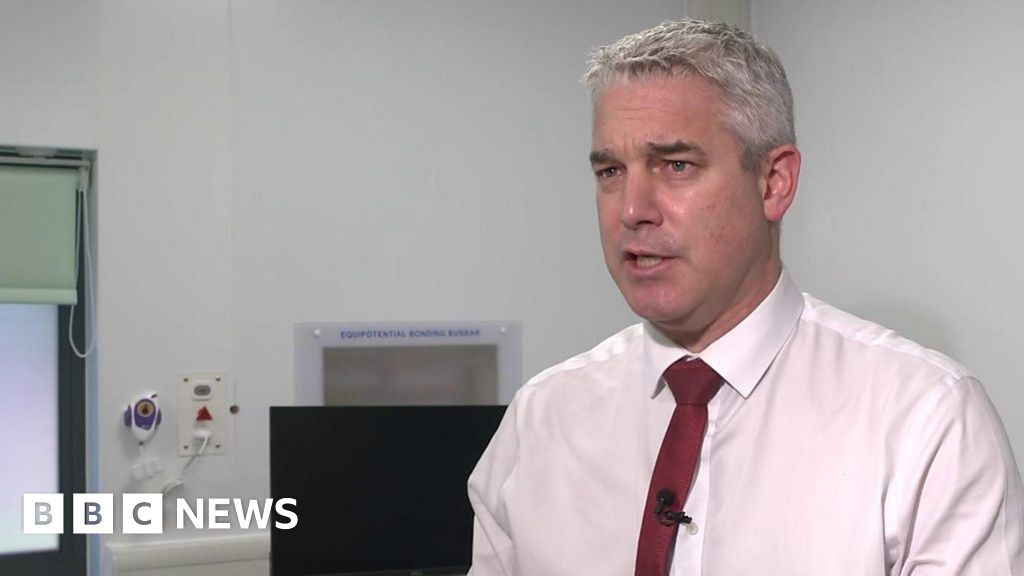
The health secretary said “we should be looking forward” to the pay review body giving its next settlement as health staff in England strike over pay.Steve Barclay said the government wanted to work “constructively” with unions and was “keen” to get evidence to the independent pay review body “which reflects the pressure the NHS is under and wider context of inflation”.Planned industrial action has suspended in Scotland and Wales following new pay offers, while some nurses and ambulance staff were on strike on Monday.NHS strike: Re-open pay talks, hospital bosses plead
Read more →
Published3 minutes agoShareclose panelShare pageCopy linkAbout sharingBy Nick TriggleHealth correspondentNurses and ambulance staff will strike on Monday in parts of England as the biggest round of NHS walkouts starts.Royal College of Nursing members in a third of England’s NHS trusts will go on strike, but action planned for Wales was suspended after a new pay offer.They will be joined by members of two ambulance unions – the GMB and Unite – in some places as both sectors walk out on the same day for the first time.Under trade union laws, emergency cover will be provided.It marks the start of a series of walkouts by NHS staff in England this week – the biggest round of industrial action in the history of the health service, according to NHS bosses – in their fight to get an above-inflation pay rise.It comes after a number of unions suspended strike action due to take place in Wales this week. Physios, midwives and nurses all announced on Friday they would not walk out. Only Unite, which represents some ambulance staff, is going ahead with its planned action there on Monday.When are NHS staff striking and what pay do they want?Nurses call on Sunak to make new pay offerThe following strike action will take place this week:Tuesday – RCN members in a third of England’s servicesThursday – Physios in a quarter of services in EnglandFriday – Ambulance staff who are members of Unison in five of England’s 10 servicesThe head of RCN said strikes would be called off if the government came to the negotiating table with a better pay offer in England.General secretary Pat Cullen told BBC Radio 4 Today programme: “We’ve always said where negotiations happen, we would cancel strikes to allow for our members to be consulted…”That’s what happened in Wales, that’s what’s been going on in Scotland.”Currently there is no sign ministers are prepared to discuss a new pay offer for 2022/23. Ms Cullen urged the prime minister: “Get to the table, negotiate with me and what offer you put on the table I will consult our members and they will make that decision.”GMB national secretary Rachel Harrison said her members had been forced into Monday’s walkout as there had been no meaningful dialogue for a month.”The NHS is crumbling, people are dying and this government is dithering,” she said.The government says the pay demands are unaffordable and would fuel inflation.Health minister Maria Caulfield has urged unions to suspend strikes and discuss next year’s pay deal. She told BBC Radio 4’s Today Programme a deal in Wales was not yet guaranteed and added it would be “extremely difficult” to reopen the 2022/23 pay deal – as this could lead to other public sector workers demanding the same. “You’re talking about billions of pounds to pay for that,” she said.Health Secretary Steve Barclay said ministers had met the recommendations of the independent NHS Pay Review Body.And he warned the walkouts this weekly would “undoubtedly have an impact on patients and cause delays”.The biggest strike – but what will the impact be?Monday marks the first time ambulance crews and nurses will walk out on the same day after NHS industrial action started in December.The NHS Providers – the membership body representing every NHS hospital and ambulance service – urged ministers to reopen talks with unions on pay. But while it is the biggest strike action of this winter, the impact will not be felt everywhere.Under trade union laws, emergency cover will be provided. This means services such as intensive care, kidney dialysis and urgent cancer care will be provided.What is more, around a third of nurses are not members of the RCN and two thirds of services in England will not see any strike action take place.The majority of services taking part in the two days of RCN action this week are hospitals.It means the biggest impact will be seen in pre-booked treatment such as hernia repairs, hip replacements and outpatient clinics.In the hospitals where strike action took place in January, the extent of the disruption varied greatly. Some said up to 20% of routine work had to be rescheduled, but others reported a much smaller impact.Speaking to BBC Radio 4’s Today Programme, chief executive Sir Julian Hartley said: “We do expect to have significant disruption in terms of planned care, outpatients and elective appointments, but obviously making sure that we deliver the priority of patient safety for urgent and emergency care.”We can’t go on with a series of industrial actions that really take us away from focusing on those priorities because I can’t overstate the amount of work that goes on in organisations to manage and mitigate for industrial action, and our focus needs to be on delivering for patients as an NHS in those key areas.”There is no strike action taking place in Northern Ireland this time, while talks have restarted in Scotland following a fresh pay offer.Meanwhile, in the ambulance service Unison, which is by far the biggest union in the sector, is not taking action on Monday.Between them, the GMB and Unite represent around a quarter of ambulance staff.The services in London and the East of England will be completely unaffected.What patients need to knowThe advice remains to call 999 in an emergency.The most life-threatening situations – such as cardiac arrest – will be responded to by an ambulance.Conditions which are serious but not immediately life-threatening might not be attended straight away in the areas where ambulance staff are on strikeOther services, such as some cancer treatments or urgent testing, may only be partially staffedMore routine care is likely to be badly affected, including planned operations such as knee and hip replacements, community nursing services and health visitingAnyone with an appointment not already rearranged should attend at their allotted timeGPs, community pharmacies and dentists will be unaffectedWhat is the latest on talks?The government has refused to reopen official pay talks – although it has met union leaders to discuss the situation. The pay award, which is worth at least £1,400 for each NHS worker below the level of doctor and works out at an average of 4.75%, is already being paid to staff.The government says it is now in the process of gathering evidence for next year’s pay award which is due to come in in April.But the unions have pulled out of that pay process, which is overseen by the independent NHS Pay Review Body.In Wales, staff were given the same award as in England, but the Welsh government has now offered another 3%, prompting many unions to suspend action there.Pay talks are also taking place in Scotland as ministers there have offered extra too.Unison head of health Sara Gorton said: “This ramps up the pressure on the prime minister significantly. Political leaders in Scotland and now Wales are making the Westminster government look decidedly out of touch.”More on this storyNHS: Who is striking, and what does it mean for patients?2 days agoPat Cullen, the ‘tenacious’ union boss leading nurses22 December 2022Are pay review bodies completely independent?29 December 2022Fresh nurse strike dates announced in England23 December 2022
Read more →