Innovative breathing aid developed

One in 10 adults suffer from the debilitating effects of chronic obstructive pulmonary disease (COPD). Research around a new breathing device developed by pulmonologists at the University of Cincinnati offers promise for improving their lives.
The new device not only improves symptoms of breathlessness and quality of life for people with COPD, it also offers benefits for people dealing with stress and anxiety and those practicing mindfulness, meditation or yoga.
The research was published in the journal Respiratory Care.
The device, called PEP Buddy, was created by Muhammad Ahsan Zafar, MD, and Ralph Panos, MD. Zafar is an associate professor in the Department of Pulmonary Critical Care and Sleep Medicine at the UC College of Medicine while Panos is a professor emeritus in pulmonary and critical care at the UC College of Medicine and is the director of national tele-ICU program for the U.S. Veterans Affairs.
“Dr. Panos and I both see patients with COPD, and it’s a huge population,” says Zafar. “Their life really changes when they have COPD. They were active individuals but now they’re debilitated and limited, so we wanted to come up with something easy that helps improve their life.”
For people with COPD, it takes longer to get inhaled air out of their lungs with each breath due to tighter air tubes. Therefore, when they breathe fast, like during physical activities, air is retained in the lungs. This air stacking or “dynamic hyperinflation” is the main reason for breathlessness and also leads to lower oxygen levels. As the breathing gets difficult during physical activity, people become less and less active and more isolated.

Panos and Zafar developed a hands-free device that is the size of a whistle. Zafar said he looked at positive-expiratory pressure (PEP) breathing devices on the market and they were handheld, big and bulky, so they tried to come up with something that is very simple, lightweight and easy to use. The device is designed to be worn around the neck with a lanyard for day-to-day use and inserted into the mouth when needed, during or after exertion.
In the study, they examined people with COPD who were short of breath and gave them two tasks. “We conducted a six-minute walk test with and without the device,” says Zafar. “They were given the device to take home and use in their daily routines. In two weeks, there was a follow-up to see how PEP Buddy use impacted their shortness of breath and quality-of-life scores.”
The study found 72% of the participants had a significant impact in reducing their shortness of breath and improving their quality of life. Among those who would drop their oxygen levels during walking, 36% of them did not drop oxygen levels when using PEP Buddy. This is the first mechanical device to show such an impact on oxygen levels in people with COPD.
Maja Flannery, a PEP Buddy user with chronic lung disease and airflow obstruction, says the device has changed her day-to-day living.
“I am so happy that I was lucky enough to be part of the study and able to use this great little device to breathe better,” Flannery says. “I use it when I get up in the morning. It helps with the air requirement when changing position from laying down to standing and exercises my lungs to get them more prepared for the day. I find it helpful in getting the trapped air out as I am active, so I can play longer points during tennis, and also recover between points more quickly. My friends at tennis laugh that it is my ‘magic whistle.'”
UC’s Zafar says the next step in this research is to conduct a long-term study to see the impact on the use of rescue inhalers, emergency department visits and long-term symptoms and functional capacity in people with COPD. PEP Buddy may also be a promising addition to pulmonary rehabilitation programs for faster improvement and sustaining better outcomes. They are also exploring other uses of PEP Buddy in health care.
“As a physician I feel gratified that we are providing something new that can actually improve people’s lives,” says Zafar. “That’s where my passion is. These people are really debilitated with not many tools in their hand to improve their symptoms right now. PEP Buddy will be one such tool.”


Read more →

Researchers discover therapeutic target to aid in glaucoma treatment

Indiana University School of Medicine researchers have identified a new therapeutic target that could lead to more effective treatment of glaucoma.
Glaucoma is a neurodegenerative disease that causes vision loss and blindness due to a damaged optic nerve. More than 200,000 people are affected by glaucoma in the United States each year. Unfortunately, there is currently no treatment. In a newly published paper in Communications Biology, researchers found neurons use mitochondria for a steady source of energy, and restoring mitochondrial homeostasis in the diseased neurons can protect the optic nerve cells from being damaged.
“Age-related neurodegenerative disease, which includes glaucoma, Parkinson’s disease, and amyotrophic lateral sclerosis (ALS), is the biggest global health problem,” said Arupratan Das, PhD, assistant professor of ophthalmology and principal investigator of the study. “The fundamental mechanisms that we discovered can be used to protect neurons in glaucoma and be tested for the other diseases. We have identified a critical step of complex mitochondrial homeostasis process, which rejuvenates the dying neuron, similar to giving a lifeline to a dying person.”
The research team, led by Michelle Surma and Kavitha Anbarasu from the Department of Ophthalmology, used induced pluripotent stem cells (iPSCs) from patients with and without glaucoma as well as clustered regularly interspaced short palindromic repeats (CRISPR) engineered human embryonic stem cells with glaucoma mutation. Using stem cell differentiated retinal ganglion cells (hRGCs) of the optic nerve, electron microscopy and metabolic analysis, researchers identified glaucomatous retinal ganglion cells suffer mitochondrial deficiency with more metabolic burden on each mitochondrion. This leads to mitochondrial damage and degeneration. Mitochondria are the tube like structures in cells which produce adenosine triphosphate, cell’s energy source.
However, the process could be reversed by enhancing mitochondrial biogenesis by a pharmacological agent. The team showed retinal ganglion cells are highly efficient in degrading bad mitochondria, but at the same time producing more to maintain homeostasis.
“Finding that retinal ganglion cells with glaucoma produce more adenosine triphosphate even with less mitochondria was astonishing,” Das said. “However, when triggered to produce more mitochondria, the adenosine triphosphate production load was distributed among more mitochondrion which restored the organelle physiology. It is similar to a situation where a heavy stone is carried by fewer people versus a greater number of people — each person will have less pain and injury, just like each mitochondrion will have less difficulty and damage.”
In the future, Das would like to test if these mechanisms protect the optic nerve in animal models under injury before testing in humans to hopefully lead to new clinical interventions.

Read more →

Ozone pollution is linked with increased hospitalizations for cardiovascular disease

The first evidence that exceeding the World Health Organization (WHO) ozone limit is associated with substantial increases in hospital admissions for heart attack, heart failure and stroke is published today in European Heart Journal, a journal of the European Society of Cardiology (ESC). Even ozone levels below the WHO maximum were linked with worsened health.
“During this three-year study, ozone was responsible for an increasing proportion of admissions for cardiovascular disease as time progressed,” said study author Professor Shaowei Wu of Xi’an Jiaotong University, China. “It is believed that climate change, by creating atmospheric conditions favouring ozone formation, will continue to raise concentrations in many parts of the world. Our results indicate that older people are particularly vulnerable to the adverse cardiovascular effects of ozone, meaning that worsening ozone pollution with climate change and the rapid ageing of the global population may produce even greater risks of cardiovascular disease in the future.”
Ozone is a gas and the main air pollutant in photochemical smog. Ozone pollution is different to the ozone layer, which absorbs most of the sun’s ultraviolet radiation. Ozone pollution is formed when other pollutants react in the presence of sunlight. These other pollutants are volatile organic compounds and nitrogen oxides which are emitted by motor vehicles, power plants, industrial boilers, refineries, chemical plants, and biomass and fossil fuel burning facilities. Previous studies have suggested that ozone pollution harms the heart and blood vessels, but there is limited and inconclusive evidence about its influence on the risk of cardiovascular disease.
This study examined the association between ambient ozone pollution and hospital admissions for cardiovascular disease. Data on daily hospital admissions for cardiovascular disease during 2015 to 2017 in 70 cities in China were collected from the two main national health insurance systems. During the study period, the two databases covered approximately 258 million people across the 70 cities, equivalent to more than 18% of China’s population. The types of cardiovascular disease included coronary heart disease, stroke and heart failure, plus subtypes such as angina, acute myocardial infarction, acute coronary syndrome, ischaemic stroke and haemorrhagic stroke.
Daily eight-hour maximum average concentrations of ozone, fine particulate matter (PM2.5), inhalable particles (PM10), sulfur dioxide, nitrogen dioxide and carbon monoxide were obtained for each city from the China National Urban Air Quality Real-time Publishing Platform.*
During the study period, there were 6,444,441 hospital admissions for cardiovascular disease in the 70 cities and the average daily eight-hour maximum ozone concentration was 79.2 μg/m3. Exposure to ambient ozone was associated with increased hospital admissions for all cardiovascular diseases studied except haemorrhagic stroke, independent of other air pollutants. For example, each 10 μg/m3 rise in the two-day average eight-hour maximum ozone concentration was associated with a 0.40% increase in hospital admissions for stroke and 0.75% for acute myocardial infarction.**
Professor Wu said: “Although these increments look modest, it should be noted that ozone levels may surge to higher than 200 μg/m3 in summer, and these increases in hospitalisations would be amplified by more than 20 times to over 8% for stroke and 15% for acute myocardial infarction.”
The researchers also estimated the excessive admission risk for cardiovascular disease associated with ozone concentrations at or above the WHO air quality guideline (100 µg/m3) compared to levels below 70 μg/m3. Ozone levels below 70 μg/m3 are mostly naturally occurring and not due to human activity. Compared to two-day average eight-hour maximum concentrations below 70 μg/m3, levels of 100 µg/m3 or higher were associated with substantial increases in hospital admissions for cardiovascular disease, ranging from 3.38% for stroke to 6.52% for acute myocardial infarction. Nevertheless, lower concentrations of 70 to 99 µg/m3 (vs. below 70 μg/m3) were also linked with increases in hospital admissions, ranging from 2.26% for heart failure to 3.21% for coronary heart disease.
During 2015 to 2017, 3.42%, 3.74% and 3.02% of hospitalisations for coronary heart disease, heart failure and stroke, respectively, were attributable to ozone pollution. When each year was analysed separately, the proportions rose with time. For coronary heart disease, ozone was responsible for 109,400 of 3,194,577 admissions over three years. Professor Wu said: “This suggests that 109,400 coronary heart disease admissions could have been avoided if ozone concentrations were 0 µg/m3. This may be impossible to achieve given the presence of ozone from natural sources. However, we can conclude that considerable numbers of hospital admissions for cardiovascular disease could be avoided if levels were below 100 μg/m3, with further reductions at lower concentrations.”
In an accompanying editorial, Professor Thomas Münzel and co-authors said: “Projections for Europe suggest that ozone will play a more dominant role as a health risk factor in the future due to climate change with rising temperature and, accordingly, increasing photochemical formation of ozone. The strong link between climate change and air quality means that reducing emissions in the long term to tackle global warming will play a key role in alleviating ozone pollution and improving the air that we breathe.”
Notes:
*Eight-hour average concentrations were calculated from hourly average concentrations. The maximum eight-hour average is the highest value between 00:00 and 23:59 hours. **The two-day average refers to the day of the hospital admission and the day before.

Read more →

New ultrasound method could lead to easier disease diagnosis

A new ultrasound method that can measure the level of tension in human tissue for the first time — a key indicator of disease — has been developed by researchers from the University of Sheffield.
The breakthrough, made by Dr Artur Gower from the University’s Department of Mechanical Engineering, together with researchers from Harvard, Tsinghua University, and the University of Galway, could be used to build new ultrasound machines that are able to better diagnose abnormal tissue, scarring, and cancer.
Ultrasounds use sound waves to create images of organs inside the human body. However, the images produced by the current techniques used in healthcare aren’t usually enough to diagnose whether tissues are abnormal. To improve diagnosis, the researchers developed a way to measure forces such as tension by using an ultrasound machine. Tension is generated in all living tissue, so measuring it can indicate whether tissue is functioning properly or if it’s affected by disease.
The researchers harnessed a technique from a rail project at the University of Sheffield, which uses sound waves to measure tension along railway lines. The technique, used both for rail and medical ultrasound, relies on a simple principle: the greater the tension, the faster sound waves propagate. Using this principle, the researchers developed a method that sends two sound waves in different directions. The tension is then related to the speed of the waves by using mathematical theories developed by the researchers.
Previous ultrasound methods have struggled to show the difference between stiff tissue or tissue under tension. The developed technique is the first capable of measuring tension for any type of soft tissue, and without knowing anything about it. In a new paper, published in the journal Science Advances, the researchers describe the new method and demonstrate how they used it to measure tension inside a muscle.
Dr Artur Gower, Lecturer in Dynamics at the University of Sheffield, said: “When you go to the hospital, a doctor might use an ultrasound device to create an image of an organ, such as your liver, or another part of your body, such as the gut, to help them explore what the cause of a problem might be. One of the limitations of ultrasounds used in healthcare now is that the image alone is not enough to diagnose whether any of your tissues are abnormal.
“What we’ve done in our research is develop a new way of using ultrasound to measure the level of tension in tissue. This level of detail can tell us whether tissues are abnormal or if they are affected by scarring or disease. This technique is the first time that ultrasound can be used to measure forces inside tissue, and it could now be used to build new ultrasound machines capable of diagnosing abnormal tissue and disease earlier.”

Read more →

Dim lights before bedtime to reduce risk of gestational diabetes

Pregnant persons should dim the lights in their home and turn off or at least dim their screens (computer monitors and smartphones) a few hours before bedtime to reduce the risk of gestational diabetes mellitus, a new Northwestern Medicine study shows.
Women who developed gestational diabetes mellitus in the multi-site study had greater light exposure in the three hours before sleep onset. They did not differ in their light exposure during daytime or sleep or in their activity levels compared to those who did not develop it.
“Our study suggests that light exposure before bedtime may be an under-recognized yet easily modifiable risk factor of gestational diabetes,” said lead study author Dr. Minjee Kim, assistant professor of neurology at Northwestern University Feinberg School of Medicine and a Northwestern Medicine neurologist.
Growing evidence suggests exposure to light at night before bedtime may be linked to impaired glucose regulation in non-pregnant adults. However, little is known about the effect of evening light exposure during pregnancy on the risk of developing gestational diabetes, a common pregnancy complication with significant health implications for both mother and offspring.
This is believed to be one of the first multi-site studies to examine light exposure before sleep on the risk of developing gestational diabetes.
The study will be published March 10 in the American Journal of Obstetrics and Gynecology Maternal Fetal Medicine.

Gestational diabetes rise is ‘alarming’
Gestational diabetes is on the rise in the U.S. and globally. About 4.5% of first-time pregnant women with a baby born between 2011 and 2013 developed gestational diabetes, which has been increasing on average 3.4% per three-year period until 2019. In 2020, the rate of gestational diabetes was 7.8% of all births in the U.S.
“It’s alarming,” Kim said. “Gestational diabetes is known to increase obstetric complications, and the mother’s risk of diabetes, heart disease and dementia. The offspring also are more likely to have obesity and hypertension as they grow up.”
Data show that women who have gestational diabetes are nearly 10 times more likely to develop type 2 diabetes mellitus compared to those do not have glucose issues during pregnancy, Kim said.
Bright light exposure prior to sleep can come from bright lights in your home and from devices like TVs, computers and smartphones.

“We don’t think about the potential harm of keeping the environment bright from the moment we wake up until we go to bed,” Kim said. “But it should be pretty dim for several hours before we go to bed. We probably don’t need that much light for whatever we do routinely in the evening.”
Scientists don’t know which source of bright light causes the problem, but it might all add up, Kim said.
“Try to reduce whatever light is in your environment in those three hours before you go to bed,” Kim said. “It’s best not to use your computer or phone during this period. But if you have to use them, keep the screens as dim as possible,” Kim said, suggesting people use the night light option and turn off the blue light.
If pregnant persons develop gestational diabetes with the first pregnancy, they are more likely to have it with the next pregnancy.
Pre-sleep light exposure increases heart rate and may lead to abdominal obesity, insulin resistance, increased blood pressure
Pre-sleep light exposure may affect glucose metabolism through sympathetic overactivity, meaning the heart rate goes up before bed when it should go down. “It seems there is inappropriate activation of the fight or flight response when it is time to rest,” Kim said.
Data shows the sympathetic overactivity may lead to cardiometabolic disease, which is a cluster of conditions including abdominal obesity, insulin resistance, increased blood pressure and an imbalance of lipids, all leading to cardiovascular disease.
The study of 741 women in their second trimester was conducted at eight clinical U.S. sites between 2011 and 2013. The participants’ light exposure was measured by an actigraph worn on their wrists. The women were measured during the second trimester of pregnancy, the time when they receive routine screening for gestational diabetes.
After adjusting separately for age, BMI, race/ethnicity, education, commercial insurance, employment schedule, season, sleep duration, sleep midpoint, sleep regularity index, and daytime light exposure, pre-sleep light exposure remained significantly associated with gestational diabetes.
The growing rate of gestational diabetes has been partially attributed to increasing body mass index and the older age of pregnant persons.
“But even after adjusting for BMI and age, gestational diabetes is still rising,” Kim said. “We have a lot to prove, but my personal worry is that light may be silently contributing to this problem without most people realizing the potential harm.”
Losing body weight and exercising also reduce the risk of developing gestational diabetes, which are important but take some effort.
Turning down lights is an easy modification
“Turning down the lights is an easy modification you can make,” Kim said.
“Now I’m the light police at home,” Kim said. “I see all this light I never thought about before. I try to dim the light as much as possible. Just for evening activities such as dinner and bathing the kids, you don’t need bright light.”
“This study highlights the importance of reducing light exposure in the hours before bedtime” said senior author Kathryn Reid, research professor of neurology at Feinberg.
The name of the paper is “The association between light exposure before bedtime in pregnancy and the risk of developing gestational diabetes mellitus.”
Other Northwestern authors are Dr. Phyllis Zee, Rosemary Braun, Blas Garcia-Canga and Michael Wolf.
The research was supported by grant R01HL105549 from the National Heart, Lung, and Blood Institute of the National Institutes of Health.

Read more →

Chinese city Xi'an draws backlash with flu lockdown proposal

Published35 minutes agoShareclose panelShare pageCopy linkAbout sharingImage source, Getty ImagesBy Kelly NgBBC News, SingaporeOfficials in Chinese city Xi’an have sparked a backlash by saying they may turn to lockdowns “when necessary” to combat future flu outbreaks. Xi’an will lock down areas and shut schools if an outbreak poses a “severe threat”, according to an emergency response plan published on Wednesday.Many internet users have called the plan “excessive”, especially after criticism of China’s Covid controls.Flu cases have surged across China just as its latest Covid wave is waning.The spike in flu cases has also led to a shortage of antiviral medication at pharmacies across the country. While there is no suggestion of an imminent lockdown in Xi’an, some have expressed fears that its plan could see a return to the zero-Covid approach, which the country abruptly abandoned in December.Famous for the terracotta army, Xi’an experienced some of the country’s strictest lockdowns during the pandemic. Locals were banned from leaving their homes – even to buy food and other basic supplies – for a month in December 2021. One person wrote on Chinese social media platform Weibo that influenza outbreaks had always been common before Covid, but “life went on as per normal” when they hit.Another remarked that some local governments were “addicted to sealing and controlling”. Xi’an’s plan segments its response into four levels, according to severity of the situation. Lockdowns may be called for when community spread reaches an acute level. It is not the only Chinese city that has such emergency plans. In 2015, for instance, the Shanghai government said it may stop classes and work, as well as set restrictions on gatherings, in the event of a serious influenza pandemic. “To local residents who were traumatised by the lockdown measures not long ago, the return to the same draconian method in coping with flu outbreaks is by no means justified,” Huang Yanzhong, a senior fellow for global health at the Council on Foreign Relations, told the BBC. But Tang Renwu, dean of Beijing Normal University’s School of Government said China was not likely to see a comeback of stringent lockdown policies. Speaking to Singapore newspaper Lianhe Zaobao, Prof Tang said other local governments may put out similar plans in the days to come – as Chinese authorities are intent on containing the seasonal flu. “Local governments should pay attention to their wording when issuing similar documents so as not to trigger social panic,” he said.More on this storyHow many Covid cases are there in China?16 JanuaryJoy and long queues as China reopens borders8 JanuaryHow zero-Covid is spoiling Xi’s party7 October 2022Public shaming returns in China amid Covid fears29 December 2021

Read more →

FDA Will Require Dense Breast Disclosure at Mammogram Clinics

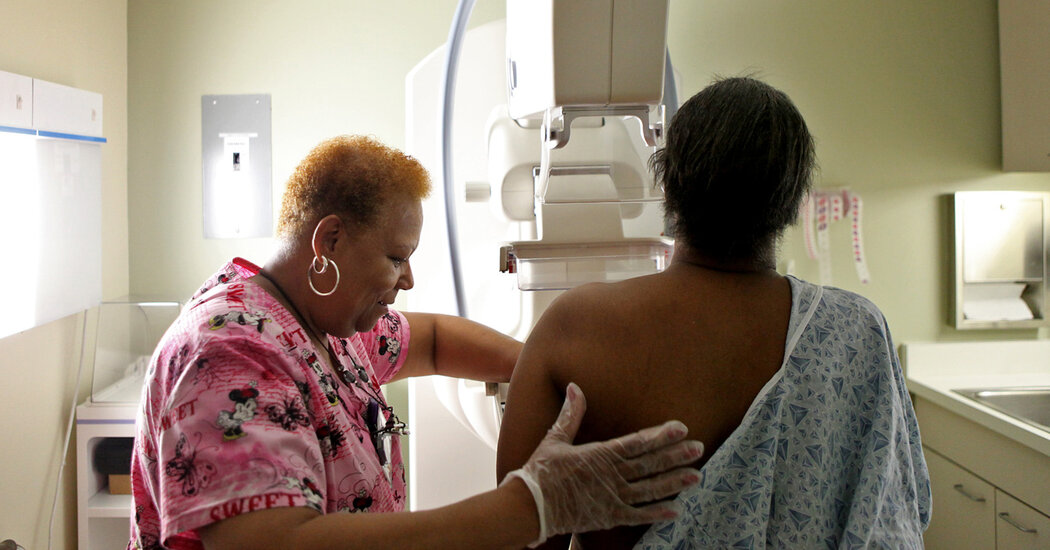
The U.S. agency wants to ensure that doctors inform women that some breast anomalies require more examination.In a long-awaited ruling, the Food and Drug Administration recommended on Thursday that all mammogram centers must tell women if they have dense breasts that could put them at increased risk for breast cancer.The density of breast tissue — whether it contains mostly fatty or glandular tissues — varies from woman to woman and has nothing to do with the size or shape or feel of a woman’s breasts. The only way for a woman to know if she has dense breasts and, if so, how dense they are is by having a mammogram; she cannot tell by looking at or feeling her breasts.Dense breast tissue may obscure cancer risks because it may be more difficult to spot small tumors with a mammogram.Breast imagers divide density into four levels, designated A, B, C and D, ranging from almost entirely fatty breasts to extremely dense breasts. Only the 10 percent of women in level D, with extremely dense breasts, are at increased risk. Those in level C are at average risk for cancer, based on density alone.The updated regulations require that patients simply be told that their breasts are dense or not dense; levels A and B would be “not dense,” while C and D are “dense.”New Developments in Cancer ResearchCard 1 of 5Progress in the field.

Read more →