
Large-scale study enables new insights into rare eye disorders


A team of investigators from Mass General Brigham’s founding members, Brigham and Women’s Hospital (BWH) and Massachusetts General Hospital (MGH), has identified metabolic strategies used by Clostridioides difficile to rapidly colonize the gut. The findings identify methods to better prevent and treat the most common cause of antibiotic-associated diarrhea and healthcare-acquired infections (HAIs). The team’s approach has implications for understanding broader aspects of microbial metabolism, including responses to antibiotics, and production of important metabolites. Results are published in Nature Chemical Biology.
“Investigating real-time metabolism in microorganisms that only grow in environments lacking oxygen had been considered impossible,” said co-corresponding author Lynn Bry, MD, PhD, director of the Massachusetts Host-Microbiome Center, associate medical director in Pathology at BWH, and an associate professor of Pathology at Harvard Medical School. “Here, we’ve shown it can be done to combat C. difficile infections — and with findings applicable to clinical medicine.”
“C. difficile is the leading cause of hospital-acquired infections and a leading cause of antibiotic-associated diarrhea. Understanding its metabolic mechanisms at a cellular level may be useful for preventing and treating infections,” said co-senior author Leo L. Cheng, PhD, an associate biophysicist in Pathology and Radiology at MGH and an associate professor of Radiology at Harvard Medical School.
C. difficile is an obligately anaerobic species of bacteria, which means it does not replicate in the presence of oxygen gas. C. difficile causes infections by releasing toxins that allow the pathogen to obtain nutrients from damaged gut tissues. Understanding how C. difficile metabolizes nutrients while colonizing the gut could inform new approaches to prevent and treat infections.
To complete their study, Bry and Cheng, faculty in the recently formed Mass General Brigham Pathology program, used a technology called high-resolution magic angle spinning nuclear magnetic resonance spectroscopy (HRMAS NMR) to study real-time metabolism in living cells under anaerobic conditions. The team incorporated computational predictions to detect metabolic shifts in C. difficile as nutrient availability decreased, and then developed an approach to simultaneously track carbon and nitrogen flow through anaerobe metabolism. The researchers identified how C. difficile jump-starts its metabolism by fermenting amino acids before engaging pathways to ferment simple sugars such as glucose. They found that critical pathways converged on a metabolic integration point to produce the amino acid alanine to efficiently drive bacterial growth.
The study’s findings identified new targets for small molecule drugs to counter C. difficile colonization and infection in the gut and provide a new approach to rapidly define microbial metabolism for other applications, including antibiotic development and the production of economically and therapeutically important metabolites.
The study’s co-authors include Aidan Pavao, Brintha Girinathan, Johann Peltier, Pamela Altamirano Silva, Bruno Dupuy, Isabella H. Muti, and Craig Malloy.
This work was supported by the National Institutes of Health, the BWH Precision Medicine Institute and Presidential Scholar’s Award, the MGH A. A. Martinos Center for Biomedical Imaging, and the Massachusetts Life Sciences Center.
Most cells in the bodies of living things duplicate their contents and physically separate into new cells through the process of cell division. But across many species, germ cells, those that become eggs or sperm, don’t fully separate. They remain interconnected through small bridges called ring canals and cluster together.
In a new study, Yale researchers uncover for the first time how it is that germ cells in fruit flies form these ring canals, a finding that they say will provide new insights into a widely shared feature of development and into diseases in which cell division is disrupted.
The findings were published March 9 in Developmental Cell.
Scientists have observed ring canals in male and female germ cells across all types of species, from simpler organisms like sponges and fruit flies to more complex animals like mice and humans. And while their purpose is not fully understood, there is evidence that ring canals are important for cell development, the researchers say.
“For example, in female fruit flies, ring canals are required to grow a functional oocyte, a developing egg cell,” said Lynn Cooley, the C.N.H. Long Professor of Genetics at Yale School of Medicine and senior author of the new study. “If you block ring canals, female flies grow tiny, little eggs and can’t reproduce.”
But how ring canals form has remained unclear.
To better understand their formation, the researchers used a live imaging approach. They tagged several ring canal proteins in fruit flies with florescent molecules and, using a microscope, observed what those proteins did over time in the germ cells of both males and females.
“When we did this, we saw the first signs of a structure we call the germline midbody,” said Kari Price, a postdoctoral fellow in Cooley’s lab and lead author of the study.
The midbody is a structure that forms during cell division and one of its roles is to recruit the molecules needed to sever cells at the end of the process. In the study, the researchers found that an unusually large midbody formed in fruit fly germ cells, stuck around for about 20 to 30 minutes, and then, instead of initiating full separation, underwent dramatic remodeling from a sphere into a ring. These midbody rings then became stable ring canals that connected the sibling cells.
The researchers also found this midbody-to-ring canal transition in fresh-water polyps and mice, suggesting it’s a feature that has been preserved throughout evolution.
“To see this solid, little object turn into a ring — that had not been observed in intact living cells before. It was, to us, very striking; it was an ‘a-ha moment,'” said Cooley. “And it would’ve been tough to discover this in anything other than fruit flies. This study is such a great example of how model systems like fruit flies are essential for understanding fundamental mechanisms of development.”
In addition to being an important step toward understanding the function and formation of ring canals, the researchers say, the new discovery may also yield insight into incomplete cell division that occurs in typical development across a variety of species and into diseases where incomplete cell division is implicated, such as colorectal cancer, Hodgkin’s lymphoma, and some immunodeficiency syndromes.
The findings may also help scientists understand the very beginnings of evolution.
“There are very primitive creatures that, when they divide, make colonies that are attached with persistent cellular bridges, much like what we see with germ cells,” said Cooley. “Maybe this way of keeping sibling cells connected in a colony or cluster is the beginning of how multicellular evolution occurred, and maybe germ cells are a reflection of that.”
Going forward, the researchers aim to identify the mechanisms that drive germ cells to remain connected.
“In this current study we saw that blocking an enzyme called Citron kinase delayed or prevented the midbody-to-ring canal transition,” said Price. “So we’re looking at Citron kinase more deeply to see what exactly it’s doing in these cells during division.”
Carnegie Mellon University engineers have developed a soft material with metal-like conductivity and self-healing properties that is the first to maintain enough electrical adhesion to support digital electronics and motors. This advance, published in Nature Electronics, marks a breakthrough in softbotics and the fields of robotics, electronics, and medicine.
At Carnegie Mellon University, softbotics represents a new generation of soft machines and robots manufactured by multi-functional materials that have integrated sensing, actuation, and intelligence.
The research team introduced the material, a liquid-metal filled organogel composite with high electrical conductivity, low stiffness, high stretchability, and self-healing properties in three applications: damage-resistant snail-inspired robot modular circuit to power a toy car reconfigurable bioelectrode to measure muscle activity on different locations of the body”This is the first soft material that can maintain a high-enough electrical conductivity to support digital electronics and power-hungry devices,” said lead author Carmel Majidi, Professor of Mechanical Engineering. “We have demonstrated you can actually power motors with it.”
The fully untethered snail robot used the self-healing conductive material on its soft exterior, which was embedded with a battery and electric motor to control motion. During the demonstration, the team severed the conductive material and watched as its speed dropped by more than 50%. Because of its self-healing properties, when the material was manually reconnected, the robot restored its electrical connection and recovered 68% of its original speed.
The material can also act as a modular building block for reconfigurable circuits. In their demonstration, one piece of gel initially connected the toy car to a motor. When the team split that gel into three sections and connected one section to a roof-mounted LED, they were able to restore the car’s connection to the motor using the two remaining sections.
“In practice there will be cases where you want to reuse and recycle these gel-like electronics into different configurations, and our toy car demonstration shows that’s possible,” explained Majidi.
Lastly, the team demonstrated the material’s ability to be reconfigured to obtain electromyography (EMG) readings from different locations on the body. Because of its modular design, the organogel can be refitted to measure hand activity on the anterior muscles of the forearm and to the back of the leg to measure calf activity. This opens doors to tissue-electronic interfaces like EMGs and EKGs using soft, reusable materials.
“Softbotics is about seamlessly integrating robotics into everyday life, putting humans at the center,” Majidi explained. “Instead of being wired up with biomonitoring electrodes connecting patients to bio measurement hardware mounted on a cart, our gel can be used as a bioelectrode that directly interfaces with body-mounted electronics that can collect information and transmit it wirelessly.”
Moving forward, Majidi hopes to couple this work on artificial nervous tissue with his research on artificial muscle to build robots made entirely of soft, gel-like materials.
“It would be interesting to see soft-bodied robots used for monitoring hard to reach places. Whether that be a snail that could monitor water quality, or a slug that could crawl around our houses looking for mold.”
Video: https://youtu.be/E4nBsJGkK7Y
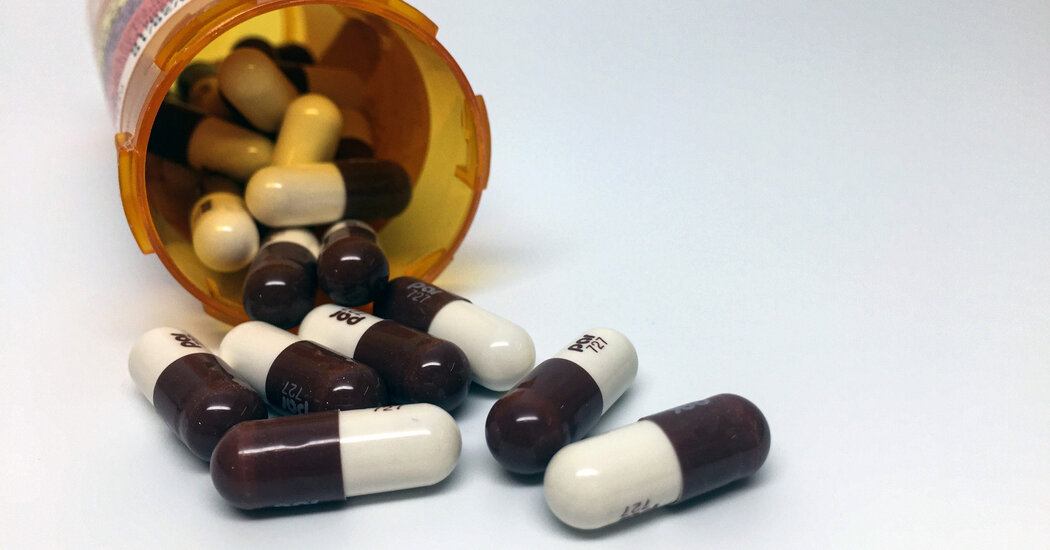
Taking a common antibiotic after sex greatly reduces the chances of developing syphilis, chlamydia and gonorrhea among men who have sex with men and among trans women.Sexually transmitted infections have soared in recent years in the United States, prompting an urgent search for solutions. New research suggests that a widely available antibiotic, taken after sex, may help stem the tide.A single dose of doxycycline taken within 72 hours of unprotected sex dramatically cuts the risk of a bacterial S.T.I., studies have found. The approach seems most effective for preventing chlamydia and syphilis, and slightly less so for preventing gonorrhea.The strategy has been shown to work among trans women and men who have sex with men who are at high risk for acquiring an S.T.I. But the pills have not shown a benefit in cisgender women (whose gender identity matches the sex assigned at birth).With the resurgence of S.T.I.s, researchers and health officials are eager to find new prevention strategies. Researchers have also found that a meningitis vaccine halved the incidence of gonorrhea. The two diseases are caused by closely related bacteria.The most recent data were presented last month in Seattle at the Conference on Retroviruses and Opportunistic Infections.“While condoms work really well when people use them, they’re not always accessible to people in their relationships,” said Dr. Jenell Stewart, an infectious diseases physician at Hennepin Healthcare and the University of Minnesota. “We need to have solutions beyond that.”The Centers for Disease Control and Prevention does not yet recommend post-exposure doxycycline to prevent S.T.I.s. But based on the strength of the new evidence, some cities like San Francisco are already offering the antibiotic to those at high risk of infection with chlamydia, syphilis and gonorrhea. Health officials are calling it “doxy-PEP.”“For those who have a lot of S.T.I.s, I think this is certainly something I hope that the C.D.C. can provide some guidance,” said Dr. Annie Luetkemeyer, an infectious disease physician at Zuckerberg San Francisco General Hospital and Trauma Center.Syphilis was nearly eliminated in the United States in 2000; rates of gonorrhea, too, were declining around that time. But the infections have resurged, in large part because of the shuttering of sexual health clinics across the country.Between 2017 and 2021, syphilis cases shot up by 68 percent and gonorrhea cases by 25 percent. About half of those new infections were in teens and young adults.The incidence of S.T.I.s also rose in women, and Black women in particular. Rates of congenital syphilis, acquired during gestation from an infected mother, increased by nearly 200 percent during the period.On any given day in 2018, about one in five Americans had an S.T.I., the C.D.C. has estimated. Although many infections are easily treated with antibiotics, many people remain undiagnosed because they may not have symptoms or have poor access to health care.Left untreated, syphilis can damage the reproductive system, brain, heart and other organs. Congenital syphilis can even lead to death; nearly 7 percent of infants with syphilis in 2020 did not survive.The new studies looked primarily at the use of doxycycline in men who have sex with men, who account for more than 40 percent of S.T.I.s in the United States. Generally, the participants were given a supply of the antibiotic and told to take two pills within three days of a potential exposure to an S.T.I.A study in 2017 found that post-exposure doxycycline sharply reduced the rate of chlamydia and syphilis, but not gonorrhea, in this group.“We were very cautious at the time because we didn’t want everyone to use the strategy before it has been confirmed,” said Dr. Jean-Michel Molina, a professor of infectious diseases at Paris Cité University, who led the study.The results were bolstered by those from another study, presented last year at a conference on H.I.V. That trial found that doxycycline after sex decreased the incidence of syphilis and chlamydia among participants by more than 80 percent, and that of gonorrhea by about 55 percent.The approach seemed so effective that a data safety monitoring board advised the researchers to halt the trial and offer doxycycline to all participants.The latest studies largely confirmed these promising results. In one of them, Dr. Molina and his colleagues tested doxycycline in 232 men who have sex with men, who were already enrolled in a larger study of H.I.V. prevention.The men who took doxycycline after sex were 84 percent less likely to contract chlamydia or syphilis and about half as likely to contract gonorrhea, compared with those who did not get the antibiotic.A separate arm of that trial found that men who got 4CMenB, a vaccine against bacterial meningitis made by GlaxoSmithKline, were half as likely to get gonorrhea. It’s unclear how long the protection might last, and the vaccine is not approved for this purpose in the United States, Dr. Luetkemeyer said.But the vaccine is considered to be safe and effective, and it is often offered to travelers, young adults and military recruits. “There’s a lot of enthusiasm in high-risk populations to get more data and to start using the meningococcal B vaccine,” Dr. Luetkemeyer said.Although these studies included only men who have sex with men, she and other researchers said they expected the results to be applicable to men of any sexual orientation.But the antibiotic did not prevent S.T.I.s in cisgender women, at least in Kenya.Dr. Stewart and her colleagues enrolled 449 young women in Kisumu who were taking daily pills to prevent H.I.V. and tested them for S.T.I.s every three months. The number of infections among those given a supply of doxycycline was roughly the same as among those who did not get the drug.The results were “a huge disappointment,” said Dr. Stewart. The researchers are now trying to understand why the women did not benefit, she said. It may be because of anatomical differences in how the drug is metabolized or because of the high prevalence of antibiotic-resistant bacteria in Kenya.The idea that doxycycline might be widely used to prevent S.T.I.s has provoked some worry about antibiotic resistance. The drug has been used for decades to treat chlamydia and syphilis without the emergence of resistant strains, but antibiotic-resistant gonorrhea is already a serious concern in many parts of the world.In France, where some of the studies were conducted, about 65 percent of infections are resistant to tetracyclines, a class of antibiotics that includes doxycycline. In Kenya, every bacterial sample from the small number of infected women in the trial turned out to be resistant.In the United States, about 26 percent of gonorrhea cases in 2018 were resistant to tetracyclines. So far, however, doxycycline’s use to prevent S.T.I.s does not seem to contribute to drug resistance, Dr. Luetkemeyer said.Doxycycline is already widely used to prevent malaria and to treat acne and rosacea. It would be recommended for preventing S.T.I.s only to those who might anyway frequently take antibiotics to treat infections, she noted.“This was a very high-risk group — 30 percent per quarter had one or more S.T.I.,” she said of the participants in her trial. “That is not the general population.”The C.D.C. is reviewing the latest data and expects to make new recommendations on the use of post-exposure doxycycline. In the meantime, the agency has advised health care providers to offer only doxycycline, not other antibiotics, for prevention, and only to gay and bisexual men and transgender women, for whom there is evidence of effectiveness.Patients should be counseled about potential side effects, like gastrointestinal trouble and sensitivity to light, the agency said.
Read more →