Beethoven: Tests on hair prove composer's genetic health woes

Published54 minutes agoShareclose panelShare pageCopy linkAbout sharingImage source, Getty ImagesBeethoven had a likely genetic predisposition to liver disease and a hepatitis B infection months before his death, tests have revealed.A team of researchers led by Cambridge University analysed five locks of hair to sequence the composer’s genome.They were, however, unable to establish a definitive cause of his hearing loss.Lead author, Tristan Begg, said genetic risk factors, coupled with Beethoven’s high alcohol consumption, may have contributed to his liver condition.The international team analysed strands from eight locks of hair kept in public and private collections, in a bid to shed light on Beethoven’s health problems.Five locks were deemed “authentic” by the researchers and came from a single European male.Image source, Kevin Brown/University of CambridgeLudwig van Beethoven was born in Bonn, Germany, in 1770 and died at the age of 56 in Vienna, in 1827.The prodigious composer and pianist suffered progressive hearing loss, which began in his mid to late 20s and led to him being functionally deaf by 1818.Image source, Susanna Sabin/University of CambridgeMr Begg said the team surmised from the composer’s “conversation books” – which he used in the last decade of his life – that Beethoven’s alcohol intake was regular, but the volumes he consumed were difficult to estimate.”While most of his contemporaries claim his consumption was moderate by early 19th Century Viennese standards, this still likely amounted to quantities of alcohol known today to be harmful to the liver,” he said.”If his alcohol consumption was sufficiently heavy over a long enough period of time, the interaction with his genetic risk factors presents one possible explanation for his cirrhosis.”Image source, Anthi Tiliakou/University of CambridgeThe team said, based on the genomic data, that Beethoven’s gastrointestinal issues were not caused by coeliac disease or lactose intolerance.Johannes Krause, from the Max Planck Institute of Evolutionary Anthropology in Germany, said: “We cannot say definitely what killed Beethoven but we can now at least confirm the presence of significant heritable risk and an infection with hepatitis B virus.”We can also eliminate several other less plausible genetic causes.”Dr Axel Schmidt, of the Institute of Human Genetics at the University Hospital of Bonn, said: “Although a clear genetic underpinning for Beethoven’s hearing loss could not be identified, the scientists caution that such a scenario cannot be strictly ruled out.”Image source, Kevin Brown/University of CambridgeGenetic genealogists also identified what they describe as an “extra-pair paternity event” – a child resulting from an affair – in Beethoven’s direct paternal line.Mr Begg added: “We hope that by making Beethoven’s genome publicly available for researchers, and perhaps adding further authenticated locks to the initial chronological series, remaining questions about his health and genealogy can someday be answered.”Find BBC News: East of England on Facebook, Instagram and Twitter. If you have a story suggestion email eastofenglandnews@bbc.co.ukMore on this storyRPO collaboration debuts in Luton with eyemasks9 JanuaryBreast cancer gene linked to Orkney islands5 days agoBlack Death 700 years ago affects your health now20 October 2022Around the BBCBBC Radio 3 – What was really wrong with Beethoven?Related Internet LinksUniversity of CambridgeThe BBC is not responsible for the content of external sites.

Read more →
Candida auris fungal infections spreading in US at 'alarming' rate, says CDC

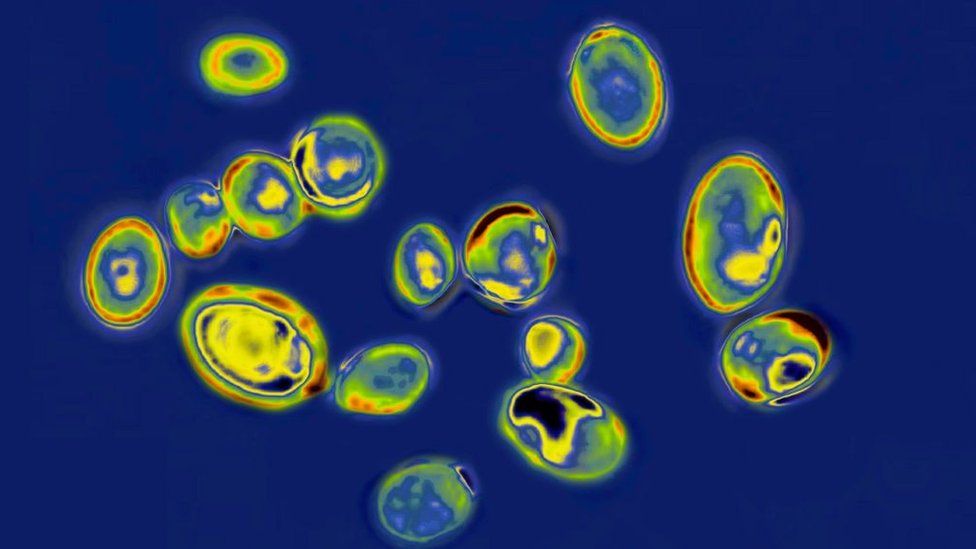
Published1 day agoShareclose panelShare pageCopy linkAbout sharingImage source, Getty ImagesA deadly fungal infection that is hard to treat is spreading rapidly at an “alarming” rate, says the Centers for Disease Control and Prevention (CDC). US cases nearly doubled in 2021 – from 756 to 1,471, says the CDC report. Healthy people are not at risk from Candida auris, but those with weak immune systems – or using medical devices like ventilators or catheters – can suffer severe illness or die.The majority of cases tested were immune to anti-fungal treatment.For this reason the CDC has called it an “urgent antimicrobial resistance threat”. Many patients are in hospitals and elderly care homes.It can spread from “contact with affected patients and contaminated surfaces or equipment”, the CDC said. One in three patients with invasive infections dies, but it can be difficult to assess the exact role Candida auris played in vulnerable patients, said CDC epidemiologist Dr Meghan Lyman, the report’s lead author.The most common symptoms are fever and chills that do not improve after treatment, according to the CDC.Because most patients are already sick, it is sometimes hard to detect the fungal infection. Only a laboratory test can confirm an infection.The infection was first reported in the US in 2016. The most rapid rise in cases was from 2020 to 2021, according to CDC data which was published in the Annals of Internal Medicine.Another reason for concern was the increase of cases that became “resistant to echinocandins” which is the antifungal medicine most recommended for treatment of the infection. The CDC attributes the rise in the number of cases reported to poor infection prevention at healthcare facilities, as well as enhanced screening efforts which have picked up on the surge in infections. It also may have worsened due to strain on healthcare and public health systems during the Covid-19 pandemic.In Mississippi, the state’s lead epidemiologist has identified a long-term acute-care facility to be at the centre of the outbreak.”Unfortunately, multi-drug resistant organisms such as C. auris have become more prevalent among our highest risk individuals, such as residents in long-term care facilities,” Dr Paul Byers told NBC.According to preliminary CDC data, there were 5 clinical cases of Candida auris in 2022. In more populous states like California and Texas, there were 359 and 160 cases, respectively. Nationwide there were 2,377 clinical cases in 2022, which would be a marked rise from the 1,471 cases in 2021.Dr Lyman, told CBS News the rise “emphasises the need for continued surveillance, expanded lab capacity, quicker diagnostic tests, and adherence to proven infection prevention and control”. Other countries have also been seeing an increase in Candida auris cases. Last year, the World Health Organization included it on its list of “fungal priority pathogens”. More on this storyBlindness and injuries cause eyedrops recall in US6 days agoAmericans warned of rise in Shigella stomach bug27 FebruaryI was cut out of Covid origin debate – ex-CDC boss9 March

Read more →

New microchip links two Nobel Prize-winning techniques

Physicists at Delft University of Technology have built a new technology on a microchip by combining two Nobel Prize-winning techniques for the first time. This microchip could measure distances in materials at high precision, for example underwater or for medical imaging. Because the technology uses sound vibrations instead of light, it is useful for high-precision position measurements in opaque materials. The instrument could lead to new techniques to monitor the Earth’s climate and human health. The work is now published in Nature Communications.
Simple and low-power technology
The microchip mainly consists of a thin ceramic sheet that is shaped like a trampoline. This trampoline is patterned with holes to enhance its interaction with lasers and has a thickness about 1000 times smaller than the thickness of a hair. As a former PhD candidate in Richard Norte’s lab, Matthijs de Jong studied the small trampolines to figure out what would happen if they pointed a simple laser beam at them. The trampoline’s surface started vibrating intensely. By measuring the reflected laser light from the vibrating surface, the team noticed a pattern of vibrations in the shape of a comb that they hadn’t seen before. They realised that the trampoline’s comb-like signature functions as a ruler for precision measurements of distance.
This new technology could be used to measure positions in materials using sound waves. What makes it special is that it doesn’t need any precision hardware and is therefore easy to produce. “It only requires inserting a laser, and nothing else. There’s no need for complex feedback loops or for tuning certain parameters to get our tech to operate properly. This makes it a very simple and low-power technology, that is much easier to miniaturise on a microchip,” Norte says. “Once this happens, we could really put these microchip sensors anywhere, given their small size.”
Unique combination
The new technology is based on two unrelated Nobel Prize-winning techniques, called optical trapping and frequency combs. Norte: “The interesting thing is that both of these concepts are typically related to light, but these fields do not have any real overlap. We have uniquely combined them to create an easy-to-use microchip technology based on sound waves. This ease of use could have significant implications for how we measure the world around us.”
Overtones
When the researchers pointed a laser beam at the tiny trampoline, they realised that the forces that the laser exerted on it were creating overtone vibrations in the trampoline membranes. “These forces are called an optical trap, because they can trap particles in one spot using light. This technique won the Nobel Prize in 2018 and it allows us to manipulate even the smallest particles with extreme precision,” Norte explains. “You can compare the overtones in the trampoline to particular notes of a violin. The note or frequency that the violin produces depends on where you place your finger on the string. If you touch the string only very lightly and play it with a bow, you can create overtones; a series of notes at higher frequencies. In our case, the laser acts as both the soft touch and the bow to induce overtone vibrations in the trampoline membrane.”
Bridging two breakthrough fields
“Optical frequency combs are used in labs around the world for very precise measurements of time, and to measure distances,” Norte says. “They are so important to measurements in general that their invention was given a Nobel Prize in 2005. We have made an acoustic version of a frequency comb, made out of sound vibrations in the membrane instead of light. Acoustic frequency combs could for instance make position measurements in opaque materials, through which vibrations can propagate better than light waves. This technology could for example be used for precision measurements underwater to monitor the Earth’s climate, for medical imaging and for applications in quantum technologies.”

Read more →

Next epidemic could be spotted early in wastewater

Researchers analysing wastewater say that routine monitoring at sewage treatment works could provide a powerful early warning system for the next flu or norovirus epidemic, alerting hospitals to prepare and providing public health agencies with vital health information.
In the first large scale and comprehensive wastewater-based epidemiology (WBE) study in the UK, scientists at the University of Bath, Bangor University and the UK Heath Security Agency analysed wastewater from 10 cities for both chemical and biological markers of health, including pesticides, pharmaceuticals and disease-causing viruses.
They collected samples from each location at hourly intervals over 24 hours on nine days in November 2021. The samples for each day were pooled before being processed and analysed for trace chemical markers using mass spectrometry techniques.
The samples were also analysed to detect any genetic material from viruses (SARS-CoV-2, norovirus and adenovirus). The total sampling catchment area equated to a population of around 7 million people.
Detecting trace chemicals
Using highly sensitive chemical analysis that could distinguish between very similar markers, the researchers were able to tell whether pharmaceuticals had passed through the human body or had been directly disposed into the wastewater system.

They could also identify whether chemicals such as pesticides had been ingested through food or had washed into the wastewater system from agricultural land.
The team observed that differences in levels of chemical markers were mostly dependent on the size of population in the catchment area, however there were some outliers.
For example in one city, there was a much higher concentration of ibuprofen found in the water, compared with other cities, suggesting direct disposal from industrial waste.
Identifying disease outbreaks
The researchers detected localised outbreaks of norovirus, Covid-19 and flu, but could also correlate them with spikes in usage of over-the-counter painkillers such as paracetamol.

The results indicate that analysing wastewater on a large scale in this way, dubbed wastewater-based epidemiology, could spot new outbreaks of diseases in communities early on, before large numbers were admitted into hospitals.
Professor Barbara Kasprzyk-Hordern, from the Water Innovation Research Centre and Institute for Sustainability at the University of Bath, led the chemistry work on the project. She said: “Most people reach for the paracetamol when they first get sick, and try to treat their illnesses at home.
“So looking for large spikes in paracetamol use could give an early indication that there may be an infectious disease outbreak in the community.
“We can also detect markers of inflammation and so look for any possible links of poor health with exposure to harmful chemicals, such as pesticides from food or industrial sources of chemicals.
“Our study has shown that only 10 daily samples from 10 wastewater treatment plants are needed to provide anonymous and unbiased information on the health of 7 million people — this is much cheaper and faster than any clinical screening process.
“This could, therefore, potentially be a very powerful tool for giving a holistic understanding of public health of different communities.”
Professor Davey Jones, who led a team at Bangor University analysing the wastewater for viruses, said: “Norovirus and seasonal flu have always been a huge problem in hospitals each winter; now Covid-19 has added to this problem.
“Our proof-of-concept study has shown the potential for Wastewater Based Epidemiology to provide an early warning surveillance system for these and other diseases, which would enable hospitals to prepare for outbreaks in the local area.”
Matthew Wade, from the UK Health Security Agency, said: “This has been a fantastic collaboration of chemists, biologists and Government agencies, working with multiple water companies to collect important data on both chemical and biological markers from different parts of the UK.
“We are delighted to be part of this project and look forward to developing the potential of this public health tool even further in the future.”
The study is published in the Journal of Hazardous Materials, and was funded by the UK Health Security Agency and the Engineering and Physical Sciences Research Council.

Read more →

U.S. Organ Transplant System, Troubled by Long Wait Times, Faces an Overhaul

The Biden administration announced a plan to modernize how patients are matched to available organs to shorten wait times and reduce the number of people who die while waiting.WASHINGTON — The Biden administration announced on Wednesday that it seeks to break up the network that has long run the nation’s organ transplant system, as part of a broader modernization effort intended to shorten wait times and reduce the number of patients who die while waiting.More than 100,000 people in the United States are awaiting organ transplants in a system that has long been defined by an imbalance between supply and demand. Patients sometimes wait years for donated organs, and people die each day. This is not the first reform effort; 25 years ago, the Clinton administration tried its own modernization initiative.For nearly four decades, the system has been run by the United Network for Organ Sharing, a national nonprofit known as UNOS that, under contract with the federal government, coordinates the work of transplant hospitals and organ procurement organizations to match transplant candidates with donated organs.Critics have long said the system is ineffective and disadvantages poor patients who do not have the means to travel. Federal officials say the computer system that does the matching is outdated.The Biden administration is now putting the network out to bid, hoping to foster competition in a system that has effectively operated as a monopoly. Federal officials say they are open to having multiple networks operating across the country.Officials also want to end a current practice in which members of the UNOS board sit on the Organ Procurement and Transplantation Network’s board, a panel of industry experts established by Congress to determine policies regarding organ transplantation. Officials view that as a conflict of interest.The administration is also rolling out a website that will, for the first time, provide detailed, de-identified data on transplant wait lists, donors and recipients. The site will also include outcomes for individual hospitals to help patients and their families make decisions about where to seek care. The moves were reported earlier by The Washington Post.“Every day, patients and families across the United States rely on the Organ Procurement and Transplantation Network to save the lives of their loved ones who experience organ failure,” Carole Johnson, the administrator of the Health Resources and Services Administration, the branch of the Department of Health and Human Services that oversees the transplant system, said in a statement.She said the overhaul was intended to “bring greater transparency to the system and to reform and modernize” the network, adding, “The individuals and families that depend on this lifesaving work deserve no less.”

Read more →

Ebola-like Marburg virus kills five people in Tanzania

Published20 hours agoShareclose panelShare pageCopy linkAbout sharingImage source, Getty ImagesBy Malu CursinoBBC NewsMarburg virus has killed five people in Tanzania’s north-western Kagera region, the health ministry has said.High fever is a common symptom of the deadly Ebola-like virus, often followed by bleeding and organ failure.Tanzania’s Health Minister Ummy Mwalimu said the disease had been contained and she was confident it would not spread further.Three people are being treated in hospital and authorities are tracing 161 contacts, Ms Mwalimu added.Tanzania’s strategy to control the spread was praised by the World Health Organization (WHO).WHO’s regional director for Africa, Dr Matshidiso Moeti, said: “The efforts by Tanzania’s health authorities to establish the cause of the disease is a clear indication of the determination to effectively respond to the outbreak.”Dr Moeti said WHO is working with Tanzania’s government to “rapidly scale up control measures to halt the spread of the virus”.The Marburg virus is a cousin of the equally deadly Ebola virus – part of the filovirus family – and it kills on average half of those infected, the WHO says.It is a severe, often fatal illness with symptoms including headache, fever, muscle pains, vomiting blood and bleeding.No vaccines or anti-viral treatments have been approved to treat the virus, the WHO has said, but it adds that rehydration with oral or intravenous fluids has improved survival.What is the Marburg virus? Recent Marburg infections and fatalities have been centred on the African continent, where hundreds of people have died from the virus in the past.The virus was first identified in 1967, after 31 people were infected and died simultaneously in Germany and Serbia. Since then, there have been outbreaks in Guinea, Uganda, Angola, the Democratic Republic of Congo, Kenya and South Africa, the WHO reports. Equatorial Guinea reported its first outbreak last month. According to the WHO and local authorities, at least nine people have died. Last July, two people in Ghana died from the virus and 98 contacts were quarantined. Two months later, the country declared the end of its outbreak.In 2021, Guinea health officials confirmed West Africa’s first case of the virus, while an outbreak in Angola in 2005 killed more than 300 people. Image source, Getty ImagesThe Egyptian rousette fruit bat often harbours the virus, but African green monkeys and pigs can also carry it.Among humans, it spreads through bodily fluids and contact with contaminated bedding.Additional reporting by Rhoda Odhiambo in Nairobi and Alfred Lasteck in Dar es SalaamMore on this storyWhat is the Marburg virus?19 July 2022Ghana confirms first cases of deadly Marburg virus18 July 2022Ebola-like Marburg virus found in Guinea10 August 2021

Read more →

New mosquito species reported in Florida

Another new mosquito species has made its way across the tropics into Florida, making a permanent home in at least three counties. Scientists are concerned because of the rate of new mosquitoes arriving in Florida and the potential for them to transmit mosquito-borne diseases.
A mosquito known only by its scientific name, Culex lactator, is the latest to establish in the Sunshine State, according to a new study published in the Journal of Medical Entomology by faculty at the UF/IFAS Florida Medical Entomology Laboratory (UF/IFAS FMEL).
This species was first discovered in Miami-Dade County in 2018 by UF/IFAS faculty while they hunted for other nonnative mosquitoes. Since then, thriving populations have been recorded in Miami-Dade, Collier and Lee counties. Scientists are concerned there hasn’t been enough research on the species and their potential disease risk.
“There are about 90 mosquito species living in Florida, and that list is growing as new mosquito species are introduced to the state from elsewhere in the world,” said Lawrence Reeves, lead author of the study and an assistant professor and mosquito biologist at the UF/IFAS research center in Vero Beach.
Mosquitoes are among the most studied insects because they can transmit diseases. However, there are large gaps of knowledge, said Reeves.
“That’s particularly true for species from the tropical forests, where mosquitoes are diverse and understudied,” he said. “Introductions of new mosquito species like this are concerning because many of our greatest mosquito-related challenges are the result of nonnative mosquitoes, and in a case like this, it’s difficult to anticipate what to expect when we know so little about a mosquito species.”
Globally, there are more than 3,600 types of mosquitoes. When a new mosquito is found in Florida, it could be any of these species. Reeves and his team used DNA analysis and other tools to not only discover they had found a new mosquito species, but to identify it as Culex lactator.

Culex lactator is found in Central America and northern South America and is a member of the Culex group of mosquitoes. This group includes important species that transmit the West Nile and St. Louis encephalitis viruses, but it is unclear whether Culex lactator will contribute to the transmission of these viruses in Florida.
Every year, Florida faces challenges from mosquito-transmitted diseases like West Nile virus, eastern equine encephalitis virus, dengue virus, chikungunya virus and others, explained Reeves.
“It’s too early to know whether Culex lactator will exacerbate these challenges, but the implications are often difficult to predict because not all mosquito species are equally capable of transmitting a particular virus or other pathogen,” said Reeves.
Each mosquito-borne virus is transmitted by only certain mosquito species, said Reeves.
“We need to be vigilant for introductions of new mosquito species because each introduction comes with the possibility that the introduced species will facilitate the transmission of a mosquito-transmitted disease,” he said.

The initial specimens of Culex lactatorwere collected in 2018 from rural sites in southern Miami-Dade County, south of Florida City, followed by additional adult and immature specimens collected through 2022 in the same locations. Each set of mosquitoes were collected from traps set by associate professor Nathan Burkett-Cadena, doctoral student Kristin Sloyer and Reeves while looking for other recently introduced mosquitoes.
In 2022, scientists with the Collier Mosquito Control District and Lee County Mosquito Control District found Culex lactator in their counties, indicating that Culex lactator has likely spread from its initial point of introduction.
Currently, Culex lactator is known to live in Collier County — south and west of Naples — Lee County, west of Fort Myers, and in the Homestead area of Miami-Dade County, though it may have also spread elsewhere in the state, said Reeves.
“Culex lactator is physically similar to mosquito species already known from Florida. It looks like other more common mosquito species,” said Reeves. “Because of that similarity, the presence of Culex lactator in an area can be easy to miss.”
Reeves and his team stress it’s important to monitor for Culex lactator as it is likely to spread within the state into areas that are environmentally suitable.
Florida’s proximity to the tropics and climate conditions make it ideal for nonnative mosquito species. Scientists are concerned about the rate and frequency of new species establishing in Florida. As many as 17 nonnative mosquito species are established in the state. Researchers stress that the detections of nonnative mosquito species are increasingly frequent, with 11 of 17 nonnative species first reported in the past two decades, and six of these 17 detected in only the past five years, said Reeves.
The mosquitoes Aedes aegypti, Aedes albopictus, and Culex quinquefasciatus — among the most important disease vectors in the United States — like Culex lactator, are nonnative species, introduced from the tropics.
“Climate change may improve the chances of tropical mosquito species becoming established once they make it to Florida if the state becomes warmer,” adds Reeves. “Increasing storm frequency and intensity could also blow in more mosquitoes and other species from the Caribbean, Central America and elsewhere.”

Read more →

Novel drug makes mice skinny even on sugary, fatty diet

Researchers from The University of Texas Health Science Center at San Antonio (UT Health San Antonio) have developed a small-molecule drug that prevents weight gain and adverse liver changes in mice fed a high-sugar, high-fat Western diet throughout life.
“When we give this drug to the mice for a short time, they start losing weight. They all become slim,” said Madesh Muniswamy, PhD, professor of medicine in the health science center’s Joe R. and Teresa Lozano Long School of Medicine.
Findings by the collaborators, also from the University of Pennsylvania and Cornell University, were published Feb. 27 in the high-impact journal Cell Reports. Muniswamy, director of the Center for Mitochondrial Medicine at UT Health San Antonio, is the senior author.
Fourth most common element
The research team discovered the drug by first exploring how magnesium impacts metabolism, which is the production and consumption of energy in cells. This energy, called ATP, fuels the body’s processes.
Magnesium is the fourth most abundant element in the body after calcium, potassium and sodium, and plays many key roles in good health, including regulating blood sugar and blood pressure and building bones. But the researchers found that too much magnesium slows energy production in mitochondria, which are cells’ power plants.

“It puts the brake on, it just slows down,” said co-lead author Travis R. Madaris, doctoral student in the Muniswamy laboratory at UT Health San Antonio.
Deleting MRS2, a gene that promotes magnesium transport into the mitochondria, resulted in more efficient metabolism of sugar and fat in the power plants. The result: skinny, healthy mice.
Liver and adipose (fat) tissues in the rodents showed no evidence of fatty liver disease, a complication related to poor diet, obesity and type 2 diabetes.
Small-molecule agent
The drug, which the researchers call CPACC, accomplishes the same thing. It restricts the amount of magnesium transfer into the power plants. In experiments, the result was again: skinny, healthy mice. UT Health San Antonio has filed a patent application on the drug.

The mice served as a model system of long-term dietary stress precipitated by the calorie-rich, sugary and fatty Western diet. The familiar results of this stress are obesity, type 2 diabetes and cardiovascular complications.
“Lowering the mitochondrial magnesium mitigated the adverse effects of prolonged dietary stress,” said co-lead author Manigandan Venkatesan, PhD, postdoctoral fellow in the Muniswamy lab.
Joseph A. Baur, PhD, of the University of Pennsylvania and Justin J. Wilson, PhD, of Cornell are among the collaborators. “We came up with the small molecule and Justin synthesized it,” Madaris said.
Significant implications
“These findings are the result of several years of work,” Muniswamy said. “A drug that can reduce the risk of cardiometabolic diseases such as heart attack and stroke, and also reduce the incidence of liver cancer, which can follow fatty liver disease, will make a huge impact. We will continue its development.”
Funders of this project include the National Institutes of Health, the U.S. Department of Defense and the San Antonio Partnership for Precision Therapeutics.

Read more →

Turn up your favorite song to improve medication efficacy

While listening to a favorite song is a known mood booster, researchers at Michigan State University have discovered that music-listening interventions also can make medicines more effective.
“Music-listening interventions are like over-the-counter medications,” said Jason Kiernan, an assistant professor in the College of Nursing. “You don’t need a doctor to prescribe them.”
While previous research studies have used music-listening interventions as a tool to treat pain and anxiety, Kiernan took a novel approach by studying the effects of music-listening interventions on chemotherapy-induced nausea.
“Pain and anxiety are both neurological phenomena and are interpreted in the brain as a state,” Kiernan said. “Chemotherapy-induced nausea is not a stomach condition; it is a neurological one.”
The small pilot study included 12 patients undergoing chemotherapy treatment who agreed to listen to their favorite music for 30 minutes each time they needed to take their as-needed anti-nausea medication. They repeated the music intervention anytime nausea occurred over the five days beyond their chemotherapy treatment. The patients in the study provided a total of 64 events.
“When we listen to music, our brains fire all kinds of neurons,” Kiernan said.
While Kiernan did see a reduction in the ratings of patients’ nausea severity and their distress (how much it bothered them to be nauseous), he cautions that it is difficult to isolate whether it was the gradual release of the medication doing its job or the increased benefit of the music. For future studies, Kiernan is drawing inspiration from another previously published study that measured the amount of serotonin, a neurotransmitter, that was released by platelets in the blood after listening to unpleasant and pleasant music.
“Serotonin is the major neurotransmitter that causes chemotherapy-induced nausea,” Kiernan said. “Cancer patients take medications to block serotonin’s effects.”
During that previous study, researchers found that patients who listened to pleasant music experienced the lowest levels of serotonin release, indicating that the serotonin stayed in the blood platelets and was not released to circulate throughout the body. Results also showed that after listening to music they found unpleasant, patients experienced greater stress and increased levels of serotonin release.
“This was intriguing because it provides a neurochemical explanation and a possible way to measure serotonin and the blood platelet release of serotonin in my study,” Kiernan said. “In 10 to 20 years, wouldn’t it be neat if you could use a nonpharmacological intervention like listening to 10 minutes of your favorite music to complement a medicine?”
The research was published in the journal Clinical Nursing Research.

Read more →

Study finds similar association of progestogen-only and combined hormonal contraceptives with breast cancer risk

There is a relative increase of 20% to 30% in breast cancer risk associated with both combined and progesterone-only contraceptives, whatever the mode of delivery, though with five years of use, the 15-year absolute excess incidence is at most 265 cases per 100,000 users. The results appear in a new study publishing March 21 in the open access journal PLOS Medicine by Kirstin Pirie of University of Oxford, UK, and colleagues.
Use of combined oral contraceptives, containing both estrogen and progestogen, has previously been associated with a small increase in breast cancer risk but there is limited data about the effect of progestogen-only hormonal contraceptives. However, the use of progestogen-only contraceptives has increased substantially in recent years, with almost as many prescriptions in England for oral progestogen-only contraceptives as for combined oral contraceptives in 2020.
In the new study, researchers analyzed data from a UK primary care database, the Clinical Practice Research Datalink (CPRD), on 9,498 women under the age of 50 with invasive breast cancer diagnosed in 1996-2017, as well as data on 18,171 closely matched controls.
On average, 44% of women with breast cancer and 39% of matched controls had a hormonal contraceptive prescription, with about half the prescriptions being for progestogen-only preparations. With five years use of either oral combined or progestogen-only contraceptives, the associated 15-year absolute excess incidence of breast cancer was estimated at 8 cases per 100,000 hormonal contraceptive users at age 16-20 years and 265 cases per 100,000 users at age 35-39 years. The odds of breast cancer were similarly and significantly raised, regardless of whether the contraceptive used was a combined (estrogen and progestogen) oral preparation (OR=1.23 95%CI 1.14-1.32, p

Read more →