Extreme temperatures may increase risk of stroke mortality, especially in low-income countries

Extreme heat and extreme cold are both associated with increased risks of death from ischemic and hemorrhagic stroke, according to a new study led by Harvard T.H. Chan School of Public Health. The researchers found that the link between extreme temperatures and stroke mortality was stronger in low-income countries than in high-income countries.
The study will be published on May 22, 2024, in Stroke.
“Our findings are another step toward understanding the effects of climate change on stroke,” said lead author Barrak Alahmad, research fellow in the Department of Environmental Health. “As temperatures become more extreme, we foresee an increase in fatal strokes and a widening disparity in stroke mortality between high- and low-income countries, as the latter are likely to bear the brunt of climate change.”
Previous research on the relationship between extreme temperatures and stroke mortality has yielded mixed or inconclusive results. Most studies have been limited to single cities or countries, mostly high-income, and few have differentiated between stroke subtypes. To address these gaps, the researchers leveraged the Multi-Country Multi-City Network, a global environmental health consortium, to build a multinational, multiregional database of ischemic and hemorrhagic stroke mortality. The database was composed of more than 3.4 million ischemic stroke deaths and more than 2.4 million hemorrhagic stroke deaths, reported between 1979 and 2019 across 522 cities in 25 countries.
The study found that for every 1,000 ischemic or hemorrhagic stroke deaths, about 11 were attributable to extreme cold or hot days. Of those 11 deaths, the coldest and hottest 2.5% of days contributed to 9.1 and 2.2 excess deaths, respectively. Out of every 1,000 hemorrhagic strokes, the coldest and hottest 2.5% of days contributed to 11.2 and 0.7 excess deaths. The study also found that low-income countries bore a higher burden of heat-related hemorrhagic stroke mortality than high-income countries and may bear a higher burden of cold-related hemorrhagic stroke mortality as well (though evidence was suggestive, not conclusive). It did not find a relationship between countries’ gross domestic product and risk of temperature-related ischemic stroke mortality.
The researchers hypothesized that better indoor temperature control systems and lower rates of outdoor work in high-income countries, as well as worse-quality health care in low-income countries, might explain the disparities. They noted that further study is necessary to uncover the drivers of low-income countries’ higher burden of temperature-related hemorrhagic stroke mortality and identify helpful interventions.
Limitations of the study included that it was limited in its geographic scope — rural settings and countries in South Asia, Africa, and the Middle East were underrepresented — and that individual-level demographics were not collected or examined. Additionally, the study only focused on stroke deaths; additional research into the incidence of non-fatal strokes would provide further understanding of the actual burden of temperature and strokes.
“We call on professional stroke societies to invest in more of this research, especially as climate change continues to escalate, and to shine a brighter light onto emerging environmental risk factors that will make strokes — already a significant driver of mortality worldwide — even deadlier,” Alahmad said.
Other Harvard Chan co-authors included Antonella Zanobetti, Joel Schwartz, and Petros Koutrakis.
The study was supported by the Kuwait Foundation for the Advancement of Science (grant CB21-63BO-01), the Medical Research Council-UK (grant MR/V034162/1), the European Union’s Horizon 2020 Project Exhaustion (grant 820655), the Swiss National Science Foundation (grant TMSGI3_211626), and the National Institutes of Health (grant R01ES034038).

Read more →

Ancient viral DNA in the human genome linked to major psychiatric disorders

New research led by King’s College London has found that thousands of DNA sequences originating from ancient viral infections are expressed in the brain, with some contributing to susceptibility for psychiatric disorders such as schizophrenia, bipolar disorder, and depression.
Published in Nature Communications, the study was part-funded by the National Institute for Health and Care Research (NIHR) Maudsley Biomedical Research Centre and the US National Institutes of Health (NIH).
About eight percent of our genome is made up of sequences called Human Endogenous Retroviruses (HERVs), which are products of ancient viral infections that occurred hundreds of thousands of years ago. Until recently, it was assumed that these ‘fossil viruses’ were simply junk DNA, with no important function in the body. However, due to advances in genomics research, scientists have now discovered where in our DNA these fossil viruses are located, enabling us to better understand when they are expressed and what functions they may have.
This new study builds upon these advances and is the first to show that a set of specific HERVs expressed in the human brain contribute to psychiatric disorder susceptibility, marking a step forward in understanding the complex genetic components that contribute to these conditions.
Dr Timothy Powell, co-senior author on the study and Senior Lecturer at the Institute of Psychiatry, Psychology & Neuroscience (IoPPN), King’s College London, said: “This study uses a novel and robust approach to assess how genetic susceptibility for psychiatric disorders imparts its effects on the expression of ancient viral sequences present in the modern human genome. Our results suggest that these viral sequences probably play a more important role in the human brain than originally thought, with specific HERV expression profiles being associated with an increased susceptibility for some psychiatric disorders.”
The study analysed data from large genetic studies involving tens of thousands of people, both with and without mental health conditions, as well as information from autopsy brain samples from 800 individuals, to explore how DNA variations linked to psychiatric disorders affect the expression of HERVs.
Although most genetic risk variants linked to psychiatric diagnoses impacted genes with well-known biological functions, the researchers found that some genetic risk variants preferentially affected the expression of HERVs. The researchers reported five robust HERV expression signatures associated with psychiatric disorders, including two HERVs that are associated with risk for schizophrenia, one associated with risk for both bipolar disorder and schizophrenia, and one associated with risk for depression.
Dr Rodrigo Duarte, first author and Research Fellow at the IoPPN, King’s College London, said: “We know that psychiatric disorders have a substantial genetic component, with many parts of the genome incrementally contributing to susceptibility. In our study, we were able to investigate parts of the genome corresponding to HERVs, which led to the identification of five sequences that are relevant to psychiatric disorders. Whilst it is not clear yet how these HERVs affect brain cells to confer this increase in risk, our findings suggest that their expression regulation is important for brain function.”
Dr Douglas Nixon, co-senior author on the study and and researcher at the Feinstein Institutes for Medical Research at Northwell Health, in the US, said: “Further research is needed to understand the exact function of most HERVs, including those identified in our study. We think that a better understanding of these ancient viruses, and the known genes implicated in psychiatric disorders, have the potential to revolutionise mental health research and lead to novel ways to treat or diagnose these conditions.”

Read more →

New weapon against dementia

Nearly 100,000 Danes over the age of 65 and more than 55 million people around the world live with dementia-related disorders such as Alzheimer’s and Parkinson’s. These diseases arise when some of the smallest building blocks in the body clump together and destroy vital functions. Why this occurs and how to treat it remains a scientific mystery. Until now, studying the phenomenon has been very challenging and limited due to an absence of the right tools.
Now, researchers from the Hatzakis lab at the University of Copenhagen’s Department of Chemistry have invented a machine learning algorithm that can track clumping under the microscope in real-time. The algorithm can automatically map and track the important characteristics of the clumped-up building blocks that cause Alzheimer’s and other neurodegenerative disorders. Until now, doing so has been impossible.
“In just minutes, our algorithm solves a challenge that would take researchers several weeks. That it will now be easier to study microscopic images of clumping proteins will hopefully contribute to our knowledge, and in the long term, lead to new therapies for neurodegenerative brain disorders,” says PhD Jacob Kæstel-Hansen from the Department of Chemistry, who, alongside Nikos Hatzakis, led the research team behind the algorithm.
Microscopic proteins detected in no time
The coming together and exchange of compounds and signals among proteins and other molecules occurs billions of times within our cells in natural processes that allow our bodies function. But when errors occur, proteins can clump together in ways that interfere with their ability to work as intended. Among other things, this can lead to neurodegenerative disorders in the brain and cancer.
The researchers’ machine learning algorithm can spot protein clumps down to a billionth of a meter in microscopy images. At the same time, the algorithm can count and then group clumps according to their shapes and sizes, all while tracking their development over time. The appearance of clumps can have a major impact on their function and how they behave in the body, for better or worse.
“When studying clumps through a microscope, one quickly sees, for example, that some are rounder, while others have filamentous structures. And, their exact shape can vary depending on the disorder they trigger. But to sit and count them manually many thousands of times takes a very long time, which could be better spent on other things,” says Steen Bender from the Department of Chemistry, the article’s first author.

In the future, the algorithm will make it much easier to learn more about why clumps form so that we can develop new drugs and therapies to combat these disorders.
“The fundamental understanding of these clumps depends on us being able to see, track and quantify them, and describe what they look like over time. No other methods can currently do so automatically and as effectively,” he says.
Tools are freely available to everyone
The Department of Chemistry researchers are in now in full swing using the tool to conduct experiments with insulin molecules. As insulin molecules clump, their ability to regulate our blood sugar weakens.
“We see this undesirable clumping in insulin molecules as well. Our new tool can let us see how these clumps are affected by whatever compounds we add. In this way, the model can help us work towards understanding how to potentially stop or transform them into less dangerous or more stable clumps,” explains Jacob Kæstel-Hansen.
Thus, the researchers see great potential in being able to use the tool to develop new drugs once the microscopic building blocks have been clearly identified. The researchers hope that their work will kickstart the gathering of more comprehensive knowledge about the shapes and functions of proteins and molecules.
“As other researchers around the world begin to deploy the tool, it will help create a large library of molecule and protein structures related to various disorders and biology in general. This will allow us to better understand diseases and try to stop them,” concludes Nikos Hatzakis from the Department of Chemistry.
The algorithm is freely available on the internet as open source and can be used by scientific researchers and anyone else working to understand the clumping of proteins and other molecules.
The research was conducted by: Steen W.B. Bender, Marcus W. Dreisler, Min Zhang, Jacob Kæstel-Hansen and Nikos S. Hatzakis from the Department of Chemistry with support from the Novo Nordisk Foundation Center for Optimised Oligo Escape and Control of Disease.

Read more →

Signatures of heart attack

Improving the outcome of patients after a heart attack is one of the major challenges of cardiology. This includes a comprehensive understanding of the pathophysiology and early detection of those patients who have a high risk of an unfavorable outcome. Researchers at LMU University Hospital, Helmholtz Munich and other institutions have now used high-tech biomedical and bioinformatics methods to comprehensively map the immune response to myocardial infarction in humans and identify signatures that correlate with the clinical course of the disease. The results of this groundbreaking work were published in the scientific journal Nature Medicine.
In Germany alone, around 300,000 people suffer a heart attack every year. The treatment of patients has significantly improved throughout the recent decades. Nevertheless, many of those affected develop heart failure after the event because the heart muscle does not recover.
According to findings from animal studies, the inflammatory reaction plays an important role after an infarction and has a decisive influence on whether the functions of the heart muscle are restored. “A misdirected or excessive immune response can jeopardize the recovery of the heart function,” says Dr. Kami Pekayvaz, lead author of the new study and clinician scientist at Department of Medicine I at LMU University Hospital, LMU Munich.
A team led by him, Viktoria Knottenberg, PD Dr. Leo Nicolai and Prof. Konstantin Stark from the Medical Clinic I of the LMU Hospital Munich and Corinna Losert and Dr. Matthias Heinig from Helmholtz Munich has analyzed for the first time how the immune system reacts to a heart attack in humans. The researchers examined the blood samples of heart attack patients who were treated at the LMU Hospital and showed different clinical outcomes.
Atlas of immune responses
The immune cells in the blood were analyzed cell by cell with regard to their RNA expression profile. RNA is produced when cells translate the information of their genes into proteins — a so-called transcriptome analysis can reveal the current state and characteristics of a cell. In addition, the blood plasma was examined for various substances using protein analyses, which provide details on the inflammatory and other processes. These analyses are among the most modern possible methods, so-called multi-omics methods.
A specific bioinformatics technique (MOFA, for Multi-Omics Factor Analysis) recognized overarching patterns in the mass of data obtained. “This method is ideal for identifying and summarizing many smaller effects that are coordinated in the same direction,” says Dr. Matthias Heinig, head of a bioinformatics working group at Helmholtz Munich. This made it possible to create an atlas of immune responses after a heart attack. “These patterns can explain differences between the clinical and temporal courses of the patients,” says Prof. Konstantin Stark, Senior Consultant in Cardiology at the LMU Hospital. This means that certain of these “immune signatures” are associated with a better recovery of heart function, others with a worse one.
This atlas of the immune response in myocardial infarction is highly relevant for further basic cardiovascular research and potentially indicates that multi-omics analyses of blood samples could be used to predict the clinical course of a heart attack patient. However, the concept of MOFA-based diagnostics in cardiovascular diseases must be tested in further studies — and this is what the Munich researchers intend to do in the coming years.

Read more →

Milk from before antibiotic era were resistant to antibiotic tetracycline

Sometime in the 1940s or so, someone in what is now the Department of Pathobiology and Veterinary Science got a lyophilizer, a piece of equipment that freeze-dries samples, says Director of the Connecticut Veterinary Medical Diagnostic Laboratory (CVMDL) Dr. Guillermo Risatti. Risatti explains that at that time, the microbiology lab was very active in testing milk for the dairy farms in the region. With an exciting new piece of equipment, it seems they started lyophilizing hundreds of samples.
The samples have been in storage ever since. Beyond the scant details that these are milk samples containing Streptococcus bacteria from the 1940s, Risatti explains that he and his colleagues — CVMDL Research Associate Dr. Zeinab Helal, Ji-Yeon Hyeon (now at College of Veterinary Medicine, Konkuk University, Seoul, Republic of Korea), and Dong-Hun Lee (also now at College of Veterinary Medicine, Konkuk University, Seoul, Republic of Korea) — were interested in exploring their microbial history.
Risatti says that over the years, the data was lost, so researchers don’t have precise details of the provenance of the samples. But knowing a bit of history about the department, they can deduce some information.
“We believe that most of them came from Connecticut or perhaps from cases from the region, but we cannot say which parts,” Risatti says. “Most likely, this lab provided a testing service to locals, as this was mainly a pathology lab. Now it’s more like a diagnostic lab, and we receive samples from all over the region, including New York and New Jersey.”
Learning about what these historical samples hold could help with research in unexpected ways, but the first step is piecing together the lost details. To do this, Risatti explains that the team established a workflow using standard techniques to streamline processes to analyze the visual characteristics, called phenotype, and to analyze their genotype with genomic sequencing.
Different species of Streptococcus use different strategies to inflict disease in the organisms they infect. These virulence factors are used to differentiate one species of Streptococcus from another and are one way to distinguish samples through phenotypic analysis. Another phenotypic analysis includes testing bacteria for their susceptibility to antibiotics.
The researchers started with 50 samples collected from 1941 to 1947, and they found that the samples contained seven different Streptococcus species, including two subspecies of S. dysgalactiae. Interestingly, the researchers found some of the samples were resistant to the antibiotic tetracycline and did not carry antibiotic resistance genes typically seen in today’s antibiotic-resistant bacterial strains. Since these samples were collected prior to the antibiotic era, the results add to a growing body of literature showing that antibiotic resistance occurred naturally before humans discovered and began to use antibiotics.

“Antibiotic resistance is a very big area of research, and it has been for many years,” says Risatti. “We did not go any further with our analysis because we don’t have the tools here, but we hope to bring this information to the public. I think it could be the jumpstart for somebody to study further.”
Risatti explains the hope is to partner with large agencies like the CDC and the Department of Public Health to help bolster antibiotic resistance research.
In developing the workflow, Risatti also praised the work of students Jillian Baron ’24 (CAHNR) and Patricia Arceta ’24 (CAHNR):
“This is a good platform for undergraduate students to gain experience and publish their findings. I am surprised by how eager these young people are. I am glad we can provide the space to do these things.”
With an eye toward the future, Risatti is excited about potential future collaborations: “I hope that people can see a link between what we do at CVMDL and human health.”

Read more →

Naturally occurring substance in pomegranates can improve treatment of Alzheimer’s disease

A substance naturally occurring in i.a. pomegranates, strawberries and walnuts can improve memory and treatment of Alzheimer’s disease, a new study conducted at the University of Copenhagen concludes.
Forgetfulness, difficulty finding words and confusion about time and place. These are some of the most common symptoms of Alzheimer’s disease.
Now researchers at the University of Copenhagen have discovered that an ordinary fruit can help.
“Our study on mouse models with AD shows that urolithin A, which is a naturally occurring substance in i.a. pomegranates, can alleviate memory problems and other consequences of dementia,” says Vilhelm Bohr, who is Affiliate Professor at the Department of Cellular and Molecular Medicine at the University of Copenhagen and prevoiusly Department Chair at the US National Institute on Aging.
This is good news for patients with dementia — a disease that is difficult to treat.
“Even though the study was conducted on mouse models, the prospects are positive. So far, research has shown promising results for the substance in the muscles, and clinical trials on humans are being planned.”
Substance improves brain function
The researchers previously discovered that a specific molecule, nicotinamide riboside (NAD supplement), plays a key role in neurodegenerative diseases such as Alzheimer’s and Parkinson’s, as it actively helps remove damaged mitochondria from the brain.

“Many patients with neurodegenerative diseases experience mitochondrial dysfunction, also known as mitophagy. This means that the brain has difficulties removing weak mitochondria, which thus accumulate and affect brain function. If you are able to stimulate the mitophagy process, removing weak mitochondria, you will see some very positive results,” Vilhelm Bohr explains.
The results of the new study show that a substance found in pomegranates, urolithin A, removes weak mitochondria from the brain just as effectively as NAD supplement.
Possible preventive effect
The researchers still don’t know how much urolithin A is needed to improve memory and alleviate symptoms of i.a. Alzheimer’s.
“We still cannot say anything conclusive about the dosage. But I imagine that it is more than a pomegranate a day. However, the substance is already available in pill form, and we are currently trying to find the right dosage,” Vilhelm Bohr says.
He also hopes the substance can be used for preventive purposes with no significant side effects.
“The advantage of working with a natural substance is the reduced risk of side effects. Several studies so far show that there are no serious side effects of NAD supplementation. Our knowledge of urolithin A is more limited, but as I mentioned, clinical trials with Urolithin A have been effective in muscular disease, and now we need to look at Alzheimers disease. ,” he says and adds:
“If we are going to eat something in the future to reduce the risk of Alzheimer’s, which we talk a lot about, we have to make sure there are no significant side effects.”

Read more →

New study highlights significant increases in cannabis use in United States

A new study by a researcher at Carnegie Mellon University assessed cannabis use in the United States between 1979 and 2022, finding that a growing share of cannabis consumers report daily or near-daily use and that their numbers now exceed those of daily and near-daily alcohol drinkers. The study concludes that long-term trends in cannabis use parallel corresponding changes in policy over the same period. The study appears in Addiction.
“The data come from survey self-reports, but the enormous changes in rates of self-reported cannabis use, particularly of daily or near-daily use, suggest that changes in actual use have been considerable,” says Jonathan P. Caulkins, professor of operations research and public policy at Carnegie Mellon’s Heinz College, who conducted the study. “It is striking that high-frequency cannabis use is now more commonly reported than is high-frequency drinking.”
Although prior research has compared cannabis-related and alcohol-related outcomes before and after state-level policy changes to changes over the same period in states without policy change, this study examined long-term trends for the United States as a whole. Caulkins looked at days of use, not just prevalence, and drew comparisons with alcohol, but did not attempt to identify causal effects.
The study used data from the U.S. National Survey on Drug Use and Health (and its predecessor, the National Household Survey on Drug Abuse), examining more than 1.6 million respondents across 27 surveys from 1979 to 2022. Caulkins contrasted rates of use in four milestone years that reflected significant policy change points: 1979 (when the first data became available and the relatively liberal policies of the 1970s ended), 1992 (the end of 12 years of conservative Reagan-Bush-era policies), 2008 (the year before the U.S. Department of Justice signaled explicit federal non-interference with state-level legalizations), and 2022 (the year for the most recent data available). Among the study’s findings: Reported cannabis use declined to a low in 1992, with partial increases through 2008 and substantial growth since then, particularly for measures of more intensive use. Between 2008 and 2022, the per capita rate of reporting past-year use increased 120%, and days of use reported per capita increased 218% (in absolute terms, the rise was from 2.3 billion to 8.1 billion days per year). From 1992 to 2022, the per capita rate of reporting daily or near-daily use rose 15-fold. While the 1992 survey recorded 10 times as many daily or near-daily alcohol users as cannabis users (8.9 million versus 0.9 million), the 2022 survey, for the first time, recorded more daily and near-daily users of cannabis than of alcohol (17.7 million versus 14.7 million). While far more people drink than use cannabis, high-frequency drinking is less common. In 2022, the median drinker reported drinking on 4-5 days in the previous month versus using cannabis on 15-16 days in the previous month. In 2022, prior-month cannabis consumers were almost four times as likely to report daily or near-daily use (42% versus 11%) and 7.4 times more likely to report daily use (28% versus 3.8%).”These trends mirror changes in policy, with declines during periods of greater restriction and growth during periods of policy liberalization,” explains Caulkins. He notes that this does not mean that policy drove changes in use; both could have been manifestations of changes in underlying culture and attitudes. “But whichever way causal arrows point, cannabis use now appears to be on a fundamentally different scale than it was before legalization.”
Among the study’s limitations, Caulkins says that because the study relied on general population surveys, the data are self-reported, lack validation from biological samples, and exclude certain subpopulations that may use at different rates than the rest of the population.

Read more →

Transitioning gender identities is not linked with depression

A landmark longitudinal study of LGBTQ+ youths has found that transitioning gender identities is not associated with depression and that about 1 in 3 gender-minority youths change their gender identity more than once. In fact, the study found higher rates of depression among transgender youths are more closely associated with bullying and victimization.
The findings from a team of researchers at The University of Texas at Austin and in Brazil are outlined in a paper in JAMA Network Open.
The study followed 366 LGBTQ+ young people ages 15-21 in two U.S. cities from 2011 to 2015 and measured depressive symptoms periodically, as well as the young people’s self-reported gender identity and other factors. During the study period, three-fourths of the participants maintained a gender identity consistent with their sex at birth (known as cisgender) throughout the three years, and another 9% maintained a transgender identity during the study period. Variations in gender identity were observed among other participants, including about 8% who reported a transgender identity earlier on and moved to a cisgender identity by the end of the study.
“Exploring gender identity and gender expression is a normal part of adolescence and growing up for some youth,” said André Gonzales Real, a clinical psychiatrist and UT doctoral student in human development and family sciences and corresponding author on the paper. “Depression among transgender youth is a big public health concern, but it’s not gender identity or transitioning that is at the root. It’s the bullying, rejection and victimization we need to be worried about.”
Of the youths who reported a different gender identity during the study, almost one-third did so more than twice. Among these youths, the rate of depressive symptoms was the lowest of the different groups and remained largely stable throughout the study. Specifically, researchers found that young people who transitioned from a cisgender identity to a transgender identity were more likely to experience symptoms of depression than those who maintained a cisgender identity throughout the study.
Importantly, when researchers controlled for bullying and victimization, which is more common for transgender youths, there was no statistical difference in depressive symptoms between groups. The finding lends key context to earlier reports of links between youth depression and gender transition.
“We found that gender identity is not the primary driver of mental health. Mental health is related to the environment young people are living in,” said Stephen Russell, the Priscilla Pond Flawn Regents Professor in Child Development at UT and an author of the paper. “Being a transgender young person does not lead to depression on its own, but the social environment that many of these young people experience does.”
Researchers also concluded that there was no change in depressive symptoms measured before and after transitions to transgender — or to cisgender. Finally, the study found that results were the same regardless of participants’ use of hormones and puberty blockers. Many studies looking at long-term outcomes for transgender and gender diverse youths come from clinical settings. The study is innovative in using a community-based sample, working with young people involved in community organizations serving LGBTQ+ youths.
Maria Inês Rodrigues Lobato of Universidade Federal do Rio Grande do Sul in Brazil is also a cooresponding author on the paper. The research was supported by the National Institute of Mental Health.

Read more →

Setback Deals Blow to Neuralink’s First Brain Implant Patient, but He Stays Upbeat

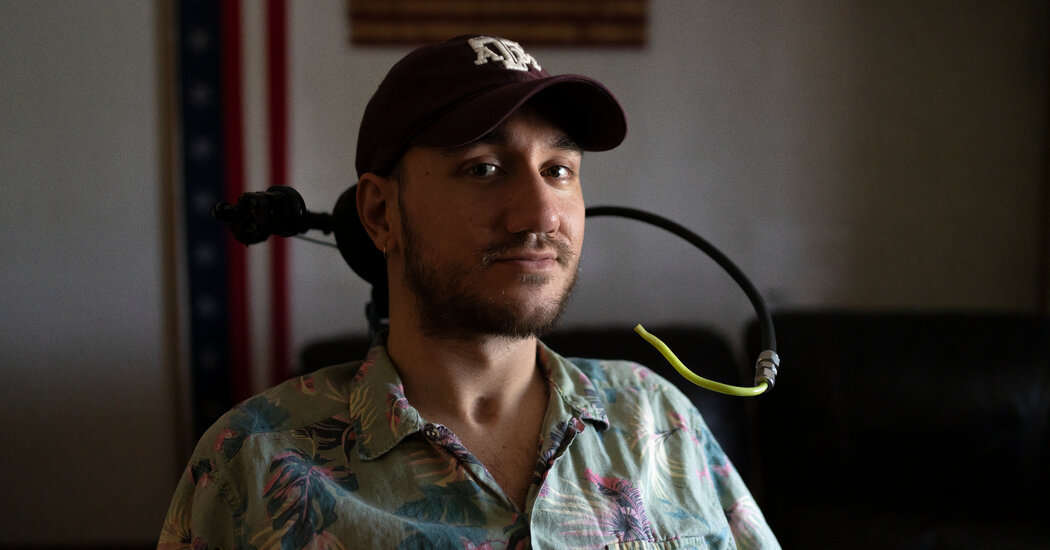
Elon Musk’s first human experiment with a computerized brain device developed significant flaws, but the subject, who is paralyzed, has few regrets.Just four months ago, Noland Arbaugh had a circle of bone removed from his skull and hair-thin sensor tentacles slipped into his brain. A computer about the size of a small stack of quarters was placed on top and the hole was sealed.Paralyzed below the neck, Mr. Arbaugh is the first patient to take part in the clinical trial of humans testing Elon Musk’s Neuralink device, and his early progress was greeted with excitement.Working with engineers, Mr. Arbaugh, 30, trained computer programs to translate the firing of neurons in his brain into the act of moving a cursor up, down and around. His command of the cursor was soon so agile that he could challenge his stepfather at Mario Kart and play an empire-building video game late into the night.But as weeks passed, about 85 percent of the device’s tendrils slipped out of his brain. Neuralink’s staff had to retool the system to allow him to regain command of the cursor. Though he needed to learn a new method to click on something, he can still skate the cursor across the screen.Neuralink advised him against a surgery to replace the threads, he said, adding that the situation had stabilized.The setback became public earlier this month. And although the diminished activity was initially difficult and disappointing, Mr. Arbaugh said it had been worth it for Neuralink to move forward in a tech-medical field aimed at helping people regain their speech, sight or movement.We are having trouble retrieving the article content.Please enable JavaScript in your browser settings.Thank you for your patience while we verify access. If you are in Reader mode please exit and log into your Times account, or subscribe for all of The Times.Thank you for your patience while we verify access.Already a subscriber? Log in.Want all of The Times? Subscribe.

Read more →