GeneMAP discovery platform will help define functions for ‘orphan’ metabolic proteins

A multidisciplinary research team has developed a discovery platform to probe the function of genes involved in metabolism — the sum of all life-sustaining chemical reactions.
The investigators used the new platform, called GeneMAP (Gene-Metabolite Association Prediction), to identify a gene necessary for mitochondrial choline transport. The resource and derived findings were published July 8 in the journal Nature Genetics.
“We sought to gain insight into a fundamental question: ‘How does genetic variation determine our “chemical individuality” — the inherited differences that make us biochemically unique?” said Eric Gamazon, PhD, associate professor of Medicine in the Division of Genetic Medicine at Vanderbilt University Medical Center. Gamazon is the senior and co-corresponding author of the study with Kivanç Birsoy, PhD, of The Rockefeller University.
Metabolic reactions play critical roles in nutrient absorption, energy production, waste disposal, and synthesis of cellular building blocks including proteins, lipids and nucleic acids. About 20% of protein-coding genes are dedicated to metabolism, including genes that code for small-molecule transporters and enzymes, Gamazon said.
Abnormalities in metabolic functions are associated with a range of disorders including neurodegenerative diseases and cancers.
“Despite decades of research, many metabolic genes still lack known molecular substrates. The challenge is in part due to the enormous structural and functional diversity of the proteins,” Gamazon said.
To discover functions for “orphan” transporters and enzymes — proteins with unknown substrates — the researchers developed the GeneMAP discovery platform. They used datasets from two independent large-scale human metabolome genome-wide/transcriptome-wide association studies and demonstrated with in silico validation that GeneMAP can identify known gene-metabolite associations and discover new ones. In addition, they showed that GeneMAP-derived metabolic networks can be used to infer the biochemical identity of uncharacterized metabolites.

To experimentally validate new gene-metabolite associations, the researchers selected their top finding (SLC25A48-choline) and performed in vitro biochemical studies. SLC25A48 is a mitochondrial transporter that did not have a defined substrate for transport. Choline is an essential nutrient used in multiple metabolic reactions and in the synthesis of cell membrane lipids.
The researchers showed that SLC25A48 is a genetic determinant of plasma choline levels. They further conducted radioactive mitochondrial choline uptake assays and isotope tracing experiments to demonstrate that loss of SLC25A48 impairs mitochondrial choline transport and synthesis of the choline downstream metabolite betaine.
They also investigated the consequences of the relationship between SLC25A48 and choline on the human medical phenome (symptoms, traits and diseases listed in electronic health records) using large-scale biobanks (UK Biobank and BioVU). They identified eight disease associations.
“What’s exciting about this study is its interdisciplinarity — the combination of genomics and metabolism to identify a long-sought mitochondrial choline transporter,” Gamazon said. “We think, given the extensive in silico validation studies in independent datasets and the proof-of-principle experimental studies, our approach can help identify the substrates of a wide range of enzymes and transporters, and ‘deorphanize’ these metabolic proteins.”
Birsoy is Chapman-Perelman Associate Professor, Head of the Laboratory of Metabolic Regulation and Genetics at The Rockefeller University, and a Searle and Pew-Stewart Scholar. Co-authors of the study include Artem Khan, Gokhan Unlu, PhD, (who completed his doctoral degree at Vanderbilt), Yuyang Liu, Ece Kilic and Timothy Kenny, PhD, at Rockefeller, and Phillip Lin at VUMC.
The research was supported by the National Institutes of Health (grants F99CA284249, F32DK127836, R01DK123323, R01HG011138, R01GM140287, R56AG068026, U24OD035523, R35HG010718), Boehringer Ingelheim Fonds PhD Fellowship, and Damon Runyon Cancer Research Foundation.

Read more →

How to stop cancer cachexia? Start at the top

Cancer is insidious. Throughout tumor progression, the disease hijacks otherwise healthy biological processes — like the body’s immune response — to grow and spread. When tumors elevate levels of an immune system molecule called Interleukin-6 (IL-6), it can cause severe brain dysfunction. In about 50%-80% of cancer patients, this leads to a lethal wasting disease called cachexia. “It’s a very severe syndrome,” says Cold Spring Harbor Laboratory (CSHL) Professor Bo Li.
“Most people with cancer die of cachexia instead of cancer. And once the patient enters this stage, there’s no way to go back because essentially there’s no treatment,” he explains.
Now, Li and a team of collaborators from four CSHL labs have found that blocking IL-6 from binding to neurons in a part of the brain called the area postrema (AP) prevents cachexia in mice. As a result, the mice live longer with healthier brain function. Future drugs targeting these neurons could help make cancer cachexia a treatable disease.
In healthy patients, IL-6 plays a crucial role in natural immune response. The molecules circulate throughout the body. When they encounter a possible threat, they alert the brain to coordinate a response. Cancer disrupts this process. Too much IL-6 gets produced, and it begins binding to AP neurons in the brain. “That leads to several consequences,” Li says. “One is animals and humans alike will stop eating. Another is to engage this response that leads to the wasting syndrome.”
The team took a two-pronged approach to keeping elevated IL-6 out of the brain in mice. Their first strategy neutralized IL-6 with custom antibodies. The second used CRISPR to reduce the levels of IL-6 receptors in AP neurons. Remarkably, both tactics produced the same results — the mice started eating again, stopped losing weight, and lived longer.
For Li, the implications were mind-blowing:
“The brain is so powerful in regulating the peripheral system. Simply changing a small number of neurons in the brain has a profound effect on whole-body physiology. I knew there was an interaction between tumors and brain function, but not to this extent,” he says.
Li says his team is now determined to figure out how to translate this discovery to human patients. Their recent collaborations with CSHL Professor Adrian Krainer and former CSHL Professor Z. Josh Huang may bring them one step closer. “If we can use what we’ve learned to prevent or treat cachexia, we can dramatically increase patients’ quality of life,” Li says. “This could one day have a big impact on many people.”

Read more →

The Killer Stalking Sri Lanka’s Men

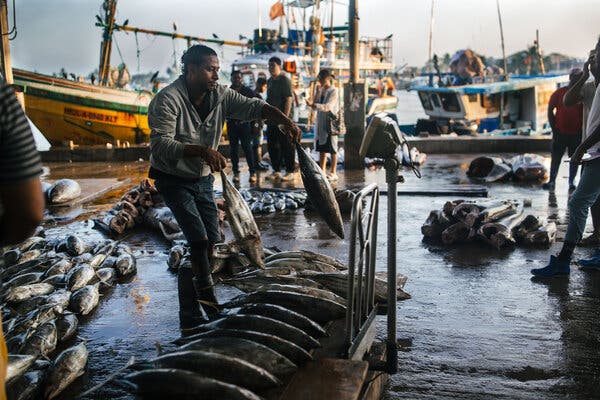
Something odd has been happening to young men in the sultry farming and fishing communities of Sri Lanka.Since the 1990s, men in their 30s and 40s have been turning up at hospitals with late-stage kidney failure, needing dialysis or even transplants. In some communities, as many as one in five young men is affected.Their condition has no clear cause; in fact, it is called “chronic kidney disease of unknown origin.” But experts say the illness is most likely the result of exposure to extreme heat, exacerbated in recent years by climate change, and the resulting dehydration, as well as an overuse of toxic pesticides that have seeped into the groundwater.The trend is most striking in young men, but some women, too, seem to have the disease. And children as young as 10 already show early signs of kidney trouble.Weighing tuna in the early morning at the Negombo fish market.Bringing a boat onto Kudawa Beach after an overnight trip.We are having trouble retrieving the article content.Please enable JavaScript in your browser settings.Thank you for your patience while we verify access. If you are in Reader mode please exit and log into your Times account, or subscribe for all of The Times.Thank you for your patience while we verify access.Already a subscriber? Log in.Want all of The Times? Subscribe.

Read more →

Your Brain Holds Secrets. Scientists Want to Find Them.

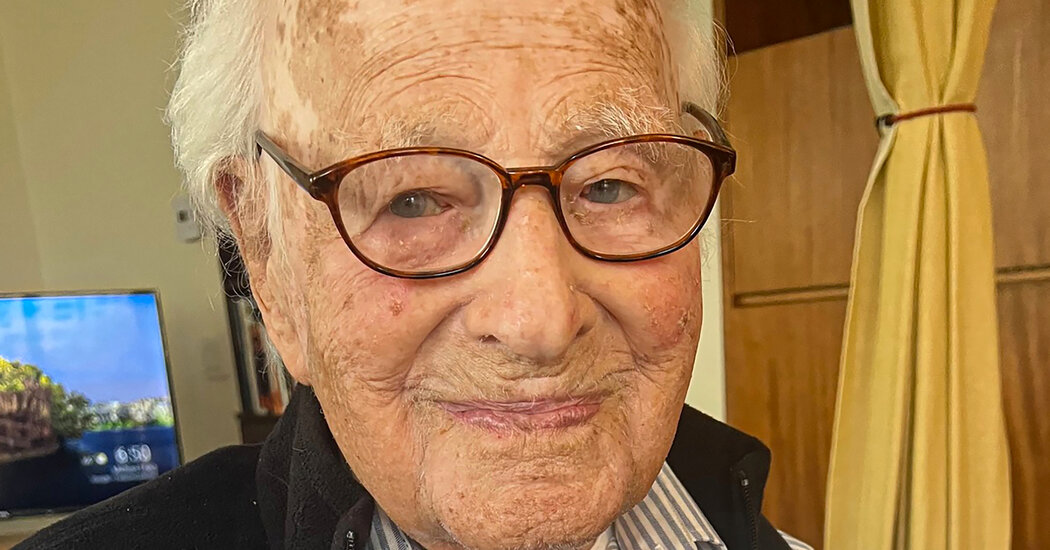
Many Americans plan to donate their organs for transplants or their bodies for medical science. Few realize that there’s a growing need for their brains, too.About a month ago, Judith Hansen popped awake in the predawn hours, thinking about her father’s brain.Her father, Morrie Markoff, was an unusual man. At 110, he was thought to be the oldest in the United States. His brain was unusual, too, even after he recovered from a stroke at 99.Although he left school after the eighth grade to work, Mr. Markoff became a successful businessman. Later in life, his curiosity and creativity led him to the arts, including photography and sculpture fashioned from scrap metal.He was a healthy centenarian when he exhibited his work at a gallery in Los Angeles, where he lived. At 103, he published a memoir called “Keep Breathing.” He blogged regularly, pored over The Los Angeles Times daily, discussed articles in Scientific American and followed the national news on CNN and “60 Minutes.”Now he was nearing death, enrolled in home hospice care. “In the middle of the night, I thought, ‘Dad’s brain is so great,’” said Ms. Hansen, 82, a retired librarian in Seattle. “I went online and looked up ‘brain donation.’”Her search led to a National Institutes of Health web page explaining that its NeuroBioBank, established in 2013, collected post-mortem human brain tissue to advance neurological research.We are having trouble retrieving the article content.Please enable JavaScript in your browser settings.Thank you for your patience while we verify access. If you are in Reader mode please exit and log into your Times account, or subscribe for all of The Times.Thank you for your patience while we verify access.Already a subscriber? Log in.Want all of The Times? Subscribe.

Read more →

Engineers find a way to protect microbes from extreme conditions

Microbes that are used for health, agricultural, or other applications need to be able to withstand extreme conditions, and ideally the manufacturing processes used to make tablets for long-term storage. MIT researchers have now developed a new way to make microbes hardy enough to withstand these extreme conditions.
Their method involves mixing bacteria with food and drug additives from a list of compounds that the FDA classifies as “generally regarded as safe.” The researchers identified formulations that help to stabilize several different types of microbes, including yeast and bacteria, and they showed that these formulations could withstand high temperatures, radiation, and industrial processing that can damage unprotected microbes.
In an even more extreme test, some of the microbes recently returned from a trip to the International Space Station, coordinated by Space Center Houston Manager of Science and Research Phyllis Friello, and the researchers are now analyzing how well the microbes were able to withstand those conditions.
“What this project was about is stabilizing organisms for extreme conditions. We’re really thinking about a broad set of applications, whether it’s missions to space, human applications, or agricultural uses,” says Giovanni Traverso, an associate professor of mechanical engineering at MIT, a gastroenterologist at Brigham and Women’s Hospital, and the senior author of the study.
Miguel Jimenez, a former MIT research scientist who is now an assistant professor of biomedical engineering at Boston University, is the lead author of the paper, which will appear in Nature Materials.
Surviving extreme conditions
About six years ago, with funding from NASA’s Translational Research Institute for Space Health (TRISH), Traverso’s lab began working on new approaches to make helpful bacteria such as probiotics and microbial therapeutics more resilient. As a starting point, the researchers analyzed 13commercially available probiotics and found that six of these products did not contain as many live bacteria as the label indicated.

“What we found was that, perhaps not surprisingly, there is a difference, and it can be significant,” Traverso says. “So then the next question was, given this, what can we do to help the situation?”
For their experiments, the researchers chose four different microbes to focus on: three bacteria and one yeast. These microbes are Escherichia coli Nissle 1917, a probiotic; Ensifer meliloti, a bacterium that can fix nitrogen in soil to support plant growth; Lactobacillus plantarum, a bacterium used to ferment food products; and the yeast Saccharomyces boulardii, which is also used as a probiotic.
When microbes are used for medical or agricultural applications, they are usually dried into a powder through a process called lyophilization. However, they can not normally be made into more useful forms such as a tablet or pill because this process requires exposure to an organic solvent, which can be toxic to the bacteria. The MIT team set out to find additives that could improve the microbes’ ability to survive this kind of processing.
“We developed a workflow where we can take materials from the ‘generally regarded as safe’ materials list from the FDA, and mix and match those with bacteria and ask, are there ingredients that enhance the stability of the bacteria during the lyophilization process?” Traverso says.
Their setup allows them to mix microbes with one of about 100 different ingredients and then grow them to see which survive the best when stored at room temperature for 30 days. These experiments revealed different ingredients, mostly sugars and peptides, that worked best for each species of microbe.
The researchers then picked one of the microbes, E. coli Nissle 1917, for further optimization. This probiotic has been used to treat “traveler’s diarrhea,” a condition caused by drinking water contaminated with harmful bacteria. The researchers found that if they combined caffeine or yeast extract with a sugar called melibiose, they could create a very stable formulation of E. coli Nissle 1917. This mixture, which the researchers called formulation D, allowed survival rates greater than 10 percent after the microbes were stored for six months at 37 degrees Celsius, while a commercially available formulation of E. coli Nissle 1917 lost all viability after only 11 days under those conditions.

Formulation D was also able to withstand much higher levels of ionizing radiation, up to 1,000 grays. (The typical radiation dose on Earth is about 15 micrograys per day, and in space, it’s about 200 micrograys per day.)
The researchers don’t know exactly how their formulations protect bacteria, but they hypothesize that the additives may help to stabilize the bacterial cell membranes during rehydration.
Stress tests
The researchers then showed that these microbes can not only survive harsh conditions, they also maintain their function after these exposures. After Ensifer meliloti were exposed to temperatures up to 50 degrees Celsius, the researchers found that they were still able to form symbiotic nodules on plant roots and convert nitrogen to ammonia.
They also found that their formulation of E. coli Nissle 1917 was able to inhibit the growth of Shigella flexneri, one of the leading causes of diarrhea-associated deaths in low- and middle-income countries, when the microbes were grown together in a lab dish.
Last year, several strains of these extremophile microbes were sent to the International Space Station, which Jimenez describes as “the ultimate stress test.”
“Even just the shipping on Earth to the preflight validation, and storage until flight are part of this test, with no temperature control along the way,” he says.
The samples recently returned to Earth, and Jimenez’ lab is now analyzing them. He plans to compare samples that were kept inside the ISS to others that were bolted to the outside of the station, as well as control samples that remained on Earth.
The research was funded by NASA’s Translational Research Institute for Space Health, Space Center Houston, MIT’s Department of Mechanical Engineering, and by 711 Human Performance Wing and the Defense Advanced Research Projects Agency.
Other authors of the paper include Johanna L’Heureux, Emily Kolaya, Gary Liu, Kyle Martin, Husna Ellis, Alfred Dao, Margaret Yang, Zachary Villaverde, Afeefah Khazi-Syed, Qinhao Cao, Niora Fabian, Joshua Jenkins, Nina Fitzgerald, Christina Karavasili, Benjamin Muller, and James Byrne.

Read more →