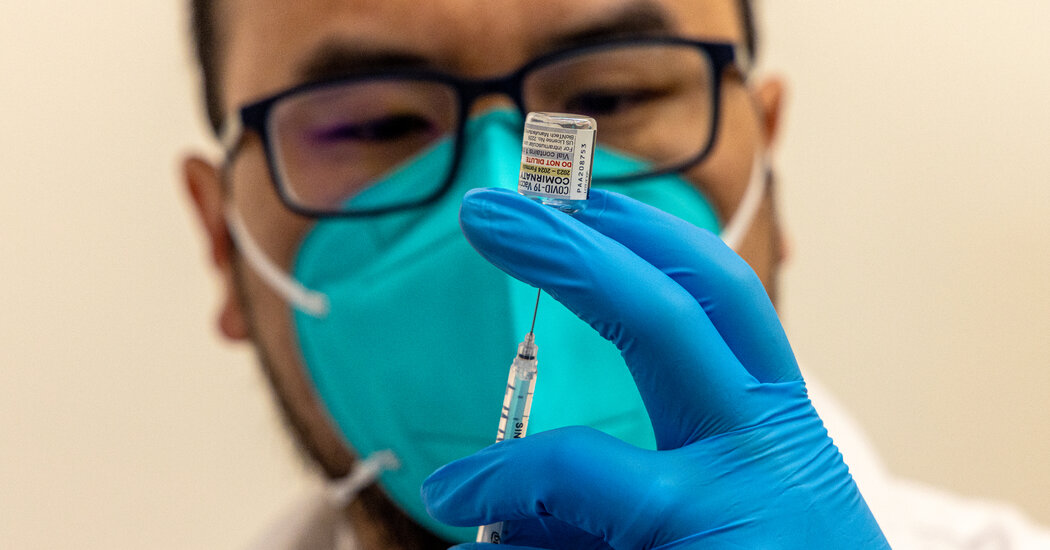
What to Know About mRNA Vaccines

Does it alter your DNA? Is the technology safe? And other questions, answered.Health Secretary Robert F. Kennedy, Jr., has repeatedly questioned the safety of mRNA vaccines against Covid-19. Scientists with funding from the National Institutes of Health were advised to scrub their grants of any reference to mRNA. Around the country, state legislatures are considering bills to ban or limit such vaccines, with one describing them as weapons of mass destruction.While mRNA, or messenger RNA, has received widespread attention in recent years, scientists first discovered it in 1961. They have been studying it and exploring its promise in preventing infectious diseases and treating cancer and rare diseases ever since.What is mRNA?A large molecule found in all of our cells, mRNA is used to make every protein that our DNA directs our bodies to build. It does so by carrying information from DNA in the nucleus out to a cell’s protein-making machinery. A single mRNA molecule can be used to make many copies of a protein, but it is naturally programmed to die eventually, said Jeff Coller, a professor of RNA biology and therapeutics at Johns Hopkins University and a co-founder of an RNA therapeutics company.How do mRNA vaccines work?Right now, there are three FDA-approved vaccines available that use mRNA, two for Covid-19 and one for R.S.V., or respiratory syncytial virus, in older adults. These vaccines consist of strands of mRNA that code for specific viral proteins.Say you get a Covid-19 vaccine. The strands of mRNA, packaged into tiny fat particles, go into your muscle and immune cells, said Robert Alexander Wesselhoeft, director of RNA therapeutics at the Gene and Cell Therapy Institute at Mass General Brigham. Protein factories in the cells then take instructions from the mRNA and manufacture a protein like the one found on the surface of a Covid-19 virus. Your body recognizes that protein as foreign, and mounts an immune response.Most of the mRNA will be gone within a few days, but the body retains a “memory” of it in the form of antibodies, Dr. Coller said. As with other types of vaccines, immunity wanes both over time and as a virus evolves into new variants.We are having trouble retrieving the article content.Please enable JavaScript in your browser settings.Thank you for your patience while we verify access. If you are in Reader mode please exit and log into your Times account, or subscribe for all of The Times.Thank you for your patience while we verify access.Already a subscriber? Log in.Want all of The Times? Subscribe.

Read more →
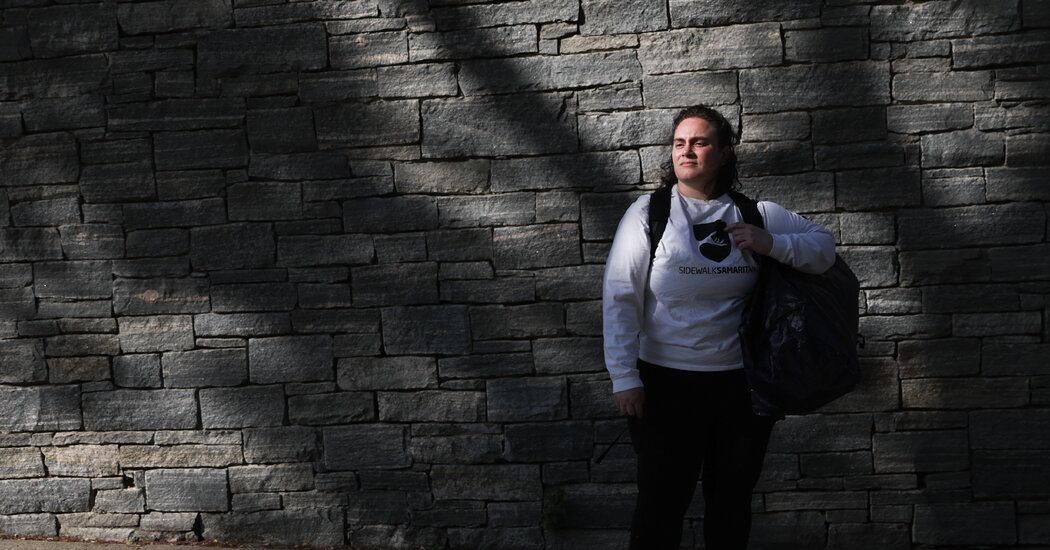
Migrants Are Skipping Medical Care, Fearing ICE, Doctors Say

Since President Trump announced plans for mass deportations and rescinded protections for hospitals and clinics, health care facilities have seen a jump in no-shows.A man lay on a New York City sidewalk with a gun shot wound, clutching his side.Emily Borghard, a social worker who hands out supplies to the homeless through her nonprofit, found him and pulled out her phone, preparing to dial 911. But the man begged her not to make the call, she said.“No, no, no,” he said, telling her in Spanish that he would be deported.Ms. Borghard tried to explain that federal law required hospitals to treat him, regardless of his immigration status, but he was terrified.“He said, ‘If I go to the emergency department, that will put me on their radar,’” she recalled in an interview recounting the incident.Across the country, doctors, nurses and social workers are increasingly concerned that people with serious medical conditions, including injuries, chronic illnesses and high-risk pregnancies, are forgoing medical care out of fear of being apprehended by immigration officials. Since the Trump administration announced plans for mass deportations and rescinded a Biden-era policy that protected spaces like hospitals, medical clinics and churches from immigration enforcement, doctors said they have seen sharp increases in patient anxiety and appointment no-show rates.If the trend continues, health care officials say, the list of consequences could be long: Infectious diseases circulating unnecessarily; worsening health care costs because of untreated chronic illnesses; and dangerous birth complications for women who wait too long to seek help, among others.In a survey conducted by KFF, a health policy research organization, 31 percent of immigrants said that worries about immigration status — their own or that of a family member — was negatively affecting their health. About 20 percent of all immigrants surveyed said they were struggling with their eating and sleeping; 31 percent reported worsened stress and anxiety.We are having trouble retrieving the article content.Please enable JavaScript in your browser settings.Thank you for your patience while we verify access. If you are in Reader mode please exit and log into your Times account, or subscribe for all of The Times.Thank you for your patience while we verify access.Already a subscriber? Log in.Want all of The Times? Subscribe.

Read more →
Who Is Casey Means, Trump’s Pick for Surgeon General?

Dr. Means, President Trump’s new pick for surgeon general, has focused on the prevalence of chronic diseases and called on the government to scale back on childhood vaccines.President Trump said on Wednesday that he would nominate Casey Means, a Stanford-educated doctor turned critic of corporate influence on medicine and health, as surgeon general.Dr. Means, an ally of the health secretary, Robert F. Kennedy Jr., has described becoming disillusioned by establishment medicine. She rose to prominence last year after she and her brother, Calley Means, a White House health adviser and former food industry lobbyist, appeared on Tucker Carlson’s show.What is her field of medicine?Dr. Means, who trained as an otolaryngologist and head and neck surgeon, left surgery behind without finishing her training to practice so-called functional medicine, which focuses on addressing the root causes of disease. She published a diet and self-help book last year titled “Good Energy: The Surprising Connection Between Metabolism and Limitless Health.” Before that, she had been best known for founding Levels, a company that offers subscribers wearable glucose monitors to track their health.She has focused on the prevalence of chronic diseases in the United States and has taken aim at obesity, diabetes and infertility, problems she has attributed to the use of chemicals and medications and Americans’ sedentary lifestyles.What has she said about vaccines?Dr. Means has echoed some of Mr. Kennedy’s skepticism of vaccines, calling on the new administration to study their “cumulative effects” and to weaken liability protections offered to vaccine makers as a way of encouraging them to develop new shots.“There is growing evidence that the total burden of the current extreme and growing vaccine schedule is causing health declines in vulnerable children,” she wrote in an October newsletter.Child health experts are adamantly opposed to trimming the list of recommended immunizations, warning that such changes would trigger outbreaks of deadly infectious diseases. And they have noted that the government makes available the safety data used to license vaccines and the safety data generated after they are put into use.What has she said about the food supply?Dr. Means has also pushed for a concerted campaign to pare back corporate-friendly policies related to the production and sale of food and medicine. For example, she has supported serving more nutritious meals in public schools, investigating the use of chemicals in American food, putting warning labels on ultra-processed foods, forbidding pharmaceutical companies from advertising directly to patients on television and reducing the influence of industry among drug and food regulators.“American health is getting destroyed,” she said at a Senate round table event on food and nutrition in September. “If the current trends continue, if the graphs continue in the way that they’re going, at best we’re going to face profound societal instability and decreased American competitiveness, and at worst, we’re going to be looking at a genocidal-level health collapse.”

Read more →

RFK Jr. Announces New Database for Research Into ‘Root Causes’ of Autism

The director of the National Institutes of Health previously floated — then walked back — the idea of an autism registry, alarming researchers and parents.After weeks of confusion about his plans for autism research, Health Secretary Robert F. Kennedy Jr. said on Wednesday that his department would build a “real-world platform” that would allow researchers to hunt for causes of the disorder by examining insurance claims, electronic medical records and wearable devices like smart watches.The department will draw the records from Medicare and Medicaid, which together cover around 40 percent of Americans. The National Institutes of Health and the Centers for Medicare and Medicaid Services will partner on the project, Mr. Kennedy said.But it was unclear whether the announcement would assuage researchers, advocates and parents, who reacted with alarm last month when Mr. Kennedy and Dr. Jay Bhattacharya, the director of the National Institutes of Health, floated — and then walked back — the idea of an autism registry for research. Many feared privacy violations.In Illinois on Wednesday, Governor JB Pritzker, a Democrat, issued an executive order aimed at protecting the privacy rights of state residents with autism. His office said he made the move in response to “rising national concerns about efforts to create federal autism registries or databases without clear legal safeguards or accountability.”Mr. Kennedy’s intense focus on autism stems from his insistence, despite evidence otherwise, that vaccines are to blame for the rapid rise in autism diagnoses in the United States. The Centers for Disease Control and Prevention recently reported that about 1 in 31, or 3.2 percent, of American eight-year-olds have received a diagnosis.For the new database, the health department said it would take steps to ensure the privacy of medical data. But it is not clear precisely what kind of research will be conducted. Mr. Kennedy said in the announcement that his department would use the platform “to uncover the root causes of autism and other chronic diseases.”We are having trouble retrieving the article content.Please enable JavaScript in your browser settings.Thank you for your patience while we verify access. If you are in Reader mode please exit and log into your Times account, or subscribe for all of The Times.Thank you for your patience while we verify access.Already a subscriber? Log in.Want all of The Times? Subscribe.

Read more →
Trump Has Called for More Babies but Dismissed Fertility Experts

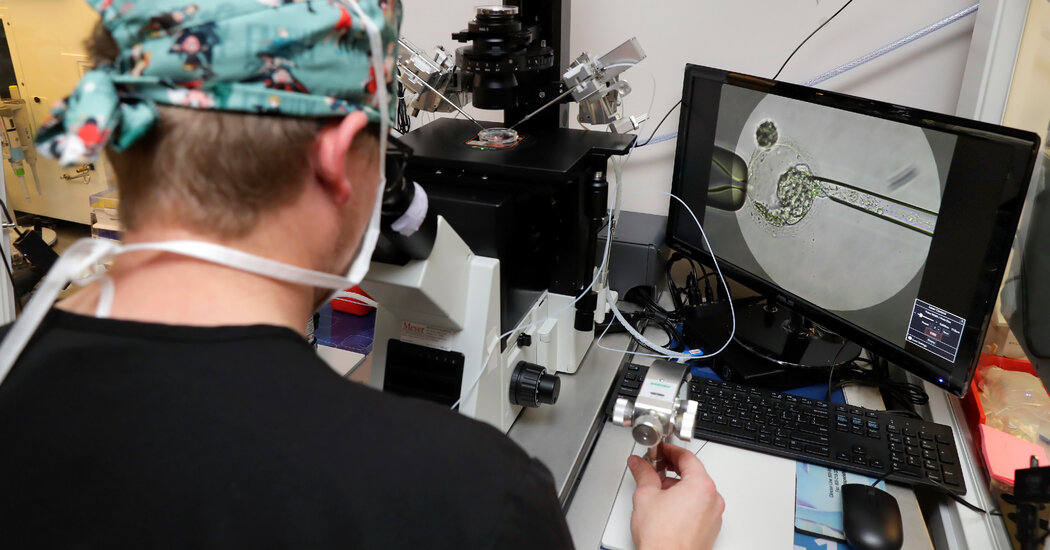
The research team studying how to improve I.V.F. was a casualty of cutbacks at federal health agencies.Every year, tens of thousands of young women opt to freeze their eggs, an expensive and sometimes painful procedure. As more Americans postpone childbearing, the numbers are growing.But there are many unknowns: What is the optimal donor age for freezing? What are the success rates? And critically: How long do frozen eggs last?The answers to those questions may be harder to find. In its drastic downsizing of the Centers for Disease Control and Prevention, the Trump administration abolished a federal research team that gathered and analyzed data from fertility clinics with the purpose of improving outcomes.The dismissal of the six-person operation “is a real critical loss,” said Aaron Levine, a professor at the Jimmy and Rosalynn Carter School of Public Policy at Georgia Tech, who has collaborated with the C.D.C. team on research projects.“They had the most comprehensive data on fertility clinics, and their core value was truth in advertising for patients.”Barbara Collura, chief executive of Resolve: The National Infertility Association, said the loss of the C.D.C. team would be a setback to both infertile couples and women contemplating the freezing and banking of eggs.We are having trouble retrieving the article content.Please enable JavaScript in your browser settings.Thank you for your patience while we verify access. If you are in Reader mode please exit and log into your Times account, or subscribe for all of The Times.Thank you for your patience while we verify access.Already a subscriber? Log in.Want all of The Times? Subscribe.

Read more →
More blood victims will die without compensation – minister

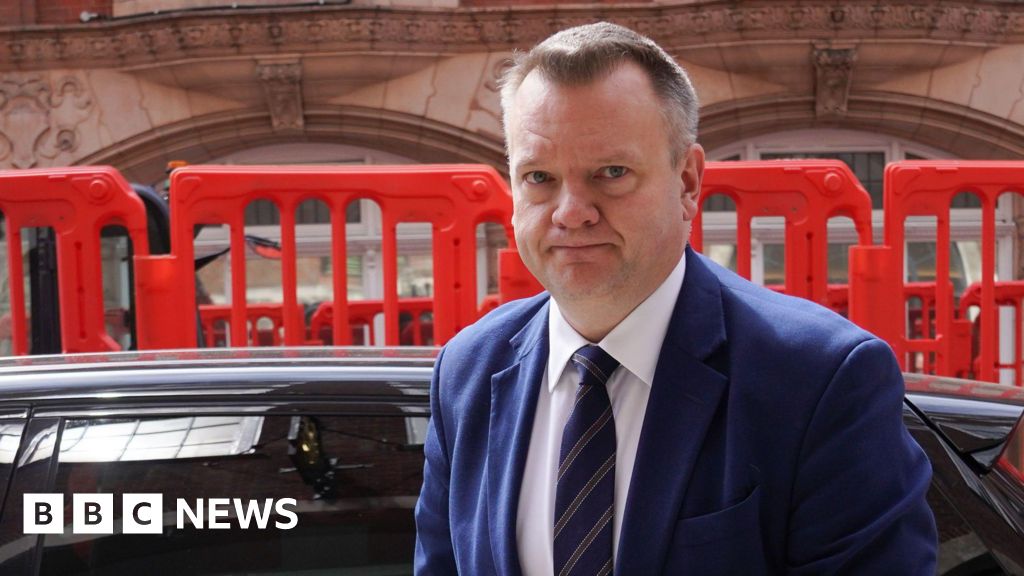
More victims of the infected blood scandal will die without ever receiving compensation, a government minister has said.The paymaster general Nick Thomas-Symonds was giving evidence to a special session of the public inquiry into what’s been called the worst treatment disaster in NHS history.It’s thought 30,000 patients in the UK were infected with HIV or hepatitis B and C after being treated with a contaminated blood clotting product or given a blood transfusion in the 1970s and 80s.Mr Thomas-Symonds agreed it was “profoundly unsatisfactory” that just 106 final compensation awards have been paid, almost a year after a damning report into the scandal was published.”I’m never going to think this is satisfactory until everybody has received the compensation that is due,” the paymaster general said.”The objective should be absolutely to pay [people] as soon as possible.”A final report into the scandal, published last year, found that the disaster could largely have been avoided if different decisions had been taken by the health authorities at the time.The report said too little was done to stop the importing of contaminated blood products from abroad in the 1970s and 80s, and there was evidence that the health authorities covered up elements of the scandal.Last month the chair of the public inquiry, Sir Brian Langstaff, ordered two days of extra hearings after he received “letter after letter, email after email” expressing concerns about the way the government’s compensation scheme has been managed.The Chancellor Rachel Reeves set aside £11.8bn in the last budget to make final awards to victims and their family members, but the latest figures show less than 1% of that total, some £97m, has been paid out to date.Survivors of the scandal and some bereaved relatives have also received a series of interim compensation payments over the last three years.Eleven victims and their representatives gave evidence in an emotional panel session in front of an audience of around 300 people in Westminster.Andrew Evans, chair of the campaign group Tainted Blood, told the hearing many victims and their families had been left feeling “betrayed and disappointed”.”People have given up on any expectation of receiving anything,” he said.”They have lost all hope of ever getting justice and we can’t be doing this for much longer.”Other witnesses criticised the way that individuals were being contacted and “invited” to come forward to claim final compensation, describing it as “waiting for your lottery ticket to come up”.Gary Webster, a haemophiliac who was infected with HIV and hepatitis C when a pupil at Treloar’s School in Hampshire in the 1970s and 80s, said that “[some] people will not get their compensation and a lot of claims will die with them.””It’s just too slow and people won’t get the justice they deserve,” he added.Under the current rules, if someone infected with HIV or hepatitis B or C dies before receiving full compensation, then any final award can be passed on to their relatives through their estate.But compensation can also be claimed by those affected by the scandal – a partner, parent of a child or sibling, for example – for the separate impact on their lives.And if they die before that compensation is agreed, then their claim will die with them and cannot be passed on.In questioning later in the day, Mr Thomas-Symonds, who leads on the response for the Cabinet Office, said he was “restless for further progress on payments”.The Infected Blood Compensation Authority (IBCA), an independent body set up to pay victims of the scandal, has said it believes the “bulk” of awards will be made to infected survivors by the end of 2027 with most of those affected, such as family members and carers, paid by the end of 2029.Mr Thomas-Symonds said he regarded that timeline as a “backstop” rather than a target to work towards.”The logic for that is there may be other people who have not yet come forward at this stage [to claim],” he said.”I’ve never been anything but clear they are absolute backstops and I expect these to speed up [in the future].”

Read more →

Genetic Study Retraces Covid’s Origins in Bats

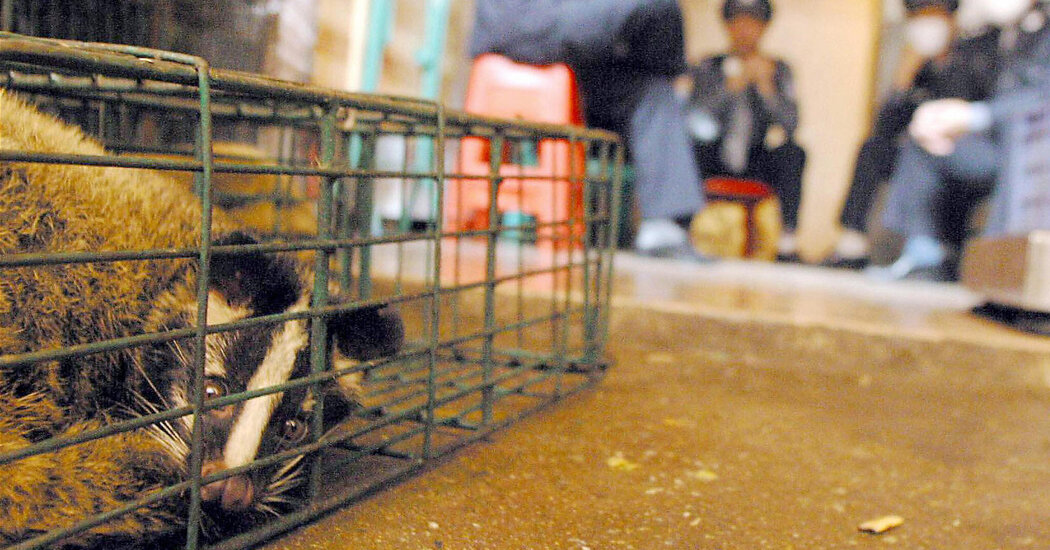
As China and the United States trade charges of a lab leak, researchers contend in a new paper that the Covid pandemic got its start, like a previous one, in the wildlife trade.In the early 2000s, a coronavirus infecting bats jumped into raccoon dogs and other wild mammals in southwestern China. Some of those animals were sold in markets, where the coronavirus jumped again, into humans. The result was the SARS pandemic, which spread to 33 countries and claimed 774 lives. A few months into it, scientists discovered the coronavirus in mammals known as palm civets sold in a market at the center of the outbreak.In a study published on Wednesday, a team of researchers compared the evolutionary story of SARS with that of Covid 17 years later. The researchers analyzed the genomes of the two coronaviruses that caused the pandemics, along with 248 related coronaviruses in bats and other mammals.Jonathan Pekar, an evolutionary virologist at the University of Edinburgh and an author of the new study, said that the histories of the two coronaviruses followed parallel paths. “In my mind, they are extraordinarily similar,” he said.In both cases, Dr. Pekar and his colleagues argue, a coronavirus jumped from bats to wild mammals in southwestern China. In a short period of time, wildlife traders took the infected animals hundreds of miles to city markets, and the virus wreaked havoc in humans.“When you sell wildlife in the heart of cities, you’re going to have a pandemic every so often,” said Michael Worobey, an evolutionary biologist at the University of Arizona and an author of the new study.The study lands at a fraught political moment. Last month the White House created a web page called “Lab Leak: The True Origin of Covid 19,” asserting that the pandemic had been caused not by a market spillover but by an accident in a lab in Wuhan, China.We are having trouble retrieving the article content.Please enable JavaScript in your browser settings.Thank you for your patience while we verify access. If you are in Reader mode please exit and log into your Times account, or subscribe for all of The Times.Thank you for your patience while we verify access.Already a subscriber? Log in.Want all of The Times? Subscribe.

Read more →
Big baby trial gives pregnant women more choice

2 hours agoShareSaveAmy ColeBBC Midlands TodayShannen HeadleyBBC News, West MidlandsShareSaveBBCWomen pregnant with larger babies have been given the option to choose how and when to give birth in a bid to lessen the risk of injury to the child.The “big baby” trial aimed to find out if starting labour earlier than 38 weeks made it less likely for infants who appeared large in the womb to be born with shoulder dystocia, where the shoulder becomes stuck during delivery.Study findings from between 2018 and 2022 showed giving birth a week to 10 days earlier reduced the risk, researchers said.It is hoped the data from the £2.5m Coventry-based trial will give doctors and midwives more confidence in facilitating natural births. Coventry nurse Eve Morgan took part in the study 2018 after monitoring found her baby could reach 9lb (4kg).Ms Morgan, who developed gestational diabetes when she was pregnant, had a cervical sweep to help bring on her choice of a natural labour.As a result, she safely delivered her 7lbs 8oz boy (3.4kg) 10 days early. “They said [the] baby grows so much in the last kind of week or so,” she said. “I’m quite petite myself. They said he would have been big for me.”The trial was led by Siobhan Quenby, a professor of obstetrics at the University of Warwick and consultant at University Hospitals Coventry and Warwickshire (UHCW) NHS Trust, in partnership with the Perinatal Institute, Birmingham. Results were gathered from 2,893 women in 106 hospitals in the UK, who consented to be randomly allocated to induction or standard delivery.What is shoulder dystocia? Shoulder dystocia occurs in 1 in 150 vaginal deliveries, delaying birth and leading to possible complications, including a stretching in the nerves of the infant’s neck.The NHS says the condition occurs more often in bigger babies but there is uncertainty over how often.It is estimated it could affect 1 in 25 women with a big baby who have a vaginal delivery.Large babies are defined as those who weigh more than 90% of other babies the same age, the NHS said.Prof Quenby said the trial findings empowered women to decide “how and when they want to deliver their baby”.Trial data crucially revealed babies did not suffer more harm if they were delivered later. It also showed earlier delivery reduced the need for emergency Caesarean section and did not increase the risk of tearing.”Whether you’re induced at 38 weeks or whether you choose to wait for a natural labour, in both groups the baby’s outcomes were the same,” Prof Quenby said.”Both groups had a risk of shoulder dystocia, it was actually slightly higher if you waited for labour naturally – but babies didn’t do any worse if you wait for labour naturally.”She added all the babies were born in an NHS hospital, where staff were trained on delivering natural births.Komal Mehmood, from Coventry, is 38-weeks pregnant with her second child, which is measuring as large. She said she found the results of the trial helpful when deciding her birth plan.”I mean it’s a natural process at the end of the day,” she said. “I understand the baby’s big, but I’m confident that waiting for a normal birth shouldn’t be a problem.”Asked if the data had offered her reassurance she said: “Definitely it does.”The trial was funded by the National Institute for Health and Care Research and the results published in the medical journal, The Lancet. More on this storyRelated internet links

Read more →

Teen unable to eat due to rare digestive condition

2 hours agoShareSaveStuart WoodwardBBC News, EssexShareSaveSteve Hubbard/BBCLike most teenagers his age, Finley is given a cake every year to celebrate his birthday, but he can never eat it – or any other food. If he did, he would bleed internally.The 14-year-old’s digestive system cannot tolerate lipids – fatty compounds or oils which are found in foods – so he has them injected directly into his heart.The treatment is a six-hour process which he has undergone every week since he was four years old, and over the past year it has increased to twice a week as he has grown. Finley’s case is so rare that doctors have considered presenting it to a medical journal, as they believe he may be one of the only people whose body reacts to lipids in this way.Dr Manas Datta, a consultant paediatrician at Broomfield Hospital in Chelmsford, Essex, who has treated Finley since he was born, said it was “horrific” seeing how Finley’s body responded to food.”Even when he was on breast milk, he was reacting,” Dr Datta told the BBC.”We had never seen this type of case before – I remember many days where Finley came to the hospital so unwell.”Family photoFinley, from Battlesbridge, Essex, underwent more than 20 operations at Great Ormond Street Hospital in London as doctors tried to understand his condition.His mum, Rhys, 37, felt her son had been a “guinea pig” due to “trials and errors”, and it had been “a lightbulb moment” when doctors finally worked out how to treat her son.”It’s heartbreaking at times – people don’t see what Finley goes through day-to-day,” she said.”They see the happy, chirpy young man, but psychologically he goes through a lot.”Rhys said she does not try to hide the sociable aspect of food from her son.”He’s always helped cook, we always go out to restaurants, he’s always had a birthday cake,” she told the BBC.”He might not be able to eat it, but he’s had the same normality in that respect as everybody else.”Finley, who is also autistic, said the look and smell of food does not make him hungry or feel like he is missing out.”Having my feed is all I know, so I just see other people eating and it doesn’t bother me,” he added.Steve Hubbard/BBCFinley receives a lipid infusion via a portacath, or tube, which enters his chest and links directly to the central vein in his heart. “We have to bypass the gastro-intestinal tract completely,” Dr Datta said.”Not only the fat, but he even cannot tolerate the normal carbohydrates and proteins as well,” he added.Finley receives carbohydrates and proteins – along with vitamins, minerals and electrolytes – three times a day into his stomach via a different tube.”I can’t remember when I had [the infusion] first because it’s just my life now – I can’t really escape it,” Finley said.”There isn’t a name for what Finley has” said Rhys, adding her son called his condition “Finley-itis”.”There’s no-one else that we know that has the lipid element infused directly.””We are actually thinking about reporting this case to some sort of journal because it’s such a rare condition,” Dr Datta said.The hope is that Finley will be able to eventually do infusion treatments at home, instead of travelling to Broomfield Hospital twice a week.”There might be a time that he is able to tolerate fat,” Rhys said, “but if not, we just carry on with what our ‘normal’ is and go from there.”Steve Hubbard/BBCFinley has plans to abseil down a tower block at Southend Hospital on 16 May to raise money for the Mid and South Essex Hospitals Charity. “The building is 154ft (47m) – it’s a bit high, but I feel like I’ll be all right,” Finley said.”The hospital and all the [staff] have given me care through my life, and I just wanted to give back and raise money for them to help other people.”Finley’s mum – who completed the same abseil on Finley’s behalf a couple of years ago as he was too young – said her son was “remarkable”.”He’s the most lovable little boy who wants to help other people because of what he’s gone through – I’m so proud of him.”More on this storyRelated internet links

Read more →

‘Doctors told my mum poison symptoms were anxiety’

9 hours agoShareSaveNeve Gordon-FarleighBBC News, EssexShareSaveJamie Niblock/BBCThe daughter of a couple who were fatally poisoned with fentanyl by a family friend said doctors told her mother she had anxiety as her health deteriorated from the effects of the drug. Luke D’Wit was jailed in 2024 for the murder of Carol Baxter, 64, and her husband Stephen, 61, who died from an overdose in West Mersea, Essex.Ellena Baxter told the BBC her mother had Hashimoto’s disease, a thyroid condition, and became increasingly unwell over the two years preceding her death with her family noticing “dramatic changes”.She said: “She was majorly confused it was like the wires were getting crossed in her brain. She would make cold cups of tea and iron shirts on top of the hob.”Mrs Baxter visited her GP, private healthcare, endocrinologists, neurologists and was treated at Colchester Hospital after suffering blackouts, flushes, headaches and feeling itchy and uncomfortable.However, her daughter said she was continuously told she was suffering with a form of anxiety. “[Luke D’Wit] was quadrupling the dosage of drugs and mixing up his own concoctions of drugs and putting them into capsules and feeding them to my mum as vitamins.”She attended A&E and Luke D’Wit, inside the pill capsules, put little metal tacks, and she got a little metal screw stuck in her intestine… she had been to multiple services at this point trying to get answers,” Ellena said. Family handoutThe 23-year-old said seeing her mother suffer had been “devastating”.”To see someone so full of life, so full of love just fade away. She died on the 9 April 2023 but she actually died a long time before that.”As part of his manipulation of the Baxters, D’Wit created a fake doctor, called Andrea Bowden, who gave Mrs Baxter advice about her condition and put her in touch with a wide network of pretend patients.”When this Dr Andrea did come about it was just a little bit of hope for all of us… she had been fobbed off so many times at this point by doctors, by the NHS, we just wanted answers,” Ellena added. With the help of Dr Andrea, Ellena said the family hoped her mother would recover.Ellena said a toxicology test was never offered to her mother by any doctor, but if one had been the fentanyl she had been ingesting might have showed up in the results.She said: “We would have taken [all her medication] away and started from scratch… if you take the vitamins away, who was doing the vitamins?”We would have known [D’Wit] was then doing something he shouldn’t, especially when Mum would have started getting better.”Family HandoutEllena has called for toxicology tests to be offered to NHS patients who have unexplained symptoms when all other tests have been exhausted, under what she has named “Carol’s Law”.”I need [toxicology tests] to be routinely offered… it is missing people.”Something needs to change and if I can help make that change through Carol’s Law, then that is what I’m wanting to do.”She said one of the places Mrs Baxter received treatment was Colchester Hospital, however, the East Suffolk and North Essex NHS has said it could not comment directly on the care of individuals. The trust added it offered toxicology tests when a patient was unconscious and in the critical care unit or if someone is pregnant and believed to be using drugs which could harm their baby. Dr Tim Leary, the chief medical officer at East Suffolk and North Essex NHS, encouraged anyone with concerns over family member’s care to get in touch through the trust’s patient advice and liaison service. More on this storyRelated internet links

Read more →