Philip Sunshine, 94, Dies; Physician Who Pioneered Treatment of Premature Babies
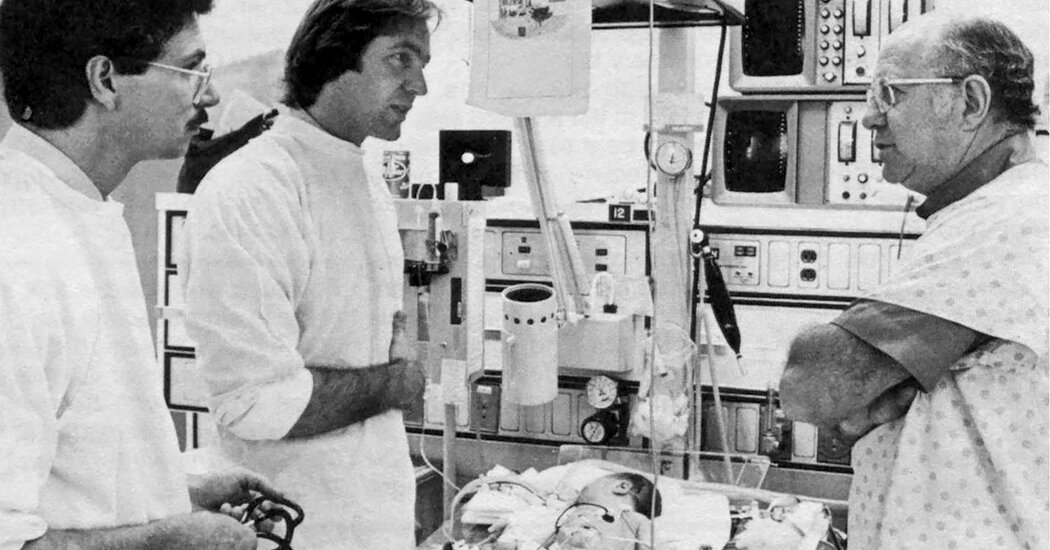
A founder of neonatology, he helped revolutionize the care of preterm and critically ill newborns. “We were able to keep babies alive that would not have survived,” he said.Philip Sunshine, a Stanford University physician who played an important role in establishing neonatology as a medical specialty, revolutionizing the care of premature and critically ill newborns who previously had little chance of survival, died on April 5 at his home in Cupertino, Calif. He was 94.His death was confirmed by his daughter Diana Sunshine.Before Dr. Sunshine and a handful of other physicians became interested in caring for preemies in the late 1950s and early ’60s, more than half of these unimaginably fragile patients died shortly after birth. Insurance companies wouldn’t pay to treat them.Dr. Sunshine, a pediatric gastroenterologist, thought that many premature babies could be saved. At Stanford, he pushed for teams of doctors from multiple disciplines to treat them in special intensive care units. Along with his colleagues, he pioneered methods of feeding preemies with formula and aiding their breathing with ventilators.“We were able to keep babies alive that would not have survived,” Dr. Sunshine said in 2000 in an oral history interview with the Pediatric History Center of the American Academy of Pediatrics. “And now everybody just sort of takes this for granted.”The early 1960s were a turning point in the care of premature babies.According to the Oxford English Dictionary, the word neonatology was used for the first time in the 1960 book “Diseases of Newborn” by Alexander J. Schaffer, a pediatrician in Baltimore. By that time, Stanford’s neonatology department — one of the first in the country — was up and running.In 1963, President John F. Kennedy’s second son, Patrick Bouvier Kennedy, was born nearly six weeks premature. He died 39 hours later. The crisis unfolded on the front pages of newspapers around the country, putting pressure on the federal health authorities to begin allocating money for neonatal research.We are having trouble retrieving the article content.Please enable JavaScript in your browser settings.Thank you for your patience while we verify access. If you are in Reader mode please exit and log into your Times account, or subscribe for all of The Times.Thank you for your patience while we verify access.Already a subscriber? Log in.Want all of The Times? Subscribe.

Read more →


N.I.H. Bars New Funding From U.S. Scientists to Partners Abroad

Generally, researchers will no longer be allowed to direct federal funds to international collaborators.The National Institutes of Health will no longer allow American scientists to direct its funding to research partners overseas, casting doubt on the future of studies on subjects including malaria and childhood cancer.Dr. Jay Bhattacharya, the new director of the N.I.H., announced the policy on Thursday, the same day Dr. Matthew J. Memoli, the principal deputy director, blasted these so-called subawards in an email obtained by The New York Times.“If you can’t clearly justify why you are doing something overseas, as in it can’t possibly be done anywhere else and it benefits the American people,” Dr. Memoli wrote, “then the project should be closed down.”The new restrictions, which will apply to domestic subawards as well in the future, come amid deep reductions in N.I.H. funding and the freezing of federal grants at many top universities, along with executive orders seeking to reshape the nation’s scientific agenda.On Monday, President Trump signed an executive order restricting a type of experimentation that can make pathogens more dangerous to humans, and ending support for the so-called gain-of-function research in countries like China.Researchers funded by N.I.H. grants have historically used subawards to facilitate international collaborations, which are essential for studying conditions like childhood cancer or illnesses like malaria and tuberculosis that are not prevalent in the United States.We are having trouble retrieving the article content.Please enable JavaScript in your browser settings.Thank you for your patience while we verify access. If you are in Reader mode please exit and log into your Times account, or subscribe for all of The Times.Thank you for your patience while we verify access.Already a subscriber? Log in.Want all of The Times? Subscribe.

Read more →
‘The NHS at its worst’, ex-ombudsman tells inquiry

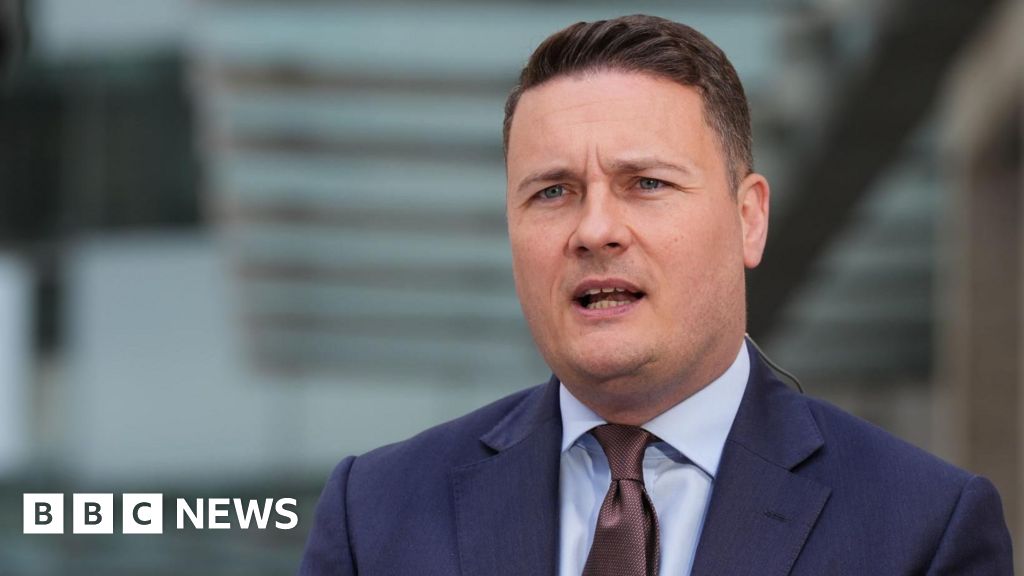
20 minutes agoShareSaveStuart WoodwardBBC News, EssexSophie HutchinsonBBC health correspondentShareSaveLampard InquiryA former health ombudsman has condemned mental health services for their handling of two vulnerable young men who died in their care.Sir Rob Behrens, who was parliamentary and health service ombudsman (PHSO) from 2017 to 2024, spoke at the Lampard Inquiry, which is examining the deaths of more than 2,000 people under mental health services in Essex over a 24-year period.Sir Rob said it was “a disgrace” how Essex Partnership University NHS Foundation Trust (EPUT) had failed in its care of 20-year-old Matthew Leahy, who died in 2012, and a 20-year-old man referred to as Mr R, who died in 2008.”This was the National Health Service at its worst and needed calling out,” Sir Rob said.’Near-complete failure’Sir Rob referred in his inquiry appearance to several reports made during his tenure, including “Missed Opportunities”, which looked into the circumstances surrounding the deaths of Mr Leahy and Mr R.Mr Leahy was found unresponsive at the Linden Centre in Chelmsford. He reported being raped there just days before he died.Sir Rob told the inquiry the PHSO identified “19 instances of maladministration” in Mr Leahy’s case by North Essex Partnership University NHS Foundation Trust – a predecessor to EPUT – including that his care plan was falsified.The former ombudsman said there had been “a near-complete failure of the leadership of this trust, certainly before it was merged” with South Essex Partnership Trust to become EPUT.”This was an indictment of the health service,” he added.PA MediaSir Rob paid tribute to Matthew’s mother, Melanie Leahy, who campaigned for more than a decade for a public inquiry, calling her “an exemplary complainant”.”She was very well prepared for every meeting, she was courteous but assertive. She knew what she wanted out of an investigation.”Given the tragedy that she’d been through, it was a remarkable contribution to public life that she performed over many years,” Sir Rob said.He also said that the way some doctors spoke about Mr R was “staggering”.Mr R was found unresponsive in the Linden Centre in December 2008 and died afterwards. Sir Rob Behrens found he had been failed multiple times by those treating him.”Some clinicians were interviewed after he died, and they had a very patronising approach to him” he told the inquiry.”In their view, [Mr R] didn’t have mental health problems at all, and he had been admitted because he wanted somewhere to live because he was homeless. That is staggering.”‘No confidence’In a report called “Broken Trust”, published in 2023, Sir Rob referenced there were more than a dozen different health and care regulators playing important roles in patient safety.”Political leaders have created a confusing landscapes of organisations, often in knee-jerk reaction to patient safety crisis points,” the report said.Sir Rob agreed with a suggestion put to him by Nicholas Griffin KC, chief counsel to the inquiry, that some incidents “fall through the gaps” due to the complexity of the complaints process and therefore are not investigated.”There are a lot of people who simply don’t know where to go,” Sir Rob said.”At the moment, I have no confidence that people trust the system because they don’t know where to go when they want to make a complaint.”Sir Rob said that Essex was “not exceptional” and the issues he had discovered there could be seen in other places as well.”The absence of leadership… not communicating effectively with patients, the safety issues around ligature points… and the absence of training and development – these are still issues which the NHS has to address generally, not just in Essex,” he said.PA MediaThe former ombudsman also told the inquiry that he was prevented from investigating a significant number of deaths due to a “serious limitation” in his office’s powers.Sir Rob Behrens explained the ombudsman could only investigate following a complaint, but that for understandable reasons of bereavement or trauma, many families in Essex did not complain following the deaths of loved ones.Sir Rob said if the ombudsman had the power to take its own initiative then “the resolution of these tragic issues could have been speeded up very dramatically”.EPUT chief executive Paul Scott has apologised for deaths under his trust’s care.He said: “As the inquiry progresses, there will be many accounts of people who were much loved and missed over the past 24 years and I want to say how sorry I am for their loss.”The Lampard Inquiry will hear evidence across several sessions until July 2026, with Baroness Lampard’s report likely to be published in 2027.More on this storyRelated internet links

Read more →

Swinney pledges to tackle GP appointment ‘lottery’

7 hours agoShareSaveShareSavePA MediaJohn Swinney says the NHS will be “at the heart” of his government’s legislative plans for the final year of the Scottish Parliament’s current term.The first minister has brought forward the annual programme for government, which he is unveiling 12 months ahead of the Holyrood election in May 2026.In his speech on Tuesday, Swinney will pledge to increase capacity in the health service to tackle what he called the 08:00 “lottery” for making GP appointments.Labour has accused the SNP of “broken promises” while the Tories say ministers must move away from “fringe obsessions”.The programme for government sets out the policy and legislative goals for the next parliamentary year.It is usually published after the summer recess, but Swinney moved the date this year to “enable a full year to delivery” before the Holyrood election.PA MediaAhead of Tuesday’s speech, he visited Newfield Medical Group in Dundee.The first minister said his programme for government would “take serious action to put the NHS on track to meet the needs of the public”.”While many people’s experience of their GP is excellent, for many others there is deep frustration over what has been described as the 8am lottery to make appointments,” he said.”So we will act to reduce pressure and increase capacity in the system, to make it easier for people to get the care they need, when they need it.”Swinney said child poverty and cost of living pressures were also among his priorities.It comes after figures released in March showed the Scottish government had missed its legal targets for reducing child poverty.”We’re seeing falling levels of child poverty, we are moving in the right direction,” he said.”Some of the measures we have funded, for example the Scottish Child Payment or increased investmnent in housing services, or wraparound care for early learning and childcare”All these measures are designed to help us achieve that journey.”The Scottish Conservatives said Swinney’s speech must signal a move away from SNP “fringe obsessions” and focus on the priorities of “mainstream Scotland”.”That means dropping the Nationalists’ fringe obsession with gender self-ID once and for all, said deputy leader Rachael Hamilton.She said Swinney should focus on repairing roads, ending classroom violence, cutting NHS waiting times and reducing taxes.Scottish Labour said Scotland would not forget John Swinney’s “record of failure”.Leader Anas Sarwar said “From health to education to the environment, this SNP government’s record is defined by broken promises.”Like clockwork, headline-grabbing plans are made and abandoned, and ambitious targets are set and missed.”Supreme Court judgementLast week the Scottish government said it would not bring forward planned legislation to criminalise misogyny before next year’s election.Ministers said there was not enough time to draw up a law which reflects the recent Supreme Court judgement on the definition of a woman, and instead plan to amend existing hate crime legislation to provide protections on the basis of sex.Scottish Greens co-leader Patrick Harvie expressed disappointment that these plans had been dropped, alongside proposals to ban so-called conversion therapy.Harvie said: “John Swinney needs to be ambitious and ensure that Scotland is taking meaningful action to cut child poverty and tackle the climate emergency. “That means putting people and planet at the core of his plans.”

Read more →

More than 1,000 GPs to get share of £102m to expand surgeries

Around £102m in new funding will be committed to expanding and modernising GP surgeries, the government says.More than 1,000 surgeries will benefit from the cash boost to upgrade and create additional space for doctors to see more patients. It is the biggest public investment in facilities for five years, according to the Department for Health and Social Care.Health Secretary Wes Streeting said: “These are simple fixes for our GP surgeries, but for too long they were left to ruin, allowing waiting lists to build and stopping doctors treating more patients.”The projects are part of the government’s broader plans to overhaul the health service – and are set to begin this summer.”It is only because of the necessary decisions we took in the Budget that we are able to invest in GP surgeries, start tackling the 08:00 scramble and deliver better services for patients,” Streeting added.Long waiting times for GP appointments mean many people now try to book a same-day appointment. The “08:00 scramble” refers to the time many GP surgeries open their phone lines for on-the-day bookings.Just under 45% of all GP appointments in March this year took place on the same day they were booked, according to NHS England.The British Social Attitudes survey, published last month, found that just 31% of people in the UK were satisfied with NHS GP services – compared to 68% in 2019Research by the Institute for Government, an independent think-tank, found that patient satisfaction with GPs had fallen significantly since the pandemic, driven by fewer in-person appointments.Around 80% of patients saw a GP in person in 2019. By last year, that had fallen to 66%, according to NHS Endland. Ruth Rankine, the primary care director at the NHS Confederation, said doctors would welcome the £102m boost to “deliver high quality care, closer to home, and fit for the 21st century”.”If we are serious about shifting care from hospital to community, from sickness to prevention, and from analogue to digital, then sustained investment in primary and community estates, equipment and technology is vital,” she added.It is unclear which of the 6,252 GP surgeries in NHS England will benefit from the new funding.Last month the government announced it would expand a scheme to help GPs provide care to patients without admitting them to hospital – backed by £80m in funding.

Read more →

Trump Administration Asks Court to Dismiss Abortion Pill Case

The request echoes the position the Biden administration took in the case in January, surprising some observers.The Trump administration on Monday asked a federal judge to dismiss a lawsuit that seeks to sharply restrict access to the abortion pill mifepristone — taking the same position as the Biden administration in a closely watched case that has major implications for abortion access.The court filing by the Justice Department is striking, given that President Trump and a number of officials in his administration have forcefully opposed abortion rights. Mr. Trump often boasts that he appointed three of the Supreme Court justices who voted in 2022 to overturn the national right to abortion. And so far in his second term, his administration has taken steps to curtail programs that support reproductive health.The court filing was the first time the Trump administration has weighed in on the lawsuit, which seeks to reverse numerous regulatory changes that the Food and Drug Administration made, starting in 2016, that greatly expanded access to mifepristone.The Trump administration’s request made no mention of the merits of the case, which have not yet been considered by the courts. Rather, echoing the argument that the Biden administration made shortly before Mr. Trump took office, the court filing asserts that the case does not meet the legal standard to be heard in the federal district court in which it was filed.The plaintiffs in the case are the conservative attorneys general of three states: Missouri, Idaho and Kansas, and the case was filed in a federal district court in Texas.“The states do not dispute that their claims have no connection to the Northern District of Texas,” the Justice Department lawyers wrote in the filing.We are having trouble retrieving the article content.Please enable JavaScript in your browser settings.Thank you for your patience while we verify access. If you are in Reader mode please exit and log into your Times account, or subscribe for all of The Times.Thank you for your patience while we verify access.Already a subscriber? Log in.Want all of The Times? Subscribe.

Read more →

As Trump Targets Researchers, Europe Makes a Pitch to Attract Scientists

The continent’s leaders are hoping to benefit as the Trump administration cuts support for research and threatens universities such as Harvard and Columbia with the freezing of federal funds.As the Trump administration slashes support to research institutions and threatens to freeze federal funding to universities like Harvard and Columbia, European leaders are offering financial help to U.S.-based researchers and hoping to benefit from what they are calling a “gigantic miscalculation.”“Nobody could imagine a few years ago that one of the great democracies of the world would eliminate research programs on the pretext that the word ‘diversity’ appeared in its program,” President Emmanuel Macron of France said on Monday.He was speaking at the Sorbonne University in Paris during an event called Choose Europe for Science that was organized by the French government and the European Union.It was unthinkable, Mr. Macron said, alluding also to the withdrawal of researchers’ visas in the United States, that a nation whose “economy depends so heavily on free science” would “commit such an error.”Ursula von der Leyen, president of the European Commission, announced an investment of 500 million euros, or $566 million, at the conference to “make Europe a magnet for researchers” over the next two years. Although that amount is not much compared to the billions in cuts American universities face, it comes on top of the $105 billion international research program called Horizon Europe that supports scientific breakthroughs, like genome sequencing and mRNA vaccines, Ms. Von der Leyen said.We are having trouble retrieving the article content.Please enable JavaScript in your browser settings.Thank you for your patience while we verify access. If you are in Reader mode please exit and log into your Times account, or subscribe for all of The Times.Thank you for your patience while we verify access.Already a subscriber? Log in.Want all of The Times? Subscribe.

Read more →

UnitedHealth’s Move to End Cyberattack Loan Lifeline Upsets Medical Providers

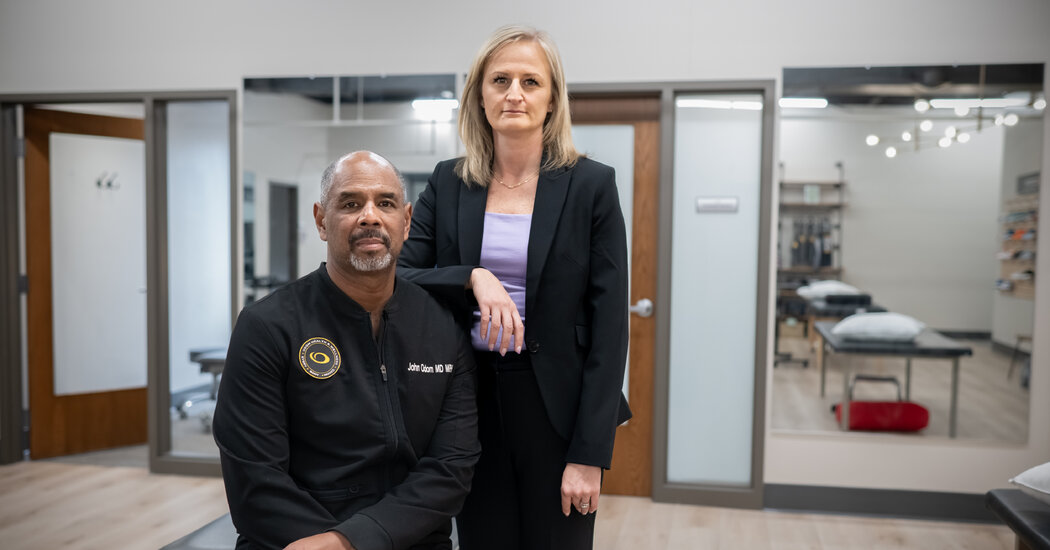
The company lent roughly $9 billion to practices affected by a vast cyberattack on its payment systems last year. Medical practices are now suing the health care colossus, saying it is pressuring them to repay funds.Two independent medical practices in Minnesota once hoped to expand operations but have spent the past year struggling to recover from the cyberattack on a vast UnitedHealth Group payment system.Odom Health & Wellness, a sports medicine and rehabilitation outfit, and the Dillman Clinic & Lab, a family medicine practice, are among the thousands of medical offices that experienced sudden financial turmoil last year. The cyberattack against Change Healthcare, a division of United, paralyzed much of the nation’s health-care payment system for months.Change lent billions of dollars to medical practices that were short on cash but has begun demanding repayments.Dillman and Odom are suing United in U.S. District Court in Minneapolis, accusing the corporation of negligence related to the cyberattack and claiming they sustained excessive expenses because of the attack’s fallout.In addition, Odom and Dillman asserted in court filings that the company’s insurance arm, UnitedHealthcare, has in turn been denying claims to cover patient care for being submitted late.Lawmakers viewed the chaos caused by the cyberattack as a result of United’s seemingly insatiable desire to buy up companies like Change, alongside doctors’ practices and pharmacy businesses. The widespread disruption was a reminder of how deeply United’s sprawling subsidiaries had become embedded in the nation’s health care system.We are having trouble retrieving the article content.Please enable JavaScript in your browser settings.Thank you for your patience while we verify access. If you are in Reader mode please exit and log into your Times account, or subscribe for all of The Times.Thank you for your patience while we verify access.Already a subscriber? Log in.Want all of The Times? Subscribe.

Read more →
Doing nothing on social care ‘untenable’, MPs warn

A failure to fix England’s social care system is costing the country in financial and human terms, cross-party MPs have warned.Doing nothing to reform social care for older and disabled adults is an “active” and “untenable” decision, according to a report from Health and Social Care Select Committee.It says successive governments have put too much emphasis on the cost of reforming the system, and future plans will be doomed to fail unless the government understands and measures the “cost of inaction”.The government, which has set up an independent commission which has just started work, said it had “hit the ground running” but acknowledged there was “much more to do”.”Taxpayers are currently paying £32 billion a year for a broken system” propped up by contributions from unpaid carers “equivalent to a second NHS”, the report said.The committee found that social care is consuming an increasing proportion of councils’ budgets, crowding out spending on other services.It added that social care makes up an integral part of the government’s NHS reforms and cannot be a separate process.Aside from improving the quality of care for people in need, the report found that investment in the system could also help drive economic growth.The report said that an extra £1 billion spent on social care would create 50,000 jobs across the country, and that every £1 invested would generate a £1.75 return to the wider economy.The committee also highlighted a lack of available data into the system, and called for the government to publish annual assessments of the level of unmet care needs for adults, as well as an annual estimates into how much delayed discharges are costing the NHS.Its report comes as an independent commission into adult social care chaired by Baroness Louise Casey begins its work. Its first report is due next year, with a final report due in 2028.The government said it was grateful for the committee’s work and would respond formally in due course.”Far from inaction, this government has hit the ground running on social care,” said Stephen Kinnock, minister of state for care.”A lot has been done, but we know there is so much more to do and deep reform is needed,” he said.

Read more →

Sybil Shainwald, Lawyer Who Fought for Women’s Health, Dies at 96

After taking part in a landmark case against the manufacturers of the synthetic hormone DES, she represented many other victims of harmful drugs and devices.Sybil Shainwald, a lawyer who for nearly half a century represented women whose health had been irreparably and often catastrophically harmed by poorly tested drugs and medical devices, died on April 9 at her home in Manhattan. She was 96.Her daughter Laurie Shainwald Kleeger announced the death, which was not widely reported.Ms. Shainwald was 48 years old and newly graduated from law school when she was hired at Julien, Schlesinger & Finz, a New York City law firm, and assigned to the team representing Joyce Bichler, a 25-year-old social worker who was the survivor of a rare cancer, clear-cell adenocarcinoma of the vagina and cervix. Her cancer was caused by a drug her mother had taken during pregnancy: diethylstilbestrol, a synthetic hormone known as DES and sold under many brand names to prevent miscarriage.At 18, Ms. Bichler had undergone a radical hysterectomy, which removed her ovaries, her fallopian tubes and two-thirds of her vagina. She was one of thousands of women who became known as DES daughters for the cancers and infertility they suffered because their mothers had taken the drug. She was suing Eli Lilly, one of the drug’s largest manufacturers, for damages.In 1947, when DES was approved by the Food and Drug Administration for use in pregnant women, studies had shown that it produced cancers in mice and rats and that it could cross the placenta and harm the fetus. Yet companies marketed it as a safe remedy for a catchall of conditions, from spotting during pregnancy to miscarriages, and continued to do so even after reports began to surface that it was, in fact, ineffective in treating those conditions.A 1957 advertisement, aimed at doctors, for the Grant Chemical Company, one of the many manufacturers of the synthetic hormone DES. A jury agreed in 1979 that all the manufacturers shared responsibility for the drug’s effects.In the late 1960s, cases of clear-cell adenocarcinoma began to be diagnosed in young women whose mothers had taken the drug. In 1971, the F.D.A. told doctors to stop prescribing it. By then, according to the National Cancer Institute, an estimated five to 10 million people — the women who had been prescribed it and their children — had been exposed to DES.We are having trouble retrieving the article content.Please enable JavaScript in your browser settings.Thank you for your patience while we verify access. If you are in Reader mode please exit and log into your Times account, or subscribe for all of The Times.Thank you for your patience while we verify access.Already a subscriber? Log in.Want all of The Times? Subscribe.

Read more →