Weight-loss drugs tested in head-to-head trial

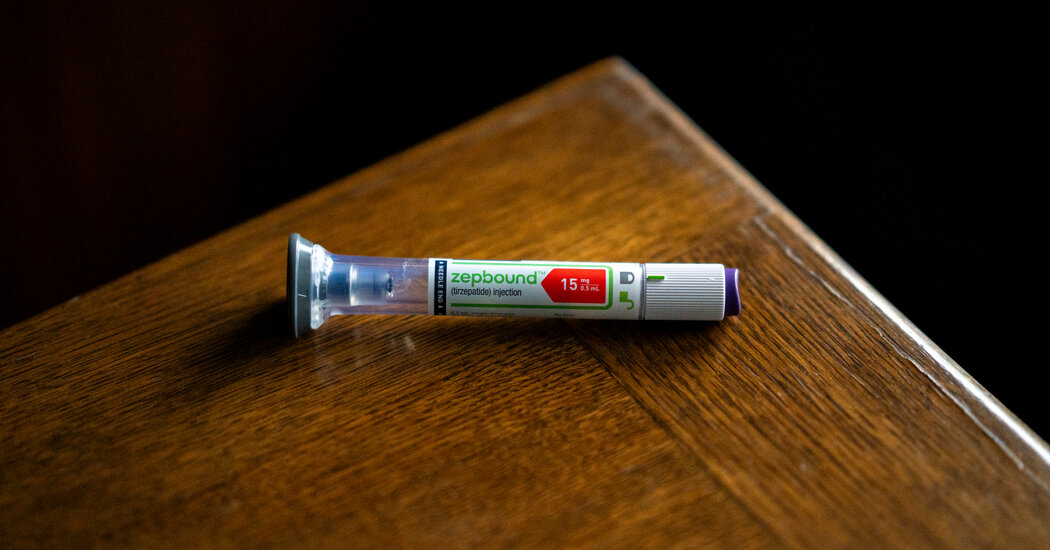
20 minutes agoShareSaveJames GallagherShareSaveGetty ImagesThe first head-to-head trial of two blockbuster weight-loss drugs has shown Mounjaro is more effective than rival Wegovy.Both drugs led to substantial weight loss, but Mounjaro’s 20% weight reduction, after 72 weeks of treatment, exceeded the 14% from Wegovy, according to the trial’s findings. Researchers who led the trial said both drugs had a role, but Mounjaro may help those with the most weight to lose.Both drugs trick the brain into making you feel full so you eat less and instead burn fat stored in the body – but subtle differences in how they work to explain the difference in effectiveness.Wegovy, also known as semaglutide, mimics a hormone released by the body after a meal to flip one appetite switch in the brain. Mounjaro, or tirzepatide, flips two.The trial, which was paid for by Eli Lilly, the manufacturer of Mounjaro, involved 750 obese people, with an average weight of 113kg (nearly 18 stone).They were asked to take the highest dose they could tolerate of one of the two drugs.The findings, presented at the European Congress on Obesity in Malaga and in the New England Journal of Medicine, showed: 32% of people lost a quarter of their body weight on Mounjaro compared to 16% on WegovyThose on Mounjaro lost an average of 18cm from their waistlines compared with 13cm on Wegovy.Those on Mounjaro had better blood pressure, blood sugar and cholesterol levels.Both had similar levels of side-effects.Women tended to lose more weight than men.Dr Louis Aronne, who conducted the trial at the Comprehensive Weight Control Center at Weill Cornell Medicine in New York, said: “The majority of people with obesity will do just fine with semaglatide (Wegovy), those at the higher end may ultimately do better with tirzepatide (Mounjaro).”Private tirzepatide sales ‘well ahead of semaglutide’In the UK, the two medicines are available from specialist weight-management services, but can also be bought privately.Prof Naveed Sattar, from the University of Glasgow, said the drugs were “good options” for patients, but while “many will be satisfied with 15% weight loss… many want as much weight loss as possible”.”In the UK, tirzepatide sales privately are now well ahead of semaglutide – that’s just a reality – and this paper will accelerate that I imagine,” he added. However, Wegovy is also licensed for other conditions – such as preventing heart attacks – while the equivalent trials with Mounjaro have not been completed.A huge amount of research into weight-loss drugs is still taking place. Higher doses of current drugs are being tested, as are new ways of taking them such as oral pills and new medicines that act on the body in different ways are being investigated.It means the final winner in this field has yet to be determined. Prof Sattar says the amount of research taking place means we may be approaching the point where “obesity prevention may also be possible soon”, but argues “it would be far better” to make our society healthier to prevent people becoming obese.

Read more →

Why Patients Are Being Forced to Switch to a 2nd-Choice Obesity Drug

CVS Caremark decided to stop offering Zepbound in favor of Wegovy for weight loss. It’s the latest example of limits imposed by insurance that disrupt treatments for patients.Tens of thousands of Americans will soon be forced by their heath insurance to switch from one popular obesity drug to another that produces less weight loss.It is the latest example of the consequences of secret deals between drugmakers and middlemen, known as pharmacy benefit managers, that are hired by employers to oversee prescription coverage for Americans. Employers pay lower drug prices but their workers are blocked from getting competing treatments, a type of insurance denial that has grown much more common in the past decade.One of the largest benefit managers, CVS Health’s Caremark, made the decision to exclude Zepbound in spite of research that found that it resulted in more weight loss than Wegovy, which will continue to be covered.Those research findings, first announced in December, were confirmed in an article published on Sunday in The New England Journal of Medicine. The study involved a large clinical trial comparing the drugs that was funded by Eli Lilly, the maker of Zepbound. Earlier research not financed by Eli Lilly reached similar conclusions.Ellen Davis, 63, of Huntington, Mass., is one of the patients affected by Caremark’s decision. “It feels like the rug is getting pulled out from under my feet,” she said.After taking Zepbound for a year, she has lost 85 pounds and her health has improved, she said. She retired after working for 34 years at Verizon, which hired Caremark for her drug coverage.We are having trouble retrieving the article content.Please enable JavaScript in your browser settings.Thank you for your patience while we verify access. If you are in Reader mode please exit and log into your Times account, or subscribe for all of The Times.Thank you for your patience while we verify access.Already a subscriber? Log in.Want all of The Times? Subscribe.

Read more →

‘WeightWatchers set me up to fail’ – Why diet industry is losing to jabs like Ozempic

2 days agoShareSaveRuth CleggHealth and wellbeing reporterShareSaveBBCSymone has been using weight loss injections for nearly a year. She says they have done what the diet industry could never do for her – free her from a life controlled by food.From a very young age, the 34-year-old could not switch off the constant noise in her head. When would her next meal come? What would it be? Would there be enough for her?”The food noise was just so loud, it could be unbearable,” she says. “I have tried every single diet going – I’ve done Atkins, eating clean, SlimFast, Slimming World, meal-replacement shakes – you name it – I’ve done it and none of them worked for me.”Several years ago, weighing 16st (102kg), she was one of the many millions who signed up to WeightWatchers, downloading the app and meticulously following its points plan, scanning in everything she ate and staying within her daily points budget.WeightWatchers attributes points to food and drink, stating that it uses a “groundbreaking algorithm” to assess their nutritional makeup and then uses a point system to inform its members which food is better to eat.But after a few weeks, Symone says she started to feel like she was being set up to fail.”How could I lose weight long term if I had to follow this mad points system? Food is not measured in points – it’s measured in calories, fat, macro nutrients.”I felt trapped, and the more research I did, the more I educated myself, the more I thought this is not for me.”The only thing that has ever worked in her quest to lose weight, she says, is weight loss injection Mounjaro, which she started using nearly a year ago.”I was at my heaviest, just over 21 stone, and the doctor told me I was pre-diabetic. I knew something had to change – I’ve got two children who depend on me too.”She was advised to start on the weight loss medication but with a two-year wait, she decided to buy it privately online and within just a few days, she was crying with relief.”I couldn’t believe that I had control over food. For the first time, I wasn’t panicking about when I would next eat.”Weight loss jabs work by mimicking a hormone called glucagon-like peptide-1 (GLP-1), which suppresses people’s appetites and makes them feel full.Symone has now lost 4st 7lb (26kg) and is losing weight gradually, documenting her experiences on social media.”I don’t want a quick fix,” she says, “I’m using weight loss injections to give me the control I never had.”Lost a million membersFor many, weight loss jabs can produce rapid results, but some experts are concerned about the meteoric rise in their popularity and how people will be affected by them long term – both physically and mentally.At its peak, WeightWatchers was seen as being synonymous with safe and controlled weight loss. With 4.5million subscribers globally, its workshops were held in most towns, on most high streets, popping up in local church halls – they were everywhere.Now, after dominating the diet industry for more than half a century, it has lost more than a million members and filed for bankruptcy, struggling to compete in a market transformed by social media influencers and weight loss injections.The company has stressed that it is not going out of business and that filing for bankruptcy will help it resolve its debt of $1.25bn (£860m).In a statement, the brand says its weight loss programme (which also includes its own brand of weight loss jabs) and weight loss workshops will continue.The company says it has been the brand with the most scientific backing in the diet industry for over 60 years, and that there have been more than 180 published studies showing the effectiveness of its approach.WeightWatchers says it uses an “holistic model of care” to support “the whole person” with “access to obesity-trained clinicians and registered dietitians”.It is also one of several companies GPs can use for weight loss referrals, with the NHS paying for patients to attend weekly meetings in the community.”It’s no longer about calorie control and diets,” Deanne Jade, clinical director of the National Centre for Eating Disorders, told the BBC.”There’s a new movement out there and it’s all about wellbeing.”People like to move in tribes – it used to be the WeightWatchers tribe, counting points and calories, now millions follow different ways to lose weight or be healthy through social media influencers, through weight loss drugs, and they’re forming new tribes.”She is not convinced that medication will be the answer that so many are looking for.”None of these pharmaceutical interventions protect people from regaining the weight when they stop injecting.”She believes they are not a quick fix, and that the best way to effectively lose weight and keep it off is to understand the psychological reasons behind overeating.ReutersMore holistic approachDr Joanne Silver, lead psychologist at the London-based eating disorder clinic, Orri, agrees. She says the weight loss injections “completely silence what the body is asking for”, which is counterintuitive to understanding what the body needs.”People can binge eat because of psychological reasons – they can use food to manage their emotions, to soothe themselves.”Eating disorders are not just about food.”Food and nutrition have become just one part of a more holistic approach so many are now adopting when it comes to their overall wellbeing.Jennifer Pybis, a fitness coach based in Liverpool, works with clients both online and in person. She says achieving a healthy lifestyle is not just about hitting a target weight.”I encourage the women I work with to consider lots of ways to measure their progress rather than just jumping on the scales.”Thinking about how they feel, comparing photographs of themselves to see how their bodies have changed shape, how their sleep is, their resting heart rate, their improvements in the gym – all of that is so important.”Jennifer PybisThe diet industry might be transforming but there are many who still prefer the more traditional model of sitting together and sharing their experiences, supporting others in their community to lose weight.In a small church hall in Winsford, Cheshire, a group of women are waiting patiently to get on the scales.Muttering and good-natured laughter can be heard as they share their latest weights with each other.”I’ve put on a pound! I did have a little bit – well maybe a lot – of wine at the weekend.””Why didn’t you have gin?” another one asks, “it’s only 55 calories a shot!”They’re here for their weekly check-in at the BeeWeighed slimming group. Some of the women have lost several pounds, others have a put on a pound or two, but overall, since joining the class, they have all lost weight.They are learning about how to eat in moderation, how to exercise safely and how to feel good about themselves.At first glance, it could be a WeightWatchers class – women meeting up to share their stories of weight loss and support each other – but there are crucial differences, says BeeWeighed owner and founder Lynda Leadbetter.She was a group leader for WeightWatchers for 18 years but left to set up her own group in 2018.”I think WeightWatchers did provide something different and something hopeful for so many women but I think it has lost its way,” she says.”I teach nutrition, I educate, I don’t sell anything extra. I feel WeightWatchers became about selling extra products, it was always about pushing those extra sales, and not about supporting people to lose weight properly.”She’s sceptical about the effectiveness of weight loss medications, and some members who have turned to the likes of Ozempic and WeGovy have left her groups, but many have stayed – continuing to attend the meetings for support while using weight loss injections.Kathryn Brady, 38, has been a member of BeeWeighed since 2023, and in that time, she’s lost over three stone. But with her wedding in a matter of weeks, the burlesque dancer has started to take Mounjaro to lose weight more rapidly.It’s not quite worked out as she had hoped.”I’ve been on Mounjaro for over a month now, and while I lost 6lb in the first week or so, I’ve put half of that back on.”Having absolutely no appetite for two weeks was really weird and I’m paying a lot of money to not lose that much weight.”She’s going to keep on using it, but she’s not completely sold yet.”Even if I continue with the skinny jab, I’ll still attend BeeWeighed, having others there supporting me keeps me going.”More on this story

Read more →

How a Sheep-Herding Cardiologist Spends His Sundays

Five mornings a week, Dr. David Slotwiner, the chief of cardiology at NewYork-Presbyterian Queens hospital, can be found tending to human hearts.But on Sunday mornings, he is on a grass-covered field at a rural farm in Hackettstown, N.J., standing among half a dozen sheep, whistle in hand, teaching his Border collies Cosmo and Luna to herd.“It helps me think about what it takes to be an effective leader, though doctors don’t respond to whistles very well,” said Dr. Slotwiner, 58, who specializes in cardiac electrophysiology.He started coming to the farm during the coronavirus pandemic, after Cosmo began showing aggression and bit his wife, Anne Slotwiner, 60. A trainer recommended a small sheep farm in New Jersey, Wayside Farm, that trains Border collies — and, once he herded with Cosmo for the first time, he was hooked.Dr. Slotwiner shares a three-bedroom house in Pelham, the oldest town in Westchester County, with his wife, Cosmo, Luna and a 15-year-old American Eskimo rescue, George. (He has two adult sons, Harry, 28, and Peter, 25.)A newborn lamb at Wayside Farm in Hackettstown, N.J., where Dr. David Slotwiner trains his Border collies.We are having trouble retrieving the article content.Please enable JavaScript in your browser settings.Thank you for your patience while we verify access. If you are in Reader mode please exit and log into your Times account, or subscribe for all of The Times.Thank you for your patience while we verify access.Already a subscriber? Log in.Want all of The Times? Subscribe.

Read more →

What to Know About the Hepatitis A Outbreak in L.A. County

A highly contagious liver infection is surging among groups who are not typically at risk. At least seven people have died.Public health officials in Los Angeles County have declared an outbreak of hepatitis A, a highly contagious liver infection driven by a virus that can, in rare cases, cause severe illness.The condition, which is typically identified in fewer than 50 people in L.A. County each year, infected at least 138 people in 2024 and cases have remained unusually high so far in 2025. Officials say that levels of the virus in local wastewater suggest these figures are an undercount.Here’s what to know.How is hepatitis A transmitted?The hepatitis A virus is spread through the so-called oral-fecal route, which means it is ingested through food or drinks that have been contaminated by microscopic bits of stool from an infected person. It can also spread through close contact with someone who is carrying the virus, even if they don’t show any symptoms.Unhoused people are often at greater risk of contracting hepatitis A because they have limited access to proper toilets and hand-washing facilities. The virus is also more common among travelers to places with poor sanitation, men who have sex with men and people who use drugs.But officials say many of the recent cases have occurred in people without those risk factors. They do not yet know why, but Dr. Timothy Brewer, an infectious disease physician and epidemiologist at U.C.L.A., said it had led him to worry about two things: food contamination, and community circulation.“If you’re practicing good hygiene in a community that has access to potable water, you really should not be seeing a lot of this,” he said. “Something is going on — but exactly what that something is, we don’t yet know.”We are having trouble retrieving the article content.Please enable JavaScript in your browser settings.Thank you for your patience while we verify access. If you are in Reader mode please exit and log into your Times account, or subscribe for all of The Times.Thank you for your patience while we verify access.Already a subscriber? Log in.Want all of The Times? Subscribe.

Read more →

Local Officials Brace for Loss of Disaster Preparedness Funding

The C.D.C. delivered $750 million annually to state and local health departments for emergency work. The program was eliminated in the Trump administration’s budget blueprint.St. Louis has been battered by two tornadoes in the past two months. A fire shut down a new nursing home last month in Enterprise, Ala., forcing residents to evacuate. Cleveland grappled with a power outage while inundated with visitors for the N.C.A.A. women’s basketball Final Four.In each case, local health officials played a key role in containing the fallout, assisting hospitals, finding new homes for displaced residents, and coordinating efforts with fire, police and other city departments.The funding for this work, about $735 million in total, comes from the Centers for Disease Control and Prevention. In President Trump’s proposed budget, the money has been zeroed out.The proposed cut has left health officials increasingly alarmed, particularly since it followed $12 billion in cuts to state and local health departments in March. Nineteen states and the District of Columbia have sued to prevent the reductions.“Man-made and natural disasters don’t depend on federal funding, but a response to save lives does,” said Dr. Matifadza Hlatshwayo Davis, health director for St. Louis. (Dr. Davis has resigned but is staying on until the city finds a replacement.)The city is coping with huge sinkholes, routinely faces floods, and sits on a fault line that puts it at risk of earthquakes. “We really rely heavily on this funding,” Dr. Davis said. Without it, “the entire population of St. Louis and its visitors would be left vulnerable.”We are having trouble retrieving the article content.Please enable JavaScript in your browser settings.Thank you for your patience while we verify access. If you are in Reader mode please exit and log into your Times account, or subscribe for all of The Times.Thank you for your patience while we verify access.Already a subscriber? Log in.Want all of The Times? Subscribe.

Read more →

NHS plans ‘unthinkable’ cuts to balance books

29 minutes agoShareSaveNick TriggleShareSaveGetty ImagesThe NHS in England is planning “previously unthinkable” cuts to try to balance the books, health bosses say.Services including diabetes care for young people, rehab centres and talking therapies are in the firing line, according to NHS Providers, which represents health managers.Staff, including doctors and nurses, also face the axe – and some NHS trusts are stopping overtime for doctors, putting the drive to cut the hospital waiting lists at risk.NHS Providers said some of the savings were “eye-watering”, but the Department of Health and Social Care said NHS services should focus on cutting bureaucracy and driving up productivity.The figures come after initial accounts for 2025-26 suggested frontline NHS organisations were going to go nearly £7bn over budget, an overspend nearly 5% above what they have been given by government, despite ministers increasing funding by £22bn over two years.One chief executive of a large hospital trust said it was looking to shed 1,500 jobs, some 5% of its workforce, including doctors and nurses.Meanwhile, a boss of a mental health trust told the BBC they had had to stop accepting referrals for adults with Attention Deficit Hyperactivity Disorder (ADHD), while waits for psychological therapies exceeded a year.They said morale had “never been lower” among staff.Other services at risk include stop smoking services and palliative care.The closure of some maternity units is also being considered, although part of that is down to the falling birth rate which has seen a number of services being under-used.ConsequencesNHS Providers received evidence from 114 trusts, more than half of the total in England.Nearly all said they were cutting or planning to cut jobs which in many cases would affect clinical staff such as doctors and nurses too.A majority also reported they were looking at closing services or at least scaling them back.NHS Providers interim chief executive Saffron Cordery said NHS managers were having to think the “previously unthinkable”.And she said while they would do their best to protect patient care, she added: “Let’s be clear. Cuts have consequences.”She said pay rises for resident doctors – previously known as junior doctors – and inflation had eaten into the extra money the health service had been given.But the Department of Health and Social Care said the extra funding being provided should be enough.A spokeswoman said: “We have underlined the need for trusts to cut bureaucracy to invest even further in the front line so we can support hard-working staff and deliver a better service for patients and taxpayers’ money.”

Read more →

Bill Gates Explains His Plans to Close the Gates Foundation in 2045

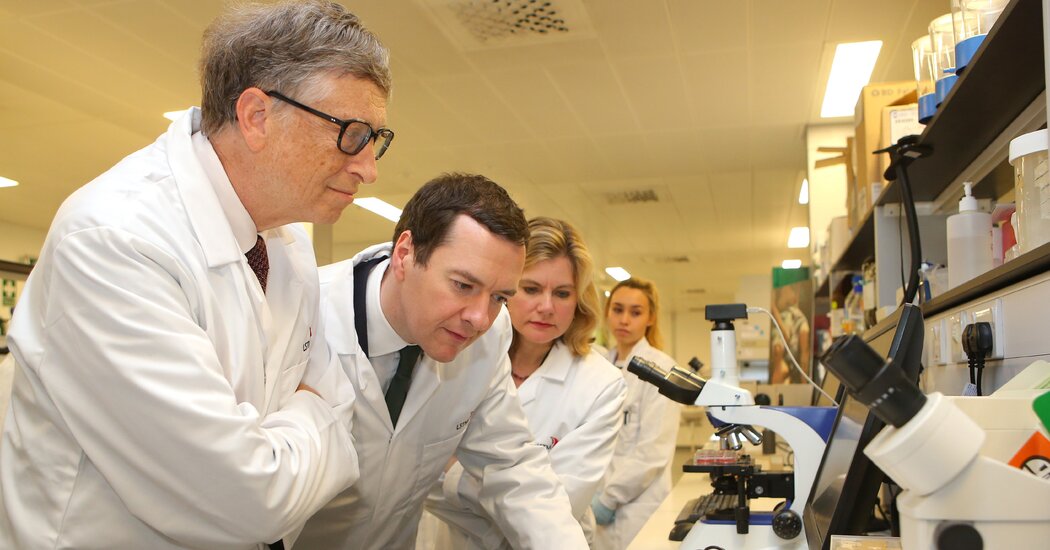
Today the Gates Foundation celebrates its 25th anniversary by announcing its plans to close up shop.Established in 2000 — when Melinda French Gates was just 35 and Bill Gates was 44 and the world’s richest man — the foundation quickly became one of the most consequential philanthropies the world has ever seen, utterly reshaping the landscape of global public health, pouring more than $100 billion into causes starved for resources and helping save tens of millions of lives.For all its pragmatic public-health spade work, the foundation has also served as a kind of valorous abstraction — the seeming embodiment of “the Golden Rule,” in a phrase that Bill Gates likes to use, and the face of an increasingly anachronistic era of elite optimism.“You could say this announcement is not very timely,” Gates says, but the timeline isn’t short: He is committing the foundation to 20 more years of generous aid, more than $200 billion in total, targeting health and human development. And it comes laced with familiar humanitarian confidence, as Gates and his team now believe that their central goals can be achieved in much shorter time. But it is also disconcertingly definitive: The foundation will close its doors, permanently, on Dec. 31, 2045, at least several decades before originally intended. In the meantime, it will be spending down its endowment, as well as almost all of Gates’s remaining personal fortune.The news comes at a time that will seem to many as a perilous one, given the Trump administration’s recent assault on foreign aid and indeed on the idea of global generosity itself. A study in The Lancet recently calculated that cuts to American spending on PEPFAR, the program to deliver H.I.V. and AIDS relief abroad, could cost the lives of 500,000 children by 2030. The journal Nature suggested that an overall cessation of U.S. aid funding could result in roughly 25 million additional deaths over 15 years.Donald Trump is the face of these cuts, but the cruelty of his administration is not the only story. After leaping upward in the 2000s, global giving for health grew very slowly through the 2010s. The culture of philanthropy has changed somewhat, too, with the age of the Giving Pledge — in which hundreds of the world’s richest people promised to donate more than half of their great fortunes to charity — yielding first to the upstart movement called Effective Altruism and then to a new age of extreme wealth defined less by altruism than by grandiosity. After the Gateses’ divorce in 2021, Melinda eventually left the foundation to establish her own philanthropy; Warren Buffett, a longtime supporter, recently announced his plans to leave most of his remaining fortune in the hands of a charitable trust his own children will administer, and to give no additional money to the Gates Foundation beyond his death. After a few years of slow post-Covid decline, this has been the year that foreign aid — as the Gates Foundation’s chief executive, Mark Suzman, wrote recently in The Economist — “fell off a cliff.”On the ground, progress has been bumpy, too, particularly in the aftermath of the pandemic emergency, when many routine vaccination programs were paused and the world’s poorest countries were thrown, en masse, into extreme debt distress. The share of the world’s population living in extreme poverty fell by almost three-quarters between 1990 and 2014, but it has hardly shrunk since.We are having trouble retrieving the article content.Please enable JavaScript in your browser settings.Thank you for your patience while we verify access. If you are in Reader mode please exit and log into your Times account, or subscribe for all of The Times.Thank you for your patience while we verify access.Already a subscriber? Log in.Want all of The Times? Subscribe.

Read more →

What to Know About Bill Gates’s Plans to Shut Down the Gates Foundation

The billionaire philanthropist says he will accelerate his giving — but then dissolve his organization in 20 years, decades earlier than he originally planned.On Thursday, Bill Gates announced a new, faster timeline to give away his fortune — and close the doors of the Gates Foundation, one of the world’s leading global-health philanthropies.Over two days last week, he spoke to me for an exclusive interview to explain his decision — and why it made sense to him, at a critical moment in public health, when the Trump administration’s steep cuts to foreign aid have thrown many global-health priorities into jeopardy.Here are some of the key takeaways from that conversation.Before the foundation shuts down in 2045, Gates has committed to it spending $200 billion, beginning now.All told, the foundation has spent $100 billion over 25 years. It now intends to double that over the next two decades, focusing on three key goals: that “no mom, child or baby dies of a preventable cause”; that “the next generation grows up in a world without deadly infectious diseases”; and that “hundreds of millions of people break free from poverty, putting more countries on a path to prosperity.”These are astronomically ambitious goals, but Gates and his team believe they can be achieved in a compressed timeline — just 20 years, instead of an original vision that would have lasted for decades longer — and he is pouring nearly all of his remaining fortune into making it happen.In the next 20 years, Gates believes, progress will be ‘incredible.’“This is a miraculous time,” he told me, with the most exciting work the foundation has ever done sitting in the R.&D. pipeline now, waiting to be delivered.It was almost hard to keep up with his survey of breakthroughs: on H.I.V., on tuberculosis, but also on more obscure and neglected diseases like lymphatic filariasis and visceral leishmaniasis. He predicts that maternal-mortality rates in the developing world could be brought into rough parity with those in the rich world, and that childhood deaths could be cut in half.We are having trouble retrieving the article content.Please enable JavaScript in your browser settings.Thank you for your patience while we verify access. If you are in Reader mode please exit and log into your Times account, or subscribe for all of The Times.Thank you for your patience while we verify access.Already a subscriber? Log in.Want all of The Times? Subscribe.

Read more →

Efforts Grow to Thwart mRNA Therapies as RFK Jr. Pushes Vaccine Wariness

Therapies involving mRNA, a key to Covid vaccines, hold great potential in treating several diseases, but some lawmakers want to ban them and the government is cutting funding.To scientists who study it, mRNA is a miracle molecule. The vaccines that harnessed it against Covid saved an estimated 20 million lives, a rapid development that was recognized with a Nobel Prize. Clinical trials show mRNA-based vaccines increasing survival in patients with pancreatic and other deadly cancers. Biotechnology companies are investing in the promise of mRNA therapies to treat and even cure a host of genetic and chronic diseases, including Type 1 diabetes and multiple sclerosis.But to some state legislators, mRNA therapies are “weapons of mass destruction” and a public health threat. They argue that these vaccines are untested and unsafe, and will be pumped into the food supply to “mass medicate” Americans against their will. Robert F. Kennedy Jr., the nation’s top health official, has inaccurately called the mRNA shots against Covid “the deadliest vaccine ever made.”Short for messenger RNA, mRNA exists naturally in every cell of every living organism — its discovery in 1961 was also celebrated with a Nobel Prize. But its association with Covid has thrust it to the center of a political storm, buffeted by vaccine hesitancy and misinformation, anger over lockdowns and mandates, and the ascendance of the Make America Healthy Again movement in the Trump administration.States and federal health agencies are playing on public wariness about vaccines to cancel research into mRNA more broadly, indicating how much the lingering politicization of Covid is fueling the new attacks on science.The National Institutes of Health, which historically has funded the research behind almost every drug on the market, this month announced that it would shift money that had been spent studying mRNA vaccines to pay for a $500 million grant to study a universal vaccine using traditional, non-mRNA technology. Jay Bhattacharya, a leading critic of the Covid response and the new director of the N.I.H., called it a “paradigm shift.”Robert F. Kennedy Jr., the nation’s top health official, has inaccurately called the mRNA shots against Covid “the deadliest vaccine ever made.”Al Drago for The New York TimesWe are having trouble retrieving the article content.Please enable JavaScript in your browser settings.Thank you for your patience while we verify access. If you are in Reader mode please exit and log into your Times account, or subscribe for all of The Times.Thank you for your patience while we verify access.Already a subscriber? Log in.Want all of The Times? Subscribe.

Read more →