Breast cancer gene families given hope by drug trial
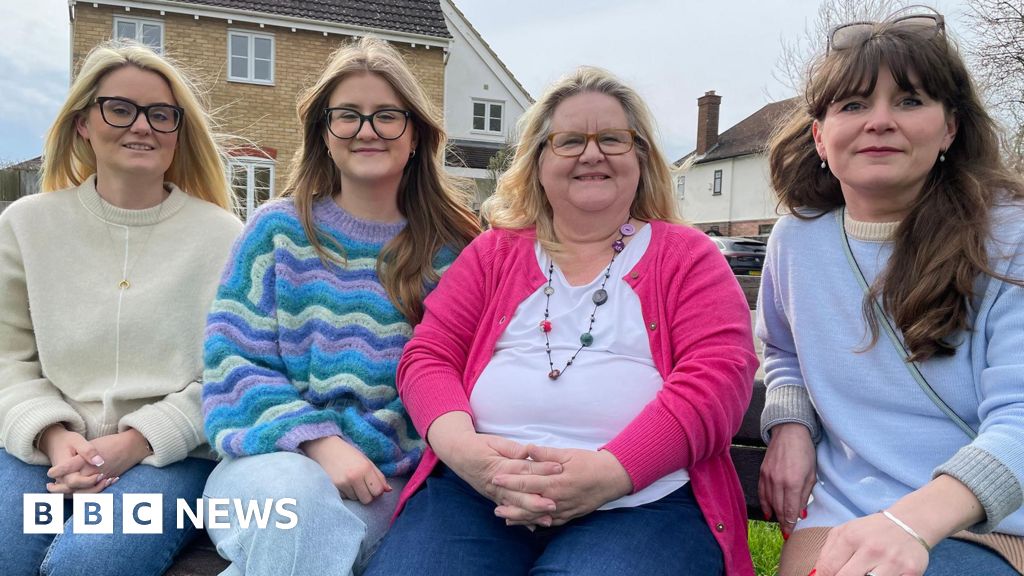
A new treatment approach can significantly improve survival rates for patients with aggressive, inherited breast cancer, a study suggests.The trial, led by Addenbrookes Hospital in Cambridge, and published in Nature Communications, involved women with early-stage breast cancer who have inherited BRCA1 or BRCA2 gene mutations.Giving them the targeted drug olaparib before surgery greatly reduced the chances of the cancer coming back. More than 1,200 patients a year in the UK could benefit from the change in practice if a larger clinical trial can confirm the findings.Jackie Van Bochoven, 59, from Cambridgeshire, has a family history of breast cancer and carries a faulty copy of the BRCA1 gene, which significantly raises her risk of the disease during her lifetime.She was diagnosed with an aggressive breast tumour in 2019 and took part in the trial.”When I had the diagnosis I was completely shocked,” she told BBC News. “Six years on, I’m well and cancer free. It’s amazing.”Jackie’s mother and sister both had breast cancer. She has three daughters and the eldest, Danielle, also carries the inherited BRCA gene mutation.”For my future generations, if they have got the BRCA gene, it is a new hope,” Jackie said.Around one in 400 people carry mutations in either the BRCA1 or BRCA2 genes.Cancer Research UK estimates about seven in 10 women with changes in these genes will develop breast cancer, compared to about one in seven women without these mutations.For men with BRCA mutations, the risks of developing breast cancer are much lower.Olaparib is the first targeted drug treatment for cancers with mutations in the BRCA genes and is given as a tablet. It works by stopping cancer cells from being able to repair their DNA by blocking a protein called PARP, which causes the cancerous cells to die.The trial, named Partner, took place at 23 sites in England, Scotland and Wales. Before surgery, 39 women with early stage breast cancer were given olaparib, also known as Lynparza, together with chemotherapy. They started olaparib tablets 48 hours after each chemotherapy infusion. After three years, all had survived.By contrast there were six deaths among 45 women in the study who received chemotherapy before surgery but did not get olaparib.Prof, Jean Abraham, a consultant at Addenbrookes and professor of precision breast cancer medicine at the University of Cambridge, who led the trial, described the results as were “really exciting”. “It is rare that you see 100% survival at 36 months for this subtype of breast cancer. We’re incredibly excited about the potential of this new approach.”The findings have the potential to be applied to other BRCA-related cancers, such as ovarian, prostate and pancreatic.”Prof Abraham said a larger, multinational trial is planned next year, involving some 600 patients. She predicted that if the findings are repeated, it will lead to a major change in clinical practice for more than 1,200 patients a year in the UK.Currently patients are given olaparib for a year after surgery, whereas on the trial patients took the tablets over 12 weeks pre-surgery, and at half the dose.Prof Abraham said: “From a cost perspective, it would save the NHS a considerable amount of money because it’s a fraction of the time and dose of the drug.”Michelle Mitchell, chief executive of Cancer Research UK, said: “While this research is still in its infancy, it is an exciting discovery that adding olaparib at a carefully-timed stage of treatment can potentially give patients with this specific type of breast cancer more time with their loved ones.”

Read more →


Charity boss slams ‘reprehensible’ health trusts

2 hours agoShareSaveStuart WoodwardBBC News, EssexReporting fromLampard InquiryShareSaveJamie Niblock/BBCHealth trusts have repeatedly tried to prevent coroners from issuing Prevention of Future Death reports in order to protect their reputations, an inquiry has heard.Deborah Coles, director of the charity Inquest, told the BBC the “reprehensible” behaviour was a pattern “played out across the country” but was “exemplified” in Essex.She gave evidence at the Lampard Inquiry, which is looking into the deaths of more than 2,000 people being treated by NHS mental health services in Essex between 2000 and 2023.Essex Partnership University NHS Foundation Trust (EPUT) has apologised to those affected.’Angry and frustrated’In her evidence to the inquiry, Ms Coles said the “lack of candour” on the part of mental health trusts in Essex was the reason a statutory public inquiry needed to be held.”It’s difficult to say how traumatising that is for families when they sit in at an inquest… and then see legal representatives try and effectively stop a coroner from making a Prevention of Future Deaths report, which is ultimately about trying to safeguard lives in the future – and I find that reprehensible,” she said.”We are talking here about trying to protect lives and also remember those who’ve died where those deaths were preventable.”Stuart Woodward/BBCSpeaking to the BBC after giving evidence, Ms Coles said NHS trusts were more concerned about reputational damage than learning lessons.”This goes to the heart of what I was talking about [in the inquiry]… the fact that trusts are more concerned with protecting their reputations than acknowledging the failings in their systems and processes and trying to do something meaningful about it,” she said.Ms Coles added that she was also angry and frustrated at a lack of political will from successive governments “to ensure the change that is needed… to try and stop the appalling culture of defensiveness that we see from NHS trusts, exemplified by Essex”.”NHS trusts try and argue with coroners that they’ve already implemented changes and that a report is not necessary,” she said, adding that it undermined potential for local and national learning.”We need to be able to ensure that we’re not talking about cut-and-paste action plans, but we can demonstrate that action has been taken and that recommendations are implemented.”A Department of Health and Social Care spokesperson said: “It’s crucial that every person affected by this ordeal has a right to tell their story. “The inquiry has heard testimonies from many families, and we are confident that the inquiry will provide a valuable channel for them to have their voices heard.”PA MediaThe public inquiry is England’s first into mental health deaths, with evidence being heard in London after sessions in September and November.Evidence will continue to be heard throughout 2025 and 2026, with Baroness Lampard’s report due to be issued in 2027.EPUT chief executive Paul Scott has apologised for deaths under his trust’s care.He said: “As the inquiry progresses, there will be many accounts of people who were much loved and missed over the past 24 years and I want to say how sorry I am for their loss.”More on this storyRelated internet links

Read more →

Child obesity clinics seeing BMIs over 50

Just nowShareSaveShareSaveGetty ImagesA disproportionate number of children referred to NHS excess weight clinics in England are from the most deprived areas, and a significant number are neurodivergent or have other health conditions, a study has found.Some have a body mass index (BMI) over 50, with 40 deemed to be severely obese.Nearly 4,800 under-18s have been referred to the clinics since they were set up in 2021, according to research carried out by Leeds Beckett, Sheffield Hallam, Leeds and Bristol universities and presented at the European Congress on Obesity.The clinics provide mental health support and care for other underlying conditions, as well as dietary advice. Specialist excess weight clinics treat severely obese children in England aged 2-17, who are flagged as needing help by their GP or another doctor.The clinics are run by multi-disciplinary teams including paediatricians, psychologists and dieticians. The new research, which looked at 32 of the clinics, found that over 40% of the children attending them lived in the most deprived neighbourhoods.Based on data from more than 3,000 child patients, many had other health conditions:24% had autism23% a learning disability30% had liver diseasea significant proportion had another health complication”Living with excess weight can cause problems affecting every organ system,” said Professor Simon Kenny, national clinical director at NHS England.”We also know that children living with health problems can have poorer school attendance, which can affect their future employment and life opportunities. “The NHS won’t just sit by and let children and young people become ill adults.”Some of the specialist clinics are using digital technology for weight loss support. For example, children can use ‘smart scales’ at home which do not show their weight. The data is connected to a mobile app to show the trend without the numbers. Only clinicians are able to see the data and provide feedback to the family.In another paper presented to the European Congress on Obesity, presented by Dr Annika Janson from Karolinska University Hospital in Sweden, researchers said giving weight loss jabs to children could be effective. She said that trials of the drugs in children aged 12 and over had shown a loss of 5-16% of body weight after a year, but added it was “difficult to isolate the effect of adding GLP-1 drugs to the plethora of treatments that are already available”. The medicines regulator NICE has not approved weight loss drugs for routine use by children in England, although they can be provided by specialists if there is urgent clinical need.What does BMI mean?Body mass index (BMI) is widely used as a simple way of finding out whether a person is a healthy weight for their height.For adults:a BMI of 18.5 to 24.9 is considered to be a healthy weighta BMI of 25 to 29.9 is considered to be overweighta BMI over 30 is considered to be obeseBut it’s not accurate for everyone because it can’t tell the difference between fat and muscle, and doesn’t take into account ethnic background.Your waist circumference may be a better guide.

Read more →

An L.A. Doctor’s House Burned. Now He Treats the Fires’ Effects in Neighbors.

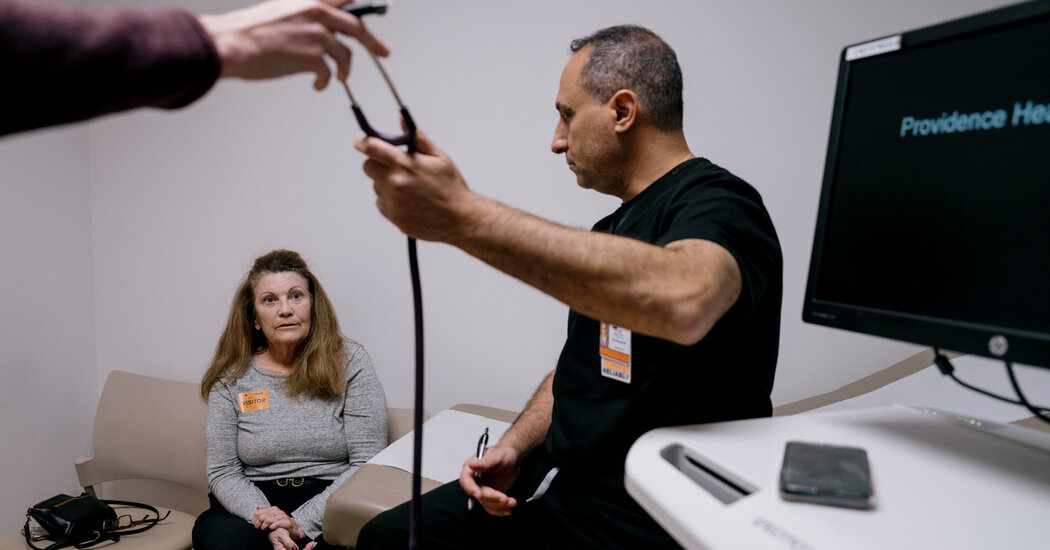
A new clinic, opened by a pulmonologist who lost his home in the Palisades blaze, is addressing the health issues developing among people exposed to the fires.Dr. Ashraf Elsayegh’s house was one of the first to burn.He stepped out into his backyard atop the Pacific Palisades in early January to find a raging fire leaping from three houses away to two. He gathered his family, helped older neighbors to their cars and fled without a single keepsake.In the days that followed, Dr. Elsayegh, a pulmonologist, did not have a chance to grieve. As he did his rounds with patients at Providence Saint John’s Health Center in Santa Monica, Calif., his cellphone was bombarded with neighbors and friends seeking his expert advice.What kind of air purifier?Is an N-95 mask enough?My daughter has asthma — should we rent a place farther away?“Forty phone calls a day with the same set of questions,” Dr. Elsayegh recalled.So when the chief administrative officer of the hospital invited him into his office to ask Dr. Elsayegh how he could support him and his family, Dr. Elsayegh replied instead, “Let’s open a clinic.”Just three weeks after the blaze tore through neighborhoods of Los Angeles, the hospital’s urban fire clinic for pulmonary issues began seeing patients. They came in droves, each with a different set of symptoms and concerns. The clinic has served as an early indicator of the types of health problems developing among those exposed to the fires, ranging from newfound shortness of breath in healthy people to exacerbated symptoms in patients with asthma, C.O.P.D. and other lung diseases.The health effects of an urban fire differ from a those of a wildfire, and when an entire community burns quickly, releasing unquantifiable toxins in unexpected directions for an unknowable period of time, there are long-term health effects that no expert can yet fully calculate. Dr. Elsayegh is making it his mission to support patients from the Palisades and surrounding communities for months and years into the future, when, he fears, cleanup crew members and others with chronic exposure may begin to show signs of severe lung diseases, like asbestosis and silicosis, and even cancers like mesothelioma.We are having trouble retrieving the article content.Please enable JavaScript in your browser settings.Thank you for your patience while we verify access. If you are in Reader mode please exit and log into your Times account, or subscribe for all of The Times.Thank you for your patience while we verify access.Already a subscriber? Log in.Want all of The Times? Subscribe.

Read more →

Trump Signs Executive Order Asking Companies to Lower Drug Prices

The president has long complained that the United States pays more for medicines than other wealthy countries. But he offered no clear legal authority to mandate lower prices.President Trump on Monday signed an executive order asking drugmakers to voluntarily reduce the prices of key medicines in the United States.But the order cites no obvious legal authority to mandate lower prices. The order said the administration would consider taking regulatory actions or importing drugs from other countries in the future if drugmakers do not comply.It was something of a win for the pharmaceutical industry, which had been bracing for a policy that would be much more damaging to its interests.On Sunday evening, Mr. Trump said in a Truth Social post that he would link U.S. drug prices to those in peer countries under a “most favored nation” pricing model, a policy he attempted unsuccessfully in his first term for a small set of drugs in Medicare. His executive order on Monday does not do that. Pharmaceutical stocks rose Monday morning on the news.Mr. Trump’s executive order came just hours after House Republicans offered an expansive set of health care policy changes that would cut around $700 billion from Medicaid and the Obamacare marketplaces over a decade and would cause an estimated 8.6 million Americans to become uninsured. Congress declined to include any provisions to directly limit drug prices in that package.The executive order also called on federal agencies to investigate why European countries get lower prices and to push them to pay more. The Trump administration has limited leverage to drive up prices in Europe.We are having trouble retrieving the article content.Please enable JavaScript in your browser settings.Thank you for your patience while we verify access. If you are in Reader mode please exit and log into your Times account, or subscribe for all of The Times.Thank you for your patience while we verify access.Already a subscriber? Log in.Want all of The Times? Subscribe.

Read more →

Care providers say overseas worker crackdown ‘short-sighted’

1 hour agoShareSaveAlison HoltSocial affairs editorShareSaveGetty ImagesCare providers have said the government is taking away the “lifeline” of overseas recruitment without fixing the problems that make it difficult to recruit UK staff.Sir Keir Starmer, the prime minister, announced sweeping reforms to immigration on Monday, including plans to end the recruitment of care workers from overseas. Even with staff being brought in from other countries, official estimates show there were 131,000 vacancies in social care in England last year. Care companies said some services will struggle to survive without international recruits.”The sector has been propping itself up with dwindling resources, rising costs, and mounting vacancies,” said Prof Martin Green of Care England, which describes itself as the largest representative body for independent care providers.”Taking (international recruitment) away now with no warning, no funding, and no alternative, is not just short-sighted – it’s cruel,” he said.Sir Keir said the visa changes were part of a drive “to reduce immigration significantly” and that the government wanted to create “a migration system that is controlled, selective and fair”.The government said care providers could extend visas for existing staff and recruit migrants already in the UK who have yet to find a job. It also promised a new fair pay agreement for care staff and wanted companies to recruit and train more people from UK.However, Dr Jane Townson of the Homecare Association said the government was introducing the changes “in a vacuum” as a fair pay agreement is a long way off and there is “no plan to deliver the care workers our country needs.”Social care has been in crisis for years, with council funding of services squeezed, significant staff-shortages and growing demand from an ageing population. Plans for reform have been delayed time and again.While care workers were clapped along with health workers during the pandemic, that did not translate into an improvement in pay or status.About 1.7 million people work in social care in England, according to Skills for Care, the official body that monitors the workforce. It is often a minimum or just above minimum wage job, with little recognition of the increasing responsibility and complexity of the support staff provide to older and disabled people.Putting it bluntly, if someone can earn more working, for instance, in a supermarket for fewer, less strenuous hours, then that is the option many will chose.Post-Covid, some staff left care work because they felt burnt out while others who still loved the job felt they could not afford the increases in the cost of living.Between April 2021 and March 2022, social care vacancies reached a record high of 165,000, a 52% increase on the year before.By December 2021, the warnings of imminent collapse prompted Boris Johnson’s Conservative government to make care work a shortage occupation, making it easier for companies to look overseas for staff. Recruits had to earn a minimum of £20,480 a year to qualify for the visa, and they could bring family with them.There was a rapid rise in overseas recruitment – in 2022/23 80,000 people arrived in the UK to work in care and in 23/24, there were another 105,000 visas.Many care companies said bringing in those staff was the difference between providing services and collapsing. However, there was also abuse of this new route into the UK. For instance, some people were exploited, ending up paying middlemen thousands for travel and sponsorship certificates.The Home Office says 470 care companies have had their licence to recruit international staff revoked since 2022. It estimates that has led to about 40,000 staff being displaced. Companies say many will have already found alternative care work.In March 2024, Rishi Sunak’s Conservative government tightened the visa requirements. This included saying recruits could no longer bring family with them. It has led to a significant fall in the number of care workers arriving from abroad.In the year up to December 2024, 9,500 visas were granted to people entering the UK to provide “caring personal services”, according to the government.However, in the four years since staff shortages were most acute, relatively little has changed to encourage more UK people to work in care. There has been an ongoing government funded recruitment campaign and talk of the need to improve the pay and status of staff, but many workers fear solutions remain a long way off.The independent Casey Commission started work last month to draw up plans for adult social care. It has been described by ministers as a “once in a generation opportunity to transcend party politics and build consensus on the future of the sector”. Its first update is due next year and its final report by 2028.At a time when the NHS is struggling, social care is more important than ever as it can keep vulnerable people out of hospital and support patients when they return home.Many care workers will say it is an incredibly rewarding job and with overseas recruitment being closed, the question is what needs to change to encourage more UK people to take on the role?

Read more →

Doctor accused of falsifying artificial mesh records

5 hours agoShareSaveMatthew HillHealth Correspondent, BBC WestShareSaveBBCA surgeon found to have left patients in “agony” after using artificial mesh to treat prolapsed bowels faces allegations he falsified medical notes.Tony Dixon was suspended after the surgery was found to have caused harm to hundreds of patients at two hospitals in Bristol.Now, a new hearing will examine Dr Dixon’s records. He is accused of dishonestly creating patient records long after he was involved in their care, something he “strongly denies”.The Medical Practitioners Tribunal Service (MPTS) will begin Monday. It will examine claims medical records for seven patients contained false information, and were not created at the correct time.A spokesperson for Dr Dixon said: “[He] always endeavoured to provide the highest standard of care to his patients. “He strongly disputes falsifying any medical records and will provide his detailed evidence about those serious allegations to the tribunal, initially by way of a detailed witness statement which he has provided to the General Medical Council.”‘Protect public’Dr Dixon built up an international reputation as the go-to expert for patients with prolapsed bowels. He used a technique known as mesh rectopexy to treat bowel problems.Through the procedure, mesh implants are placed into the body to treat pelvic organ prolapse which can occur after childbirth.The mesh, which is usually made from synthetic polypropylene, is intended to repair damaged or weakened tissue.At the point of his suspension in 2024, the MTPS said Dr Dixon’s “misconduct was so serious that action needed be taken to protect members of the public”.But, the tribunal considered that a longer period of suspension would be unduly punitive, especially taking into account the period that Dr Dixon had already been the subject of fitness to practise proceedings.As founder of the Pelvic Floor Society, he drew heavily on claims he had made in medical publications about the success rates of the rectopexy mesh surgery he pioneered.But now questions are being raised by the MPTS about the honesty his follow-up data which has to be written contemporaneously.A BBC Inside Out investigation in 2017 first revealed Dr Dixon had carried out unnecessary operations and raised questions about whether he provided adequate medical follow. Two investigations at Southmead Hospital and Spire Bristol subsequently found Mr Dixon caused harm to hundreds of people by carrying out operations that were not necessary.Both hospitals apologised to victims after his suspension.The MPTS had previously found that he failed to obtain informed consent or trial alternative treatment and not to have adequately investigated symptoms.The BBC has discovered that all of Dr Dixon’s papers in the journal Diseases of the Colon and Rectum, now have an ‘expressions of concern’ in the relevant papers in Colorectal Disease.They centre on concerns about the honesty of his claimed follow up on patients.Prof Susan Galandiuk, editor in chief of the journal Diseases of the Colon and Rectum, which has published two papers with Tony Dixon’s data said: “Many people will read journal articles and will act based on their conclusions, in terms of practicing surgeons.”Many other surgeons who are writing articles will cite these articles and base their conclusions on these.”Sometimes or often these papers are used when guidelines are formulated or referred to. So their conclusions can go on to influence many different things .”The BBC has separately approached more than 40 former mesh patients of Dr Dixon via the Rectopexy Mesh Victims and Support group.None of them recognise the follow up form which he had claimed to have used in publications for up to five years post operative follow up.They include Debbie Cooper Jones, a dentist from Gloucester.She said: “He seemed to have done quite a lot of research from the papers that were on his website.”So I was a bit surprised at my lack of follow-up because he was quoting so many statistics.”Perhaps, in hindsight it seems a little bit odd that there wasn’t that close monitoring of us given the nature of the surgeries we were having and maybe even the novelty of them that it was ground-breaking work.”It will take several weeks for the tribunal decide on the new allegations.That decision is crucial when it comes to eventually deciding whether Dr Dixon will eventually be able to reapply to go back on the medical register again.

Read more →

My bowel had to be removed after years of constipation

5 hours agoShareSaveJenny ReesBBC Wales Health CorrespondentShareSaveBBCA woman whose bowel had to be removed due to chronic and severe constipation says we should all be more open to talking about basic bodily functions.Kathryn Nicklas, 26, was told for several years that her constipation was caused by irritable bowel syndrome (IBS) and she was repeatedly prescribed laxatives.She said embarrassment about her symptoms as a teenager meant she had struggled to advocate for her condition to be taken seriously. Prof Julie Cornish, a leading pelvic health doctor, said many patients required surgery for pelvic health problems but that simpler solutions were possible when symptoms were spotted sooner.Ms Nicklas, who works in north Wales, said before her surgery she was “taking laxatives like they were smarties” but “still struggling to go to the toilet”.”I was forever living in floaty dresses because of the bloating and even bought maternity jeans just to be comfortable,” she said.”If I was able to go [for a poo] it would only be as a result of irrigation or an enema. I’d come home from work and spend an hour on the toilet – I had no life, because I was always uncomfortable.”She added: “On one occasion I didn’t go to the toilet for four weeks and was admitted to hospital.”They said I was so full of poo, everything had just stopped working.”Despite various tests and changes to her diet, no cause was ever found, but years of constipation had a long lasting impact on Ms Nicklas’ pelvic organs – causing pain, vaginal bleeding and bloating.Ms Nicklas’ large bowel was removed in 2022.Kathryn NicklasAs an adult, Ms Nicklas said she advocated for her symptoms to be taken seriously, but as a teenager she said embarrassment about bodily functions had made that more difficult.”Looking back now, why is that such an embarrassing thing?”Why is going to the toilet so embarrassing when it’s just a normal function that everybody does?”Would my constipation have been better if I hadn’t have refused to go to the toilet unless I was at home and my brothers weren’t around and no one could hear me? Because that’s not healthy decision making,” she added.”As a result of the constipation and so many years of it my body’s been affected.”Your pelvic floor gets absolutely destroyed by the fact that you’re constantly trying to go but you can’t go.”Prof Cornish, a colorectal surgeon, said pelvic health issues affected both men and women.”It is a public health issue that actually we need to be giving information to people at an earlier stage – and it’s not just women and girls, it’s also boys and men because pelvic health issues affect everybody in different ways,” she said.”We’re not just talking about gynaecological bits, we’re talking about the bladder and bowel which can be impacted and that does have a bearing on things like pelvic organ prolapse.”So if you are chronically constipated for many years you are far more likely to develop problems with a prolapse.”The need for better understanding is part of the reason why Prof Cornish set up the Everywoman health festival in Cardiff, which is now in its third year.A thousand tickets will be given free to teenagers this year, with educational sessions planned on menstrual health, pelvic health and knowing basic body parts.Shakira Hassan, a specialist women’s health physiotherapist, treats a wide range of conditions including pelvic pain, bladder, bowel and prolapse issues, where pelvic organs have lowered out of place.”If you were to examine most women over 40, 50% of those women will actually have a pelvic organ prolapse, so it’s about being able to educate and empower those women to be able to still lead a really normal and well life,” she said.Ms Hassan said stigma was a huge factor, which could be worse in some cultures.”We know that potentially one in three women will experience some urinary incontinence and potentially one in four women will experience some level of faecal incontinence throughout their life. That’s huge numbers – it’s really common.””Education is key,” said Prof Cornish. “And the difficulty is that whilst there are some people who have that understanding or are able to access that education, you’re essentially disenfranchising a large proportion of the population who may not be able to access it, and they may end up being the patients that I see more of.”You see the inequalities that are out there.”But all of this leads to a massive delay in treatment and usually an increase in the severity of symptoms and treatments needed.”We all have a responsibility for our own health and that is going to be key – it’s not just about off-loading it to the NHS, so I think the more we teach our children, that’s going to empower them to take responsibility going forward.”The Welsh government said: “Health and wellbeing is a mandatory part of the curriculum for Wales and helps learners to understand different factors that affect their physical health. “Our guidance expects children to learn about a range of health conditions that can affect them.”Related stories

Read more →

Trump Plan Would Tie Some Drug Prices to What Peer Nations Pay

The president announced an executive order aimed at lowering U.S. drug costs, revisiting an idea that was blocked in court during his first term.President Trump will sign an executive order on Monday aimed at lowering some drug prices in the United States by aligning them with what other wealthy countries pay, he said on Truth Social on Sunday evening.The proposal he described, which alone cannot shift federal policy, is what he calls a “most favored nation” pricing model. Mr. Trump did not provide details about which type of insurance the plan would apply to or how many drugs it would target, but he indicated that the United States should pay the lowest price among its peer countries.“Our Country will finally be treated fairly, and our citizens Healthcare Costs will be reduced by numbers never even thought of before,” he wrote in his social media post.Any such plan will most likely be subject to challenges in court, and it is not clear whether it will pass legal muster, especially without action by Congress.In his first term, Mr. Trump tried unsuccessfully to enact a version of this idea for Medicare, the health insurance program that covers 68 million Americans who are over 65 or have disabilities. That plan would have applied only to 50 drugs, administered at clinics and hospitals, that are paid for by Medicare. A federal court blocked it, ruling that the administration had skipped steps in the policymaking process.The pharmaceutical industry bitterly opposes the idea, which would almost certainly cut into its profits, and has been lobbying against it as discussions of the policy have regained steam in Washington in recent weeks. Companies have warned that such a policy would lead them to spend less on research, depriving patients of new medicines.We are having trouble retrieving the article content.Please enable JavaScript in your browser settings.Thank you for your patience while we verify access. If you are in Reader mode please exit and log into your Times account, or subscribe for all of The Times.Thank you for your patience while we verify access.Already a subscriber? Log in.Want all of The Times? Subscribe.

Read more →

From Kardashian popcorn to pancakes – is the protein health craze worth it?

16 minutes agoShareSaveGeorge SandemanBBC NewsShareSaveBBC”High-protein” versions of snacks and food staples are all over our supermarket shelves – from pancakes and pasta, to rice pudding and oven pizza.Celebrities are getting in on the act too. Khloe Kardashian unveiled Khloud Protein Popcorn a fortnight ago, which she described as “the perfect combination of a tasty snack and a boost of protein to fuel your day”, while Zac Efron promoted a protein-rich porridge in January.But is this increased advertising of protein just a marketing gimmick or are these products actually useful if you’re trying to build muscle or live a healthy life? And is it worth the extra cost?Sales of them are rising; figures shared with BBC News by the research agency Mintel show that, excluding sports nutrition items, 8.3% of food product launches made claims about being a source of protein, or having high levels of it, in the first three months of 2025.That was up from 6.1% in 2024 and 4.6% the year before.Kiti Soininen, a research director at Mintel, says protein claims are being added to food with naturally high levels of the nutrient, like chicken breasts and pulses, but also on products you wouldn’t expect.Getty Images”Mousses, desserts, granola, pancakes, even the odd pizza, are coming through with a high-protein claim,” she says. “Protein is enjoying a bit of a ‘health halo’ at the moment.”Ethan Smith, a personal trainer in Liverpool, says high-protein diets are necessary for building muscle but that it ought to be done without the high protein snacks and drinks you see in shops.”I’m a huge believer that there is nothing better than whole foods,” he says. “You can get the protein that you need from vegetables and lean meats.”He believes the convenience of high-protein snacks, combined with the positive perception of the nutrient among customers, has led to manufacturers using protein as a marketing tool.For manufacturers to claim their product is a source of protein, they must show regulators at least 12% of its energy value is provided by protein. To make a claim that a product is high in protein, the figure is 20%.To help reach these scores they can add protein-rich ingredients to their products, like nuts and pulses, or make them more dense by removing water.”When someone in a rush is getting a meal deal for lunch, you can see why they would reach for a protein bar or drink instead of two boiled eggs,” he says. “In my 12 years as a personal trainer, I’ve never seen as much hype around the benefits of protein as I am now.”The benefits of protein range from muscle building and sports performance to helping with weight loss by suppressing appetite and helping women during pregnancy.If you’re trying to build muscle you need to consume around 1.6g of protein per kilogram of your body weight each day, says Dr Paul Morgan, a university lecturer in human nutrition.He says for the average person trying to ensure their general health, this figure should be around 1.2g.He thinks many of the supermarket products advertising their protein content are “gimmicky” and warns they might not be as good for you as advertised.”I think they do have a benefit but we are wary that a lot of them are ultra processed foods and that’s a really topical area [in our field] that we don’t know enough about,” he says.The risk of consuming too much proteinUltra-processed foods have come under scrutiny recently with one study published last month linking them to early death.He explains that researchers in his field are trying to understand the differing impact on muscles that two similar protein sources might have when one of them is ultra-processed.Another issue is calories because putting on weight is the most common problem people have when they are trying to consume more protein, Dr Morgan explains, as any excess is stored in the body as fat.Some protein advertised snacks and drinks can have as many calories as regular products using similar ingredients.Nature Valley’s protein peanut and chocolate bars have 489kcal per 100g, while Cadbury’s peanut brunch bars, which also contain chocolate, have 485kcal at the same weight.Dr Morgan dismisses theories that eating too much protein can damage your bones or harm your kidneys, though there are exceptions if you have a pre-existing health condition.Getty ImagesDespite his concerns over ultra-processed protein products, Dr Morgan sees the benefit of increased protein in staple foods.These might be particularly useful to elderly people who need more protein than the average person to maintain strength in their muscles and bones.Tesco’s high-protein penne pasta contains 8.8g of protein per 100g, while their normal penne contains 5.8g of protein for the same weight. However, customers pay more for this as the high protein-penne costs £4.80 per kg. The normal penne costs £1.29 per kg.So is it worth buying these protein advertised products?It might be if you’re someone who needs more protein to maintain your health or if you’re trying to build muscle and need just a little bit extra to meet your daily protein goal, says Ethan.”If the majority of your diet is whole foods and you need that extra 20g of protein to hit your goal and want something sweet – then go for that pudding or snack,” he tells us. “Having balance is important – but you shouldn’t be relying on them.”He adds: “When I started my career, people used to talk about whey protein just as a supplement to your diet. Now the number of companies putting protein on anything and everything is insane.”More on this story

Read more →