Cervical screening invites to change in England

Invitations for cervical screening will be sent out every five years instead of every three for women aged 25-49 in England, if they have a negative test.Research shows they are at very low risk of cervical cancer and can safely wait longer to be screened again, NHS England has said.The roll out of a vaccine to protect against HPV – the virus which causes nearly all cervical cancers – has reduced cases by around a quarter since the early 1990s.Charities said the change was good news for those at low risk because they no longer needed to go for screening as often.Scotland and Wales have already introduced this change, which will start in England from 1 July.Cancer Research UK urged women and people with a cervix not to wait for a screening invitation if they noticed any unusual changes.They are encouraged to go for regular cervical screening between the ages of 25 and 64. Currently, those aged 50-64 are invited every five years and 25-49 year olds every three years.NHS England says it now wants to spare younger women appointments they don’t need as part of “a more personalised approach”.Cervical screening involves testing for HPV, human papillomavirus. Some types of HPV can cause cell changes in the cervix, which may develop into cancer over time. Nearly all cases of cervical cancer are linked to high-risk HPV.If that HPV test is negative, studies suggest the chances of someone developing cervical cancer over the next 10 years is very low.This is more accurate than looking for cancer cells on their own.A recent study showed that screening every five years is as safe as doing it every three years, because the same number of cancers are found and fewer screening tests are needed.Anyone eligible will receive a notification via the NHS app to book a screening appointment, NHS England said.”The NHS is following robust evidence on how often women need to be safely screened, and by putting invitations and reminders straight in women’s pockets on their phones, we’re making it easier than ever to take up screening appointments,” said Dr Sue Mann, national director for women’s health at NHS England.It previously said it was possible to eliminate cervical cancer by 2040, thanks to improved rates of vaccination and screening.Cervical cancer is the fourth most common cause of cancer in women worldwide.

Read more →

MPs set to vote on decriminalising abortion in England and Wales

Women would no longer be prosecuted for terminating a pregnancy in England and Wales under a proposed shake-up of abortion laws.MPs are set to get a free vote next week – meaning they will not be told how to vote by their party – on a change to the law.It comes amid concern more women are being investigated by police on suspicion of illegally ending a pregnancy.Abortion is illegal in England and Wales, most often prosecuted under a piece of Victorian legislation, the Offences Against the Person Act of 1861. But it is allowed up to 24 weeks and in certain other circumstances under the terms of the 1967 Abortion Act.This requires two doctors to sign it off and even before 24 weeks can require a woman to testify that her mental or physical health is at risk.An amendment to the Crime and Policing Bill, tabled by Labour MP Tonia Antoniazzi, aims to decriminalise abortion at any stage by a woman acting in relation to her own pregnancy, ending the threat of investigation or imprisonment.The framework by which abortion is accessed would remain the same. But abortions would only need to be signed off by two doctors – as the law currently demands – if the procedure takes place in a hospital or other healthcare setting. Time limits would also still apply in healthcare settings. “The police cannot be trusted with abortion law – nor can the CPS or the wider criminal justice system,” Antoniazzi said. “My amendment to the crime and policing bill will give us the urgent change we need to protect women.”Six women have appeared in court in England charged with ending or attempting to end their own pregnancy outside abortion law, in the past three years.Last month, Nicola Packer, 45, was cleared by a jury of “unlawfully administering” herself with abortion pills at home during a coronavirus lockdown in 2020.She had taken prescribed abortion medicine when she was around 26 weeks pregnant, beyond the legal limit of 10 weeks for taking such medication at home. She told jurors she did not realise she had been pregnant for more than 10 weeks.The Royal College of Obstetricians and Gynaecologists (RCOG) said Ms Packer’s trial demonstrated “just how outdated and harmful” current abortion law was and called for reform.The RCOG are among several royal medical colleges, charities and trade unions backing Antoniazzi’s amendment, which has been signed by 136 MPs so far, including Labour MPs, Lib Dems, Greens and a handful of Conservatives.A rival amendment by Labour MP Stella Creasey, which would make accessing an abortion a human right, is backed by 101 MPs so far.It seeks to decriminalise abortion up to 24 weeks, negating elements of the Abortion Act. It would also ensure that late-term abortions outside the Abortion Act did not result in prison sentences.Creasy said her amendment would simply bring the rest of the UK into line with Northern Ireland, where abortion was decriminalised in 2019.But some of Britain’s biggest abortion care providers have expressed concern about it being rushed through without proper scrutiny, saying it would effectively rip up the 1967 Abortion Act and could open the door to a whole debate about a woman’s right to an abortion.Rachael Clarke, head of advocacy at the British Pregnancy Advisory Service (BPAS), warned that MPs should not be asked to back a “generational change” after just three hours of debate next week.”For us, unfortunately, although we truly believe that we need overwhelming and generational change for abortion law, Stella Creasy’s amendment is not the right way to do it,” she told Radio 4’s Today programme.BPAS is among the organisations backing Antoniazzi’s proposals.The Society for the Protection of Unborn Children said both of the proposed amendments represent “the greatest threat to unborn children and their mothers since the Abortion Act”.They urged supporters to lobby their MPs to vote against both proposals, warning that abortion “up to birth” could become possible under the changes.MPs are likely to be offered a vote on one of the two amendments, with Labour, the Lib Dems and the Conservatives all saying their MPs will not be told to vote for or against the changes.The prime minister’s official spokesman said: “It is important that women have access to safe and legal abortions on the NHS and this now includes taking abortion pills at home.”This is an extremely sensitive issue and we recognise there are strongly held views on all sides of the discussion and by longstanding convention any change to the law in this area would be a matter of conscience for individual MPs rather than the government.”The spokesman declined to say which way Sir Keir Starmer would vote on the issue, as it was a “matter of conscience”.The 1967 Abortion Act initially allowed abortions to take place up to 28 weeks in England and Wales. This was reduced to 24 weeks in 1990.Abortions after 24 weeks are allowed only if:the woman’s life is in dangerthere is a severe fetal abnormalitythe woman is at risk of grave physical and mental injurySince 2018, women in England have taken the second abortion pill at home, aligning the rules with Scotland and Wales.Though the same rules apply in Scotland, it has a distinct healthcare and legal system.Abortion laws are currently under review in Scotland following appeals from advocacy groups’ to decriminalise the process.

Read more →

Ginger vs. Cancer: Natural compound targets tumor metabolism

Looking to nature for answers to complex questions can reveal new and unprecedented results that can even affect cells on molecular levels.
For instance, human cells oxidize glucose to produce ATP (adenosine triphosphate), an energy source necessary for life. Cancer cells produce ATP through glycolysis, which does not utilize oxygen even under conditions where oxygen is present, and convert glucose into pyruvic acid and lactic acid. This method of producing ATP, known as the Warburg effect, is considered inefficient, thus raising questions as to why cancer cells choose this energy pathway to fuel their proliferation and survival.
In search for this energy catalyst, Associate Professor Akiko Kojima-Yuasa’s team at Osaka Metropolitan University’s Graduate School of Human Life and Ecology analyzed the cinnamic acid ester ethyl p-methoxycinnamate, a main component of kencur ginger, and its mechanism of action. In previous research, the team discovered that ethyl p-methoxycinnamate has inhibitory effects on cancer cells. Furthering their study, the acid ester was administered to Ehrlich ascites tumor cells to assess which component of the cancer cells’ energy pathway was being affected.
Results revealed that the acid ester inhibits ATP production by disrupting de novo fatty acid synthesis and lipid metabolism, rather than through glycolysis as commonly theorized. Further, the researchers discovered acid ester-induced inhibition triggered increased glycolysis, which acted as a possible survival mechanism in the cells. This adaptability was theorized to be attributed to ethyl p-methoxycinnamate’s inability to induce cell death.
“These findings not only provide new insights that supplement and expand the theory of the Warburg effect, which can be considered the starting point of cancer metabolism research, but are also expected to lead to the discovery of new therapeutic targets and the development of new treatment methods,” stated Professor Kojima-Yuasa.

Read more →

F.D.A. Looks to A.I. to Enhance Efficiency

With a Trump-driven reduction of nearly 2,000 employees, agency officials view artificial intelligence as a way to speed drugs to the market.The Food and Drug Administration is planning to use artificial intelligence to “radically increase efficiency” in deciding whether to approve new drugs and devices, one of several top priorities laid out in an article published Tuesday in JAMA.Another initiative involves a review of chemicals and other “concerning ingredients” that appear in U.S. food but not in the food of other developed nations. And officials want to speed up the final stages of making a drug or medical device approval decision to mere weeks, citing the success of Operation Warp Speed during the Covid pandemic when workers raced to curb a spiraling death count.“The F.D.A. will be focused on delivering faster cures and meaningful treatments for patients, especially those with neglected and rare diseases, healthier food for children and common-sense approaches to rebuild the public trust,” Dr. Marty Makary, the agency commissioner, and Dr. Vinay Prasad, who leads the division that oversees vaccines and gene therapy, wrote in the JAMA article.The agency plays a central role in pursuing the agenda of the U.S. health secretary, Robert F. Kennedy Jr., and it has already begun to press food makers to eliminate artificial food dyes. The new road map also underscores the Trump administration’s efforts to smooth the way for major industries with an array of efforts aimed at getting products to pharmacies and store shelves quickly.Some aspects of the proposals outlined in JAMA were met with skepticism, particularly the idea that artificial intelligence is up to the task of shearing months or years from the painstaking work of examining applications that companies submit when seeking approval for a drug or high-risk medical device.“I don’t want to be dismissive of speeding reviews at the F.D.A.,” said Stephen Holland, a lawyer who formerly advised the House Committee on Energy and Commerce on health care. “I think that there is great potential here, but I’m not seeing the beef yet.”We are having trouble retrieving the article content.Please enable JavaScript in your browser settings.Thank you for your patience while we verify access. If you are in Reader mode please exit and log into your Times account, or subscribe for all of The Times.Thank you for your patience while we verify access.Already a subscriber? Log in.Want all of The Times? Subscribe.

Read more →

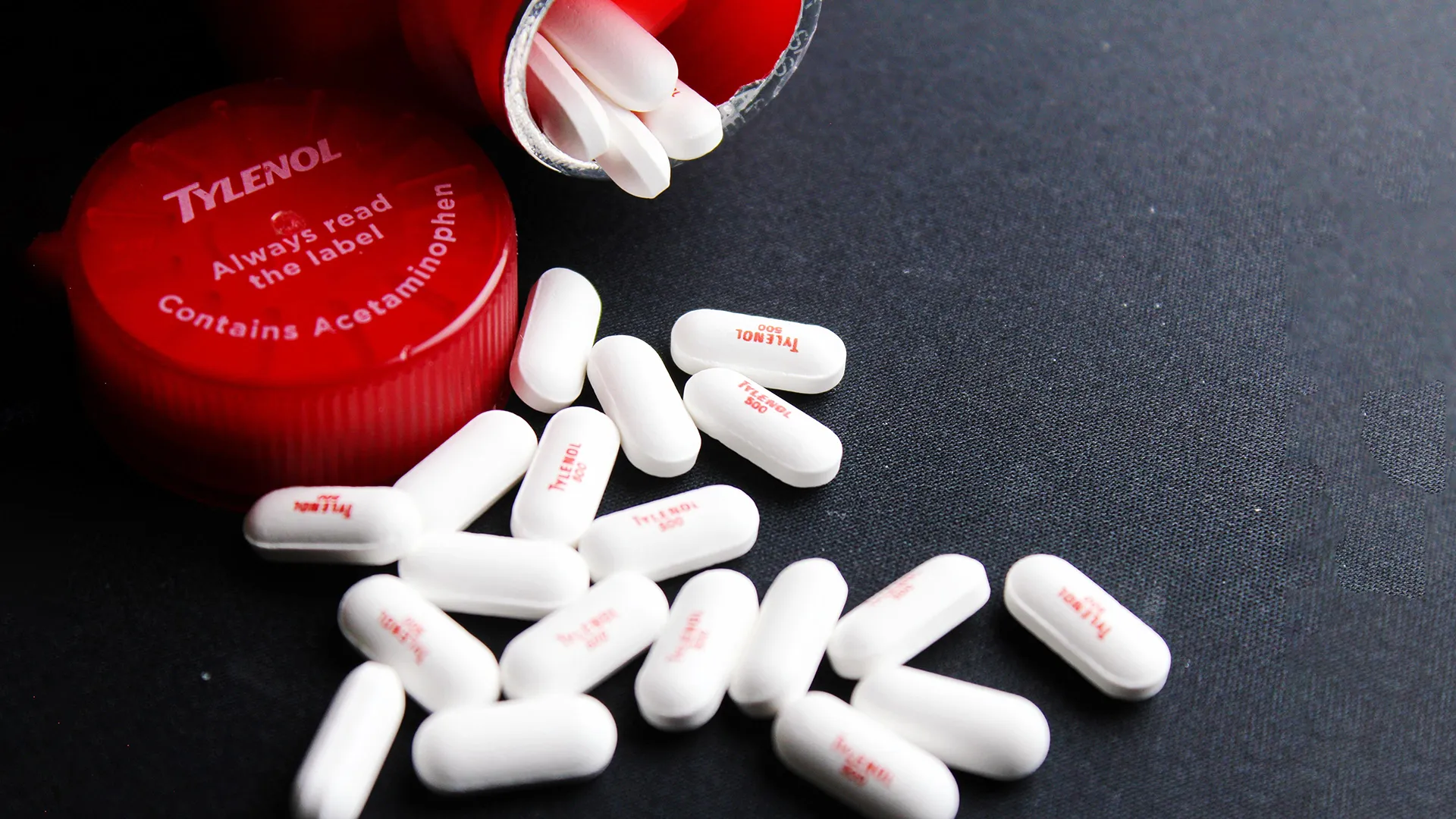
New discovery: Tylenol stops pain at the nerves, before it hits the brain

A new study from Hebrew University reveals that acetaminophen doesn’t just work in the brain — it also blocks pain at its source by acting on nerve endings in the body. The researchers found that its active metabolite, AM404, shuts down specific sodium channels in pain-sensing neurons, stopping pain signals before they reach the brain. This discovery not only reshapes our understanding of how one of the world’s most common painkillers works, but also opens the door to developing safer, more targeted pain treatments.
A breakthrough study from the Hebrew University of Jerusalem, published this week in the prestigious journal PNAS (Proceedings of the National Academy of Sciences USA), reveals a previously unknown peripheral mechanism by which acetaminophen (also known as paracetamol, Tylenol®, or Panadol®) relieves pain.
The study was led by Prof. Alexander Binshtok from the Hebrew University’s Faculty of Medicine and Center for Brain Sciences (ELSC) and Prof. Avi Priel from its School of Pharmacy. Together, they uncovered a surprising new way that acetaminophen — one of the world’s most common painkillers — actually works.
For decades, scientists believed that acetaminophen relieved pain by working only in the brain and spinal cord. But this new research, published in PNAS, shows that the drug also works outside the brain, in the nerves that first detect pain.
Their discovery centers on a substance called AM404, which the body makes after taking acetaminophen. The team found that AM404 is produced right in the pain-sensing nerve endings — and that it works by shutting off specific channels (called sodium channels) that help transmit pain signals. By blocking these channels, AM404 stops the pain message before it even starts.
“This is the first time we’ve shown that AM404 works directly on the nerves outside the brain,” said Prof. Binshtok. “It changes our entire understanding of how acetaminophen fights pain.”
This breakthrough could also lead to new types of painkillers. Because AM404 targets only the nerves that carry pain, it may avoid the numbness, muscle weakness, and side effects that come with traditional local anesthetics.
“If we can develop new drugs based on AM404, we might finally have pain treatments that are highly effective but also safer and more precise,” added Prof. Priel.

Read more →

How to Improve Executive Functioning

Conditions like A.D.H.D. and autism can make starting and completing tasks feel impossible, but experts say there are workarounds.The pomodoro technique. Power poses. Planners. Denise Daskal has tried them all, searching for the right strategy to improve her executive functioning, or the mental skills used to manage time and pursue goals.Ms. Daskal has spent hours hunting through TikTok, reading books and taking classes to become better organized and more focused both at work and in her personal life. But the long list of strategies, while somewhat helpful, has felt exhausting, she said.“My mind breaks a bit when I get overwhelmed and I have too much coming at me all at once,” said Ms. Daskal, 63, who lives in Dearborn, Mich., and was diagnosed with attention deficit hyperactivity disorder a few years ago.Conditions like A.D.H.D., autism, obsessive compulsive disorder and depression can impede executive functioning; so can the period of life when women transition in and out of menopause. Life circumstances such as parenting young children, getting a bad night’s sleep or even missing a meal can scramble a person’s ability to focus and complete tasks, too.Here’s how to understand executive functioning, and figure out which coping strategies might work for you.What is executive functioning?Executive functions are life management skills that help people “convert intentions into actions,” said Ari Tuckman, a psychologist in West Chester, Pa., and author of the “The ADHD Productivity Manual.”We are having trouble retrieving the article content.Please enable JavaScript in your browser settings.Thank you for your patience while we verify access. If you are in Reader mode please exit and log into your Times account, or subscribe for all of The Times.Thank you for your patience while we verify access.Already a subscriber? Log in.Want all of The Times? Subscribe.

Read more →

A Killer Within Easy Reach

The tiny nation of Suriname, on South America’s Atlantic coast, has one of the highest suicide rates in the world. A majority of those deaths involve a single substance: paraquat, a pesticide widely used for weed control that is lethal to humans in amounts as small as one swallow.Pesticides are among the leading means of suicide in agricultural areas of developing nations, implicated in more than 100,000 deaths annually. Yet for years, their threat has been largely overlooked.Now, a handful of researchers and philanthropists are pushing to change that, arguing that restricting access to the most lethal pesticides could be one of the simplest, most cost-effective ways to save lives.Paraquat, one of the deadliest pesticides still on the market, is among their top targets. It is quickly absorbed by the body and has no antidote. Even a small dose causes multi-organ failure, though death may take hours or days.That often leaves time for people who ingest it in a moment of despair to come to regret their decision, according to Dr. Esther Fong, an emergency physician at Suriname’s busiest hospital. “You see the death written on their foreheads,” she said, “but you cannot do anything about it.”Paramedics, police officers and teachers see paraquat’s reach as inescapable.“It’s very easy to find, and most every house has one bottle or more,” said Ashna Badrising, an English instructor at the E.H. Cabell School.We are having trouble retrieving the article content.Please enable JavaScript in your browser settings.Thank you for your patience while we verify access. If you are in Reader mode please exit and log into your Times account, or subscribe for all of The Times.Thank you for your patience while we verify access.Already a subscriber? Log in.Want all of The Times? Subscribe.

Read more →

This overlooked supplement could help you think sharper and age better

Creatine, the supplement popular with athletes for its ability to help build strength and power, is increasingly being recognized for its broad health benefits.
The compound’s usefulness extends well beyond the gym, according to Dr. Richard Kreider, professor and director of the Exercise & Sport Nutrition Lab at Texas A&M University. Kreider has spent more than 30 years investigating the effects of creatine, a naturally occurring compound stored in the muscle that combines with phosphate to form creatine phosphate, which is needed for cellular energy.
“When the body is stressed, like in exercise or under metabolic conditions like some diseases, creatine phosphate is needed to maintain energy in the cell, and therefore has a lot of protective and health benefits, in addition to the exercise performance effects that have been seen,” Kreider said.
How Much Creatine Do We Need?
Our bodies create about a gram per day, but it’s recommended to get two to four grams of creatine per day, depending on muscle mass and activity levels. According to Kreider, most people fall short of getting enough creatine from diet alone. The best sources of creatine in the diet are meat and fish.
“You only get about a gram of creatine per pound of red meat or fish, like salmon, so it’s expensive and takes a lot of calories to get a gram,” Kreider said. This is why supplementation matters, especially for vegetarians or vegans who do not consume enough creatine in their diet.
For athletes with performance-related goals, Kreider said it’s recommended to supplement 5 grams, four times a day for a week. Supplementation “helps load the muscle up with more energy,” which makes for improved high-intensity exercise, recovery and even cognitive function. After that, consuming 5 to 10 grams per day will maintain creatine stores and provide enough creatine for the brain.

Beyond boosting athletic performance, creatine is important for everyone as they age throughout their lives, Kreider said. It can help older adults who lose muscle mass and cognitive function as they age, he said, and in adolescents, low dietary creatine intake is associated with slower growth, less muscle mass and higher body fat.
Is Creatine Safe?
In a comprehensive review published in February in the Journal of the International Society of Sports Nutrition, Kreider and colleagues analyzed 685 clinical trials on creatine supplementation to assess its safety and the frequency of reported side effects. The analysis showed there were no significant differences in the rate of side effects for participants taking a placebo and those taking creatine.
As for anecdotal concerns like bloating or cramping, Kreider says those claims don’t hold up under scrutiny, and studies have shown creatine can actually prevent cramping because it helps the body retain more fluid.
Despite the strong evidence base, Kreider said creatine has long been the subject of misconceptions and misinformation. He’s among the members of the International Society of Sports Nutrition who recently issued a letter affirming the safety and efficacy of creatine, urging lobbyists and policymakers not to restrict access to it.
“There’s absolutely no data supporting any negative side effect anecdotally reported about creatine on the internet and in the media,” he said. “Creatine is safe, and it’s important for everybody, not just bodybuilders and athletes.”

Read more →

We quit our jobs, sold our home twice and spent 10 years fighting for the truth

9 hours agoShareSaveJames Melley and Alison HoltBBC News, Social AffairsShareSaveFamily handoutWarning: This article contains upsetting details and reference to suicideThere didn’t seem to be anything out of the ordinary when Jane Figueiredo spoke to her daughter that night on the phone.”Alice asked me to bring her some snacks for the next time we visited,” Jane says. But that call, at 22:15 on 6 July 2015, was the last conversation they ever had.Around three hours later, Jane and her husband, Max, were being driven to hospital in a police car at speed. They had been told their daughter was gravely ill.Alice had got into a communal toilet at Goodmayes Hospital, in Ilford, east London, where she was a mental health patient, and taken her own life. She was just months away from her 23rd birthday.On Monday, almost 10 years later, the North East London NHS Foundation Trust (NELFT), which runs the hospital, and Benjamin Aninakwa, the manager of the ward Alice was on, were found guilty of health and safety failings over her death.The jury decided not enough was done by NELFT, or Aninakwa, to prevent Alice from killing herself.’You are not above the law’It’s taken a decade of battling by Alice’s parents to uncover the truth about how the 22-year-old was able to take her own life in a unit where she was meant to be safe.They twice had to sell their home, quit their jobs and have worked full-time on the case.The jury deliberated for 24 days to reach all the verdicts, after which time the Trust was cleared of the more serious charge of corporate manslaughter, while Aninakwa, 53, of Grays, Essex, was cleared of gross negligence manslaughter.During the seven-month trial, we sat a few seats away from the family. They’ve sometimes been overwhelmed, leaving the court angry or in tears, as they felt their voices – and that of Alice – were not being heard.Now, Jane hopes the verdicts will bring major change to psychiatric care providers around the country. “You need to do far, far better to stop failing those people who you have a duty of care to,” she said after the verdict.Weeks earlier, in mid-March this year, the Figueiredos were living in a hotel room in central London.While folding their clothes, they spoke to the BBC during a break in the trial, which was already running months longer than expected.They had been living out of suitcases since the end of October, when court hearings began.Even before the pain of hearing evidence about their daughter’s death, they said simply existing like this had been a huge challenge. For the couple, it was important to be at the Old Bailey every day in person – no matter the cost – because they felt this was their only chance to see the Trust held to account for their daughter’s death.Sensitive and caringAlice was born in 1992, the second of three daughters. She was a bright and energetic child, and often the centre of attention. She loved music, poetry, reading and, in particular, art. Family and friends say she had a big personality.”She had a really deeply thoughtful, sensitive, caring nature. She was really kind. She was really generous,” remembers Jane.As a child, Alice started to develop what became an eating disorder, and by 15 she was showing symptoms of severe depression and was admitted to a mental health unit.In the following years she would be hospitalised on many more occasions.In 2012, then 19, she was admitted to the Hepworth Ward, at Goodmayes Hospital, for the first time. It is an inpatient mental health unit for women, run by NELFT. She was admitted there a total of seven times over the following three years.”She needed safety. She was a risk to herself,” says Jane.”It was a question of, somehow managing the crisis and trusting the medical profession to make the right decisions,” adds Max, Alice’s stepfather.Between admissions, Alice had long periods when hospital treatment wasn’t needed. She had been applying to go to university and was planning a brighter future.But on 13 February 2015, as her mental health took a serious turn for the worse, Alice was admitted to the Hepworth Ward for what would prove to be the final time.Three days later, Alice was detained on the unit under section three of the Mental Health Act to undergo treatment for her own safety and could not leave without her consultant’s permission.Alice was put on one of the highest observation levels, reserved for patients at most risk of harming themselves. It meant a member of staff had to stay within arm’s length of her 24-hours-a-day.In a letter to staff just over a month into her admission, Max and Jane wrote: “She cannot contain the sense of sheer torment, intense depression and overwhelming despair she is experiencing.”Family handoutThe manager for Hepworth Ward at the time was Benjamin Aninakwa. The now 53-year-old had been working on the unit since it opened, in 2011. He was in charge of the unit during each of Alice’s previous admissions, so knew her well.But other things on the ward had changed. The nurse and the consultant, who had previously cared for Alice, had both moved on and there was a high level of temporary agency staff filling long-standing gaps in the rota. Her parents say Alice felt unsettled.”I think it became clear that there was an element of chaos in the ward,” says Max.Jane, who was a chaplain to the mental health trust, would visit Alice every day; Max, who worked for the NHS as an accountant, would stop by a few times a week, often with food.Alice told her parents that staff weren’t carrying out observations properly. On one occasion, within the first fortnight of her admission, she said an agency health care assistant who was supposed to be staying close to her, was instead making a phone call.The family later saw an internal email saying Alice had been left alone while the care worker continued this conversation. In that time, Alice attempted to harm herself using her bedding.The same email said that once the care assistant returned and found Alice she slapped her. “Nothing was done about that. There was no safeguarding,” says Jane.During the trial, the court heard that Alice had attempted to harm herself on at least 39 occasions during her admission – many of these involved plastic bags or bin liners.Even though they were in the dark about many of these incidents, her parents became so concerned they started raising it with staff at the hospital, in person and in several emails.On 16 May, three months into Alice’s stay, Jane emailed the consultant for Hepworth Ward, Dr Anju Soni, about an incident of self-harm with a plastic bag in which Alice lost consciousness.”If it had been a few minutes longer before she was found, the outcome could have been very different – she could have died,” she wrote.The court heard that many of these incidents were not recorded properly by staff, nor communicated to the family.After several months, Alice’s depression began to ease. In June, her observation levels were lowered to reflect her progress, and they were eventually reduced to hourly checks.She was able to leave the unit for short periods, even going to a Fleetwood Mac concert with her boyfriend Andrew.But her eating disorder remained a serious challenge, and she was still under section. She asked to be moved to a specialist unit to help her recovery.On 30 June, Alice complained of chest pain and was transferred to nearby King George Hospital. When she came back to Hepworth Ward a couple of days later, the court heard she was told she was too frail to go on planned leave.Her family remember intense fluctuations in her mood around this time. They say she was frustrated that her eating disorder wasn’t improving, little progress was being made on her moving to another unit and she was getting bullied by other patients on the ward.On 4 July, three days before Alice died, Jane and Max went to visit her. The eating disorder was taking its toll. They could see their daughter was struggling.”She sat there almost in silence, tears were rolling down her face,” remembers Jane.Late on the night of 6 July, Alice and her boyfriend exchanged messages with each other, talking about their love of Bob Dylan’s music. At 23:30 he wrote: “I can’t stop thinking about you, x.”The court heard that around that time Alice had asked to speak to a care assistant she got on with.The care assistant was called away to an emergency elsewhere in the hospital. When she returned to Hepworth Ward she looked for Alice. She eventually found her slumped in the communal toilet.Errors by two nurses on duty on Hepworth Ward slowed the arrival of an on-call doctor and paramedics. Alice was eventually taken to another hospital where she died.”It’s a moment where your entire life has changed and will never be the same. That’s what we have had to learn to live with,” says Jane.Still dealing with the devastating shock of losing their daughter, the Figueiredos set about piecing together what had happened to her.The Trust produced a Serious Incident (SI) report. These investigations are meant to help prevent similar incidents happening.But the Figueiredos felt it was incomplete and the Trust was avoiding accepting responsibility for Alice’s death.Whatever their concerns, the report contained information that was new and troubling. It mentioned 13 incidents in which Alice had used a plastic bag or bin bag to self-harm.”I was shocked and horrified when I saw that,” says Jane. “I thought, [the Trust] knew this had happened, and [they] still let her carry on doing this, and she died,” she says.The family felt the risk of plastic bags for patients on an acute mental health ward, particularly Alice, should have been obvious.During a previous admission to Hepworth Ward the year before, Alice tried to harm herself using plastic bags on at least three occasions.In November 2015, sensing there was more to uncover, the couple holed themselves up in a hotel in Lindisfarne, off the Northumbria coast, and started piecing together their suspicions.”We went very quickly into actually writing our own report and sending it to all the authorities that we knew of,” says Max.They used their insiders’ knowledge from working in the health service, to get their report in front of senior NHS people and regulators. They wrote to Sir Bernard Hogan-Howe, then head of London’s Metropolitan Police.He wrote back and a police investigation into what happened to Alice was launched. The Nursing and Midwifery Council launched inquiries into several of the nurses involved in Alice’s care.Even with the police involved, the Figueiredos kept digging, getting hold of as much documentation as they possibly could. When they weren’t able to get documents through official routes, they’d find other ways to get them, working like seasoned investigators.Once they had them, they’d analyse them and produce detailed reports that they sent to the police and regulators.”If I could discover something that would be helpful to their investigation. I would try to do that. We were a parallel investigation,” says Jane.Family handoutAll this digging came at a financial cost.”We were in our 50s, we both stopped working and actually sold our house and lived off that to be able to do this,” says Jane.The emotional price was even higher. “You can’t underestimate or even find the words to say, the toll that that takes on you. It’s profoundly re-traumatising,” she says.There were further shocks to come in Alice’s medical notes, which showed gaps in the hospital’s official SI report. They had been told Alice had attempted to self-harm with plastic bags on 13 occasions, in fact it happened at least 18 times.Most of these incidents weren’t recorded in logs as they should have been.”It still shocks us to the core today,” says Max.On the unit, plastic bags were not used in the bins in patient bedrooms for safety reasons, but they were in a few communal locations, including a toilet that was often left unlocked. Alice used these bags to self-harm on multiple occasions, including the incident that led to her death.The trial heard there was little evidence that ward manager Benjamin Aninakwa made any attempt to restrict access to those bin bags, despite the issue being raised with him, and it appearing in Alice’s care plan.He did not appear as a witness in court but told police the toilet door was locked and he had been overruled when he tried to remove the bin bags. The court heard there were no emails or evidence in Alice’s clinical notes and records to corroborate this.A Care Quality Commission inspection in April 2016, the year after Alice’s death, found bin bags still being used on the unit. The bags were eventually removed.The court heard that around the time Alice was admitted to the hospital for the final time, the Trust was carrying out a “scoping exercise”, which looked at removing all plastic bin bags from the hospital’s wards. It was revealed a bin which didn’t need a plastic liner had been considered – it would have cost just £1.26.”NELFT placed more value on their rubbish bins than they did on my daughter’s life,” says Jane.In a statement, the Trust said: “Our thoughts are with Alice’s family and loved ones, who lost her at such a young age. We extend our deepest sympathy for the pain and heartbreak they have suffered this past 10 years.”We will reflect on the verdict and its implications, both for the trust and mental health provision more broadly as we continue to work to develop services for the communities we serve.”Jane and Max Figueiredo say they wanted to hold those at the Trust to account, but that they also wanted change for the future. But there will be no celebration at Monday’s verdicts.”Nothing will ever bring Alice back to us and we will never stop thinking of her and missing her,” says Jane. “There’s always one place empty at our table, one very special voice silent that we long to hear in our conversations.”If you are suffering distress or despair, details of help and support in the UK are available at BBC Action Line.

Read more →

RFK Jr sacks entire US vaccine committee

US Health Secretary Robert F Kennedy Jr, a vaccine sceptic, has removed all 17 members of a committee that issues official government recommendations on immunisations.Announcing the move in an editorial in the Wall Street Journal, Kennedy said that conflicts of interest on the Advisory Committee on Immunization Practices (Acip) were responsible for undermining trust in vaccinations.Kennedy said he wanted to “ensure the American people receive the safest vaccines possible.”Doctors and health experts have criticised Kennedy’s longstanding questioning of the safety and efficacy of a number of vaccines, although in his Senate confirmation hearing he said he is “not going to take them away.”On Monday he said he was “retiring” all of the Acip panel members. Eight of the 17 panellists were appointed in January 2025, in the last days of President Biden’s term.Most of the members are practising doctors and experts attached to major university medical centres.Kennedy noted that if he did not remove the committee members, President Trump would not have been able to appoint a majority on the panel until 2028.”The committee has been plagued with persistent conflicts of interest and has become little more than a rubber stamp for any vaccine,” Kennedy wrote.He claimed that health authorities and drug companies were responsible for a “crisis of public trust” that some try to explain “by blaming misinformation or antiscience attitudes.”In the editorial, Kennedy cited examples from the 1990s and 2000s and alleged that conflicts of interest persist.”Most of ACIP’s members have received substantial funding from pharmaceutical companies, including those marketing vaccines,” he wrote in the Wall Street Journal.The move appears contrary to assurances Kennedy gave during his confirmation hearings. Bill Cassidy, a Republican Senator from Louisiana who is also a doctor, reported that he received commitments from the health secretary that Acip would be maintained “without changes.”On Monday, Cassidy wrote on X: “Of course, now the fear is that the Acip will be filled up with people who know nothing about vaccines except suspicion. “I’ve just spoken with Secretary Kennedy, and I’ll continue to talk with him to ensure this is not the case.”Acip members are required to disclose conflicts of interest, which are posted online, and to recuse themselves from voting on decisions where they may have a conflict.”The problem isn’t necessarily that ACIP members are corrupt,” Kennedy wrote. “Most likely aim to serve the public interest as they understand it.”The problem is their immersion in a system of industry-aligned incentives and paradigms that enforce a narrow pro-industry orthodoxy.”Dr Bruce Scott, president of the American Medical Association, a professional organisation for American doctors, said mass sacking “upends a transparent process that has saved countless lives.””With an ongoing measles outbreak and routine child vaccination rates declining, this move will further fuel the spread of vaccine-preventable illnesses,” Dr Scott said in a statement.Kennedy did not say who he would appoint to replace the board members. Acip has a meeting scheduled starting 25 June, at which members are scheduled to vote on recommendations for vaccines for Covid, flu, meningococcal disease, RSV and other illnesses.The BBC contacted the US Department of Health and Human Services and the Acip chair, Dr Helen Keipp Talbot, for comment.

Read more →