Scientist Looks Anew at Raccoon Dog Data, Stressing the Unknowns
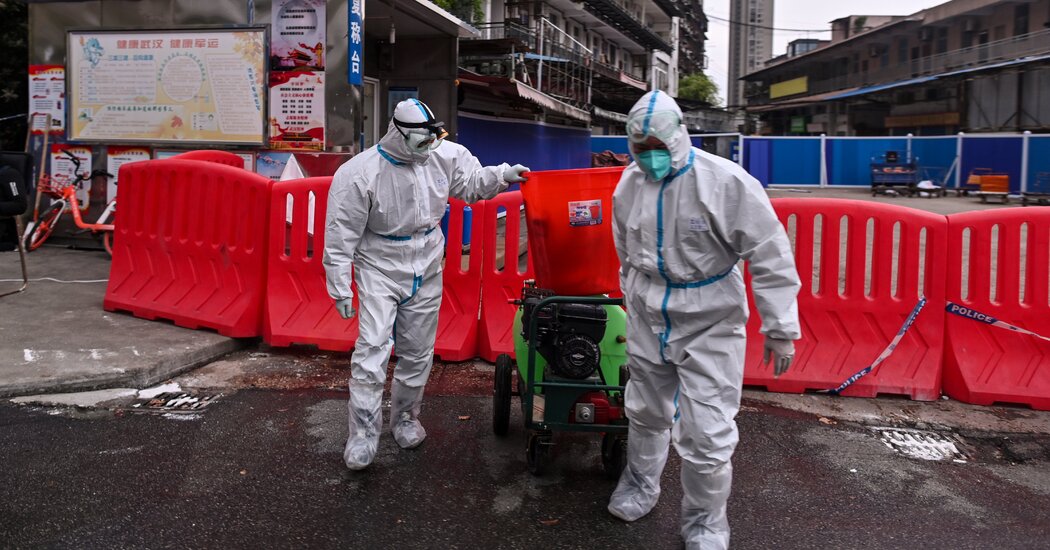
After analyzing genetic data swabbed from a Wuhan market in early 2020, a virologist said it was unclear if animals for sale there had been infected.A new study of genetic data from a market in Wuhan, China, said the data did not support the case that the pandemic had started with illegally traded animals, touching off fresh debate about samples that other scientists see as critical pieces of the puzzle of how the coronavirus reached humans.The new study, which examined the relative amounts of animal and viral material in swabs taken from surfaces at the market in early 2020, said it was difficult to draw conclusions about whether given samples of the virus had come from infected live animals or were simply from incidental contamination.But several outside experts said the analysis, posted online this week by the study’s author, Jesse Bloom, a virologist at the Fred Hutchinson Cancer Center, could have been affected by a number of unknown variables and decisions about how to filter the data.For those reasons, they said, the findings did not do much to sway their impression of previous studies. Samples from the market containing animal and viral genetic material, they said, were consistent with the possibility that an animal there — perhaps a raccoon dog — had spread the virus to people, but did not prove that had happened.“I think there’s a pretty reasonable chance they picked up an infected raccoon dog, but that doesn’t prove that was the origin,” said Frederic Bushman, a microbiologist at the University of Pennsylvania who specializes in analyzing samples like those taken from the Wuhan market, but who was not involved in any of the market studies. “I don’t think the Bloom paper changes my thinking that much.”Chinese researchers wrote about the market data last year and then made the genetic sequences available this year, allowing a team of international scientists to study them. That team wrote in a report last month that based on the data, they could not conclusively identify an animal that had passed the virus to people.But they said the data confirmed that animals believed to be susceptible to the virus, like raccoon dogs and masked palm civets, a small Asian mammal implicated in the SARS outbreak two decades ago, were being sold at the market in late 2019. Many of the earliest Covid-19 patients also worked or shopped at the market.Because the market was one of only four places in Wuhan reported to be selling live animals of the sort that could plausibly spread the virus, the scientists said it was unlikely that so many early patients were linked to the market purely by chance. They said the genetic data also built on other evidence, including that two early lineages of the virus had been at the market.This week’s study took a different approach to analyzing the gene sequences.Dr. Bloom investigated whether the amount of genetic material from the virus correlated with the amount of genetic material from susceptible animal species in the samples. If one species at the market was overwhelmingly responsible for shedding the virus, he said in an interview, he would have expected to see a clear link between the amount of genetic material from the virus and the amount from that species.But the study found no clear correlations of that kind. Instead, the strongest correlations involved various fish sold at the market that could not have been infected, an indication that infected people had probably deposited viral material where the fish was.Dr. Bloom said that finding suggested that the virus, also known as SARS-CoV-2, was spread widely across the market by the time the swabs were collected in early 2020.“In the same way we shouldn’t read much of anything into the fact that there’s a bunch of SARS-CoV-2 mixed with largemouth bass and catfish samples, we also shouldn’t read much into the fact that there’s a raccoon dog sample with a SARS-CoV-2 read,” Dr. Bloom said.A common raccoon dog.Buschkind/AlamyBut outside experts said that various features of the samples could throw off efforts to correlate animal and viral material. The international scientists said in their report that they had considered running a similar analysis, but that it risked producing misleading results. Dr. Bloom acknowledged that “it’s an open question of whether that is an informative thing to calculate at all.”Genetic material from the virus degrades quickly, said Christopher Mason, a specialist in environmental sampling at Weill Cornell Medicine. Crucially, viral material may decay at a different rate than material from animals, making it difficult to compare them in samples collected over the course of weeks after the market’s closure.It could be that fish were most closely associated with the virus simply because the fish were likely to have been frozen or refrigerated, slowing the decay of viral material in those samples, said Tom Wenseleers, an evolutionary biologist at KU Leuven in Belgium.The latest analysis “confirms that looking at these sorts of correlations tells you next to nothing with respect to which host species could have been a plausible source of the pandemic,” Dr. Wenseleers said. This leaves scientists in the same situation as before, he said, with market data that doesn’t offer conclusive evidence of any particular origin scenario.The new study also looked closely at a swab from a cart at the market in which the international team had found a trace of the virus alongside genetic signatures of raccoon dogs, but no detectable genetic material from humans.Dr. Bloom wrote that the swab had only a minuscule amount of viral material, and that it was not clear why Chinese researchers had classified the swab as Covid-positive. His study said that swab was the only one that had substantial amounts of raccoon dog genetic material with any traces of the virus.Some scientists, though, said Dr. Bloom’s analysis risked dismissing other Covid-positive swabs by setting too high of a bar for the amount of animal genetic material in a sample.Dr. Bushman, of the University of Pennsylvania, said that the threshold used in the analysis was “aggressive” and that it was best to compare results obtained from a series of different cutoffs.Using a more sensitive threshold, the international team of scientists identified multiple Covid-positive samples containing raccoon dog genetic material, as well as others with genetic signatures of different animals thought to be susceptible to the virus.Alexander Crits-Christoph, a computational biologist formerly at Johns Hopkins University who helped lead the international team’s analysis, said the team also looked closely at whether the Chinese researchers had been right to describe the swab from the cart as positive for the virus.He noted that a number of other swabs from the same stall were clearly positive for the virus. He said results from sampling elsewhere in the market also indicated that unlike the swab from the cart, most of the truly negative swabs contained no traces of the virus at all.“This is environmental sampling of a virus that is a tiny needle in a haystack,” Dr. Crits-Christoph said.

Read more →

Researchers Identify Possible New Risk for Breast Cancer

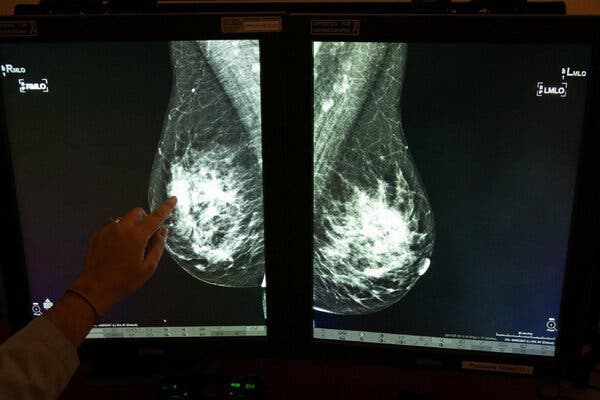
The NewsScientists have long known that dense breast tissue is linked to an increased risk of breast cancer in women. A study published on Thursday in JAMA Oncology adds a new twist, finding that while breast density declines with age, a slower rate of decline in one breast often precedes a cancer diagnosis in that breast.Scientists at Washington University in St. Louis analyzed breast density changes over a 10-year period in 10,000 women who were free of cancer when the study started. Some 289 women were diagnosed with breast cancer in that time; the study compared changes in their breast tissue to those in 658 similar women who did not develop breast cancer.Breast density was higher from the start in the women who went on to develop breast cancer, and density declined in all women over time. But when each breast’s density was measured separately, scientists found a significantly slower decline in density in breasts that developed cancer, when compared with the other breast in the same patient.Dense breast tissue on a mammogram at a hospital in Illinois.Kristan Lieb/Chicago Tribune, via Alamy Live NewsWhy It Matters: A Potential Warning SignShu Jiang, the study’s lead author and an associate professor of public health sciences at Washington University, said the findings might provide an individualized and dynamic tool for assessing a woman’s breast cancer risk. “I hope they can get this into clinical use as soon as possible — it will make a huge difference,” she said.“Right now, everybody only looks at density at one point in time,” Dr. Jiang added. But women have mammograms at regular intervals throughout their lives, and the density of each breast is measured each time.“So this information is actually already available, but it’s not being utilized,” she said. Now, a woman’s risk of developing breast cancer could “be updated every time she gets a new mammogram.”Background: Breast Density MattersBreast density is now an acknowledged risk factor for breast cancer, albeit one of many. Dense tissue also makes tumors harder to detect in imaging scans.Dozens of states have started requiring mammography centers to notify women if they have dense breast tissue. In March, the Food and Drug Administration recommended that providers tell women about their breast density.But this is the first study to measure changes in density over time and to report a link to breast cancer.What’s Next: Finding Women at RiskThough larger studies will need to be done to confirm the findings, Karen Knudsen, chief executive of the American Cancer Society, called the data “exciting.”“This is the first study I’ve seen that looks specifically across time at changes from breast to breast, instead of averaging the two breasts, where you might miss these changes,” Dr. Knudsen said.Although women are provided the information about breast density and the risks associated with it, the study suggests that information could be better used. “We need to know how to follow women with dense breasts, instead of just alerting them,” Dr. Knudsen said.One next step may to be examine breast density over time in women taking medication to prevent breast cancer to see if the density decreases, Dr. Knudsen suggested.“There could be different risk stratification guidelines set up to monitor those who are having much slower decline in tissue density, versus those who are not,” Dr. Jiang said.

Read more →

Republicans Push Transgender Restrictions in More States

Skip to contentU.S.Today’s PaperAdvertisementContinue reading the main storyAdvertisementContinue reading the main storySite IndexGo to Home Page »newsHome PageWorldCoronavirusU.S.PoliticsNew YorkBusinessTechScienceClimateSportsWildfire TrackerObituariesThe UpshotInternationalCanadaEspañol中文网Today’s PaperCorrectionsTrendingOpinionToday’s OpinionColumnistsEditorialsGuest EssaysLettersSunday OpinionOpinion VideoArtsToday’s ArtsArt & DesignBooksBest Sellers Book ListDanceMoviesMusicPop CultureTelevisionTheaterWhat to WatchVideo: ArtsLivingAutomotiveGamesEducationFoodHealthJobsLoveMagazineParentingReal EstateStyleT MagazineTravelListings & MoreReader CenterThe AthleticWirecutterCookingHeadwayLive EventsThe Learning NetworkTools & ServicesPodcastsVideoGraphicsTimesMachineTimes StoreManage My AccountNYTLicensingnewsHome PageWorldCoronavirusU.S.PoliticsNew YorkBusinessTechScienceClimateSportsWildfire TrackerObituariesThe UpshotInternationalCanadaEspañol中文网Today’s PaperCorrectionsTrendingOpinionToday’s OpinionColumnistsEditorialsGuest EssaysLettersSunday OpinionOpinion VideoArtsToday’s ArtsArt & DesignBooksBest Sellers Book ListDanceMoviesMusicPop CultureTelevisionTheaterWhat to WatchVideo: ArtsLivingAutomotiveGamesEducationFoodHealthJobsLoveMagazineParentingReal EstateStyleT MagazineTravelMoreReader CenterThe AthleticWirecutterCookingHeadwayLive EventsThe Learning NetworkTools & ServicesPodcastsVideoGraphicsTimesMachineTimes StoreManage My AccountNYTLicensingSubscribeHome DeliveryDigital SubscriptionsGamesCookingEmail NewslettersCorporate SubscriptionsEducation RateMobile ApplicationsReplica EditionInternationalCanadaEspañol中文网Site Information Navigation© 2023 The New York Times CompanyNYTCoContact UsAccessibilityWork with usAdvertiseT Brand StudioYour Ad ChoicesPrivacy PolicyTerms of ServiceTerms of SaleSite MapCanadaInternationalHelpSubscriptions

Read more →

Scientists identify antivirals that could combat emerging infectious diseases

A new study has identified potential broad-spectrum antiviral agents that can target multiple families of RNA viruses that continue to pose a significant threat for future pandemics. The study, led by Gustavo Garcia Jr. in the UCLA Department of Molecular and Medical Pharmacology, tested a library of innate immune agonists that work by targeting pathogen recognition receptors, and found several agents that showed promise, including one that exhibited potent antiviral activity against members of RNA viral families.
The ongoing SARS-CoV-2 pandemic, which has claimed nearly seven million lives globally since it began, has revealed the vulnerabilities of human society to a large-scale outbreak from emerging pathogens. While accurately predicting what will trigger the next pandemic, the authors say recent epidemics as well as global climate change and the continuously evolving nature of the RNA genome indicate that arboviruses, viruses spread by arthropods such as mosquitoes, are prime candidates. These include such as Chikungunya virus (CHIKV), Dengue virus, West Nile virus and Zika virus. The researchers write: “Given their already-demonstrated epidemic potential, finding effective broad-spectrum treatments against these viruses is of the utmost importance as they become potential agents for pandemics.”
In their new study, published in Cell Reports Medicine, researchers found that several antivirals inhibited these arboviruses to varying degrees. “The most potent and broad-spectrum antiviral agents identified in the study were cyclic dinucleotide (CDN) STING agonists, which also hold promise in triggering an immune defense against cancer,” said senior author Vaithi Arumugaswami, Associate Professor in the UCLA Department of Molecular and Medical Pharmacology.
“A robust host antiviral response induced by a single dose treatment of STING agonist cAIMP is effective in preventing and mitigating the debilitating viral arthritis caused by Chikungunya virus in a mouse model. This is a very promising treatment modality as Chikungunya virus-affected individuals suffer from viral arthritis years and decades from the initial infection,” Arumugaswami added.
“At molecular level, CHIKV contributes to robust transcriptional (and chemical) imbalances in infected skin cells (fibroblasts) compared to West Nile Virus and ZIKA Virus, reflecting a possible difference in the viral-mediated injury (disease pathogenesis) mechanisms by viruses belonging to different families despite all being mosquito-borne viruses,” said senior author Arunachalam Ramaiah, Senior Scientist in the City of Milwaukee Health Department.
“The study of transcriptional changes in host cells reveals that cAIMP treatment rescues (reverses) cells from the harmful effect of CHIKV-induced dysregulation of cell repair, immune, and metabolic pathways,” Ramaiah added.
The study concludes that the STING agonists exhibited broad-spectrum antiviral activity against both arthropod-borne- and respiratory viruses, including treaded SARS-CoV-2 and Enterovirus D68 in cell culture models.
Garcia notes, “The next step is to develop these broad-spectrum antivirals in combination with other existing antivirals and be made readily available in the event of future respiratory and arboviral disease outbreaks.”

Read more →

Study finds ChatGTP outperforms physicians in providing high-quality, empathetic advice to patient questions

There has been widespread speculation about how advances in artificial intelligence (AI) assistants like ChatGPT could be used in medicine.
A new study published in JAMA Internal Medicine led by Dr. John W. Ayers from the Qualcomm Institute within the University of California San Diego provides an early glimpse into the role that AI assistants could play in medicine. The study compared written responses from physicians and those from ChatGPT to real-world health questions. A panel of licensed healthcare professionals preferred ChatGPT’s responses 79% of the time and rated ChatGPT’s responses as higher quality and more empathetic.
“The opportunities for improving healthcare with AI are massive,” said Ayers, who is also vice chief of innovation in the UC San Diego School of Medicine Division of Infectious Disease and Global Public Health. “AI-augmented care is the future of medicine.”
Is ChatGPT Ready for Healthcare?
In the new study, the research team set out to answer the question: Can ChatGPT respond accurately to questions patients send to their doctors? If yes, AI models could be integrated into health systems to improve physician responses to questions sent by patients and ease the ever-increasing burden on physicians.
“ChatGPT might be able to pass a medical licensing exam,” said study co-author Dr. Davey Smith, a physician-scientist, co-director of the UC San Diego Altman Clinical and Translational Research Institute and professor at the UC San Diego School of Medicine, “but directly answering patient questions accurately and empathetically is a different ballgame.”
“The COVID-19 pandemic accelerated virtual healthcare adoption,” added study co-author Dr. Eric Leas, a Qualcomm Institute affiliate and assistant professor in the UC San Diego Herbert Wertheim School of Public Health and Human Longevity Science. “While this made accessing care easier for patients, physicians are burdened by a barrage of electronic patient messages seeking medical advice that have contributed to record-breaking levels of physician burnout.”

Designing a Study to Test ChatGPT in a Healthcare Setting
To obtain a large and diverse sample of healthcare questions and physician answers that did not contain identifiable personal information, the team turned to social media where millions of patients publicly post medical questions to which doctors respond: Reddit’s AskDocs.
r/AskDocs is a subreddit with approximately 452,000 members who post medical questions and verified healthcare professionals submit answers. While anyone can respond to a question, moderators verify healthcare professionals’ credentials and responses display the respondent’s level of credentials. The result is a large and diverse set of patient medical questions and accompanying answers from licensed medical professionals.
While some may wonder if question-answer exchanges on social media are a fair test, team members noted that the exchanges were reflective of their clinical experience.
The team randomly sampled 195 exchanges from AskDocs where a verified physician responded to a public question. The team provided the original question to ChatGPT and asked it to author a response. A panel of three licensed healthcare professionals assessed each question and the corresponding responses and were blinded to whether the response originated from a physician or ChatGPT. They compared responses based on information quality and empathy, noting which one they preferred.

The panel of healthcare professional evaluators preferred ChatGPT responses to physician responses 79% of the time.
“ChatGPT messages responded with nuanced and accurate information that often addressed more aspects of the patient’s questions than physician responses,” said Jessica Kelley, a nurse practitioner with San Diego firm Human Longevity and study co-author.
Additionally, ChatGPT responses were rated significantly higher in quality than physician responses: good or very good quality responses were 3.6 times higher for ChatGPT than physicians (physicians 22.1% versus ChatGPT 78.5%). The responses were also more empathic: empathetic or very empathetic responses were 9.8 times higher for ChatGPT than for physicians (physicians 4.6% versus ChatGPT 45.1%).
“I never imagined saying this,” added Dr. Aaron Goodman, an associate clinical professor at UC San Diego School of Medicine and study coauthor, “but ChatGPT is a prescription I’d like to give to my inbox. The tool will transform the way I support my patients.”
Harnessing AI Assistants for Patient Messages
“While our study pitted ChatGPT against physicians, the ultimate solution isn’t throwing your doctor out altogether,” said Dr. Adam Poliak, an assistant professor of Computer Science at Bryn Mawr College and study co-author. “Instead, a physician harnessing ChatGPT is the answer for better and empathetic care.”
“Our study is among the first to show how AI assistants can potentially solve real world healthcare delivery problems,” said Dr. Christopher Longhurst, Chief Medical Officer and Chief Digital Officer at UC San Diego Health. “These results suggest that tools like ChatGPT can efficiently draft high quality, personalized medical advice for review by clinicians, and we are beginning that process at UCSD Health.”
Dr. Mike Hogarth, a physician-bioinformatician, co-director of the Altman Clinical and Translational Research Institute at UC San Diego, professor in the UC San Diego School of Medicine and study co-author, added, “It is important that integrating AI assistants into healthcare messaging be done in the context of a randomized controlled trial to judge how the use of AI assistants impact outcomes for both physicians and patients.”
In addition to improving workflow, investments into AI assistant messaging could impact patient health and physician performance.
Dr. Mark Dredze, the John C Malone Associate Professor of Computer Science at Johns Hopkins and study co-author, noted: “We could use these technologies to train doctors in patient-centered communication, eliminate health disparities suffered by minority populations who often seek healthcare via messaging, build new medical safety systems, and assist doctors by delivering higher quality and more efficient care.”

Read more →

Man Who Has Fathered Hundreds Is Barred From Donating Sperm

A court in the Netherlands ruled that a man who fathered at least 550 children in the past 16 years had lied to prospective mothers and fertility clinics.A man who has fathered between 550 and 600 children over the past 16 years is not allowed to donate any more sperm to prospective parents, a court in the Netherlands ruled on Friday.According to The Hague District Court, the man lied about the number of children he had already fathered, the number of sperm donations he had made and his intention to donate even more sperm.“All these parents are now confronted with the fact that the children in their family are part of a huge kinship network, with hundreds of half siblings, which they did not choose,” the court said.Because of Dutch privacy laws, the government has not publicly named the man, Jonathan Jacob Meijer, 41, in the court proceedings as the donor in question. However, in an email to The New York Times for a 2021 article about him, a spokesman for the health ministry confirmed his identity. “Donors must sign an agreement with their clinic that they don’t donate sperm at other clinics,” Gerrit-Jan KleinJan wrote. “The sperm donor you are writing about made this agreement as well. Nevertheless, he donated at more sperm banks resulting in 102 babies.”The court’s ruling came after Mr. Meijer was sued by the Dutch Donor Child Foundation, which represents the interests of sperm donors’ children, and a mother who had one of his children. “The children deserve a rest,” the mother, who went by Eva but omitted her last name, said in a statement on Friday.Citing negative psychological consequences for the children, the court said that barring Mr. Meijer from continuing to donate was in the children’s best interest. It would be hard for them to cultivate relationships with so many biological half siblings, and it adds to a higher chance of incest, the court said.In the Netherlands, Mr. Meijer donated sperm to at least 11 fertility clinics, according to court documents. Each of those clinics allows his sperm to produce 25 children or be donated to a maximum of 12 mothers, as is the rule in the Netherlands. Mr. Meijer also lied to the clinics, according to court records, telling each clinic that he hadn’t donated elsewhere and wasn’t planning on doing so in the future.A report from 2017 concluded that Mr. Meijer had fathered 102 children through Dutch clinics between 2007 and 2017. Between 2015 and 2018, he also donated sperm to a fertility clinic in Denmark that, at the time, didn’t place a limit on the number of children produced from donated sperm and that sent semen to people in other countries.In addition to his clinic donations, Mr. Meijer also offered his sperm on various social media platforms in the Netherlands and abroad. According to the court, Mr. Meijer keeps in touch with multiple parents.The Dutch Donor Child Foundation — which posted an image of two clinking champagne glasses on Twitter in celebration of the verdict with the words “important step forward!” — supported the ruling. “We’re happy that the judge ruled that it’s not a good idea to have countless half-siblings,” Ester de Lau, a board member, said.Dutch lawmakers are in the process of implementing new rules for sperm donors to protect the interests of the children. The Dutch House of Representatives debated the issue this month.“In the Netherlands, we think it’s important that everyone has facts about their lineage,” according to Ernst Kuipers, the minister of health, welfare and sport. It has been possible for donor children to request such information since 2004. But the government wants to establish a central registry that would show whether a sperm donor has donated to multiple clinics.“The new rules would discourage undesirable situations in which sperm donors sometimes father hundreds of children,” according to the proposed bill.Ms. de Lau said she supported the bill, but that it needed to go further to ensure that donor children could also look up any possible private donations and donations abroad. “The registry can start in the Netherlands, but needs to be international,” she said. “This isn’t something that is limited to the Netherlands.”Rules surrounding sperm donation vary across Europe. In Belgium, the health minister announced a similar registry after it became clear that Mr. Meijer had also been active there.Richard van der Zwan, Mr. Meijer’s lawyer, told the court that his client wanted to help parents who had trouble conceiving, The Associated Press reported. Mr. van der Zwan couldn’t immediately be reached for comment on Friday.Mr. Meijer said he was not acting selfishly and that his continued sperm donations would not negatively affect any subsequent children, the court said. But the court ruled that the interests of the children and other parents outweighed those of Mr. Meijer’s to continue to offer himself as a donor.

Read more →

Stranded Sudanese NHS doctor given seat on evacuation flight

Published20 minutes agoShareclose panelShare pageCopy linkAbout sharingBy Joe InwoodBBC NewsnightAn NHS doctor who felt “betrayed” after being refused a place on a UK evacuation flight from Sudan has now been given a seat.Abdulrahman Babiker is awaiting a flight at an airport north of Khartoum.He told the BBC he was delighted to be leaving the country but had mixed feelings about family left behind. He was initially turned away by officials on Thursday – he has a UK work permit but only UK passport holders were being accepted.Earlier, the Foreign Office had said it was prioritising UK nationals and those in Dr Babiker’s situation needed to make their own way to the UK.Khartoum International Airport has been shut for almost two weeks due to fighting between two warring factions, while the borders of neighbouring countries are hundreds of miles away from the capital.It is thought at least 24 Sudanese NHS doctors were in a similar position to Dr Babiker.He credited the public attention his story received with the apparent change in policy. “I got so much support from my colleagues at the hospital, from friends…. everyone knew the case,” the Manchester Royal Infirmary doctor told the BBC.Despite his relief, he said he still had “mixed feelings” at leaving, as many family members are still in Khartoum. While Dr Babiker said he felt “much better” now that he knew he was able to leave, he said the “risk” his family and friends are in has left him unable to sleep.What is going on in Sudan? A simple guideCeasefire extended but fighting continues’The kids were clinging to me but I had to leave’For almost two weeks, rival factions within the Sudanese military have fought for control, destroying large sections of the capital Khartoum in the process and killing hundreds of civilians.While Dr Babiker has now been allowed a seat on an evacuation flight, it is not currently clear if there has been an explicit change in government policy. Dr Babiker said he felt there was a definite difference in approach and he hoped that the UK government would rethink its policy on visas, especially when it comes to skilled workers, something he said which “needs to be re-evaluated”.He said he had heard of other doctors having a similar experience, and that others he was in contact with had already been flown out of Sudan and landed in Cyprus. The UK has a military air base on the island and is flying people back to Britain from there.The BBC has approached the Foreign Office for comment and is awaiting a response.Additional reporting by Alex Binley Are you a British national who has been evacuated from Sudan? Are you still inside the country? If it is safe to do so, share your experiences by emailing haveyoursay@bbc.co.uk.Please include a contact number if you are willing to speak to a BBC journalist. You can also get in touch in the following ways:WhatsApp: +44 7756 165803Tweet: @BBC_HaveYourSayUpload pictures or videoPlease read our terms & conditions and privacy policy

If you are reading this page and can’t see the form you will need to visit the mobile version of the BBC website to submit your question or comment or you can email us at HaveYourSay@bbc.co.uk. Please include your name, age and location with any submission. WHAT WENT WRONG?: Toast investigates the rise and fall of Google GlassTHE FIRST DOG IN SPACE: Witness History tells the story of Laika, the first dog to orbit the EarthMore on this storyNHS medic ‘betrayed’ over refused Sudan evacuation7 hours agoCan Sudan refugees come to the UK legally?1 day agoSudan ceasefire extended but fighting continues2 hours ago

Read more →

Bilingualism May Stave Off Dementia, Study Suggests

People who spoke two languages daily in their youth tended to score higher on memory tests later in life, the researchers found.Speaking two languages provides the enviable ability to make friends in unusual places. A new study suggests that bilingualism may also come with another benefit: improved memory in later life.Studying hundreds of older patients, researchers in Germany found that those who reported using two languages daily from a young age scored higher on tests of learning, memory, language and self-control than patients who spoke only one language.The findings, published in the April issue of the journal Neurobiology of Aging, add to two decades of work suggesting that bilingualism protects against dementia and cognitive decline in older people.“It’s promising that they report that early and middle-life bilingualism has a beneficial effect on cognitive health in later life,” said Miguel Arce Rentería, a neuropsychologist at Columbia University who was not involved in the study. “This would line up with the existing literature.”In recent years, scientists have gained a greater understanding of bilingualism and the aging brain, though not all their findings have aligned. Some have found that if people who have fluency in two languages develop dementia, they’ll develop it at a later age than people who speak one language. But other research has shown no clear benefit from bilingualism.Neuroscientists hypothesize that because bilingual people switch fluidly between two languages, they may be able to deploy similar strategies in other skills — such as multitasking, managing emotions and self-control — that help delay dementia later on.The new study tested 746 people age 59 to 76. Roughly 40 percent of the volunteers had no memory problems, while the others were patients at memory clinics and had experienced confusion or memory loss.All were tested on a variety of vocabulary, memory, attention and calculation tasks. They were asked to recall previously named objects, for example, and to spell words backward, follow three-part commands and copy designs presented to them.Volunteers who reported using a second language daily between age 13 and 30 or between age 30 and 65 had higher scores on language, memory, focus, attention, and decision-making abilities compared with those who were not bilingual at those ages.Investigating bilingualism at different life stages is a unique approach, said Boon Lead Tee, a neurologist at the University of California, San Francisco, who was not involved in the research. With the impressively large sample size, she said, the authors of the study can probably generate other novel results, such as whether the age at which a person acquired each language affected their cognition in later life.She cautioned, however, that the study only focused on one aspect of bilingualism: using two languages every day for long periods of time. The positive effects on cognition may turn out to be caused by another factor, such as the age at which the two languages were encoded into memory, or the particular demographic or life experiences of people who happen to be bilingual.Other experts agreed that the results might have been different if the researchers had asked volunteers if they had spoken a second language once a week, or even less frequently, rather than every day.“I think there isn’t a definition that everybody agrees upon, and I think there will never be because being a bilingual is a full spectrum,” said Esti Blanco-Elorrieta, a language researcher at Harvard University.It’s also crucial for future research to look at the broader benefits of bilingualism, said Dr. Blanco-Elorrieta, who speaks Basque, English, German and Spanish.“The advantage of being bilingual doesn’t really lie on these milliseconds of advantage that one can have in a cognitive task,” she said. “I think the importance of being bilingual is being able to communicate with two cultures and two ways of seeing the world.”

Read more →

Players told to 'sit it out' under new concussion guidance

Published12 hours agoShareclose panelShare pageCopy linkAbout sharingImage source, Family photoBy Jim ReedHealth reporterAnyone with suspected concussion must be immediately removed from football, rugby and other sports and rest for at least 24 hours, under new guidance for grassroots clubs. It says the NHS 111 help-line should be called and players should not return to competitive sport for at least 21 days. The UK-wide guidelines are aimed at parents, coaches, referees and players. Its authors say a “culture change” in the way head injuries are dealt with is needed.”We know that exercise is good for both mental and physical health, so we don’t want to put people off sport,” Prof James Calder, the surgeon who led the work for the government, said.”But we need to recognise that if you’ve got a head injury, it must be managed and you need to be protected, so that it doesn’t get worse.”Listen to BBC’s 5 minutes On Concussion from a KickaboutWhat is concussion?Concussion – a traumatic brain injury affecting mental function – can alter the way someone thinks, feels and remembers things.Only about 10% result in being knocked out and losing consciousness. Effects are usually temporary and most people recover fully with rest. The guidance, drawn up by a government-appointed panel of sports-medicine experts, is based on work in Scotland, which has had its own official recommendations in place since 2015.It says anyone with a head injury must be removed from playing and not participate in any further exercise or work activity until they have been checked by a onsite health professional or contacted the NHS 111 help-line.If the player displays “red-flag” symptoms – such as loss of consciousness, amnesia or difficulty speaking – they must be urgently assessed at the side of the pitch by a medic or taken to an accident-and-emergency (A&E) unit. Image source, Sport ScotlandWork to draw up new recommendations for all sports began after the death of Ben Robinson, 14, from Carrickfergus, County Antrim, in 2011, who collapsed near the end of a school rugby match.His death had resulted from “second-impact syndrome”, a rare condition where the brain swells rapidly after suffering multiple concussions in a short period of time, a coroner found.Ben’s father, Peter, has been campaigning to raise awareness of the risks ever since. “Concussion is a brain injury and all concussions are serious,” he told BBC News.”Most people recover to 100% and they are back playing their sport. But it’s the mismanagement of that injury that can lead to tragic circumstances, as with Ben’s case.”There’s a risk in all sports. But with greater awareness and education, we are moving forward and making it a safer place.”Image source, Getty ImagesFor 24 hours after being removed from the game, the new guidance says, the injured player must not:be left alonedrink alcohol drive a carThe advice is also to minimise smartphone and computer use for at least 48 hours, as staring at a screen can lengthen recovery time. The panel had had “big debates” about how long players should remain on the sidelines, amid concerns some may cover up or disguise the extent of their injuries, Prof Calder said.”There has now been a realisation that washing someone with a magic sponge is not the right approach. If you feel there has been a concussion, that player should be removed,” he said.”‘If in doubt, sit them out,’ is the new mantra.”Professional rugbyThe NHS and most sports authorities do not routinely collect data on the number of concussions in grassroots sport.But the charity Headway estimates 1.4 million people attend A&E in England and Wales with some type of head injury each year, with 95% of those classed as mild. Data from the Rugby Football Union (RFU) suggests a team of 15- to 18-year-olds will have a player concussed once in every 10 games on average, rising to one in every two or three in professional rugby. The new national guidance is designed as a base set of recommendations for all sports, which individual governing bodies can then add to if required. The RFU already runs its Headcase programme to raise awareness of concussion, while rules lowering the legal tackle height in community rugby are due to come into force from July. The Football Association introduced its own concussion guidelines in 2015. More recently it said under-12s should not be taught to head balls in training, while in England the advice in the adult game is fewer than 10 “maximum-force” headers in practice each week.Headway’s chief executive, Luke Griggs, described the guidelines as an “important step” but warned they needed to be accompanied by a full public health campaign. “This cannot start and stop with a document put on a government website or emailed to clubs,” he said. “This has to be a hearts and minds campaign to get people to understand the very important reasons for these guidelines.”Sports Minister Stuart Andrew said: “One of the things we’ll now be doing is reviewing how well this guidance has been absorbed and understood. “If there are tweaks we need to make, then of course we will do that.”Follow Jim on twitter. More on this storyPL ‘disappointed’ at temporary concussion sub ruling6 March’Force players with serious brain injuries to retire’16 September 2022

Read more →

Hidden high blood pressure in young people revealed

Published12 hours agoShareclose panelShare pageCopy linkAbout sharingImage source, Getty ImagesBy Michelle RobertsDigital health editorA “considerable” number of young people in England – about 170,000 aged 16 to 24 – unknowingly have risky high blood pressure, experts are warning. That is about five in 100 young men and one in 100 young women, says the Office for National Statistics (ONS).Although it may not cause symptoms or problems to begin with, it puts extra strain on the heart and blood vessels. High blood pressure, or hypertension, is responsible for about half the heart attacks and strokes in the UK.It can develop at any age, which is why doctors say all adults should have regular blood pressure checks and take steps to avoid long-term harm. Doctors gave me a pacemaker when I was 11 days oldI was told my heart might fail within a yearDama Hamlin: Why do some young athletes suffer cardiac arrest?Chris Shine, from the ONS’s analytical hub, told the BBC that they had carried out the new analysis to identify the groups most at risk of having undiagnosed high blood pressure. “We see that there are considerable numbers of younger, healthier people who are undiagnosed. It may be that this group are unaware they have the condition because they are less likely to access healthcare if they are otherwise well,” he said. “These results will provide valuable insight for health services and those seeking to improve outcomes for what is one of the most common causes of premature death, especially as we know that the sooner hypertension is identified, the more effectively it can be managed and treated among all ages.”About a third of adults in the UK have high blood pressure, but many are not aware of it, experts say.Being overweight, eating an unhealthy diet, not being active, drinking too much alcohol and smoking can all raise blood pressure.According to the ONS, young men were particularly likely to be undiagnosed – 66% of males and 26% of females aged 16 to 24 years, and 55% of males and 44% of females aged 25 to 34 years, compared with 17% of males and 21% of females aged 75 years and over.Image source, Getty ImagesThe data comes from the Health Survey for England, which carried out at-home blood pressure measurements on 20,000 people – including 1,500 young people – taken by a nurse on a few different occasions to obtain an average reading. It suggests:4% of women (about 110,000) and 7% of men (about 210,000) aged 16-24 in England have high blood pressureOf those, 26% of the women (about 30,000) and 66% of the men (about 140,000) were undiagnosedDr Pauline Swift, from the charity Blood Pressure UK, said while some risk factors, such as ageing and ethnicity, are unavoidable, others are within people’s control.”In recent years we have seen an increase in younger patients with high blood pressure, often as a result of poor diet, consuming too much salt and lack of exercise leading to weight gain,” she said. “If you start making small changes to your lifestyle when you are young, such as eating less salt, more fruit and vegetables and taking more exercise to maintain a healthy weight, then you are more likely to stay healthier and prevent strokes, heart disease and chronic kidney disease.”High blood pressure kills thousands of people every year in the UK and is almost entirely preventable. “Everyone needs to take control of their health by checking their blood pressure either at home, at a pharmacy or with their practice nurse. This could save your life.”Prof Bryan Williams, President of the International Society of Hypertension, and a specialist at University College London Hospitals NHS Foundation Trust in London, said: “I just don’t think people realise just how dangerous untreated high blood pressure can be.”It is estimated that high blood pressure causes 10 million deaths every year across the world. To put this in perspective, that is more deaths globally every year than the total number of global deaths caused by Covid over three years. “The good news is that once high blood pressure is properly diagnosed, for most people it is easy to treat and control, especially if it is diagnosed early.”If I have a simple message it is, get your blood pressure checked and don’t ignore it if it is high.” Blood pressure is measured in millimetres of mercury (mmHg). The healthy range is between 90 over 60mmHg and 120 over 80mmHg. More on this storyRoad noise makes blood pressure rise, study finds28 MarchTeenagers at risk after drop in vaccine take-up4 days agoStudy links London dirty air and teen blood pressure8 FebruaryRelated Internet LinksBlood Pressure UKBritish Heart FoundationOffice for National StatisticsThe BBC is not responsible for the content of external sites.

Read more →