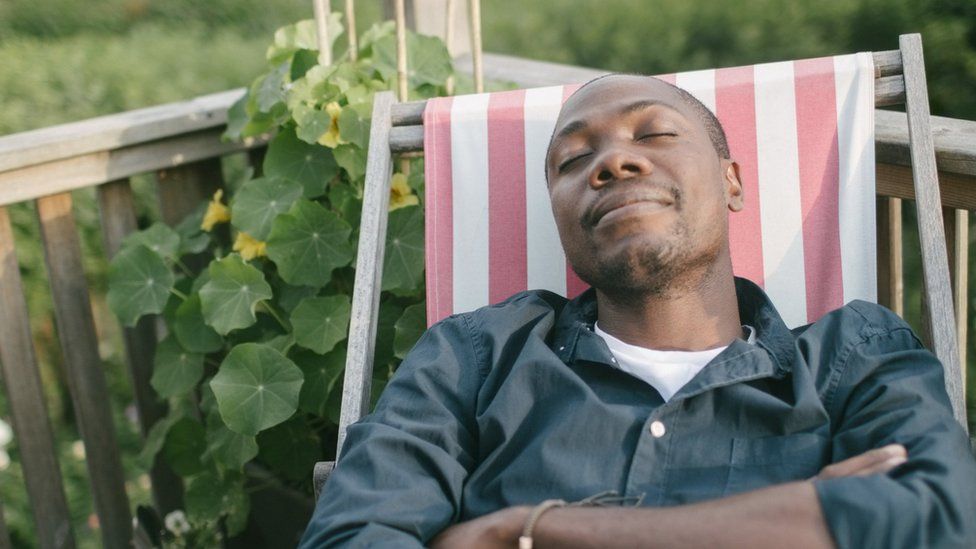
A daytime nap is good for the brain

Published31 minutes agoShareclose panelShare pageCopy linkAbout sharingImage source, Getty ImagesBy James GallagherHealth and science correspondentRegularly finding time for a little snooze is good for our brain and helps keep it bigger for longer, say University College London researchers.The team showed nappers’ brains were 15 cubic centimetres (0.9 cubic inches) larger – equivalent to delaying ageing by between three and six years. However, the scientists recommend keeping naps to less than half an hour.But they said a daytime sleep was hard in many careers, with work culture often frowning on the practice. “We are suggesting that everybody could potentially experience some benefit from napping,” Dr Victoria Garfield told me. She described the findings as “quite novel and quite exciting”.Napping has been shown to be critical for development when we are babies, becomes less common as we age and then goes through a resurgence in popularity after retirement, with 27% of people over 65 reporting having a daytime nap. Dr Garfield says advice to nap is “something quite easy” to do in comparison to weight loss or exercise which are “difficult for a lot of people”.The brain naturally shrinks with age, but whether naps could help prevent diseases like Alzheimer’s will still need extra research. Overall brain health is important for protecting against dementia and the condition is linked to disturbed sleep.The researchers suggest poor sleep is damaging the brain over time by causing inflammation and affecting the connections between brain cells. “Thus, regular napping could protect against neurodegeneration by compensating for deficient sleep,” researcher Valentina Paz said.However, Dr Garfield is not about to find a comfy spot to snooze at work and prefers other ways of looking after her brain.”Honestly, I would rather spend 30 minutes exercising than napping, I’ll probably try and recommend that my mum does it.” How to find the answer?Studying napping can be a challenge. Napping might boost health, but the reverse is also true as your health can leave you so tired you need to nap more. So the researchers used a clever technique to prove that napping is beneficial. They used a gigantic natural experiment based on the DNA – the genetic code – with which we are born. Previous studies have identified 97 snippets of our DNA that either make us more likely to be nappers or to power through the day. So the team took data from 35,000 people, aged 40 to 69, taking part in the UK Biobank project and simply compared those genetic “nappers” and “non-nappers”.The results, published in the journal Sleep Health, showed a 15 cubic centimetre difference – equivalent to 2.6 to 6.5 years of ageing. Total brain volumes were about 1,480 cubic centimetres in the study. “I enjoy short naps on the weekends and this study has convinced me that I shouldn’t feel lazy napping, it may even be protecting my brain,” Prof Tara Spires-Jones, from the University of Edinburgh and the president of the British Neuroscience Association, told me.She said the “interesting” findings study showed a “small but significant increase in brain volume” and “adds to the data indicating that sleep is important for brain health”.The researchers did not directly study having a big sleep in the middle of the day, but said the science pointed towards a cut off of half an hour. Follow James on Twitter.

Read more →

Covid Inquiry: Mistake not to consider range of pandemics – David Cameron

Published19 JuneShareclose panelShare pageCopy linkAbout sharingBy Kate WhannelPolitical reporter, BBC NewsFormer Prime Minister David Cameron has said it was a “mistake” not to consider different types of diseases when preparing for future pandemics.Giving evidence to the Covid Inquiry, Mr Cameron said “group think” meant his government did not focus enough on pandemics other than flu. He also denied that his government’s austerity policies damaged the UK’s ability to cope with Covid.The inquiry is currently considering preparedness ahead of the pandemic.George Osborne and Jeremy Hunt, the chancellor and health secretary under Mr Cameron, will give evidence to the inquiry later this week. Questioned by the inquiry’s lawyer Kate Blackwell KC, Mr Cameron said: “Much more time was spent on pandemic flu and the dangers of pandemic flu rather than on potential pandemics of other, more respiratory diseases, like Covid turned out to be.”This is so important – so many consequences followed from that.”UK public services were ‘depleted’ when Covid hitWhat is the UK Covid inquiry and how long will it take?Covid inquiry criticises government evidence The Conservative former leader said that on becoming prime minister he had sought to improve the UK’s planning for risks by changing government structures, including by setting up a National Security Council.However, he added that there was “always a danger of group think – perhaps that is what is happening here”. “I think the failing was not to ask more questions about asymptomatic transmission.”The Inquiry also heard from Sir Chris Wormald, permanent secretary at the Department of Health and Social Care (DHSC). He, too, was asked about the government’s focus on influenza preparations in its pandemic-planning. “The approach taken was essentially ready for flu, ready for anything,” he said.Clara Swinson, who has headed up the DHSC’s global health division since 2016, also spoke during Monday’s hearing. Referring to a UK-wide pandemic strategy, she said “there would’ve been some areas that were worth updating”, since the only one was from 2011.Turning to the focus on influenza, she added: “We had reflected in the new pandemic portfolio a recognition that we would like the strategy to be along all of the different routes of transmission.”Asked whether this was a mistake in hindsight, Ms Swinson said she thought it was “a reasonable decision at the time”. Image source, ShutterstockMr Cameron was also pressed on whether his austerity policies hampered the UK’s resilience when facing the pandemic.At a hearing held last week, Sir Michael Marmot, a professor of epidemiology at University College London that the UK had entered the coronavirus pandemic with “depleted” public services. Mr Cameron said he didn’t accept that description and defended the austerity drive overseen by his government.He said it was needed to get the public finances in order and without doing so there would have been less money for the NHS.”Your health system is only as strong as your economy – one pays for the other.”He also pointed out that while other public services were cut, the NHS was actually protected by his government.During his premiership, the NHS budget rose by an average of 1% to 2% after inflation. However, this compares to an average of 4% during the rest of the health service’s history – so while the budget did rise, the figure still represented a squeeze overall.And it is a major reason why waiting times have worsened and the UK has fewer staff and beds per head than many other western European countries.Other areas of health spending – such as training and public health – were not protected.However, it is worth noting the Conservatives were not alone in advocating this approach. At both the 2010 and 2015 elections Labour was not promising significantly more for the NHS.What is the UK Covid-19 inquiry?It is about going through what happened and learning lessonsNo-one will be found guilty or innocentAny recommendations made do not have to be adopted by governmentsThe inquiry has no formal deadline but is due to hold public hearings until 2026Scotland is holding a separate inquiry in addition to the wider UK oneMore on this storyUK public services were ‘depleted’ when Covid hitPublished16 JuneWhat is the UK Covid inquiry and how does it work?Published1 hour agoCovid inquiry criticises government evidencePublished6 June

Read more →

Brain receptor patterns separate sensory and cognitive networks

Receptor patterns define key organisational principles in the brain, scientists have discovered.
An international team of researchers, studying macaque brains, have mapped out neurotransmitter receptors, revealing a potential role in distinguishing internal thoughts and emotions from those generated by external influences.
The comprehensive dataset has been made publicly available, serving as a bridge linking different scales of neuroscience — from the microscopic to the whole brain.
Lead author Sean Froudist-Walsh, from the University of Bristol’s Department of Computer Science explained: “Imagine the brain as a city. In recent years, brain research has been focused on been studying its roads, but in this research, we’ve made the most detailed map yet of the traffic lights — the neurotransmitter receptors — that control information flow.
“We’ve discovered patterns in how these ‘traffic lights’ are arranged that help us understand their function in perception, memory, and emotion.
“It’s like finding the key to a city’s traffic flow, and it opens up exciting possibilities for understanding how the normal brain works.

“Potentially in the future, other researchers may use these maps to target particular brain networks and functions with new medicines.
“Our study aimed to create the most detailed map yet of these ‘traffic lights’.”
The team used a technique called in-vitro receptor autoradiography to map the density of receptors from six different neurotransmitter systems in over 100 brain regions.
To find the patterns in this vast data, they applied statistical techniques and used modern neuroimaging techniques, combined with expert anatomical knowledge. This allowed them to uncover the relationships between receptor patterns, brain connectivity, and anatomy.
By understanding the receptor organisation across the brain, it is hoped new studies can better link brain activity, behaviour, and the action of drugs.

Moreover, because receptors are the targets of medicines, the research could, in the future, guide the development of new treatments targeting specific brain functions.
Dr Froudist-Walsh added: “Next, we aim to use this dataset to develop computational models of the brain.
“These brain-inspired neural network models will help us understand normal perception and memory, as well as differences in people with conditions like schizophrenia or under the influence of substances like ‘magic mushrooms’.
“We also plan to better integrate findings across species — linking detailed circuit-level neuroscience often conducted in rodents, to large-scale brain activity seen in humans.”
Creating openly-accessible maps of receptor expression across the cortex that integrate neuroimaging data could speed up translation across species.
“It is being made freely available to the neuroscientific community via the Human Brain Project’s EBRAINS infrastructure, so that they can be used by other computational neuroscientists aiming to create other biologically informed models,” added Nicola Palomero-Gallagher, HBP researcher at the Forschungszentrum Jülich and senior author of the paper.
The global team of researchers are from University of Bristol, New York University, Human Brain Project, Research Center Julich, University of Dusseldorf, Child Mind Institute and Universite Paris Cite.

Read more →

A new tool to study complex genome interactions

People who owned black-and-white television sets until the 1980s didn’t know what they were missing until they got a color TV. A similar switch could happen in the world of genomics as researchers at the Berlin Institute of Medical Systems Biology of the Max Delbrück Center (MDC-BIMSB) have developed a technique called Genome Architecture Mapping (“GAM”) to peer into the genome and see it in glorious technicolor. GAM reveals information about the genome’s spatial architecture that is invisible to scientists using solely Hi-C, a workhorse tool developed in 2009 to study DNA interactions, reports a new study in Nature Methods by the Pombo lab.
“With a black-and-white TV, you can see the shapes but everything looks grey,” says Professor Ana Pombo, a molecular biologist and head of the Epigenetic Regulation and Chromatin Architecture lab. “But if you have a color TV and look at flowers, you realize that they are red, yellow and white and we were unaware of it. Similarly, there’s also information in the way the genome is folded in three-dimensions that we have not been aware of.”
Understanding DNA organization can reveal the basis of health and disease. Our cells pack a 2-meter-long genome into a roughly 10 micrometer-diameter nucleus. The packaging is done precisely so that regulatory DNA comes in contact with the right genes at the right times and turns them on and off. Changes to the three-dimensional configuration can disrupt this process and cause disease.
“We’ve known for a long time that diseases run in families,” says Dr Robert Beagrie, co-first author of the study and a molecular biologist at the University of Oxford, formerly at the Pombo lab. “More recently, we’ve come to understand that a great deal of this predisposition is because we inherit DNA sequence variants from our parents that affect how our genes are switched on and off.”
GAM provides more complex information
Techniques such as Hi-C and GAM allow scientists to freeze and study the interactions between regulatory sequences and genes. In Hi-C, chromatin is cut into pieces using enzymes and then glued together again in such a way that two-way DNA interactions are revealed upon sequencing. In GAM, first described by the Pombo team in “Nature” in 2017, scientists take hundreds of thin slices of nuclei, each from individual cells, and extract DNA from them. They sequence the DNA and statistically analyze the data to learn which regions interact.
Using this technique, the team created a map of the three-dimensional interactions. When they compared this with existing 3D maps of the genome created using Hi-C, they found many novel interactions. This puzzled them until they realized they were seeing more complex interactions using GAM, with multiple regions of DNA coming together at the same time. “These more complex contacts contain active genes, regulatory regions, and super enhancers, which regulate important genes that determine cell identity,” says Dr. Christoph Thieme, co-first author of the study and a senior postdoctoral fellow in the Pombo lab.
In comparison, Hi-C captured mostly two-way interactions. Both techniques are complementary as two in three contacts detected by GAM were not visible using Hi-C — and vice-versa.
“I was super excited to see that we had uncovered a really strong effect,” Beagrie says. “It is clear that these complex interactions were much more common than we had previously appreciated.”

Read more →

A Trail Guide for Disabled Hikers

I was well into adulthood when I realized that hiking was an activity that I could participate in. I grew up with multiple disabilities and chronic illnesses and thought being “outdoorsy” was only for able-bodied people. I couldn’t find information about hiking as a disabled person, so I spent a lot of time trying to figure it out for myself.Accessibility is improving, but there is no one-size-fits-all solution. Different disabilities — and even people with the same disability — have different needs. For instance, I look for trails that don’t have long inclines or obstacles like big rocks and steep stairs, are shady and wide enough to use a cane or trekking poles, and have benches or places to rest (I often bring a collapsible chair).Wheelchair accessibility, in particular, means different things. A truly wheelchair-accessible trail is flat, wide and has a firm surface with no obstacles. Trails with steeper, more rugged sections may be an option for experienced outdoor-wheelchair users or those using all-terrain chairs. I refer to these trails as wheelchair hikeable.For many travelers with disabilities, much depends on a trail’s grade or slope. You can often find this information, expressed as a percentage, on park websites or trail apps. A slope over 12 percent may be difficult for people with mobility or cardiopulmonary concerns, and inaccessible for most wheelchair users. Other considerations include tactile signage and maps, which have raised elements for exploration by touch; accessible parking; and excessive or unexpected noises, which can lead to sensory overload for people with sensory-processing disorders.Access to nature is so important for our well-being. Everyone deserves to experience it — and those with disabilities can on these accessible summer adventures.CaliforniaRedwood National and State ParksOn the Revelation Trail in Prairie Creek Redwoods State Park, a platform encircles an old-growth redwood; visitors who are blind or have low vision can engage multiple senses.Alexandra Hootnick for The New York TimesNorthern California’s redwood country is one of my favorite places. Coast redwoods are the world’s tallest trees, and one can’t help but feel humbled by them. Redwood National and State Parks, which are in Yurok and Tolowa ancestral territory, include forests, prairie ecosystems and coastline, much of it accessible.Redwood Access and Revelation TrailsRedwood Access Trail, which is wheelchair accessible, winds beneath redwoods along Prairie Creek.Alexandra Hootnick for The New York TimesThese trails, designed for people who use wheelchairs and other mobility aids, and for people who are blind or have low vision, combine to create a three-quarter-mile loop that begins at the Prairie Creek Visitors Center in Prairie Creek Redwoods State Park, part of the Redwood National and State Parks system. The Access trail winds beneath redwoods along Prairie Creek, and there is an overlook with interpretive signage about fish spawning. After a quarter of a mile, you can connect with the Revelation Trail or continue another quarter mile to the Elk Prairie Campground.Scenes along Revelation Trail in Prairie Creek Redwoods State Park.Alexandra Hootnick for The New York TimesAlexandra Hootnick for The New York TimesThe Revelation Trail has guide ropes, and a platform encircles an old-growth redwood so that visitors who are blind or have low vision can engage multiple senses. The signage is not in Braille, but the park provides Braille-ready and audio-described brochures.Newton B. Drury Scenic ParkwayA huge old-growth redwood within Prairie Creek Redwoods State Park can be reached from the Newton B. Drury Scenic Parkway.Alexandra Hootnick for The New York TimesThis 10-mile-long scenic parkway, lined with towering redwood groves, runs through Prairie Creek Redwoods State Park. Visitors can experience it on foot or on wheel on the first Saturday of each month from October to May, when the parkway is closed to vehicles. You may want to use a power wheelchair to travel the entire length of the paved, gently rolling road.Crescent BeachA sidewalk with edge guards leads to accessible picnic tables on Crescent Beach in Redwood National and State Parks.Alexandra Hootnick for The New York TimesThis is a wonderful spot to spend a day or enjoy a picnic. The day-use area, at the end of Enderts Road near Crescent City, has a paved parking lot and accessible vault toilets. A sidewalk with edge guards leads to two accessible picnic tables on the beach with a grill and fire rings. Beach access from the picnic area is fairly level and the sand is usually well-packed. There are interpretive signs about Tolowa villages, but they are not in Braille. Beach push wheelchairs with balloon wheels that make it easier to travel over sand are available to borrow. Stop by the Crescent City Information Center to reserve one.Washington StateNorth Cascades National ParkA wheelchair-accessible boardwalk and compact gravel trail loops through an ancient forest and along Happy Creek in North Cascades National Park.Grant Hindsley for The New York TimesI first went to North Cascades a few years ago and immediately fell in love with the jagged peaks, alpine lakes and waterfalls. One of the least visited national parks, it is a great option for anyone who wants to experience the mountains without crowds. There are several accessible and low-effort trails, and opportunities to learn about the Sauk-Suiattle and Upper Skagit tribes, who maintain their traditions and rights to this land.Trail of the CedarsTrail of the Cedars is appropriate for those using all-terrain wheelchairs, canes or hiking poles.Grant Hindsley for The New York TimesThis 0.6-mile loop, appropriate for those using all-terrain wheelchairs, canes or hiking poles, begins at the Newhalem Powerhouse, near the visitor center. It is a delightful trail along the Skagit River in a mossy forest with tall Western red cedars. Interpretive signs, some with tactile elements, provide historical and botanical information. The compact dirt-and-gravel trail is wheelchair hikeable, but there is a 12 to 15 percent incline at the end. (You could go out and back to avoid the incline.) The trail is occasionally muddy or narrower than three feet if plants have grown along the edge. While the small gravel parking area does not have designated accessible parking, you can parallel park alongside a circular area to deploy a ramp.Hikers cross the Skagit River at the beginning of the Trail of the Cedars in North Cascades National Park in Washington State.Grant Hindsley for The New York TimesHappy Creek Nature TrailScenes along the Happy Creek Nature Trail in North Cascades National Park.Grant Hindsley for The New York TimesGrant Hindsley for The New York TimesJust off Highway 20, a 0.3-mile, wheelchair-accessible boardwalk and compact gravel trail loops through an ancient forest and along Happy Creek. The creek lives up to its name — I always feel joyful listening to its gentle babbling. There are several viewing areas with benches, and the paved parking area has two accessible spots; for van access you can park next to the toilet or use the parallel parking area.Rainy LakeA mile-long paved path leads to Rainy Lake in Okanogan-Wenatchee National Forest, just beyond the border of North Cascades National Park.Grant Hindsley for The New York TimesRainy Lake is technically in Okanogan-Wenatchee National Forest, just beyond the border of North Cascades. This mile-long paved trail, which goes by bogs, meadows and waterfalls, leads to a stunning lake in a cirque surrounded by mountains. It is shaded and there are several benches. It is most accessible for power-wheelchair users: The incline is gentle but long, with a few steep sections of 8 to 10 percent.The trailhead begins near the parking lot entrance at the Rainy Pass Trailhead, which has several accessible parking spots, vault toilets and water in the summer.South DakotaBadlands National ParkThe Door Trail in Badlands National Park in South Dakota leads through the Badlands Wall to a grand view of the canyon and prairie.Tara Weston for The New York TimesMy first visit here was on a cross-country road trip. After days of monochrome interstates, the colorful rock formations and prairies felt like a dream. This fascinating landscape is the result of thousands of years of geological action depositing and eroding rock. The prairies are home to bison, prairie dogs and other wildlife. The land holds cultural and spiritual significance to many Indigenous groups, including the Oglala Lakota Nation, whose Tribal Trust land makes up the park’s South Unit.Three of the 17 trails are fully or partially wheelchair accessible, and there are many accessible overlooks. Back roads, typically gravel, may be wheelchair hikeable. It can be hot in the summer, so bring water and sun protection.Fossil Exhibit TrailFossil Exhibit Trail is a wheelchair-accessible boardwalk that leads to several tactile exhibits and fossil replicas of ancient animals that once lived there.Tara Weston for The New York TimesA wheelchair-accessible boardwalk leads to several tactile exhibits and fossil replicas of ancient animals that once lived there. The interpretive signage includes Braille. The trail, which is a quarter-mile round-trip, begins at a parking area on the Badlands Loop Road east of the White River Valley Overlook, where there is accessible parking and a vault toilet.Window and Door TrailsWindow and Door trails are boardwalks and begin at the same parking lot just beyond the northeast entrance to Badlands National Park.Tara Weston for The New York TimesBoth trails are boardwalks and begin at the same parking lot just beyond the northeast entrance. The quarter-mile, round-trip Window Trail on the south side offers views of a fantastic canyon through a natural window in the Badlands Wall. The Door Trail, which begins on the north side, is a three-quarter-mile, round-trip hike, but only the first quarter mile is wheelchair accessible. This trail leads through the Badlands Wall to a grand view of the canyon and prairie.Bighorn sheep graze alongside a road in Badlands National Park.Tara Weston for The New York TimesCliff Shelf Nature TrailCliff Shelf Nature Trail in Badlands National Park is most accessible to people who can navigate stairs with handrails or use hiking poles.Tara Weston for The New York TimesThe beginning of this trail is wheelchair accessible and leads to an overlook. The boardwalk continues, but there are many stairs; the trail eventually becomes compact dirt and gravel, so it is most accessible to people who can navigate stairs with handrails or use hiking poles.North Carolina and TennesseeGreat Smoky Mountains National ParkStructures dating from the homesteading era over 100 years ago are situated near the Oconaluftee River Trail in Great Smoky Mountains National Park.Jessica Tezak for The New York TimesI lived in the Southern Appalachian Mountains for many years and fell in love with hiking there. This is one of the most biodiverse regions in the United States, home to old-growth hardwood forests and at least 19,000 species of animals and plants. It holds deep cultural connections for Appalachian culture and Cherokee people. Great Smoky Mountains is the most visited national park, but there aren’t many fully accessible trails. Here are three.Sugarlands Valley Nature TrailScenes along Sugarlands Valley Nature Trail in Great Smoky Mountains National Park.Jessica Tezak for The New York TimesJessica Tezak for The New York TimesThis half-mile, wheelchair-accessible paved loop takes you through a lovely forest along the West Prong Little Pigeon River. There may be road noise, but you can still enjoy the sights and sounds of the river from one of many benches. There are remnants of chimneys and rock walls, and tactile interpretive signs. The parking area, just south of the Sugarlands Visitor Center, has five accessible parking spots, but the striped aisles may be too narrow for a van.A canopy of deciduous trees hangs over the Sugarlands Valley Nature Trail in Great Smoky Mountains National Park.Jessica Tezak for The New York TimesOconaluftee River TrailScenes along the Oconaluftee River Trail.Jessica Tezak for The New York TimesJessica Tezak for The New York TimesThis 1.5-mile-long trail, which begins at the Oconaluftee Visitor Center, is generally hikeable for people with mobility considerations. It is partially wheelchair accessible and may be wheelchair hikeable for those with all-terrain chairs. There are lots of benches. The first tenth of a mile is paved and takes you to the Mountain Farm Museum, where the trail transitions to gravel with some grass. It continues along the river and is generally level for another half a mile, where there is one steep section over 20 percent. The trail is under three feet wide in some places and may be slightly muddy, with loose gravel and exposed roots. The visitor center has paved accessible parking, restrooms and water fountains.Little River TrailThe Little River Trail, a gravel road that follows the river, is not designated accessible, but many disabled people are able to enjoy it.Jessica Tezak for The New York TimesThe Little River Trail, a gravel road that follows the river, is not designated accessible, but many disabled people, myself included, have enjoyed it. It is most suited for people using power wheelchairs, all-terrain manual chairs, walkers or hiking poles. You can have a solitary experience here, complete with wildlife sightings, and the river provides a wonderful visual and auditory background. The trail begins past the Elkmont Campground, with accessible parking nearby. The first 0.2 mile is a little rough, with some broken asphalt and gravel, but it transitions to packed gravel. A mile in, a large boulder serves as a turnaround spot.New YorkLetchworth State ParkAlong the mile-long Autism Nature Trail in Letchworth State Park are various stations that engage different senses for visitors, including people with autism.Lauren Petracca for The New York TimesAt Letchworth State Park, the “Grand Canyon of the East,” the Genesee River flows through a deep gorge surrounded by lush forest. I have not visited this park, but it is home to the mile-long Autism Nature Trail, with eight stations that engage different senses. It is popular and safe for children with autism, and is also accessible to autistic adults and wheelchair users.Follow New York Times Travel on Instagram and sign up for our weekly Travel Dispatch newsletter to get expert tips on traveling smarter and inspiration for your next vacation. Dreaming up a future getaway or just armchair traveling? Check out our 52 Places to Go in 2023.

Read more →

Should Medicine Still Bother With Eponyms?

The names of Nazi-era doctors are still found on diseases and body parts. By expunging them, will doctors forget lessons of the past?Edith Sheffer’s young son always disliked labels such Asperger’s syndrome. But in 2016, a psychiatrist told him that he should be proud: His condition was named after Dr. Hans Asperger, an Austrian scientist in the 1930s who used his position to help save children like him. By devising a diagnosis that emphasized the children’s intellectual abilities, the psychiatrist said, Dr. Asperger tried to spare them from the Nazi campaign to “euthanize” youths with cognitive disabilities.Dr. Sheffer, sitting next to her 12-year-old son, knew this wasn’t entirely true. Now a historian of 20th-century Europe at the University of California, Berkeley, she had spent years researching Dr. Asperger for her 2018 book, “Asperger’s Children.” Before he became known as a benevolent savior — “a psychiatric Oskar Schindler,” as Dr. Sheffer put it — Dr. Asperger marched in line with the Nazis’ medical framework.His diagnosis, which he later called autistic psychopathy, was part of the larger Nazi medical effort to divide lives into two categories: worthy or unworthy of living. And, Dr. Sheffer learned with horror, he had personally condemned dozens of children to the killing centers. “I don’t want my son to be named after someone who sent children like him to their deaths,” she told Vox in 2018.By the time her book was published, Asperger’s syndrome was no longer listed in the Diagnostic and Statistical Manual of Mental Disorders. In 2013 it was folded into autism spectrum disorder, in part because there was not solid evidence that it warranted its own diagnosis. But shortened versions of the term are still used widely in the autism community, many of whom refer to themselves with terms, such as “Aspie,” derived from the name Asperger’s.Dr. Sheffer has since been gratified to see that other medical organizations, including the American Psychiatry Association and the World Health Organization, which put out the 11th revision of the International Classification of Diseases, or ICD-11, have largely phased it out. “I think the message has reached the medical community,” she said.Asperger’s is (or was) a medical eponym, part of a hallowed tradition of naming body parts, diseases, disorders and tools after great medical figures. Its demise illustrates the risk inherent in idolizing anyone from another era, and adds support to a growing movement to end this tradition altogether. But some scholars contend that even “canceled” eponyms have a place, as stark reminders of the ethical breaches medicine should never repeat.An eponym was once considered medicine’s highest honor. Like monuments to great generals, they paid tribute to medicine’s most brilliant minds, ensuring their names would live on in perpetuity. The best-known example is the fallopian tubes, named after Gabriele Falloppio, an Italian priest and anatomist who is credited as being the first to describe them. Others include Alzheimer’s, Parkinson’s and Hodgkin’s diseases, all named for European medical men.So it was a shock when, in the early 2000s, dozens of eponyms were discovered to be linked to National Socialist doctors who had violated every value of medical consent and human dignity. These offenders could be found lingering in the lungs, attached to common diseases like arthritis and even on craters of the moon. There seemed to be only one possible response: purge the Nazis. These names were “not only a travesty but an affront to the profession,” two doctors wrote in 2007 in The Israel Medical Association Journal.“We owe it to our patients, we owe it to their loved ones, we owe it to the victims of these atrocities,” said Dr. Eric Matteson, a retired rheumatologist who helped rename a disease of inflamed blood vessels formerly known as Wegener’s granulomatosis. “You are doing them an injustice.”Beginning in 2000, after hearing a rumor that Dr. Friedrich Wegener had ties to National Socialism, Dr. Matteson and a colleague spent years combing through World War II archives around the world. They eventually learned that Dr. Wegener was a Nazi supporter who had worked three blocks from the ghetto in Lodz, Poland, and might have dissected victims of medical experimentation. In 2011, several major medical organizations moved to replace Wegener’s syndrome with “granulomatosis with polyangiitis” — a mouthful, admittedly. (“Wegener’s” can still be found in the ICD-11.)The hunt for Nazi names was on. Clara cells, a type of cell that lines the lungs and secretes mucus, were found to be named for a Nazi doctor who experimented on soon-to-be-executed prisoners. The cells were renamed club cells, reflecting their bulbous shape. Reiter’s syndrome, a form of arthritis caused by a bacterial infection, was renamed “reactive arthritis” after it was found to have been named for a doctor who performed deadly typhus experiments on prisoners of the Buchenwald concentration camp.In most cases, the name change fit with medicine’s growing preference for descriptive terms over honorific ones. “Many of us just don’t use eponyms because they’re not anatomically informative,” said Jason Organ, an anatomist at Indiana University. Rather than a fallopian tube, he said, “uterine tube just makes more sense — it tells you what it is.” In some cases, the inconsistent use of eponyms can even lead to medical errors, Dr. Organ added.Not all anatomists agree with this slash-and-burn approach. Dr. Sabine Hildebrandt, an anatomical educator at Harvard Medical School, trained in Germany a few years before the legacy of Nazi medicine began coming to light. To her, eponyms provide an opportunity to remind future doctors of the path medicine must never go down again. “I would like to see them not as badges of honor, necessarily, but as historical markers — as teaching moments,” she said.In the classroom, Dr. Hildebrandt highlights Frey’s syndrome, one of the rare medical eponyms that celebrates both a female researcher and a victim of the Holocaust. The syndrome, a neurological condition that can cause heavy facial sweating while eating, is named for Lucja Frey-Gottesman, a Polish neurologist who was murdered by the Nazis after being sent to the Lvov ghetto.Dr. Hildebrandt also draws attention to Dr. Charlotte Pommer, a name that her students probably have not encountered. In 1942 Dr. Pommer, a young German anatomist, walked into the laboratory of her department’s director, Dr. Hermann Stieve, only to be confronted with the executed bodies of five people she recognized, members of the resistance group Rote Kapelle. Horrified, she abandoned the field.Dr. Pommer gave up her bid for immortality. No part of the body is named after her; no papers list her as an author. Dr. Stieve gained renown for his contributions to medicine, including disputing the “rhythm method” of birth control and studying the effects of stress on the menstrual cycles of doomed female prisoners. By contrast, Dr. Pommer led a life of obscurity, treating victims of war in a nearby hospital.Dr. Hildebrandt uses this story to show that complicity was not the only choice available to doctors of that era, and that there are other ways to be remembered than by having something named after you. Her 2016 book, “The Anatomy of Murder: Ethical Transgressions and Anatomical Science during the Third Reich,” is dedicated to Dr. Pommer. “It really is about correcting history,” she said.Seen this way, eponyms might be compared to the modern German tradition of Stolpersteine, or “stumbling stones”— brass plaques, embedded in cobblestone streets across Europe, that commemorate Holocaust victims by listing their names and the date they were seized from their homes. They are meant to arrest passers-by, prompting them to contemplate past atrocities and the lives of those who were lost.Similarly, many scholars argue that medicine should discard Nazi eponyms but retain those related to victims and resisters, to honor their stories. But the “right” side of history doesn’t stay put; as norms and standards change, and as scholars like Dr. Sheffer and Dr. Matteson uncover damning new evidence, many more are sure to fall from grace.“If you pull enough of the threads here, a lot of this stuff’s going to come unraveled,” Dr. Organ said.Dr. Sheffer notes another strike against eponyms: They often don’t even honor the right person. The term Asperger’s first emerged in the 1980s, at the suggestion of a British psychiatrist named Dr. Lorna Wing. Yet Dr. Wing conducted far more extensive research into the condition that would bear Dr. Asperger’s name. “He doesn’t deserve the credit,” Dr. Sheffer said. “If anything, we should use the name Wing’s syndrome because we’re going by her definition, not his.”There is also a more fundamental reason to get rid of eponyms. Highlighting an individual obscures the reality that medicine moves forward through collaboration, debate and gradual consensus. But that’s a lesson that even doctors are still learning.“Trying to keep an eponym and strip it of its honorific meaning is probably really, really challenging,” said Jason Wasserman, a bioethicist at the Oakland University School of Medicine who writes about medical ethics in the Nazi era. “Built into medical culture is the glory of the discovery.”

Read more →

Northern India Endures Heat Wave, and a Wave of Deaths

Some doctors believe the high number of fatalities is tied to the temperatures. But the authorities are still trying to determine how many people died and what exactly killed them.An unusually intense heat wave has swept across northern India in the last four days, with some hospitals in the state of Uttar Pradesh recording a higher-than-usual number of deaths. Doctors there are convinced there’s a link between the punishing temperatures and the deaths of their patients, but officials are investigating what role the dangerous combination of heat and humidity played in the rise in mortality.In Ballia District, population about three million, the daily high temperature over the same period has hovered around 43 degrees Celsius (above 109 degrees Fahrenheit), nine degrees hotter than usual, alongside relative humidity as high as 53 percent. Dozens of deaths were recorded at hospitals there on June 15, 16 and 17.Dr. Jayant Kumar, the chief medical officer of Ballia District, near the state of Bihar, said that 23 people died in the district on Thursday. The next day, 11 more succumbed. “The number of deaths has been more than normal,” Dr. Kumar said.He told the Press Trust of India, a news agency, that on average, eight people usually die per day. “Most of these are natural deaths,” he told The Times in a phone interview, “most of the dead being elderly people suffering from different ailments like diabetes.”But Indian government officials have pushed back against linking the deaths too directly to the punishing heat.Dr. Diwakar Singh, formerly the chief medical superintendent of Ballia District, told reporters on Friday night that 34 people had died of heat stroke at the main hospital under his oversight. The next day, he was reprimanded by the state government for prematurely drawing that conclusion and removed from his position.The government has since sent a scientific team from the state capital, Lucknow, to investigate the causes.Dr. Singh’s replacement, Dr. S.K. Yadav, took a more cautious line on Sunday, saying, “Elderly patients with comorbidities like hypertension and diabetes are expiring because of heat.”“Still,” he added in a phone interview, “the death numbers are more than normal.” He agreed with Dr. Kumar’s assessment that the excessive heat was to blame for the high death toll, whatever the exact link.While an extraordinary number of patients were being admitted for heat-related distress, Dr. Yadav said, “we are able to provide beds to all the patients, and we have enough doctors and medicines.”The nightmarish prospect of mass deaths caused by a sudden rise in temperatures has become more urgent in recent years. And the phenomenon in this area of the world may portend a warning beyond India’s borders.The heat in this part of India has been hovering around the critical “wet-bulb temperature,” the threshold beyond which the human body cannot cool itself to a survivable point by perspiration, defined as 35 degrees Celsius (95 degrees Fahrenheit), adjusted for 100 percent humidity. The wet-bulb reading in Ballia on Saturday reached 34.15 degrees Celsius (about 93 degrees Fahrenheit).It is expected that more older or infirm patients than usual will die in heat waves like this one, which climate change has made more common across India’s historically scorching plains, as in most of the world, scientists say.The question is whether these are “excess deaths,” of the kind that can be measured only statistically, or whether India’s incrementally more unbearable weather is playing a more direct role in causing them, for instance by heat stroke. When more deaths are recorded than were expected, they count as excess. But that leaves open the question of what exactly caused them.Local newspapers, collecting figures from different officials and hospitals, have counted as many as 54 deaths in Ballia and an additional 44 in Bihar over the past three days.In April, when temperatures in the western state of Maharashtra were nearing their peak, at least 11 people are known to have died of heat stroke almost simultaneously.A man being carried into a hospital in Ballia District, in the state of Uttar Pradesh, on Sunday.Associated PressAn especially humid city like Kolkata now crosses the anticipated limit of human survivability to heat with only perspration for cooling several times a year; some epidemiologists are puzzled that more Indians do not drop dead of heat.The fact that wet-bulb temperatures in much of South Asia have been inching nearer to the critical level has provoked global concern over the past few years. It has even made its way into literature. “The Ministry for the Future,” a science-fiction novel written by Kim Stanley Robinson in 2020, imagines a scenario in which 20 million Indian citizens living in the same part of the country — men, women and children — are killed by an intense heat wave within one week, immediately changing the course of history.The region’s hottest weather breaks in June every year. A cyclonic storm, the Indian Ocean equivalent of a hurricane, pushed through India’s western coast late last week, and its rains are expected to arrive in Uttar Pradesh and Bihar within the next two days. That should bring temperatures down from their highest level. Soon after, the region can expect the annual monsoon.The diagnosis by the medical team from Lucknow that is analyzing last week’s excess deaths may not mention heat stroke. In that case, it will most likely describe a situation like the deadly heat wave that hit Chicago in July 1995, which was blamed for killing 700 people, or the one that caused tens of thousands of deaths in Europe in August 2003.What is not in doubt is that weather of the kind that is becoming increasingly commonplace on every continent is making greater numbers of people die sooner than they would have in cooler times.

Read more →

She was denied an abortion in Texas – then she almost died

Published1 day agoShareclose panelShare pageCopy linkAbout sharingBy Nada TawfikBBC NewsA Texas law that bans all abortions except in dire medical circumstances is one of the strictest introduced since the right to the procedure was overturned. Critics say it is forcing many women, and their doctors, to choose between breaking the law and making the right decision for their health.Amanda Zurawski and her husband Josh had recently bought their dream home. Located in one of the most sought-after areas of Austin, Texas, it had scenic views of a lake and a golf course. With their first child on the way, it was perfect for their growing family.But their moving day last August was not at all what they had envisioned. Amanda had just been released from the hospital after her life was put at risk when she was denied an abortion.”It felt like I was living in a dystopian world,” Amanda told the BBC. “In the United States, as a pregnant person, you should not be afraid of your life because of the laws.”In the year since the Supreme Court overturned Roe v Wade, giving states the right to ban abortion, 13 states have passed near total bans. Texas is the largest, and one of the strictest, banning all abortions from the moment of conception, except in cases of a “life-threatening physical condition” or “a serious risk of substantial impairment of a major bodily function”. Breaking the law can carry a $100,000 (£78,000) fine and up to life in prison.When Amanda learned she was having a daughter, she and her husband were overjoyed. But on the same day that she compiled the guest list for her baby shower, she was diagnosed with a condition that led to not only the loss of her child, but put her in the crosshairs of Texas’s abortion ban.Doctors told her she had cervical insufficiency, which is a weakening of the cervical tissue that causes premature dilation, and that her unborn daughter would not survive. She and her husband were devastated. “She was a baby that we desperately, desperately wanted,” she said.This video can not be playedTo play this video you need to enable JavaScript in your browser.A standard course of medical treatment for an unviable pregnancy at that stage of development is to terminate, and extract the foetus. Waiting to miscarry naturally can put the mother at risk for infection, which can prove fatal.But doctors told her they couldn’t terminate her pregnancy, as under the state’s laws, it was a crime to perform an abortion when there was a foetal heartbeat, unless the mother’s life was threatened. Essentially, the message was that she was not sick enough yet to legally justify an abortion. Three days later, Amanda developed a life-threatening infection and went into septic shock.”My teeth were chattering uncontrollably, I couldn’t put together a sentence,” she said. “Imagine when you have the worst flu you’ve ever had in your entire life, it was that times one thousand; it was awful.”At the hospital, they induced labour and she miscarried her baby, whom she named Willow. She was then immediately sent to the intensive care unit, where she spent the next several days. The sepsis had caused scarring on her uterus and fallopian tubes, which led to one tube being permanently blocked.It may make conceiving even harder for her in the future.The last refuge of abortion access in the southFor Supreme Court, the abortion battle is just beginningAmanda is now one of 13 women, and two doctors, who have decided to sue the state of Texas in the hope of changing the ban, to give doctors more leeway in determining when an abortion is necessary. The state has asked the judge to dismiss the case. On Wednesday, Governor Greg Abbott signed legislation that clarifies that doctors are allowed to use their “reasonable medical judgment” to prevent serious complications caused by ectopic pregnancies or pre-viable premature rupture of membranes, which was the cause of Amanda’s sepsis.Anti-abortion advocates and politicians who support the ban say that the Texas laws were always written clearly, but the new legislation will help make it more explicit.”If a doctor can foresee that a woman has sepsis that could end up being life-threatening, they can act immediately,” said Rebecca Parma, who leads anti-abortion research and advocacy for Texas Right to Life.She also said that now that abortion has been banned, her group intends to advocate for increased social services to women and the extension of Medicaid, or free health insurance, up to a year after childbirth, to ensure that women’s maternal health is not neglected. But the Center for Reproductive Rights, which is funding the lawsuit on behalf of the women and doctors, said there was no list long enough to encompass all cases where an abortion might be medically necessary.Their position mirrors that of the American College of Obstetricians and Gynaecologists, which says each patient brings unique medical considerations to the table.Dr Leah Tatum, a fellow of the organisation, who treats patients at Austin Regional Clinic, says the laws in Texas are written in such an ambiguous way that they cause stress and anxiety for medical providers across the state, who fear being charged with a crime for providing their patients with medical care.”I’m coming at this from an objective medical standpoint,” she said. “A pregnancy has more risk to the patient that is carrying the pregnancy than an early termination would.” “At what point by the law are they considering the patient’s life at risk?” Medicine is not black and white, she said, and cases that fall in the grey are more difficult to interpret within the law. While she is part of a big practice, with lawyers on hand to give advice, she worries for providers who don’t have that same support system, particularly in rural areas. “This is so different from how we were trained and what the national standard is for maternal care,” said Dr Judy Levison, a Houston doctor who has been practising for four decades. But she’s decided to stop seeing patients, partially because of these bans, and is now one of two doctors who are plaintiffs in the lawsuit against the state. She mostly saw low-income patients, and she felt she was being asked to practice medicine in an unethical way. “Where were they going to get an abortion? How were they going to afford travelling, getting childcare, risking two days not working and risking their employment perhaps? I suddenly felt like my hands had been tied behind my back,” she said.And although the law, and the recent legislation clarifying the law, makes exceptions for when the mother’s life is threatened, Texas does not allow abortions in the case of lethal foetal abnormalities, which are medical problems that make the foetus unlikely to survive upon birth.Taylor Edwards, who is also a plaintiff in the lawsuit, said that because there was no exception, she was forced to leave Texas for an abortion to terminate her unviable foetus. “The emotional torture of those two weeks cannot be understated. I don’t know how to explain to people how absolutely terrible it is knowing you’re carrying around a baby that isn’t going to live and you have to be very visibly pregnant,” she said.She is not the only one who has made the decision to leave the state to obtain an abortion. Many have had to travel hundreds of miles to Kansas or New Mexico, sometimes calling a dozen or more facilities to schedule their procedure, says Dr Kari White, of the Texas Policy Evaluation Project at the University of Austin. “This was a really emotionally difficult experience for people, not because they were getting an abortion but because they were unsure whether or not they could get one,” she told the BBC.Image source, BBC / Pratiksha GhildialLike Amanda, Taylor also went through fertility treatments, spending tens of thousands of dollars to conceive, and found out in her second trimester that her daughter Phoebe would not survive. At her 17-week anatomy scan this past February, the doctor saw the baby’s brain matter herniating out of her skull, a condition known as encephalocele. Taylor recalled the moment when the doctor told her that the baby would not survive: “I just started screaming, I don’t know what took over me.”She did not want to have to carry her daughter to term, only to give birth to a stillborn baby. But the cost and stress of having to leave the state took a psychological toll on her as well.Three hours before she was due to fly to New Mexico, the clinic said they had run out of the necessary medication for the procedure. She eventually got an appointment later in Colorado, barely making their 19-week cut-off, after which they would no longer perform the procedure. In total, the flights, hotel and abortion cost her $6,000 and was not covered by insurance, she said. “You shouldn’t have to deal with it when you’re going through the worst experience of your life,” she said.”And then to be thrust into a situation where you’re made to feel like a criminal is even worse.”As for Amanda, after losing Willow and moving into their home in Austin, she and her husband discovered that a tree outside of their new home was a desert willow. Every morning they say hello to it, feeling their daughter is close by. Along with the Edwardses, they have started another round of fertility treatment, hoping to have another child. As the one-year anniversary of the fall of Roe v Wade draws near, both women say they are hopeful – but ready to fight. “When I look back on the last year and everything that’s happened to me personally but also in our political landscape, I see a lot of people mobilising,” Mrs Zurawski said. “I’ve said before I don’t think there’s anything more powerful than a pissed-off mum and you got a lot of pissed-off mums right now.”More on this storyTwo US hospitals broke law by denying abortionPublished2 MayFive women sue Texas over abortion accessPublished8 MarchA new reality for women seeking an abortion in TexasPublished10 August 2022

Read more →

The New War on Bad Air

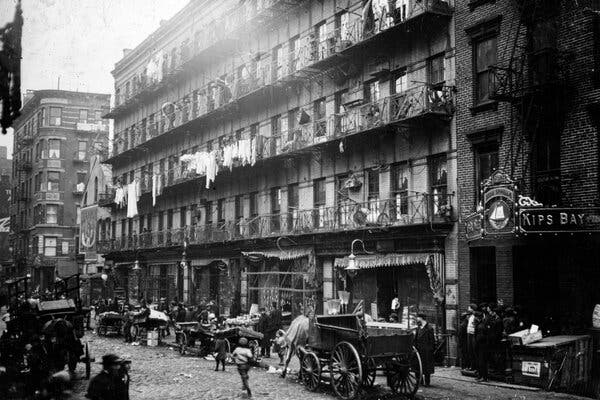
In January 1912, in the depths of a New York City winter, an unusual new apartment complex opened on the Upper East Side.The East River Homes were designed to help poor families fend off tuberculosis, a fearsome, airborne disease, by turning dark, airless tenements inside out. Passageways led from the street to capacious internal courtyards, where outdoor staircases wound their way up to each apartment. Floor-to-ceiling windows opened onto balconies where ailing residents could sleep. The rooftops drew tenants outside with covered porches and reclining seats, on which tuberculosis patients convalesced.“It is believed that this type of dwelling will not only be an efficient aid in the actual treatment of cases of incipient tuberculosis, but an even greater benefit will be its influence as a measure of prevention,” wrote Dr. Henry Shively, who ran a tuberculosis clinic and developed the idea for the complex.One of the paramount lessons of the Covid-19 pandemic is that fresh air matters. Although officials were initially reluctant to acknowledge that the coronavirus was airborne, it soon became clear that the virus spread easily through the air indoors. As the pandemic raged on, experts began urging building operators to crank up their ventilation systems and Americans to keep their windows open. The message: A well-ventilated building could be a bulwark against disease.It was not a novel idea. More than a century ago, when infectious diseases ravaged cities in the United States and Europe, public health reformers preached the power of good ventilation, and open-air homes, hospitals and schools sprang up in New York, London and other locales on both sides of the Atlantic.A balcony of the East River Homes in Manhattan in 1911, before the complex opened.Museum of the City of New YorkAn interior courtyard of the East River Homes in present day.Robert Wright for The New York TimesBut over the last century, society lost hold of that idea. Scientific advances turned pathogens into problems that could be solved at the individual, biomedical level, with medicines and vaccines, rather than through infrastructure or societal change. Skylines became crowded with air-conditioned towers. An energy crisis encouraged engineers to seal structures tightly. And by the time the coronavirus arrived, Americans were spending their days in schools, offices and homes that could barely breathe.“So you get a virus that spread nearly entirely indoors butting up against our building infrastructure that we know is not designed for health,” said Joseph Allen, an expert on healthy buildings at the T.H. Chan School of Public Health at Harvard.Three years later, many Americans have a new, hard-earned appreciation for the health benefits of clean air. But some experts worry that the lesson may not stick. The Covid-19 public health emergency has now expired, and public attention has shifted to other airborne threats, such as the acrid wildfire smoke that has recently smothered many Eastern cities. Given these developments, it might be tempting to seal our buildings back up again.That would be a mistake, experts say, especially in an era that is certain to bring more pandemics and air-quality crises. Being better prepared for the future, they say, will require us to avoid the missteps of the past.“There’s a real history of forgetting, especially in the United States,” said Sara Jensen Carr, an architect at Northeastern University who studies the connection between design and health. “I think we’re on the verge of forgetting the importance of fresh air again.”‘An abundant supply of fresh air’Tenement housing on Elizabeth Street in Manhattan in 1912.Lewis Hine, via Library of CongressIn the 19th-century city, infectious diseases — tuberculosis, cholera, smallpox, yellow fever, typhoid — were an ever-present danger. Many aspects of the squalid urban environment, with its overflowing sewers and lack of clean drinking water, fueled these outbreaks. But poor ventilation was also to blame.In New York City’s notorious tenements, many rooms lacked windows to the outdoors, and buildings were sometimes packed together so tightly that an open window provided little breeze. Conditions were especially dismal in cellar apartments. “Their foul, damp, sepulchral-like air being never visited by pure air and sunlight, they are fitter receptacles for the dead than the living,” the Association for Improving the Condition of the Poor wrote in an 1853 report.Germ theory had not yet gained widespread acceptance; instead, the longstanding theory of miasma held that disease was the result of “bad air.” So sanitary reformers began calling for an overhaul of urban spaces, including improvements in ventilation. “An abundant supply of fresh air, at a proper temperature, is the first requisite of health in every place,” the Citizens’ Association of New York wrote in a report published in 1865.New York undertook a variety of reforms, including restricting airless, underground apartments; requiring windows to the outdoors; and providing more space between buildings. Other cities and states developed new building codes and ventilation standards. “Ventilation comes next to godliness,” the president of the American Society of Heating and Ventilating Engineers declared in 1895, at the organization’s annual meeting.(Reformers were not entirely virtuous in their motives. They were partly spurred on by a desire to quell social unrest, and the association of poor neighborhoods with disease and disorder also led to slum clearing.)Similar reforms were also underway in hospitals thanks, in part, to the crusading work of Florence Nightingale, the British nurse who was stationed at a filthy military hospital during the Crimean War in 1854. The nurse, who believed in the healing power of “air from without,” helped popularize pavilion-style hospitals, which featured long, narrow wards with a row of large, open windows running along each wall.“The entire building is designed around promoting the movement of fresh air,” said Annmarie Adams, an architectural historian at McGill University.A 19th-century lithograph of Florence Nightingale in a tuberculosis ward at the Scutari Barracks in Turkey during the Crimean War.Album/British Library, via AlamyOutdoor air became part of the treatment regimen for tuberculosis, inspiring the design of sanitariums and fueling an open-air school movement that had students attending class on rooftops, in army tents and on ferries.When the Spanish flu pandemic arrived in 1918, officials expanded the approach, said E. Thomas Ewing, a historian at Virginia Tech. Some conventional classrooms began operating with their windows open, temporary open-air hospitals appeared and newspapers advertised doctor-endorsed “winter window screens.”In Chicago, sanitary inspectors checked the ventilation in churches. “Many clergymen substituted the subject of the epidemic for their regular texts and nearly all wove the healing powers of fresh air and sunshine into the theme of their regular sermons,” the department of public health noted in a 1919 report.It is difficult to prove that better-ventilated buildings made a difference. Death rates — both overall and from certain diseases, such as tuberculosis — did drop after New York implemented sweeping sanitary reforms, although these gains cannot be attributed to ventilation alone.Still, in the decades since, numerous studies have concluded that improving ventilation, including boosting natural ventilation by opening doors and windows, can reduce the transmission risk of numerous infectious diseases, including tuberculosis and influenza. In one recent study, researchers put patients with Covid-19 in a controlled chamber; when they increased the ventilation, the viral load in the air was reduced.Calculating comfortSmog in Manhattan on Thanksgiving Day in 1966.Neal Boenzi/The New York TimesBut even as the fresh-air cure gained ground, other developments set the stage for its demise.As science advanced, measures like hand-washing and chemical disinfection became key strategies for reducing the spread of pathogens, particularly in settings like operating rooms. For a time, this approach coexisted with the open-air strategy. “Some hospitals would have fresh air wards on one side,” said Jeanne Kisacky, an independent architectural historian, “and they’d have the closed wards for the surgical patients on another.”But additional medical advances soon tipped the scales: Antibiotics and vaccines became highly effective ways to control infectious disease, making something as simple as an open window seem quaint.“In schools and in hospitals, workplaces and homes, this desire for fresh air has been supplanted by just other priorities,” said Dr. Carr, the architect. “Chief among them: climate control.”Air conditioning, invented in 1902, expanded rapidly after World War II. At the same time, the public began noticing that outdoor air was not always fresh; deadly, days-long smog events descended on cities and towns. By the middle of the 20th century, opinions on outdoor air had flipped.“You go from Nightingale with, ‘It’s God’s gift to man, it’s natural, it’s healthy,’ to ‘It’s full of dust and dirt, and we don’t want it without it being filtered,’” Dr. Kisacky said.The shift to comfort from health was also reflected in ventilation standards, which began to emphasize perceived indoor air quality by bringing in just enough outdoor air to ensure that buildings did not stink. Ventilation rates fell and then plummeted further during the energy crisis of the 1970s, when buildings were sealed even more tightly. “In fact,” said James Lo, an architectural engineer at Drexel University, “a lot of effort pre-Covid is to try to reduce the amount of ventilation because people don’t want to spend the energy.”Minimum standardsA classroom in Pelham, N.Y., as smoke from Canadian wildfires descended last week.Will Zammit-Miller, via Associated PressIn the United States today, the American Society of Heating, Refrigerating and Air-Conditioning Engineers, or ASHRAE, sets widely used indoor air quality standards and specifies minimum ventilation rates. In practice, these rates typically govern how buildings are designed, rather than how they are operated day to day, and many structures deliver less fresh air than they were designed to provide, experts said.The standards define acceptable indoor air quality as air that does not have “harmful” levels of “known contaminants,” and with which at least 80 percent of occupants are satisfied. But infectious disease is not a focus.“It says nothing about, ‘Does this level of air quality protect you from risk of infection when the seasonal flu is going around, or when there’s a novel epidemic disease, like Covid?’” said William Bahnfleth, an architectural engineer at Penn State University and the chairman of the epidemic task force at ASHRAE.That is finally changing. ASHRAE is developing a new standard focused on reducing the transmission of airborne pathogens that applies both to new buildings and existing ones. It covers not only the rate of air exchange but also the use of filters and air cleaners, which can be highly effective ways to remove particles from the air. (Updated ventilation guidelines from the Centers for Disease Control and Prevention cover filters and air cleaners, too.)Although the focus is on infectious disease, many of these same strategies should provide protection from wildfire smoke or other pollutants that may seep into buildings. But the new recommendations are unlikely to make a big difference unless they are incentivized or enforced in some way, Dr. Bahnfleth said. He noted that there is little government regulation of indoor air quality. Some government entity “needs to take some responsibility,” he said.We have an opening to wage a new war on bad air, experts said, one that will be aided by tools and technologies that were not available to 19th-century sanitary reformers. But the key insight, and the animating spirit, is unchanged. “Our buildings,” said Dr. Allen, of Harvard, “should be seen as a public health tool.”

Read more →

A Year After Dobbs, Advocates Push in the States for a Right to Birth Control

After Justice Clarence Thomas cast doubt on the Supreme Court decision that established a right to contraception, reproductive rights advocates are pressing for new protections at the state level.One year after Justice Clarence Thomas said the Supreme Court should reconsider whether the Constitution affords Americans a right to birth control, Democrats and reproductive rights advocates are laying the groundwork for state-by-state battles over access to contraception — an issue they hope to turn against Republicans in 2024.The justice’s argument in Dobbs v. Jackson Women’s Health Organization, the case that overturned Roe v. Wade and the right to abortion, galvanized the reproductive rights movement. House Democrats, joined by eight Republicans, promptly passed legislation that would have created a national right to contraception. Republicans blocked a companion bill in the Senate.Now, reproductive rights advocates are pressing their case in the states. Even before Dobbs, some states had taken steps to protect the right to contraception, by either statute or constitutional amendment; 13 states and the District of Columbia currently have such protections, according to KFF, a health policy research organization.This month, the movement scored an important but little-noticed victory in Nevada, where the Democratic-controlled Legislature passed a bill, inspired by the defeated federal measure, that would guarantee a right to contraception. Gov. Joe Lombardo, a Republican, has not said whether he will sign it, and a spokeswoman said she could not speak to his views. Proponents of codifying such a right see Nevada as a test case.“It’s going to be up to Republicans to choose whether they want to protect the right to contraception,” Senator Edward J. Markey, Democrat of Massachusetts and the sponsor of the failed Senate bill, said in an interview. He called the Dobbs decision “a preview of coming atrocities.”On Wednesday, Mr. Markey and Representative Kathy Manning, Democrat of North Carolina, reintroduced legislation to create a national right to contraception. With the House now controlled by Republicans and Senate Democrats well short of the 60 votes needed to break a filibuster, the legislation is most likely dead on arrival in Washington.Polls have consistently shown broad bipartisan support for access to contraception, and while Republicans may not be eager to enshrine a right to it in federal law, neither do they generally want to ban it. Still, some opposition to birth control does exist.The Roman Catholic Church opposes any form of artificial birth control, arguing that some contraceptives “can cause early abortions.” Some abortion foes claim that two common methods of preventing pregnancy — intrauterine devices and emergency contraception, also known as the morning-after pill and marketed as Plan B — are “abortifacients” that prevent a fertilized egg from implanting in a woman’s uterus.But the American College of Obstetricians and Gynecologists says intrauterine devices work “mainly by preventing fertilization of an egg by sperm.” And the Food and Drug Administration said last year that Plan B does not prevent a fertilized egg from implanting in the womb and cannot be considered an abortion pill.Critics of codifying a right to contraception say such legislation amounts to a solution without a problem — or is purely a political gesture meant to put Republicans in a difficult spot and spur voters into rejecting them at the ballot box.“Most Republicans saw that as a political vote, not really a serious vote,” John Feehery, a Republican strategist, said of the vote on the House bill last year. “In the Republican coalition, there is a small but vocal element that is anti-contraception, but the vast majority of Republicans don’t have any interest in making contraception illegal.”Since the Dobbs decision, debates over birth control have also become increasingly tied up with abortion. Some Republicans who voted against the House bill complained that it would have sent more money to Planned Parenthood, an organization that is a target for many in the party because it is a major provider of abortions. Representative Cathy McMorris Rodgers, Republican of Washington, described the bill as a “Trojan horse for more abortions.”Writing for the majority in the Dobbs case, Justice Samuel A. Alito Jr. stressed that the ruling “concerns the constitutional right to abortion and no other right.” But in a concurring opinion, Justice Thomas said the Supreme Court should reconsider other rulings, including Griswold v. Connecticut, a 1965 decision that established the right of married couples to use contraception. He said the logic of the majority opinion in Dobbs undermined Griswold.Justice Clarence Thomas said the Supreme Court should reconsider Griswold v. Connecticut, a 1965 decision that established the right of married couples to use contraception.Allison V. Smith for The New York Times“For years, we asked elected officials around the country to pay more attention to the conflation of abortion and contraception,” said Clare Coleman, the president and chief executive of the National Family Planning & Reproductive Health Association, which represents health providers. “We shouldn’t have to answer the ‘Why are we worried?’ question anymore.”Ms. Coleman and her allies in the movement say that complacency is what cost American women the right to abortion. They also see what they regard as worrisome efforts to restrict access to birth control.In 2021, Republicans in Missouri tried to ban taxpayer funding for intrauterine devices and emergency contraception. Missouri is one of four states — the others are Arkansas, Mississippi and Texas — that have ejected Planned Parenthood, a major provider of birth control, from their Medicaid programs.At the same time, the federal family planning program known as Title X is being challenged in Texas, where a federal judge ruled late last year that it violated parents’ constitutional rights by permitting clinics to provide birth control to teenagers without parental consent. If the ruling is upheld, it could threaten access to contraceptives for minors nationwide.So far, though, the Dobbs case has not spawned the kind of widespread attacks on birth control that advocates feared. In fact, access to contraception has been expanded in a handful of red states, according to the Guttmacher Institute, which tracks reproductive health measures.In Indiana, Gov. Eric Holcomb signed legislation allowing pharmacists to prescribe birth control. In West Virginia, Gov. Jim Justice signed a bill requiring insurance plans to cover 12-month supplies of contraceptives from pharmacies. In Arkansas, Gov. Sarah Huckabee Sanders signed legislation requiring Medicaid to cover intrauterine devices and other long-acting reversible contraceptives for women who have just given birth. All are Republicans.The push for laws declaring a right to contraception comes as the F.D.A. is considering allowing birth control pills to be sold over the counter for the first time. A panel of advisers to the agency said last month that the benefits of over-the-counter contraception outweighed the risks. In anticipation of possible action by the F.D.A., Senate Democrats recently reintroduced legislation that would require insurers to cover over-the-counter contraception.But Senator Catherine Cortez-Masto, Democrat of Nevada and one of the bill’s chief sponsors, said she did not know if the measure’s backers could get any Republican support in the current post-Dobbs climate. “We think that we should,” she said, “but, you know, it’s a different and challenging time right now.”In North Carolina, the Dobbs case and abortion politics doomed a bill to affirm a right to contraception, said State Senator Lisa Grafstein, a Democrat who introduced the measure. Ms. Grafstein said in an interview that she had spoken to at least one Republican who was interested in becoming a co-sponsor.But that was before lawmakers in the state moved to ban most abortions after 12 weeks.State Senator Lisa Grafstein, a Democrat in North Carolina, introduced a contraception bill that was doomed by abortion politics.Kate Medley for The New York Times“Once the abortion debate took off, there wasn’t any more discussion of these kinds of issues,” Ms. Grafstein said. “The tenor of things has really changed a lot in terms of whether a conversation like that would even be possible at this point.”Even in Nevada — a state where voters codified a right to abortion through a referendum more than three decades ago, in 1990 — it was tough for the bill’s backers to get Republican support. Ultimately, a handful of Republicans voted for the measure. Its chief sponsor, Assemblywoman Selena Torres, a Democrat, said she was hopeful that the governor would sign it.“This was a very separate topic from abortion,” Ms. Torres said. “But I do think that the Dobbs decision is ultimately what drives this conversation.”Supporters of codifying a right to contraception are hoping Nevada will serve as a model for other states and will also put pressure on Republicans in Congress. Americans for Contraception, an advocacy group that has orchestrated the state-by-state strategy, ran attack ads last year against Republicans who voted against the House bill.The group says it has lined up Democratic state legislators in five more states — Arizona, Mississippi, Tennessee, Virginia and Wisconsin — to introduce bills next year to guarantee a right to contraception.“Last year, 195 House Republicans tried to get away with opposing the right to contraception by voting against a straightforward bill,” said Dana Singiser, a senior adviser to the group. “Nevada demonstrates that some of their colleagues at the state level recognize that supporting the right to contraception is a policy and a political no-brainer.”In Washington, there is a ready explanation for why so many Republicans voted against the House bill: Susan B. Anthony Pro-Life America, an anti-abortion group, decided to include the vote in its scorecard for lawmakers.The organization derided the measure as the “Payouts for Planned Parenthood Act” and said it would “trample conscience rights” in states that allow health providers or pharmacists to refuse to provide birth control. The group asserted that the bill’s definition of contraceptives — “any drug, device or biological product intended for use in the prevention of pregnancy” — was overly broad and could be construed to include abortion pills.“If you’re a Republican, you want to be seen as pro-life, and the Susan B. Anthony group, they help define who’s pro-life,” said Mr. Feehery, the Republican strategist, adding, “I think most Republicans would much rather be on the side of Susan B. Anthony than on the side of Planned Parenthood.”

Read more →