Scientists develop gene-editing technology that eliminates EV-A71 RNA viruses

A team of scientists from A*STAR’s Genome Institute of Singapore (GIS) and the Yong Loo Lin School of Medicine, National University of Singapore (NUS Medicine) has made an important breakthrough in the fight against RNA viruses that cause human diseases and pandemics.
Their research shows that the CRISPR-Cas13 editor delivered by adeno-associated virus (AAV) can directly target and eliminate RNA viruses in laboratory models. AAV are delivery vehicles derived from small viruses that naturally infect humans.They are clinically approved for use in gene therapy drugs which are used to treat diseases such as spinal muscular atrophy, Duchenne muscular dystrophy, and haemophilia.
The EV-A71 virus is the cause of the hand, foot, and mouth disease, and in severe cases, can lead to nervous system disease and death. To treat the viral infection, the team turned to CRISPR-Cas13, an RNA-editing technology that alters RNA in a cell.
CRISPR-Cas13 edits RNA and opens therapeutic avenues to a wide range of diseases that are untreatable by the Nobel Prize-winning CRISPR-Cas9, which edits DNA. CRISPR-Cas13 is programmed by guide RNAs (gRNAs) to target specific RNA sequences. Upon binding to these RNA sequences, the CRISPR-Cas13 cuts the RNA target into pieces, inactivating the RNA. CRISPR-Cas13 could also be utilised for RNA-editing, where a specific RNA sequence is changed to another sequence within the cell.
In this recent work, the team of scientists first developed the Cas13gRNAtor computational programme to design CRISPR gRNAs that cut viral RNA across different viral strains. They show that CRISPR-Cas13 treatment potently reduces viral burden, with less than 0.1% of the viruses remaining in previously infected cells.
Importantly, the research findings show that the AAV-CRISPR-Cas13 therapy clears the EV-A71 infection and prevents organ damage and mortality.
“This is a stunning demonstration that one dose of CRISPR-Cas13 can mean a difference between life and death. We are building on this research to develop further life-changing nucleic acid therapeutics.” said Dr Chew Wei Leong, Associate Director and Principal Scientist at A*STAR’s GIS.
Associate Professor Justin Chu from NUS Medicine’s Department of Microbiology and Immunology and Infectious Diseases Translational Research Programme added, “This amazing study has helped to unlock the new frontiers in antiviral strategies by using AAV-CRISPR-Cas13 to combat human enteroviruses, paving the way for potential therapeutics against viral diseases.”
Professor Liu Jian Jun, Acting Executive Director of A*STAR’s GIS said, “The CRISPR technology allows the rewriting of the genetic code in almost any organism. This joint research with NUS is an extremely important development which can potentially treat many diseases caused by RNA viruses, and open many avenues for further therapeutic solutions.”
These findings demonstrate a therapeutic development pipeline for antiviral AAV-CRISPR-Cas13 against potentially deadly RNA virus infections. Further therapeutic development could bring this technology towards treating human RNA viruses in the clinic. This research was published on 28 June 2023, in eBioMedicine, part of The Lancet Discovery Science.

Read more →

Novel molecules fight viruses by bursting their bubble-like membranes

Antiviral therapies are notoriously difficult to develop, as viruses can quickly mutate to become resistant to drugs. But what if a new generation of antivirals ignores the fast-mutating proteins on the surface of viruses and instead disrupts their protective layers?
“We found an Achilles heel of many viruses: their bubble-like membranes. Exploiting this vulnerability and disrupting the membrane is a promising mechanism of action for developing new antivirals,” said Kent Kirshenbaum, professor of chemistry at NYU and the study’s senior author.
In a new study published Aug. 2 in the journal ACS Infectious Diseases, the researchers show how a group of novel molecules inspired by our own immune system inactivates several viruses, including Zika and chikungunya. Their approach may not only lead to drugs that can be used against many viruses, but could also help overcome antiviral resistance.
The urgent need for new antivirals
Viruses have different proteins on their surfaces that are often the targets of therapeutics like monoclonal antibodies and vaccines. But targeting these proteins has limitations, as viruses can quickly evolve, changing the properties of the proteins and making treatments less effective. These limitations were on display when new SARS-CoV-2 variants emerged that evaded both the drugs and the vaccines developed against the original virus.
“There is an urgent need for antiviral agents that act in new ways to inactivate viruses,” said Kirshenbaum. “Ideally, new antivirals won’t be specific to one virus or protein, so they will be ready to treat new viruses that emerge without delay and will be able to overcome the development of resistance.”
“We need to develop this next generation of drugs now and have them on the shelves in order to be ready for the next pandemic threat — and there will be another one, for sure,” added Kirshenbaum.

Read more →

What I Saw When I Looked Inside My Own Body

Modern medicine is constantly showing us our guts and bones. Why doesn’t it feel more profound?It wasn’t that I thought medical imaging was simple, precisely. I understood that a real human body is complicated — that the anatomy textbooks were the map, not the territory. I understood that the plastic dummy with its removable organs was a model, not an exact representation; that the brightly colored images hanging in the doctor’s office were not photographs; that the episode of “The Magic School Bus” in which the class travels through Arnold’s digestive system was not a documentary. Still, what I did not anticipate was that when confronted with an image of my own body — the product of the rotating series of X-rays known as a CT scan — I wouldn’t recognize it at all. I don’t mean as myself, but as anything.For most of human history, there was only one way to see inside the body: You cut it open. When, in 1628, William Harvey published “De Motu Cordis,” his theory of the circulation of blood, he relied on vivisections of dogs and sheep. To produce the detailed anatomical drawings in “Gray’s Anatomy,” Henry Vandyke Carter relied on human cadavers. It wasn’t until 1895 that a physicist named Wilhelm Röntgen tried something new: He put the hand of his wife, Anna, between a cathode-ray tube and a photographic plate. There it was — her skeletal hand. Anna was revolted. “I am seeing my own death!” she is said to have screamed. In Thomas Mann’s novel “The Magic Mountain,” set a decade or so later, the tubercular Hans Castorp too saw “his own grave” in the X-ray — “the flesh in which he moved decomposed, expunged, dissolved into airy nothingness.”I am the beneficiary of more than a century of acclimation to the idea of seeing inside yourself. The X-ray, along with all the imaging technologies that followed, is one of modern medicine’s routine little miracles, just like insulin, penicillin, vaccines and effective pain treatment. We see inside bodies all the time now. On TV, doctors examine X-rays and ultrasounds for clues. On social media, a grainy fetal shape floating in the void tells us that a friend is pregnant. A trip to the dentist yields the alien sight of your jaw flattened out and hung up for display.Radiology can be subjective — not as subjective as, say, art criticism, but not cut and dried.From my CT scan, I expected a brush with mortality — the opportunity to see the forbidden land of my own guts, to contemplate their eventual decomposition. By that point I had already had an organ removed (my gallbladder), and I suppose I expected to register its absence somehow. What I saw instead was just shades of gray and blobs of darkness. Nothing was recognizable as an organ. At one point, I remember, the doctor directed me to pay attention to something that, in his own words, did not look like anything at all. That, he wanted me to know, was my pancreas. He was right: It did not look like anything at all. If, for Anna Röntgen and Hans Castorp, the X-ray produced something that was undeniably and terrifyingly their own body, I was having the opposite experience. Whose body was this? Was it a body at all? Without the doctor there to tell me what it was I saw, I would never have known.In popular culture, medical imaging represents a simple statement of fact, a question resolving into certainty. Watch episodes of the medical drama “House, M.D.,” and you will see imaging confidently used to diagnose psychopathy, to tell whether somebody is lying, even to visualize the subconscious. People lie and bodies deceive, but tests and scans do not. And so, in the real world, one submits to these devices nervously, as one would to some kind of truth serum or all-seeing eye: There is no hiding here.Even when we imagine a superhero with X-ray vision, we imagine somebody who sees through the inessential to the essential. In a scene in the 1978 “Superman,” the Man of Steel flirts with Lois Lane first by scolding her for smoking, then by scanning her for lung cancer. (Her lungs glow pinkly and cutely for a moment before he informs her that she’s all clear. Later, at her request, he tells her the color of her underwear.) Like his superstrength, Superman’s X-ray vision is allied to his virtuous nature: His eyes tell the truth and can’t be fooled.Nobody expects strict medical accuracy from superhero movies. But popular science narratives are hardly more cautious. We are often breathlessly informed, for instance, that parts of the brain “light up” when presented with certain stimuli, telling us precisely what people are thinking and feeling and why. (Of course, parts of the brain do not light up at all — only their images on an f.M.R.I., indicating blood flow.) Even in everyday life, medical images convey an official certainty that’s hard to obtain through other means. I’ve known friends to forgo different parts of the medical process throughout pregnancies, but the pregnancy-announcing sonogram is de rigueur. Without that image to show friends, you simply aren’t pregnant, socially speaking; you just might be.For medical professionals, though, all these imaging techniques are imperfect tools, just another way to get a partial idea of what might be happening inside a human body. You have to be trained to read them at all. The doctors on “House” run and pore over scans themselves, but in reality both creating and interpreting CT scans are specialized jobs. Radiology can be subjective — not as subjective as, say, art criticism, but not cut and dried. In the future, artificial intelligence may take a greater role in interpreting results — but it will not make the experience any less alienating if, instead of depending on human expertise to analyze your body, a computer program is making judgments and flagging risks based on patterns and correlations even the doctors may not be able to see.All we want from a picture is reality; all we ever get is representation. From medicine, we want pure science, but what we get is a complicated tangle of guesswork and certainty, tried-and-true and trial-and-error. You can undergo countless tests without reaching clarity. Even when doctors have identified the main problem — when their ability to operate and repair feels truly godlike — there remain the things they simply don’t know.It doesn’t look human, the picture on the screen. I have watched professionals use ultrasound to search my arms for veins, looking for spots of black in a field of dark gray and then plunging a needle in a promising spot. Yet it never quite felt as though it was my arm over there on the screen. It’s as if I had another, more real body that could be glimpsed only temporarily, through arcane practices into which I had no insight. What I wanted from a CT scan was a particular kind of self-knowledge, even if it was just an understanding of how my organs looked packed together; what a relief it would have been to confront something as certain and solid as my own grave on the computer screen. Instead I saw the only thing I’ll ever see in any picture: a mass of shapes that might mean something and might mean nothing at all.Some time after I underwent surgery, the surgeon showed me photographs of the procedure itself. Like the CT scan, the photographs were chaotic and confusing, but they were at least fleshy. I saved some, thinking I might be interested in them later. Months later, scrolling through my pictures, I ran across some thumbnails of uninteresting heaps of meat. What’s that, I wondered, and why had I saved these boring and frankly slightly disgusting images? Then I remembered — it was me, it was me, it was me.Opening illustration: Source photographs from Getty

Read more →

Irregular sleep patterns associated with harmful gut bacteria

New research has found irregular sleep patterns are associated with harmful bacteria in your gut.
The study, published today in The European Journal of Nutrition, by researchers from King’s College London and ZOE, the personalised nutrition company, is the first to find multiple associations between social jet lag — the shift in your internal body clock when your sleeping patterns change between workdays and free days — and diet quality, diet habits, inflammation and gut microbiome composition in a single cohort.
Previous research has shown that working shifts disrupts the body clock and can increase risk of weight gain, heart problems and diabetes. However, there is less awareness that our biological rhythms can be affected by smaller inconsistencies in sleeping patterns due to waking early with an alarm clock on workdays, for example, compared to waking naturally on non-workdays for people working regular hours.
Senior author Dr Wendy Hall from King’s College London said: “We know that major disruptions in sleep, such as shift work, can have a profound impact on your health. This is the first study to show that even small differences in sleep timings across the week seems to be linked to differences in gut bacterial species. Some of these associations were linked to dietary differences but our data also indicates that other, as yet unknown, factors may be involved. We need intervention trials to find out whether improving sleep time consistency can lead to beneficial changes in the gut microbiome and related health outcomes.”
The composition of the microbes in your gut (microbiome) may negatively or positively affect your health by producing toxins or beneficial metabolites. Specific species of microbes can correspond to an individual’s risk of long-term health conditions such as diabetes, heart disease and obesity. The microbiome is influenced by the food you consume which makes the diversity of your gut adjustable.
In a cohort of 934 people from the ZOE PREDICT study, the largest ongoing nutritional study of its kind, researchers assessed blood, stool and gut microbiome samples as well as glucose measurements in those whose sleep was irregular compared to those who had a routine sleep schedule. While previous studies into the association between social jet lag and metabolic risk factors have been done in populations with obesity or diabetes, this cohort consisted of mainly lean and healthy individuals with most getting more than seven hours sleep per night throughout the week.
Researchers found that just a 90-minute difference in the timing of the midpoint of sleep — the halfway point between sleep time and wake-up time — is associated with differences in gut microbiome composition.

Read more →

Why you should go to sleep at the same time all week

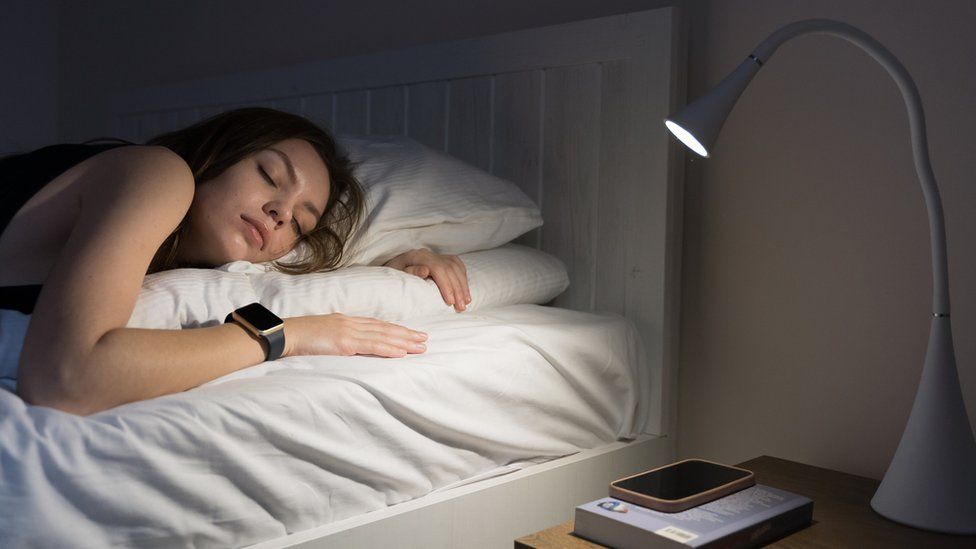
Published1 hour agoShareclose panelShare pageCopy linkAbout sharingImage source, Getty ImagesBy Philippa RoxbyHealth reporterSmall differences in sleeping habits between work and rest days could lead to unhealthy changes to the bacteria in our guts, a study suggests.This may be partly a result of people with “social jetlag” having slightly poorer diets, the researchers found.Heavily-disrupted sleep, particularly shift work, is known to have a negative impact on health.Keeping bed times and wake times consistent and eating healthily may help reduce our risk of disease.The study of nearly 1,000 adults by Kings College London scientists found that even a 90-minute difference in the midpoint of your night’s sleep over the course of a normal week could influence the types of bacteria found in the human gut.Having a wide range of different species of bacteria in your digestive system is really important. Some are better than others, but getting the right mix is key to preventing a number of diseases.Gut instinct: Why I put my poo in the postHow bacteria are changing your mood”[Social jetlag] can encourage microbiota species which have unfavourable associations with your health,” said Kate Bermingham, study author and senior nutrition scientist at health science company Zoe.Going to sleep and waking up at very different times during the week, compared to the weekend, is known as having social jetlag.It is thought to affect more than 40% of the UK population, the study says, and is most common in teenagers and young adults, then tapers off as we age.Participants in this study, in the European Journal of Nutrition, had their sleep and blood analysed, stool samples collected and recorded everything they ate in a food questionnaire. Those who had social jetlag (16%) were more likely to eat a diet laden with potatoes, including crisps and chips, plus sugary drinks, and less fruit and nuts.Previous research showed people with social jetlag ate less fibre than those with more consistent sleeping times. Other studies found social jetlag was linked to weight gain, illness and mental fatigue.”Poor quality sleep impacts choices – and people crave higher carb or sugary foods,” says Dr Bermingham.An unhealthy diet can then affect levels of specific bacteria in the gut. The researchers found that three out of the six microbiota species which were more plentiful in the social jetlag group are linked to poor diet quality, obesity and higher levels of inflammation and stroke risk. The relationship between sleep, diet and gut bacteria is complicated and there is still a lot more to find out.In the meantime, the advice from experts is to keep things consistent, if you can, over the course of a week.”Maintaining regular sleep patterns, so when we go to bed and when we wake each day, is an easily adjustable lifestyle behaviour we can all do, that may impact your health via your gut microbiome for the better,” says Dr Sarah Berry, from King’s College London.What is a healthy diet?The NHS website recommends you try to:eat at least five portions of a variety of fruit and vegetables every daybase meals on higher fibre starchy foods like potatoes, bread, rice or pastahave some dairy or dairy alternatives, and go for lower-fat or lower-sugar where possibleeat some beans, pulses, fish, eggs, meat and other proteinchoose unsaturated oils and spreads, and eat them in small amountsdrink plenty of fluids (at least six to eight glasses a day)More on this storyMore than half your body is not humanPublished10 April 2018Gut instinct: Why I put my poo in the postPublished14 April 2018How bacteria are changing your moodPublished24 April 2018Around the BBCHow quickly can you improve your gut bacteria? BBC FoodWhy a workout is good for your gut bacteria – BBC Future

Read more →

Safety of AI-supported mammography screening

Mammography screening supported by artificial intelligence (AI) is a safe alternative to today’s conventional double reading by radiologists and can reduce heavy workloads for doctors. This has now been shown in an interim analysis of a prospective, randomised controlled trial, which addressed the clinical safety of using AI in mammography screening. The trial, led by researchers from Lund University in Sweden, has been published in The Lancet Oncology.
Each year around one million women in Sweden are called to mammography screening. Each screening examination is reviewed by two breast radiologists to ensure a high sensitivity, so called double reading. There is however a workforce shortage of breast radiologists, in Sweden and elsewhere, which can put the screening service at risk. Lately, the potential of AI to support mammography screening has attracted much attention, but how this is to be optimally conducted and what the clinical consequences will be, remains unclear.
To know with certainty what happens when radiologists work with the support of AI requires studies in which women are randomly allocated to AI-supported screening or to standard screening. The Mammography Screening with Artificial Intelligence (MASAI) trial is the first randomised controlled trial evaluating the effect of AI-supported screening.
“In our trial, we used AI to identify screening examinations with a high risk of breast cancer, which underwent double reading by radiologists. The remaining examinations were classified as low risk and were read only by one radiologist. In the screen reading, radiologists used AI as detection support, in which it highlighted suspicious findings on the images,” says Kristina Lång, researcher and associate professor in diagnostic radiology at Lund University and consultant at Skåne University Hospital, who led the study.
The 80,033 women included in the safety analysis were randomly allocated into two groups: 40,003 women in the intervention group that underwent AI-supported screening and 40,030 in the control group that underwent standard double reading without AI support.
“We found that using AI resulted in the detection of 20 % (41) more cancers compared with standard screening, without affecting false positives. A false positive in screening occurs when a woman is recalled but cleared of suspicion of cancer after workup,” says Kristina Lång.
At the same time, the screen-reading workload for radiologists was reduced by 44 %. The number of screen readings with AI-supported screening was 46,345 compared with 83,231 with standard screening.

Read more →

Study to test eye drops for nearsightedness

A study conducted at Vanderbilt University Medical Center and 11 other hospitals and practices across the United States shows that use of low-dose atropine eyedrops, commonly used in a higher dose to treat lazy eye, was no better than a placebo at slowing myopia (nearsightedness) progression and elongation of the eye among children treated for two years.
The first randomized controlled trial of its kind aimed at identifying an effective way to manage myopia was published last week in JAMA Ophthalmology. It was conducted by the Pediatric Eye Disease Investigator Group and funded by the National Eye Institute (NEI).
“We found, interestingly, and honestly shockingly, that there was no difference in the use of 0.01% atropine and placebo in treating these children who ranged in age from 5 to 12,” said Lori Ann Kehler, OD, associate professor of Ophthalmology and Visual Sciences, chief of the Optometry Service and the Vanderbilt site principal investigator for the study. Of the 187 trial participants, 21 were from VUMC, she said.
The onset of myopia usually occurs between the ages of 7 and 16 when developing eyes can start growing too long axially (from front to back). Instead of focusing images on the retina — the light-sensitive tissue in the back of the eye — images of distant objects are focused at a point in front of the retina which causes people to have poor distance vision while their near vision remains unchanged.
The condition results in the need for eyeglasses to improve distance vision, and it can also result in medical complications and serious uncorrectable vision loss later in life, like retinal detachments or myopic macular degeneration.
The study contradicts earlier studies from East Asia that showed the small dose of atropine is effective in slowing progression of myopia.
In 2017 the Academy of Ophthalmology endorsed the findings from East Asia saying that although the FDA had not approved atropine for this use, there was sufficient evidence for prescribing the low dose for myopia. Ophthalmologists across the country, including at VUMC, began to offer the prescription to young patients with myopia.

Read more →

Minds & eyes: Study shows dementia more common in older adults with vision issues

Losing the ability to see clearly, and losing the ability to think or remember clearly, are two of the most dreaded, and preventable, health issues associated with getting older.
Now, a new study lends further weight to the idea that vision problems and dementia are linked.
In a sample of nearly 3,000 older adults who took vision tests and cognitive tests during home visits, the risk of dementia was much higher among those with eyesight problems — including those who weren’t able to see well even when they were wearing their usual eyeglasses or contact lenses.
The research was published recently in JAMA Ophthalmology by a team from the Kellogg Eye Center at Michigan Medicine, the University of Michigan’s academic medical center.
Based on data from a nationally representative study of older adults conducted in 2021 through the U-M Institute for Social Research, it adds to a growing pile of studies that have suggested a link between vision and dementia.
All of the older adults in the study were over the age of 71, with an average age of 77. They had their up-close and distance vision, and their ability to see letters that didn’t contrast strongly with their background, tested by a visiting team member using a digital tablet. They also took tests of memory and thinking ability, and provided health information including any existing diagnosis of Alzheimer’s disease or another form of dementia.
Just over 12% of the whole group had dementia. But that percentage was higher — nearly 22% — among those who had impaired vision for seeing up close.

Read more →

Organoids revolutionize research on respiratory infections

In a breakthrough for bioengineering, researchers at EPFL have developed organoids that can model the human respiratory tract. The organoids, called AirGels, allow them to uncover the mechanism by which antibiotic-resistant pathogens like Pseudomonas aeruginosa infect the respiratory tract.
Biofilms are highly resistant communities of bacteria that pose a major challenge in the treatment of infections. While studying biofilm formation in laboratory conditions has been extensively conducted, understanding their development in the complex environment of the human respiratory tract has remained elusive.
A team of researchers led by Alexandre Persat at EPFL have now cracked the problem by successfully developing organoids called AirGels. Organoids are miniature, self-organized 3D tissues grown from stem cells to mimic actual body tissues and organs in the human body. They represent a paradigm shift in the field, enabling scientists to replicate and study the intricate environments of organs in the laboratory.
Developed by Tamara Rossy and her colleagues, the AirGels are bioengineered models of human lung tissue that open up new possibilities in infection research. They revolutionize infection research by accurately emulating the physiological properties of the airway mucosa, including mucus secretion and ciliary beating. This technology allows scientists to study airway infections in a more realistic and comprehensive manner, bridging the gap between in vitro studies and clinical observations.
“There is a lot to say about this study, but the engineering of organoids for infection research has tremendous potential,” says Persat. “It’s a game changer.”
In the study, published in PLoS Biology, the researchers used AirGels to investigate the role of mucus in the process of biofilm formation by Pseudomonas aeruginosa, a pathogenic bacterium that is commonly resistant to antibiotics. By infecting the AirGels with P. aeruginosa and studying them under high-resolution live microscopy, they were able to the bacterium form biofilms in real time.
Their observations revealed that P. aeruginosa actively induces contraction of its host’s mucus using retractile filaments known as type IV pili (T4P). The T4P filaments generate the necessary forces to contract the airway’s mucus, which allows P. aeruginosa cells to aggregate and form a biofilm. The researchers validated their findings with follow-up simulations and biophysical experiments on selected P. aeruginosa mutants.
The study shows that the AirGel organoid model can provide unique insights into the mechanical interactions between bacteria and their hosts’ environments, in this case uncovering a previously unknown mechanism that contributes to biofilm formation in the respiratory tract.
Being able to engineer organoids that faithfully replicate the mucosal environment opens up new avenues of exploration, enabling researchers to uncover overlooked aspects of infections, investigating the influence of additional physiological factors, such as temperature, humidity, drugs, and chemical stressors on the development and progression of infection, and develop targeted treatments against antibiotic-resistant pathogens.

Read more →

Early-life lead exposure linked to higher risk of criminal behavior in adulthood, researchers find

An evaluation of 17 previously published studies suggests that exposure to lead in the womb or in childhood is associated with an increased risk of engaging in criminal behavior in adulthood — but more evidence is needed to strengthen understanding. Maria Jose Talayero Schettino of the George Washington University, U.S., and colleagues present these findings in the open-access journal PLOS Global Public Health.
Lead exposure can cause a variety of health challenges, such as cardiac issues, kidney damage, immune system dysfunction, reproductive problems, and impaired neurodevelopmental function in children. Research has also uncovered statistical associations between lead exposure and criminal behavior, both at the level of the entire population and at the level of individual people. However, the findings of individual-level studies have been inconsistent.
To help clarify the existing evidence, Talayero Schettino and colleagues conducted a systematic review of studies that address links between individual lead exposure and crime or other antisocial behaviors. Their analysis included 17 studies, which employed a variety of methods for measuring lead exposure — using blood, bones, or teeth — and addressed the effects of exposure at different ages, including in the womb or early childhood, later childhood, and adolescence or adulthood.
The review highlighted a wide range of findings among the studies. For instance, in some cases, no statistical links were found between early childhood lead exposure and later delinquent behavior. One study showed a link between exposure and antisocial behavior, but not arrests. Still, several studies found links between early childhood exposure to lead and later arrests, including drug-related arrests. The authors also used a tool called ROBINS-E to evaluate each study for statistical bias, finding some studies to be more statistically robust than others.
Overall, in light of the known biological effects of lead, this review suggests that an individual exposed to lead in the womb or in early childhood may have a higher risk of engaging in criminal behavior as an adult.
On the basis of their findings, the researchers note a need for more individual-level evidence to be collected in order to deepen understanding of the associations seen in the 17 studies they reviewed. However, policy action to prevent lead exposure is of paramount importance to safeguard public health.
The authors add: “Policy action to prevent lead exposure is of utmost importance as our research shows an excess risk for criminal behavior in adulthood exists when an individual is exposed to lead in utero or during childhood. Preventing lead exposure is crucial to safeguard public health and promote a safer society for all.”

Read more →