Tips for Buying Travel Insurance

In the wake of Covid, travel insurance sales have spiked with the rebound in travel as people seek to protect their investments against flight delays and cancellations, extreme weather events and the persistence of the virus. But travel insurance is complicated with a range of benefits, inclusions and prices. Here’s what you need to know before you buy.Know what’s coveredGenerally speaking, travel insurance covers unforeseen events, like an illness in the family, the loss of a job or a natural disaster, that force you to cancel or interrupt a trip. It can also apply in the event of a strike at a transportation company, a terrorist attack in your destination or when your travel provider goes bankrupt. These are known as covered reasons. Most polices also include medical coverage, which is useful abroad where your health insurance may not cover you.While policy prices vary based on age, length of travel and type of coverage, expect to pay between 4 to 10 percent of your entire trip cost to get insured.Insure nonrefundable expensesTravel insurance was designed to protect expenses you can’t get back any other way when things go wrong. Think of nonrefundable Airbnb reservations or the cost of a cruise to the Galápagos.If your hotel is refundable and you can get the value of your flights back in credits, you can skip travel insurance.Buy close to bookingTravel insurers say the best time to buy travel insurance — which usually takes effect within a day of purchase — is just after making your travel plans to have the largest possible coverage window. A lot can happen between booking a Christmas market cruise in Europe in June and going in December.With many plans, purchasing travel insurance 10 to 14 days from your first trip payment entitles you to “early purchase” benefits such as a waiver for pre-existing medical conditions that impact travel. If such a waiver is included, it is usually prominent in a summary of benefits, so read it carefully.“Not all plans have a pre-existing condition waiver,” said Suzanna Morrow, the senior vice president of InsureMyTrip.com, an online insurance marketplace. “If I have a heart condition and if something occurs, I don’t want it excluded, so I would need to buy a policy within 14 days of the first dollar spent.”Hedge against the weatherYou can’t control the weather, but you can insure against its unexpected disruptions. For example, if you’re ready to jump on great rates in the Caribbean during the height of hurricane season, buy your insurance immediately after booking so that if a hurricane develops and your destination is evacuated, you’ll be covered.“That’s probably the biggest use case for travel insurance,” said Stan Sandberg, a co-founder of TravelInsurance.com, an online marketplace. He counsels travelers to buy early — if you wait and the storm is named it will be too late to insure against it, because it is no longer an unforeseen event.Similarly, with winter travel, if you’ve purchased nonrefundable ski lift tickets and a storm prevents you from reaching the resort, you may be able to claim the unused portion of your ski pass.This coverage may prove more valuable as climate change exacerbates weather events like hurricanes and tornadoes, which are considered “natural disasters” and are covered by most policies.Pick up the phoneWith the proliferation of automated insurance offers when you buy airline tickets or tours, travel insurance can feel like a one-size-fits-all product. It is not. Many policies, for example, exclude extreme sports like skydiving and mountain climbing, though there are specialty policies that include them.If you have a specific concern — a family member is sick or you’re going heli-skiing — the best way to know if a travel insurance policy will cover you is to call an insurer or the help line at a travel insurance marketplace to get advice.“Tell them the what-if scenario and then you can get professional and accurate advice,” Ms. Morrow said. “Thinking you’re covered and then having your claim denied is salt in the wound.”Travel insurance does not cover ‘unpleasantries’What if you’re dreading spending a week in an unairconditioned rental in England during a heat wave and decide you don’t want to go? Most standard travel insurance will not cover a change of heart.“Travel insurance doesn’t cover you for unpleasantries,” said Carol Mueller, the vice president of strategic marketing at Berkshire Hathaway Travel Protection.A policy upgrade, Cancel For Any Reason coverage, which is not available in every state, will cover a change of heart, usually up until a few days before departure. Most only reimburse 50 to 75 percent of your costs and the purchase must be made within weeks of your initial trip payment. It will bump your insurance premium up 40 to 50 percent, according to the insurance marketplace Squaremouth.com, which only recommends C.F.A.R. for travelers with specific concerns not included under covered reasons for trip cancellation.A relatively new twist in trip protection, Interruption For Any Reason, works like C.F.A.R. in that it reimburses a portion of your expenses and can be invoked if you decide to bail while you’re on a trip for a reason that isn’t covered by standard trip insurance. Normally, you must buy it within weeks of your initial trip payment and be 72 hours into a trip before you can use it.Keep recordsIf something goes wrong and you need to make a claim, you’ll need proof in the form of a paper trail. That could be receipts for clothing you purchased when your bags went missing, a hotel room required when your flight was canceled (along with flight cancellation notices from the airline) or a doctor’s note stating that you have Covid — or another illness — and are unable to travel. (With Covid, a positive test taken at home is not considered official documentation for the purposes of a claim.)Resist pressure to buy flight insuranceWhen purchasing an airline ticket online, most carriers offer travel insurance to cover the cost with some version of vaguely menacing language like, “Do you really want to risk your investment?” when you decline.Don’t fall for it. You may want to insure that ticket, but price out the policy elsewhere. A recent offer to insure a $428 flight for nearly $28 on an airline website cost $12 to $96 with a range of options at InsureMyTrip.com.The $12 option was closest to the airline’s offer. Caveat emptor.

Read more →
Splitting York autistic twins may have unwanted outcome – charity

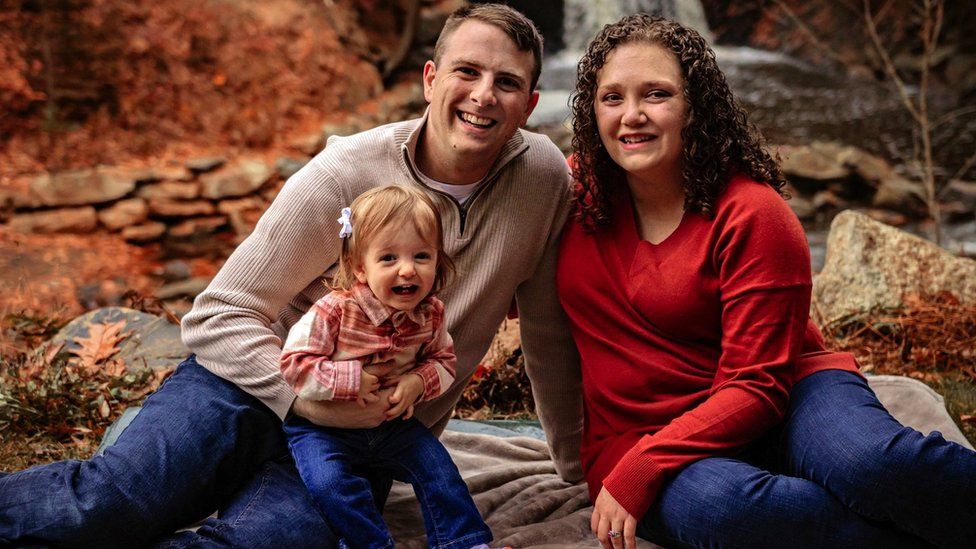
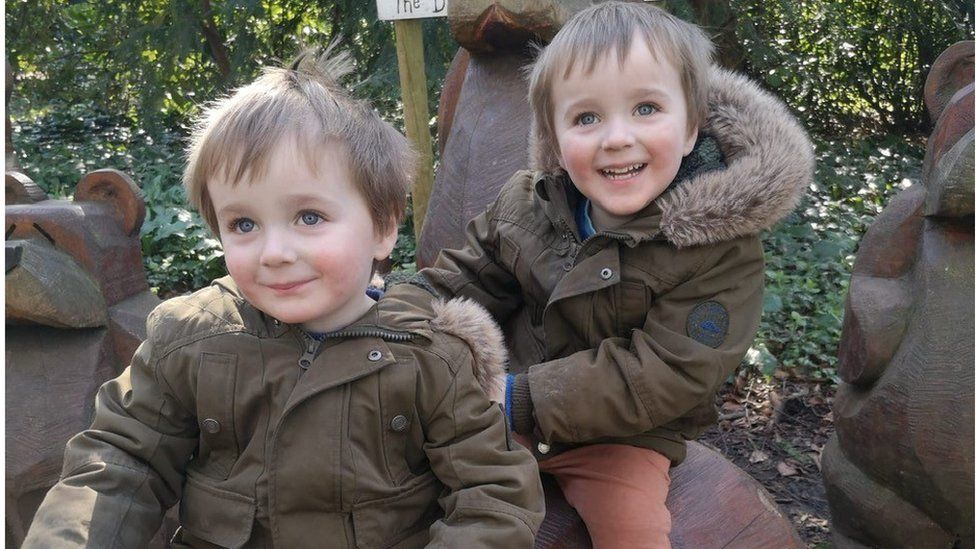
Published16 minutes agoShareclose panelShare pageCopy linkAbout sharingImage source, Family handoutBy Kevin ShoesmithBBC NewsA charity has warned of possible “unwanted outcomes” after autistic twin brothers were allocated places at two different schools. Jasper has been offered a place at Hob Moor Oaks School, in York, leaving Reuben to attend a mainstream primary.The four-year-olds’ parents, Pete and Rhiannon, are taking their case against City of York Council to a tribunal.Ahead of the hearing, Twins Trust said separation could cause psychological issues “for years to come”.Image source, Family handoutIn a statement, Shauna Leven, chief executive of Twins Trust, said: “In the vast majority of cases, separation of multiples into different schools against their will can bring about unwanted outcomes for all concerned. The psychological effect of separation can create problems for years to come.”Often twins like Reuben and Jasper are together from birth, then throughout nursery school. They become emotionally dependent on each other and can be distressed when separated.”We strongly urge decision makers to find ways to allow families to be at the centre of decision-making regarding their school placement.”Ms Leven added it was “preferable” for children “to have as much time as possible to prepare for transition to primary school”. Both boys are non-verbal and have Education, Health and Care Plans (EHCPs) detailing “significant” difficulties. City of York Council has told the family that Hob Moor Oaks School is “over-subscribed” but has previously pledged to work with the family to find “suitable provision” for Reuben. Subject to a ruling to the contrary from next month’s tribunal panel, Reuben will attend a mainstream primary that adjoins the special school. ‘Sleepless nights’Pete and Rhiannon said their sons’ consultant paediatrician has also submitted a letter of support for the tribunal. Former special needs teacher Pete said: “Although Jasper and Reuben would technically be under the same roof the provision would be very different. One is a special school; the other is a mainstream primary school.”They are identical twins with the same needs. Since Jasper was offered his place in January, it’s been really stressful. It’s caused a lot of sleepless nights.”Meanwhile, York Central MP Rachael Maskell said she had met with a senior council official last week to discuss the case.She said she understood the family’s concerns but added there is “a shortage of SEND [Special Educational Needs and Disability] provision” in York and North Yorkshire.Martin Kelly, City of York Council’s corporate director of Children and Education, said: “The allocation of special school places always takes account of the circumstances of individual children, and where children are in enhanced resource provision or in mainstream provision this is considered by the admissions panel with school places allocated on this basis. “In common with local authorities nationally, York has seen a significant increase in parental requests for special school places since 2020. We are addressing this increase by implementing capital plans which both increase specialist and enhanced resource provisions, and support appropriate adaptations in mainstream education.”The Special Educational Needs and Disability Tribunal is expected to hear the case on 14 September.Follow BBC Yorkshire on Facebook, Twitter and Instagram. Send your story ideas to yorkslincs.news@bbc.co.uk.More on this storyParents of autistic twins lodge school appealPublished15 AprilParents of twins tell of special school dilemmaPublished25 MarchRelated Internet LinksCity of York CouncilThe BBC is not responsible for the content of external sites.

Read more →

Dating with cancer: ‘It was the first thing people noticed'

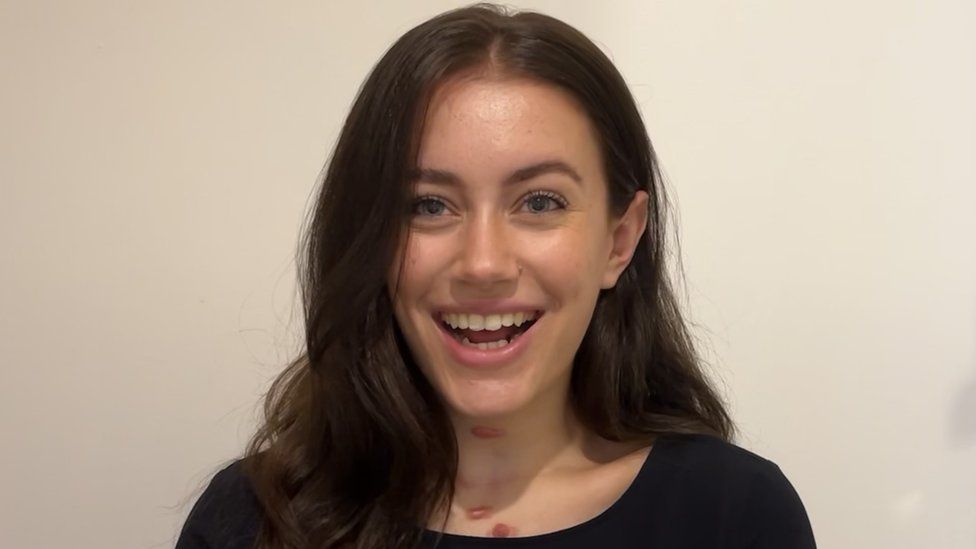
Published47 minutes agoShareclose panelShare pageCopy linkAbout sharingImage source, Natalie ColesBy Iqra FarooqBBC NewsbeatThe online dating world can be overwhelming at the best of times.First there’s the swiping and matching, before you even have to worry about being ghosted or maybe even meeting the person in real life.But it can be especially tricky if you’ve experienced something as life-changing as cancer treatment.Natalie didn’t really consider cancer to be a huge part of her identity when she decided to go on dating apps after her treatment ended.”It really threw me that the first thing people saw were the scars on my neck,” the 22-year-old tells BBC Newsbeat.”Within about 24 hours of joining, I had about 10 messages along the lines of ‘I can see you have a lot of hickeys on your neck’.”It was frustrating that I joined as an empowering clean slate. I’m in a new place and nobody knows me as the cancer girl. And it was the first thing people saw.”Natalie, who had treatment for thyroid cancer, says she learnt how to be thick-skinned but it still ruined her experience of dating.”I have a dark sense of humour about my cancer and I think a lot of young people do as a coping mechanism,” she says.”The fact that people didn’t care about the impact of their words frustrated me. Dating is meant to be fun and it took the fun out of it for me.” Image source, Mattie CarrNatalie, who lives in Devon, decided to delete the apps after a few months and wants people to think more about how they talk to someone who’s had cancer. And that’s something 24-year-old Mattie Carr agrees with.She was diagnosed with stage 4 Hodgkin Lymphoma, a rare type of blood cancer, when she was 23. “In a weird way, getting diagnosed for me was a huge relief because doctors hadn’t been able to tell me what was wrong for years,” she says.Once her treatment was successful, Mattie moved from Sussex to live with friends in London and decided to start dating.But she felt like she couldn’t avoid talking about her cancer because it took up so much of her life.”I was a bit self-conscious because I had a port [device] in my chest which sticks out a lot on me,” she says.”Even when I was walking about on the streets, I would have random people come up to me and ask me what it was.”And every time I would go on a date, someone would ask about it.”Image source, Mattie CarrMattie also says it meant she struggled to answer all the first date questions – like “what do you do for fun?” – without it coming up in conversation.”I wasn’t able to socialise in big places so it was really hard to answer a lot of the questions without touching on cancer,” she says.Like Mattie, Serena Sahota decided to start dating about five months after her treatment for oral cancer.She was 19 when she was diagnosed and had a 12-hour operation to remove some lymph nodes from the neck, as well as part of her mouth, tongue and wisdom teeth. “I was a bit anxious about the idea of dating because I didn’t know how or when to bring up cancer,” says Serena, who lives in Oxford.”But then I thought ‘why shouldn’t I date, I’m no different from anybody else’.”I didn’t mention it unless I’d been talking to that person for a long time because I don’t want the whole date to become about my cancer.”Image source, Serena SahotaTips for dating after cancerNatalie, Mattie and Serena have all been supported by the Teenage Cancer Trust.Hannah Jackson, who’s one of the charity’s youth support co-ordinators based in Glasgow, says her priority is helping people build their confidence after treatment.”It’s really important they feel empowered to live their life in the way they want to and date who they want to date,” she says.So we asked the girls for their top tips when it comes to dating after cancer:Be yourself – it can be scary if you’ve been through some physical changes but if it’s the right person, they won’t careHave a support network – you need to speak to people who’ll understand the full spectrum of emotions that come with dating Only share what you want – be open about your cancer journey once you’ve built up a rapport with someone, sharing could help filter out unsupportive peoplePrepare for rejection – it happens to everyone and is unlikely it’s because of your diagnosis, so arm yourself with a list of positive qualities about yourselfIf you have been affected by any of the issues in this article, you can find support on BBC Action Line.What are dating apps doing? Serena’s going back to university in September so has put her dating life on pause until then – but thinks app bosses need to take more responsibility for harmful comments.”I’ve had a few difficult comments on the apps and nothing’s really gotten done about it,” she says.So Newsbeat asked Hinge, Bumble and Tinder for more information on their reporting policies if you come across a harmful message. Hinge says they have an in-app reporting feature that allows them to take “immediate action” and they use technology which scans profiles for “red-flag language”.Bumble says it has AI technology to monitor profiles and identify violations including harassment and hate speech in over 100 languages. Tinder encourages people to make use of the self-reporting tool on all profiles so the dedicated team can investigate the complaint, which may include removing the profile. Follow Newsbeat on Twitter and YouTube.Listen to Newsbeat live at 12:45 and 17:45 weekdays – or listen back here.More on this storyYoung cancer patients ‘in a desperate situation’Published3 October 2022I decided not to let cancer stop me datingPublished17 April 2022Dating with cancer: ‘A Hinge date saved my life’Published11 August 2020Related Internet LinksTeenage Cancer TrustThe BBC is not responsible for the content of external sites.

Read more →

Why talk of a UK doctor exodus is premature

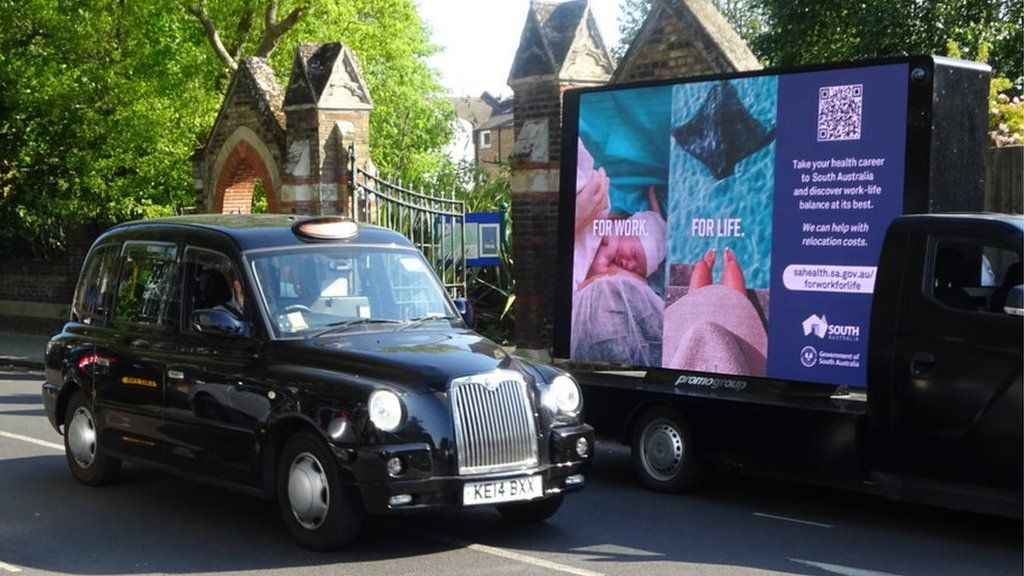
Published26 minutes agoShareclose panelShare pageCopy linkAbout sharingImage source, South Australia governmentBy Jim Reed, Rob England and Nick TriggleBBC NewsThe NHS, it is claimed, is facing an exodus of doctors. It is one of the reasons put forward to support their claims for more pay as strike action continues.But an analysis of data by the BBC suggests this is not the case – yet.The proportion of the medical workforce leaving the NHS has hardly changed for a decade, while figures on those seeking a move overseas do not, overall, show a clear upwards trend.There are, however, some worrying signs – with increasing numbers of junior doctors taking a break in their training, and some evidence that aggressive marketing by authorities in Australia on social media and billboards is turning the heads of more UK medics.Doctors not leaving NHS in greater numbersEvery year thousands of doctors leave the NHS. Some retire, others move into private practice and some head abroad.But figures from NHS Digital in England show over the past decade the proportion leaving overall has remained pretty constant at about 14-15%.Meanwhile, the number of new joiners has increased, leading to a rise in the number of doctors in the NHS.But what about if we just look at junior doctors? This is the group that receives the lowest rates of pay in the profession and is often said to be the most disenchanted. They make up almost half the hospital doctors in England and include anyone who has finished medical school but has not yet completed their postgraduate training to become a GP, speciality doctor or consultant.Firstly, most junior doctors do stay. Of those in 2016 who had completed their first two years of foundation training, only 7% had left the profession five years later, according to the General Medical Council (GMC).But junior medics are taking a breakHowever, other data from the regulator does show a big jump in the numbers taking a break from their training. In 2012, two-thirds moved straight on to the third year of their junior doctor training pathway after completing year two.But by 2020 that figure had fallen to under a third.Where these doctors are going is unclear. They could be spending time working as a locum – taking well-paid but ad-hoc freelance shifts to cover gaps in rotas – going travelling or seeking opportunities abroad. Most seem to come back after a pause of a year or two, but the fact there is a clear upwards trend is causing some concern.Working abroad remains an optionThe best data on how many move abroad each year comes from the GMC database on applications for a Certificate of Good Standing, which doctors use to apply for work abroad.Before the pandemic, there were consistently more than 6,000 certificates a year sent to other medical authorities around the world.After a drop during the pandemic the number rose to about 7,000 in 2022. More recent figures for 2023 so far suggest the number will be higher again – although it is unclear if this reflects a long-term rise, as the trend seen over the last 18 months may just be a natural catch-up following the dip during the pandemic.The most popular countries are Australia, United Arab Emirates, Canada and Ireland, accounting for two-thirds of the certificates.But applying for one of these certificates does not mean a doctor has definitely left the UK, the GMC says, rather it shows an intention to work abroad in the future. Data from previous years suggests half of doctors who apply for a certificate remain working in the UK.Australia an attractive destinationThe BBC has also approached the medical authorities directly in Australia and New Zealand about the number of doctors trained in the UK emigrating. New Zealand has the most up-to-date figures, which show about 500 doctors a year trained in the UK and Ireland left to work there before the pandemic. The data available for the first three-quarters of 2022-23 suggests a similar level.The figures for Australia only go up to 2021, and show a total of 6,621 UK-trained doctors arriving to work that year. There has been a gradual upwards trend over the past five years with the figures more than a quarter higher than they were in 2016. And the British Medical Association (BMA) is convinced this will get worse.Dr Robert Laurenson and Dr Vivek Trivedi, who jointly chair the BMA junior doctors’ committee, said: “You cannot ignore the evidence that if the government won’t pay doctors what they are worth, they are going to continue to leave for countries that will.”But as doctors leave the UK, it is also worth noting medics come in from abroad. Last year more than 12,000 doctors who were trained abroad joined the register. The number of newly-qualified homegrown doctors who joined was 8,000. It is a two-way street.

Read more →

Issue 1: Ohio vote delivers win for abortion-rights supporters

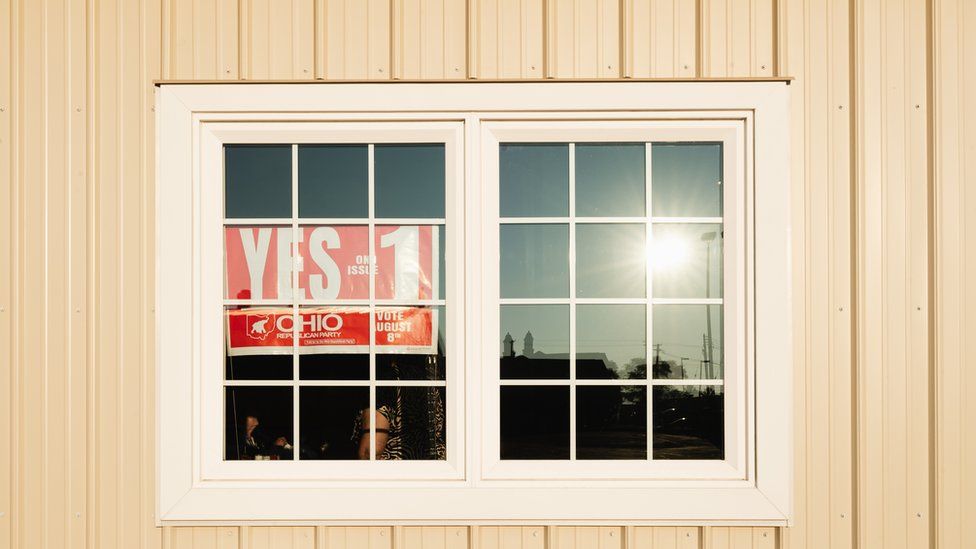
Published14 minutes agoShareclose panelShare pageCopy linkAbout sharingImage source, Jake Olson/BBCBy Holly Honderichin WashingtonIn what is being celebrated as a victory for abortion rights advocates, Ohioans have decided to keep the minimum voter threshold of a bare majority for amending their constitution, rejecting an attempt to raise it to 60%. With most of the votes counted, US media projected on Tuesday evening that a majority of Ohio voters said ‘no’ to raising the threshold, including in big cities like Cleveland and Columbus, while around 43% voted ‘yes’. The campaign behind the ‘no’ vote, One Person, One Vote, told Politico in a statement that the amendment – called Issue 1 – was a “deceptive power grab designed to silence” the voice of voters.Ohio Democratic Party Chair Liz Walters told the Columbus Dispatch that the result is “a victory for the kind of state we want to see.”More than 600,000 submitted early ballots on the issue – a historically high turnout for August elections in the state.Issue 1 may sound tedious, but the rare summer election had potential implications for a later vote, scheduled in November, which could establish a state-wide right to abortion. If Issue 1 had passed, the abortion-rights amendment would likely have been blocked, with support falling below the proposed higher threshold. So was the vote on issue 1 about protecting the constitution, as its supporters claim, or was it really about abortion? What is Issue 1?Issue 1 was the only question on the ballot in Ohio’s 8 August special election.Before key abortion vote, Republicans try to change the rulesIf passed, it would have changed the threshold for approving amendments from 50% to 60%. And Issue 1 would have also made it harder to put amendments before voters in the first place, asking petitioners to gather signatures from 5% of eligible voters in each of Ohio’s 88 counties, instead of the current 44.In the 111 years since Ohio first granted voters the power to introduce citizen-led amendments, just 19 of 71 proposed measures have passed the 50% benchmark. Why is it controversial? Issue 1 was championed by Ohio’s Republican led-legislature and the state’s chief election official, Republican secretary of state Frank LaRose.Mr LaRose and his allies have said Issue 1 was about protecting the Ohio constitution from outside moneyed interests.”Constitutions are for fundamental rights, widely held beliefs,” he told the BBC this week. “Not just a controversial issue that may have 51% support.”Image source, Jake Olson/BBCBut opponents of Issue 1 – a diverse and bipartisan coalition – insisted it was actually an effort to block the abortion amendment. “They’ve seen polls in Ohio that show 58, 59% of Ohioans support this amendment,” said Kellie Copeland, executive director of Pro-Choice Ohio. “And so they were looking to put it just out of reach.”And at a private event in May, Mr LaRose seemed to confirm these widely-held suspicions. “I’m pro-life. I think many of you are as well,” Mr LaRose said, in a video recorded by Scanner Media. “This is 100% about keeping a radical pro-abortion amendment out of our constitution.”What are the likely consequences? Polls suggest that the abortion-rights amendment – which protects abortion access up until foetal viability (around 24 weeks of pregnancy) – would be likely to win a majority. But meeting the 60% threshold would be a long-shot. Without constitutional protection, the Republican-led statehouse will likely move forward with more anti-abortion legislation. Currently, a six-week ban is on hold while a legal challenge proceeds. If abortion becomes illegal in Ohio, the consequences will be felt by millions in neighbouring states, including Indiana, Kentucky and West Virginia, where abortion access has already been cut off. And beyond abortion, observers say the implications of Ohio’s August election could spill over into the state’s election for US Senator next year, in which Mr LaRose may be a candidate. Image source, Jake Olson/BBCMore on this storyBefore key abortion vote, Republicans try to change the rulesPublished11 hours agoFour ways the end of Roe v Wade has changed AmericaPublished24 JuneThe woman who wants to end abortion in AmericaPublished24 June

Read more →

Roe v Wade: ‘Could abortion bans put my IVF at risk?’

Published17 minutes agoShareclose panelShare pageCopy linkAbout sharingImage source, Julie EshelmanBy Lebo DisekoGlobal Religion CorrespondentOne year after the US Supreme Court overturned Roe v Wade – a landmark ruling on abortion rights – some IVF patients are worried that potential new laws could jeopardise their fertility treatment. Some women are even considering moving their frozen embryos across state lines.Julie Eshelman has had a long and difficult journey trying to build her family. “My husband and I were married in 2015,” she tells me. “We naively decided that we wanted to wait a year before we started having kids. In 2016, we started trying and after six months, I was like: ‘This isn’t working, maybe there’s something wrong.'”And so began years of fertility tests, treatment, three miscarriages, and many tears. Finally, in June 2021 she had a baby girl. “We now have a beautiful, feisty spunky two-year-old daughter,” she says, her voice lifting.But when Julie and her husband decided to try for a second child, things got complicated. The US Supreme Court had just overturned the 1973 Roe v Wade ruling – this means women no longer have a national right to an abortion. Individual states can now ban or restrict access to terminations and in the process of rewriting the rules, some lawmakers drew up legislation defining life as beginning at fertilisation. This has thrown up crucial questions for fertility treatment. “If they say that life starts at conception what does that mean for an IVF embryo?” asks Julie.During IVF (in vitro fertilisation), eggs are typically collected from a woman’s ovaries, fertilised in a laboratory, then screened. Some healthy embryos are transferred to the womb and others can be frozen for future use. Any that aren’t considered viable or are not used may be destroyed. Image source, Getty ImagesBut if life is considered to start at the moment of fertilisation, doctors and patients like Julie fear this could have implications for the IVF process. At the time of the Supreme Court decision, Julie was getting ready to move to Pennsylvania because of her husband’s job in the military. She was worried about a proposed bill there that she feared could have had consequences for embryo storage and IVF. She felt the risk was too great and decided to leave her embryos in the Democrat controlled state of Illinois, where she had had her last IVF cycle, until she knew the outcome of the Pennsylvania vote.She says the decision to wait added at least six extra months to her IVF treatment, delaying what was already a lengthy, stressful and expensive process. Next year her family will have to move again when her husband is redeployed. Julie doesn’t know where they will be asked to move to or what the laws will be there. She worries that delays could affect her chances of a successful pregnancy.When does life begin?Legislation defining life as beginning at conception or fertilisation is sometimes called a “personhood law”, because it confers the rights of a person on a foetus or embryo. There were 20 personhood bills introduced in the US this year, according to The Center for Reproductive Rights. None were passed into law, but campaigners fear that similar legislation could pass in the future. Two states – Georgia and Arizona – currently have language in their abortion bans which reproductive rights advocates say effectively establishes foetal personhood.Dr Natalie Crawford is a fertility doctor in the state of Texas, which has a near-total abortion ban. She says that many of these bills are written by people who do not have a medical background, using words such as “fertilisation” and “implantation” which have a very specific meaning in a scientific context.Image source, Getty Images”When somebody writes these words, with the mindset of trying to eliminate abortion, it starts to impact our ability to potentially do IVF in a safe manner,” she says. “If you say life begins at fertilisation, then how can I grow an embryo in a lab, or biopsy it for genetic testing, or freeze it or thaw it, or implant it in somebody, or leave it frozen?” She tells me that when Roe v Wade was overturned, the phone at her clinic “wouldn’t stop ringing” as worried patients tried to find out what it might mean for their treatment.The American Society of Reproductive Medicine says that currently there is no state where the legal position regarding IVF has changed, but it also says that personhood definitions “have the potential to implicate and even ban the use of ART [assisted reproductive technology], including in vitro fertilisation”. Not everyone who wants to restrict abortion wants to impact how IVF is practised, but there are some who are explicit about wanting to do so. Jim Baxa, the president of West Texas for Life, believes the medical practice of disposing of non-viable embryos is “murder, and ought to get punished as murder”.He tells me: “Life is created by God, not man. If God allows us to create a life through IVF, then that’s to his glory. But creating life is not a human right.”All laws are based upon faith. I’m just extending that ‘Thou shalt not murder’ argument to every single human being.”Jim wants Texas lawmakers to “close loopholes” when it comes to IVF. For example, he says, doctors should only create “one or a few embryos, and implant all of those embryos” at once. But Dr Crawford argues against this approach: “In other countries that have [had] religious based laws when it comes to IVF procedures, IVF is much less successful, it can be more risky, and cost more money.”She says that in the best of circumstances the rate of a live birth is 65%, which means it often takes multiple attempts – and multiple embryos – to have a successful pregnancy. There are also safety concerns with implanting multiple embryos at once, both for the mother and the foetuses, because multiple births can lead to medical complications.’Waiting to cross that finish line’Image source, Kristin Dillensnyder Kristin Dillensnyder uses her own experience of undergoing fertility treatment to coach other women through the emotional rollercoaster of IVF, a process that often takes much longer than people anticipate. “It’s like signing up for a 5km race, and then you realise you’re on the course for a marathon,” she says. “It’s so much more than you thought. There’s no rest, and you feel unprepared.”Some clients tell her they are considering transferring their embryos to another state “where they’re protected”.While she hasn’t seen anyone take that step yet, Kristin says women are “arming themselves with the information, so if, let’s say, we go from a level of yellow to a level red of concern, they know exactly what to do and they’re prepared”.For the national infertility association Resolve, the solution lies in changing the law at federal level. Its president Barbara Collura is now working with lawmakers to help advance a bill that would protect IVF nationwide.”We have a bill that was introduced in the last Congress. It has been reworked and is going to be reintroduced soon.”She says it would protect people who need access to medical care associated with IVF: “They cannot be prosecuted, their access cannot be denied. It also protects the healthcare providers who give that care.” Crucially, she says, it would mean that “people have rights over their sperm, their eggs or embryos and are able to do what they want to do to build their family. That is the goal”. More on this storyWhat is Roe v Wade ruling on abortion?Published24 June 2022Texas judge sides with women suing over abortion banPublished3 days agoBefore key abortion vote, Republicans try to change the rulesPublished11 hours agoOne in five chance of natural pregnancy after IVFPublished21 June

Read more →

Fitness: Only 5,000 steps a day needed to stay healthy, study shows

Published31 minutes agoShareclose panelShare pageCopy linkAbout sharingImage source, Getty ImagesBy Annabel RackhamBBC NewsIt has long been touted that 10,000 steps a day is the magic number you need to stay fit and healthy – but a new study shows fewer than 5,000 may be enough to see a benefit. The analysis of more than 226,000 people around the world showed 4,000 was enough to start reducing the risk of dying prematurely of any cause.Just over 2,300 is enough to benefit the heart and blood vessels. The more you do, the more health benefits are seen, researchers said.Every extra 1,000 steps beyond the 4,000 reduced the risk of dying early by 15% up to 20,000 steps.The team from the Medical University of Lodz in Poland and Johns Hopkins University School of Medicine in the US found the walking benefits applied to all genders and ages, regardless of where they lived. However, the biggest benefits were seen among the under-60s.Friends could be key to finding fitness motivationPumping weights could help you live longerDaily walk prevents one in 10 early deaths – studyProf Maciej Banach, from the Lodz university, said that while the number of advanced drugs for treatment was growing, they were not the only answer.”I believe we should always emphasise that lifestyle changes, including diet and exercise, which was a main hero of our analysis, might be at least as, or even more, effective in reducing cardiovascular risk and prolonging lives,” he said.Image source, Getty ImagesAccording to World Health Organization data, insufficient physical activity is responsible for 3.2 million deaths each year – the fourth most frequent cause worldwide.Honey Fine, a personal trainer and instructor for global fitness company Barry’s, emphasises the problems that come from sitting down too much.”It can slow your metabolism and affect muscle growth and strength, which can cause aches and pains,” she tells the BBC.”Sitting down for too long can also cause all sorts of back problems, we find this a lot with people with office jobs, that their backs are constantly put in a stressed compressed position which causes a lot more problems later on in life.”She explains the importance of non-exercise activity thermogenesis – also known as Neat, “which in simple terms is everything we do that uses energy and burns calories”.”Tasks like standing, carrying shopping, washing the floors, hoovering, pacing whilst walking on the phone – it’s all the little things that make us more active that help us to burn calories more efficiently,” she said.Simple ways to stay healthyEasy exercises to get your blood pressure downWhat’s the least exercise we can get away with? How your daily step count can help head and heartMs Fine says that although adding regular walks into your life may be daunting, the rewards are great when it comes to your health.”Walking can lower your blood pressure, strengthen your muscles to protect your bones, it can increase energy levels as well as giving you endorphins and it can help you maintain a healthy weight alongside healthy eating,” she says.Other benefits include boosts to your mental health and important time away from screens and other distractions.Walking is suitable for “almost anybody” because it is low impact and easy on joints and muscles, she added.A personal trainer’s top tips for walkingWalk to the station rather than going by bus or carIf you work at a desk, set hourly reminders to get up and move aroundIf you are pregnant, walking is the best kind of exercise to doTake a daily 30-minute walk listening to a podcastWalk with friends in a park or forest trails and walk the dog if you have oneStart small – a 10-minute walk from the station to the office can easily build up to a 20-minute stroll in the park and finally a 30-minute walk around townMore on this storyFriends could be key to finding fitness motivationPublished19 October 2022Pumping weights could help you live longerPublished28 September 2022Daily walk prevents one in 10 early deaths – studyPublished1 March

Read more →

The more you walk, the lower your risk of early death, even if you walk fewer than 5,000 steps

The number of steps you should walk every day to start seeing benefits to your health is lower than previously thought, according to the largest analysis to investigate this.
The study, published in the European Journal of Preventive Cardiology [1] today (Wednesday), found that walking at least 3967 steps a day started to reduce the risk of dying from any cause, and 2337 steps a day reduced the risk of dying from diseases of the heart and blood vessels (cardiovascular disease).
However, the new analysis of 226,889 people from 17 different studies around the world has shown that the more you walk, the greater the health benefits. The risk of dying from any cause or from cardiovascular disease decreases significantly with every 500 to 1000 extra steps you walk. An increase of 1000 steps a day was associated with a 15% reduction in the risk of dying from any cause, and an increase of 500 steps a day was associated with a 7% reduction in dying from cardiovascular disease.
The researchers, led by Maciej Banach, Professor of Cardiology at the Medical University of Lodz, Poland, and Adjunct Professor at the Ciccarone Center for the Prevention of Cardiovascular Disease, Johns Hopkins University School of Medicine, found that even if people walked as many as 20,000 steps a day, the health benefits continued to increase. They have not found an upper limit yet.
“Our study confirms that the more you walk, the better,” says Prof. Banach. “We found that this applied to both men and women, irrespective of age, and irrespective of whether you live in a temperate, sub-tropical or sub-polar region of the world, or a region with a mixture of climates. In addition, our analysis indicates that as little as 4,000 steps a day are needed to significantly reduce deaths from any cause, and even fewer to reduce deaths from cardiovascular disease.”
There is strong evidence that a sedentary lifestyle may contribute to an increase in cardiovascular disease and a shorter life. Studies have shown that insufficient physical activity affects more than a quarter of the world’s population. More women than men (32% versus 23%), and people in higher income countries compared to low-income countries (37% versus 16%) do not undertake a sufficient amount of physical activity. According to World Health Organization data, insufficient physical activity is the fourth most frequent cause of death in the world, with 3.2 million deaths a year related to physical inactivity. The COVID-19 pandemic also resulted in a reduction in physical activity, and activity levels have not recovered two years on from it.
Dr Ibadete Bytyçi from the University Clinical Centre of Kosovo, Pristina, Kosovo, senior author of the paper, says: “Until now, it’s not been clear what is the optimal number of steps, both in terms of the cut-off points over which we can start to see health benefits, and the upper limit, if any, and the role this plays in people’s health. However, I should emphasise that there were limited data available on step counts up to 20,000 a day, and so these results need to be confirmed in larger groups of people.”
This meta-analysis is the first not only to assess the effect of walking up to 20,000 steps a day, but also to look at whether there are any differences depending on age, sex or where in the world people live.

Read more →

Inflammation slows malaria parasite growth and reproduction in the body

Research led by the Peter Doherty Institute for Infection and Immunity (Doherty Institute) and the Kirby Institute found that inflammation in the body can slow down the development of malaria parasites in the bloodstream — a discovery that may constitute a potential new strategy for preventing or limiting severe disease.
A mosquito-borne disease, malaria is caused by Plasmodium parasites, which invade and multiply within red blood cells. Previous research has shown that the parasites can rapidly sense and respond to conditions within the host by intimately syncing with their internal body clocks. While it is known that the body’s nutrient levels and daily circadian rhythms affect the parasites’ development, little was known about the impact of host inflammation on the parasites — until now.
This animal-model study, published in the journal mBio, reveals that when the body’s immune system responds to inflammation it alters the chemical make-up of the plasma, which directly hinders the maturation of the Plasmodium parasites as they circulate in the bloodstream.
University of Melbourne’s Associate Professor Ashraful Haque, Laboratory Head and co-lead of the Bacterial and Parasitic Infections theme at the Doherty Institute, and one of the senior authors of the paper, said this work highlights the captivating dynamic of the host-parasite relationship.
“First, we discovered that inflammation in the body prevented the early stage of the parasites from maturing. We also noticed that inflammation triggered significant changes in the composition of the plasma — we were actually quite surprised by the magnitude of these changes,” said Associate Professor Haque.
“As we dug deeper, we found substances in the altered plasma that, we believe, are what may inhibit parasite growth in the body. This work reveals a new mechanism that slows down the malaria parasite’s development in the bloodstream. Our research was done using animal models, so it would be really interesting to study if such inhibitory mechanisms occur in humans too.”
Dr David Khoury, Lead of the Malaria Analytics Group at the Kirby Institute and co-senior author of the paper, said the scientists found a remarkable response by the parasites to the changes in their environment.

Read more →

Mothers experiencing depression can still thrive as parents

The proverb “It takes a village to raise a child” takes on new significance when a mother of a child is experiencing depression.
“Being a mother with depression carries increased risks for a child’s physical and psychological health,” says Dr. Sarah Dow-Fleisner, Assistant Professor in the School of Social Work and Director of the Centre for the Study of Services to Children and Families at UBC Okanagan. “But it’s not fated to be, especially if mothers have external supports.”
Dr. Dow-Fleisner’s findings, recently published in the Journal of Family Issues, have important implications for how social workers and clinical practitioners — as well as families and communities — can help.
While a lot of research focuses on the postpartum period during which the rate of depression among mothers is highest, Dr. Dow-Fleisner wanted to focus on depression occurring later in childhood. Her team used data from a large longitudinal US study to compare depressed and non-depressed mothers of nine-year-old children.
Her analyses revealed that mothers with depression were more likely to report parenting stress and less likely to view themselves as competent parents as compared to non-depressed mothers. They also reported engaging in more disciplinary tactics, including nonviolent tactics like taking away privileges as well as aggressive tactics like cursing or threatening the child. In terms of involvement, they were less likely to be involved at the child’s school, such as attending an open house. However, they were equally likely to be involved in home activities, such as helping with homework.
“Furthermore, mothers with depression reported fewer interpersonal supports and community resources than mothers without depression,” says Dr. Dow-Fleisner. “This is consistent with previous research.”
Interpersonal supports refer to both emotional and material help from others, such as a relative providing advice or emergency childcare. Community resources refer to safety and neighbourhood cohesion. Neighbourhood cohesion measures the willingness of neighbours to help and the shared values of the neighbourhood, among other social and trust factors.

Read more →