Philip L. Sherman, Who Circumcised Thousands of Babies, Dies at 67
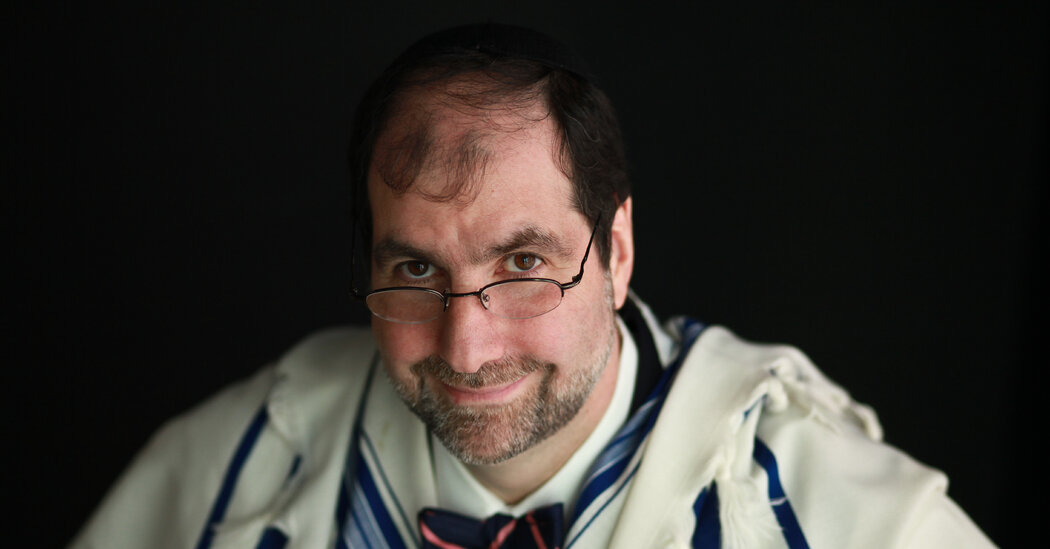
A mohel who became a boldface name, he said his record in 45 years of performing the Jewish religious rite was 11 in a single day (including two pairs of twins).Armed with only a scalpel, a clamp and a metal probe, Philip L. Sherman would routinely carry out his surgical mission in about 15 seconds, leave in as little as 10 minutes and hotfoot it to his car, which was probably parked illegally but perhaps spared a ticket by the inspired placard on his windshield: “Mazel Tov! Bris in progress. Please don’t ticket.”Mr. Sherman, whose website (as well as his vanity license plate) was emoil.com =, claimed to have performed some 26,000 ritual circumcisions, mostly in the New York metropolitan area, during his 45-year career. He was trained in the Jewish religious practice of brit milah — a profession generally spelled “mohel” in English and pronounced “moil.”His record, he said, was 11 in a single day, including two pairs of twins — a considerable scheduling feat, considering that the ritual is to be performed on the eighth day of the baby’s life and during daylight.Mr. Sherman also performed ritual circumcisions on Muslim and Christian infant boys, as well as the son of a man he had circumcised as an infant and the grandsons of two Israeli prime ministers, and in all kinds of places, including Hong Kong, the Cayman Islands and a bar on Third Avenue (for a family who lived upstairs).He died on Aug. 9 at his home in Englewood, N.J. He was 67. His daughter, Nina Sherman Green, said the cause was pancreatic cancer.Mr. Sherman performed his first circumcision when he was 21, in Brooklyn during a blizzard (prudently, he had stayed over nearby the night before). After his cancer diagnosis, he began what he called a sabbatical in June.Sporting his signature bow tie, Mr. Sherman did his best to leaven a ceremony that is not for the fainthearted. For Mr. Sherman, it was a living — and, most important, it was the fulfillment of an enduring and sacred religious covenant, immortalized in the biblical verse “And Abraham circumcised Isaac his son.”“I’m there to fulfill a Torah commandment, to educate, let them know what the significance is, briefly, appropriately, tastefully,” he told The New York Times in 2012.He performed so many brises for Jewish families in New York that he became a boldface name and was written about like a celebrity.His services did not come cheap. “You pay $800 for a steady hand and a good reputation,” Scott Stringer, the former New York City comptroller, told The Times after his son, who was born in December 2011, was circumcised by Mr. Sherman. “It’s not the kind of thing where you’re looking to save money.”But Mr. Sherman said he did not turn away families who could not afford his fee.Philip Lloyd Sherman was born on April 26, 1956, in Syracuse, N.Y. His mother, Malvina (Jacobs) Sherman, was an English teacher. His father, Paul Sherman, was a factory worker.He was inspired to study brit milah by his grandfather Isadore Jacobs, who was a mohel and also a rabbi, a cantor, a dayan (a religious judge) and a shochet (a ritual slaughterer). After studying with Rabbi Yosef Hakohen Halperin, a renowned mohel, in Jerusalem, Mr. Sherman graduated in 1979 with degrees in music and Bible studies from a joint program run by Columbia University and the Jewish Theological Seminary.He also served as a cantor at several synagogues in New York, including the Spanish and Portuguese Synagogue in Manhattan from 1985 to 2019. He also occasionally worked as an actor.He played a judge on the Netflix series “Orange Is the New Black” and appeared in an episode of the Amazon Prime show “The Marvelous Mrs. Maisel.” He was also cast in the 2011 Paul Rudd movie “Our Idiot Brother.”“I played a mohel, but the scene was cut,” he told the Jewish Telegraphic Agency. “How ironic.”He described himself as the only motorcycle-riding rabbi in the Screen Actors Guild.In the actual religious ceremonies over which Mr. Sherman presided, he not only starred; he also fed the supporting players their lines.“Let me tell you my secret,” he routinely confided to new fathers, according to an interview with The New Yorker in 1999. “After it’s over, be sure to thank your wife for doing a great job and giving you such a perfect son.”In addition to his daughter, Mr. Sherman is survived by two sons, Reuven and Elan Sherman, from his marriage to Naomi Freistat, which ended in divorce; his brothers, Steven and Martin Sherman; and six grandchildren. His marriage in 1994 to Andrea Raab ended in divorce in 2022.Mr. Sherman performed the brises for his sons and his grandsons, pointing out that in addition to following the biblical injunction to Abraham (rather than deferring to a doctor and turning a religious ceremony into a strictly medical procedure), he had undergone a full year of training.Yes, he acknowledged, of course the baby feels pain during it. But, he added, “when it’s done properly, only for a moment.”And, yes, he said, it was also true that sometimes even just by imagining the removal of the baby’s foreskin, one of the parents or a guest might pass out. But, he suggested cheerfully, “usually at a bris, there’s no shortage of doctors or lawyers.”When the actress and comedian Whoopi Goldberg told him that she hated attending a bris, Mr. Sherman offered her a suggestion.“The next time you go to one,” he advised, “do what I do: Close your eyes.”Just kidding, he added.

Read more →

'Resurrecting' the legendary figure behind Count Dracula

Vlad III, known as Vlad the Impaler, was a 15th century prince and military leader who was so terrifying, he’s thought to have inspired the creation of the literary vampire, Count Dracula. Now, a scientific examination of his letters is giving new insights into his health. Researchers now reporting in ACS’ Analytical Chemistry, say the results suggest that Vlad probably had skin and respiratory conditions and could have even cried literal tears of blood.
The legendary figure’s official title was Vlad III, Voivode of Wallachia, and he lived in the southern region of Romania in the mid-1400s. Of course, there’s no evidence that Vlad III was a vampire, but he was feared for his ruthlessness. Some estimates place his death toll at over 80,000 people, many dying by impalement, earning him his nickname. He was also referred to as Vlad Drăculea, translating to “the son of the dragon,” which many believe inspired the eponymous character from the novel Dracula.
Though over 500 years have passed since Vlad’s reign, some artifacts have remained, including several letters he penned at different points throughout his life. The molecules and proteins present on documents and other relics like these can provide scientists with a unique understanding of the life and times of people from the past. So, Vincenzo Cunsolo and colleagues wanted to, for the first time, investigate these letters to learn more about the health of the infamous Vlad Drăculeaa, as well as the environment he lived in.
To uncover the letters’ secrets, the researchers used a specialized plastic film called EVA, or ethylene-vinyl acetate, to extract any proteins or small molecules from the paper without damaging it. These extracts were then analyzed with mass spectrometry, allowing researchers to characterize thousands of different peptides. Of these, the team focused on those with the most advanced deamidation, a form of protein degradation that occurs with age. The most degraded proteins were likely the oldest, and therefore, they are the most likely to be from Vlad compared to newer, less-degraded proteins that could have originated from other people handling the letters more recently. A total of 16 proteins were of human origin, relating to skin, breathing and blood.
The researchers say that the data they acquired, although not exhaustive, suggest that Vlad could have suffered from respiratory issues, and potentially even a condition called hemolacria, which would have caused him to cry tears of blood — quite fitting for such a spooky character. Other proteins identified by the team indicate that he could have been exposed to certain, plague-related bacteria or even pesky fruit flies. In all, the researchers say that this work helps shed light on some important documents of the past, as well as the people who may have written them.

Read more →

Researchers use mathematical modeling and dynamic biomarkers to characterize metastatic disease during adaptive therapy

Most cancer deaths are due to the metastatic spread and growth of tumor cells at distant sites. Identifying appropriate treatments for patients with metastatic disease is challenging because of limited biomarkers and detection capabilities, and poor characterization of metastatic tumors. In a new study published and included on the cover of the journal Cancer Research, Moffitt Cancer Center researchers demonstrate how mathematical modeling combined with dynamic biomarkers can be used to characterize metastatic disease and identify appropriate therapeutic approaches to improve patient outcomes.
Metastatic tumors can vary in size, location and composition. Metastases also vary within an individual patient, making treatment decisions challenging. Physicians use biomarkers collected from blood specimens, tissue biopsies and images to identify appropriate treatment strategies. However, these techniques are limited by single timepoints, poor resolution of smaller lesions and an inability to provide information on individual metastases. Scientists are investigating the potential of dynamic biomarkers to overcome the limitations of standard biomarker approaches.
“Dynamic markers base prognosis not on the absolute value of measurement at a single time point, but on the relative change over time. For example, PSA doubling time may stratify patients with prostate cancer who are likely to respond better to chemotherapy, progress to metastatic disease or die from the disease,” said Jill Gallaher, Ph.D., a research scientist in the Department of Integrated Mathematical Oncology at Moffitt.
Moffitt researchers used mathematical modeling and dynamic biomarkers to identify the characteristics of metastatic disease that are associated with better patient outcomes to treatment. They focused their analysis on a biomarker called prostate-specific antigen (PSA) that is commonly used in the diagnosis and treatment of patients with prostate cancer. The researchers performed their study with data from 16 patients treated in a clinical trial of adaptive therapy. During adaptive therapy, patients are given breaks from treatment based on their change in PSA levels. This approach is designed to prevent the development and growth of drug resistant tumors that cause treatment failure.
The researchers assessed dynamic PSA biomarkers during the first cycle of adaptive therapy, which includes the time it takes to reduce the PSA burden by 50% when treatment is on and the time it takes to regrow to the original value when the treatment is off. They identified several key relationships between metastatic disease and the biomarkers, including metastases that were larger in size had longer treatment cycles; metastases with a higher proportion of drug-resistant cells slowed the cycle; and metastases that had a faster cell turnover rate had a faster drug response time and a slower time to regrow. They also relate PSA dynamics to clinical variables, including Gleason score, a grading system used to show how abnormal the prostate cancer cells look and how likely the cancer will advance; the change in the number of metastases during a cycle; and the total number of cycles over the course of treatment.
The team performed additional modeling to compare adaptive therapy to continuous therapy during which no treatment breaks are given. They discovered that differences between metastatic tumor compositions favored continuous treatment, and differences within metastatic tumor compositions favored adaptive schedules. These observations suggest that it may be possible to use mathematical modeling approaches combined with dynamic and standard biomarkers to improve the characterization of patients’ disease and help identify appropriate treatment options.
“Multiscale mathematical models, such as the one proposed here, can help disentangle the multidimensional nature of cancer and lead to a better understanding of the drivers of treatment success and failure. While this work is only a first step, it shows that model-informed analysis of biomarkers and visible metastases during a single cycle of adaptive therapy may be useful in identifying important features of the metastatic population to provide further support for treatment decision-making,” explained Alexander Anderson, Ph.D., chair of the Department of Integrated Mathematical Oncology at Moffitt.
This study was supported by the National Cancer Institute (U01CA232382) and the Moffitt Center of Excellence for Evolutionary Therapy.

Read more →

Extreme heat may hasten cognitive decline in vulnerable populations

July 2023 was the hottest month on record, with cities like Phoenix experiencing record-breaking heat waves for weeks on end. A new study finds that ongoing extreme heat can worsen cognitive decline among vulnerable groups — particularly Black older adults and those living in poor neighborhoods.
“Our research finds that cumulative exposure to extreme heat can undermine cognitive health, but it does so unequally across the population,” said Eunyoung Choi, a postdoctoral associate at the NYU School of Global Public Health and the first author of the study, published in the Journal of Epidemiology and Community Health.
Extreme heat is the leading cause of weather-related deaths in the U.S., claiming more lives each year than hurricanes, tornadoes, and lightning combined. Young children and older adults are particularly vulnerable to heat-related illnesses such as heat exhaustion and heat stroke.
Recent studies suggest that high temperatures may hurt cognitive function, but these studies tend to look at a snapshot of someone’s cognition at a single time point following brief exposure to heat. Less is known about the long-term consequences of heat on cognitive health.
“Cognitive decline may not manifest right after a single heat event, but repeated or prolonged exposures to extreme heat may be detrimental,” explained Virginia Chang, associate professor of social and behavioral sciences at the NYU School of Global Public Health and the study’s senior author. “Cumulative exposure to extreme heat can trigger a cascade of events in the brain, including cellular damage, inflammation, and oxidative stress, all of which can exhaust one’s cognitive reserve.”
As heat waves become more frequent and intense due to climate change and urban heat islands, the researchers sought to understand the connection between extreme heat exposure and cognitive decline. They analyzed data from nearly 9,500 U.S. adults ages 52 and older surveyed over a 12-year period (2006-2018) as part of the Health and Retirement Study conducted by the University of Michigan Institute for Social Research, which measures participants’ cognitive function over time.
The researchers also looked at socioeconomic measures of the neighborhoods where participants lived. In addition, they calculated participants’ cumulative exposure to extreme heat (the number of days in which the heat index reached or exceeded a location-specific threshold) during this 12-year period based on historical temperature data from the CDC’s National Environmental Public Health Tracking Network.

Read more →

Semaglutide medication may benefit 93 million U.S. adults

Researchers from the University of California, Irvine have just published a study that projects 93 million U.S. adults that are overweight and obese may be suitable for the 2.4 mg dosage of semaglutide, a weight loss medication known under the brand name Wegovy.
They projected based on the known weight loss effects (15% average weight loss) of this therapy that its use could result in 43 million fewer people with obesity, and prevent up to 1.5 million heart attacks, strokes, and other adverse cardiovascular events over 10 years.
The study, US Population Eligibility and Estimated Impact of Semaglutide Treatment on Obesity Prevalence and Cardiovascular Disease Events was published in the journal Cardiovascular Drugs and Therapy, and was led by Nathan D. Wong, PhD, professor and director of the Heart Disease Prevention Program in the Division of Cardiology at the UCI School of Medicine. Wong also recently presented his teams findings at the American College of Cardiology scientific sessions in March 2023.
The analysis is based on results from the STEP 1 trial, published in 2021 in the New England Journal of Medicine, which showed the 2.4 mg dosage of semaglutide approved by the FDA for the treatment of obesity reduced body weight by an average of 14.9% along with reductions in several cardiovascular risk factors such as blood pressure and lipids.
The study projected 93 million U.S. adults (based on National Health and Nutrition Examination Survey data) who are overweight or obese would fit STEP 1 eligibility criteria and that treatment with the drug would result in 43 million fewer persons with obesity. Wong and colleagues applied body mass index and other risk factor changes to cardiovascular disease risk scores among an estimated 83 million persons without pre-existing cardiovascular disease, estimating a reduction in 10-year cardiovascular disease risk of 1.8% from 10.15% to 8.34% (or a relative risk reduction of 18%), projecting up to 1.5 million cardiovascular events could be potentially prevented in 10 years. The analysis did not estimate the additional cardiovascular events that might be prevented from treatment among the approximately 10 million estimated eligible persons with cardiovascular disease.
The projected 18% reduction in cardiovascular events in persons who are overweight or are obese but without cardiovascular disease compares favorably to the recently announced top line results of the SELECT trial which studied Wegovy in persons with cardiovascular disease and showed an actual 20% reduction in future cardiovascular events. “It is one of the biggest advances in the obesity and cardiovascular medicine world,” said Wong.
“We now have a weight control therapy that also significantly reduces cardiovascular events beyond the diabetes population where it was originally studied,” said Wong. “It should be considered for patients who are obese or overweight with other risk factors where cardiovascular disease is their leading cause of disability and death.” Since drugs in this class have side effects, it is important that patients always discuss the risks and benefits of such therapies with their physician. Additionally, an appropriate dietary and physical activity regimen is always the foundation of weight management and cardiovascular risk reduction.
Additionally, Wong noted that given the costs of these therapies, that better access is needed for our high risk underserved populations who may benefit from them.
Wegovy is a glucagon-like peptide 1 receptor agonist (GLP1-RA) injectable therapy approved by the Federal Drug Administration (FDA) for chronic weight management in adults with who are obese or overweight with at least one weight-related condition, such as high blood pressure, type 2 diabetes, or high cholesterol. Wegovy is to be used in addition to a reduced calorie diet and increased physical activity.
Novo Nordisk supported the study.

Read more →

AI method uses transformer models to study human cells

Researchers in Carnegie Mellon University’s School of Computer Science have developed a method that uses artificial intelligence to augment how cells are studied and could help scientists better understand and eventually treat disease.
Images of organ or tissue samples contain millions of cells. And while analyzing these cells in situ is an important part of biological research, such images make it nearly impossible to identify individual cells, determine their function and understand their organization. A technique called spatial transcriptomics brings these cells into focus by combining imaging with the ability to quantify the level of genes in each cell — giving researchers the ability to study in detail several key biological mechanisms, ranging from how immune cells fight cancer to the cellular impact of drugs and aging.
Many current spatial transcriptomics platforms still lack the resolution required for closer, more detailed analysis. These technologies often group cells in clusters that range from several to 50 cells for each measurement, a resolution that may be sufficient for well-represented large cells but that is problematic for small cells or ones that aren’t well represented. These rare cells may be the most critical for the disease or condition being studied.
In a new paper published in Nature Methods, Computational Biology Department researchers Hao Chen, Dongshunyi Li and Ziv Bar-Joseph unveiled a method that uses artificial intelligence to augment the latest spatial transcriptomics technologies.
The CMU research focuses on more recent technologies that produce images at a much closer scale, allowing for subcellular resolution (or multiple measurements per cell). While these techniques solve the resolution issue, they present new challenges because the resulting images are so close-up that rather than capturing 15 to 50 cells per image, they capture only a few genes. This reversal of the previous problem creates difficulties in identifying the individual components and determining how to group these measurements to learn about specific cells. It also obscures the big picture.
The algorithm developed by the CBD researchers, called subcellular spatial transcriptomics cell segmentation (SCS), harnesses AI and advanced deep neural networks to adaptively identify cells and their constituent parts. SCS uses transformer models, similar to those used by large language models like ChatGPT, to gather information from the area surrounding each measurement. Just as ChatGPT uses the entire context of a sentence or paragraph for word completion, the SCS method fills in missing information for a specific measurement by incorporating information from the cells around it.
When applied to images of brain and liver samples with hundreds of thousands of cells, SCS accurately identified the exact location and type of each cell. SCS also identified several cells missed by current analysis approaches, such as rare and small cells that may play a crucial role in specific diseases or processes, including aging. SCS also provided information on location of molecules within cells, greatly improving the resolution at which researchers can study cellular organization.
“The ability to use the most recent advances in AI to aid the study of the human body opens the door to several downstream applications of spatial transcriptomics to improve human health,” said Ziv Bar-Joseph, the FORE Systems Professor of Machine Learning and Computational Biology at CMU. Such downstream applications are already being investigated by several large consortiums, including the Human BioMolecular Atlas Program (HuBMAP), that are using spatial transcriptomics to create a detailed, 3D map of the human body.
“By integrating state-of the-art biotechnology and AI, SCS helps unlock several open questions about cellular organization that are key to our ability to understand, and ultimately treat, disease,” added Hao Chen, a Lane Postdoctoral Fellow in CBD.
SCS is available free on GitHub and was supported by grants from the National Institutes of Health and the National Science Foundation.

Read more →

Researchers develop versatile and low-cost technology for targeted long-read RNA sequencing

In a development that could accelerate the discovery of new diagnostics and treatments, researchers at Children’s Hospital of Philadelphia (CHOP) have developed a versatile and low-cost technology for targeted sequencing of full-length RNA molecules. The technology, called TEQUILA-seq, is highly cost-effective compared to commercially available solutions for targeted RNA sequencing and can be adapted for different research and clinical purposes. The details were described in a paper in Nature Communications.
On the journey from gene to protein, an RNA molecule can be cut and joined in different ways before being translated into a protein. This process is known as alternative splicing, and it allows a single gene to encode several different proteins. Although alternative splicing occurs in many biological processes, it can be dysregulated in diseases like cancer, leading to pathogenic RNA molecules. To understand how alternative splicing might lead to disease, researchers need to have accurate accounting of all the RNA molecules (known as “transcript isoforms”) that emanate from a single gene.
One way of doing so is using “long-read” RNA sequencing platforms, which sequence RNA molecules over 10,000 bases in length end-to-end, capturing the entirety of the transcript isoforms. However, these long-read platforms have modest sequencing yield, which has hampered their widespread adoption, especially in the clinical setting, as generating long-read RNA sequencing data at clinically informative depth could be prohibitively expensive. Targeted sequencing, which involves enriching specific nucleic acid sequences of interest prior to sequencing, is a useful strategy that can substantially enhance coverage of predefined targets, but the cost and complexity of target capture have been barriers to wider use.
“Targeted long-read RNA sequencing is a powerful strategy for elucidating the RNA repertoire for any predefined set of genes. However, existing technologies for targeted sequencing of full-length RNA molecules are either expensive or difficult to set up, putting them out of reach for many labs,” said co-senior author Lan Lin, PhD, Assistant Professor of Pathology and Laboratory Medicine and a member of the Raymond G. Perelman Center for Cellular and Molecular Therapeutics at CHOP. “TEQUILA-seq solves that problem by being both inexpensive and easy to use. The technology can be adapted by users for different purposes, and researchers can choose which genes they want to sequence and make the reagents for target capture in their own labs. This has the potential to accelerate discovery of new diagnostic and therapeutic solutions for a wide range of diseases.”
One method that allows for targeted sequencing is called hybridization capture-based enrichment, which uses short pieces of nucleic acids called oligonucleotides as capture probes. These oligonucleotides (often simply referred to as “oligos”) are tagged with biotin molecules and designed to hybridize to their targets based on nucleic acid sequence complementarity, which allows for easy capture and isolation of their target sequences from a biological sample. However, although hybridization capture-based enrichment is an efficient method for targeted sequencing, commercially synthesized biotinylated capture probes are expensive and can only be used for a limited number of reactions, making the per-sample cost high for each capture reaction.
To address this limitation, the CHOP researchers developed TEQUILA-seq (Transcript Enrichment and Quantification Utilizing Isothermally Linear-Amplified probes in conjunction with long-read sequencing). A key innovation in TEQUILA-seq is a nicking-endonuclease triggered isothermal strand displacement amplification reaction, which can synthesize large quantities of biotinylated capture probes from a cheap pool of non-biotinylated oligos as the templates. Using an input of only 2 ng of template oligos, the researchers can generate 25 ug of TEQUILA probes, which can be used for at least 250 capture reactions. This innovative strategy for synthesizing capture probes makes TEQUILA-seq highly cost-effective and scalable for large target panels and many biological samples.
To benchmark its performance, the researchers performed TEQUILA-seq for multiple gene panels on synthetic RNAs or human RNAs. TEQUILA probes performed as well as commercial capture probes in target capture and enrichment, while being hundreds of times cheaper for each capture reaction. Moreover, the researchers demonstrated that TEQUILA-seq can substantially enhance detection while preserving quantification of target RNA molecules.

Read more →

Brain recordings capture musicality of speech — with help from Pink Floyd

As the chords of Pink Floyd’s “Another Brick in the Wall, Part 1,” filled the surgery suite, neuroscientists at Albany Medical Center diligently recorded the activity of electrodes placed on the brains of patients undergoing epilepsy surgery.
The goal? To capture the electrical activity of brain regions tuned to attributes of the music — tone, rhythm, harmony and words — to see if they could reconstruct what the patient was hearing.
More than a decade later, after detailed analysis of data from 29 such patients by neuroscientists at the University of California, Berkeley, the answer is clearly yes.
The phrase “All in all it was just a brick in the wall” comes through recognizably in the reconstructed song, its rhythms intact, and the words muddy, but decipherable. This is the first time researchers have reconstructed a recognizable song from brain recordings.
The reconstruction shows the feasibility of recording and translating brain waves to capture the musical elements of speech, as well as the syllables. In humans, these musical elements, called prosody — rhythm, stress, accent and intonation — carry meaning that the words alone do not convey.
Because these intracranial electroencephalography (iEEG) recordings can be made only from the surface of the brain — as close as you can get to the auditory centers — no one will be eavesdropping on the songs in your head anytime soon.
But for people who have trouble communicating, whether because of stroke or paralysis, such recordings from electrodes on the brain surface could help reproduce the musicality of speech that’s missing from today’s robot-like reconstructions.

Read more →

Robotic exoskeletons and neurorehabilitation for acquired brain injury: Determining the potential for recovery of overground walking

A team of New Jersey researchers reviewed the evidence for the impact of robotic exoskeleton devices on recovery of ambulation among individua5ls with acquired brain injury, laying out a systematic framework for the evaluation of such devices that is needed for rigorous research studies. The open access article, “Lower extremity robotic exoskeleton devices for overground ambulation recovery in acquired brain injury — A review”, was published May 25, 2023 in Frontiers in Neurorobotics.
The authors are Kiran Karunakaran, PhD, Sai Pamula, Caitlyn Bach, Soha Saleh, PhD, and Karen Nolan, PhD, from the Center for Mobility and Rehabilitation Engineering Research at Kessler Foundation, and Eliana Legelen, MA, from Montclair State University.
Acquired brain injury was defined as cerebral palsy, traumatic brain injury or stroke. The review focused on 57 published studies of overground training in wearable robotic exoskeleton devices. The manuscript provides a comprehensive review of clinical and pre-clinical research on the therapeutic effects of various devices.
“Despite rapid progress in robotic exoskeleton design and technology, the efficacy of such devices is not fully understood. This review lays the foundation to understand the knowledge gaps that currently exist in robotic rehabilitation research,” said lead and corresponding author Dr. Karunakaran, citing the many variables among the devices and the clinical characteristics of acquired brain injury. “The control mechanisms vary widely among these devices, for example, which has a major influence on how training is delivered,” she added. “There’s also wide variability in other factors that affect the trajectory of recovery, including the timing, duration, dosing, and intensity of training in these devices.”
Developing a framework for future research requires a comprehensive approach based on diagnosis, stage of recovery, and domain, according to co-author Karen J. Nolan, PhD, associate director of the Center for Mobility and Rehabilitation Engineering Research and director of the Acquired Brain Injury Mobility Laboratory. “Through this approach, we will find the optimal ways to use lower extremity robotic exoskeletons to improve mobility in individuals with acquired brain injury,” said Dr. Nolan.
“It’s important to note that our review is unique in presenting both the downstream (functional, biomechanical, physiological) and upstream (cortical) evaluations after rehabilitation using various robotic devices for different types of acquired brain injury,” Dr. Karunakaran noted. “Each device needs to be evaluated by domain in each population and throughout all stages of recovery. This is the necessary scope for determining the response to treatment.”

Read more →

Most infants receiving ICU-level care for RSV had no underlying medical condition

Most infants admitted to the intensive care or high acuity unit for respiratory syncytial virus (RSV) infections during fall 2022 were previously healthy and born at term, according to a new study reported in JAMA Network Open.
The findings from this study support the use of preventative interventions in all infants to protect them from RSV, the leading cause of lower respiratory tract infections (LRTI) and hospitalizations worldwide.
RSV accounts for about 57,000-80,000 hospitalizations in children younger than 5 years with 1 in 5 RSV-positive hospitalized children being admitted to intensive care units, according to the Centers for Disease Control and Prevention (CDC).
Researchers across the United States evaluated the characteristics and outcomes of RSV-related critical illness in 600 infants from 39 hospitals across 27 states as part of the RSV Pediatric Intensive Care registry.
The registry conducted prospective surveillance during the RSV seasonal peak in 2022. During the two-month period, the investigators found: The median age for infants requiring intensive care was 2.6 months. 169 (28%) were premature. 487 (81%) had no underlying medical conditions. 143 (24%) received invasive mechanical ventilation.”Most of the infants in our study receiving ICU-level care were young, healthy and born at term,” said lead investigator Natasha Halasa, MD, MPH, Craig Weaver Professor of Pediatrics in the Division of Pediatric Infectious Diseases at Monroe Carell Jr. Children’s Hospital at Vanderbilt. “Although mortality was rare, our findings emphasize the significant illness caused by RSV in young infants.”
Children with a history of prematurity or certain underlying medical conditions such as congenital heart disease, neurologic or neurodevelopmental/neuromuscular disorders, chronic lung disease and immunocompromising conditions are at higher risk for life-threatening RSV disease, according to Halasa and co-corresponding author Angela Campbell, MD, MPH, from the CDC.

Read more →