How artificial intelligence gave a paralyzed woman her voice back

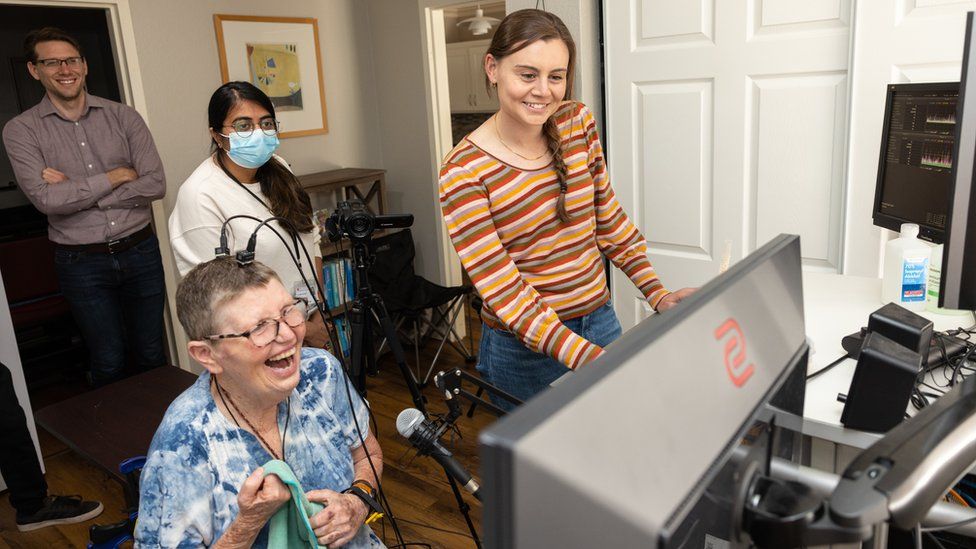
Researchers at UC San Francisco and UC Berkeley have developed a brain-computer interface (BCI) that has enabled a woman with severe paralysis from a brainstem stroke to speak through a digital avatar.
It is the first time that either speech or facial expressions have been synthesized from brain signals. The system can also decode these signals into text at nearly 80 words per minute, a vast improvement over commercially available technology.
Edward Chang, MD, chair of neurological surgery at UCSF, who has worked on the technology, known as a brain computer interface, or BCI, for more than a decade, hopes this latest research breakthrough, appearing Aug. 23, 2023, in Nature, will lead to an FDA-approved system that enables speech from brain signals in the near future.
“Our goal is to restore a full, embodied way of communicating, which is really the most natural way for us to talk with others,” said Chang, who is a member of the UCSF Weill Institute for Neuroscience and the Jeanne Robertson Distinguished Professor in Psychiatry. “These advancements bring us much closer to making this a real solution for patients.”
Chang’s team previously demonstrated it was possible to decode brain signals into text in a man who had also experienced a brainstem stroke many years earlier. The current study demonstrates something more ambitious: decoding brain signals into the richness of speech, along with the movements that animate a person’s face during conversation.
Chang implanted a paper-thin rectangle of 253 electrodes onto the surface of the woman’s brain over areas his team has discovered are critical for speech. The electrodes intercepted the brain signals that, if not for the stroke, would have gone to muscles in her, tongue, jaw and larynx, as well as her face. A cable, plugged into a port fixed to her head, connected the electrodes to a bank of computers.
For weeks, the participant worked with the team to train the system’s artificial intelligence algorithms to recognize her unique brain signals for speech. This involved repeating different phrases from a 1,024-word conversational vocabulary over and over again, until the computer recognized the brain activity patterns associated with the sounds.

Read more →

Researchers fully sequence the Y chromosome for the first time

What was once the final frontier of the human genome — the Y chromosome — has just been mapped out in its entirety.
Led by the National Human Genome Research Institute (NHGRI), a team of researchers at the National Institute of Standards and Technology (NIST) and many other organizations used advanced sequencing technologies to read out the full DNA sequence of the Y chromosome — a region of the genome that typically drives male reproductive development. The results of a study published in Nature demonstrate that this advance improves DNA sequencing accuracy for the chromosome, which could help identify certain genetic disorders and potentially uncover the genetic roots of others.
DNA sequencing isn’t as simple as reading genetic material from a genome’s beginning to its end. DNA gets chopped up when it is extracted from cells, plus even the best sequencing equipment can only handle relatively small bits of DNA at a time. So, researchers and clinicians rely on special software to piece together fragments of sequenced code in the correct order like a puzzle.
A reference genome is a separate, already pieced-together genome that serves as a guide, similar to the pictures on the front of puzzle boxes. And because 99.9% of our species’ genetic code is shared, any human genome would closely match a reference.
Last year, a team from the Telomere-to-Telomere (T2T) consortium, which is made up of experts from dozens of organizations such as NIST, generated the most complete reference genome at the time by using new sequencing technologies to crack previously indecipherable regions of the genome. But cells used in that work did not contain the most puzzling of all, the Y chromosome.
“Chromosomes all contain sections of very repetitive DNA, but well over half of the Y chromosome is like that,” said study co-author Justin Zook, who leads NIST’s Genome in a Bottle (GIAB) consortium. “If you use the puzzle analogy, a lot of the Y chromosome looks like the backgrounds often do, where all the pieces look really similar.”
With this new endeavor, T2T was not starting at zero as the GIAB had already gotten the ball rolling.

Read more →

New research shows how cancer rewires a key immune pathway to spread

A study led by researchers at Memorial Sloan Kettering Cancer Center (MSK) and Weill Cornell Medicine discovered a new relationship between cancer cells and the immune system, and shows how cancer can selfishly hijack a normally helpful immune pathway.
Usually, activation of this key immune pathway — called the STING pathway — triggers a strong inflammatory response that protects the body from foreign and unhealthy cells. But prolonged activation of the same pathway leads to a desensitization and ultimately to a “rewiring” of cellular signaling, which aids and abets cancer’s spread, the researchers found.
“You might think of it like a car alarm,” says Samuel Bakhoum, MD, PhD, a researcher and radiation oncologist at MSK, and one of the study’s two senior authors. “If it goes off rarely, that’s going to get your attention. But if it’s going off all the time, you’re going to get used to it and tune it out.”
The findings, which were published in Nature on August. 23, help explain why drugs to activate STING (known as STING agonists) have been unsuccessful in clinical trials in patients with advanced cancer, and suggest, counterintuitively, that many patients may actually benefit from drugs that block STING activation (STING inhibitors).
“There’s been millions of dollars invested in drugs that activate the STING pathway to fight cancer, and so far in clinical trials, they have not shown significant anti-cancer efficacy,” Dr. Bakhoum says. “In the lab, these drugs held a lot of promise — but in one trial of 47 patients, there were only two whose cancers even showed a partial response. In another trial of more than 100 patients that combined STING agonists with another immunotherapy, the overall response rate was 10%. So the question driving this research was, ‘Why don’t they work despite such promise in the preclinical setting?'”
The team’s discoveries were made possible through the development of an innovative computational tool in the lab of the study’s other senior author, Ashley Laughney, PhD, an assistant professor of physiology and biophysics and member of the Institute for Computational Biomedicine at Weill Cornell Medicine. Dubbed ContactTracing, the approach predicts cell-to-cell interactions and also examines how different cells respond to stimuli in growing tumors. By mapping interactions into a mandala-like pattern, the tool revealed that the long-term activation of the STING pathway leads to changes in cellular signaling that attracts cells that suppress the immune response to the area in and around the tumor.
“This isn’t just another tool to document whether cell type A might interact with cell type B,” says Dr. Laughney, who is also a member of the Sandra and Edward Meyer Cancer Center at Weill Cornell Medicine. “We’re looking at whether and how these interactions actually affect the cell receiving the signal.”
The study was led by a team of four co-first authors from the Bakhoum and Laughney laboratories: postdoctoral fellow Jun Li, PhD, and senior research technician Mercedes Duran, MS, from the Bakhoum Lab; and computational scientist Melissa Hubisz, PhD, and Tri-Institutional Computational Biology and Medicine graduate student Ethan Earlie, MS, from the Laughney Lab.

Read more →

Adding immunity to human kidney-on-a-chip advances cancer drug testing

A growing repertoire of cell and molecule-based immunotherapies is offering patients with indomitable cancers new hope by mobilizing their immune systems against tumor cells. An emerging class of such immunotherapeutics, known as T cell bispecific antibodies (TCBs), are of growing importance with several TCBs that the U.S. Food and Drug Administration (FDA) approved for the treatment of leukemias, lymphomas, and myelomas. These antibody drugs label tumor cells with one of their ends, and attract immune cells with another end to coerce them into tumor cell killing.
One major challenge in the development of TCBs and other immunotherapy drugs is that the antigens targeted by TCBs can be present not only on tumor cells, but also healthy cells in the body. This can lead to “on-target, off-tumor” cell killing and unwanted injury of vital organs, such as the kidney, liver, and others, that can put patients participating in clinical trials at risk. Currently, there are no human in vitro models of the kidney that sufficiently recapitulate the 3D architecture, cell diversity, and functionality of organs needed to assess on-target, off-tumor effects at a preclinical stage.
Now, a new cross-disciplinary, cross-organizational study created an immune-infiltrated kidney tissue model for investigating on-target, off-tumor effects of TCBs and potentially other immunotherapy drugs. The team of bioengineers and immune-oncologists who performed the study at the Wyss Institute for Biologically Inspired Engineering at Harvard University, Harvard John A. Paulson School of Engineering and Applied Sciences (SEAS), Harvard Medical School (HMS), and the Roche Innovation Centers in Switzerland and Germany, developed an immune-infiltrated human kidney organoid-on-chip model composed of tiny kidney tissue segments that contain vasculatureand forming nephrons, which can be infiltrated by circulating immune cells. They used this model to understand the specific toxicity of a pre-clinical TCB tool compound that targets the well-characterized tumor antigen Wilms’ Tumor 1 (WT-1) in certain tumors. Importantly, WT-1 is also expressed at much lower levels in the kidney, making it an important organ to study its potential on-target, off-tumor effects in. Their findings are published in PNAS.
“Together with our collaborators at Roche, we extended our vascularized kidney organoid-on-chip model to include an immune cell population that contains cytotoxic T cells with the potential to kill not only tumor cells, but also other cells that present target antigens,” said Wyss Core Faculty member Jennifer Lewis, Sc.D., the study’s senior author. “Our pre-clinical human in vitro model provides important insights regarding which cells are targeted by a given TCB and what, if any, off-target damage arises.” Lewis is also the Hansjörg Wyss Professor of Biologically Inspired Engineering at SEAS and co-leader of the Wyss Institute’s 3D Organ Engineering Initiative.
Incorporating immunity into a kidney organoid-on-chip
In 2019, Lewis’ group, together with that of Joseph Bonventre, M.D., Ph.D. at Brigham and Women’s hospital along with co-author Ryuji Morizane, M.D., Ph.D., found that exposing kidney organoids created from human pluripotent stem cells to the constant flow of fluids during their differentiation enhanced their on-chip vascularization and maturation of glomeruli and tubular compartments, relative to static controls. The researchers’ observations were enabled by a 3D printed millifluidic chip, in which kidney organoids are subjected to nutrient and differentiation factor-laden media flowed at controlled rates during their differentiation. The chip device allows researchers to directly observe the tissue using confocal microscopy through a transparent window in real-time.
“Given that this in vitro model represents most of the cell types in the kidney and incorporates the immune system, itcould support the assessment of on and off-target effects from TCBs as well as complex cellular interactions,” said Kimberly Homan, Ph.D., a former postdoctoral researcher in Lewis’ lab, first author of the initial work, and a co-corresponding author of this new study. Homan has since left Lewis’ lab to join Genentech as Director of the Complex in vitro Systems lab where she continued to provide expertise to the project collaborators.

Read more →

Sedentary time in children linked with heart damage in young adulthood

Hours of inactivity during childhood could be setting the stage for heart attacks and strokes later in life, according to research presented at ESC Congress 2023.1 The study found that sedentary time accumulated from childhood to young adulthood was associated with heart damage — even in those with normal weight and blood pressure.
“All those hours of screen time in young people add up to a heavier heart, which we know from studies in adults raises the likelihood of heart attack and stroke,”2 said study author Dr. Andrew Agbaje of the University of Eastern Finland, Kuopio, Finland. “Children and teenagers need to move more to protect their long-term health.”
This was the first study to investigate the cumulative effect of smartwatch-assessed sedentary time in young people and cardiac damage later in life. It was conducted as part of the Children of the 90s study, which began in 1990/1991 and is one of the world’s largest cohorts with lifestyle measurements from birth.3
At 11 years of age, children wore a smartwatch with an activity tracker for seven days. This was repeated at 15 years of age and again at 24 years of age. The weight of the heart’s left ventricle was assessed by echocardiography, a type of ultrasound scan, at 17 and 24 years of age and reported in grams relative to height (g/m2.7). The researchers analysed the association between sedentary time between 11 and 24 years of age and heart measurements between 17 and 24 years of age after adjusting for factors that could influence the relationship including age, sex, blood pressure, body fat, smoking, physical activity and socioeconomic status.
The study included 766 children, of whom 55% were girls and 45% were boys. At 11 years of age, children were sedentary for an average of 362 minutes a day, rising to 474 minutes a day in adolescence (15 years of age), and 531 minutes a day in young adulthood (24 years of age). This means that sedentary time increased by an average of 169 minutes (2.8 hours) a day between childhood and young adulthood.
Each one-minute increase in sedentary time from 11 to 24 years of age was associated with a 0.004 g/m2.7 increase in left ventricular mass between 17 to 24 years of age. When multiplied by 169 minutes of additional inactivity this equates to a 0.7 g/m2.7 daily rise — the equivalent of a 3 gram increase in left ventricular mass between echocardiography measurements at the average height gain. A previous study in adults found that a similar increase in left ventricular mass (1 g/m2.7) over a seven-year period was associated with a two-fold increased risk of heart disease, stroke, and death.4
Dr. Agbaje said: “Children were sedentary for more than six hours a day and this increased by nearly three hours a day by the time they reached young adulthood. Our study indicates that the accumulation of inactive time is related to heart damage regardless of body weight and blood pressure. Parents should encourage children and teenagers to move more by taking them out for a walk and limiting time spent on social media and video games. As Martin Luther King Jr. once said, ‘If you can’t fly, run. If you can’t run, walk. If you can’t walk, crawl. But by all means keep moving.'”

Read more →

Despite fears to the contrary, Canadian wildfire smoke exposure was not much worse than a bad pollen day in New York City

New Yorkers can apparently breathe a sigh of relief, at least for now. Their exposure to the smoke in June 2023 from Canadian wildfires led to only a slightly higher bump in visits to New York City hospital emergency departments for breathing problems or asthma attacks than what is seen on days when pollen counts are high. However, authors of a new study say other possible health effects, such as possible heart attacks and stroke, still need to be investigated.
For the study, researchers at NYU Grossman School of Medicine analyzed daily levels of air pollution, as measured by the presence of tiny particles known as particulate matter 2.5, which can if lodged deep in the lungs lead to inflammation, as well as respiratory and heart problems.
When researchers assessed air pollution levels for the first six months of 2023, including months of regular ambient (or general background) air pollution and the days in June when wildfire smoke peaked, they found that wildfire smoke led to a 3% average increase in asthma-related visits to emergency departments across all city hospitals (for every 10 microgram increase in PM 2.5 per cubic meter of air).
When wildfire smoke was at its worst on June 7, 2023 (at a PM 2.5 of 146 micrograms per cubic meter of air), citywide asthma-related emergency visits peaked at 335, up from a daily average of 188 per day earlier in the year, when the skies were clear of wildfire smoke.
By comparison, they say this peak wildfire number is only slightly higher than the 302 asthma-related emergencies seen on April 26, 2023, when the level of tree pollen, another lung irritant and known asthma trigger, was high (at tree pollen counts above 1,500 per cubic meter of air).
The researchers caution that while no deaths tied to the wildfire smoke were reported in June, asthma remains a serious and potentially life-threatening lung disease.
“Thankfully, the respiratory effects of the wildfire smoke in June were not much worse than what had been seen on really bad pollen days back in the spring, and despite what many New Yorkers may have feared on seeing hazy, orange air,” said study co-investigator Wuyue Yu, a doctoral student at NYU Langone Health.

Read more →

How a Small Gender Clinic Landed in a Political Storm

The small Midwestern gender clinic was buckling under an unrelenting surge in demand.Last year, dozens of young patients were seeking appointments every month, far too many for the clinic’s two psychologists to screen. Doctors in the emergency room downstairs raised alarms about transgender teenagers arriving every day in crisis, taking hormones but not getting therapy.Opened in 2017 inside a children’s hospital affiliated with Washington University in St. Louis, the prestigious clinic was welcomed by many families as a godsend. It was the only place for hundreds of miles where distressed adolescents could see a team of experts to help them transition to a different gender.But as the number of these patients soared, the clinic became overwhelmed — and soon found itself at the center of a political storm. In February, Jamie Reed, a former case manager, went public with explosive allegations, claiming in a whistle-blower complaint that doctors at the clinic had hastily prescribed hormones with lasting effects to adolescents with pressing psychiatric problems.Ms. Reed’s claims thrust the clinic between warring factions. Missouri’s attorney general, a Republican, opened an investigation, and lawmakers in Missouri and other states trumpeted her allegations when they passed a slew of bans on gender treatments for minors. L.G.B.T.Q. advocates have pointed to parents who disputed her account in local news reports and to a Washington University investigation that determined her claims were “unsubstantiated.”The reality was more complex than what was portrayed by either side of the political battle, according to interviews with dozens of patients, parents, former employees and local health providers, as well as more than 300 pages of documents shared by Ms. Reed.Some of Ms. Reed’s claims could not be confirmed, and at least one included factual inaccuracies. But others were corroborated, offering a rare glimpse into one of the 100 or so clinics in the United States that have been at the center of an intensifying fight over transgender rights.The turmoil in St. Louis underscores one of the most challenging questions in gender care for young people today: How much psychological screening should adolescents receive before they begin gender treatments?Shaped by ideas pioneered in Europe, these clinics have opened over the past decade to serve the growing number of young people seeking hormonal medications to transition. Many patients and parents told The New York Times that the St. Louis team provided essential care, helping adolescents feel comfortable in their bodies for the first time. Some patients said they were lifted out of grave depression.A rally at the Missouri Statehouse in Jefferson City, Mo., in March.Charlie Riedel/Associated PressBut as demand rose, more patients arrived with complex mental health issues. The clinic’s staff often grappled with how best to help, documents show, bringing into sharp relief a tension in the field over whether some children’s gender distress is the root cause of their mental health problems, or possibly a transient consequence of them.With its psychologists overbooked, the clinic relied on external therapists, some with little experience in gender issues, to evaluate the young patients’ readiness for hormonal medications. Doctors prescribed hormones to patients who had obtained such approvals, even adolescents whose medical histories raised red flags. Some of these patients later stopped identifying as transgender, and received little to no support from the clinic after doing so.Unwanted outcomes and regrets happen in every branch of medicine, but several clinics around the world have reported challenges similar to those in St. Louis. Pediatric gender medicine is a nascent specialty, and few studies have tracked how patients fare in the long term, making it difficult for doctors to judge who is likely to benefit.In several European countries, health officials have limited — but not banned — the treatments for young patients and have expanded mental health care while more data is collected. In the United States, health groups have endorsed what’s known as affirming care even as their peers in Europe have grown more cautious. And conservative lawmakers in more than 20 states have taken the draconian step of banning or severely restricting gender treatments for minors.Civil rights groups are challenging the Missouri ban in a hearing this week, and Ms. Reed testified on Tuesday in favor of it, describing her allegations in detail.Washington University created an oversight committee to carry out weekly reviews of the gender clinic’s operations. The school’s investigation claimed that none of the clinic’s 598 patients on hormonal medications reported “adverse physical reactions.” In a statement to The Times, the university said that it would not address specific allegations because of patient privacy, and that “physicians and staff have treated patients according to the existing standard of care.”But doctors in St. Louis and elsewhere are wrestling with evolving standards and uncertain scientific evidence — all while facing intense political pressure and an adolescent mental health crisis.An Affirming ApproachKim Hutton, a founder of a parents group called TransParent. “In Missouri there were no knowledgeable doctors on this subject,” she said. “It was left to the parents to try to figure it out.”Bryan Birks for The New York TimesAmerica’s first youth gender center opened in Boston, in 2007, after two clinicians — Dr. Norman Spack, an endocrinologist, and Laura Edwards-Leeper, a child psychologist — traveled to the Netherlands to observe a promising treatment for children with gender distress, known as dysphoria.The Dutch doctors were prescribing drugs that stalled puberty in order to prevent the physical changes that often exacerbate dysphoria. The approach, they reasoned, would give the adolescents time to consider whether to proceed with estrogen or testosterone treatments later on.Transgender children have high rates of anxiety, depression and suicide attempts. The Dutch found that for a specific group — adolescents with no severe psychiatric disorders who had experienced gender dysphoria since early childhood — their depression lessened after taking puberty blockers.When Dr. Spack and Dr. Edwards-Leeper opened the Boston clinic, they hewed closely to the Dutch approach. In its first five years, the clinic treated just 70 patients.Similar clinics opened around the country, diverging over time from the strict Dutch protocols into an affirming approach that prioritized a child’s inner sense of gender. It was unethical, some argued, to deny care to children with psychiatric problems when gender treatments could help resolve those issues.In 2012, parents in St. Louis began lobbying leaders of the children’s hospital to set up an affirming clinic. The parents invited Dr. Spack to town to talk about his experience in Boston.“In Missouri there were no knowledgeable doctors on this subject,” said Kim Hutton, a founder of the group, called TransParent. “It was left to the parents to try to figure it out.”The clinic opened in 2017, led by Dr. Christopher Lewis, a pediatric endocrinologist, and Dr. Sarah Garwood, an adolescent medicine specialist, who had each attended TransParent meetings. They saw patients once a week on the second floor of the St. Louis Children’s Hospital, spending most days elsewhere in the sprawling complex.When Ms. Reed arrived, in 2018, she was the clinic’s only full-time employee. Eventually, the clinic would have about nine staff members, most part-time.Their patients were part of a striking generational change: Between 2017 and 2020, about 1.4 percent of 13- to 17-year-olds in the United States identified as transgender, nearly double the rate from a few years earlier.It’s clear the St. Louis clinic benefited many adolescents: Eighteen patients and parents said that their experiences there were overwhelmingly positive, and they refuted Ms. Reed’s depiction of it. For example, her affidavit claimed that the clinic’s doctors did not inform parents or children of the serious side effects of puberty blockers and hormones. But emails show that Ms. Reed herself provided parents with fliers outlining possible risks.Ms. Hutton’s son, who requested anonymity because of privacy concerns, is now in college, and said he was grateful he transitioned years earlier. “I have normal-people problems, which is all that I ever wanted,” he said.Another patient, Chris, now 19, who also requested anonymity to protect his privacy, recalled Dr. Lewis patiently drawing diagrams on the paper sheet of his exam chair, explaining how testosterone would redistribute his body fat and permanently deepen his voice. Chris felt “drastically improved” after taking the hormone, he said, but was still distressed by his breasts. At 17, he went to a surgeon in Ohio for a mastectomy.And Becky Hormuth, a teacher in St. Charles, Mo., praised the center’s doctors for their approach to her son’s mental health. The doctors diagnosed her 15-year-old with autism, she said, and connected him with a dietitian to help treat his eating disorder — before prescribing testosterone. Now, at 16, her son is “better than he’s ever been,” Ms. Hormuth said.A family therapist in St. Louis, Katie Heiden-Rootes, said she had worked with or supervised the counseling of roughly 30 of the clinic’s patients and had never seen problems with their care.“The biggest complaint I heard about the clinic was, ‘We can’t get in,’” Dr. Heiden-Rootes said.Katie Heiden-Rootes, a family therapist, said she had counseled about 30 of the clinic’s patients and had never seen problems with their care.Bryan Birks for The New York TimesBecky Hormuth’s son is a patient at the St. Louis clinic. “I’m worried everything we’ve fought for for our kid is going to come crumbling down,” she said.Bryan Birks for The New York TimesThe Red Flag ListWhen Ms. Reed, 43, began working at the clinic, she considered herself a fierce champion of the gender-affirming model. In her previous jobs — at Planned Parenthood, at an H.I.V. clinic and in the foster care system — she had also supported L.G.B.T.Q. young people. And her husband, a transgender man, had shown her how essential gender-affirming care could be.Ms. Reed’s job at the clinic was akin to that of a social worker — collecting medical histories, triaging appointments and supporting patients in the hospital, at school and in court.Her doubts about the affirming model arose in 2019, she said, after hearing from an upset patient who regretted their medical transition. She grew more concerned in 2020 as more new patients sought the clinic’s help, many with psychological problems exacerbated by the pandemic. She saw parallels with England’s youth gender clinic, known as the Tavistock, which was under investigation after employees complained about feeling pressure to approve children for puberty blockers as their wait-list swelled.The St. Louis center relied heavily on outside therapists to vet patients, emails show. Doctors there prescribed hormones to patients who had identified as transgender for at least six months, had received a letter of support from a therapist and had parental consent.Frustrated that the clinic had no system to keep track of patient outcomes, Ms. Reed and the clinic’s nurse, Karen Hamon, kept a private spreadsheet, which they called the “red flag list.” (Ms. Reed gave The Times a version of the spreadsheet without identifying information. Ms. Hamon and other clinic employees declined to comment for this article.)The list eventually included 60 adolescents with complex psychiatric diagnoses, a shifting sense of gender or complicated family situations. One patient on testosterone stopped taking schizophrenia medication without consulting a doctor. Another patient had visual and olfactory hallucinations. Another had been in an inpatient psychiatric unit for five months.On a different tab, they tallied 16 patients who they knew had detransitioned, meaning they had changed their gender identity or stopped hormone treatments.Ms. Reed saw parallels with England’s youth gender clinic, known as the Tavistock, which was under investigation after employees complained about feeling pressure to approve children for puberty blockers.Peter Nicholls/ReutersOne patient emailed the clinic, in January 2020, to say they had detransitioned and were seeking a voice coach for their masculinized voice. They also requested a referral for an autism screening, noting, “I have mentioned this before at appointments and over email, but it did not seem to go anywhere.”In another email thread, the center’s staff discussed a patient who regretted a recent mastectomy. The patient had messaged their surgeon at Washington University twice about wanting a breast reconstruction, but had not received a reply.The Times independently found another St. Louis patient who detransitioned, Alex, who posted on Reddit last year to “give a warning” about the clinic. (Alex shared medical records with The Times to corroborate her account.)Alex arrived at the center in late 2017 at age 15, she said, after identifying as transgender for three years. She had been referred by a therapist who was treating her for bipolar disorder and anxiety.Alex was prescribed testosterone, she said, after one appointment with Dr. Lewis. “There was no actual speaking to a psychiatrist or another therapist or even a case worker,” she wrote on Reddit.After three years on the hormone, she realized she was nonbinary and told the clinic she was stopping her testosterone injections. The nurse was dismissive, she recalled, and said there was no need for any follow-ups.Alex, now 21, does not exactly regret taking testosterone, she told The Times, because it helped her sort out her identity. But “overall, there was a major lack of care and consideration for me,” she said.The number of people who detransition or discontinue gender treatments is not precisely known. Small studies with differing definitions and methodologies have found rates ranging from 2 to 30 percent. In a new, unpublished survey of more than 700 young people who had medically transitioned, Canadian researchers found that 16 percent stopped taking hormones or tried to reverse their effects after five years. Survey responders reported a variety of reasons, including health concerns, a lack of social support and changes in gender identity.‘Disastrously Overwhelmed’Laura Edwards-Leeper warned in 2021 that American gender clinics were prescribing hormones to some children who needed mental health support first.Kristina Barker for The New York TimesNearly 15 years after bringing the Dutch approach to America, Dr. Edwards-Leeper, the Boston psychologist, had grown alarmed by the rise in adolescents seeking gender treatments.In a November 2021 Washington Post opinion piece, Dr. Edwards-Leeper warned that American gender clinics were prescribing hormones to some children who needed mental health support first.“We may be harming some of the young people we strive to support — people who may not be prepared for the gender transitions they are being rushed into,” she wrote with Erica Anderson, the former president of the U.S. Professional Association for Transgender Health and a transgender woman.In St. Louis, Dr. Andrea Giedinghagen, the clinic’s psychiatrist, emailed the essay to her colleagues. “This basically encapsulates the (very complex, nuanced) views that the child and adolescent psychiatrists I know at various gender centers hold,” Dr. Giedinghagen wrote.The head of the clinic, Dr. Lewis, responded, adding a university administrator to the thread. “I DO think our clinic, and transgender care at large, exhibits some of the concerns mentioned,” he wrote, including being “disastrously overwhelmed.”But, he added, “No matter the approach there will be a percentage of patients that should have been started that weren’t and vice versa.”By the end of 2021, emails show, the clinic was getting calls from four or five new patients every day — a sharp rise from 2018, when it saw that many over the course of a month. And, according to an internal presentation from 2021, 73 percent of new patients were identified as girls at birth. Gender clinics in Western Europe, Canada and the United States have reported a similarly disproportionate sex skew that has bewildered clinicians.St. Louis Children’s Hospital, where the gender clinic opened in 2017. When Ms. Reed arrived in 2018, she was the clinic’s only full-time employee.Bryan Birks for The New York TimesOther parts of the St. Louis hospital were also seeing more transgender patients. In August and September of 2022, Ms. Reed and Ms. Hamon, the clinic’s nurse, conducted a half-dozen training sessions with the emergency department to explain their work at the gender clinic. At the trainings, E.R. staff shared concerns about their own experiences with their young transgender patients, which Ms. Hamon later relayed to her team and university administrators.The E.R. staff, she wrote in an email, had been seeing more transgender adolescents experiencing mental health crises, “to the point where they said they at least have one TG patient per shift.”“They aren’t sure why patients aren’t required to continue in counseling if they are continuing hormones,” Ms. Hamon added. And they were concerned that “no one is ever told no.”As similar mental health issues bubbled up at clinics worldwide, the international professional association for transgender medicine tried to address them by publishing specific guidelines for adolescents for the first time. The new “standards of care,” released in September, said that adolescents should question their gender for “several years” and undergo rigorous mental health evaluations before starting hormonal drugs.Dr. Lewis worried that his clinic would not be able to adjust to the new standards, known as the S.O.C.“Right now I have no idea how to meet what would be the most intensive interpretations of the SOC,” Dr. Lewis texted Ms. Hamon. (She took a screenshot of the message and sent it to Ms. Reed.) He suggested meeting with staff members to discuss how they could abide by the new guidelines.In its statement, the university said that the clinic prioritized mental health care and that licensed external therapists “make a vital contribution to that effort.” It also said that “patients have ongoing relationships with mental health providers.”Some former staff members said the clinic was doing the best it could for patients with complex psychiatric histories. Cate Hensley, a social worker who interned at the clinic from 2020 to 2021, said that the team had a weekly meeting to discuss such cases.She also said that U.S. hospitals and health insurers invested far too little in mental health, putting extra pressure on doctors and hurting patients.“This center is providing ethical care in an unethical system,” Mx. Hensley said.Political AgendasJennifer Harris Dault, a Mennonite pastor, moved her family to New York to ensure that her child could get gender treatments when she nears puberty.Lauren Petracca for The New York TimesBy the end of last year, Republican lawmakers in Missouri had turned gender care for minors into a rallying cry. And Ms. Reed, formerly a staunch defender of the affirming model, had become openly skeptical of it, raising concerns in internal emails and in meetings despite warnings from higher-ups.Her performance review in 2022 stated that she “responds poorly to direction from management with defensiveness and hostility.” In November, she left the gender clinic and started a new role at the university coordinating pediatric cancer research.Ms. Hamon raised doubts as well, according to text messages and emails provided by Ms. Reed. In January of this year, she emailed an administrator to explain why she did not want a management role at the center.“You know I have struggled with ethical dilemmas about how we do things for quite some time,” Ms. Hamon wrote.That month, Ms. Reed obtained a prominent parental rights lawyer, Vernadette Broyles. Shortly thereafter, she filed her complaint with the state and publicized her allegations in an essay in The Free Press. Ms. Broyles is a vocal proponent of gender treatment bans for minors and has said the “transgender movement” poses an “existential threat to our culture.”Ms. Reed said that she supported the rights of transgender adults like her husband, and that Ms. Broyles was the only lawyer who would take her case pro bono. Still, Ms. Reed does not deny that her views have hardened and become political: “I support a national moratorium on the medicalization of kids,” she said.One parent said that, perhaps in pursuit of this political aim, Ms. Reed had misrepresented her child’s experience.Ms. Reed’s affidavit describes a patient whose liver was damaged after taking bicalutamide, a drug that blocks testosterone. It makes a specific claim about what a parent had written to the child’s doctors: “The parent said they were not the type to sue, but ‘this could be a huge P.R. problem for you.’”The parent, Heidi, a data scientist in the St. Louis area who requested anonymity because of privacy concerns, said she was stunned to read this “twisted” description of her teenage daughter’s case.Heidi, a parent in the St. Louis area who requested anonymity, said Ms. Reed misrepresented her child’s experience.Bryan Birks for The New York TimesHeidi’s daughter indeed had liver damage, a rare side effect of bicalutamide. But she had been taking the drug for a year, records show, and had a complicated medical history. She was immunocompromised, and experienced liver problems only after getting Covid and taking another drug with possible liver side effects.In a message to doctors that was shared with The Times, Heidi actually wrote, “In our world, it’s like a P.R. nightmare” — referring to tensions in her family about the gender treatments. The message did not mention anything about suing the clinic. To the contrary, it said: “We don’t regret any decision.”Ms. Reed said that she learned about the case from Ms. Hamon, who helped compile examples for the affidavit, and that she regretted citing the case when she had not seen the medical record herself.“My daughter’s situation was exploited,” Heidi said, noting that the hospital told her that her records would be shared with the state.Missouri’s ban of gender care for minors will begin on Aug. 28 unless the hearing this week results in a preliminary injunction. If the law goes into effect, the clinic will not be allowed to enroll new patients.Some families are not waiting for the legal proceedings to play out. Jennifer Harris Dault, a Mennonite pastor, moved her family from St. Louis to New York in July to ensure that her 8-year-old transgender daughter could get gender treatments when she nears puberty.“The more I see coming out of Missouri the more I know we made the decision that was right for us,” she said.The attorney general’s investigation into the clinic’s practices is ongoing, as is an inquiry by Senator Josh Hawley, a Republican. While several families said they blamed Ms. Reed for the political fallout, others said the university bears responsibility, too.For decades, Dr. John Daniels was the sole endocrinologist in St. Louis prescribing hormones to transgender adults. He did so, he said, because he saw profound benefits in his patients and because, as a gay man, he appreciated the diversity of the human experience.When Ms. Reed’s allegations came out, he was shocked, and emailed her to ask if she had ever reported concerns to Washington University. She replied that she had, but was ignored.“I hate that the politicians have gotten involved with this, but I do have great concerns about how adolescents and preadolescents are being treated,” Dr. Daniels wrote. “That the higher-ups at W.U. didn’t take you seriously is now on them.”Kirsten Noyes

Read more →

Robert Paulson, Long-Term A.L.S. Survivor, Is Dead at 86

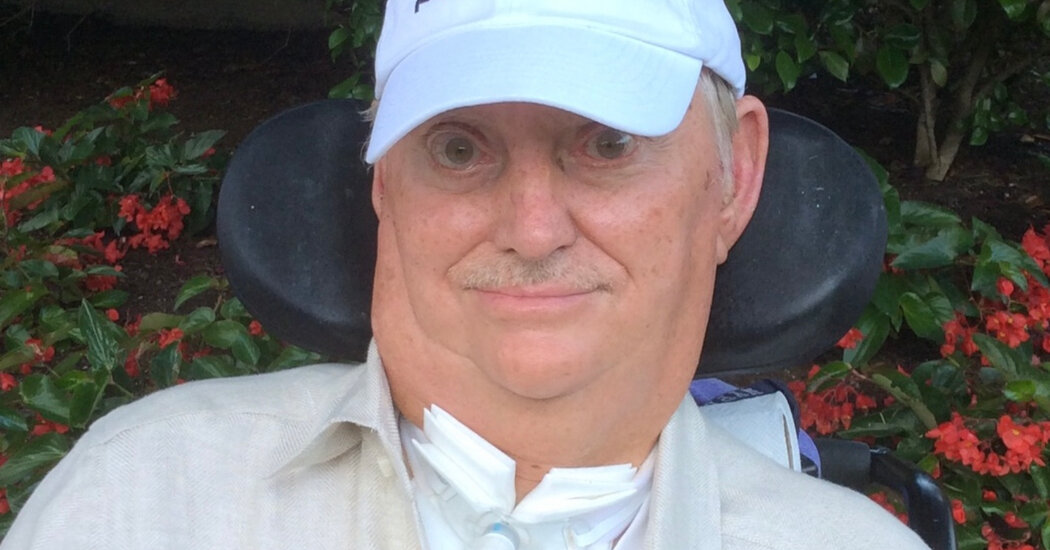
He lived with the condition also known as Lou Gehrig’s disease much longer than most and spread the message, an admirer said, that disability was “just a different way of living.”Long after being diagnosed with amyotrophic lateral sclerosis, better known as Lou Gehrig’s disease, Robert Paulson published his autobiography. He could not move by then, much less type, so he created the book in four months from his wheelchair by employing a text-generating device that uses the eye as a cursor to select letters.“A million clicks of his eye,” his wife, Maureen (Dowling) Paulson, said in a phone interview. “He got pretty proficient at it.”In his book, “Not in Kansas Anymore: A Memoir of the Farm, New York City and Life with A.L.S.” (2009), Mr. Paulson wrote, “The diagnosis of this disease need not be a death sentence.”Later in the book, he observed: “Life is everything. And what is it but the ability to feel, think and communicate? Thanks to today’s technologies, A.L.S. can’t take any of these from you.”Mr. Paulson, who spoke through a speech synthesizer, built a public profile as a face of A.L.S. with his book, with interviews he gave and with appearances he made, with his wife, before audiences including students at Sacred Heart University, in Fairfield, Conn., and prisoners at Rikers Island. His messages, Mrs. Paulson said, centered on resilience and coping when “terrible things come your way.”“He’d say, ‘It rains on all of us,’” she added. “It was a good message for kids to hear.”Mr. Paulson spoke in 2018 to a disabilities studies course taught by Allan B. Goldstein at the New York University Tandon School of Engineering.“What he brought was the knowledge that disability was not a tragedy, that it’s just a different way of living,” Mr. Goldstein said by phone. “And they got that viscerally.”Kailey Blount, who attended a disability and literature class at Sacred Heart at which Mr. Paulson appeared, said that he helped her cope with the effects of ulcerative colitis. “In a time where I was frozen by disability,” she said by email, “Mr. Paulson lit a path forward. His brilliant mind, kind heart and dignified soul guided me towards a brighter future.”Mr. Paulson died on Aug. 8 at his home in Manhattan, his wife said, 30 years after he experienced the first symptoms of the disease to which he finally succumbed. He was 86.With the aid of crucial interventions at various points after his diagnosis — including a tracheotomy, a ventilator and a feeding tube — Mr. Paulson lived an unusually long time with the disease. The average survival time is three years, according to the A.L.S. Association, and only 5 percent of people with the disease live 20 years or longer. The physicist Stephen Hawking was an outlier: He was diagnosed with A.L.S. at age 21, and he survived with it until his death in 2018, 55 years later.Robert Edward Paulson was born on June 27, 1937, in his mother’s bedroom on his family’s wheat, soybean and alfalfa farm in Lindsborg, Kan., a small city founded by Swedish settlers. His father, Nils, died before Bob turned 2. His mother, Ellen (Karlsson) Paulson, who had immigrated from Sweden, took over the running of the farm after her husband’s death.“It was up to my three older brothers and me to scratch out a living as we grew up,” Mr. Paulson told the website of Bridging Voice, an organization that helps people with neurodegenerative disorders communicate through training and equipment, in 2021. “My childhood was all grit and dogged determination.”Bob hated farming, so he followed the example of his brother Arnold, a nuclear engineer. He studied nuclear engineering at Kansas State University and graduated with a bachelor’s degree in 1959. The coach of his debate team there suggested that, given his ability to deliver an argument, he would make a good lawyer.He attended Georgetown Law School at night while working on classified matters during the day at the United States Atomic Energy Commission (which was later split into two agencies, one of them the Nuclear Regulatory Commission, in 1974). He graduated in 1963.With his background in science, he specialized in patent law.“My life as an attorney, before A.LS., entailed standing up and speaking in federal court,” he told Bridging Voice. “I used my voice in every part of the law.” He also sang in opera workshops, glee clubs and church choirs.But his ability to stand, speak and sing began to erode in the 1990s, as his fingers, arms, legs and stomach muscles weakened. He went from using a cane to a walker and, in 1998, to a wheelchair. But he continued to work as a partner at Morgan & Finnegan, an intellectual property law firm in Manhattan, for five more years. He stopped when he could no longer use his limbs and keep up with the billing.In late 2003, when pneumonia led to the failure of his lungs, he required a tracheotomy and breathing and feeding tubes. “I can do this, I’m already in a wheelchair,” he recalled of his reaction to the latest change in the state of his health when he was interviewed a few years later by the Muscular Dystrophy Association’s A.L.S. division.He adjusted over the next 20 years, with help from his wife; his sons, Joshua, Luke and James; and others. He started his own patent law firm, with a client list that included the United States Chamber of Commerce; wrote his autobiography; and compiled a synopsis of more than 200 decisions in trademark and copyright law from 2013 to 2020.In addition to his wife, Mr. Paulson is survived by his sons, four grandchildren and his brother Arnold.Mrs. Paulson said that despite his condition, her husband retained a largely positive disposition.“He was willing to face the day,” she said. “He’d wake up, maybe you’d see a few tears in his eyes, but he’d charge ahead. I’d get him in the wheelchair, and off we’d go.”

Read more →

Brain advance gives voice hope to paralysed

Published2 hours agoShareclose panelShare pageCopy linkAbout sharingImage source, Steve FischBy Philippa RoxbyHealth reporterScientists have developed a device that can translate paralysed people’s brain signals into words at faster speeds than before, it has been reported in two papers in the journal Nature.Pat Bennett, 68, who has motor-neurone disease (MND), tested the technology and said it could help her stay connected to the world.Implants in her brain decode the words she wants to say.The US researchers now want to improve their technology further.Their ultimate aim is for people who can no longer talk, because of strokes, brain diseases or paralysis, to be able to communicate their thoughts in real time.’Good guess’Ms Bennett used to ride horses and jog every day before being diagnosed, in 2012, with a disease that attacks areas of the brain that control movement, causing eventual paralysis. Her speech was the first thing affected.For the Stanford University research, a surgeon implanted four sensors the size of pills into Ms Bennett’s brain, in areas key to producing speech.When she tells her lips, tongue and jaw to make sounds to form words, an algorithm decodes information coming out of her brain.”This system is trained to know what words should come before other ones, and which phonemes make what words,” said Dr Frank Willett, co-study author.”If some were wrongly interpreted, it can still take a good guess.”Image source, Noah BergerAfter four months of training the software to interpret Ms Bennett’s speech, her brain activity was being translated into words on a screen at 62 words per minute, about three times the speed of previous technology.Normal conversations are about 160 words per minute, the researchers say, but they are yet to produce a device people can use in everyday life.One in 10 words was wrong in a vocabulary of 50 words and there were errors in a quarter of Ms Bennett’s 125,000-word vocabulary.”But it’s a big advance toward restoring rapid communication to people with paralysis who can’t speak,” Dr Willett said.And Ms Bennett said it meant “they can perhaps continue to work, maintain friends and family relationships”.’Normal conversations’In another study, from the University of California San Francisco (UCSF), Ann, who has severe paralysis following a stroke, was able to speak through a digital avatar, complete with her own facial expressions. Scientists decoded signals from more than 250 paper-thin electrodes implanted on the surface of Ann’s brain and used an algorithm to recreate her voice, based on a recording of her speaking at her wedding.The system reached nearly 80 words per minute and made fewer mistakes than previous methods, with a larger vocabulary.”It’s what gives a user the potential, in time, to communicate almost as fast as we do and to have much more naturalistic and normal conversations,” researcher Sean Metzger, who helped develop the technology, said.Study author Dr Edward Chang was “thrilled” to see the success of the brain interface in real time.Improvements in artificial intelligence (AI) had been “really key”, he said, and there were now plans to look at turning the technology into a medical device.Current technology allows some people with MND to bank their voice before it’s lost, and then use their eyes to select the words or letters they want to say on a screen, but it can be time-consuming.The charity MND Association says it’s “excited” about the potential of the new research, although they caution it’s at a very early stage. Related Internet LinksMND Association – Fighting motor neurone diseaseDedicated to Finding a Cure for ALS – The ALS AssociationAmyotrophic Lateral Sclerosis (ALS) – Johns Hopkins MedicineThe BBC is not responsible for the content of external sites.

Read more →

Boots infant formula adverts broke rules – watchdog

Published1 day agoShareclose panelShare pageCopy linkAbout sharingImage source, Getty ImagesBy Vishala Sri-PathmaBusiness reporterOnline adverts for the retailer Boots promoting four brands of infant formula on Google broke advertising rules, the watchdog has said.In the UK, it is against the law to advertise infant formula for babies up to six months old because it might discourage breastfeeding. Boots apologised and said the adverts, which were automated, had been removed.It comes as supermarket Iceland calls for changes to laws on formula milk advertising.Advertising follow-on formula, for babies over six months, is allowed.But for infant formula, retailers cannot communicate special offers via any platform.Iceland says it is calling on the government to “immediately” update existing legislation so that retailers are allowed to tell the public when they reduce the price of formula.The supermarket said it still endorsed breastfeeding, yet rising costs were “placing unbearable pressure on parents who choose to or have no alternative” to using formula milk.It is also asking for customers to be allowed to buy formula with loyalty points, gift cards or food bank vouchers, which is currently prohibited.Iceland and other retailers have included formula products in offers and cut-price promotions but under the law are not allowed to communicate this to customers.Iceland’s executive chairman, Richard Walker, said that the supermarket had gone against these regulations and got in touch with customers about offers. The government said: “The legislation ensures parents and carers have access to the highest quality and safe infant formula, as well as not discouraging breastfeeding by protecting them from inappropriate marketing of breast milk substitutes.”It added that it has measures in place to support families with the cost of feeding babies and young children, including a scheme to help parents of children under four from lower-income families buy foods including baby formula.The BBC has asked the Advertising Standards Authority (ASA) for comment. Breastfeeding support groups feel that supermarkets and other retailers are just interested in their profits rather than babies and mothers.A spokesperson for the Baby Feeding Law Group said that these legal marketing restrictions are intended to protect parent and carers from “undue commercial influence”.”There is a wealth of evidence that marketing undermines breastfeeding and safe and appropriate formula feeding. The regulations are not designed to limit access to infant formula, it is the manufacturers and retailers who set prices, and who do so in a manner which ensures high profit margins,” the group added. Boots rulingThe ASA said the Boots adverts, which appeared on the sidebar on search engine websites like Google, clearly displayed “images of the infant formula products to mean that the ads were promoting infant formula”.It ordered Boots to remove the adverts.The adverts in question, paid for by Boots, were promoting four different branded formulas: Aptamil, Hipp, Cow & Gate and Kendamil.Following the ASA ruling, Boots apologised and said it had removed all its infant formula advertising, saying that the adverts were automated, generated by an algorithm linked to the Boots website that promoted products on offer.The World Health Organization (WHO) recommends exclusively breastfeeding babies for the first six months and giving breast milk alongside solid food until the age of two or beyond.It says breast milk has many benefits for infants including protection against gastrointestinal infections. It is also an important source of energy and nutrients. The WHO has urged governments around the world to ban the advertising of infant formula as it feels it discourages breastfeeding.More on this storyShell ads banned for misleading clean energy claimsPublished7 June

Read more →